Ruminations

Blog dedicated primarily to randomly selected news items; comments reflecting personal perceptions

Wednesday, May 13, 2020

Fear and Misguided Praise

"Given the media hype around hydroxychloroqnine, given messaging coming out of the White House and out of President Trump, there are a lot of people that are wanting to believe that hydroxychloroquine is that panacea, that magical drug that will protect us against COVID-19."
"It's understandable, because people are looking for that solution that's going to protect them. And I think the numbers have moved as a result of that hype."
Allan Malek, Chief Pharmacy Officer, Ontario Pharmacists Association

"Health Canada recently warned Canadians of the serious side effects associated with chloroquine and hydroxychloroquine, including heart rhythm problems, liver or kidney problems, low blood sugar [hypoglycemia], and nervous system problems."
Health Canada spokesperson
Hydroxychloroquine   Courtesy Mint Pharmaceuticals

"This is a product that has historically appeared in the drug-shortage database in Canada."
"So we believe that some patients [who suffer autoimmune diseases] might have been proactive, and wanted to get ahead of this when they realized that this was being touted by the leader of the free world as the cure-all for COVID-19."
Jaiveer Singh, CEO, Mint Pharmaceuticals, Mississauga
Various preliminary reports augmented by U.S.President Donald Trump's praise for hydroxychloroquine, an anti-malaria drug commonly prescribed for people with autoimmune diseases, saw a situation where sales of the drug doubled in March in Canada, leaving people suffering from lupus or rheumatoid arthritis discovering that they were unable to renew their prescriptions caused by the resulting drug shortage.

The surge in sales, according to pharmacists and manufacturers, was responsible for the shortage encountered by the people who needed the drug. The anti-malaria drug saw sales in that month of 9.5-million doses in Canada, according to IQVIA -- a clinical research company -- representing over double the volume distributed the month before and close to double the average monthly volume since January 2019.

A French researcher had claimed that he had seen a 100 percent cure rate for COVID-19, with the use of the drug in a small clinical trial. Critics of the experiment pointed out its small sample size and lack of peer review. But the praise heaped on the drug for its assumed efficacy by President Trump as a "game-changer" in the battle against COVID-19 on March 21 convinced many that their fears would be alleviated if they were in possession of the drug.
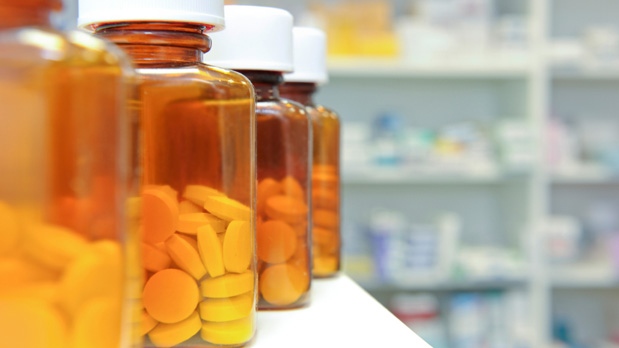
Prescription Drugs

If ordinary people, vulnerable through fear of contracting the disease, were gullible enough to seek out the unproven drug, what can one say of evidence that doctors had been acquiring supplies of the drug for themselves or for others for which they were prescribing unusual amounts labelling their acquisition as "office use". In response, a number of professional organizations warned physicians of the drug's unproven status.

Irrespective of which, globally demand to access hydroxychloroquine was magnified in the belief that it held the answer to the question, how to defend against the global pandemic of SARS-CoV[-2. No evidence has yet been found of a convincing nature for the anti-malaria drug's usefulness in the treatment of COVID-19, a drug capable of a litany of collateral health issues.

India, one of the largest producers of hydroxychloroquine in the world, halted exports of the drug (along with others they export) to ensure an adequate supply of drugs internally, as a response to the spread of COVID-19 throughout the country.  A shipment of five million capsules of the drug dating back to a November order has since been received in Canada, by Mint Pharmaceuticals. Even so, its CEO which explains his company, which supplies some 60 percent of all orders in Canada, sees them dwindling.
He is convinced that legitimate patients for whom the drug is prescribed to treat their autoimmune disorders could very well have taken self-protective action by stockpiling the drug, fearing a shortage since publicity surrounding the possible use of the drug for COVID-19 began growing in the international community. His company, assures Mr. Singh, despite that, is positioned to avoid major issues of medication supply in Canada.

Over the past few weeks, he pointed out, demand for the drug has significantly decreased, and he posits that might be as a result of mounting evidence against the use of hydroxychloroquine in the treatment of COVID. Federal and provincial public health groups ordered pharmacists to release only 30-day doses of all drugs to patients, a practise that may well have aided in reducing the strain on pharmaceutical supply chains.

A World Health Organization spokesperson pointed out several days back that multiple treatments in the fight against the virus were indicating promise. "We do have some treatments that seem to be in very early studies limiting the severity or the length of the illness, but we do not have anything that can kill or stop the virus", Margaret Harris advised, in a late briefing.

Pharmacist Jim Giontsis, who runs a pharmacy in Toronto’s Moss Park neighbourhood, warns against using drugs like hydroxychloroquinine to treat COVID-19. (Evan Mitsui/CBC)


Labels: , , , ,

Thursday, April 02, 2020

The SARS/CoV-19 China Backstory

"Far from admitting its own culpability in trying to cover up the initial spread of COVID-19, China is busy fostering conspiracy theories about the origins of the virus [that it began outside China] and attack Western leaders for blaming the pandemic on a deliberate effort by China to destabilize Western economies."
David J.Bercuson, fellow, Canadian Global Affairs Institute, director emeritus, Centre for Military, Security and Strategic Studies, University of Calgary
Masks are seen on a production line manufacturing masks at a factory in Shanghai, China on Jan. 31, 2020. Aly Song / REUTERS
China became a beacon of low-wage, efficient production, scalped-cost goods, attractive to American, Canadian and European production with an eagle-eye set on profit through outsourcing to China's vast factories. That manufacturing in the West sidled off to China, leaving millions of people who once had their living wage guaranteed by strong union demands, looking for other means of employment failed to register, even when products leaving China for points west were found to be substandard, dangerously adulterated and a threat to human health, it left little impression on the quest to lower production cost and raise the bottom line.

The world became hugely dependent on Chinese production lines for an immense spread of medicines, for the supply of medical equipment the world is now finding itself in perilously low supply of. In the face of a pathogen that emerged from a 'wet' wild animal market in Hubei Province and inevitably spread outward from China when millions of Chinese, focused on traditional travel for Chinese New Year streamed out of Wuhan -- the city that became the epicentre of the epidemic because Beijing failed to take action -- the world also became indebted to China to provide it with the equipment it had trusted China to produce.

China had become the major producer of ventilators and respirators at the very time when the novel coronavirus had begun surfacing in Wuhan last December. Half of the medical masks dispersed around the world in normal times, before the advent of SARS-CoV02, are produced in China. The United States became reliant on China for 97 percent of its antibiotics by 2018, according to Yanzhong Huang, senior fellow, global health, at the U.S. Council on Foreign Relations.

At the same time China had captured between 70 and 95 percent of the American market for vitamin C, ibuprofen, hydro-cortisone and acetaminophen, according to U.S. Commerce Department records. The United States sourced its surgical gowns and blood oxygen level measuring equipment through Chinese factories, along with magnetic resonance imaging (MRI) scanners. And then, Chinese officials authorized Wuhan's lockdown along with other cities in Hubei, leading Beijing to enforce official bans on export of medical equipment. From U.S.-owned manufacturers stationed in China.

The European Commission closed down the export of personal protective equipment (PPE) supplies so that the European Union and over 50 countries banned outright or imposed strict restrictions on the export of a range of medical equipment and PPEs, inclusive of masks, visors, hazmat suits and gloves. Canada, along with Australia, Brunei, Chile, Myanmar, New Zealand and Singapore signed a commitment to "maintaining open and connected supply chains", to oppose "trade restrictive measures on essential goods, especially medical supplies".

That, when the Canadian company Medicom was producing three million medical masks daily at its Shanghai factory, but was prohibited from exporting its masks out of China, to Canada. And nor was Canada only hit in this 'nationalization' of a foreign company's production; the very same situation impacted on American companies whose production facilities were located in China; American they might be, but shipping their products back to the United States at a time of desperate need was out of the question.

Suddenly and swiftly, companies whose exports out of China were forbidden, saw a light bulb explode in the realization that they owed it to their country of origin to return to producing badly needed goods right at home. Canada, like the United States, is facing a dramatically critical shortage of medical equipment, and in Canada, Medicom is among the firms enlisted to begin producing to make up a dangerous shortfall, poised now to open its first permanent factory in Canada, to help supply the country with the millions of masks and thousands of ventilators in short supply

Ottawa had sent along 16,000 tonnes of gear in February to aid China in its struggle to control their zoonotic outbreak; 1,101 masks, 50,118 face shields, 36,426 medical coveralls, 200,000 pairs of gloves and more; representing a tiny fraction of what China would require to quell the virus. Last month, a New York Times investigator discovered China had imported 56 million respirators and masks in just the first week of the Wuhan shutdown. Affiliates of the United Front Works Department, China's overseas propaganda and influence-peddling arm of the Chinese Communist Party are suspected to have been engaged in forwarding that critical bulk cargo.
The USNS Comfort passes the Statue of Liberty as it enters New York Harbor during the outbreak of the coronavirus disease (COVID-19) in New York City, U.S., March 30, 2020. The United States, like other western countries, is scrambling for medical supplies. ANDREW KELLY / REUTERS

Out of the goodness of their hearts, now that China has more or less subdued the galloping infection rate internally, Beijing has been busy ingratiating itself as a benefactor to countries all over the world, themselves now attempting to cope with the firestorm of infection rates they're experiencing. The Bank of China donated 30,000 masks and PPEs to Canada, and has forwarded supplies in a gesture of humanitarian forgiveness to the United States, briefly overlooking President Trump's insistence on naming the coronavirus the 'Wuhan virus'.

A fierce bidding war for desperately-needed medical supplies is breaking out all over the world, with hard-hit nations hoping to acquire sufficient supplies to enable their medical community to cope with the expected surge of hospital admissions due to the respiratory illness afflicting communities. The U.S. Federal Emergency Management Agency is alert to the dire state of U.S. medical supplies and the instructions that FEMA has been given is to lock down any and all supply it can locate, anywhere in the world.

Last Sunday's planeload of medical equipment landing at JFK airport, New York where America's premier city is struggling to cope with its current status as number one hotspot for viral infections, came courtesy of China, the country that is now busy burnishing its credentials as the saviour of the world, despite its purported conspiracy theory of having had the virus deliberately planted through a biological war bid, by the very country it is now attempting so nobly, to aid.

Reuters
FDNY Emergency Medical Technicians (EMT) secure a patient that was identified to have coronavirus disease (COVID-19) into an ambulance while wearing protective gear, as the outbreak of coronavirus disease (COVID-19) continues, in New York City, New York, U.S., March 24, 2020. REUTERS/Stefan Jeremiah/File Photo

Labels: , , , , , , ,

 
()() Follow @rheytah Tweet