Weight Loss? No Easy Answers
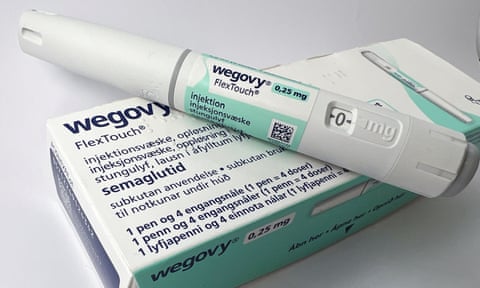
"Usually when a new medicine happens, we have time to learn how to use it. [But with GLP-1 drugs], everyone is kind of iterating in real time.""For the first time, we have medications that target obesity at its root, reshaping how the brain and gut regulate hunger and impact metabolism. These breakthroughs are game-changing, but major barriers remain: high costs, insurance hurdles, lack of real-world data in diverse populations, and persistent stigma.""Both of them [Ozempic and Wegovy] slow stomach emptying. Both of them decrease appetite. Both of them work at the level of the pancreas and at the level of the brain and other organs in the body.""It is a blockbuster in the works. [The weight loss it produces is] profound [and might be a good fit for people with a very high BMI]."Dr. Melanie Jay, director, N.Y.U. Langone Comprehensive Program on Obesity"Not everybody responds to GLP-1.""[Other] people are having tolerance to it. … Over time, somebody who responded to Wegovy really well at the beginning, five, 10, 20 years from now, probably will need some other more powerful or different acting medication.""For somebody who has a lower BMI of 30, this might be overpowering."Dr. Shauna Levy, medical director, Bariatric and Weight Loss Center, Tulane University, New Orleans"Just as there are many classes of medications for diabetes or for blood pressure, there will be many different classes that target different mechanisms of the disease of obesity.""They are all hormones that communicate to our brain. How hungry are we? How full are we?"Dr. Ania Jastreboff, director, Yale Obesity Research Center
 |
| Alvvino |
World-wide, tens of millions of people take prescribed drugs like Ozempic. A situation that represents a type of real-time experiment offering substantially greater data than would be the case with even carefully controlled clinical trials. Originally prescribed as a weight-loss drug for people with diabetes, the drug has greatly expanded in use beyond diabetes and obesity. Some of the class have been approved for the new purpose of reducing risk of heart attacks and allied cardiovascular issues as well as for the treatment of sleep apnea, severe liver disease, and kidney disease.
While the drugs' use has been expanded now to treat a wider variety of health conditions, it is widely acknowledged that it is their weight loss performance that drives their wider use. On the other hand researchers subscribe to the belief that the drugs provide benefits other than weight loss. Leading that belief is a theory that the drugs' effect diminishes the opportunities for inflammation, involved in many chronic health conditions.
Those patients who decide to cease taking the drugs tend to regain weight to a significant degree. Clinical trials of the injectable drugs now in circulation have noted that people lose some 15 to 20 percent of their body weight on average after roughly 72 weeks; numbers supported by other studies. Depending on the drug and the study other real-world trials indicate average weight loss to range between 8 and 17 percent.
When people decide to stop taking the drugs it is most often attributed to the result of unwanted side effects, or the costs involved. At least some of the dropped weight will be regained. Records of 180,000 patients underwent an analysis that found over half of those who took semaglutide -- the working substance of Wegovy -- or tirzepatide -- the compound in Zepbound -- retained at least some lost weight or even additional weight two years post-cut-off.
 |
| GLP-1 drugs for diabetes and weight loss have proven to be very effective, but they do have side effects. Among those side effects is "Ozempic face," where skin on the face sags and wrinkles. "Ozempic face" was coined in reference one of these drugs, although any rapid weight loss can cause it. Harvard Health |
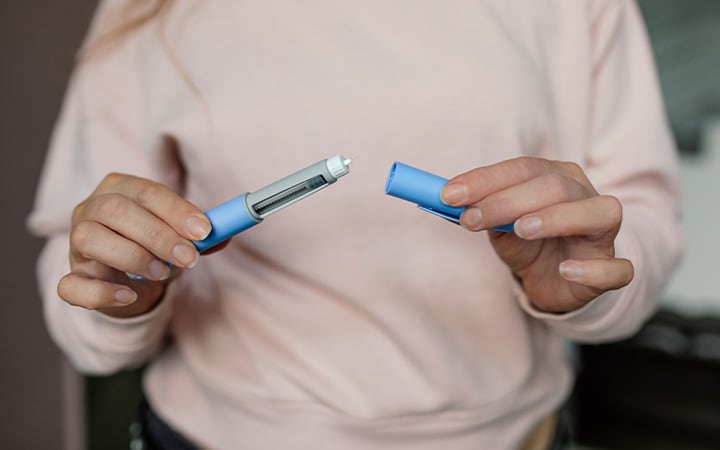
Patients stopping use of the drugs frequently select other methods to maintain weight loss, including intense exercise, bariatric surgery or other weight-loss medications, according to Hamlet Gasoyan at the Cleveland Clinic in Ohio, who studies these drugs. Unexpected downsides can result with many people on the drugs experiencing side effects reported in clinical trials, such as nausea, fatigue and digestive issues like vomiting and diarrhea.
With ever greater numbers making use of the drugs, additional concerns crop up, such as "Ozempic breath" (dehydrated patients whose dampened appetites cause them to consume fewer liquids), and "Ozempic face" that results after fat loss leaves a hollowed-out appearance on the face. More serious issues have also emerged with doctors seeing dialled-down appetites sufficiently extreme to end up with some patients developing nutritional deficiencies.
The loss of muscle mass in some patients, another issue -- with many young, healthy patients able to recover or preserve muscle by strength training and consuming more protein, according to doctors. Older adults, however become more frail on these medications, and the risk of falls becomes more troubling. There are some who use the drugs who claim to feel more confident, able to exercise and move about with greater ease.
Other patients claim, according to Marie Spreckley, a researcher at University of Cambridge, that they feel emotionally flatter, abandoned by the delight they once held for food, leaving them less connected to the social element of eating with others. Even others report personalities that feel dull, or being left feeling lethargic under the influence of the drugs.
 |
| For many years, patients struggling with weight loss were told that success simply required more willpower – eat less, exercise more and the weight would eventually come off. But recent advances in medical science prove it’s often not that simple. The Science of Health |
Labels: Diabetes, Experimental Therapy, Gateway to Health Problems, GLP-1 Drugs, Heart Disease, Inflammation, Overweight, Side Effects
posted by Pieface @ 8:32 PM
0 comments