The Cure's The Dilemma
"We have replaced one problem with another. Bags for life have become bags for a week. When we go shopping, we should remember our bags like we remember our phones."
"After all this public awareness, we'd expect plastic consumption to drop in supermarkets, but it's actually increasing."
"It is clear from this data that many people are simply swapping 'single-use' plastic bags for these plastic bags for 'life'."
"The impact of this simple substitution is a major concern, given the significantly higher plastic content of bags for life."
Fiona Nicholls campaigner, Greenpeace U.K.
"It's shocking to see that despite unprecedented awareness of the pollution crisis, the amount of single-use plastic used by the U.K.'s biggest supermarkets [Tesco] has actually increased in the past year.""Our survey shows that grocery retailers need to tighten up targets to drive real reductions in single-use packaging and items. We need to address our throwaway culture at [its] root through systems change, not materials change -- substituting one single-use material for another is not the solution."Juliet Phillips, campaigner, EIA Ocean
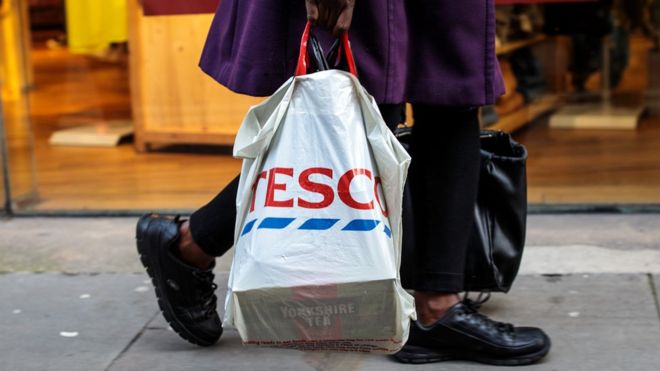 |
| Sales of "bags for life" rose to 1.5bn last year as the amount of plastic used by supermarkets increased to 900,000 tonnes, Greenpeace research has found. Getty Images |
Single-use plastics are nothing if not convenient. That is, when the shopper is conveying purchases from shop to home. Once home, the bags are divested of their contents and tucked away somewhere handy for future use. Oh, not? Re-used in the kitchen as trash containers to be put out with the weekly municipal pick-up? Not really? Not viewed as handy and temporary containers of objects taken from point A to point B? Wrong again?! Right; they're crumpled into tight little balls and tossed into the trash.
We're busy, can't spend valuable time thinking about how to reuse flimsy bags obviously meant for single use. Who are we, after all, to second-guess the intended use of a shopping emporium's disposable temporary convenience? Of course, rising shoppers' consciousness poked occasionally by environmentalists' cries of pained discovery when plastics are found in all their glory, infinitesimally small and intrusively ubiquitous in common public spaces and remote natural places alike, has resulted in little pinpricks of guilt; not only is human activity resulting in a changing climate, our sloppy habits are criminally littering our public living spaces and nature's most compelling landscapes.
 |
| Photograph: Tolga Akmen/AFP via Getty Images |
Solution? Charge a nominal fee for each of those bags. Urge people to bring along more permanent bags and tell them they're helping the planet recover from humankind's egregiously destructive activities. Extol the virtues through public education campaigns of moving seamlessly toward the use of more permanent-type bags expressly designed for multiple, ongoing use. For the markets those bags remain valuable for their printed advertising on each 'permanent' bag, used over and over again potentially, as a permanent fixture.
The U.K. government had a brainstorm of an idea to wean its public off disposable bags to re-set their habits toward a permanent bag culture, "bags for life". Sturdy bags, re-usable, diminishing the "plastic footprint" of large supermarket chains, educating the public and doing a great public good in the process. All sweetness and light, until a published report by Greenpeace and the country's Environment Investigation Agency which revealed the move to be more fantasy than reality in its outcome.
 |
| Sales of plastic "bags for life" rose 26% last year to 1.5 billion |
It was revealed in the joint report that in 2019 ten enterprises reflecting Britain's largest grocery marketers have sold over 1.5 billion "bags for life", which calculates out to an average of 54 such bags per household in the nation. Topping off the 959 million "bags for life" sold last year in major supermarkets in Britain.
The frozen food chain Iceland reported having sold 34 million "bags for life" this year representing a remarkable increase over the 3.5 million such bags sold the year before. "Typically, you pay for these once and can return them for a free replacement when they wear out", went the cajoling, optimistic government line in its initial 2015 promotion campaign. The report, "Checking Out on Plastic II", however, found "bags for life" sold by the largest supermarkets in 2019 totalled close to 50,000 tons of plastic, over and above the more than 3,330 tons of single-use plastic bags.
According to the report, total plastic packaging in Britain's supermarkets came to 995,000 tons in 2018. A 80 percent reduction in bags circulated by the largest food retailers was seen in the wake of the plastic bag levy; unfortunately the "bag for life" sales managed to counter this effect, but to what degree is still not completely understood. Close to nine million tons of plastic are known to end up every year in the ocean, according to Ocean Conservancy, the non-profit U.S. environmental group.
The U.K. Plastics Pact which the largest supermarket chains in Britain joined as an industry-wide initiative to "tackle the scourge of plastic waste", included a pledge to replace plastic packaging with reusable, recyclable or compostable materials. The environmental campaign group expressed its doubt such a move would result in a reduction of the plastic footprint of these companies. The truth being, according to Fiona Nicholls, supermarkets' and retail companies' performance in reducing their plastic footprint has been poorly realized.
 |
| Greenpeace and the Environmental Investigation Agency say more plastic is going on shelves than ever before |
Labels: "Bags for life", Environment, Plastics, Single-Use, United Kingdom, Waste
posted by Pieface @ 6:41 PM
0 comments


