Ruminations

Blog dedicated primarily to randomly selected news items; comments reflecting personal perceptions

Saturday, August 29, 2020

Plastics Waste During COVID
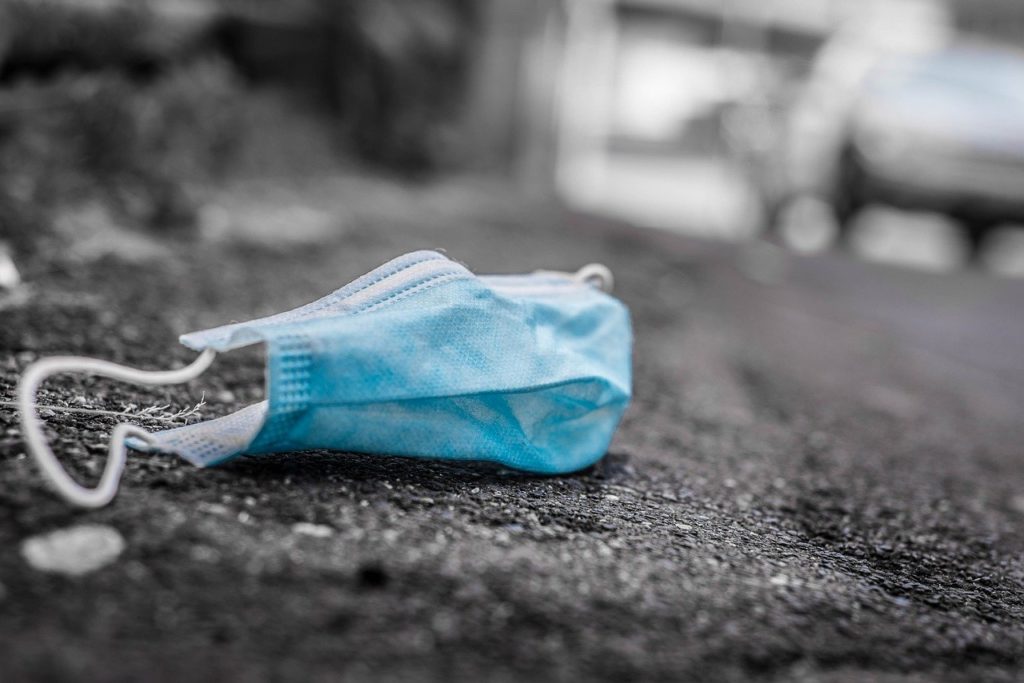
Another Side Effect of COVID-19: The Surge in Plastic Pollution

"I remember going to a coffee shop and them saying, 'We can't fill  your cup'. I think it was mere days later everything was shutting down. But that was the first little tiny step, was reusable coffee cups."                                             "People are still motivated to want to do something [about the environment]."                             "There was really strong support for more regulations and bans on single-use plastics a year ago. When we ran our survey this summer, we saw a lot less support for that, which makes sense based on the idea that it's less of a priority issue right now [in preoccupation with COVID-19 issues]."                                                                                               "The experience of the pandemic has been gendered in a lot of different ways [such as childcare disproportionately affecting women]."                                       "It's hard to imagine how you can move ahead [with things like zero-waste grocery stores] in the same way today in our new environment. But at the same time, the issue of plastic pollution is the same whether or not there's a pandemic. Ocean plastics don't care about our pandemic. The problem hasn't gone anywhere, and we still need to find solutions."                                                                                  Robert Kitz, research associate, Agri-Food Analytics Lab, Dalhousie University, Halifax, Nova Scotia

When COVID-19 struck an unready world, companies such as Bulk Barn and Starbucks halted the use of reusable containers in a reflection of overall concerns relating to contagion and hopes of controlling the coronavirus spread. This issue marked the turning point as the coronavirus transmission was identified as a global pandemic by the World Health Organization, heralding sweeping changes in coming months. Not too gradually cup lids, disposable cutlery, bottled water packs and plastic containers have been proliferating as plastic waste continues to make its presence known.

Dr.Kitz and co-authors of a new study on plastic food packaging looked intensively at how attitudes of consumers have been altered as a result of the COVID-19 pandemic. In their search to identify the changed attitudes, the researchers compared 977 responses collected between July 10 and 14 against results of an earlier survey of 1,014 Canadians dated May12 to 18 of 2019. Consumers actively avoiding plastic packaging has stabilized, remaining the same (58 percent in 2019 as opposed to 66 percent in 2020).

More than half (52 per cent) of Canadians think new regulations on plastics should only be put into place when the COVID-19 pandemic is over, the study found.

In Canada, consumers taking steps to avoid plastic packaging has remained pretty much stable (58 percent in 2019 versus 60 percent in 2020), yet fewer consumers are now concerned in relation to environmental repercussions (91 percent from 87 percent; the larger decrease seen among men), as one-third of respondents admitted purchasing more plastic-wrapped foods, attributed primarily to takeout and home delivery (44 percent) and increased concerns over safety (43 percent). Anxiety over food safety strikes fifty-five percent of Canadians, while 40 percent think of new safety concerns as "very", or "extremely important" in considering whether to purchase plastic-wrapped consumables.

At the outset of the study, researchers imagined that respondents might be less concerned over plastic pollution in the light of grave immediate concerns relating to pandemic contagion. A measurable decrease was recognized, but it was also observed that most Canadians continue to be engaged in the issue of environmental protection. Zero-waste grocery stores where bans on plastic bags and straws, pre-pandemic were proliferating, have come to an abrupt halt.

One-third of Canadians are buying more plastic-wrapped foods during the pandemic, according to a survey conducted by Dalhousie University’s Agri-Food Analytics Lab.
1/3 of Canadians now buy more plastic-wrapped foods Photo: Mario Tama /Getty

The issue of plastic pollution appears to be gaining momentum as the use of single-use plastic is seen to have grown by 250 to 300 percent during the pandemic, and as their use has increased, regulation efforts have faltered in the face of the coronavirus. Plans announced last year by the federal government on a ban of single-use plastic have not yet been carried through and will not likely be, for the foreseeable future of struggling to overcome the threat of the pandemic.

Back in 2019, fully 90 percent of respondents viewed stricter regulations favourably, while 70 percent gave their support to a single-use plastics ban. A drop of 11 and 12 percent respectively was seen in the most recent survey; men in particular reporting a notable drop in agreement. The issue of gender in concerns over environmental ramifications -- pointed out Dr.Kitz -- wasn't present in 2019. Price-consciousness has struck 50 percent of Canadians among the demographic receiving government top-ups to income, under CERB (Canada Emergency Response Benefits).

Leaving 55 percent of people reporting their willingness to pay more for products wrapped in biodegradable food packaging. Food security, as a result of the pandemic disrupting production and supply chains, has arisen as a greater issue in Canada because of the pandemic, with rising food costs; yet another recognizable difference from the year before. New regulations on plastics should be put into place only once the pandemic is over, in the view of over half of Canadians (52 percent). 

“What we found was that people are still concerned about it,” says Robert Kitz about plastic pollution. “People are still motivated to want to do something.” Photo by Mario Tama /Getty Images

Labels: , , , ,

Monday, December 02, 2019

The Cure's The Dilemma

"We have replaced one problem with another. Bags for life have become bags for a week. When we go shopping, we should remember our bags like we remember our phones."
"After all this public awareness, we'd expect plastic consumption to drop in supermarkets, but it's actually increasing."
"It is clear from this data that many people are simply swapping 'single-use' plastic bags for these plastic bags for 'life'."
"The impact of this simple substitution is a major concern, given the significantly higher plastic content of bags for life."
Fiona Nicholls campaigner, Greenpeace U.K.

"It's shocking to see that despite unprecedented awareness of the pollution crisis, the amount of single-use plastic used by the U.K.'s biggest supermarkets [Tesco] has actually increased in the past year."
"Our survey shows that grocery retailers need to tighten up targets to drive real reductions in single-use packaging and items. We need to address our throwaway culture at [its] root through systems change, not materials change -- substituting one single-use material for another is not the solution."
Juliet Phillips, campaigner, EIA Ocean
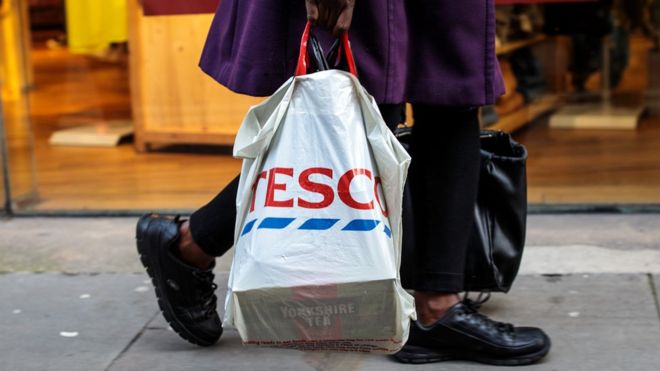
Shopper with a reusable plastic bag from Tesco
Sales of "bags for life" rose to 1.5bn last year as the amount of plastic used by supermarkets increased to 900,000 tonnes, Greenpeace research has found.  Getty Images
Single-use plastics are nothing if not convenient. That is, when the shopper is conveying purchases from shop to home. Once home, the bags are divested of their contents and tucked away somewhere handy for future use. Oh, not? Re-used in the kitchen as trash containers to be put out with the weekly municipal pick-up? Not really? Not viewed as handy and temporary containers of objects taken from point A to point B? Wrong again?! Right; they're crumpled into tight little balls and tossed into the trash. 

We're busy, can't spend valuable time thinking about how to reuse flimsy bags obviously meant for single use. Who are we, after all, to second-guess the intended use of a shopping emporium's disposable temporary convenience? Of course, rising shoppers' consciousness poked occasionally by environmentalists' cries of pained discovery when plastics are found in all their glory, infinitesimally small and intrusively ubiquitous in common public spaces and remote natural places alike, has resulted in little pinpricks of guilt; not only is human activity resulting in a changing climate, our sloppy habits are criminally littering our public living spaces and nature's most compelling landscapes.
 
Bags for life
  Photograph: Tolga Akmen/AFP via Getty Images
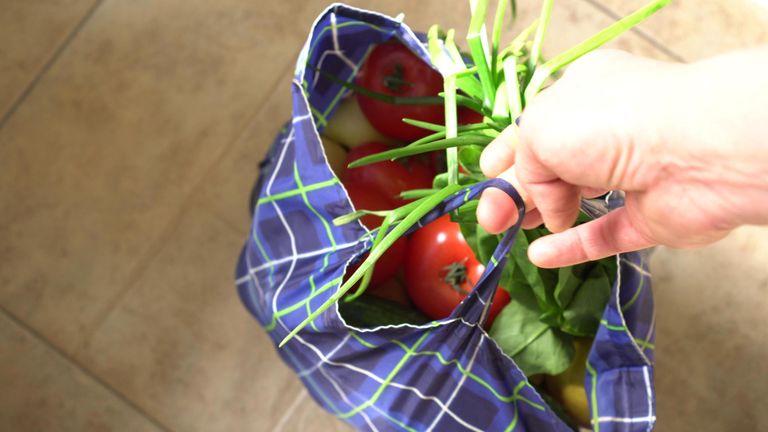
Solution? Charge a nominal fee for each of those bags. Urge people to bring along more permanent bags and tell them they're helping the planet recover from humankind's egregiously destructive activities. Extol the virtues through public education campaigns of moving seamlessly toward the use of more permanent-type bags expressly designed for multiple, ongoing use. For the markets those bags remain valuable for their printed advertising on each 'permanent' bag, used over and over again potentially, as a permanent fixture.

The U.K. government had a brainstorm of an idea to wean its public off disposable bags to re-set their habits toward a permanent bag culture, "bags for life". Sturdy bags, re-usable, diminishing the "plastic footprint" of large supermarket chains, educating the public and doing a great public good in the process. All sweetness and light, until a published report by Greenpeace and the country's Environment Investigation Agency which revealed the move to be more fantasy than reality in its outcome.
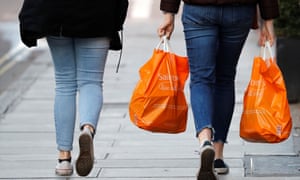
Supermarket bag for life
Sales of plastic "bags for life" rose 26% last year to 1.5 billion
It was revealed in the joint report that in 2019 ten enterprises reflecting Britain's largest grocery marketers have sold over 1.5 billion "bags for life", which calculates out to an average of 54 such bags per household in the nation. Topping off the 959 million "bags for life" sold last year in major supermarkets in Britain. 

The frozen food chain Iceland reported having sold 34 million "bags for life" this year representing a remarkable increase over the 3.5 million such bags sold the year before. "Typically,  you pay for these once and can return them for a free replacement when they wear out", went the cajoling, optimistic government line in its initial 2015 promotion campaign. The report, "Checking Out on Plastic II", however, found "bags for life" sold by the largest supermarkets in 2019 totalled close to 50,000 tons of plastic, over and above the more than 3,330 tons of single-use plastic bags.

According to the report, total plastic packaging in Britain's supermarkets came to 995,000 tons in 2018. A 80 percent reduction in bags circulated by the largest food retailers was seen in the wake of the plastic bag levy; unfortunately the "bag for life" sales managed to counter this effect, but to what degree is still not completely understood. Close to nine million tons of plastic are known to end up  every year in the ocean, according to Ocean Conservancy, the non-profit U.S. environmental group.

The U.K. Plastics Pact which the largest supermarket chains in Britain joined as an industry-wide initiative to "tackle the scourge of plastic waste", included a pledge to replace plastic packaging with reusable, recyclable or compostable materials. The environmental campaign group expressed its doubt such a move would result in a reduction of the plastic footprint of these companies. The truth being, according to Fiona Nicholls, supermarkets' and retail companies' performance in reducing their plastic footprint has been poorly realized.

MPs want a reduction in all types of single use packaging
Greenpeace and the Environmental Investigation Agency say more plastic is going on shelves than ever before


Labels: , , , , ,

Thursday, January 03, 2019

Marine Animals in Peril

"I spent all of my undergrad and my masters referencing this [2006 overview of the world's fresh waters] paper, and it was just becoming outdated."
"A lot of the threats are still present, but so many new ones have emerged. There are now 3,700 major hydro power dams that are either planned or under construction [many of them in India and South America]."
"We're seeing there is definitely a shift [in chemicals]. We are seeing a lot of pharmaceuticals in water, like antibiotics that are accumulating in the river systems and are going without treatment."
"For the most part [unused pills flushed down the toilet] they get into the ecosystem undetected. [Other pollutants cause] a range of impacts [on fish] ranging from reduced abundance of fish to effects on individual fish [as, for example] inter-sex fish ... that are essentially stuck between two sexes."
"They are happening under the water's surface and there aren't the same cheerleaders for these lesser-known fish as there are for the killer whales off the coast, or seals. They really do get forgotten. We can monitor things on a huge scale. We can monitor an entire drainage basin and know what's in the fresh water and in the terrestrial habitat."
Andrea Reid, Doctoral biologist candidate, Carleton University

"They [researchers] are now finding fewer inter-sex fish in the Grand [River]."
"[This overview of issues] will keep the alarm bells ringing. We need to keep looking forward instead of being reactive. .. But within all of this there is also some optimism, I think. People do care, [and] there are some advances in water treatment."
"But some of these [conservation measures] are not engineering changes. They are about wholesale changes in human behaviour."
Steven Cooke, biology professor, Carleton University, Ottawa
Palau National Marine Sanctuary, Indonesia

The ecological threats faced by fish today endanger their existence in a way unknown generations ago. The presence of antibiotics in water systems along with micro-plastics pose lethal threats to the survival of fish. Then there is the plight of exotic fish that people buy over the Internet and once they become too large to manage they are dumped into Canadian waters. Canada does not yet and perhaps never will experience the issue of large, dangerous fish and reptiles that the Florida Everglades has undergone, when exotic fish and reptile owners 'free' their fish into the wild.
An Argentine black and white tegu is caught in one of 160-plus traps set out by a University of Florida research team. The group collaborates with the Florida Fish and Wildlife Conservation Commission, the National Park Service, the U.S. Geological Survey, the U.S. Fish and Wildlife Service, and the South Florida Water Management District to contain and reduce the tegu population Photo: Karine Aigner
When ecologist David Dudgeon published a review of the world's fresh waters it was considered hugely authoritative and used as a university reference for the following dozen years. Now, Andrea Reid, completing her PhD in biology felt it timely that an update was produced. Working alongside other biologists including Dr. Dudgeon, an update has been published in the journal Biological Reviews.

Containing the booming Burmese python population has become virtually impossible for the Florida Fish and Wildlife Conservation Commission, and so the agency and its partners created the month-long Python Challenge to enlist the help of the public. Pythons are believed to have decimated the Everglades' populations of small mammals, but they will also eat waterbirds like herons, egrets, ibises, and spoonbills. Photo: Karine Aigner


Among threats to fish life, dams have been blocking rivers to produce hydroelectric power, a situation that has been many decades in the making, and their presence by happenstance prevents fish from their customary biological imprinting; migrating up and down waterways as they hatch, mature and return to their native waters to spawn. Fish 'ladders' put in place in dams have partially solved the problem, and in North America some of those dams have been removed to restore natural aquatic habitation.

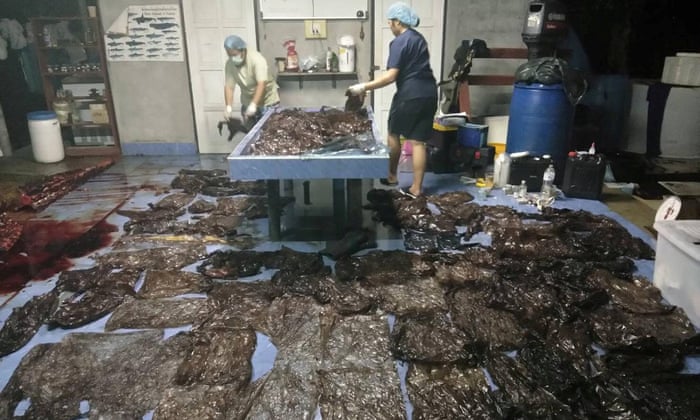
The concerns over the omnipresence of microplastics in the world's waterways relate in part to the deleterious effects on aquatic life of which fish represent a large portion. Plastics of every size and shape have been implicated in the deaths of whales, turtles and other aquatic wildlife who ingest plastic but are unable to digest these substances with no nutritional value as they it end up mutilating their interiors, and tangling their fins.

An estimated million seabirds die annually resulting from ocean pollution and ingestion or entanglement in marine debris. Even marine debris like discarded fishing lines and nets create deadly hazards for marine animals when they are directly or indirectly thrown into rivers, oceans and lakes.  About 80 percent of plastic trash originates from landfills, washing into rivers and reaching oceans where sharks can become entangled and coral reefs damaged.

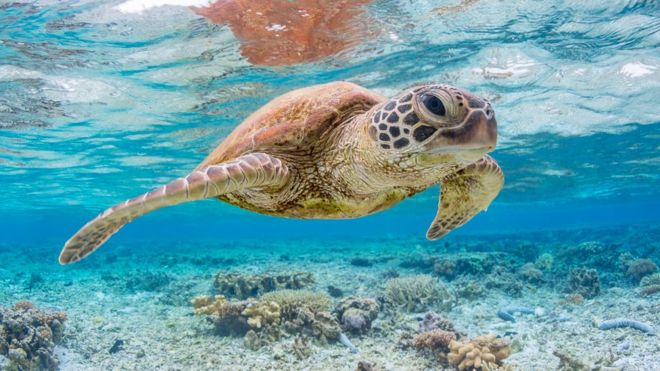
sea turtle
A new study suggests that ingesting even a single piece of plastic can be deadly for sea turtles. Google

And although pollutants from chemicals have been around for quite a while, there has been a notable increase of their presence as people are increasingly prescribed medicinal drugs, excreting them in their urine where they reach waterways and impact on fish and other marine creatures. Sewage treatment plants remove solids and kill germs, they have not been designed to remove chemicals. when people flush down unused pills or excrete them in urine, fish absorb them in their habitat.

The result is fish have fewer offspring, or offspring whose genetic material has been damaged. Most of these impacts occur downstream from urban centres. There have been changes for the better; locally a sewage plant in Kitchener-Waterloo, Ontario has been upgraded to remove many pharmaceuticals and the result is that researchers are finding fewer fish being deleteriously impacted.

Researchers also use environmental DNA (eDNA), genetic traces left by animals in water or on land when they slough off bits of skin or scales or leave droppings. Samples are taken to learn how species interact, a monitoring that makes available solid information to governments and regulators who can respond by designing conservation measures that answer to any given identified need.

But there is always another important part of the puzzle, and that involves the public, and awareness. That it is not positive ecological practise to thoughtlessly dump medicine into a toilet, but to return unused pills to the pharmacy where they were bought. And to take care with their plastic discards by reusing or recycling them, for starters, and just perhaps buying less of disposable plastic 'conveniences'.

Some of the plastic bags extracted from a whale’s stomach in Thailand. Photograph: Social Media/Reuters

Labels: , , , ,

Friday, September 29, 2017

Microplastics Effects on Bivalves; Clams, Oysters, Mussels

"We're finding most shellfish have plastic in them."
"Shellfish aquaculture uses a lot of plastic infrastructure."
"I wouldn't be overly concerned about eating shellfish specifically. Microplastics are everywhere."
"The ability of microplastics to absorb and concentrate chemicals that may be eaten by organisms makes them a serious emerging threat to wildlife and natural ecosystems and potentially, human health."
"We are looking at shellfish because they are filter-feeding organisms. They accumulate anything that is in the water and they live on the coast where the most drastic changes are happening, which makes them excellent sentinels of ecosystem health."
Dr. Sarah Dudas, Canada Research Chair in Shellfish Aquaculture Ecosystem,Vancouver Island University, Nanaimo, British Columbia
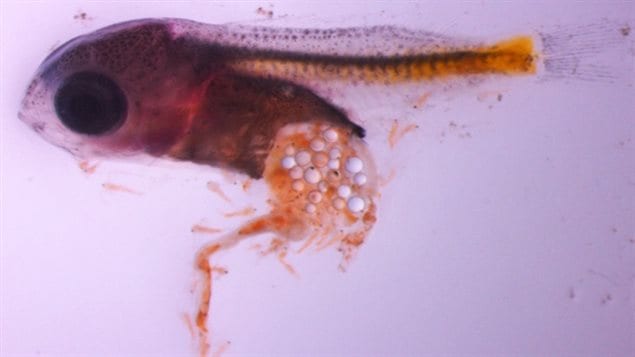
A larval perch with microplastic in its gut. Vancouver Island University professor Sarah Dudas says the effects of microplastics still aren’t fully understood, but they are believed to have impacts on the reproductive abilities of fish.
Photo Credit: (Oona Lönnstedt)
"Microplastics are an added factor to plastic pollution. The beading in toothpaste, confetti from parades, the glitter people put on their faces, the sources are endless and the hardest part is educating people about it."
"Since I started the project I’ve been going home and talking to my friends and family about this. I want to get the word out and start them thinking about where the plastic products they buy end up." "Shellfish are resilient so I ask myself, if they are being affected by microplastics then what are the microplastics doing to the more vulnerable organisms in the oceans?"
Maggie Dietterle, university student, research study
In 2016, Dr. Dudas assembled a team of students to help her analyze the contents of thousands of clams and oysters found in the Strait of Georgia. Their study affirms that in consuming clams or oysters, a decided seafood delicacy appreciated by many people for their delicious taste and nutrient utility along with the protein inherent in their constituency, is an unexpected and decidedly un-nutritious element, plastic.

Correct, plastic. The same substance in various forms found contaminating and polluting the earth and the oceans everywhere from the tropics to the Arctic regions of the two poles. On land the presence of plastics represent an existential threat to wildlife, killing many which become trapped, or attempt to ingest it in its various forms, and in the oceans, even whales are known to die from having consumed plastic which their alimentary canals cannot process, and which in any event, provide them with no sustenance.

There are predictions that the rising tide of plastics everywhere on this planet will eventually pose an even steeper threat to the biosphere. Which hasn't yet put a brake on the use of plastics and their ubiquitousness in packing and containerizing, convenience and manufacturing of durable products. Durable indeed; their shelf life might not be long, but their capacity to endure without breaking down in the environment is endless.

According to Dr. Dudas, the research her team has been engaged in finds no differences in the plastics discovered in fish, whether the aqua-creatures are those raised in commercial fish farming or those found in the wild. Her study, as with that of the Vancouver Aquarium's Ocean Pollution Research Program, have come up thus far with no solution to the question looking for a definitive answer as to a source.

While it is true that fish aquaculture uses plastic extensively in the manufacture of nets and ropes that with use shed flake fibres, identifying with any degree of accuracy what it is that pollutes fish habitat remains elusive. Other than the generalized fact that plastics in various presentations are not just in garbage landfills, but carelessly strewn about, blown about, everywhere.

The study is being conducted based at the VIU Deep Bay Marine Research Station on Vancouver Island
The study is being conducted based at the VIU Deep Bay Marine Research Station on Vancouver Island © VIU Facebook
The purpose of Dr. Dudas's study is clear enough; to determine the source of the plastics, and if possible prove or disprove a suspicion that fish farms are largely responsible. The suspicion of those who have undertaken these studies is that microfibres shed and pass through filters in domestic washing machines when clothing is being washed, and make their way to water treatment plants and the water supply.

The preliminary results of Dr. Dudas's study indicate the existence of an average of eight microplastic particles resident in each clam or oyster. Despite which, she is of the opinion that though these minuscule specks and strands of plastic are overwhelmingly everywhere, there should be little concern over eating the shellfish containing them. Doubtless, given the presence of plastics everywhere they end up in some invisible form in everything we eat.

Remember the scandal out of China in 2008 when it was discovered that powdered plastic (melamine) had been put in baby formula and other foods which had been adulterated, (even fed to animals and appearing in eggs) with the end result that some babies died because of their intake of formula whose manufacturers used the plastic to have their product appear more wholesome.

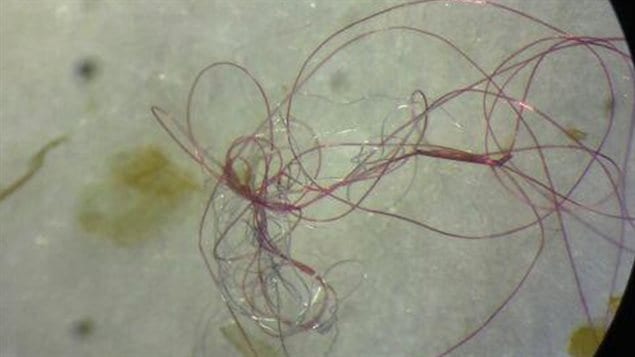
Exceedingly fine plastic fibres found inside the body of a Great Lakes fish. Scientists who have reported that the lakes are awash in tiny bits of plastic are raising new alarms about a little-noticed form of the debris turning up in sampling nets: synthetic fibres from garments, cleaning cloths and other consumer products.
Exceedingly fine plastic fibres found inside the body of a Great Lakes fish. Scientists who have reported that the lakes are awash in tiny bits of plastic are raising new alarms about a little-noticed form of the debris turning up in sampling nets: synthetic fibres from garments, cleaning cloths and other consumer products. © Rachel Ricotta/Associated Press

Labels: , , , ,

 
()() Follow @rheytah Tweet