Ruminations

Blog dedicated primarily to randomly selected news items; comments reflecting personal perceptions

Friday, April 10, 2020

Trashing the Environment

"In an effort to clean up its own backyard, China stopped importing plastic waste in 2017. There's still a long way to go before the flow of plastic into the ocean is stopped, however."
"Bans on drinking straws or grocery bags in Canada won't stop it; economic development and improved waste-management systems in low-income countries will."
"The best way for us to make sure our waste doesn't end up in the ocean is to send it to the landfill rather than trying to sell it on the international recycling market."
"Meanwhile, for those who have lamented our use of plastic packaging over the years, it's understandable, especially since the marketers sometimes make excessive use of the stuff."
"But the coronavirus shows that public hygiene was, and remains, an important priority, and we downplay it at our peril."
Ross McKitrick, professor of economics, University of Guelph, senior fellow, Fraser Institute 
A man collects plastic waste at a garbage dump in Bali  (Getty Images)

On the other hand, burying plastic waste in landfills doesn't solve the problem of ridding it once it has served its purpose. Plastic is derived from petroleum products. As such, gathering waste plastics to destroy it by burning it through a process that would produce energy, just as gas and oil do, would most certainly produce a desired effect; ridding the world of the waste, and transforming it to usable energy. A process that may even now be in the developing stages, and if not, research into a method whereby this can be achieved, should proceed.

Banning the use of plastics for packaging certainly isn't the answer, since for strictly hygienic reasons, plastic services us well. There was a time in the not-too-distant past when not only at outdoor markets once popular in inner-cities, but also in supermarkets to a degree, all manner of food products were simply piled up for people to riffle through and select what they wanted. Meat and meat products were set out on open shelving, uncovered until shoppers selected portions to take home.
A man sits among massive piles of plastic and other waste on a beach in Munbai, India. (Photo by Akira Kodaka)

For the most part, fruits and vegetables continue to be sold in bulk, unpackaged, to be selected by the purchaser, running their hands along items to ascertain freshness. In a time of care being taken to avoid contamination and cross-contamination where the very real fear of contracting a deadly virus like COVID-19 haunts us all, it has become verboten to handle food that others will eventually acquire for themselves. Public hygiene is now uppermost in everyone's mind, hoping to avoid a nasty infectious pathogen.

Wrapping perishable foods in plastic serves a double purpose; keeping it clean, avoidance of being handled by other than the purchaser, and maintaining a degree of freshness. At the same time, it is also true that packaging can be overdone, and this is another matter to be separately discussed, bringing in packagers to agree to reduce packaging as required. Even wrapping commodities other than food can be useful, done to a minimum degree, to avoid picking up germs.

Society is concerned over environmentalists' messages of garbage-filled oceans, and of bits of plastic being found in the most inaccessible and remote places on Earth. We're right to be concerned. But the issue requires a closer examination. It is not from the developed world and the West that waste plastic has been littering the environment, since for the most part, there recycling of waste plastic has become an absolute requirement.
Plastic and other waste clog a river in Cambodia. (Photo by Akira Kodaka)
In reality, single-use plastics, singled out as the source of environmental degradation and contamination is not the real culprit. Merely a minuscule fraction (about three percent) of the world's plastic production ends up annually as ocean waste, very little of that tiny amount emanating from high-income countries with their effective waste-management systems. Over 50 percent of the Great Pacific Garbage Patch is comprised of abandoned fishing nets and fishing gear.

And the simple fact of the matter is, that most plastic waste that enters the ocean from land -- fully 86 percent of it -- arrives through rivers in Asia, about ten percent of it imported plastic waste that was once gathered by China from recyclers in Europe and North America, to be processed for re-use. The type that proved not to be reusable, was discarded. Which answers to Dr.McKitrick's contention that it would be better off buried in stable landfills away from lakes and rivers.

Children collect plastic bottles from the Buriganga river in Dhaka. (Getty Images)
                                                                       

Labels: , , , ,

Sunday, August 11, 2019

ReCycling? First the Good News....

"We're obliterating our natural ecosystems predominantly to produce monocrops that go into the industrial food web, and what's bad on land is even worse underwater [e.g.rainforest destruction coral reef bleaching]."
Keiran Whitaker, Entocycle start-up, London
The larval form of the black soldier fly is over 50 per cent protein by weight. (Frances Willick/CBC)

"The Olympics story [producing Olympic and Paralympic medals from e-waste-retrieved metals] is really good [because it brings attention to the issue] of creative re-cycling."
"It shows that the way we do things at the moment has terrible consequences for society, in terms of the negative health impacts and obviously impacts to climate change."
Vanessa Gray, official, United Nations environmental agency
Gold medal
Japan is exploring the feasibility of forging the Olympic 2020 medals using precious metals salvaged from electronic waste. Getty Images

In London, England, the brainchild, Entocycle, of Kevin Whitaker uses local food waste that has been created in manufacturing food products to feed to black soldier fly larvae. The larvae consume the waste and it is converted into protein. That's the point when the insects are ground into a flour high in amino acids, combined with other ingredients to produce feed pellets for animals.

That's not all; the excrement created by the flies -- called frass -- can then be used as well, as agricultural fertilizer. Long-range expectations are that once the public adjusts to this new way of producing food, the insect flour could be used and eaten by people. The result would be enormous; fewer forests razed to produce cropland or pasture, and the fertilizer production held to be responsible for one percent to two percent of global greenhouse gas emissions avoided in the process.

The global issue of waste is the need to ensure that less of it is created, and that which is created can be used in purposeful ways, avoiding excess environmental and atmospheric pollution. There is, in fact, a wave of imaginatively creative thinking consuming the minds of entrepreneurs guiding them to correct current inefficiencies in producing and handling waste products, to turn them into useful substances in an effort toward reduction.

In Finland a company has been absorbed in a production method to dramatically change the way fabrics are extracted from wood to produce clothing. Cotton and viscose rayon, representing the second and third most common textile fibres, are produced from plants. Wood pulp is used to produce most viscose rayon with the use of an assortment of chemicals, that themselves are a source of criticism.

The Rainforest Action Network finds about 120 million trees are used for the production of textiles annually, an obvious practise harmful to the world's forests whose presence cleans our atmosphere absorbing carbon dioxide, while producing clean oxygen kind to the lungs of humanity. A Finnish textile fibre company called Spinnova founded by two former physicists is transforming the process.


One of the company's founders thought of patterning the spinning of plant fiber in the very way that spiders produce silk. And now Spinnova uses a mechanical method to produce fibre, a process that makes use of about 99 percent less water than the production of cotton, without the use of harmful chemicals. Wood pulp harvested from Brazilian wood is used by Spinnova and it plans to make use of agricultural waste material as well as discarded clothing in its fibre production.

Japan, a tiny set of three islands in the Pacific, has a population of 130 million people. Famously, Japan produces technologically advanced communications tools and its turnover rate as new models reach the consumer market is enormous, leaving it with an electronic waste (e-waste) conundrum. There was a time when Japan simply buried used or unsold stale-model computers. Japan also likes to move its production along; Japanese love their cars, and update their models and acquisitions by the driving public constantly.

Older vehicles that fail to pass stringent technical and safety and pollution standards are shipped abroad, newer models taking their place constantly in auto showrooms and consumers' possession. Disposal of immense numbers of cellphones, computers and televisions complicated by the risks of leaking dangerous chemicals into the environment was a problem seeking a solution, leading to an advanced recycling system.

In over 1,500 municipalities in Japan with their thousands of electronics stores, 42,000 tons of discarded electronics were collected, as well as over five million cellphones. And a process to recover metals was initiated from the trove, representing metals which would be re-used, bypassing a need for additional mining.

Yet out of this innovative solution, another kind of problem has arisen, identified by a paper in the Lancet, pointing out the potential harm to human health. The industry of recycling, employing people to break asunder electronic devices to remove copper, gold, mercury and other materials has the misfortune of producing negative health consequences on those very workers employed to help solve the problem of waste and encourage recycling.

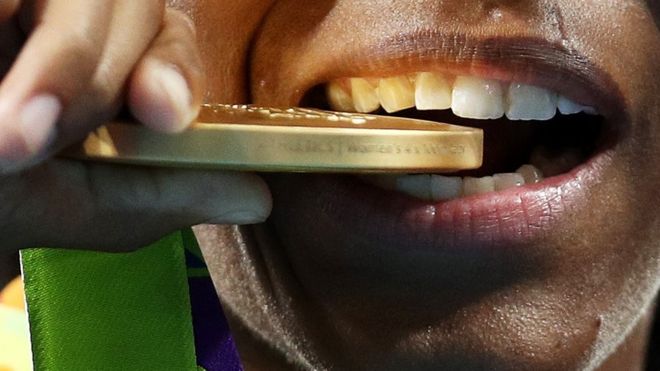
All medals for the Tokyo 2020 Olympics will be made from metal collected by recycling electronic waste

Labels: , , , , ,

Friday, June 14, 2019

Single-Use Plastic Exceptions

"It would be hard to overemphasize the importance of plastics in modern society."
"Just think what our world would be like if we didn't have garbage bags. It's not a frivolous use -- it's absolutely necessary for sanitation."
"We were gyrating with hula hoops, going to Tupperware parties [in the 1960s], listening to vinyl records, playing with plastic toys and drinking from plastic cups through plastic straws. And we were paying for it all with plastic."
"[The current backlash against plastic is no all-or-none situation]: It never is in science. You have to evaluate each of these uses on their own merit."
"This business of having a plastic-free world, it's just nonsense."
Dr. Joe Schwarcz, director, Office for Science and Society, McGill University, Montreal
A surgeon holds a syringe prior to administering chemotherapy on June 7, 2019, at the Georges-Francois Leclerc centre in Dijon, central-eastern France.   ROMAIN LAFABREGUE/AFP/Getty Images
"Climate change is now a lot more real for more people than ever. To most, it falls under the umbrella of 'environmental harm', so it all gets lumped together."
"The problem is, being aware that something needs to be done about the environment, and actually doing something about the environment is a big leap. They have all the worry of climate change, and none of the control."
"That it might be negligible overall [to give up plastic straws and feel virtuous about it] is not really the issue, it's the feeling of making a difference, of being able to affect outcomes -- that is the main thing."
"[Politically, straws are easy targets], something that could be removed without much upheaval, for maximum political gain."
"The disposable plastic furor isn't bad, per se [but some objects will always require durable, flexible, sterile material for proper function]. Syringes, IV stuff. Could you make plastic alternatives that have similar properties but are more biodegradable? Maybe."
Dean Burnett, neuroscientist, author, Cardiff, Wales
Disposable plastic items in the health sector aren’t a major concern, experts say. Tim Boyle/Getty Images

A study conducted a few years back by researchers at Magee-Womens Hospital in Pittsburgh found that on average, a single abdominal hysterectomy was responsible for generating 9.2 kilograms of waste. Half of that waste was disposable gloves, thin film packaging, wrappers, hard plastic trays and other plastics. The idea of the study was to weigh the environmental impact involved in the second most common major surgery for women in the U.S. and Canada; a hysterectomy.

The team studied 62 surgeries where researchers immediately on the completion of each of the surgeries entered the operating theatre to carefully collect, sort, label and weigh the solid waste and recycling. When politicians announce that it is time for single-use plastics to be regulated against in view of the vast amount of plastics circulating as waste in our environment, in the world's oceans, they have a point; we do package consumer items much, much too much.

On the other hand, there are exceptions; nothing is ever as simple as it seems at first glance. Syringes, IV tubing, saline bags, plastic-wrapped drugs, catheters -- all are objects made of plastic without which modern hospitals would find it difficult to operate, ensuring adequate sterile conditions to contain bacterial contamination. Some  hospitals, cognizant of the ultra abundance of waste plastics have undertaken steps to make operating rooms and other patient care areas less wasteful.

According to an article published in the Canadian Medical Association Journal, up to 85 percent of hospital garbage is non-hazardous solid waste. Plastic packaging is a typical source of waste plastic where many surgical products are double-wrapped. Blue sterile wrap is used to cover surgical instruments, but it can be recycled into curbside blue boxes. Hospitals in Quebec sort plastics, to send them to recyclers.

Hospitals began their shift to plastic, single-use sterilized products a decade ago, transitioning from sterilizing reusable products in a bid for absolute sterility, and to ensure that pathogenic bacteria not be transferred from one patient to another through re-used instruments, when sterilization processes failed. "The shift has been done and, while it's not impossible, it's difficult to undo", stated Jerome Ribesse, director general of Synergie Sante Environnement and a member of the board of the Canadian Coalition for Green Health Care.

According to Vito Buonsante, plastics program manager at Environmental Defence (what a name to match with an enterprise!) disposable plastic items emanating from the health sector do not constitute a major concern. It is the unnecessary use of plastics for the production of cutlery, plates and take-out containers that would usefully be tackled first. Straws are symbolic for environmentalists, yet they account for little in terms of weight in total plastic waste.

Think in terms of plastics of merit and long-term use. Say, for example, flat-screen TVs, computers, water pipes. Indispensable to our modern way of life.
Operating room.
Operating room. - 123RF Stock Photo


Labels: , , , , ,

 
()() Follow @rheytah Tweet