Ruminations

Blog dedicated primarily to randomly selected news items; comments reflecting personal perceptions

Wednesday, March 01, 2023

Tik-Tok Tics

"Even professionals in the mental health community can miss it. Because we don't approach patients from the perspective that maybe they're fibbing."
"You get what you need emotionally just by reading an injury on a health-related website and then signing on to one of the tens if not hundreds of thousands of support groups dedicated to that illness."
"You don't have to act in real life. You just get all the attention you can possibly handle, because those groups are unconditionally supportive, at least to start."
"Everybody who's sick does want a little time and attention and care, and that's reasonable. It's only when it becomes willfully deceptive and emerges as a serious pattern of behaviour and an individual may feel, even to the person, compulsive or addictive, which are words they often use, do we worry about it being Munchausen syndrome."
"The limit is only a person's creativity and motivation and knowledge and anybody can become an expert in even rare medical conditions just by reading the Wikipedia entry for 20 minutes."
"There's also a certain kind of perverse cachet associated these days with having a mental illness, in that there's more sensitivity to the issue of mental illness and more awareness than there was when I started this work in 1990."
Dr.Marc Feldman, psychiatrist, University of Alabama
A person holds a cell phone with TikTok loading onscreen.
(cottonbro studio/Pexels)

A fairly new and growing phenomenon has been noted by psychologists, and that may just be because people are showing up in their offices in droves and they're seeing people presenting with mental-health disorders and Tourette's-like symptoms. This is not normal, and this abnormal situation is skyrocketing in numbers. Certainly there must be a cause. People are susceptible to communications, to hearing, seeing and delving into new peculiarities that ask for attention -- and replication.

Humans do this kind of thing from a tender, learning age. Even infants barely learning to walk love imitating gestures, occasionally very complex ones, repeatedly entertaining themselves and becoming proficient in mannerisms and dance steps to gain attention, applause and admiration. The invaluable three As we're always on the lookout for, as though emotionally starved of notice. Some of us are. There are those who are raised in households where parents are undemonstrative leaving children hungering for a human touch, a hug, a kiss, praise.

It can all be found -- emotional validation -- remotely, through the resource that has taken over our lives; the Internet and its vast communication network. A research paper in 2021 noted a video showing what it terms "TikTok tics" was viewed in a three-week period over 5.5 billion times. That's equivalent to 2/3 of the world's population. There is a belief among researchers that the young, mostly adolescent girls and young women, have been acquiring symptoms of a wide number of disorders from viewing posts on social media influencers who display symptoms.

 
https://images.wsj.net/im-418195/square
Kayla Johnsen, 17, in her bedroom in Sugar Land, Texas, says she began watching TikTok videos of people displaying tics shortly before she began experiencing them herself.
 
The phenomenon appears to have been initiated through the Tumblr site, then Instagram, and more recently TikTok. A wide variety of presenting issues have been recognized; gender dysphoria, depression, anxiety, attention-deficit hyperactivity disorder and eating disorders. Some teens are thought to be faking while others may have acquired genuine symptoms. Illnesses acquired through the Internet seems a modern incarnation of mass psychogenic illness.

Patients are showing up looking for treatment for tics associated typically with Tourette's syndrome, a neurological disorder. A paper published in Archives of Disease in Childhood made note of two tic specialty clinics at two London children's hospitals reporting a doubling in referral rates of children presenting with tics.

Psychiatry professor Dr. Andrea Giedinghagen indicates the increased number of cases with tics may represent a genuine portrayal of stress release, relating to the pandemic. According to Professor Gedinghagen's paper published in the journal Child Clinical Psychology and Psychiatry, Munchausen's by Internet is when a person assumes a sick role for the purpose of receiving support through the Internet. 

There is an example of a mass pschogenic illness other than the current one spread by social media, when people between the 14th and 17th centuries in Europe broke into fits of manic dancing. No obvious reason for this behaviour presented itself. Priests began performing exorcisms. There were people who danced themselves to death. There is a theory that it was a case of mass psychogenic illness originating in cult groups that spread the social contagion.

For a more modern explanation, one has only to look at how dominant online activities have become. Isolation caused by the pandemic drove more people to spend more time online. In the cohort of 28 subjects with an average age of 18.8 years, 93 percent showed coprolalia (obscene language) or copropraxia (obscene gestures) in expressing themselves. A way of 'acting out' to attract greater attention, perhaps.

Aidan wearing a knit sweater and sitting crouched on their bed with their hands clasped in front of them. Posters, drawings and other items are pinned to their bedroom wall, and the room is lit with a purple light.
Aidan, 18, developed involuntary tics after watching videos on TikTok posted by teenagers claiming to have Tourette’s syndrome. The New York Times
 
"While it is possible that these are all conversion phenomena, there is also some evidence -- though thus far only explicated in the lay press -- that these may be deliberately manufactured, or a form of factitious disorder."
"The only difference between [TikTok tics] and the medieval dancing plagues is that, thanks to the Internet, people no longer have to be in the same geographic space for that social contagion to spread."
"A lot of times there's an  assumption of malicious intent, which these folks don't have."
Dr. Andrea Giedinghagen, psychiatry professor, Washington University School of Medicine, St.Louis


Labels: , , , , ,

Sunday, June 27, 2021

Calculating Dementia Risk

"What sets this dementia risk calculator apart is that you don't need to visit a doctor for any tests."
"People already have all the information they need to complete the calculator in the comfort of their home."
Dr.Stacey Fisher, study lead author, University of Ottawa

"This tool will give people who fill it out clues to what they can do to reduce their personal risk of dementia."
"The COVID-19 pandemic has also made it clear that sociodemographic variables like ethnicity and neighbourhood play a major role in our health."
"It was important to include those variables in the tool so policy makers can understand how different populations are impacted by dementia, and help ensure that any prevention strategies are equitable."
Dr.Peter Tanuseputro, study senior author, University of Ottawa, The Ottawa Hospital
IMAGE
Researchers have built and validated an online calculator that empowers individuals 55 and over to better understand the health of their brain and how they can reduce their risk of being diagnosed with dementia in the next five years.  Project Big Life
 
An online calculator has been placed on a dedicated website for anyone's use thanks to the work of researchers out of the University of Ottawa. The site -- projectbiglife.ca/dementia -- predicts a person's risk over the next five years of developing dementia. Based on survey results of over 75,000 Canadians, it uses age, lifestyle factors, weight and previous health conditions to render a percentage risk of developing dementia.

Each participant in the study that ran for close to two decades was followed for an average of a decade. Findings were published in the Journal of Epidemiology and Community Health online. The dementia platform also was posted live online.

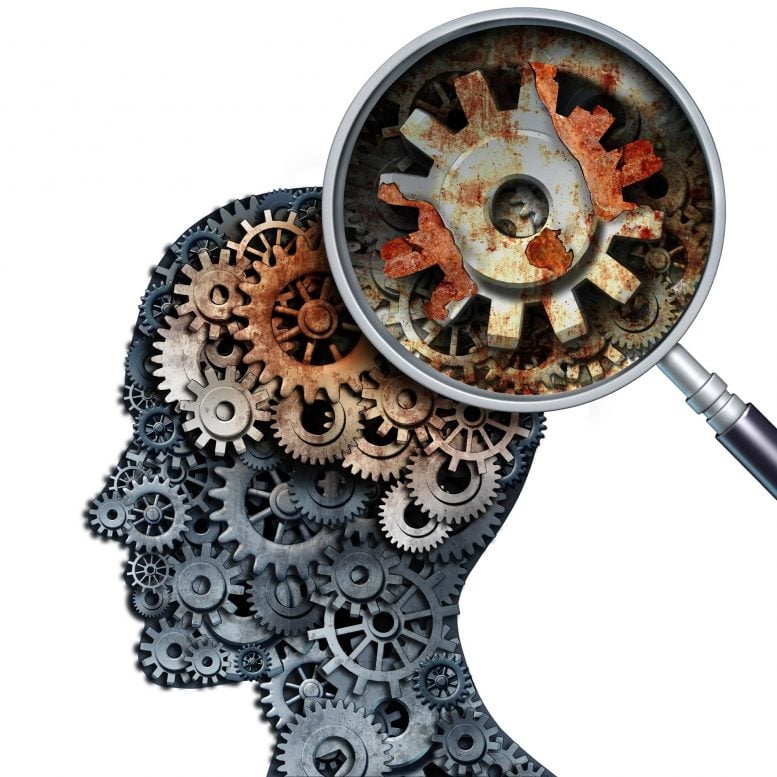
Brain Decline Dementia Analysis Concept
It takes about five minutes to complete the online questionnaire meant exclusively for people 55 years of age and over, and according to the scientists involved in its creation, is 83 percent accurate. While there are other online calculators present on the Internet, few have the scientific background data support that this one can boast.

The data gathered by the scientists in their Dementia Population Risk Tool (DemPoRT), form the backbone of the questions posted on the dementia tool. The critical factors taken into account are age, smoking status and lifetime exposure, alcohol consumption, physical activity, stress, diet, sense of belonging, ethnicity, immigration status, socioeconomic status of neighbourhood, education, activities where assistance is required, marital status, languages spoken, and health conditions.

The individual responding to the questionnaire is given, based on their answers to the questions, their personal relative level of risk, along with 'advice' in the form of focusing on aspects of their life where changes can be made for the purpose of reducing risk.

dementia
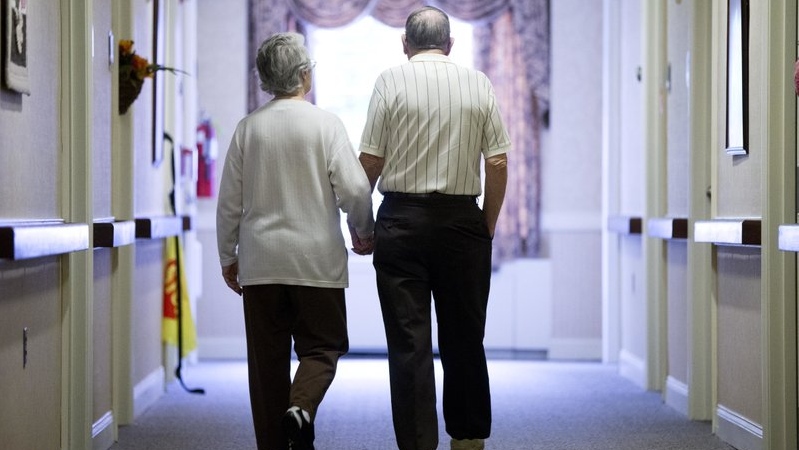
An elderly couple walks down a hall in Easton, Pa. Research released on Friday, Nov. 1, 2019 suggests many American adults inaccurately estimate their chances for developing dementia and do useless things to prevent it. (AP Photo/Matt Rourke, File)

Labels: , ,

Monday, March 22, 2021

It's All About Control : Harvesting Personal Data

"The unholy alliance between Canadian politicians and Big Tech features prominently in the political parties' own use of social media data to track, profile and target voters."
"With the help of social media companies, political parties scrape online information posted by Canadians and use it to send manipulated and micro-targeted content attuned to each individual's behavioural triggers, in order to persuade them to vote a certain way."
"The result is that even people in the same household will not see the same political content."
"As the January 6 insurrection at the U.S. Capitol showed, if voters are not seeing the same information, they are not living in the same world."
"Distorting communication between voters has serious moral and political implications, which is why the EU created free people. In modern, technologically advanced democracies, data protection laws should build trust in the digital environment by properly protecting citizens and safeguarding hard won human rights, such as the right to privacy."
Jim Balsillie, founder, Centre for Digital Rights
Governments in the 'free world', the democracies allied in their struggle to counter the Beijing Communist Party's all-consuming traction advancing its agenda to control the lives of all its citizens through facial recognition technology and web outreach to ensure complete resignation of individuality and adherence to the proscription of criticism of Xi Jinping, the CCP, and its actions against the Uyghurs, Tibetans and Christians, shudder with horror at the casual dismissal of human rights and interference in peoples' privacy.

There are, however, certain parallels between what Beijing is accomplishing in scooping up data holus-bolus and controlling its massive population through advanced AI technology, and what certain democracies are also engaging in. The Internet has intruded in every aspect of human life. The great global public has embraced the wide open accessibility of knowledge, entertainment, communication and commerce with an enthusiastic appreciation of how much of our lives have changed, how much time is spent online, how casual friendships are made, how commerce is conducted, how fascinated we are with the options for contact, gaming, expressing ourselves.

Surveillance technologies have forever altered our concept of privacy. On the other hand, most people are not as seized with the issue of their personal 'privacy' as are campaigners for the protection of the right to privacy. Many people won't hesitate a heartbeat before airing the most personal details of their lives, live on stream, and with no concern over divulging such intimacies to the worldwideweb. Everyone nurtures a sense of personal entitlement overriding the need for personal privacy.

There is a cure for all of this. It is simple enough. Walk away. But nothing is ever as simple as it seems since those willing to forego any further use of the technology we have all grown so dependent on -- is willing to leave it all behind as an expedient in honour of privacy protection -- are few and far between. Violation of privacy rights does not appear high on the public's list of necessities to live a self-respecting life. And since the public really doesn't much care, why should those who govern them when the situation confers benefits on government?

Jim Balsillie, with all his experience, expertise and deep-seated knowledge of fundamental human rights can point out, as he has that "Behavioural monitoring, analysis and targeting are no longer restricted to social media, but have spread across a wide range of products, services and sectors, including retail, insurance, finance, health care, entertainment, education and transportation. In the early 21st century, every industry became a technology industry and now just about every internet-enabled device, and online service is a supply-chain interface for the unobstructed flow of behavioural data that's used to power the surveillance economy. This has not only meant the death of privacy, but has served to undermine personal autonomy, free markets and democracy."

Yes, indeed. And the public's complacency with all of this is obvious enough. A lack of imagination works to fail to instruct people of how much they have and will continue to lose in the greater scheme of things simply because most people cannot identify the fact that they are being unscrupulously manipulated. There are such subtleties of silent interference they are not recognized, and if they are, shrugged off as being insignificant and irrelevant.

And, as Balsillie points out, "... Privacy is a fundamental human right. Privacy is a gateway right to other rights and freedoms, including free expression, personal autonomy and freedom from harassment. Privacy is treated as a human right in numerous international conventions, including the United Nations Universal Declaration of Human Rights and the International Covenant on Civil and Political Rights. This right should be codified in our data governance laws, as it is in the European Union's landmark General Data Protection Regulation."

Rethinking Privacy For The AI Era
Rethinking Privacy for the AI Era    Forbes

Labels: , , , , ,

Monday, July 06, 2020

Internet Evangelist, Vinton Cerf

"The most troubling thing about the internet environment is the buggy software.  You hear people worrying about artificial intelligence and machine learning but I'm worried about autonomous software running on the Internet of Things [networks attached to smart devices] that have bugs."
"We have a lot of work to do to clean up the ecology we've created."
"It is a dog's breakfast of ideas [China's proposed New Internet Protocol] that do not fit together very well. What they wanted to do was to get more control."
"I have trouble believing it doesn't have any software in there [Huawei Communications] that lets the Chinese government get access to anything."
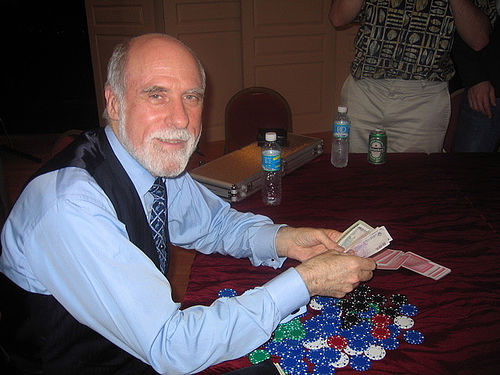
Vinton Cerf, father of the Internet, vice-president Google
https://storage.googleapis.com/gweb-uniblog-publish-prod/images/vint_v01.max-1000x1000.jpg

The standards we now take for granted that maintain our electronic devices in connection to the internet were pioneered in 1973 by Vint Cerf, a then-assistant professor at Stanford University, along with his colleague Bob Kahn. They did that enormous deed to the world when they developed the Internet Protocol (IP) and Transmission Control Protocol (TCP) for use by the U.S.  military to enable different types of software, hardware, operating systems and networks to communicate.

Their intention, as the developers of a brave new world of communications was to ensure that this be viewed as a universal tool open to being built upon, expanded and customized, with its basic underpinnings intact. When software developers came along to build over the basic structure they were able to do so with ease and confidence, bringing the world further along in recognition of the usefulness of the indispensable communication tool the product became, one that is still expanding.

It took five years to see the World Wide Web develop following the launch of the internet in 1983. Decades on, the wide open, free-to-use internet, geographically unattached is edging away from its place as a global standard, leading to what Vint Cerf speaks of as a "Splinternet", coined by the Cato Institute. A New Internet Protocol representing a set of standards replacing the original internet was proposed last year by China.

A country with vast influence, power and ambition, China seeks to control the internet just as its goal has become clear internationally to control everything and anything it recognizes for its importance to a fast-developing world of unimaginable technological advances. China alone has up to a billion internet users, where several successful internet companies such as Alibaba and Baidu are top of the Chinese social networks facilitating contact between its enormous population base.

And it has been China that has pioneered a goal of its own relating to the internet as it began to filter, block and manipulate social media for its own controlling purposes; technology they are making available at a price to other countries eager to control what their populations see and have access to under authoritarian governments. Britain's still tenuous intention to retain equipment from Huawei in its 5G network upgrade, U.S. warning aside of threats to national security also concern Vint Cerf.

Google Chief Internet Evangelist Vint Cerf, Father of 'Net and ...
Search Engine Journal  Vinton Cerf

Apart from his certainty that the Chinese government will have access to other countries' sovereign data, he worries that worldwide routing systems as well are not protected adequately. He spends a good portion of his time now campaigning for internet security, net neutrality and backing up information as being of vital importance.

American government agencies had created various networks for electronic communication, prohibited for public use by the late 1980s. This, at a time when Mr.Cerf worked for MCI Mail, among the first of the commercial email providers. He sought government permission in experimenting to determine if he could connect MCI's private email-system to the internet. Given a year, his efforts were successful, leading other email providers to lobby for access openings and  soon public email accounts were rampant.

For the past 15 years Mr. Cerf has worked for Google, advocating for accessibility-by-design to service Google's business plan, now viewed by the public as a conglomerate advertising machine with political biases. Mr. Cerf has seen the internet morph from neutral to hosting abuses such as fake news, cyber bullying and other negatives of social media. Google's neutral platform position is seen now to be hanging in the balance.

Image:NASA/JPL

"Many of us did not anticipate the harmful potential of these technologies. The people who are creating these products and writing the software should feel a much greater burden than in the past because the harmful side effects can be devastating on a global scale."
"Not only do individuals need to feel this ethical pressure, but I feel that companies need to be incentivized to do everything in their ability to ensure these bad things do not happen."
Vinton Cerf

Labels: , , , , ,

Wednesday, December 11, 2019

Waste Not, Want Not

"It’s been really successful for us this summer. This location in particular has been able to save our customers thousands of dollars and we’ve also been able to divert over 11,000 pounds of waste. It’s pretty exciting."
"Most of us… buy large quantity items and package them up and freeze them. So we have short-dated items in these coolers, like meat or chicken or hamburger. You can easily pack it and save it for another day so you can feed your family and it costs pennies."
"Sometimes you have a bag of perfectly good produce or fruit or vegetable, and there’s one bad apple or one rotten lemon. We can… open the package, take those really good quality items and put them into boxes and sell them for a significantly discounted price to our customers."
Tarla Confiant, manager, Edmonton Superstore

"A company that can make money while making a big social impact is an entrepreneurial dream come true. I think that the backbone of Canada's economic future depends on innovators like Josh….Josh [Josh Domingues, CEO, Flashfood] might have the right plan, experience, and competitive advantage to disrupt the industry in a meaningful way."
"When pitching a business in its early stages, elaborating on your business background and highlighting your strengths as an entrepreneur will greatly help offset any doubt investors may have in the concept. Time will tell what the future holds for this entrepreneur and his big vision, but with a deal like that, things are looking pretty bright."
Jasmin Ganie-Hobbs, major accounts manager, Business Development Bank of Canada (BDC)
Meijer produce area - Copy.jpg
Meijer produce area

"Food is at the core of what we do, and we are constantly looking at ways to minimize in-store waste because it’s the right thing to do for our communities and our customers."
"We are excited to work with Flashfood and learn how much food can be spared from landfills."
Don Sanderson, group vice-president of fresh, Meijer 

"Bringing the Metro Detroit community the ability to buy such great food at huge discounts while reducing food waste is exciting."
"Meijer is a well-respected market leader focusing on innovation and it's evident through our partnership. Both teams are thrilled about the impact we're bringing to market in this pilot."
Josh Domingues, founder, CEO, Flashfood, Toronto
Meijer Pilots App to Reduce Waste, Sell Food Before Spoiling
Food purchased on the Flashfood app will be stored for customer pick-up

In this age of the Internet, convenience and compressed time, it's an idea whose time has come, quite obviously. Deeply discounted groceries linked with decreasing the amount of food waste that regularly goes into dumps when supermarkets are left with stale-dated grocery products and over-ripe fruits and vegetables. True, most supermarkets do make an effort to slash prices on foods nearing or just past their best-before dates as well as too-mature produce, but it is only shoppers who happen to be at the store physically that can take advantage of deep discounts whose effect reduces the store's waste.

The Toronto startup enables its clients to use the Flashfood app at partnered supermarkets to view the perishable foods available at a huge mark-down and order what they want to bring home with them when they drive by and pick up whatever looked appealing and price-irresistible. So much perfectly good food ends up in landfills, an unjustifiable waste which led Meijer to try the Flashfood app at four Michigan outlets where grocers upload "close-dated" items -- fresh foods closing in on their best-buy dates, at up to 50 percent off.

Meijer Flashfood refrigerator - Copy.jpg
 Customers pick up their selected discounted          groceries which can consist of baked goods, deli products, meat, produce and seafood -- from a refrigerated case or shelving unit at participating stores. That grocery stores face a food waste problem is well-established. They can and do donate many food items to local food cupboards, and some foods can be re-purposed for animal feed. Yet the problem remains simply because it is so endemic and so vast. Some 73 billion kilograms (160 billion pounds) of perishable food ends up in landfills in North America on an annual basis at a cost to grocers of around $24.2 billion yearly.

 Food retailers such as Kroger, Target and Whole Foods in the U.S. have experimented with 'order-to-shelf' technology in the hopes of reducing food waste, even while the creation of a market for 'ugly produce' failed to grab the food shoppers' imagination as had been anticipated, despite the well-executed public relations effort to convince shoppers that misshapen produce is every bit as fresh and nutritious as their 'perfectly shaped' counterparts. The discounted produce effort simply failed to resonate with shoppers, leading the retailers to set the initiative aside as a failure in alternate marketing.

Loblaw, Canada's largest food retailer, decided earlier in the year to partner with Flashfood where the service is now available at 405 locations across Canada. "It cuts down on grocery costs, it's easy to do online and you just pick it up", one satisfied customer in Ontario enthused. "Often it solves the 'what's for dinner' problem. I just see what's available."

Food waste costs grocers about $24.2 billion yearly representing 160 billion pounds of wasted food

Labels: , , , , ,

Monday, July 01, 2019

Is Screentime Ruling Your Life?

"Every chronic disease we know of it exacerbated by stress."
"And our phones are absolutely contributing to this."
Dr. Robert Lustig, professor of neuroendocrinology, University of California, San Francisco

"The point is, your thread is yours, mine is mine, and we use it to regulate our emotions, to balance facts with fun, in our own idiosyncratic way."
"It’s very counterintuitive to say at this stage, but the fact is, no one really knows what the heck people are seeing on their screens."
Byron Reeves, paper co-author, Stanford University

"[The researchers contend that] scientists need to look over people's shoulders, digitally speaking, and record everything, on every device, that an individual sees, does and types [to obtain a full idea of a user's experience and the effects on them]."
Benedict Carey, The Times

"A few weeks ago, the world on my phone seemed more compelling than the offline world -- more colourful, faster-moving and with a bigger scope of rewards."
"I still love that world, and probably always will. But now, the physical world excites me too -- the one that has room for boredom, idle hands and space for thinking."
Kevin Roose, technology columnist, The Times
Consumers Research   Pexels

Well, they're everywhere, anywhere you look, people fixated on their iphones, anxious not to miss anything, a kind of pathology of utter dependence, an other-world one inhabits by choice-of-habit, eschewing their presence in a real world in favour of a wired, on-line world that seems far more satisfying than simply observing and taking part in what goes on around them directly, in person. It is, in fact, a kind of casual rejection of life as it is for life as it is portrayed through social media and online contacts.

It now is the rare individual who decides not to have a presence on Facebook. As time-consuming a portal to another kind of remote, reserved life as anyone could wish for, where one looks to be 'friended' and 'liked'. Personal, real-life interaction entirely superfluous as the Facebook-elected consumer becomes completely dependent, satisfied to have an alter-life revolve around an Internet-sourced presence.

It is the grip that the siren-song of that dependency and its impact on people's health, both physical and psychological that led a group of social scientists to begin to study the phenomenon. They conceived of a working method; to download software onto the smartphones and laptops of study volunteers. That software snapped shots every five seconds to record what was happening on screen; shots sent to be analyzed on the server used by the researchers.

They named the process "screenomes", enabling them to get a fairly representative and in fact concise picture of what was happening. What they discovered was that the test subjects switched every 20 seconds from one activity to the next, rarely tarrying over twenty minutes on any one particular activity. What they came away with was a sequence of disjointed screens unique to the individual; a kind of digital DNA.

There exists reliable evidence that smartphones interfere with sleep, with self-esteem, with relationships, memory, attention spans, creativity and problem-solving, as well as decision-making skills. Cortisol levels rise with each ping of a phone, and that hormone is linked to stress; its release triggering alterations in the body similar to spikes in blood pressure, heart rate and blood sugar.
A situation that ultimately contributes to diabetes, high blood pressure, heart attack and stroke.

In the United States, the average person spends four hours daily fixated on their phone, picking it up 52 times throughout the course of a day. This is done as a subconscious routine, somewhat like a nervous tic, so habitual it almost reflects instinct, only one that has been ingrained by endless repetition to become a nervous disposition. Leaving the user with social adaptations more suited to a hermit.

Face-to-face, eye-to-eye interactions become rare; they appear extraneous. As a result, interpersonal and intimate relationships suffer. Considering all that is known about this modern-day universal and favoured mode of 'communication', definitely injurious to one's physical health. Throw in the unsettling effect of the psychological impact and it's an insidious diminishing of the value of life.

Abstract:
Digital experiences capture an increasingly large part of life, making them a preferred, if not required, method to describe and theorize about human behavior. Digital media also shape behavior by enabling people to switch between different content easily, and create unique threads of experiences that pass quickly through numerous information categories. Current methods of recording digital experiences provide only partial reconstructions of digital lives that weave – often within seconds – among multiple applications, locations, functions, and media. We describe an end-to-end system for capturing and analyzing the “screenome” of life in media, i.e., the record of individual experiences represented as a sequence of screens that people view and interact with over time. The system includes software that collects screenshots, extracts text and images, and allows searching of a screenshot database. We discuss how the system can be used to elaborate current theories about psychological processing of technology, and suggest new theoretical questions that are enabled by multiple timescale analyses. Capabilities of the system are highlighted with eight research examples that analyze screens from adults who have generated data within the system. We end with a discussion of future uses, limitations, theory, and privacy.
Screenomics: A Framework to Capture and Analyze Personal Life Experiences and the Ways that Technology Shapes Them
Byron Reeves, Nilam Ram, Thomas N. Robinson, James J. Cummings, C. Lee Giles, Jennifer Pan, Agnese Chiatti,  Mj Cho,  Katie Roehrick,  Xiao Yang,  Anupriya Gagneja,  Miriam Brinberg, Daniel Muise,  Yingdan Lu,  Mufan Luo,  Andrew Fitzgerald & Leo Yeykelis
Human Computer Interaction journal


Labels: , , ,

Thursday, June 27, 2019

Our Ultimate Consuming Culture

"Unlike drugs or alcohol, from which we can be totally abstinent if we want to be, shopping and eating have to be done."
Dr. April Benson, psychologist

"Here's how it works: The initial pleasurable experience -- ooh la la, that bag! -- releases the neurotransmitter dopamine in the nucleus accumbens, a part of the brain that plays a major role in our neural reward circuitry. Each time we do this pleasurable thing, dopamine is released faster, more intensely. The bits of the brain charged with memory encoding record the purchase as a nice experience, thus generating a conditioned emotional response to the cue."
Linda Rodrigues McRobbie, freelance writer, London

"Over time, the pleasure associated with an addictive behaviour subsides, but because the memory of the desired effect and the need to recreate it persists, desire becomes compulsion."
Dr. Carolyn Mair, psychology consultant

"[Corporate interests and marketers exploit our acquisitiveness desires to convince us that specific foods, porn, alcohol are desirable, their language steeped in self-reward.] That's part of the strategy to normalize and make innocuous these things that really aren't."
"Their revenue streams are really dependent on the heavy consumers. Corporations, especially those that market temptation goods, depend on excessive consumption for their bottom line."
Dr. David Courtwright, emeritus professor of  history, University of North Florida
To determine the 10 states profiting the most from vices such as gambling, alcohol and cigarettes, 24/7 Wall St. reviewed revenue from "sin taxes" as a percentage of the state's total tax revenue. Perhaps surprisingly, Nevada doesn't top the list despite being home to the world famous Sin City itself.
"With more materialistic attitudes and more marketing, it's making it harder in general for people to deal with this stuff."
"We have all this media, and yet we're supposed to be able to control our shopping and we're looked down upon if we don't."
Dr. Ricardo Rieppi, psychotherapist
Shopping in Bloor-Yorkville: High-End Fashion and Boutiques

The shopping compulsion: it teases and attracts and compels us to respond to all the advertising we're exposed to on so many levels that have become commonplace and an adjunct to our lives. Everywhere we go, everything we tune into from radio to television, videos and social media make it all so accessible and so interesting, piquing our already-heightened sense of acquisitiveness in a consumer-oriented society. So many items become 'must-haves'. All the more so when they're being flogged by celebrity figures.

Shopping once entailed a physical presence; you deliberately embarked on a mission to go downtown to a shopping area to look about at what was on offer. Now you know what's on offer, advertisements pop up each time you're on line, every time you use your smartphone, everywhere you look while out driving and billboards beckon. And really, it's no longer an effort to shop. In days gone by shopping was carried out in rural areas by the use of mail order items. Now people don't have to haul themselves to shopping centres, the Internet makes it all so simple.

We are indoctrinated and geared through social media influence to want to shop, to acquire the most up-to-date fashions, the latest technological gear, the current home fashions, so readily accessible, all we do is click and it's in the virtual shopping basket and payment is remote, no handing over of cash. In excess of 197 million people buy goods through Amazon monthly. According to Walmart, the largest retailer in the world, $500-billion in sales last year alone beefed up their bottom line. Their top-selling items? laptops, crayons, Instant Pots....really!

Holiday Shopping in Toronto: You Can’t Get This Online

In the United States last year, American credit card debt represented a record $870-billion; that's a lot of 'stuff' and it's linked to "compulsive buying disorder"; at least the 19 million Americans who represent the obsessive purchasing segment of the population falling into the category of buying-stuff-they-don't-really-need grouping. German psychiatrist Emil Kraepelin originated the term "oniomania" (buying mania) in 1915 to identify a compulsion he thought of as close to kleptomania.

One survey identified 64 percent of Americans who bought items on impulse later regretted that indiscretion, a condition we call buyer's remorse. So many things that aren't needed, aren't even wanted or particularly liked, but purchased in response to a compulsion to buy items that will later end up being donated to thrift shops, original tags and all. It all began in earnest in the 1980s with the proliferation of malls alongside an increase in disposable incomes. According to experts in the field, compulsive shopping affects a minimum of six percent of the population.

What may be even more surprising is that it isn't only women but men too who tend to compulsion-shop. Researchers point out that shopping helps many people over rough spots in their lives; coasting over depression as a distraction, however temporary. We are tempted by dissatisfaction with life, by feelings of anxiety to elevate our emotions to a more tractable and pleasant position by pleasing ourselves with new acquisitions; a band-aid solution to whatever ails us. It is an addiction that is difficult to regulate and discipline.

Herald the Holidays at Yorkdale Shopping Centre

Labels: , , , , ,

Tuesday, June 11, 2019

Sex or Text?

"Several high income countries have recently reported a decline in the frequency with which men and women have sex. Sexual inactivity might not seem an obvious focus for public health attention—concern is generally reserved for sexual activity and its adverse outcomes such as unintended pregnancy, sexually transmitted infection, and sexual dysfunction—but regular sexual activity has benefits for health, well being, and quality of life."
"Research indicates that men and women who enjoy an active sex life are fitter, happier, and have better cognitive function and increased life expectancy. Evidence shows that sexual activity might help prevent infection by bolstering immune function; protect against cardiovascular disease by lowering heart rate and blood pressure; and reduce stress by increasing release of oxytocin."
Authors: Kaye Wellings, professor, Melissa J.Palmer, research fellow, Kazuyo Machiyama, assistant professor, Emma Slaymaker, associate professor, London School of Hygiene and Tropical Medicine study, British Medical Journal

"[There appears a connection between smartphone tyranny and the weakening of] the boundary between the public world and private life ... You get home and continue shopping or buy tickets -- everything except for ... talking."
"You don't feel close when you are constantly on the phone."
"Several factors are likely to explain this decline, but one may be the sheer pace of modern life."
"It is interesting that those most affected are in mid-life, the group often referred to as the ‘U-bend’ or ‘sandwich’ generation. These are the cohorts of men and women who, having started their families at older ages than previous generations, are often juggling childcare, work and responsibilities to parents who are getting older."
"What is important to well-being is not how often people have sex but whether it matters to them.
More than half of the men and women taking part in the study said they’d prefer to have sex more often, which could partly stem from unfavourable comparisons with what they think is the norm."
“Most people believe that others have more regular sex than they do themselves. Many people are likely to find it reassuring that they are not out of line."
Kaye Wellings, lead author, study Changes in, and factors associated with, frequency of sex in Britain: evidence from three National Surveys of Sexual Attitudes and Lifestyles (NATSAL)


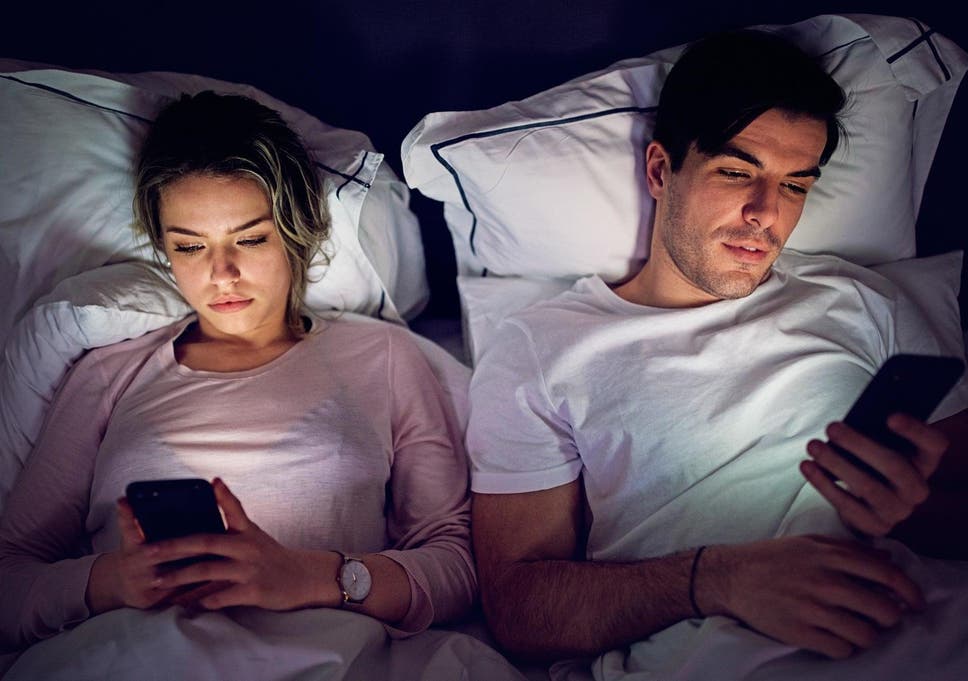
A study on mobile phone use while performing other activities was presented at a symposium on how digital technology is affecting relationships
A study on mobile phone use while performing other activities was presented at a symposium on how digital technology is affecting relationships ( Getty )

A recently published major sex survey of 34,000 Brits points out the grip of the Internet has led the United Kingdom to join other countries ranging from Finland to Australia, in research validating that populations are less engaged in sexual union. One of the world's most thorough sex surveys -- The National Survey of Sexual Attitudes and Lifestyles (NATSAL) which has conducted surveys every decade since 1991, released its latest findings representing the period up to 2012.

That finding validates that sex life in Britain, as in many other countries of the world where the Internet has taken precedence over all other modes of communication, including face-to-face, is responsible for people fixating on social media and all manner of Internet searches and communications, at the expense of one-on-one relationships of an intimate order; namely sex or conjugal relations, which are steadily on a downward spiral.

In 2012, 13.2 percent of women in Britain reported having sex on ten occasions or more in the past month, as compared to 20.6 percent back in 2001. For men, the figure over the same period dropped from 20.2 percent in 2001 to 14.4 percent by 2012. Those are the numbers representing couples who have continued to engage in sex. In sad contrast both men and women who had not experienced any sex in the past month had risen to almost 30 percent whereas in 2001 the figure stood at 23 percent of women and 26 percent of men.

As far as the authors of this latest study are concerned, it is the rise of smartphone use (the ubiquitous and hugely popular iPhone was launched in 2007), where the Internet has made its way into all aspects of peoples' lives. Digital life for most people has become an endless 24/7 affair. The compulsion to endlessly check email, to scroll, to scrutinize alerts, to engage in games and tab-opening are all identified as playing their part in destroying peoples' personal, intimate lives and concentration on other day-to-day concerns.

It is the social life of millennials that has fixated the interest of researchers, who delve into their sex lives for data applicable to that demographic. They, after all, came of age online. As a result the social contract requiring face-to-face relationships to bloom has passed them by with the disinterest of those who have more interesting fish to fry. The gap that exists in social awareness and custom between people over 35 and those under 28 in the modern social construct is immense.

Yet, this most recent NATSAL survey identifies that the steepest decline in having sex appears not among the young and single, but rather within the over-age 25 demographic who happen to be in long-term stable relationships; married or cohabiting. In this group the odds of having had sex ten or more times by either men or women was about halved between 2001 and 2012. These are the people who bring the Internet into bed, where the tendency is to continue working, organizing, shopping, communicating.

The survey looked no further than 2012 for its conclusions. But no one doubts that the situation has only exacerbated as the public ever more fiercely embraced their indispensable iPhones, abandoning flesh-to-flesh contact. The Wall Street Journal conducted a poll, finding a rising number of Americans (36 percent of 28-to-38-year-olds, and 16 percent of those over 39), will make the inevitable choice of Internet over sex.


Fig 1


Labels: , , , , ,

Sunday, June 09, 2019

Professional eGaming is an eSport : Seriously

"In a game where you have to make split second decisions in any moment, these minor hesitations can affect  your performance."
"If you have pain and weakness in your body, you won't be able to contribute as much."
"This is their job and these guys take their training just as seriously as a Kobe Bryant or a Michael Jordan."
"Their eye-hand coordination starts to deteriorate by the time they're 25. The 18-year-olds have already been playing for ten years and they're quicker than the older players."
"It's hard to continue to complete past their mid-20s and there's just not that many spots open."
Dr. Todd Sontag, physician, Orlando Health

"The average esport athlete conducts more than 400 movements per minute using a mouse or keyboard [according to the New York Institute of Technology's Center for eSports Medicine, providing esport athletes with services such as] body composition testing, nutritional guidance [and] customized chair-sizing."
"The use of drugs like Ritalin and the excessive intake of caffeine or other stimulants provides additional sources of concern."
Center for eSports Medicine, New York Institute of Technology 


Dr. Levi Harrison, an orthopedic surgeon based in Los Angeles, is one of the first medical professionals to focus practise on esports-related injuries. His YouTube channel with its 67,000 subscribers includes tutorials in detail for how gamers can maintain their fingers, wrists and forearms in good health condition. Dr. Harrison has been introduced to a condition where a player's thumb gets locked into place; the result of extended periods holding a controller: "gamers thumb".

Perhaps it is not as well known as it will in future be, that electronic sports are now big business. Elite tournaments now promise payouts of close to $25 million, according to Gamespot. Salaries are on offer rivalling and even surpassing those of many professional athletes. The video game and software company Epic Games last year announced it planned to extend $100 million in funding for prize pools to highlight Fortnite competitions for the new season. Its audience, spanning the globe is in the tens of millions.

Over 67 million people around the world play League of Legends every month, according to Riot Games. Esport teams, in recognition of all these realities has a vested interest in the health of players and the urgency of the moment. Financial payoffs are attractive, but the window for success in esport is short. A professional basketball or baseball player may extend a career into their mid-to-late-30s, while esport athletes' retirement age puts the breaks on players a full decade earlier.

These are players and teams who will never appear on a basketball court. Despite which their bodies undergo repetitive-motion stress. Though team players are in their teens and early 20s, professional gamers are continually at risk for injuries most people normally associate with middle age; such as office workers spending working days in front of a computer screen. They suffer from carpal tunnel syndrome, elbow, shoulder and neck pain, eye strain and musculoskeletal injuries such as tendinitis and back pain.
Embedded video

Each season's millions of dollars in prize money associated with thousands of players anxious to achieve a roster spot means that even minor injuries cause concern for the players, who keep their team doctor's contact number close at hand. The League of Legends World Championship has an audience reputed to be larger and more enthusiastic than that of the Major League World Series and the NCAA Basketball Final Four in combination.

All of which has seen the definition of 'athlete' undergo a profound change. Now, over 120 colleges in North America offer varsity esport teams. The hyper-competitive world of electronic sports ("esports") now resembles mainstream professional sports. There has been an increase in prize money even as the games become more competitive in lock step with an increase in the number of traditional physicians devoting time to esports injuries, of which there is no shortage.

The New York Institute of Technology, Center for eSports Medicine's website speaks of the sedentary nature of esports and the altered sleep routines and social interactions, impacting the well-being of players. Long exposure to bright LED lighting, social anxiety, limited physical activity and hygiene represent additional issues all of which affect the gaming community.
LCS Summer 2019 Week 1
Photo via Riot Games

Labels: , , ,

Sunday, May 26, 2019

The Online SuckerPunch

"We created a project just so we could capture when people are seeing these fake ads and being sucked down this rabbit hole. It's been going on for a long time."
"They've [on-line fraudsters] gotten very good at doing these things. They can make almost any email or website look authentic. You've got all these authentic-sounding terms. You've got the names and business names that are real, to trick people into believing this is good and it makes sense."
"The spoof websites are the icing on the cake."
"We conservatively estimate that we only capture five percent of reporting. Fraud is under-reported often because of stigma/shame, embarrassment, etc. and we do not have the capacity to handle all the calls or validate all the online fraud reports we receive."
"What we capture provides a snapshot of what is occurring in Canada."
Jeff Thomson, senior intelligence analyst, RCMP Canadian Anti-Fraud Centre
Image result for online fraud
ripandscam.com

"The 2018 [FBI] report shows  how prevalent these crimes are. It also shows that the financial toll is substantial and a victim can be anyone who uses a connected device."
"Awareness is one powerful tool in efforts to combat and prevent these crimes."
Donna Gregory, chief, FBI complaint centre

"In today's complex digital landscape, hackers are becoming increasingly sophisticated, which means it's becoming more difficult to tell real from fake, phishing from friendly."
Rob Fodor, chief data scientist, vice-president of fraud, Interac

"We're finding that it's increasingly difficult for criminals to steal from Canadians using old methods. They constantly evolve. They're going at it through trickery."
"[The] CRA scam [Canada Revenue Agency, case in point, where a fraudster attempts to extract money from victims, claiming to be a government tax collector]."
"Who would have thought in the past about [scam artists] using the government to try to get money from us?"
Rachel Jolicoeur, Interac
CAFC logo

The Canadian Anti-Fraud Centre is operated jointly in Canada with the RCMP and the Ontario Provincial Police and the Competition Bureau; 466 reported attempts to defraud with fake car sales ads came to their attention in 2018. Of that number, 168 people became victims of the scam, with a reported loss of close to $860,000. The schemes these fraud artists devise are so increasingly slick and believable, with the use of connections and assurances that look absolutely legitimate, there's little wonder so many people get sucked in.

And as increasingly professional as these come-ons have become, all signs point to even more robust and well-planned, completely believable schemes in the planning stages, to entice and abuse even more peoples' trust, and scam them of their money. The FBI recently released its 2018 annual Internet Crime Report with the finding that complaints at its Internet Crime Complaint Center -- designed to capture calls regarding Internet-enabled theft, fraud, and exploitation -- totalled 351,937 last year.

Those complaints led to a loss of over $2.7 billion for the people so ignominiously gulled by credulous-seeming on-line fraudsters. The FBI made good use of those statistics to re-awaken the public to the extent of the fraud, and to persuade them to increase their vigilance against being taken by a fraud artist. The agency figures that the more people are reminded of the plight being visited on the unwary with a related loss of hard-earned cash, the more dedicated people will become to protecting themselves.

Online fraud has become so complex, according to Interac, out of 1,064 Canadians who took part in a new study, over 96 percent failed to identify online fraud on being confronted by it. Many people who took part in the study believed the most effective way to respond to fraudulent activity would be to swiftly react by shutting down their computer, or turning their Internet browser off. It does work in the immediacy of the situation when the screen is suddenly blocked and a large red notice screams that one's computer has been compromised -- call the number given, immediately.

There is so much fraud and it is on the increase simply because it is worthwhile someone's effort; the returns on the investment, so to speak, means that even if a small number of people fall prey, the amount of money they are cheated out of, makes for a rewarding enterprise from the fraud artists. A total of $97.7 million was reported stolen from Canadians linked to online fraud in 2018; an increase over the $83.3 million lost in 2017, by varying methods geared to profit the crooks.

Romance scams netted $22.5 million in 2018 from over 760 Canadians. This kind of scam with online dating, revolves around a fraud artist meeting another person online, cultivating a relationship, and eventually asking for cash. The figures don't actually reflect in total the numbers involved; in that only about five percent of all fraud is reported to police. Fraud reported to local police departments runs into a dead end.

When money is sent to someone online, ending up in another country, local police departments are stymied, so many victims fail to report the fraud, given personal issues of embarrassment or shame suffered when nothing is gained from reporting the crime, other than teaching the victim to be a little more wary next time around.

Typically, phishing messages will ask you to "update," "validate," or "confirm" your account information. They might even ask you to make a phone call. Watch out for these catch phrases: 
  • “E-mail Money Transfer Alert:  Please verify this payment information below…”
  • “It has come to our attention that your online banking profile needs to be updated as part of our continuous efforts to protect your account and reduce instances of fraud… “
  • “Dear Online Account Holder, Access To Your Account Is Currently Unavailable…”
  • “Important Service Announcement: You have 1 unread Security Message!”
  • “We regret to inform you that we had to lock your bank account access.  Call this number to restore your bank account.”
Often, the message or website includes official-looking logos and other identifying information taken directly from legitimate websites. Government, financial institutions and online payment services are common targets of brand spoofing.
http://www.rcmp-grc.gc.ca

Labels: , , ,

Monday, December 24, 2018

Viral Virus Alert!

"The modus operandi was to send a pop-up on people's systems using a fake Microsoft logo."
Ajay Pal Sharma, senior police superintendent, Gautam Budh Nagar suburb, Delhi


"The success of the legitimate industry [call centers in India] has made it easier for the illegitimate industry [to operate and appear genuine]."
Courtney Gregoire, assistant general counsel, Microsoft digital crimes unit
Researchers at Stony Brook University in New York State published a study of tech-support scams last year, estimating in their summation that a 142-web-domain pop-up campaign succeeded in enriching its participants by ten million dollars in the space of two months of operation. It was, according to Najmeh Miramirkhani, the paper's lead author, a complex network of entities, some of whom made their own calls while others outsourced calls to India: "This is an organized crime."

A computer user clicks on the 'wrong' site and suddenly they face a frozen screen, sometimes appearing glaring red with an alarming message that Microsoft Windows has detected a nasty virus and is isolating it, waiting to hear from you. The message warns, do nothing other than call Microsoft directly at the telephone number that appears on the screen. Do.not.shut.off.your.computer, it also warns. You call that number and a sympathetic, professional at Microsoft confirms that your computer has been blocked.

However, the person you're speaking to explains that it can be unblocked, once again giving you access to all you hold dear and depend upon. All you have to do to get the gears going is provide them with the authorization to unblock your computer which can be done through purchase of services. It's up to you, dear computer-owner; want your computer back? ... Microsoft is offering a package of services; chose one of several, ranging in cost from $99 to $1,000 for the deluxe service and the problem is fixed.

If the suspicion crosses your mind that this doesn't sound like Microsoft, well you're right. It doesn't and it isn't, and you're being had. Shut down your computer, and it'll have to be an 'illegal' shut-down because remember, everything is frozen. Microsoft will indeed do the rest. The system will evaluate itself and automate Microsoft's protective services to eliminate the threat and restore your system. Panic gone. All's right with the world. You've done the right thing.

Many, however have not. The scam works among many who allow themselves to be completely fazed and discombobulated by this surprise; a wholly unexpected intrusion into the inner sanctum of their computer. The alert that appeared so genuine wasn't, but you have the 'proof' in your disabled computer and the panic-anxiety that leads you to agree to their terms that will restore it to you -- and you've been successfully victimized.

One in five recipients of that viral threat will fall victim to a fake tech-support center while six percent among them will end up paying the extortion to "fix" the problem that really doesn't exist, as far as a recent consumer survey undertaken by Microsoft attests. Microsoft receives about 11,000 complaints about the scams monthly. Its own Internet monitors spot some 150,000 pop-up ads for the services on a daily basis.

Working with Microsoft, law enforcement authorities traced many of these boiler room enterprises to New Delhi, the capital of India where last month police from two Delhi suburbs raided sixteen fake tech-support centers, arresting over 30 people. In similar raids on ten call centers, authorities arrested another 24 people back in October. Fifty police officers swooped down on eight centers on November 28 in one of those suburbs where scammers had extracted money from thousands, mostly Americans and Canadians.

Posing as a Microsoft employee, an operator responding to a victim's contacting the call center would inform the caller their system had been hacked or attacked by a virus, most unfortunately. That's when the package of services to solve the problem would be proffered. U.S. authorities have busted similar scams in the United States, but the majority of such illicit centers come out of India reflecting the country's experience in operating many of the world's call centers where about 1.2 million people are employed generating about $28-billion in annual revenues.

virus

Labels: , , , , ,

Wednesday, September 05, 2018

Social Media Bondage

"This decline in reading print media -- particularly the decline in reading books -- it's concerning."
"Reading long-form texts like books and magazine articles is really important for understanding complex ideas and for developing critical thinking skills. It's also excellent practice for students who are going on to college."
"Does digital media displace the leisure time people once spent on legacy media? We find that the answer is yes."
Jean Twenge, professor of psychology, San Diego State University

"This is not the way we treat things that we want to teach children are pleasurable. [by coercing children to read, by temporarily restricting their Internet time until a time-frame dedicated to reading has passed] I mean, think about it. You would never think of coercing your child into having a piece of cake."
"[Modelling good reading through example is fundamental]. That almost goes without saying. If you're nagging your child to read and you're just sort of on Instagram [yourself] all the time, why in the world would they take that seriously?"
Daniel Willingham, professor of psychology, University of Virginia
Image – iStockphoto: Disobey Art

Dr. Willingham wrote Raising Kids Who Read, and Dr. Twenge is the author of iGen: Why Today's Super-Connected Kids Are Growing up Less Rebellious, More Tolerant, Less Happy -- and Completely Unprepared for Adulthood -- and What That Means for the Rest of Us, one title snappy and to the point, the other groaningly verbose for a title, but both indicating the concern that these two academics feel for the generations for whom reading is no longer a valued skill nor a source of limitless pleasure and entertainment.

According to research published by the American Psychological Association, adolescents in North America are twinned to their electronic devices; texting, scrolling and engaging in social media for hours on end daily, vastly preferring that medium to reading books and magazines, in print or long-form media. In 2016, one in three American high school seniors chose not to read a book at all for pleasure, while 82 percent of those in 12th grade daily succumbed to the social imperative of visiting Facebook, Twitter and Instagram.

In contrast, back in the 1970s, about 60 percent of high school seniors read a book, magazine or newspaper each and every day; now, only 16 percent of high school seniors reported having done so. Early in the 1980s the slide in rates of reading legacy media began and steadily increased in the next several decades. And then along came smart-phones and high-speed Internet with widely available access, sweeping everyone along in the frenzy of being cool and connected.

Image – iStockphoto: Disobey Art

Screen time for high-schoolers -- including television -- rose steadily, tripling from the late 1970s to the mid-2010s, the study points out. And while 12th-grade students reported about six hours devoted every day to digital media, tenth-graders devoted five hours and eighth-graders four hours, amply demonstrating that given the choice, teens prefer to pick up their devices in favour of a book any day of the week, any hour, any time.

As in most things, a gender differential was noted, with girls visiting social media sites more frequently than boys, who preferred to spend more of their leisure time on video games, in a predictable twist. Dr. Willingham recommends parents focus on the need to separate their children from their screens, but without resorting to enforced reading; not to deprive the teen of his/her phone assuring a return in 30 minutes once that time has been gainfully spent reading.

To begin with, the environment in which children live should be one where books are a casual yet important part of what is on offer as an option, rather than banning devices. A good way to impress the importance of reading on teens is to ensure that they are familiar with books being the first choice of leisure-time reading for their parents; setting that vital example as a subconscious clue to values and choices.

"Litter your house with eye-catching titles", is the advice of Dean-Michael Crosby, teacher at a school in England, whose advice to parents is that leaving books in the living room, the kitchen, even bathrooms has the potential to provoke interest in young people, curious about their contents.

(iStock)

Labels: , , , , ,

 
()() Follow @rheytah Tweet