Ruminations

Blog dedicated primarily to randomly selected news items; comments reflecting personal perceptions

Sunday, May 28, 2023

Labelled 'Health' Products, Are they Safe and Healthy?

Vanessa died in 2000 after complications from Prepulsid
"[The provisions had been discussed before, but] there was nothing that would have indicated to industry that it was imminent."
"The industry and the association were both caught off guard when we saw that included in the budget."
"We have seen no consultation efforts to persuade us that the regulatory powers conferred in Vanessa's law would be appropriate for the lowest-risk products, such as natural health products."
Aaron Skelton, president, Canadian Health Food Association
"I think post-market surveillance the monitoring for safety around natural health products is urgent."
Senator Judith Seidman, epidemiologist, health researcher

"We have no recourse."
"There's no reporting on side-effects, there's no follow up, there's no nothing for natural health products to this point -- not the same way that there is with the other prescriptive drugs or other therapeutic products that are much more regulated."
Katharine Kovacs Burns, co-chair, Patients for Patient Safety Canada

In The News for May 25 : New rules for reporting reactions to natural  health products - LakelandToday.ca
A new plan to force hospitals to report adverse effects of "natural health products" such as herbal remedies and supplements has come as a surprise to manufacturers, who say they were blindsided by the proposed change. THE CANADIAN PRESS/Darryl Dyck
 
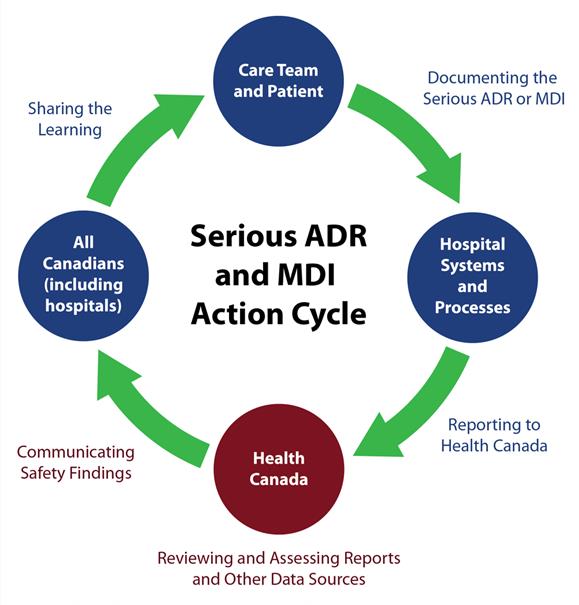
Vanessa's Law, passed in 2014 -- was meant to improve adverse health reactions reportage -- named after Vanessa Young, the 15-year-old daughter of a Conservative Member of Canadian Parliament. She died in 2000 after her heart rate was morbidly affected by prescription medication her physician gave her a script for. 

Hospitals would be required to report any unintended consequences that might be associated with natural health products if they were to be placed under that framework. Such reports would enable Health Canada to recall products or to order that they be re-formulated should that be deemed to be necessary to ensure their safety to the consuming public.

The new plan would impose reporting of adverse effects of "natural health products" on hospitals with respect to herbal remedies and supplements. The plan was included by the federal government in the 2023 budget bill, now making its final passage through the House of Commons before it becomes law.  Once it does, natural health products would fall under the same category as pharmaceuticals respecting monitoring them once they are on the market.

The debate over whether natural health products should be included in Vanessa's Law generated "quite the discussion" when it was initially introduced  noted Senator Seidman.. Several high-profile tragedies since then where parents and patients chose to substitute conventional medicine in favour of natural remedies ensued, prompting a renewal of the conversation on regulation of natural health products in Canada. The Canadian Pharmacists Association has stated that natural health products should have been included when Vanessa's Law was originally passed back in 2014.
Module 1: Overview of Vanessa's Law and mandatory hospital ...
The federal auditor general in 2021 found Health Canada fell short of making certain that products were safe and effective on the market. Gaps in monitoring of such products left consumers exposed to potential health and safety risks. In that same report it was pointed out that 88 percent of natural health products reviewed were advertised with misleading product information. Some products had unproven and unauthorized health claims, incorrect dosages, incomplete lists of ingredients, or unreadable information on the product label.

The issue has heated debate to the extent that Aaron Skelton, in his position as president of the Canadian Health Food Association was left to argue that manufacturers are responsible themselves for reporting any ill effects associated with their products. Health Canada, he pointed out. has the power to stop sales and seize products at the present time.

Arguments in defence of his industry and his contentions that there is no need for government to impose additional restrictions on the health food production industry, nor to impose on hospitals the responsibility to keep records to report on all side effects or other incidents relatable to health food products, fails to impress the volunteer patient-advocacy organization Patients for Patient Safety Canada.

In the United States, the National Center for Complementary and Integrative Health, an American government agency regulating such products, notes that simply because an ingredient has 'natural' origins not synthetically manufactured, should not be construed as the product being completely safe. It cites as an example, that kava, a plant native to the South Pacific used as a dietary supplement may be implicated in severe liver damage.

Labels: , , , , , ,

Sunday, May 30, 2021

Don't Forget to Take Your Gendered Vitamins

"[This segment of the retail market is] really interesting, because it has [the] legitimacy of being in [the] pharmacy section, but little regulation of what goes into the messaging."
"Thus, while masculine characteristics were presented through building and improving muscle, feminine characteristics were instead aligned with metabolism-- the chemical process of breaking down food that is often positively affiliated with weight loss."
"We found that 'masculine' products are more likely to be marketed through benefits promising muscle function and prioritizing active professionalism and physical health, while 'feminine' products are more likely to promise improvements to physical appearance and prioritize a decorative, passive role."
Study on gender-advertised multivitamins
Supplements for men, women, children and seniors: What’s the difference?

Supplements for men, women: What's the difference?  Brant Arts IDA Pharmacy

"They're just very restraining gender roles."
"Those are all genderless issues, yet they were predominantly marketed towards men in order to make room, we argue, for this decorative performance of women."
 Sydney Forde, Penn State University

"[Gender difference reflects an assumption that it is] easier for consumers to make sense of things when they are divided by oversimplified categories of gender appeal."
"[Mundane it may be, but it demonstrates] how we are told by marketing to exist in the world."
Brittany Melton, Brock University

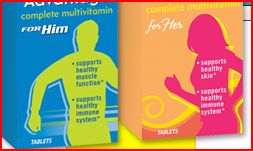
"All men deserve a supplement that can keep up with their daily active lifestyle": men's version.
"Ladies this one's for you!": packaging in pink.
It's likely that shoppers in a pharmaceutical setting wouldn't have much trouble discerning vitamin packaging meant for men and those designed for women; that old traditional colouration identification; blue and pink. If it's good enough for distinguishing the gender separation in babies, then it's good enough for advertisers making a distinction between their products ... even if the distinction is all imaginary. A sales gimmick, in other words; a personal address to the purchaser; men we've got you covered; women this is a reflection of your needs.

Two researchers undertook a comparison in the packaging of two versions of the very same vitamin by the same manufacturer, one meant for men the other for women. It's not only the colour distinctions but the description of what the product will do for men, or for women; same product different angle set to appeal to the buyer's notion of what is important to them as a male, as a female. Without doubt before embarking on this double-pronged-and-separate messaging, a study in gender preferences and appeal was made and then the producer embarked on their gender-separate messaging for the very same product. Making sales by giving the client what they want.

Men are sold multivitamins with the emphasis on energy; pills they are told will work to build their muscles. Women on the other hand are informed that the multivitamins work as metabolism boosters, weight-loss aids that will give them healthier hair, improving their appearance. Neither gender has any idea that the vitamins they each select by colour code and variant performance descriptions are one and the same vitamin, just boxed differently with a different presentation and explanation.

They're also priced differently; the women's version has a slightly higher price tag attached to it. Marketing at its most sophisticated. Both researchers, Melton and Forde undertook a catalogue of 25 multivitamin products, ten geared to men, and fifteen packaged for women. Coding the information provided on the packaging and the product description given online by the manufacturer. Their purpose was to measure gender stereotypes in advertising that proliferate in a 'grey area' of regulation; somewhere between drugs and personal care products.

Megan Madden
As an example, muscle function was front and centre on 50 percent of men's vitamins, but represented just 20 percent of women's vitamins, and metabolism featured large on 60 percent of women's vitamins, in contrast to 40 percent of men's. The variance of emphasis presents men as "professional" and women as "decorative", points out Ms.Melton. While men's vitamins claim an improvement on eye function, muscle performance, cognitive function and the immune system, women's claim improvement of hair, nails and skin.

Mention of bone health does appear on women's vitamins, but as the exception to the general trend that focuses on beauty. As example, 33 percent of women's vitamins feature hair while no men's vitamins mention it at all, and 67 percent feature skin, in comparison to 30 percent of men's, their research clarifies. Comparable mentions of energy appeared on both men's and women's vitamins, but still greater emphasis on energy as a matter of metabolism related to weight loss distinguished women's pills.

Labels: , , , ,

Sunday, May 12, 2019

Vitamin D Supplementation

"Numerous studies within the last twenty years have linked vitamin D deficiency or insufficiency to various types of cancer, Alzheimer's disease, Type 2 diabetes, heart disease, pregnancy complications and more."
Dan NEwton, molecular biologist, research scientist, Medical University of South Carolina

"We are starting to see some studies show that vitamin D doesn't have a benefit, even for bone health. However, these studies are in people who have generally good vitamin D blood levels."
"It's not surprising that giving them more of a nutrient they already have enough of doesn't lead to better health outcomes."
James Fleet, professor, nutrition science, Purdue University

"Overall, the clinical trial research has shown that there are some benefits of vitamin D supplementation, but they are more limited than what was originally proposed."
"A few years ago, people believed that vitamin D was a panacea that could prevent every major chronic disease."
"This may be [why the VITAL trial failed to link vitamin D supplementation to a reduction in heart disease or stroke risk] because the amount of vitamin D needed for heart health is relatively modest to moderate, similar to the amount needed for bone health and already achieved by many without taking supplements. For cancer reduction, there may be benefits with larger doses."
"We found a strongly significant reduction in cancer death of 13 percent across the five trials, which included VITAL."
JoAnn Manson, chief, division of preventive medicine at Brigham and Women's Hospital, Harvard Medical School professor, lead author, VITAL study
vitamin d

According to a 2015 report published in the Journal of the American Medical Association, 2012 saw a fourfold increase in vitamin D supplementation by American adults as compared to a decade earlier. This, in recognition of the generally low dietary intake of vitamin D linked to studies widely publicized during that time suggesting its intake could prevent a large and varied types of chronic diseases.

More latterly, uncertainty relating to vitamin D's usefulness based on two recently published studies, has arisen; the first a meta-analysis published in The Lancet Diabetes & Endocrinology, suggesting that vitamin D supplemental intake has not been seen to reduce the risk of falls and fractures, nor has it be understood to have led to clinically significant improvement in bone mineral density.

The Vitamin D and Omega-3 Trial, also referred to as VITAL, represents the second study which focused on whether taking 2,000 international units (IU) of vitamin D daily for men over 40 and women over 55 might prevent cancer and cardiovascular disease over five years. This was a randomized control trial of over 25,000 American participants.

The finding of the report was that "supplementation with vitamin D did not result in a lower incidence of invasive cancer or cardiovascular events than did a placebo". Vitamin D is required for absorption of calcium and phosphorus into bones and teeth, which made it a recognized hormone promoted for its bone health facilitation -- since with a lack of sufficient vitamin D, calcium leaches from bones, resulting in loss of bone strength which can in turn lead to rickets in children and osteomalacia (softening of the bones) or osteoporosis in mature people.

In the Lancet study, only six percent of the 81 trials the analysis depended upon for its conclusion represented people with vitamin D deficiency. The conclusion in view of this fact represents an oversimplification of the trial results. Dr. Manson points out that the reasons her VITAL trial failed to link vitamin D supplementation clearly to a reduction heart disease or stroke risk may be attributable to many causes. She and her colleagues published a meta-analysis of vitamin D supplements linked to health outcomes in the Annals of Oncology. In the studies they interpreted, the dosages of vitamin D went from 833 to 2,000 IU daily.

Cancer develops over several decades, and many of the studies had fewer than five years of followup, pointed out Dr. Manson. It was therefore not to be expected that their study demonstrated that the development of cancer was not statistically at variance for the vitamin D group, versus the control group in their meta-analysis.  The recommended amount of vitamin D from diet and supplements based on bone health search has yet to be set by the National Academy of Medicine.

Should anyone consume three ounces of salmon twice weekly, have a cup of milk and two eggs daily, that would amount to 330 IU of vitamin D each day. Whereas the current recommendations are 400 IU of vitamin D for infants, 600 IU for men and women ages one to 70 years, and 800 IU for adults 71 or older. The human body can synthesize vitamin D with exposure to sun, but the Dietary Reference Intakes for vitamin D make the assumption that most people limit their direct exposure to the sun.

Aside from the fact that sun exposure is mostly seasonal, most people spend most of their time indoors; many people live at northern latitudes and see less sun in their daily lives; and those that do experience frequent sun exposure, most likely use sun protection lotions or clothing cover-ups to reduce skin cancer risks.

illustration of Vitamin D with list of benefits

Labels: , , , , , , ,

Thursday, February 14, 2019

To Depend Upon Multivitamins and Supplements -- Or Not

The best way to get the vitamins, minerals, and other nutrients you need isn’t with a shopping spree at your local drugstore. It’s from food.  WebMD

"Digestion slows down during sleep, so taking your nutrient supplement late at night would not be associated with an efficient absorption."
"Fluid intake is especially important for the disintegration of the supplement tablet or capsule and for dissolution of water-soluble nutrients such as vitamin C and B vitamins."
Jeffrey Blumberg, professor of nutrition science and policy, Tufts University, Boston

"Multivitamins tend to do best when taken earlier in the day, as the B vitamins in them might stimulate metabolism and brain function too much for a relaxing evening or before bed."
Neil Levin, clinical nutritionist, NOW Foods
The issue is multivitamins, and who should take them along with other dietary supplements. Expert reaction is mixed, but mostly on the side of recommending supplements only for people with specific conditions; pregnant women for one group, prescribed folic acid to reduce risk of neural tube defects; children in developing countries where diets fail to provide sufficient vitamin A and iron.

Otherwise, according to recent studies insufficient evidence has been found to recommend multivitamin supplements to the healthy, average individual who eats a varied whole-food diet. On the other hand, taking too much of certain vitamins can be harmful. So, no, healthy people with a varied diet really have no need for dietary supplements such as multivitamins.

Of course the supplement industry, valued an an estimated $128 billion in yearly sales globally respectfully begs to disagree. And a 2011-2012 U.S. National Health and Nutrition Examination Survey saw 52 percent of respondents reporting the use of dietary supplements, a percentage of participation remaining unchanged from a similar 1990-2000 survey.

There is a useful place for supplements as a complement in nutritional intake for those with certain deficiencies who require help in meeting needed nutrient intake on a daily basis. For those who meet this criteria, those supplements should be taken regularly at certain times of the day that are both convenient and which promotes optimal absorption.

Debate around taking vitamins in the morning or at night confuses some people, but experts in the field agree that morning is the best time for multivitamin intake, along with any B vitamins. The timing should be consistent and the supplements or vitamins should be kept in a visible place to remind to take them, same time of day, every day. Vitamins and supplements are often prescribed for older people.

Most supplements are best taken with food with a view to reducing stomach upset, and to stimulate digestion and improve absorption. Iron, magnesium and fish oil supplements most commonly may cause digestive upset taken on an empty stomach. Fat-soluble vitamins A, D, E and K are absorbed better with a meal or snack containing a teaspoon of fat (almond butter, avocado) , as does a multivitamin containing those vitamins.

Preliminary research suggests that taking probiotics with a meal or 30 minutes before a meal could produce better effects than taking them after eating. It is elementary that hydration while taking a supplement or multivitamin is essential. Certain types of minerals change the "take with food" equation where chelated mineral supplements can be taken without food.

Chelation refers to a mineral bound to an acid so there is no reliance on stomach acid to break down the mineral. Nutrient duos include vitamin D to boost calcium absorption and vitamin C to boost iron absorption; these nutrients should be taken simultaneously through supplements or even better with whole food sources; iron supplements taken with a glass of iron juice for example, where vitamin C boosts the iron.

Calcium supplements should ideally be taken at a different meal than iron supplements or multivitamins since calcium can affect the body's absorption of iron, zinc and magnesium. The body absorbs calcium more effectively taken at 600 milligrams or less. Fiber should be taken at a different time from other supplements and medications to avoid interference with absorption.
Woman taking vitamins and supplements
Getty Images

Calcium. “There really should be no reason that people should be calcium deficient,” says Angel Planells, a dietitian from Seattle. Known for the role it plays in making your bones stronger, calcium is found in dairy products like milk and yogurt. Women -- especially those who are likely to have osteoporosis -- may think about taking calcium supplements. But talk to your doctor first.
Vitamin D. This nutrient, made by the body from sunshine, helps you take in calcium and phosphorus, so it’s key for healthy bones and teeth. Older adults don’t make it as well, so supplements can help make you less likely to have bone loss and broken bones.
Vitamin B12. This is important for keeping blood cells and nerve cells healthy. Aging affects how well you take in and use B12 from foods, so if you’re over 50, it’s probably best to get your B12 from supplements and B12-fortified foods like cereals, as well as foods that are rich in it, like meat, low-fat dairy, and fish.
Folate. This helps prevent anemia. Spinach, beans, peas, oranges, fortified cereals, and enriched breads can have it.
B6. This helps your metabolism and immune system. You can get it in fortified cereals and soy products, as well as organ meats and whole grains.
Your body also needs these:
Vitamin C. Oranges, right? (And red and green bell peppers, along with other vegetables and fruits.) It may help protect you from cataracts, help wound healing, and possibly lower your odds of having certain kinds of cancer.
Magnesium. Among other things, it helps keep your blood pressure and blood sugar levels steady. It’s also good for your bones. You can get it from nuts, spinach, and dairy products, and it’s used to fortify some breakfast cereals. Experts aren’t sure how well it works as a supplement.
And here are some popular items you can find in the supplements aisle that you might talk with your doctor about:
Probiotics. Gut health is also very important for your immune system. Some studies show that probiotics -- living organisms like those found in yogurt -- help prevent some types of diarrhea and ease symptoms of irritable bowel syndrome.
Coenzyme Q10. Also called coQ10, this is made naturally in your body and found in most body tissues. It may help your immune system work better.
Melatonin. A hormone released mostly at night, it’s believed to help you fall asleep. The science on it is promising.
Fish oil. The American Heart Association recommends at least two servings a week of salmon and other types of fish with omega-3 fatty acids. In supplement form, though, no studies have shown that it protects against heart disease. Omega-3s also may help with symptoms of rheumatoid arthritis.
WebMD Feature, John Donovan --  Reviewed by Neha Pathak, MD on January 03, 2019


Labels: , , , , ,

 
()() Follow @rheytah Tweet