Ruminations

Blog dedicated primarily to randomly selected news items; comments reflecting personal perceptions

Sunday, May 30, 2021

Don't Forget to Take Your Gendered Vitamins

"[This segment of the retail market is] really interesting, because it has [the] legitimacy of being in [the] pharmacy section, but little regulation of what goes into the messaging."
"Thus, while masculine characteristics were presented through building and improving muscle, feminine characteristics were instead aligned with metabolism-- the chemical process of breaking down food that is often positively affiliated with weight loss."
"We found that 'masculine' products are more likely to be marketed through benefits promising muscle function and prioritizing active professionalism and physical health, while 'feminine' products are more likely to promise improvements to physical appearance and prioritize a decorative, passive role."
Study on gender-advertised multivitamins

Supplements for men, women, children and seniors: What’s the difference?

Supplements for men, women: What's the difference?  Brant Arts IDA Pharmacy

"They're just very restraining gender roles."
"Those are all genderless issues, yet they were predominantly marketed towards men in order to make room, we argue, for this decorative performance of women."
 Sydney Forde, Penn State University

"[Gender difference reflects an assumption that it is] easier for consumers to make sense of things when they are divided by oversimplified categories of gender appeal."
"[Mundane it may be, but it demonstrates] how we are told by marketing to exist in the world."
Brittany Melton, Brock University

"All men deserve a supplement that can keep up with their daily active lifestyle": men's version.
"Ladies this one's for you!": packaging in pink.
It's likely that shoppers in a pharmaceutical setting wouldn't have much trouble discerning vitamin packaging meant for men and those designed for women; that old traditional colouration identification; blue and pink. If it's good enough for distinguishing the gender separation in babies, then it's good enough for advertisers making a distinction between their products ... even if the distinction is all imaginary. A sales gimmick, in other words; a personal address to the purchaser; men we've got you covered; women this is a reflection of your needs.

Two researchers undertook a comparison in the packaging of two versions of the very same vitamin by the same manufacturer, one meant for men the other for women. It's not only the colour distinctions but the description of what the product will do for men, or for women; same product different angle set to appeal to the buyer's notion of what is important to them as a male, as a female. Without doubt before embarking on this double-pronged-and-separate messaging, a study in gender preferences and appeal was made and then the producer embarked on their gender-separate messaging for the very same product. Making sales by giving the client what they want.

Men are sold multivitamins with the emphasis on energy; pills they are told will work to build their muscles. Women on the other hand are informed that the multivitamins work as metabolism boosters, weight-loss aids that will give them healthier hair, improving their appearance. Neither gender has any idea that the vitamins they each select by colour code and variant performance descriptions are one and the same vitamin, just boxed differently with a different presentation and explanation.

They're also priced differently; the women's version has a slightly higher price tag attached to it. Marketing at its most sophisticated. Both researchers, Melton and Forde undertook a catalogue of 25 multivitamin products, ten geared to men, and fifteen packaged for women. Coding the information provided on the packaging and the product description given online by the manufacturer. Their purpose was to measure gender stereotypes in advertising that proliferate in a 'grey area' of regulation; somewhere between drugs and personal care products.

Megan Madden
As an example, muscle function was front and centre on 50 percent of men's vitamins, but represented just 20 percent of women's vitamins, and metabolism featured large on 60 percent of women's vitamins, in contrast to 40 percent of men's. The variance of emphasis presents men as "professional" and women as "decorative", points out Ms.Melton. While men's vitamins claim an improvement on eye function, muscle performance, cognitive function and the immune system, women's claim improvement of hair, nails and skin.

Mention of bone health does appear on women's vitamins, but as the exception to the general trend that focuses on beauty. As example, 33 percent of women's vitamins feature hair while no men's vitamins mention it at all, and 67 percent feature skin, in comparison to 30 percent of men's, their research clarifies. Comparable mentions of energy appeared on both men's and women's vitamins, but still greater emphasis on energy as a matter of metabolism related to weight loss distinguished women's pills.

Labels: , , , ,

Tuesday, February 23, 2021

Environmentally Green Diamonds

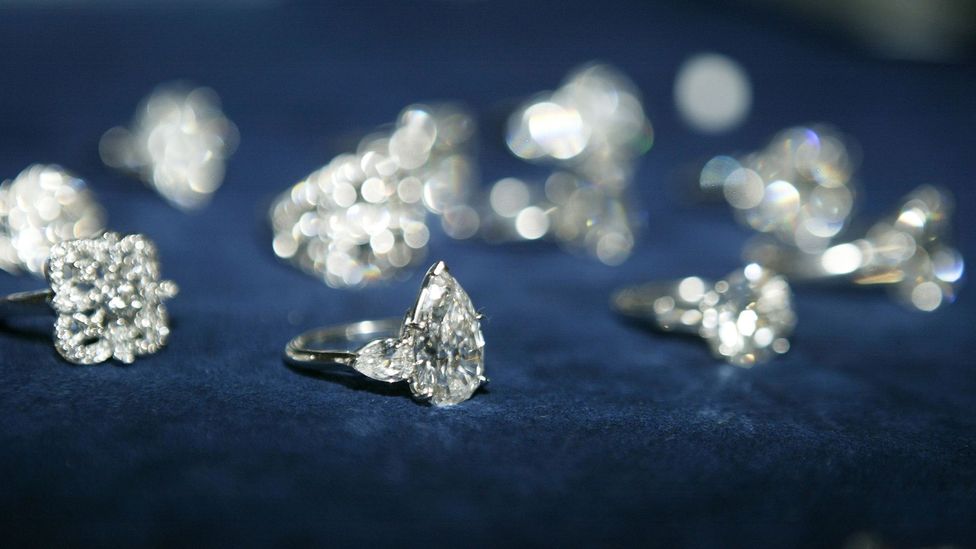
Demand for diamonds is declining in many parts of the world at a time when the industry has an oversupply of the gemstones (Credit: Getty Images)

"Mined diamonds I think are very time-limited now -- the industry will come to an end, it's a question of when."
"We no longer need to mine the earth to make diamonds, because we can mine the sky."
Dale Vince, founder, Ecotricity Plc
 
"Marketing spend, by not only the man-made diamond industry but also the natural diamond industry is likely what will ultimately determine the success in the long run."
"If you're trying to be the lowest-cost producer you don't care about using hydropower as you aren't going to get a premium for it."
"You need to be able to sell it at a premium or build it as a brand."
Paul Simnisky, diamond analyst, New York
 
"I believe in the next 12 to 24 months we will see a major shift in consumer mindset which will force this industry to ensure that everything that is passing through is a low-carbon product."
"And the lab-grown guys will push ahead."
Amish Shah, ALTR Diamonds
 
"It's very confusing today, there are a lot of companies that are talking about sustainability and being carbon-neutral but they can't really put proof to the claim."
"When you see a new product coming into the market it's kind of a free-for-all -- there are no rules or regulations."
"But now you're seeing consumers asking questions, the same questions they are asking about natural diamonds: what is the source?"
Leon Peres, CEO, SCS Global Services
Diamonds are now widely seen as the ultimate expression of love thanks largely to clever marketing by the industry (Credit: Getty Images)
 
SCS Global Services is in the process of certifying through audit the sustainability footprint of lab-grown diamonds produced by Green Rocks Diamonds, based in Israel. These are the diamonds of choice for lab-grown jewelry retailer Kimai whose eco-conscious customers want to be assured that the precious gems they're prepared to put out big money for are green sustainability products. According to Jessica Warch, co-founder of Kimai, clients are wary of goods coming out of a big hole in the ground.  
 
"From the perspective of sustainability it isn't just being carbon neutral", she explains. "There's much more to it. There's the environmental and social perspective that's rarely taken into account when people talk about carbon neutrality, which to us is the most important part." Production facilities in India where ALTR Diamonds are produced, is capable of switching to solar power for energy to complement its source of methane; cow dung, according to Amish Shah.

Diamond mining can involve the removal of vast amounts of earth and rock which creates holes so big they can be seen from space (Credit: Alamy)

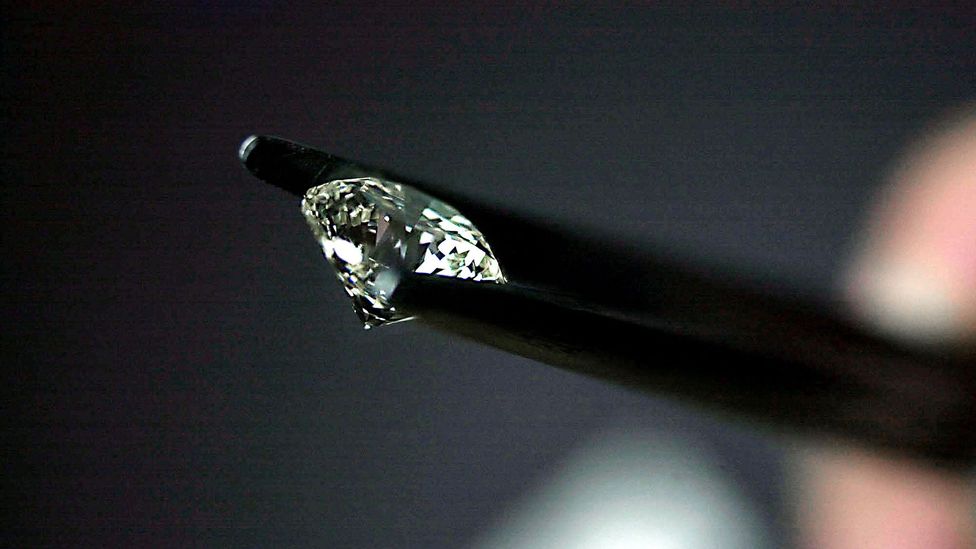
Lab-grown diamonds are virtually indistinguishable from natural diamonds. The big difference between natural and lab-grown rests with the traditional extraction methodology in pulling diamonds out of the earth. It is a lengthy, energy-intensive process which leaves a significant carbon footprint. Lab-grown diamonds are focused toward energy neutrality, to appeal to a rising number of consumers for whom environmental consciousness is important.

The diamonds themselves have identical compositions such that manufactured stones now pose a competitive rivalry to their naturally formed counterparts. Leading jewelry retailers now find it worth their while to serve their clients the stones they specifically enquire about and increasingly that means diamonds from eco-sensitive perspectives of production. 
 
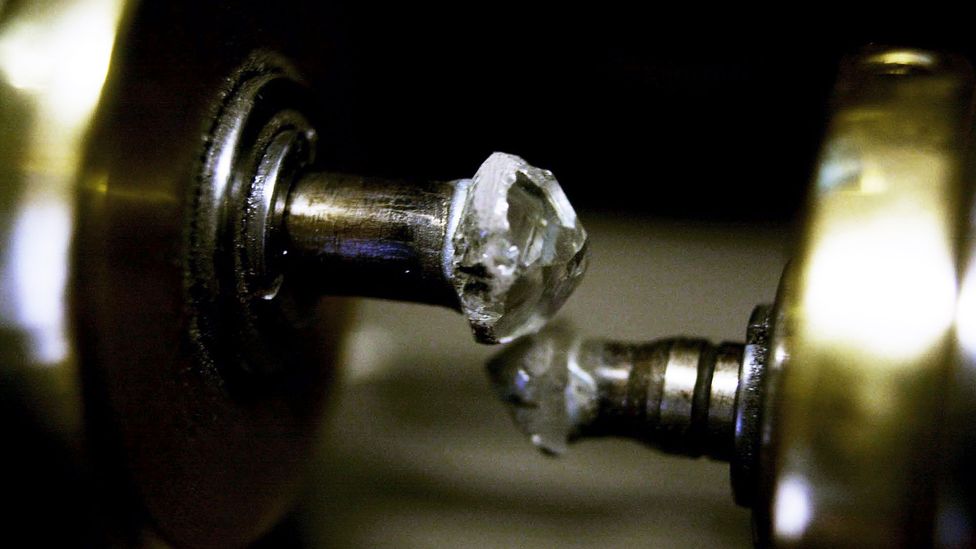
Diamonds are among the hardest materials on the planet, which means the only way to polish a rough diamond is with another one (Credit: Getty Images)
 
There are two means by which lab-grown stones are produced; by mimicking natural formation with the use of high pressure and heat, or through a process known as chemical vapour deposition. CVD begins with a single-crystal diamond seed, placed in a chamber filled with hydrogen and a carbon-containing gas like methane; heated to 1,200C. The seed is built up by the carbon which forms the diamond crystals. Much like an oyster irritated with the presence of a tiny mineral, and that reacts by covering it in layers of  nacre -- and a pearl is formed over time.

Ecotricity Plc. creates its own methane, that greenhouse gas resulting from a combination of carbon and hydrogen, by splitting hydrogen from water with the use of electrolysis pulling carbon from the atmosphere. The production of lab-grown diamonds is on the increase though the industry has a long way to get there yet before it catches up to mined diamonds; 7m carats were produced last year; in comparison the mined process produced a volume of 111m carats in the same period.

A polished one-carat lab-grown stone now sells for a third less than a polished mined diamond. But there's no getting away from the use of renewable energy like hydropower as a challenge to the traditional mining method to the newer lab-produced diamonds. A growing number of rival producers in India and China remain fixed within old mining practices, despite that 50 percent of the world's lab-grown diamonds are now being turned out in China.
 
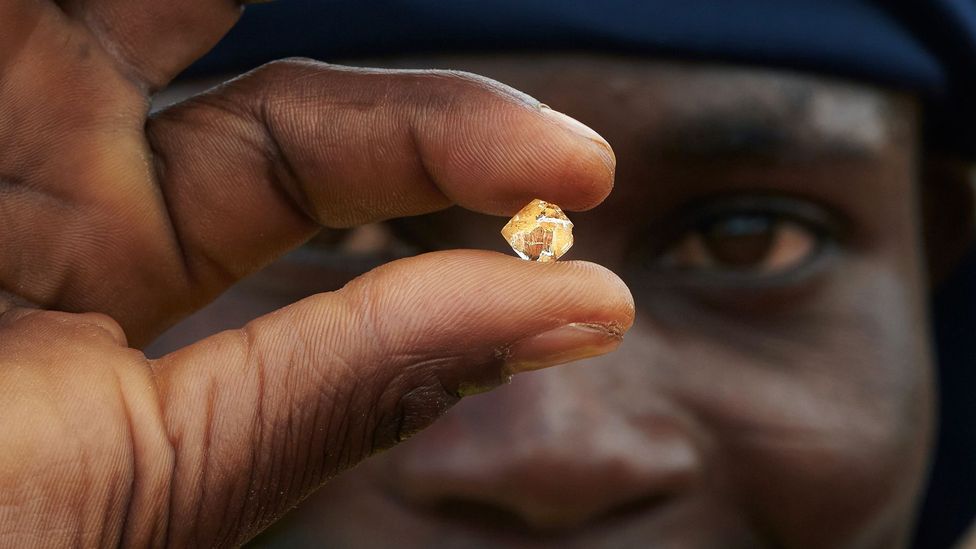
Diamond mining provides employment in developing countries but is also surrounded by humanitarian concerns (Credit: Getty Images)

Labels: , , ,

Sunday, August 23, 2020

The Health/Beauty Marketing Trap

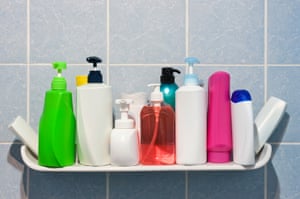
Several bottles of shower gel, shampoo and other washing products
Perfumed, moisturized, exfoliated. Enviromantic/Getty Images

"I don't want to tell anyone they're wrong. Some people really love beauty. If someone has the money and time, and really enjoys those cleansing rituals, that's their right. But it's nothing to do with health or preventing anything."                                "We tend to be very susceptible to marketing and advertising that associates products and brands with health, when in fact many of us are spending time and money doing things that we could try doing without."                            "I take short, quick showers that aren't hot. It gives me a rinse, makes my hair lay down, and makes me feel like there's some divide between night and day in this pandemic time, especially."                                                                                        "I wash my hands because I don't want to have disease. I'm deliberate about why I'm doing what I'm doing."                                                                                   "Teeth whitening is a great example. It's very much social, and about beauty. But it doesn't actually have to do with hygiene, and it doesn't mean your teeth aren't free of bacteria and you don't have an oral infection."                                              "There was great social value in knowing you weren't part of the people living next to the open sewage piles that were in [pre industrial era] London and elsewhere. You were part of the washed class because you could afford soap and water."  Dr.James Hamblin, preventive medicine physician, lecturer in public health policy, Yale University

Research shows that Amish people – who live a rural lifestyle and embrace traditional agricultural methods – have optimally diverse microbiomes. Photograph: Bruce Burkhardt/Getty Images

Dr.Hamblin's argument is that the public has chosen to believe all the marketing and advertising geared to persuade them that cleanliness and optimum hygiene can only be obtained by purchasing and using the products crowding the market promising better health, improved appearance and an upgraded outlook on life come complete with the use of redundant products such as moisterizers, artificial ointments and lotions that smell good and promise the world. When, in fact, all that is required to attain both health and hygiene goals is a bar of soap and running water.

In point of fact, points out Dr.Hamblin in a newly published book, Clean: the New Science of Skin, the overuse of a tangle of products that are unneeded, fail to produce a positive outcome as promised, and in the long run often disturbs the natural cleansing process our bodies themselves have acquired as a result of evolution. Applying artificial ointments, lab-produced with an encyclopedia of chemicals makes it more difficult for the natural processes that have developed to nurture our skin, the largest organ of our body.

The Demodex mite as an example, a microscopic creature which teem in huge numbers over our skin feed off discarded and dead cells, in so doing act as a natural exfoliant, superior to the microbe-ads we are persuaded to scrub on our faces. Additional mites and microbes living on our skin consume sebum which works to apprehend oily skin from developing. "They're not hygiene practices. They're recreational and social practices", Dr.Hamblin notes of the products we use to shower, to scrub and salve skin with.

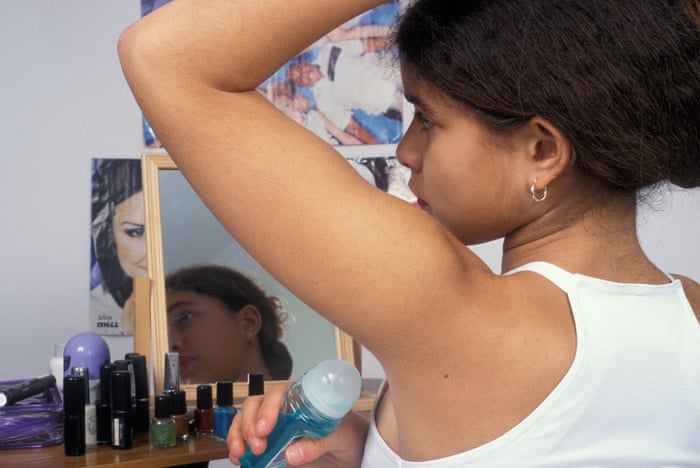
Stigmatism of body odour began as an advertising strategy that helped quadruple the sales of Lifebuoy soap in the 20s. Photograph: Angela Hampton Picture Library/Alamy

The hygiene, beauty and cosmetics industry has a value of $500billion. Dead cells disappear as our skin regenerates roughly every 27 days. Dust and particulate matter from the atmosphere can be washed away with the use of water. Dr.Hamblin insists that once your body reaches a steady state after returning to normal with the removal of all chemical products commonly seen on the market, problems with body odour tend to disappear. Soap, he contends, dries out the skin, which then requires the use of moisturizers.


Dr.Hamblin uses nothing but water when he takes his regular showers, using hand soap primarily for his hands alone. And he brushes his teeth for the singular purpose of sustaining their condition: "I don't want them to rot", he says. With the original production of soap in the pre-industrial area, soap was expensive, serving as a symbol that you were elevated over those who were unable to afford a bar of soap. With the Industrial Revolution soap, like most other products was produced more inexpensively, placing it in the realm of affordable for many more members of the general public.

Dr.Hamblin is also quick to point out that showering goes beyond its daily cleansing purpose; it is a normalcy measure, a reassuring routine that gives structure to the day. You awaken, you shower, you break your fast, you leave the house and arrive at your workplace. "This is an odd time, and at times like this, it becomes important to do things that ground you. These [ritualistic] markers are important to us to maintain the rhythms of how our minds and bodies are meant to function."

Labels: , , ,

Saturday, July 18, 2020

JUST Settling for Less Nutrition

"The mission of the company is to try to build a healthier food system as fast as we possibly can. And we're going to do that by focusing on building technology and bringing products to people."
"But much more important than anything that we're doing are individual consumers in their everyday lives, in their own families deciding that they want to be a part of creating a healthier food system too."
"It's that shift, it's that drive, it's that leadership that is going to change this world. And I'm just really proud that we get to bring [our products] to Canadian consumers."
Josh Tetrick, co-founder, CEO, JUST Plant Egg
VegNews.JustPlantEggCanada

"[The most significant difference between the JUST Plant Egg and a poultry egg] is the absence of essential nutrients including vitamin B12, selenium, vitamin A, vitamin D, choline and two antioxidants -- lutein and zeaxanthin -- all of which reside primarily in the egg yolk."
Amanda Li, registered dietitian, Toronto
The mission statement of the JUST Plant Egg as repeated above, is clearly commercialization-oriented, an opportunity to grow yet another alternative food source to deliver protein, and present itself as an improvement over standard old stand-bys such as animal product-type poultry eggs, while delivering a message of environmental responsibility and virtuous superiority. Just -- another highly processed food product, presenting yet another choice for conscientious consumers, setting aside the emotionally charged purple prose of marketing environmental consciousness.

A presentation by food company Eat JUST, Inc., based where else? in Silicon Valley, where its 'folded scramble', labelled JUST Egg in the United States, introduced to the U.S. food market there several months ago, destined to be known as JUST Plant Egg when it reaches stores in Canada. It will be widely sold, in over 100 Walmart stores across Canada, in Whole Foods Market locations, available for the recommended retail price of $6.99, which will buy a four-pack in the freezer section.

This is a precooked product, meant to be reheated in a toaster, a microwave, oven or stovetop frying pan. Not exactly what is meant by 'whole food' in the sense that it is not quite as nature produced it, but rather, processed as nature might never have imagined it. The product can be used to prepare scrambled eggs for breakfast, in sandwiches, wraps burritos, stir-fries, grain bowls and fried rice.

The JUST Plant Egg is pre-cooked and designed to be reheated in a toaster, microwave, oven or in a frying pan on the stovetop.
The JUST Plant Egg is pre-cooked . Eat JUST, Inc.

The plant-based egg, which contains turmeric for its yolk-similar colouration, is favourably comparable to a standard egg in protein content. And while a hen's egg contains six or seven grams of protein, the JUST Plant Egg has a standard seven grams, cholesterol-free, with 100 calories, in comparison to a hen's 80, with seven grams of fat (0.5g saturated fat) as opposed to a conventional egg's five grams (1.5g saturated).

Basically, the Plant Egg is comprised largely of mung bean protein, is a non-GMO product, with all natural flavours. A new survey examining dietary preferences in the last six months suggests that vegetarians, vegans and pescatarians in Canada are increasing in number. "Canada may have more than 600K vegans now", (out of a total population count of 37.59 million), according to Sylvain Charlebois, senior director, Agri-Food Analytics Lab, Dalhousie University. "47.1 percent of Canadians would consider alternative sources of protein", the lab found, in a survey.

 Eat JUST, Inc. is launching its folded plant-based egg in Canada this fall.

Labels: , , , ,

Thursday, May 10, 2018

Bored Palates? Food Fads Mushrooming....

"We have discovered that mushrooms may be even better for health than previously known. They can be excellent sources of four key dietary micronutrients that are all known to be important in healthy aging."
"We are even looking into whether some of these could be important in preventing Parkinson's disease and Alzheimer's disease."
Robert Beelman, professor, food science, Pennsylvania State University
Mushrooms
Mushrooms contain some valuable nutrients.

We are forever searching for magic formulas that will make us healthier, guarantee longevity, create taste sensations, and allow us to be among the food cognoscenti partaking of truly fashionable dining choices. Mushrooms, decidedly within the fungi genus require a host to grow upon and usually that turns out to be decaying woody fibers. In woodland settings in spring and fall people who know their mycology, which are safe to eat and which best to avoid, go on expeditions to hunt out tasty morsels  for the table.

Mushrooms are known for other things too, of course, not merely for their edible qualities and taste sensations, but for other, more exotic values, as doors capable of opening us into a world of psychedelic wonders. There are those people who will go to great lengths to hunt down these marvels of psychic transformations and out-of-mind experiences. Clearly, the mushroom family is a vast species of flora capable of delivering both sustenance and mind-altering sensations.

From time to time on an ongoing basis one type of grain or fruit or vegetable is selected by influential public food figures as the 'food ingredient of the moment', and recipes and various exotic edible concoctions and pairings begin to take centre stage with a focus on stamping the chosen food item as special far beyond the nutritional qualities of other foods. The careful curation of establishing a stellar reputation for such foods results in their wild popularity, including for foods that few enjoy the taste of.

But mushrooms in all their various types are by and large good tasting as well as packed with nutrients while carrying very few calories. What's not to like? Dr. Beelman, in conducting a 2017 study, found specialty varieties like shiitake, porcini and grey and yellow oyster mushrooms are possessed of exceptionally high concentrations of antioxidants, ergothioneine and glutathione -- yum and benefits combined!

Even the button mushroom, the most common type to be found on supermarket shelves, and the safest bet for mushroom-suspicious food-preparers contain high levels of selenium and potassium. Mushrooms' new popularity and buzz is expanding the consumer market worldwide, with expectations that mushroom sales will result in over $50 billion by 2023. As for medicinal mushrooms combined with other foods, that market has surged by 800 percent.
Stuffed mushrooms
Make stuffed portabella mushrooms by filling them with your favorite ingredients and baking.

Medicinal mushrooms like chaga, lion's mane and reishi are being used in broths, beverages and even in the production of body care products on their way to presenting as one of the biggest food trends for 2018. Of the taste sensations such as sweet, salty, spicy, sour and bitter there is also umami, attributed to mushrooms. Umami is the taste that the Japanese explain is exemplified by monosodium glutamate, the ubiquitous taste enhancer in traditional Chinese food preparation.

Medicinal mushrooms are now -- wait for it -- being added as mushroom powder to lattes in coffee shops. Roasted coffee beans are similarly being blended with various types of fungi. Can it hurt, given that mushrooms are packed with vitamins and minerals? If while drinking coffee there is a lingering underlying taste of mushroom, it certainly might put some critical palates off. Perhaps, however that might be counteracted by the impression that it's high-style?

Before we get too immersed in the discussion entirely on the side of the mushroom cheerleading team, some scientists have given warning that the health benefits attributed to mushrooms require far more evidence before what's bandied about becomes a given. Chaga, commonly used in medicinal tinctures and teas, as example, said to "support cellular regeneration", "important for liver cleansing, "keep skin youthful", appears to be mostly wishful thinking.

According to MindBodyGreen, an examination "couldn't find a single study in which researchers gave chaga to human beings for any reason, let alone to determine if the fungus slows down aging in the skin". Caveat emptor!

Eating death cap mushrooms may lead to liver and kidney damage as well as death.

Labels: , , ,

Wednesday, March 21, 2018

Entomophagy: The Evolution of Food

"When you read books by [European] travellers in the 1700s or 1800s, if they went to Africa or somewhere like Mexico where they saw people eating insects, it would be like, 'Their hunger's so great, their access to meat so scarce that they resorted, horrifically, to eating insects'."
Julie Lesnik, Assistant Professor of Anthropology, Wayne State University, Detroit

"That wasn't the case whatsoever. They were doing it because it was healthy and good for their environment."
"It's delicious, it's nutritious and it's sustainable."
"This opportunity with Loblaw is massive validation for the category [insect eating], for our industry. We're excited to see what comes out of it in that respect. Hopefully it's just that first step toward further acceptance and normalization."
Jarrod Goldin, Entomo Farms, Norwood, Ontario
Loblaw Cricket Flour 20180306
Roasted crickets are shown at the Entomo Farms cricket processing facility in Norwood Ont., in this April 2016 photo. (Fred Thornhill/Canadian Press)
"It's one thing for us to be educating people and telling them, 'You can get these products from this website'. It's another thing for them to see it on their grocery shelf."
"That legitimizes it so much more. It gives the consumer the trust and confidence to try that product because their trusted grocer is carrying it." 
"There is a variety of different applications and, as the industry has grown -- even in the last two years -- the diversity of applications has grown. So we've seen more and more ways that these start-up companies are looking at using the insects in their products and ingredients.
"...Their value statement is: every jar of [insect protein] pasta sauce saves 18 bathtubs [1,900 litres] of water compared to the beef. To be able to put that impact into perspective for consumers after they do a blind taste test and can't even tell -- that's really powerful."
"It's an incredibly wholesome food source that should be available to anybody who wants to utilize it. We don't need everybody to eat it, because not everybody eats shrimp, not everybody eats pork and not everybody eats broccoli -- but those are thriving industries. We only need to have a very small percentage of the consumer base actually add this into their diet to create a very robust and thriving industry. And to be able to show some very outsized environmental impacts."
Robert Nathan Allen, president, Little Herds 

"We're actually looking for a supplier that would help make those [nutritional bars], and then of course Entomo would supply the raw material."
"The [cricket] powder made more sense because people could incorporate it into food ... It's helping bridge people that have a bit of the 'ick' factor. You see the powder and it looks quite benign, and looks like something you could add into anything you're cooking."
Kathlyne Ross, VP, product development and innovation, Loblaw Companies Ltd. grocers
Plates of fried crickets. Roughly 80 per cent of the global population is known to eat a range of bugs. Hoang Dinh Nam/AFP/Getty Images
It's been rumoured, talked about, wondered at, tried out for many years. The 'ick' factor is certainly there, but so is a good number of people with the will and the curious interest to give them a try, to be persuaded that eating insects of various types in intriguing presentations is of value in feeding the world of humans with protein to build strong bodies. In particular this source should be of interest to vegans and vegetarians since animal products identify as the prime source of B12. And then the case can be made that insects are part of the animal kingdom.

"It's hard to wrap my mind around because, if you're using cricket, you're not a vegan or vegetarian anyway", stated Amanda Li, a registered dietitian. "In my opinion, if you're going to be eating fish, chicken, or turkey ... you probably don't need to add more protein on top of that unless you're trying to be more sustainable"; her perception that seems to question the need for yet another animal source of protein. She is likely in the minority, however; the prospect of opening up new food markets to a source that is the most abundant of all life on Earth appeals to many more involved in the food industry.

The Food and Agriculture Organization (FAO) of the United Nations has been forthrightly praising and attempting to further a consumer dietary market comprised of insects, identifying them as a hugely sustainable high quality protein source. Which just incidentally needs six times less feed to produce the equivalent amount of protein than does cattle. People living in northern global regions where cold winters limit the presence of insects to seasons tend not to consider bugs as food, unlike those in Mexico, Central and South America whose plentiful natural resources include insects and where eating them is culturally established.

An estimated two billion people globally consume insects, regarding them to represent a normal proportion of their daily diet. The worldwide market for insects for the dinner plate was valued in 2015 at close to $43-M and it is anticipated that this is due to gain momentum, up to 40 percent growth by 2023. As many as two thousand edible insect species flourish around the world; ants, grasshoppers, beetles and caterpillars and countless others in a world where consuming bugs has now crept into the Western world.

Now that Loblaw grocers has added cricket to their shelves, it can be considered that the eating of insects is finally on stream to become accepted as part of the North American diet. Entomo's cricket powder is sold at all Loblaw grocery stores throughout Canada, having been added to the PC Insiders Collection. Protein powder produced from crickets is readily available at the local supermarket. Research published by the journal Global Food Security in 2017 concluded that insects and plant-based meats "have the highest land use efficiency". 

If people exchanged half of the traditional animal products they consume, such as beef, or lamb for bugs "the land required to produce the world's food would be slashed by a third", according to The Guardian in the U.K. And Loblaw promotes cricket powder as a food source with strong sustainability, nutritional properties, diverse applications and palatability. A boon for the mass market. The very concept of entomophagy in the West; insect-enriched pancake mixes, cookies, crackers are promoted as added protein nutrients.

The rule of thumb for their use in savoury or sweet baking is ten percent substitution of total flour with cricket powder. Protein powder is becoming a popular choice among athletes, along with those people involved in weight management. It is viewed as convenient, either used as a meal in itself, or to balance and fortify a meal or snack otherwise not containing protein. Cricket powder, a whole food, makes a perfect addition. The insects are harvested at the conclusion of their natural life cycle; rinsed, roasted and ground.

Because of economies of scale, in comparison to other products on the grocery shelves, insect protein is not cheap. A 113-gram (quarter pound) bag of PC-brand cricket powder sells for $13.99, while a 573-mL (16 fl.oz) jar of cricket Bolognese is priced at $9.99. Once insect eating becomes mainstream and production rises full-scale, the costs of the products at the retail level will moderate, as it does with the introduction of any new products.

Cricket powder contains calcium iron and 100 percent of the daily values for vitamin B2 as well as being high in protein, with 13 g per 2-1/2-tbsp/19 -serving.

 Loblaw Companies Ltd. says it is adding cricket powder to its lineup of President's Choice products.
Loblaw Companies Ltd. says it is adding cricket powder to its lineup of President's Choice products. (Jessica Doria-Brown/CBC)

"From a nutrition standpoint, it is really interesting because, not only are crickets a source of protein, but they also have other vitamins and minerals in there."
"Because cricket powders are still holding the full cricket, you're getting the iron, vitamin B2 and the calcium that's in the cricket itself, whereas you might not be getting that with a protein powder."
Vincci Tsui, registered dietition


Labels: , ,

Wednesday, December 27, 2017

Placing the Market Before the Legislation

"When you think about medications that have been given approval to be sold in pharmacies, that's where most if not all of our medications come from [after hundreds of millions are invested in clinical trials, for marketing approval]."
"That model simply does not hold for much of the classical herbal cannabis research, where you're looking for basic claims of efficacy and safety, but not trying to make a formal claim for a product that is going to be patented."
"Access to a credible placebo may seem like an odd thing to have as a challenge. But bear in mind that many of these studies are placebo-controlled, so you need a drug which is a credible placebo -- looks and smells and for all intents and purposes pretends it is cannabis when in fact it does not have the active ingredient you are testing."
Mark Ware, pain researcher, McGill University Health Centre, Montreal

"It's [marijuana] already at market so there's really no incentive, or virtually no incentive, for licensed producers to take the money they're generating from the sale of these products and reinvest it in research."
"One thing that was quite consistent was adverse events. And the benefits, even if they're real, are much smaller than what people might anticipate."
"I think this gives [doctors] some comfort, saying, 'Look, here's the evidence. It's actually missing in a lot of places, so I can't give it for conditions X, Y and Z'."
"Some of the pain studies go for nothing more ... than five, six hours. And this is for chronic pain. It's hard to get a great feel for how someone is going to do long term on a medicine after five, six hours."
"[The only evidence of marijuana being used to treat glaucoma is a single randomized study conducted on six patients]. We would kind of be putting the cart before the horse if we started to prescribe this without the research."
Dr. Mike Allan, professor of family medicine, University of Alberta, Edmonton
Advisories prepared by the Alberta College of Family Physicians, distributed to more than 32,000 clinicians, outline the scientific literature, or lack thereof, around medicinal marijuana.
Advisories prepared by the Alberta College of Family Physicians, distributed to more than 32,000 clinicians, outline the scientific literature, or lack thereof, around medicinal marijuana. (CBC News)

"We're in a unique place because a lot of large pharmaceutical companies are reluctant to fund these studies where they don't necessarily see the incentive for something that they aren't able to patent."
Professor Robert Laprairie, University of Saskatchewan

"You can design a short-term study with marijuana, or for that matter, with alcohol or opiates, and say, 'Look, we gave people a bunch of alcohol over a three-day period or one week or one month and they seem to feel better. It helped their anxiety'. But that doesn't mean it's a good medication."
Dr. Meldon Kahan, Women's College Hospital, Toronto
Medical Marijuana: How the Evidence Stacks Up
There is controversy aplenty, and lots of second guessing and hand-wringing over potential consequences with the final federal approval in Canada of legalizing the growing, marketing, use and possession of marijuana in mid-2018. The process of licensing growers and commercial sales outlets is ongoing. The agreement to divide the taxes derived from the sale of the weed between the federal government and the provinces has been settled. Police forces throughout the country are attempting to understand the parameters around which they will work in enforcing the law relating to driving while high.

The Colleges of Physicians and Surgeons are concerned as are Pediatricians, over the possible deleterious effect on the nation's youth that may result with those under 20 years of age using the drug that has the potential to inhibit brain maturity. And there are concerns over the prospect of a future where the consequences of long-term use of marijuana may turn out to be problematic because no one has ever done a concentrated study specifically to determine what those consequences might be.

The market of social users, like that of medical-use marijuana, continues to grow apace. Health Canada's data shows that licensed medicinal cannabis producers have increased between June of 2016 and June 2017 at a steady rate, from 75,166 to over 200,000; a tripling of registrations in each year  to the present.Yet concern is growing that there is no data with respect to long-term health outcomes with marijuana use.

The pharmaceutical model where research is conducted to license and patent a new drug to enable it to be commercially viable after proof that its use has medical merit, at a cost of multiple millions of dollars for each patent, in the greater interests of future years of sales, has bypassed a product that is already in circulation and has been for countless years, a product whose merits and demerits are vaguely recognized but has never undergone the scientific rigor of research and clinical trials.

Precisely because so many people have turned to the use of medical cannabis while questions remain open regarding its risks and effectiveness is hugely concerning to health authorities. This is a medication that was once regarded strictly as a recreational drug that has never undergone years of expensive commitment to scrutiny. There is no exclusivity of production and sales with marijuana, unlike what normally occurs when bringing an entirely new class of drugs to market.

However, points out Dr. Ware who served as vice-chair on the federal government's legalizing cannabis task force, the competition existing among licensed marijuana producers has led some to decide to invest toward research if only for the purpose of differentiating their brand from                that of other producers. Dr. Allan, on the other hand, foresees few benefits for producers to invest in such research since they already have a free, shared market.

And should negative results surface from any such research and resulting trials, no one would benefit; an obvious disincentive to embark on the process. A positive result from research, on the other hand, would change nothing. Still, according to Dr. Laprairie, there has been a steady and rising interest on the part of academics, patients and licensed producers to engage in advanced medical cannabis research.

Dr. Kahan is of the opinion that evidence does exist that cannabidiol, a marijuana compound, does produce medical benefits inclusive of pain relief, though he feels more study is required. The absence of a placebo that would be seen to be plausible appears to be a problem, since future study participants quite often have had ample experience with the use of cannabis, enabling them to readily recognize whether they have been placed in the study or the control group.

Dr. Allan points out a study finding that between 85 and 90 percent of nurses, for example, were able to differentiate when patients were on pills with cannabis derivation.

THE CANADIAN PRESS/Sean Kilpatrick

Labels: , , , , , ,

Friday, November 24, 2017

Forewarned

"Alcohol is such a big part of our culture in Canada. We're inundated with alcohol marketing that shows us how much fun alcohol is. It's part of most of our celebrations."
"...[But] consumers have a right to know the health risks if they do choose to drink alcohol. If they do choose to drink, they can do so in a safer manner."
Erin Hobin, researcher, Public Health Ontario

"Simply presenting all the negatives all the time, and not the positive, is I'm not sure [sic] terribly helpful."
"You have to have both messages there, because otherwise it comes off as a kind of scare message. You mention the word cancer, and people freak out. And rightfully so."
Jann Westcott, president, Spirits Canada
"Alcohol continues to be a significant factor for violent crime in the Yukon."
"New data from Statistics Canada show that while crime severity in the territory has remained stable from 2015 to 2016, violent crime severity has mounted."
"Dan Cable, a spokesperson for the Yukon Department of Justice, noted in an interview with the Star that 90 per cent of all violent crime lists alcohol as a factor."
"'We have an alcohol problem in the territory,' he said. 'Yukon has one of the highest uses of alcohol, and alcohol is a factor in criminal behaviour'."
"The information comes from Statistics Canada’s annual report on police-reported crime."
"It shows that the Yukon’s crime severity index (CSI) dropped by less than one per cent between 2015 and 2016 – while the violent CSI rose by more than eight per cent."
"The crime rate fell by five percentage points, with 9,118 actual incidents in the territory last year."
"The crime severity index includes all Criminal Code of Canada violations. It tracks changes in crime severity by reflecting the seriousness of individual offences, while the violent CSI focuses on violent violations."
"Other reports show that the Yukon has almost three times the national rate of hospitalizations caused entirely by alcohol. That excludes emergency room visits and accidents resulting from impaired driving."
"As well, the territory had the highest rate of alcohol sales per capita in 2014, and the second-highest percentage of self-reported heavy drinking."
"Last year, there were 366 impaired driving charges in the Yukon and 169 drug violations."
"Yukon RCMP also reported 1,555 violent Criminal Code violations in the territory last year, with assaults accounting for the majority, at 1,019."
Whitehorse Daily Star, Whitehorse, Yukon
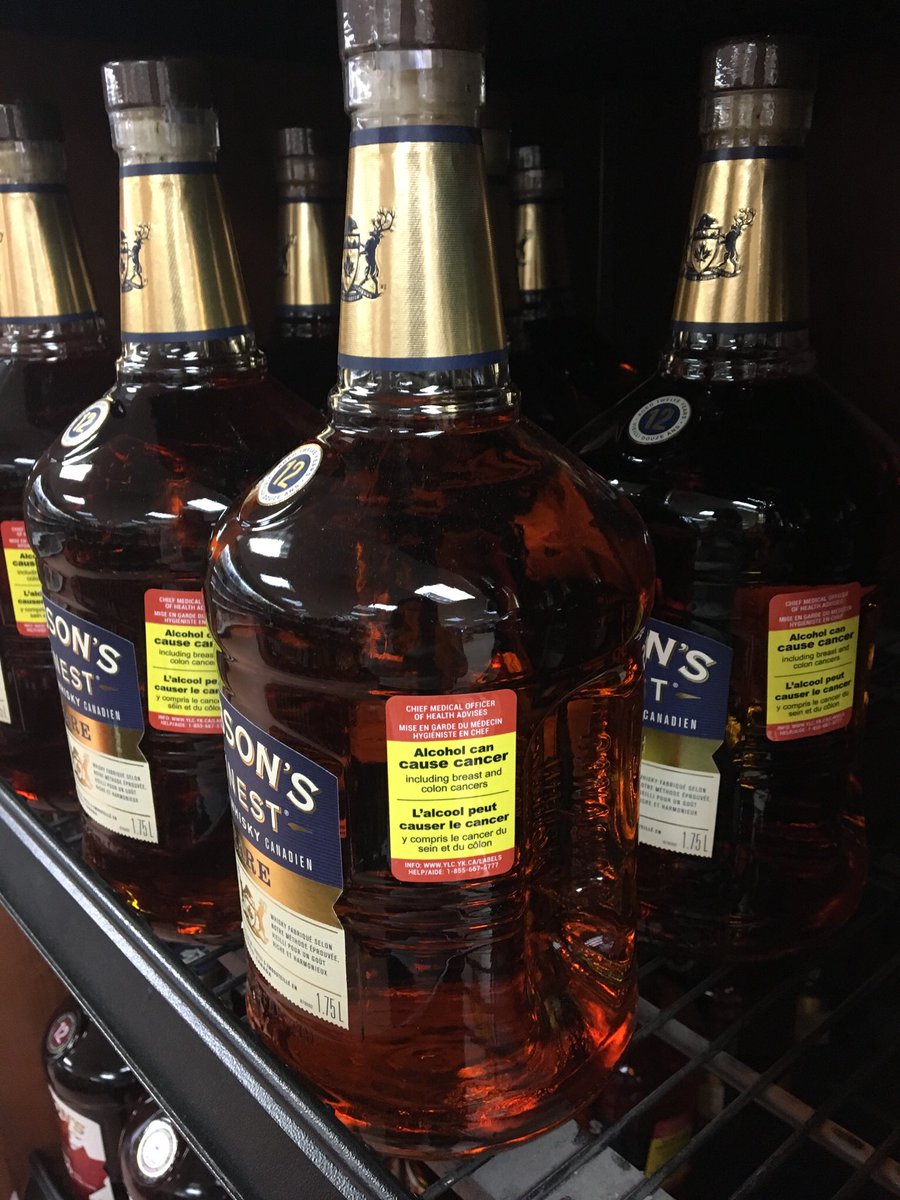
In the first experiment of its kind in the world, Yukon introduced warning labels on alcohol bottles this week detailing drinking's cancer risk     Handout

Canadians generally make the assumption that drinking in moderation  is harmless to their health. That assumption rests on the messages that have reached the public through research findings where small amounts of alcohol are seen to be useful in reducing the incidence of heart-health risk. That assurance of moderation and presumed health safety served to convince the public that drinking in moderation is a positive, heart-healthy activity.

Earlier this month though, came the latest medical news from the American Society of Clinical Oncology warning of alcohol consumption dangers, linking alcohol directly with over one in twenty cancers worldwide. Now that's something to think about. And according to researcher Erin Hobin, evidence often cited of health benefits linked to alcohol happens to be "very conflicting", and this appears to be the position of the U.S. Centers for Disease Control, along with other like groups.

A survey conducted over the Internet of over two thousand residents of Ontario revealed that most respondents supported the placing of alcohol information labels on liquor bottles. The labels, explaining the size of standard drinks and safe-practise drinking levels appeared to have the support of most people in the general public.

Two diffferent warning labels will be added to alcohol containers in Yukon in the coming months, as part of an ongoing Health Canada study. One label warns of the cancer risk associated with drinking, while the other encourages healthy drinking habits.
Two diffferent warning labels will be added to alcohol containers in Yukon in the coming months, as part of an ongoing Health Canada study. One label warns of the cancer risk associated with drinking, while the other encourages healthy drinking habits. (Government of Yukon)

Labels that warn "alcohol can cause cancer ... including breast and colon cancers". Another that with the use of graphic images recommends that women have no more than two standard drinks daily; men three drinks. Both should set aside two or more non-drinking days weekly to "reduce health risks". While a third label will explain that five ounces of wine, 12 ounces of beer, or 1.5 ounces of spirits represent a standard drink.

Dr. Hobin and a team of researchers put together those labels, and set about at the urging of authorities in the Yukon through the Yukon Liquor Corporation, to hand-affix stickers to thousands of bottles in Whitehorse, as a Canadian first in a type of warning exercise for consumers who may not know how vulnerable they can be when drinking to excess.

Bottles of liquor, wine and allied alcohol in the stores operating in the territory now include these large stickers advising that drinking alcohol has the potential of causing breast and colon caner, offering information on "safe" consumption levels. Two studies launched by Ms. Hobin and colleagues at the University of Victoria led to this initiative whose effect on the public will undergo analysis over the next eight months.

This effort is in lock-step with health groups all over the world attempting to make people aware of alcohol's carcinogenic potential. Korea is unique in having a similar program, though it's labels fail to mention cancers in particular. In the United States there are warning labels on alcohol of a sort; text-only messages in small print addressing known risks of drunk driving and drinking while pregnant.

The labelling runs the risk of irritating some consumers. And the reality is also that many people become inured to the presence of label warnings, and ultimately they have little positive effect. But a study undertaken by Hobin and her colleagues through focus groups held in the Yukon concluded "strong support" for warnings, participants urging that larger ones including pictograms be favoured.


Yukon launches alcohol warning labels linking alcohol and various cancers - a world first! labelling

Labels: , , , , ,

Friday, October 21, 2016

The Respectability Branding of Weed/Pot/Ganga

bob marley quote about bob marley smoking quotes weed bob marley ...smoking weed quotes bob marley quote on marijuana and music quote life ...

"First, we take away any of the vernacular such as 'weed', 'pot', 'ganga'. In terms of imagery, we skew away from any green leaves or even the word marijuana."
Olivia Mannix, Cannabrand, Colorado cannabis product branding group

"We're very excited to bring Marley Natural to Canada. Yeah, mon!"
"We have the same values [as Privateer Holdings, Seattle]; social change, environmental sustainability, and to actually build a professional, responsible and legal cannabis industry."
"Daddy's message was unity, personal freedom and social justice. It is what he sang about, what he fought for, and how he lived. It's timeless, and it still resonates."
Cedella Marley, daughter of Bob Marley

"We set out on this old-fashioned, boots-on-the-ground adventure to go to places like northern California, Oregon, Washington, Colorado, British Columbia, Jamaica, Israel, Spain, the Netherlands, trying to understand the status of the cannabis industry."
"We set out to create our own brand at Privateer. We chose to wear suits. We weren't going to use the typical slang words and cliches.. We weren't going to use the leaf all over the place or the colour green."
Brendan Kennedy, CEO, Privateer Holdings, Seattle

"I remember leaving that meeting and thinking two things: One was, if these guys are right, this is probably the biggest opportunity we've seen come through Heckler's [public relations/branding/advertising] doors since Starbucks."
"This plant had been demonized for a long time. There were conceptions of the consumer that were fairly inaccurate. So for me from a branding perspective, coming into a situation where you really have some things working against you, and to see how you could really work in a marketplace that had these strong preconceptions [was appealing]."
"We are literally witnessing the beginning of the end of cannabis prohibition worldwide, and the healing of various nations and economies worldwide in terms of job creation and tax benefits."
Scott Lowry, brand director, Privateer Holdings
Willie Nelson.
American country singer Willie Nelson takes a drag off a joint while relaxing at his home in Texas circa 2000. (Liaison / Getty Images)

With the aromatic scent of the use of marijuana losing its illicit status as the year-old Liberal administration in Canada is on track to legalize marijuana use beyond its health/medical application for those who can acquire the go-ahead from Health Canada, buying their medical marijuana from licensed dealers, there is so much profit to be made by generally retailing marijuana that pot shops have opened in all major Canadian cities -- illegally, since the weed is not yet in that legal status -- risking police raids and shut-downs.

There is so much money to be made from the sale of this product that has so many strains and presentations that celebrities are lining up their own profit margins, buying into the production and sale of pot, lending their famous names to the enterprise in exchange for a boost in their bottom line. Marley Natural, a line of hemp body products and smokeables is just one such example; a winner since of all celebrities the late Bob Marley's name and reputation was inextricably wound into that of ganga's attributes that has attracted so many to the habit.

The dearly departed Marley aside, celebrity licensing has gone into overdrive with Willie Nelson, Snoop Dogg, Nick Lachey, Whoopi Goldberg, Wiz Khalifa and Melissa Etheridge all leaping into the lucrative business of hawking cannabis under their imprimatur. Investors in the steadily emerging and runaway market may be enthralled with the use of marijuana themselves and see no reason why everyone shouldn't have easy access to their particular brand, most of all, because it will make them rich.

Brands, according to Brendan Kennedy of Privateer Holdings, a private equity firm raising capital to invest in the "cannabis space", won't emerge resulting from regulatory change, they are, conversely set to "fuel the cultural change" taking place. His investing venture and his partners invested time and energy in scoping out the market before they took the plunge to commit to fully engaging in it. What they emerged with was the impression that an image problem lingered around the drug's use, and they set about to change that, to make it respectable.
Now, words matter. Take for example, the very word 'Marijuana', it is henceforth to be referred to as 'Cannabis'. And the word 'dealer' with its uneasy connotations of trafficking has become the much more respectable 'budtender', a riff on bartender, ha-ha. 'Paraphernalia' has surrendered to 'ancillary items', so much more innocent in sound if not intent. And goodness me, 'stoned' now is to be referred to as 'deepened perception', infinitely more acceptable. The pejoratives 'pothead' and 'stoner' now merely refer to 'enthusiasts'; how anodyne can you get?
Among other initiatives they undertook to make everything more publicly civil, aside from investing in a proven online cannabis resource, was to land one of Canada's coveted medical cannabis licences; legal and respectable. And they opened a production facility in Nanaimo, British Columbia, branding it "Tilray", an innocuous name with no connotations hearking back to ganga's grubby antecedents. And, of course, they brought aboard the Marley Natural brand; a trifecta of meticulous planning.

Although it remains illegal to patent or trademark psychoactive edibles or cannabis smokeables in the United States in view of marijuana's classification as a Schedule One drug along with heroin, by bringing aboard a high-profile celebrity figure, a social patent is achieved, readily given to being touted on line through all the tentacles of popular social media. Say an Instagram post or a Tweet, so far-reaching that millions across various states, territories and countries can be alerted to its availability even though advertising is prohibited.

Snoop Dogg
Snoop Dogg exhales lungfuls of blunt smoke on stage at WaMu Theater in Seattle, Wash. on April 19, 2014. (Jordan Stead / seattlepi.com / The Associated Press)


There's no stopping this train; it's full speed ahead!

Labels: , , ,

Thursday, August 04, 2016

Breathe Deep, Don't Panic. It Won't Help....

"I don't think we're heading toward a crisis, I believe we're already there. If we look at the reliability of a large number of pieces of equipment, it's really the worst it's ever been."
"We're into almost this downward spiral. Service technicians are getting loaded up with more and more, having less time to do preventive maintenance."
"The less preventative maintenance you do, the more problems you're going to have."
Rob Isabelle, mechanical engineer, elevator consultant

"It [the elevator she was in] started making a lot of banging noises. Then the lights went out. There was a lot more banging went on, and then it dropped to the basement."
"It jolted me when we came to a stop at the bottom. I didn't know what was happening or when it was going to stop. Everything was black. I kept trying to press buttons to try to make it open the doors but nothing would happen."
Nancy Lean, 46, Toronto

Elevator Crash at Philadelphia Criminal Justice Center, August 4, 2016, Critically Injuring Sheriff's Officer Who Was Thrown Like 'Projectile' NBC 10


This woman found herself trapped in an elevator at York Regional Police headquarters in Aurora. This was her workplace. She was on her way to the second floor when the elevator suddenly turned rogue and unamenable to responding to the instructions given it through the up-to-then reliable button system which simply failed to respond. This was, without doubt, an experience that anyone finding themselves in wouldn't be too anxious to repeat.

But it's an experience that is being repeated and repeated and repeated. Infrastructure, particularly mechanical-electrical types grow old and cranky; there is fatigue of the system and its various parts and eventually something will go wrong. Building owners know all this, that it is the cost of doing business to have insurable, reliable equipment in their buildings. To that end they contract for regular maintenance from the industry that services elevators.

Often enough these are the very same corporations that build them, huge multinationals like Otis, Schindler, Kone and ThyssenKrupp. There are also small, independents who also offer similar services. Understandably, they may have the expertise to compete, but the big corporate interests don't look too kindly at their presenting as alternative service ports. So it all comes down to marketing and undercutting competition by low-balling contract pricing.

The fact that there are so many elevators everywhere means that there's a lot of business to be had. It was profitable business at one time. But in the competition to grab greater portions of the market share, even as the elevators themselves were steadily aging and requiring more attention they began receiving less servicing and break-downs began to proliferate.

Imagine living or working on a floor above, say, the tenth floor of any building and the elevator/s break down. That's no mere inconvenience, that's a huge disruption and difficulty; not everyone is in the athletic shape it takes to trudge up and down stairs. According to Mr. Isabelle,  thirty years earlier the typical workload for a technician would be to service roughly 35 to 45 elevators for which the cost would be $1,000 per elevator per month.

Such maintenance contracts would be all-encompassing, inclusive of due diligence, repairs as needed, adjustments as required, and the elevators would be reliable in their workhorse capacity with no surprises. At the present time, that very same contract's price has been reduced to about $600 to remain competitive in the undercut-marketplace of opportunity and increased market share. Moreover technicians -- at that price -- are responsible now for 100 elevators.

The four large multinationals named above had their European operations fined over $1-billion in 2007 for having colluded on pricing, which exacerbated the prevailing, reasonable system of contract-and-service, to cut out the small independents which were taking business away from them, while doing a creditable job. The small independents just couldn't compete with the cut-rate pricing of the multinationals and went out of business.

Elevator Crash at Philadelphia Criminal Justice Center, Critically Injuring Sheriff's Officer Who Was Thrown Like 'Projectile' NBC 10

This has resulted in property owners and managers of older buildings in particular facing a dilemma. Parts and technicians capable of handling aging equipment have become few and far between. The option of replacing elevators with more modern ones can run to between $150,000 to $300,000 for each replacement, only partially recoverable from tenants over a prolonged period.

The crisis of elevator break-downs is on the rise. How common are those break-downs where people find themselves trapped on malfunctioning elevators, and in some instances are injured? In the province of Ontario alone last year firefighters responded to 4,461 emergency calls to extricate hapless people from elevators; a dozen a day, about double such occurrences in 2001.

Toronto had about 2,862 elevator-rescue calls to 911 last year. Montreal firefighters responded to 1,532 calls, and Vancouver responded to 428 calls, and in the nation's capital, Ottawa, 314 calls went out to come to the rescue of trapped elevator victims.
On Saturday, the Colorado Springs Fire Department confirmed that the reason Trump’s event started late was because he got stuck in a hotel elevator and had to be rescued by Colorado Springs firefighters.
The fire department said in a statement that Trump was trapped inside an elevator at The Mining Exchange Hotel with about 10 other people. Fire officials said Monday those inside were trapped for no more than 15 minutes.
Firefighters opened the top elevator hatch and lowered a ladder to get everyone out of the elevator.  The Denver Post

Labels: , , ,

 
()() Follow @rheytah Tweet