Ruminations

Blog dedicated primarily to randomly selected news items; comments reflecting personal perceptions

Thursday, April 02, 2026

Trump, Excoriating U.S. 'Allies'

"You'll have to start learning how to fight for yourself, the U.S.A. won't n e there to help you anymore, just like you weren't there for us."
"Iran has been, essentially, decimated. The hard part is done."
"Go get  your own oil!"
"[Paris has been] VERY UNHELPFUL]. The U.S.A. will REMEMBER!!!"
"We’ve been there automatically, including Ukraine. Ukraine wasn’t our problem. It was a test, and we were there for them, and we would always have been there for them. They weren’t there for us."
"All of those countries that can’t get jet fuel because of the Strait of Hormuz, like the United Kingdom, which refused to get involved in the decapitation of Iran, I have a suggestion for you: Number 1, buy from the U.S., we have plenty, and Number 2, build up some delayed courage, go to the Strait, and just TAKE IT”."
"I’ve long said that, you know, I wonder whether or not NATO would ever be there for us. So … this was a great test, because we don’t need them, but they should have been there."
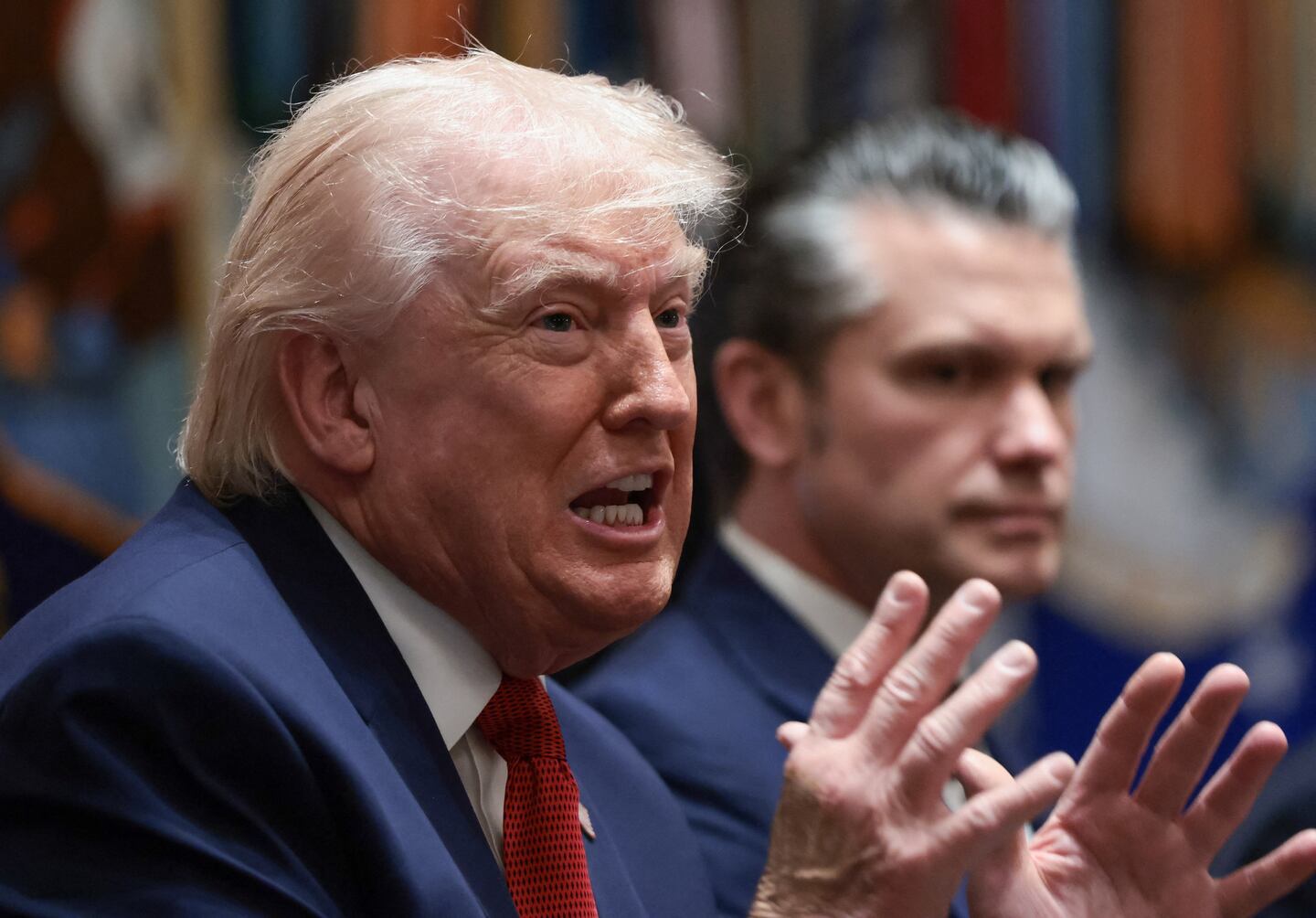
U.S. President Donald J. Trump
https://www.thedailybeast.com/resizer/v2/K5KS2W5L45A4JNL6OR5LUAHCQI.JPG?auth=ffde8817218f541eef32308836e222c7fc2c8ac856e38fe3e2bfe1660fdf402e&width=1440&height=1004
Donald Trump has also called NATO countries that do not help with the war in Iran "cowards." Evelyn Hockstein/REUTERS
 
"I hope that amid the emotions surrounding the President of the United States today, a moment of calm will come."
"And why? Because there is no NATO without the United States, and it is in our interest that this calm comes."
"But there is also no American power without NATO."
Polish Defense Minister Wladyslaw Kosiniak-Kamysz 
https://www.reuters.com/resizer/v2/6VNZZMO6CRJJ3G7AGD7B7N6W3U.jpg?auth=ce471fba128412505d459bc8e38d5acbbc1afa1df3da776fc344ad4e822e9e53&width=960&quality=80
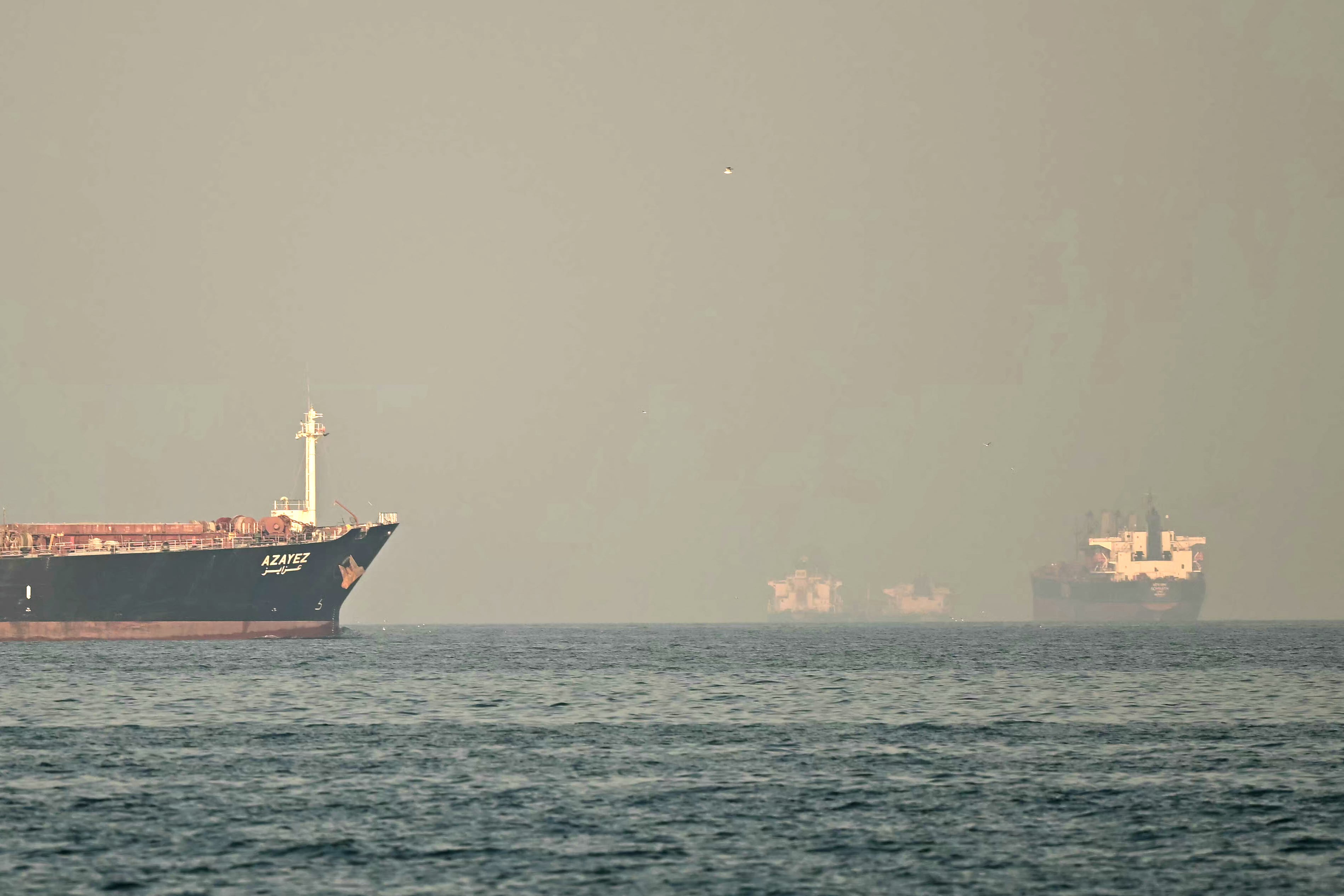
Cargo ships in the Gulf, near the Strait of Hormuz, as seen from northern Ras al-Khaimah, near the border with Oman?s Musandam governance, amid the U.S.-Israeli conflict with Iran, in United Arab Emirates, March 11, 2026. REUTERS/Stringer
 
Frustration with allies  unwilling to commit themselves through the NATO military alliance in support of the U.S. conflict in Iran, has hit boiling point with President Trump who is now telling his erstwhile allies to "go get  your own oil" in respect to the closure of the Strait of Hormuz by Iran, has sent energy prices soaring. 
 
Following U.S. strikes hitting Isfahan, the central Iranian city, leading to Tehran attacking a fully loaded Kuwaiti oil tanker in the Persian Gulf, Mr. Trump's precarious patience appears to have hit its limit. A month after the start of the aerial bombardment by the U.S. and Israel, the intensity of strikes on either side has not levelled off and major disruptions have erupted to the global supply of oil and natural gas, reflected by panicked global markets.
 
Earlier, Mr. Trump  shared footage of the massive attack on Isfahan, home to one of three nuclear enrichment sites that was attacked last June by U.S. strikes, where it is suspected that much of Iran's highly enriched uranium was stored. It seems evident that no agency foretold the extent of Iran's stranglehold on the Strait of Hormuz, with its catastrophic results to world shipping, much less the Iranian leadership's decision to attack its neighbours' energy infrastructure.
 
The roiling of world markets and the strait-closing effect on many basic goods such as fertilizer normally shipped across the world, has had its effect on the American president who directed responsibility at the United Kingdom and France for refusing to enter a war for which no clear endgame could be deduced, a war they were never consulted on, nor an alert given that it would be forthcoming. 
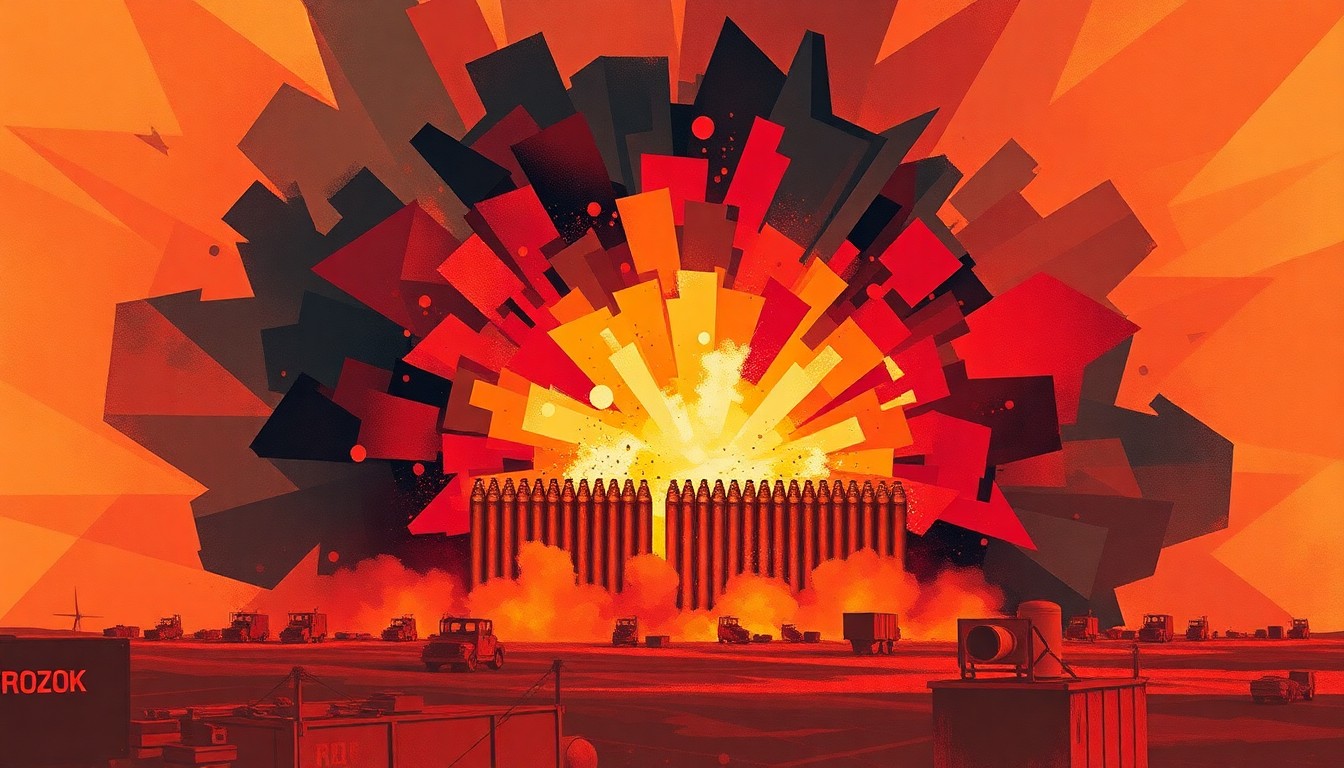
 
https://nationaltoday.com/wp-content/uploads/not-wordpress/2026/03/69cb37cf795ba.jpg
The U.S. attack on an Iranian ammunition depot in Isfahan raises tensions and the risk of further military escalation in the region. Los Angeles Today
 
France  permitted the U.S. Air Force use of the Isteres base in southern France once it received guarantees that planes landing there would not be carrying out strikes in Iran. Europe's loudest critic of the war, Spain stated it chose to close its airspace along with its joint U.S.-Spain airbases for any planes involved in the conflict. As for Italy, an official confirmed that U.S. military assets were refused use of the Sigonella airbase in Sicily for any operation with links to the offensive in Iran. 
 
American bombers were intending to land at the Italian base prior to continuing on toward the Middle East. However, affirmed Italy's Defence Minister Guido Crosetto, Italy would still allow the US. use of its bases; no cooling of relations between the two countries has resulted over the Iran conflict.
 
The world is now on notice that should a ceasefire not be "shortly" reached and the strait reopened, the U.S. was prepared to broaden its offensive, and that would include attacking the Iranian oil export hub on Kharg Island. 
 
https://www.reuters.com/resizer/v2/NB5JSYDZQZICZEQI6W3PU2YAOI.jpg?auth=b794af94d9519a0de03e8d8e92d9db35b8396c2e944f2107c80835dd27527ed9&width=960&quality=80
Luojiashan tanker sits anchored in Muscat, amid the U.S.-Israeli conflict with Iran, in Muscat, Oman, March 7, 2026. REUTERS/Benoit Tessier
"We don't want to have to do more militarily than we have to."
"But I didn't mean it flippantly when I said, in the meantime, we'll negotiate with bombs."
U.S. Defense Secretary Pete Hegseth 

Labels: , , , , , , ,

Tuesday, March 17, 2026

A Non-Coalition of the Unwilling

"We are not at war with anyone."
"[France's warship deployment's intent is to allow France] to respond to emergency situations [and evacuate French nationals if necessary."
"We stand by the side of our allies and our friends. There have been some interceptions that have continued in recent days."
French President Emmanuel Macron
Cargo ships and tankers are seen in the Strait of Hormuz on Feb. 25, 2026. (Giuseppe Cacace / AFP via Getty Images)
"We must be careful -- it's always a risky operation -- to make sure our warships are not targeted." 
"Because if they are attacked, we have to fire back."
Former French President Francois Hollande 
 
"It is not NATO's war. NATO is an alliance to defend the alliance area."
"[Berlin has taken note but] The United States did not consult us before this war, and so we believe this is not a matter for NATO or the German government."
Stefan Kornelious, spokesman for German Chancellor Friedrich Merz
 
"It's only appropriate that people who are the beneficiaries of the strait [of Hormuz] will help to make sure that nothing bad happens there."
"If there's no response or if it's a negative response, I think it will be very bad for the future of NATO."
U.S. President Donald Trump
Donald Trump, seated at his desk, gestures with his hands out to the side
U.S. President Donald Trump speaks before signing an executive order in the Oval Office of the White House on Monday. (Julia Demaree Nikhinson/The Associated Press)
 
The American President, during the U.S.-Israeli aerial strikes against the Islamic Republic of Iran and the consequential blockading by Iran of the Strait of Hormuz to the world's 1/5th most important shipping route, has asked his allies in the North Atlantic Treaty Organization and others, that includes France, China, Japan, South Korea and the United Kingdom for their assistance in securing global shipping through the strait. Thus far there have been far more demurrals than offers of assistance. Appealing to China, in any event, would be a non-starter since it has allied itself with Iran and signed a Comprehensive Strategic Partnership, in its thirst for Iranian oil. 
"From our perspective, it [the Strait of Hormuz] is open -- just not for the U.S., Israel and its allies."
"[There have been] delusional [claims that Iran is searching for a negotiated end to the war]."
"[Wrong, Iran seeks nether] truce nor talks." 
Iranian Foreign Minister Abbas Araghchi
Several aircraft can be seen parked behind a fence as dark smoke rises in the distance.
Smoke can be seen in the distance from Dubai International Airport after a drone struck a fuel tank, forcing the temporary suspension of flights on Monday. (The Associated Press)
 
At the present time, cargo ships are stuck waiting in the Gulf, or have the alternative of a much longer detour around the southern tip of Africa. As the war in Iran continues, there will appear shortages and price increases on a widening range of goods, beyond soaring energy prices. The wider global supply chain beyond energy includes pharmaceuticals from India, semiconductors from Asia and Middle East-derived products such as fertilizers from oil byproducts. 
 
Foreign citizens from around the world work in the Middle East; more than any other country in Europe, France alone has over 400,000 of its citizens working there; with over 60,000 in the United Arab Emirates. Spain, Italy, the Netherlands and Greece have deployed their frigates in the region. France has signed key defence agreements with several countries; Qatar, Kuwait and the United Arab Emirates -- a permanent base in Abu Dhabi where French air and naval forces saw a doubling of Rafale fighter jets.
 
Typhoon and F-35 fighter jets, helicopters and air defence systems have been sent by the U.K. to assist in intercepting Iranian missiles and drones and to protect British troops stationed across the region, particularly in Cyprus and Qatar, along with Britain's other partners in the Middle East. France's Rafale jets have intercepted drones from Iran targeting the U.A.E. since the war's beginning. 
 
France's President Macon urged Iran to halt strikes against regional countries as the first Western leader to speak directly with Iranian President Masoud Pezeshkian since the war broke out. It will be remembered that President Macron was always the first, the second and the third to speak with Vladimir Putin about his invasion of Ukraine. According to Mr. Macron "a diplomatic solution" is required to put a stop to the escalation. As  a major peacemaker, Mr. Macron spoke as well with Israeli Prime Minister Benjamin Netanyahu and U.S. President Donald Trump.
 
The war continues. 
 
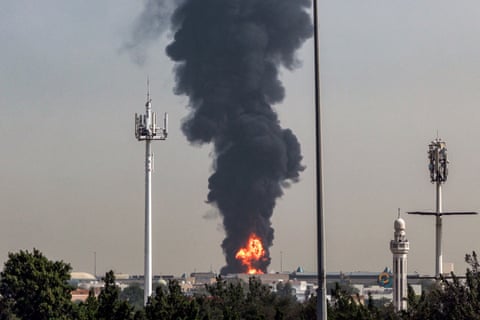
Fire and thick black smoke rise Dubai’s international airport
Fire and smoke rise from Dubai’s international airport on Monday after a ‘drone-related incident’. Flights were disrupted. Photograph: AFP/Getty Images
"The feeling is, this is not Europe’s war."
"Of course we are allies with America, but we don’t really understand their moves recently."
"We haven’t been consulted, and we don’t really understand, what are the objectives of this war."
"It is in our interest to keep the Strait of Hormuz open." 
Kaja Kallas, EU foreign policy chief 

Labels: , , , , ,

Tuesday, March 10, 2026

Despite Danger, the Irresistible Draw of Country and Family

"Australia made the offer because we are so impressed by these women as individuals. The choice that Australia gave, the choice of government officials standing in front of you and saying it is up to you, is a choice that every individual should be entitled to."
"Everything was about ensuring the dignity for those individuals to make a choice. We couldn’t take away the pressure of the context for these individuals, of what might have been said to them beforehand, what pressures they might have felt there were on other family members."
"When those players were silent at the start of their first match in Australia, that silence was heard as a roar all around the world. We responded by saying, the invitation is there. In Australia you can be safe."
"Australia’s objective here was not to force people to make a particular decision. We’re not that sort of nation.” 
"They were given a choice. In that situation what we made sure of was that there was no rushing, there was no pressure." 
Australian Home Affairs Minister Tony Burke
 
"Iran welcomes its children with open arms and the government guarantees their security."
"No one has the right to interfere in the family affairs of the Iranian nation and play the role of a nanny who is kinder than a mother."
Iranian first Vice President Mohammad Reza Aref    
https://i.cbc.ca/ais/80445e24-0fea-41dc-aa49-c2f734007949,1773183226635/full/max/0/default.jpg?im=Crop%2Crect%3D%2820%2C0%2C1139%2C640%29%3BResize%3D860
A player and staffer with the Iranian women's soccer team, not pictured, sought asylum Tuesday before their teammates flew home where war began on Feb. 28. (Mohd Rasfan/AFP via Getty Images)
 
"I want to say about the Iranian women's team that it has between really moving for Australians to see them in Australia."
"I don't want to get into commentary about the Iranian women's team."
"Obviously, this is a regime that we know has brutally cracked down on its people."
Australian Foreign Minister Penny Wong  
The Iranian women's soccer team left Iran to take part in the Women's Asian Cup match last week, on the Gold Coast, before the February 28th joint U.S.-Israeli aerial attacks on the Islamic Republic. From Australia, while competing, news coming out of Iran briefed them on what was happening in their home country. And the team members, without a doubt, were concerned not only for their country, but for the  safety and security of their family members.
 
During the Second World War, when Britain gave haven to French soldiers and members of the French resistance to the Vichy government under Nazi occupation, many of the French although appreciating the generosity of Britain and their personal safety there, decided, regardless of the dangers they would be exposed to (arrest on arrival in France by the SS where young Frenchmen were shipped to Germany to serve as slave labour) for love of country and concern about their families' welfare.
 
And so, no doubt, it was pretty much the same for the young Iranians in their Australian sojourn, when most members of the team made the self-conscious decision that they would return to their home country and share with their families whatever danger the short-term assaults staged by the U.S. and Israel to destroy the Islamic Republic's missiles, launching sites, nuclear facilities and weapons depots, while also targeting key members of the Islamic Republican Guard Corps, the Basij police, and elite Iranian government figures including the Grand Ayatollah.
 
https://media.cnn.com/api/v1/images/stellar/prod/gettyimages-2264339861.jpg?c=original&q=w_860,c_fill/f_webp

Iran players standing silent during anthems ahead of their opener against South Korea on March 2.
Albert Perez/Getty Images
 
It was not only the pressure of concern over the potential collective punishment their families might face were they not to return to Iran that created stress for the  young Iranians. Their group commitment over their decision not to sing the Iranian national anthem last week was condemned as a lack of loyalty to their country. Without a doubt their loyalty to the country was undimmed, but their unwillingness to sing along with the anthem reflected their rejection of the theocratic regime that had unleashed violent mass punishment against the massive protests on the streets of Iran by Iranian citizens calling for an end to the regime.
 
For their troubles, they were labelled traitors by an Iranian state TV presenter for remaining silent during the playing of the national anthem on March 2 before an opening loss to South Korea. In later matches, the players did sing the anthem and saluted. Given the circumstances and the possible less-than-warm reception the players may receive on their return to Iran,  the Australian Iranian Council has called on the government to offer their protection, permitting them to  remain in Australia.
 
An online petition launched by the Council garnered over 61,000 signatures on Monday, where Australian authorities were urged to "ensure that no members of Iran's women's national soccer team is to depart Australia while credible fears for their safety remain". The centre-left government was also urged to provide asylum to the Iranian team by Australia's shadow attorney general, on Sunday. 
 
A plea was made by the exiled son of Iran's last shaw, Reza Pahlavi, who called on the Australian government to protect the team "and give them any and all needed support". In the end, most of the team made the decision to return to what was, after all, their home and their families, flying out of Australia on Tuesday. In total, seven members of the women's soccer team asked for, and received permission to  remain in Australia.  
 
There was a precedent for this kind of humanitarian gesture, as it happens. Humanitarian visas were granted by Australia to over 20 members of the Afghanistan women's cricket team at a time when the Taliban in 2021 returned to power, and banned women's sport, among many other bans that severely reduced girls' and women's futures in the Islamist nation.  
 
https://media.cnn.com/api/v1/images/stellar/prod/gettyimages-2265240945.jpg?c=original&q=w_1202,c_fill/f_avif
Police officers clear the road for a departing bus transporting members of the Iranian Women's Asia Cup football team to the airport outside the Royal Pines Resort on the Gold Coast on Tuesday, March 10.
Patrick Hamilton/AFP/Getty Images


Labels: , , , ,

 
()() Follow @rheytah Tweet