Ruminations

Blog dedicated primarily to randomly selected news items; comments reflecting personal perceptions

Saturday, June 23, 2018

Growing Your Own

"The odds are better there won't be any contamination from the things we grow ourselves, but no fresh foods are safe."
"Gardening and cooking are a food safety continuum. Safety must be considered with every step in the process, from pre-planting to placing meals on the table."
"Did the previous [home] owner have a lawn there that could have been exposed to lots of chemicals? Was there any run-off from roads or driveways? Was it a place where people walked their dogs? Those questions also apply to community gardens." 
"Cooking is a highly effective step in destroying bacteria that might be there."
Jeanne Brandt, family, community health specialist, Oregon State University Extension

"Composted or aged manure or other soil amendments containing any animal components such as manure, meat, egg shells or bones are not recommended for gardens as they may not be thoroughly processed and thus contain food-borne pathologies."
"Washed produce should be dried before storage. Berries, broccoli and similar should be washed only prior to serving, to avoid mould development."
"Drip irrigation is the safest way to apply the irrigation water because there is no direct contact with the edible portion of the produce."
"Always wash your hands before entering the garden or harvesting; after handling compost, plant debris or garbage; after touching a pet or farm animal; and after using the toilet."

Sanja Ilic, assistant professor, food-safety specialist, Ohio State University Extension
Tomatoes
Pixabay

So if you have the idea fixed in your mind that anything you can grow in the summer in your garden plot in your backyard, is guaranteed more quality nutrients and safety, it's an appealing one, but at the same time to ensure that no pathogens are present on the fruits and vegetables you bring to the table, with pride and anticipation of superior taste and quality, remember if you have an animal companion pet a hazard exists respecting that pet's waste products as it evacuates or urinates in proximity to your garden.

According to public health officials, not that much can be done to treat food-borne disorders, but if one is struck with food poisoning that arrived in your gut via fresh produce, stay well hydrated to replace lost fluids and electrolytes. And while you're recovering think about the evasive actions you may have neglected taking in the prevention of contamination while taking pride in growing your own garden vegetables.

Ironically, one of the reasons given by people who devote time, space and labour to growing their own is food safety. In some instances, they're fooling themselves. If we're to believe what statistics tell us, more food-borne illnesses are as likely to be caused by home-grown produce than they are by fresh foods that have been acquired through the usual channels of procurement such as supermarkets or summer farmers' markets.

According to surveys, home gardeners fail to understand that soil, compost, human and animal manure and water, innocent seeming though they may be, are potential sources of disease-causing bacteria with the possibility of contaminating produce. Generally, the focus goes elsewhere, according to Jeanne Brandt: "They were most concerned about chemical contamination". And identifying the right vegetable garden location is the first step in planning a home garden.
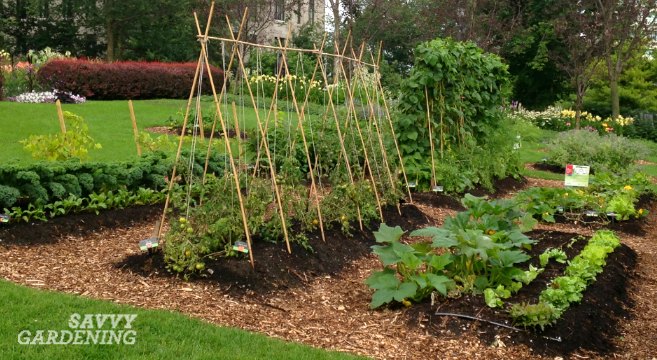

"You want to know what's been on that (planting space)", she cautions. Routines whose purpose is to keep garden spaces orderly, gardeners' hands and tools cleaned, are often bypassed by novice gardeners. In North America close to half of all food illness outbreaks have been caused by fresh produce; greens, lettuces, and row-crop vegetables eaten raw -- as in fresh salads -- represent the number one culprit placing children, the elderly and pregnant women at risk.

Risks of acquiring food-borne illnesses can be minimized however, by the adoption of some simple practices to prevent garden contamination, and in extension of that, the kitchen as well, where preparation takes place before table presentation. Compost prepared from grass clippings or plant trimmings, for example are good alternatives auguring for safe outcomes. City water, having been treated, is the safest to use. Ensuring that wildlife; poultry and pets are restricted from the garden area is paramount to preventing their ordure from contaminating garden soil.

Attention should be given to preventing cross-contamination from the use of dirty tools and even table surfaces when harvesting whole foods. Take care to ensure that railroad ties, corroded metal, pressure-treated lumber are never used in preparing raised beds for vegetable gardens. If  using rainwater stored in barrels for irrigation, periodically clean the barrel with bleach.
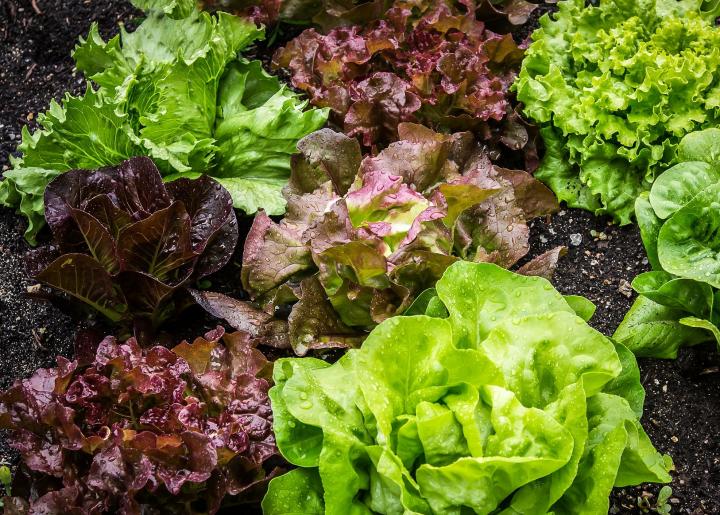
Lettuce varieties
The Old Farmer's Almanac

Labels: , , ,

Thursday, April 05, 2018

Pasta Lovers, Rejoice!

"The study found that pasta didn't contribute to weight gain or increase in body fat."
"In weighing the evidence, we can now say with some confidence that pasta does not have an adverse effect on body weight outcomes when it is consumed as part of a healthy dietary pattern."
Dr. John Sievenpiper, scientist, St.Michael's Hospital, Toronto

"I tend to agree. I eat pasta regularly and if consumed in modest amounts then no reason for it to cause weight gain. So it's nice to see this evidence."
"In the end, weight gain occurs with over-consumption of calories and so portion size matters."
"Regular portions of healthy pasta can be part of a healthy balanced diet and this work supports this view."
Naveed Sattar, professor of Metabolic Medicine, University of Glasgow
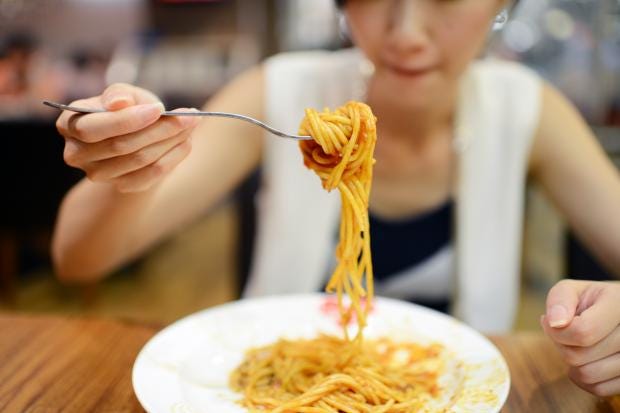
Linguine with lemon, feta cheese and basil (Mia via AP)

Research published in the journal BMJ Open has set aside concerns of pasta presenting as a high glycemic food with a reputation as a type of foodstuff best avoided. No longer. This is now one carbohydrate that deserves its starring role in many diets and beloved of people who know that it handsomely carries off a wide variety of combinations with other nutrient-rich food like proteins and fats.

Nutritionists have routinely recommended that pasta be consumed minimally in order to cut calories, prevent the build-up of fat, and stop the spiking of blood sugar. Diets focusing on low-carb foods had advanced the narrative by advising concerned consumers to exchange foods like bread, pasta and potatoes for vegetables, fish and meat. Even spiralized vegetables were being promoted as an exchange for spaghetti.

The new study undertaken by Canadian researchers at the Clinical Nutrition and Risk Modification Centre with St.Michael's Hospital in Toronto represents a meta-analysis of 30 previous studies to finally conclude that pasta not only is not a cause of weight gain, but in reality people can lose over a pound of weight over a four-month period with three pasta meals a week. Pasta, found the reviewers, had been demonized unfairly.

The reality is that pasta contributes to gradual weight loss when eaten alongside a well-designed diet, with the emphasis on moderation; not eating any more at one sitting than is nutritionally reasonable. Evidence was assessed from 30 randomized controlled trials in which close to 2,500 people took part, eating pasta weekly along with a low glycemic diet, a plan designed to prevent blood sugar from spiking.

pasta

The clinical trial participants ate on average 3.3 servings of pasta each week rather than other carbohydrate choices --  with one serving equalling roughly a half-cup. On this diet plan, 1.1 pounds was lost on average, over a 12-week follow-up. Pasta has a low glycemic index after all; it is absorbed into the bloodstream more gradually and does not cause high blood sugar levels, as previously hypothesized.

Pasta included as part of a low-glycemic diet recommended for those needing to lose weight, or who live with chronic illnesses like diabetes or cardiovascular disease, is now seen as perfectly appropriate in a well-balanced diet.

Ta-da!

Labels: , , ,

Saturday, March 03, 2018

Common Sense Where Art Thou!?!

"I thought if I had one bite or sip of something 'bad' like candy, bread, 'processed' food or 'toxins' like alcohol, it would unravel all of the 'progress' I had made and taint my spotless health routine."
"I was able [after direction from a therapist and nutritionist] to walk back my rigid thinking around what I'm 'allowed' to eat, eating and exercising on a certain schedule, and defining  healthy as being thin, toned, and free of 'bad' food in my body."
Hannah Matthews, 30, writer
Woman taking photo of pumpkin soup with smartphone
Photograph: Alexandra Iakovleva/Getty

But not before this woman, who had fixated on the "eat clean" and "clean eating" movements geared to directing people concerned over their physical image -- their health profile, their weight and presence on social media sites as virtuously knowledgeable about what constitutes food choices that harness a healthy outlook to one's future -- placed her own health in jeopardy. The movement that insists sugars, gluten, processed foods and anything falling into the category of delicious should be one's guide in healthful eating had captured her entirely.

She became so hyperconscious that, in the process of following all these instructions to the nth degree she developed, she now believes, orthorexia, a designation characterizing someone unhealthily food-obsessed; which is to say 'healthy' eating dominating their every thought of food, ensuring that no type of food that normal people sometimes crave must ever pass their lips. Ms. Matthews' devotion to this restricted diet and exercise routine found her malnourished and developing heart problems.

When she took the direction of a health therapist and the advice of a nutritionist, learning how to restore a normal relationship with food, her health took a turn for the better. She began to train herself to think more deeply and less compulsively about her approach to food with the understanding that this represented a life-and-death issue for her, to reform her compulsion to refuse to eat anything forbidden and focus solely on the approved food items.

A backlash has arisen in the United Kingdom to the paradigm of clean eating; influential cookbook writers who had once helped to popularize 'clean eating' are now creating a distance between their professional profiles and the trend that has led to disordered eating and unhealthy food habits. British writers and chefs have begun to raise red flags about taking clean eating too seriously. The author of cookbook Flavour: Eat What You Love, Ruby Tandoh, has spoken out on the clean eating issue as a "bad fad".

She has criticized clean eating for its part in "precarious health claims and a trend-driven food press, all underpinned by an unaltering disdain for fat bodies." Swearing on the properties of coconut oil, of spiralized zucchini noodles and raw vegan juice serves to deprive the body of fibre through the exclusion of pulp, pointed out British food writer and historian, Bee Wilson. "We are once again living in an environment where ordinary food, which should be something reliable and sustaining, has come to feel noxious", she wrote.
"They're marketing these diets based on pseudo-science, and that's what I have a problem with."
"Judging by my Twitter feed, it's [the clean eating movement] only gaining steam. We live in a random post-truth world, driven by social media, and it permeates a lot of fad diets and the pseudo-science of Gwynneth Paltrow."
"Telling people to eat a little less of everything isn't going to make me a million bucks on Instagram".
Dr. Giles Yeo, geneticist, University of Cambridge, BBC presenter of Clean Eating: The Dirty Truth documentary
A study focusing on the issue of clean eating based on recommendations to cut out whole food groups like dairy concluded that adherents of clean eating are at a higher risk of weakened bones leading to the potential of osteoporosis and fractures. A more recent and smaller study of over 100 people found that those declaring themselves a "clean eater" leave the impression they are neurotic and unlikeable.

Michael Pollen, author of In Defense of Food appeals: "Eat food, not too much -- mostly plants". At a time when most people are aware that processed food diets are unhealthy and whole foods represent an antidote to fast food and processed food as a healthy alternative, combined with the fact that fresh fruits and vegetables and whole foods are more accessible in a wide range of types and prices ensures that the choice is there and is attainable.

As in all matters of reason and reasonableness, moderation is the key. Eat well, choosing whole foods, focusing primarily on fruits, vegetables, grains, dairy products, fish, extra virgin olive oil, and poultry - all in reasonable, moderate amounts for optimum health outcomes. Supported by regular exercise of a recreational variety, including walking.

Labels: , , , ,

 
()() Follow @rheytah Tweet