Ruminations

Blog dedicated primarily to randomly selected news items; comments reflecting personal perceptions

Saturday, June 23, 2018

Growing Your Own

"The odds are better there won't be any contamination from the things we grow ourselves, but no fresh foods are safe."
"Gardening and cooking are a food safety continuum. Safety must be considered with every step in the process, from pre-planting to placing meals on the table."
"Did the previous [home] owner have a lawn there that could have been exposed to lots of chemicals? Was there any run-off from roads or driveways? Was it a place where people walked their dogs? Those questions also apply to community gardens." 
"Cooking is a highly effective step in destroying bacteria that might be there."
Jeanne Brandt, family, community health specialist, Oregon State University Extension

"Composted or aged manure or other soil amendments containing any animal components such as manure, meat, egg shells or bones are not recommended for gardens as they may not be thoroughly processed and thus contain food-borne pathologies."
"Washed produce should be dried before storage. Berries, broccoli and similar should be washed only prior to serving, to avoid mould development."
"Drip irrigation is the safest way to apply the irrigation water because there is no direct contact with the edible portion of the produce."
"Always wash your hands before entering the garden or harvesting; after handling compost, plant debris or garbage; after touching a pet or farm animal; and after using the toilet."

Sanja Ilic, assistant professor, food-safety specialist, Ohio State University Extension
Tomatoes
Pixabay

So if you have the idea fixed in your mind that anything you can grow in the summer in your garden plot in your backyard, is guaranteed more quality nutrients and safety, it's an appealing one, but at the same time to ensure that no pathogens are present on the fruits and vegetables you bring to the table, with pride and anticipation of superior taste and quality, remember if you have an animal companion pet a hazard exists respecting that pet's waste products as it evacuates or urinates in proximity to your garden.

According to public health officials, not that much can be done to treat food-borne disorders, but if one is struck with food poisoning that arrived in your gut via fresh produce, stay well hydrated to replace lost fluids and electrolytes. And while you're recovering think about the evasive actions you may have neglected taking in the prevention of contamination while taking pride in growing your own garden vegetables.

Ironically, one of the reasons given by people who devote time, space and labour to growing their own is food safety. In some instances, they're fooling themselves. If we're to believe what statistics tell us, more food-borne illnesses are as likely to be caused by home-grown produce than they are by fresh foods that have been acquired through the usual channels of procurement such as supermarkets or summer farmers' markets.

According to surveys, home gardeners fail to understand that soil, compost, human and animal manure and water, innocent seeming though they may be, are potential sources of disease-causing bacteria with the possibility of contaminating produce. Generally, the focus goes elsewhere, according to Jeanne Brandt: "They were most concerned about chemical contamination". And identifying the right vegetable garden location is the first step in planning a home garden.
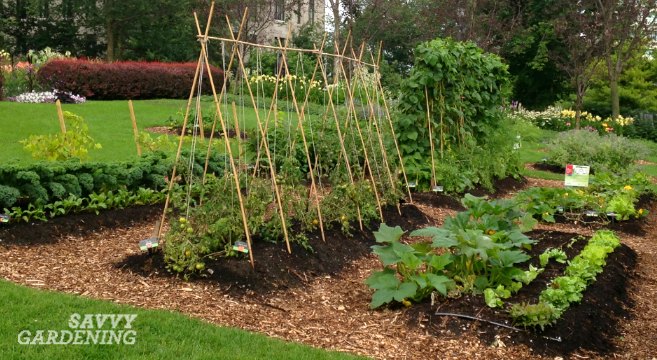

"You want to know what's been on that (planting space)", she cautions. Routines whose purpose is to keep garden spaces orderly, gardeners' hands and tools cleaned, are often bypassed by novice gardeners. In North America close to half of all food illness outbreaks have been caused by fresh produce; greens, lettuces, and row-crop vegetables eaten raw -- as in fresh salads -- represent the number one culprit placing children, the elderly and pregnant women at risk.

Risks of acquiring food-borne illnesses can be minimized however, by the adoption of some simple practices to prevent garden contamination, and in extension of that, the kitchen as well, where preparation takes place before table presentation. Compost prepared from grass clippings or plant trimmings, for example are good alternatives auguring for safe outcomes. City water, having been treated, is the safest to use. Ensuring that wildlife; poultry and pets are restricted from the garden area is paramount to preventing their ordure from contaminating garden soil.

Attention should be given to preventing cross-contamination from the use of dirty tools and even table surfaces when harvesting whole foods. Take care to ensure that railroad ties, corroded metal, pressure-treated lumber are never used in preparing raised beds for vegetable gardens. If  using rainwater stored in barrels for irrigation, periodically clean the barrel with bleach.
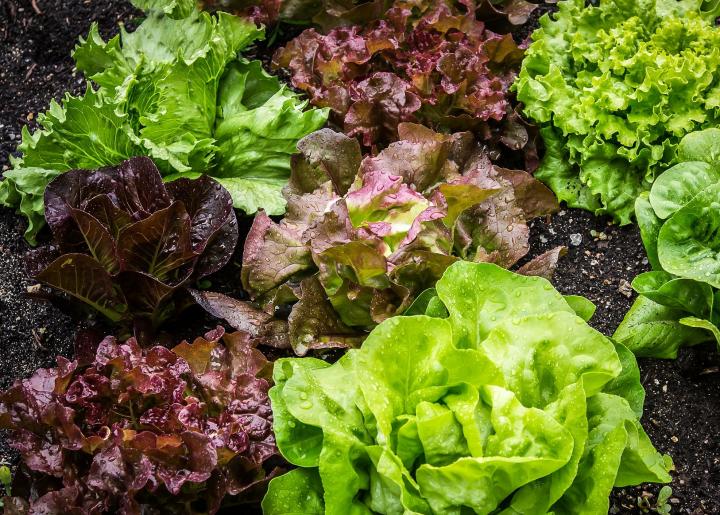
Lettuce varieties
The Old Farmer's Almanac

Labels: , , ,

Sunday, February 03, 2013

Bounty in Canada's Frozen North

Perhaps 'bounty' is too extravagant a description. Bounteous harvests will never materialize in the far North of Canada's vast Northwest Territories, not all that far, in fact, from the Arctic circle. Living in the North is expensive. Fresh food hard to come by; what is trucked in on winter ice roads or flown in has come a long way and vegetables and fruits become the worse for wear by the time they reach a retail market source in the Northwest Territories.

But in Inuvik, which really is the frozen North, an old hockey rink has been converted to a local community greenhouse. And it is flourishing. People are able to tend their garden plots and grow, unbelievably, watermelons, tomatoes, apples and cherries, even corn, although most peoples' aspirations are likely confined to more modest garden vegetable produce. The greenhouse is open 24 hours a day.

http://www.inuvikgreenhouse.com/images/greenhouse02lg.jpg

In Norman Wells, N.W.T. the average high temperature is about 13-degrees C. three months out of the year. There, Doug Whiteman amended whatever soil there was available to his gardening efforts with compost, fertilizer and vegetable matter to add nutrients that would allow him to grow the aforesaid vegetables and fruits.

"Some places have permafrost, some don't, and other places you're just going to have large pieces of ice in the ground", he explains.

"You can do this here?" is a question asked of Andrew Cassidy, executive director of the Territorial Farmers Association. "In the Northwest territories, we probably have about 20 commercial producers. It's a small number but I would probably say ten years ago, we might have had half a dozen." 

And Gene Hachey, agricultural consultant for the Government of the Northwest Territories lauds all attempts to grow food in such an agronomy-hostile environment. "There's something cool about having 'a cob' at the end of the year. And you take it off and you hold it like a diamond." 

A family formerly from New Brunswick keeps goats and chickens and rabbits on their Boreal Barn farm. They were aided with $10,000 in government funding to help improve and expand their family farm. Where their animals are free to roam in spring and summer, but temperatures plunge to -40C in the winter, and the sun doesn't shine for months.

"We have the lights set up so that they're on 14 hours a day so they have a kind of daytime in their barn." Their hens produce about 72 eggs each day, which the farmers sell to their neighbours.  But there is never enough to satisfy demand.

That kind of determination and self-sufficiency is nothing short of amazing, given the obvious climate constraints and the difficulties in coping with permafrost, extreme winter cold, and long months without the sun.

Inuvik's 24-hour-operational greenhouse where a hundred community members look after their 74 plots is made possible with the aid of joint federal and territorial programs.

Labels: , , , , ,

Wednesday, November 21, 2012

 Foreign Species Infestations

I planted purple loosestrife, a cultured variety obtained from a local nursery in my garden many years ago.  The plant grew to maturity as a very tall, attractive stalk with a lovely series of purple flowers.  At that time I was very well aware of the nature of the reputation that purple loosestrife enjoyed, accused of being an environmental interloper, a threat to native species.  And people were urged to destroy them wherever they saw them.

Years ago I read a report of the purple loosestrife situation in Algonquin Park, where we often enjoyed ourselves canoe-camping for periods of time in the summer and fall.  Truth was, I saw very few stands of purple loosestrife, though we did come across wild rice, and we once camped beside an island that had amazing bushes of cranberries which we harvested and then cooked up later, at home.  But loosestrife, not one stand.  That report?  It concluded they were no threat there.

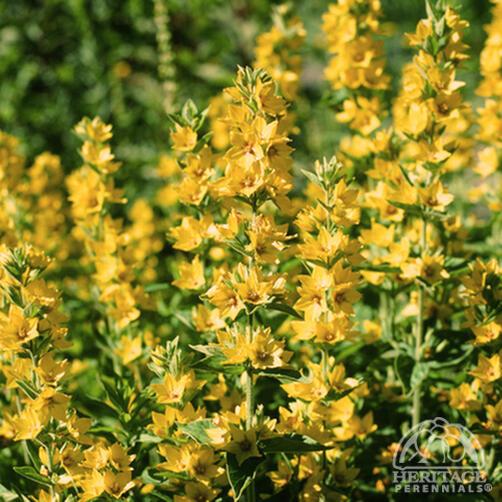
Years ago also, I planted in my garden at the back of the house one single plant of yellow loosestrife.  It is reputed, though not a native species, to have been planted in this area since the Victorian era.  Presumably brought along with pioneering housewives, just as they brought seeds for their kitchen gardens, introducing non-native species of other types as well.
Lysimachia punctata
Over the years I found the purple loosestrife to be a very non-intrusive plant.  It stayed where it was planted.  It did not propagate, did not spread, did not cause havoc in my garden.  It did produce some very lovely flowers and its presence was, while not spectacular, splendid enough in its season.  The yellow loosestrife, on the other hand, spread like crazy, and I soon regretted ever having planted it.

And now I read a report from area botanists that the threats of loosestrife thuggishly taking over wetlands and crowding out more valued native species was just wild exaggeration of a prospect that never did occur.  It's true that some introduced botanical species can make an awful nuisance of themselves; Japanese-sourced kudzu, for example, introduced in the southeastern U.S. and now overgrowing all other botanical species, impossible to control.

But purple loosestrife?  "We were all led to believe that this thing was going to take over the world.  Even in the '90s, some biologists were questioning that", said plant biologist Brian Husband of the University of Guelph.  But they were considered a dire threat, and governments in Eastern Canada and the Northeastern U.S. in their great wisdom released two European beetles known to eat loosestrife.

Introduce two insects as foreign species to impact on a vegetation as a foreign growth to solve a problem of unwanted presence threatening the security of native species?  How utterly clever.  Well, it was discovered that after an initial spurt of growth, purple loosestrife settled down to a discreet presence, not crowding out native species after all, but living harmoniously among them.  And this appears to be a characteristic typical of many other introduced species.

Now we learn that some experts believe that some hysteria was involved here, that the threat posed by an alien species - purple loosestrife - was overplayed; it was given a bum rap and unnecessarily targeted.  In the process two insect species whose long-term effect on the environment likely won't be known for some time were introduced. 

A local Ottawa Valley biologist and environmentalist, Dan Brunton is of the opinion that in the first place purple loosestrife was never suited to this region.  "I have argued for what it's worth that it never was such a big deal", suitable primarily to wetlands of a certain type: "ideally only seasonally flooded sites like old gravel pits, low pastures, artificially maintained river shores edges, ditches. etc."

As for the beetles; releasing them, as far as Mr. Brunton is concerned, was a poor idea.  "We are doing some really risky questionable things.  The worst is releasing a non-native bug to reduce the density of stands.  Gee, nothing could possibly go wrong with releasing non-native animals in hopes of controlling another non-native animal, could it?"

Labels: , , , ,

Sunday, June 27, 2010

Pink, Frilly Echinacea!


How perfectly ... well, perfect. What more could we conceivably ask for? Two telephone calls in less than a week, one from Barcelona, the other from Lourdes. Just to keep in touch. To let us know. How wonderfully thoughtful. He told us about his week in Genoa, the mountains he climbed, what he saw there, and his impressions. And after a month away in Spain, Italy and France, he will be returning home. And our granddaughter, her class valedictorian, was hugely praised at the commencement ceremonies - grade eight to high school. We can hardly believe so much time has elapsed.

Our daily walk in the ravine, always itself its own reward, gave us further reward when we were accosted several times during our daily jaunt by our favourite little squirrel, Stumpy. Thus named for the simple reason that instead of owning a long, sweeping furry tail he has but a stump of one. There is another little black squirrel in the ravine also tailless like Stumpy, but not as bold as he. There are some grey and some red squirrels whose bravery and recognition of our regular route as we drop off peanuts in various places, is noted, but not extraordinary.

For Stumpy tracks us, and approaches us, coming as close as he dares. He knows our voices. When we call, he often appears, although he could be just about anywhere in the ravined woods. He will occasionally accost us two or three times during the course of our hike, each time quite far from the place previous. He is a delightful little creature, brave and clever. He does not entirely surrender his need to ensure his safety but he cannot ever be certain he is not in imminent danger.

There are owls and hawks in the woods and he could be seen as prey. Let alone the many dogs who walk through with their humans, most of them willing and eager to chase squirrels. Our two little dogs are little different, other than for the fact that they know Stumpy and accept his calm presence. While he cannot let down his guard he will come to within five feet of us and stand alert before us, awaiting his peanut. Always a three-chamber peanut for Stumpy.

And then, in the afternoon, my husband suggested it would be interesting to go along to a local family-operated plant nursery, one we have been frequenting for many years. I was initially reluctant, even though he's heard me say frequently enough lately that I would like to have a few new perennials to fill in some garden spots. In that nursery, one of the area's largest, and certainly one of the best-stocked and best-cared for, I felt as though I was running amok with desire and greed.

Everything looked compellingly attractive, and we rummaged about here and there, expressing admiration for the varied and colourful perennials and annuals. Who even knew there were now annual galliardia? We now have annual blanket flower in our garden beds. And more asters and dahlias. And a new type of Hibiscus, hardy to our 5a growing zone. And a huge Astilbe, a new cultivar, with graceful foliage and a wonderful floral crop. And a new type of Echinacea, one with bright pink, frilly flower heads.

I managed to happily plant the annuals, didn't even bother changing out of my long skirt. Our garden soil is incredibly rich as a result of all the compost we've spread over the years, from our kitchen and garden waste. And the addition of a combination of bone- and blood-meal helped in the planting. Later, I snipped some sweet basil and oregano out of the herb garden, and we began to assemble a pizza, for our evening meal. A fragrant conclusion to a fantastic day.

Labels: , ,

Saturday, June 19, 2010

Springing Good-Naturedly


It's early garden days yet. Plenty of warmth before us, to enjoy outdoor living. Not yet even summer by the calendar, although we're enjoying humid, hot and wet weather, perfect for the garden which, by the way is looking absolutely fabulous. I know, I know, I say that every year. Every year I tell myself that the garden has never looked better. And then the year following I have good reason to say that yet again.

Whatever the year, whatever the time, it's a simple fact of simple appreciation: the garden has never looked better.

I'm utterly besotted with the garden, no point trying to deny it, although I've never denied it. Mind, I try to present a casual air about it all when someone comes along admiring the garden and congratulating me for its appearance. I demur, say it has little to do with my paltry and amateurish ministrations, and everything to do with serendipity. Just something mysterious
about the trees, the shrubs, the perennials themselves, their zest for life.

They are, in point of fact, show-offs, all of them. Egotistically imperious, that's their outlook on life. Throughout the cold winter months when the garden is in the deep-freeze, they plan their strategy for the seasons to come. Mindful of the mischievous, good-natured surprise they plan to spring on us as soon as Nature relents, calls back winter and introduces the agonizingly slow advance to spring. When the bulbs become activated, and the perennials begin to stir, and blossoms appear everywhere.

Utterly ravishing, never, ever, underwhelming.

Labels:

Wednesday, December 09, 2009

Our Winter Garden


The wind has been a howling virago all day. We've been the recipient of an ongoing blizzard; winds of 50kmh, heavy snow whirling about everywhere, interspersed with fragile ice pellets. The storm began in the early morning hours, and by noon there was about six to eight inches of snow on the ground. We were warned to anticipate roughly 16 cm throughout the day, and another 5 cm or so overnight. We have already exceeded that and have dug out several times.

(The city in which we live is experiencing traffic gridlock. Not helped one iota by the public transit system which absurdly uses articulated buses, fine for moving about greater numbers of fares, but not so good in such weather. They have an unfortunate tendency to jack-knife and insist that it is their right to do so, further tying up traffic by occasionally blocking both sides of a roadway.)

For people having to travel it's a nightmare. For those who can gaze out their windows onto the scene outside, it's a miracle of nature's transformation of a bleak late fall day into a snow-laden, scintillating scene of unimaginable beauty. We long ago settled our garden into winter mode. The bulbs planted in mid-fall had ample opportunity through incessant rain in October to establish themselves, setting down a good root system.

One of our backyard composters had been emptied and its contents sprinkled liberally on the gardens at the front. We used commercial compost, sheep manure mixed with black soil on the backyard gardens. Else our Button will delve into the compost and feast herself on the decomposed remnants of kitchen waste; some dogs exhibit the most outrageous proclivities. All of the garden pots have been stored under the deck, and covered with tarpaulins so the clay won't crack through exposure to free-and-thaw.

The latest, larger garden shed has been completed, and it now holds, among other tools, the snow thrower which was given a good first run of the season in clearing out the driveway out front and the walkways. I went out early in the day to shovel out all the backyard walkways and the deck just after noon, and moved about six-inch-thick layers so our little dogs could get out to do their thing. It had to be repeated a few hours later, but not by me. Although it was incredibly invigorating to be out there, in the swirling snow; picturesque beyond belief.

I thought: why not take a few photographs, and so I indulged. Snow can be seen layered atop some of our collection of classical garden statuary, the bird baths, the urns, which all remain in place through all seasons. Some (the urns, the birdbaths) are covered with rigid tops and plastic to ensure they too don't suffer from a freeze-and-thaw cycle that could leave them cracked. Our statuary have gone through many years of exposure and remain intact.

Although the astute observer will notice that Faith, Hope and Charity cling closely to one another for warmth in this season inimical to the unprepared unclad, while the infinitely hardier figure of Discobolus refuses to submit to the weather-inclemency and bravely continues his solo, victorious toss.

Labels: , ,

Tuesday, November 03, 2009

Finishing Up


This was one of those days when the weather was so changeable, it ran the gamut of what might ordinarily occur throughout the space of a week. We awoke to rain just petering out after having poured all night long, so that the outside landscape was completely sopping. Not long afterward the skies cleared and there was nothing but blue to be seen up there.

The temperature which had plunged overnight steadily rose under the influence of the sun, and our backyard was comfortable enough for my husband to continue working on cladding his new garden shed. Suddenly the sun was temporarily blocked by the appearance of a dark cloud and a quick downpour. Which didn't halt his enterprise.

At noon we set out for a ravine walk, just a few minutes after one of those sudden downpours, where a billowy white cloud with a dark grey area on its underside decided to open up just to ensure we weren't too complacent about the day's prospects. The ravine trails were slushy, the creek waters were roiling and muddy. All of the leaves have now disengaged themselves from the trees they had formerly ornamented, so a thick layer of leaves littered everywhere, an exquisite patchwork of colour.

Squirrels were rousting about here and there, but also awaiting our daily appearance, rushing to be the first to roost on the stumps and trees and bridges where we always leave peanuts. We heard, but did not see, a raven overhead somewhere, its hoarse calls unmistakeable. Last week we'd heard an owl, over on the opposite side of the ravine to where we'd been, but had no luck scoping it out, later. We did see hairy and downy woodpeckers, however, and chickadees and nuthatches.

When we got back home I took some photographs of the shed, its construction now almost completed. And photos too of our winter-ready gardens. I've been checking to see whether squirrels have tried to dig up any of the spring bulbs I planted a few weeks back (and which all of the rain we've had since then have been given a real leg-up for root encouragement), but none of the beds appear to have been disturbed. I used bloodmeal when planting the bulbs, and covered the beds generously with the soil from the emptied-out garden pots; that doubtless helped.

We've replaced the original seed-and-nut-encrusted suet cakes that we hung over the edge of the deck rail, the squirrels having done a neat job of extracting from them what attracted their appetite, leaving the dregs on the floor of the deck, for the birds who appear more content to peck about there, than in the suet cakes themselves. Chickadees, cardinals and sparrows have come calling to take advantage of what lies there. However, none of the three new suet cake offerings have as yet been disturbed by anyone.

We're hoping that as winter approaches and as the squirrels begin their semi-hibernation, birds will have more of an opportunity to take advantage of new cakes being put out, since they're placed there primarily for their nutritional needs, not the squirrels'. We'll have ample time to determine whether that scenario will in fact, ensue. In the meanwhile, the squirrels play havoc with everything, as is their wont.

And as the day progressed we were treated to light, fluffy clouds swirling through the sky, and the occasional light rain until the sky finally succumbed to a total covering of bruised, dark clouds threatening to swamp us again with heavy rain events. It felt quite a bit colder, and most certainly was, as the wind came up emphatically, blowing leaves about with gay abandon, everywhere. We'd gone out to do some shopping and bought another winter jacket for our granddaughter, prepared to return it to the shop if it doesn't fit or she doesn't care for it.

I also snapped some photos from the vantage point of looking out into the backyard from the interior of the new garden shed, through one of its windows, to pick up some colour from what is left of the burning bush (not much; the tumbled leaves can be seen floating in the birdbath, beneath the shrub) and the purple smoke tree still holding onto its leaves.

Labels: , ,

Wednesday, October 14, 2009

Coming To A Head


Although when I wake up in the morning I feel pretty awful, and my face feels like nothing I can remember before the onset of Shingles, once breakfast is under way I begin to feel a bit better. Last night I found it difficult to fall asleep because of the pounding, drilling headache on the right side of my head. But when sleep finally tiptoed in and took my head by surprise, I slept soundly. Apart from the itchy-soreness, I am visibly improving, too. I don't look quite as hideously pustular. So that's encouraging, at the very least. I even feel slightly human again.

Despite which, when we ventured out into the ravine for our daily ramble, I did wear a hat to protect my scalp against the cold, and sun glasses as well for the same purpose, although there was no sun. It was just a tad above freezing, unusually cold for this time of year. And the colours are glorious, each day more so than the day before. Button has taken to rushing ahead, really trotting far ahead of us on the second half of our perambulation through the ravine, returning to old habits, just as cold weather has returned. So she has to be leashed at that juncture.

Trust Riley, stolid little fellow, who takes his time, and absolutely nothing we do will entice him to pick up his pace. He has to be able to look back from time to time, to ensure that no one else is around, who he must vet before moving on. Just occasionally, when Button stops and indicates to me that she would appreciate a shelled peanut, thank you very much, Riley will hurry, and begin his little trot to catch up with us, so he too can avail himself of the peanut cache. There are hordes of squirrels about everywhere, searching out edibles to be buried here and there, to satisfy their instinct to prepare for winter.

We watch as black, red or grey squirrels mount the places where we usually leave unshelled peanuts. Somewhat precipitate, since we're only just arriving. They go methodically, throughout the length of the trails, from one area to another where peanuts are usually left by us. When they see us coming by, watch from a distance as we deposit the peanuts, they move with great alacrity to claim what they discover so magically. On occasion, a tiny red squirrel will indignantly and purposefully chase the much-larger black or greys, then return to the cache, where there have been left sufficient for all to take.

On our return home, my husband, who has had to temporarily abandon his completion of the garden shed installation, went out back to resume the work. Like me, he has been under the weather; his ailment quite different than mine, a kind of intestinal flu-like malady that is only just now receding sufficiently to make him feel able to exert himself physically once again. Yesterday he completed installing the soffits and fascia, and today he began installing the siding on the shed. Looks as though that will be efficiently done; at least the two long sides; the other three, shorter ones, will take more effort in measuring and cutting.

As for me, it was past time to begin seriously working on the dismantling of our beloved gardens. Taking up the annuals, and saving the corms of the tuberous begonias. Cutting back the perennials, and just generally getting everything neat and tidy for the coming season of icy slumber. It's amazing how convolutedly wound-up the morning glory vines became, and how tricky it always is to disentangle and cut them away from the fences, tucking all that green mass into compost bags to be hauled away by the municipality. There is just far too much of everything to be tossed into our two composters, since we reserve them mostly for kitchen waste.

When I was done, everything looked a whole lot more subdued. There was still texture, still some colour, but the bright effervescence of the living blooms had disappeared. I did leave two of the smaller garden pots for now, because they're still so utterly beautiful, and I wanted to preserve them for another day; one, a huge pink geranium-ivy, the other a robustly colourful bleeding heart, set off by bright blue lobelia. The bacopa and the million bells were still fresh, but the ipomoea looked the worst for frost, as did the begonias and the impatiens. Gone, all of them, for another year. The petunias had long since seen better days. The dahlias had gone to curled-up sleep.

Not much point taking proud photos of the garden any longer. I've got now to get to work on the back, as well, building on what I've already accomplished in taking it apart for winter. And then the garden pots will have to be emptied of their soil, into the gardens, so the pots can be safely stored for winter. The hydrangeas, ligularia, the peonies and the tree peonies need trimming, along with all of our dozens of plantain lilies. I should really dig up and separate the lilies, but I'll give that a pass, this year. Soon as the garden beds are tidied up, I'll be able to plant next year's spring bulbs.

And the job will be done. Just in time for Hallowe'en. When I place the rose cones over top of all the roses, so that, at night, the white cones eerily resemble, a tidy graveyard. Rather appropriate, in a way.

Labels: , , ,

Tuesday, October 13, 2009

CPR, Refrigerating Units, Gardens, Autumn


Our 20-year-old refrigerator, a three-door model I really like a lot, appears ready to pack it in. Can't blame it, I suppose. In these days of built-in-obsolescence, a major appliance that manages to eke out its life beyond the usual 15-year allotment, has become a rarity. The only thing I really hated about it is the interior appointments, the ones made of plastic. The metal shelving is fine, and the little bit of glass on the interior, but the plastic; I hate it. The refrigerator was a bare 6 years old when the plastic shelving began to look its age and my man-for-all-seasons had to patch it up.

Of late it's been groaning wretchedly on occasion, giving me pause for thought. I wasn't ready to replace it, not psychologically. Of course no refrigerator should freeze tender lettuce leaves when they're away down in the crisper. And no refrigerator is really expected to sweat it out during the hot summer months, dripping all over the place. All right, its performance was more than a little sclerotic. But it was when it began screeching and wailing like a Banshee that we got really alarmed. I mean, that's an alarming sound. My husband dutifully screwed the covering off the offending fan, and oiled it lightly.

No more screeching, (after having, last bout, awakened him out of a sound 5:00 a.m. sleep) but the rest remains; that this appliance has gone past its best-before date. Besides which, it is hardly energy-efficient. So off we went to look for a replacement. After we first contacted a nearby large appliance repair shop whose receptionist kindly ascertained that replacement parts were still available, and service costs pegged in at $59 an hour. So, totting up everything, we would be investing $200 - $300 to service the refrigerator that might just poop out completely in the next year. Why not go for a new energy-efficient model?

We did. It'll be delivered on Friday. How's that for speedy? And the delivery cost includes hauling off the old appliance and disposing of it environmentally. So that was fine, but I still felt a little discombobulated, because I'd wanted to get out into the garden this day to do a little more clean-up. While the garden, drenched, still looks presentable, we've got a week of overnight freezes to finally kill off all the hardier annuals that survived the week-end. And I thought how nice it would be to be able to get out there and work for a couple of hours, cleaning up our personal landscape before everything turned to mush.

It had rained pretty well all day, but for a short period when we got out in a light drizzle, to amble along in the ravine, marvelling at the continuing transformation in there, and the confetti-inspired landscape. We even watched as the sun struggled to compete with the scudding clouds and finally managed to light up the landscape in discrete portions through the length of our amble in there. The sun, it appeared, had little strength of the warming kind. It was cold, very cold, and we had to dress good and warm for the occasion.

When we returned home from our appliance exchange arrangements, there was a message from our granddaughter. Today, she told me, was the day set aside for CPR instruction for the grade 8 students in her mixed 7-8 class. It had been a good experience, she said, but she found it fairly intense, and alternately boring on occasion. It didn't help, she said, that her teacher had decided to bring the entire class into the school gymnasium where the instruction was being conducted, and the grade 7s - retards all, she said - were noisily rambunctious and as such, extremely distracting.

Never mind, I told her, be grateful that she had the opportunity. That experience alone made it worthwhile, and she'd be surprised how much of what she learned would stick with her. She mused whether the information would be put to use by those being instructed, whether, when faced with a real emergency, people would be capable of responding adequately, recalling everything they'd learned. And I responded that some people would be cool and collected, others would be like how I imagine myself responding, panicked and distraught on seeing someone's urgent physical distress.

She, I assured our grandchild, would be like her grandfather, a take-charge person, one who would recall precisely how to proceed, and do it well.

Labels: , , ,

Monday, October 12, 2009

Thanksgiving


Today marks a week of living with Shingles. Our younger son arrived back home in Vancouver from his week-end canoe-camping trip along the Skagit River, said the temperature dropped to minus-4 at night, but it was beautiful out there, the ivy maples (whoever heard of ivy maples?) were bright red, and he picked up some fascinating 'rocks' on the beach, one of which, about two inches, and round, had a hole drilled right in the centre. He plans to take it along to the museum of anthropology, will send along a few others, included with his latest pottery.

Wanted to know how I felt. I told him that when last we spoke I felt like hell warmed over. At the present time I look like hell warmed over, and for a special bonus still feel like it, albeit slightly reduced. I have an idea now what it's like to live with a Frankenstein-face. Hard to look directly at myself in the mirror, and it's irritating beyond belief to have my husband peer closely at me to try to ascertain whether I seem to be improving. I have a kind of Mongolian look about me now; eyes slit, deep pouches beneath, forehead extraordinarily pronounced.

I give thanks that I am surviving. Acetaminophen has been of great assistance. I have one more day of medication, and then I'm on my own. Instead of cleaning the house, today, I only played at it, did the vacuuming, counted on the kitchen and bathroom cleaning I'd indulged in yesterday to count for today. Baked a pumpkin pie and got the spices just right. Cooked giblets for a gravy. Baked a really beautiful-looking squash, and prepared a mixture of garlic cloves, yam and yellow potatoes to go along with the turkey. We also had tiny fresh cucumbers, grape tomatoes and snow peas.

After our ravine walk in the early afternoon, I even managed to get out into the backyard to do two huge bags worth of compost collection, cutting back perennials, digging up annuals. Stuffing them into the bags, and sticking the bags under the deck, until collection day. The perennials are spent, the annuals defeated by the minus-four-degrees of frost we experienced last night. I hardly made a dent in the amount of work that has to be done, preparing the gardens for winter; just in the backyard, never mind the front gardens. Hoping that the following few days will be kind, weather wise, and feeling-wise, so I can get out there and do my stuff.

Hoping too that no one gets to see me up close and too personal for the time being. Because it's been cold and windy I've had to clap a cloche over the top of my head, and put on sunglasses - to protect my irritated, red and miserable scalp, the forehead area, and my eyes from the elements. The sunglasses and the cloche do a fairly respectable cover-up job as well. People have to really peer kind of close to get the shock of their lives; the visage of some disgusting troll run amok in the ravine. My energy level has been somewhat impaired, so that trudging up those hills takes their toll, and I've got to rest.

Because it's Thanksgiving week-end (yesterday we had a really terrific fish chowder, I put a real melange of shellfish and whitefish into the chowder; it was comforting and hot on a windy, cold autumn day) we've seen an inordinate number of people tromping through the ravine. Yesterday it was so cold and windy, despite sunny intervals that we had wool sweaters on Button and Riley, and we experienced freezing rain and some snow, whoopee! The rain and wind of the last few days has brought down an amazing burden of leaves, leaving trees looking kind of bare. The trails have been completely blanketed over with bright confetti-leaf-offerings; an autumn patch-work quilt.

All of which brings home to us the reality that life is good, and it goes on, and the seasons repeat themselves unendingly, and for all of this and much, much more we are extraordinarily fortunate.

Labels: , , , ,

Wednesday, September 30, 2009

It's Done


Summer is over, done with for this year of 2009, to be repeated, in the year following, once autumn has morphed into winter, and winter into spring. This is the cycle of our years, the vast mechanistic organism within which we live, breathe, and enjoy our lives, thankful for everything that we have.

Our gardens are not yet prepared to wither, for the rain we've had in abundance of late, and the winds as well, have protected tender annuals and late-blooming perennials from the chilling effects of overnight frosts. For that too, we are grateful. Grateful to retain, at least for the short term, the luscious and lush flowers that so brilliantly colour our days.

In the ravine, every day brings changes. Today the thermometer was unable to bring itself to rise above four degrees. With the constant wind, and the rain, itself fairly constant but for the occasional window of cessation and the surprise of a moment's sunshine breaking through before rain returns, the trails have been littered with new-fallen leaves.

Not just leaves, but from the huge old pines scattered all over the ravine, the trails - as well as the underbrush have been inundated with pine needles. The effect is marvellously soothing; to walk on the soft needles, feeling them underfoot, to look along the trails, seeing an endless swath of yellow-orange lighting up the path.

The contrast of the needles in their soft, glowing orange-yellow, with green yet glowing on the trees above is balm to the autumn eye. And all the while, as we progress, needles keep falling gently about us, as do the leaves, gentling the landscape. This is not yet, however, the final curtain for pleasantly balmy weather in our sphere, for this year.

We still keep the faith, knowing that soon, before the end of this new month approaching, we will savour the memory of late summer for a few more days, with Indian Summer, when suddenly fresh breezes bring in warm temperatures, and we can imagine, for a few days, that Nature has relented and returned summer to us.

I'm awfully glad that another thing is done with. I had procrastinated, not wanting to shove myself out the door with yet another door-to-door canvass, but finally last week, did begin the canvass of my street for The Arthritis Society. Yet another canvass; I don't seem to be able to say 'no'. Though I did, for January, because the Heart & Stroke Foundation got to me first, for February.

Our near neighbours responded as they are wont to do, most of them, generous to a fault. Those who steadfastly refuse to extract from their comfortable pockets a few dollars for a charity are now given a polite bypass; no point knocking on those doors any longer. But the others welcome any charity I represent, prevail upon me to chat, and permit me to move on.

Done with, and we're moving on. Concluded, another wonderful summer. Finished, another charitable canvass.

Labels: , , ,

Monday, September 28, 2009

Our Household Gargoyle(s)


Slim opportunities presented today for any kind of outdoor activity. Heavy overnight rain set the pattern for the following day. We need the rain. It generally does rain in the fall. And we are now officially in fall. The rain has moderated the temperature, so it doesn't feel quite as cool as it would, otherwise, due to the higher-than-normal humidity.

All work on the garden shed has been halted, for now. Not only because of the rain, but because our master workman has taken a rest. Actually a rest long overdue and imposed as a result of feeling 'under the weather'. No matter, work will re-commence when the craftsman has become re-invigorated as a rest of a rest period. The most arduous of the work of the installation has been completed.

Yesterday was a photo-taking day. Taking in the colours and textures that remain of the garden. And there are ample examples of both. Our large old pine that centres one of the gardens has begun again shedding needles in abundance. Which needles litter the garden below, and this is fine with the rhododendrons directly under the pine. Where the needles sit thick and prickly on the grass, I rake them up and collect them in heaping handfuls for compost. The needles along with the fallen pine cones. And then, since they also fall on the bricks of the courtyard, that needs sweeping as well.

This is truly invigorating work, and I enjoy the activity of cleaning up, tidying up the areas, and as I am thus engaged, glancing continually at various parts of the garden, noticing little details, exquisite, splendid floral displays, not quite ready to remove themselves from our personal landscape. The extravagence of the lush begonias, falling up and over their stems, gracefully draping themselves over the sides of their enclosure. The bright, white trumpet shape of the datura flowers, those moon flowers of deadly provenance.

The huge, fabulous clusters of white-pink hydrangea against the red brick wall of the garage, leaning heavily on the province of the climbing rose beside it and the Big Ben rose that appears to have exhausted its potential for further show this season. Beside it the bright red florabunda roses, just entering their final phase of well-earned conceit, brandishing new buds
beside the glory of the fully-opened roses. And above and beyond them, the household gargoyle observing all, impishly and impudently demonstrating what it personally thinks of it all.

Labels: , ,

Sunday, September 20, 2009

Still Exuberantly Colourful


Everything in the garden continues to look reasonably fresh and bright, yet time is running out for this year's garden. I had decided, in the interests of temporary longevity, to give everything a good soaking yesterday, and watered the gardens and the garden pots somewhat to excess, including the ornamental trees. And rather unsurprisingly, we had overnight frost on the roofs. Not quite ground frost, but a gentle warning. I gathered all the ripe plum tomatoes this morning, leaving some still on the vine, to ripen further.

I can hardly believe the swiftness of this summer's passage. But then, it's likely I, and everyone else feels the same way, already nostalgic for the early days of spring discovery when the bulbs were just beginning to raise themselves, and all gardeners were excitedly looking forward to another season of sumptuous flowering that would knock us off our pins and cause us to bore non-gardeners with emailed photographs of our wonderful gardens. Of course we have those photographs to nudge wan memories during the winter months when we grieve the loss of exciting garden discoveries.

As it is we can wander the gardens, admire the still-blooming yellow roses, the pink, the red roses, determined to bloom as long as they can, defiant of the approaching season; they echo our thoughts. But on a more practical level, preparations are required to plan the process of putting the garden to bed. Damaged rose cones to be replaced with new ones to protect the roses overwinter. Compostable bags to be prepared to take the bulk of the perennials to be cut down neatly so spring can commence with its new growth.

And bulbs, tulip and daffodil bulbs, and lots of them, to encourage my efforts to find suitable places where they can be dug in. And also lots of new grape hyacinths as well to border the gardens that haven't already been planted with them. So I can forget about them throughout the winter months, and then be suitably amazed when they miraculously break through the springtime garden soil when nothing else has yet gathered itself to make the effort.

Labels: ,

 
()() Follow @rheytah Tweet