Ruminations

Blog dedicated primarily to randomly selected news items; comments reflecting personal perceptions

Tuesday, February 18, 2020

Obsession for Men Belongs in a Zoo

"For some reason, Calvin Klein perfume is a huge hit with all big cats, but in all honesty any perfumes work well and we do like to offer them a variety of different smells."
Mike Woolham, animal manager, Banham Zoo, Norfolk, England

"My own personal cat liked it."
"He'd rub against it, more so than with catnip."
Mandy Aftel, perfumer, author of Fragrant: The Secret Life of Scent

"We spray it around the enclosure in lots of little concentrated sprays, and when the cats come out and smell it, they literally roll onto the ground, rub their cheeks all over it, and rub their faces with it."
"I guess it's kind of like the reaction that you get from a cat when it's enjoying catnip. They just seem to be in absolute heaven."
Louise Ginman, Taronga Zoo, Sydney, Australia
iStock.com/guenterguni

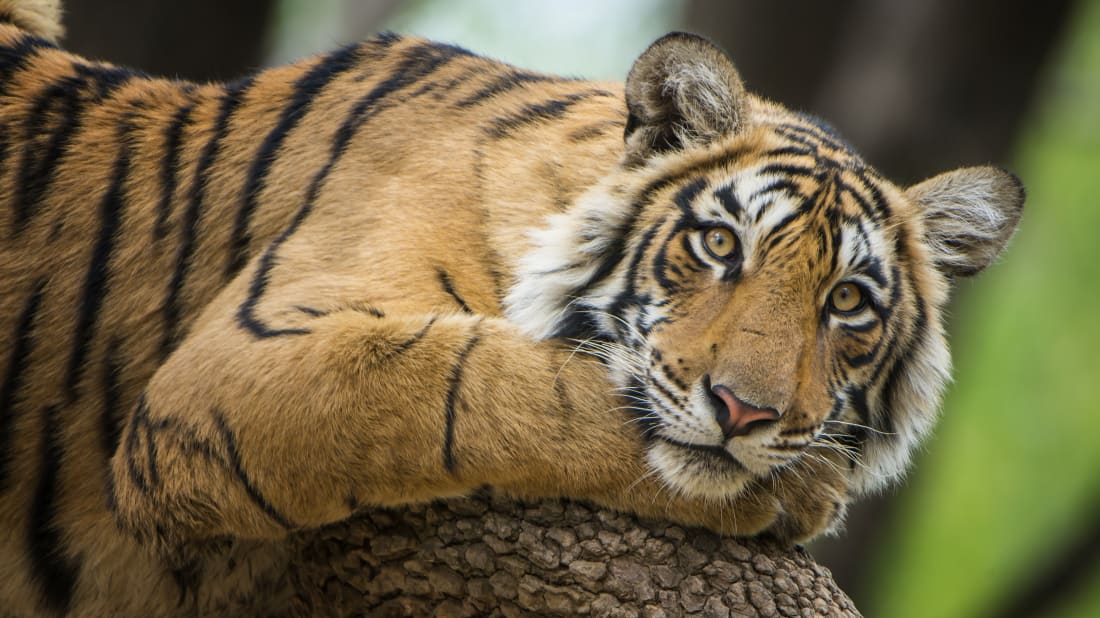
The Banham Zoo recently produced a short video showing leopards taking turns at pawing a tree, and a tiger rubbing its face against a log, emphasizing that large predatory animals "respond very positively" to scents that people are accustomed to using, never suspecting that it is not only humans that appreciate the fragrances that are reputed to appeal to members of the opposite sex when worn enticingly by women and increasingly, by men.

For the big cats, at least, it is the presence of an ingredient called civetone that represents the appealing element in these fragrances. A small catlike mammal that lives throughout Southeast Asia and Africa, the civet like most mammals, marks its territory when it secretes a distinctive scent emanating from its anal glands. Pheromones like these have long been used as a vital ingredient in the making of perfumes. Today's perfume industry makes use of a laboratory-produced copy, civetone.

Getty Images

Amusingly enough, the fragrance is described by Ms.Aftel, an expert in perfumery, as a fecal floral: "kind of poopy, but kind of floral", creating a complex aroma with musky tones when used in the manufacture of perfume. Who would've guessed? Ms.Aftel theorizes that the use of secretions of a wild animal in the sale of luxury perfumes might have originated when civet and other aromatic materials such as musk were historically used in medicines.

When civet oil was being harvested naturally, the animals were maintained in a captive state until the turn of the 19th Century, when perfumers understood they could use a synthetic formulation in place of natural civet essence. There is surely a correlation here with the propensity of domestic animals like dogs to find the scent of other animals' fecal droppings irresistible, rolling in it ecstatically.

Animal behaviourists believed that instinct drives dogs and other animals to this behaviour to make themselves smell repugnantly as a repellant defense against predators.
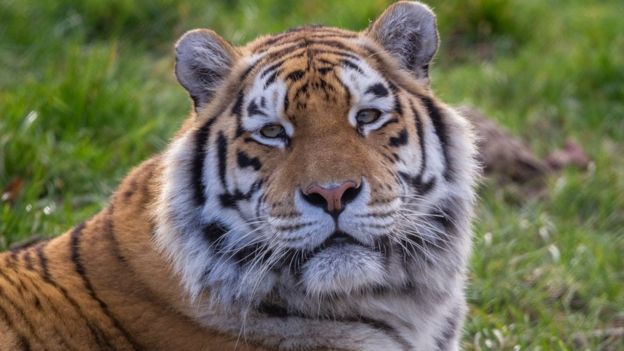
Tiger
Banham Zoo
The scent proving to be the most popular with wildcats happens to be Obsession for Men, a Calvin Klein fragrance. A curator at the Bronx Zoo tested 24 different scents on cheetahs, leopards and tigers. Discovering in the process that these predatorial cats preferred that product over all others. It was already acknowledged by zookeepers that spraying perfumes in a big cat's enclosure kept them from being bored; the animals would investigate the new scent and begin rolling about in it.

That Bronx zookeeper, Pat Thomas, and  his findings had his impression confirmed when zookeepers the world over treated their big cats to that singular scent to observe the animals' delight over Obsession for Men's fragrance. Wildlife biologists soon began stocking up on the cologne after experimenting with it, to discover elusive species such as jaguars would approach their trail cameras in the presence of the irresistible fragrance.
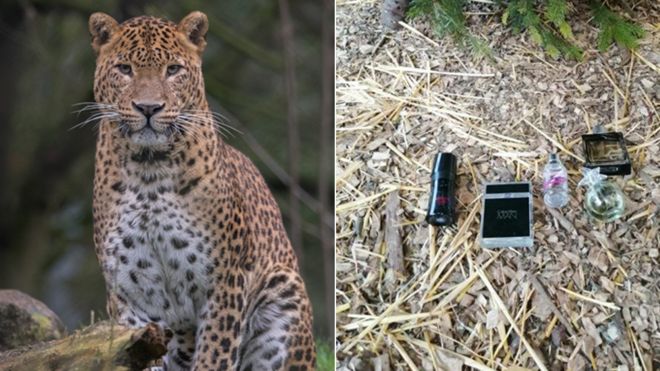
Leopard with perfume
Purr-fume lovers: Banham Zoo's big cats "respond very positively to unique scents", keepers say.  Banham Zoo

Labels: , ,

Friday, January 24, 2020

China's Insatiable Appetite

"Between 1996 and 2011, the number of countries supplying the Chinese sea cucumber market expanded from 35 to 83. Over 90% of the world’s tropical coastline now lies within countries that export sea cucumbers to Hong Kong, a large proportion of which are traded on to mainland China."
"In many cases, finance extends from importers in China all the way through the supply chain to individual catchers."
Michael Fabinyi, Kate Barclay, chinadialogueocean

"The sea cucumber has been used in traditional Chinese medicine to treat everything from high blood pressure and fatigue to constipation and impotence."
"The sea cucumber is low in fat and cholesterol while being high in protein and B vitamins. It is also rich in antioxidants."
thespruceEats
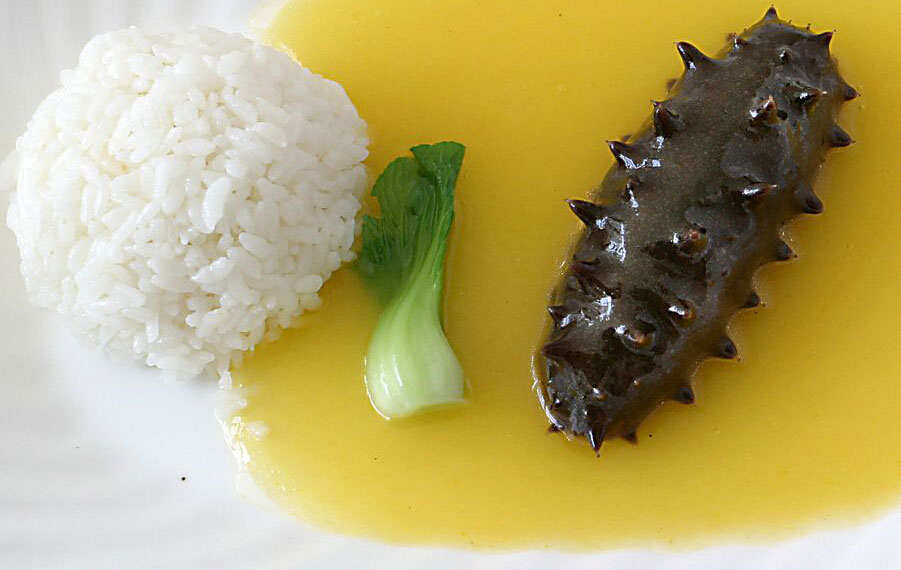
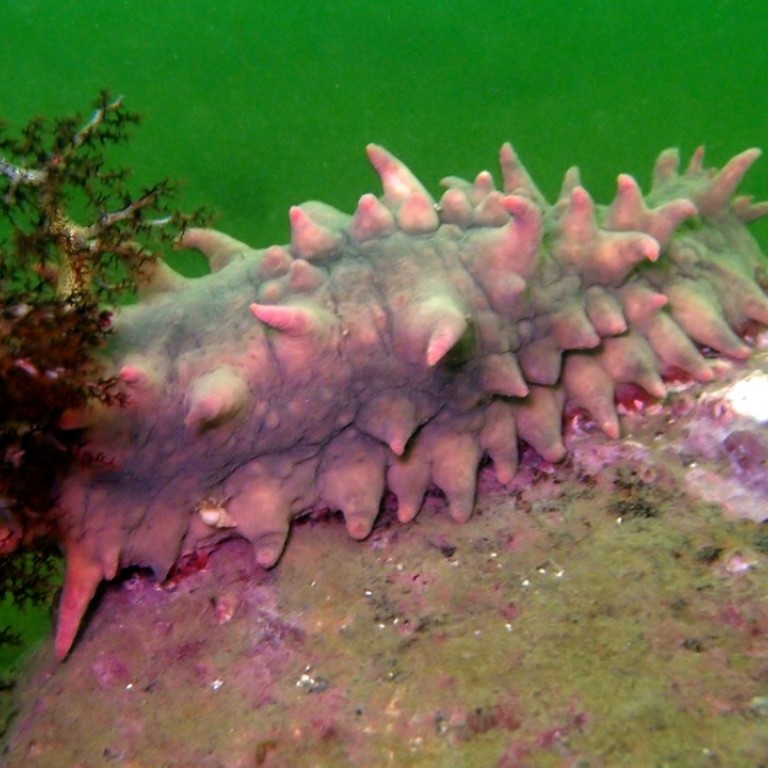
Sea cucumber
In China, sea cucumbers are considered a luxury food and are used to treat kidney problems and impotence. Some species can sell for more than US$600 per kilogramme or 3,765 yuan (Photo: treetstreet/Thinkstock)
At one time in traditional Chinese cuisine culture, sea cucumbers were reserved for the wealthy, who could afford what has been viewed by the Chinese community as a luxury edible. China's economic boom has seen millions of people leaving poverty to become part of the growing Chinese middle class. With that rise in financial status, the voracious appetite for table delicacies has seen the popularity of sea cucumber soar among people who can now afford the expensive treat.

The creatures have a reputation in Asia for their nutritional value, along with their unusual texture; believed to have medicinal properties to treat medical conditions ranging from arthritis to impotency. There are, needless to say, many other wild creatures that Chinese cuisine values for their purported pharmaceutical properties, in a long tradition of Chinese medicine. Chinese are known to pay astronomical sums for creature delicacies to which they ascribe miraculous health properties.

It is why donkey populations worldwide have declined, through export to China in such unsustainable numbers as to threaten the species, from Brazil to Pakistan. It is why wild animals such as rhinoceros, tigers, antelopes, snakes buffaloes, deer, bear, sharks, elephants, monkeys ... the list goes on ... and on -- are similarly under threat. Threatening the very existence of many animals whose numbers are increasingly precarious.


Because of the huge popularity of sea cucumbers, the oceans have been literally vacuumed of their presence around China, leaving the animals to become a rarity in their wild state because of the demand increase of the last several decades. Natural stocks of local species have been depleted. Leading to aquaculture, raising sea cucumbers in pens or ponds. Others are raised in the sea in conditions approximating their natural habitat, and these are considered to be free-range.

The local economy on the Liaodong Peninsula has undergone a transition where tidal flatlands have been transformed to a patchwork of ponds, the entire area so huge, they appear in satellite maps. Fed by ocean water, the ponds are seeded with the young and in a year's time they'll have grown sufficiently large to harvest. Huge structures that breed sea cucumbers destined for the ponds are located further inland.

"People here all rely on this", explained Liu Aiqing, while weighing sea cucumbers pulled by divers from a nearby pond. With a value of over $8 billion annually, sea cucumbers are now the most valuable of farmed sea products in China, according to Bao Pengyun, marine biologist who helped contribute to the development of the industry in China through his research at Dalian Ocean University.

The animals feed off the rocks and sand where they thrive while purifying surrounding water. Total eradication of the creatures would have a devastating result through the food chain, from either end. Some estimates place 70 percent of the world's edible species of sea cucumbers as over-exploited, from the South Pacific, to the Mediterranean, to the Gulf of Mexico.

As far as Mr. Bao, the marine biologist is concerned, little difference exists between sea cucumbers raised in pens or those raised in free range, and those from the wild. "Very much the same", he insists. "The difference is tangible", contends Mou Jie, a woman who set out with friends to drive up the coast to take a ferry to deposit her on Guanglu, where she plans to buy the delicacies.

Image result for china, sea cucumbers
South China Morning Post

Sea cucumbers from cold waters grow more slowly than others, taking three years to reach maturity, rather than one, giving them the reputation of being more nutritious. Whether fresh, partially processed or dried, wild sea cucumbers are priced at two to three times the penned versions. Dried, the most expensive can cost close to $1,000 a kilogram.

And then there are those who claim sea cucumbers to be flavourless, with the texture of cartilage or rubber. Actually, they have little taste of their own; like another Eastern food product that some swear by and others swear at -- tofu -- sea cucumbers pick up flavour from whatever it is they are cooked in, or with. Plucked alive from the sea, lightly blanched, then bathed in a sauce of garlic, cilantro and chili oil, their taste then assumes that of a rubbery piece of cartilage flavoured by a sauce of garlic, cilantro and chili oil.

Takers, anyone?

Image result for china, sea cucumbers
Sea Cucumbers are being eaten to death : National Geographic


Labels: , , , , , , ,

 
()() Follow @rheytah Tweet