Ruminations

Blog dedicated primarily to randomly selected news items; comments reflecting personal perceptions

Sunday, April 12, 2020

Rites of Spring

"Long before European settlers came along, maple sap was harvested and enjoyed by Indigenous Canadian populations, who tapped trees by cutting v-shaped patterns (or inserting thin wooden tubes) into the bark."
"They created syrup in a variety of ways: using freezing temperatures to separate the water from the sap or boiling the sap down in clay kettles over the fire."
"Eventually, European settlers learned these techniques from the Indigenous peoples, and maple syrup production began in their communities between 1700-1800 in Canada."
Canadian Living
Maple sap boils in pan on a wood fire in sugar bush, Madoc, Ontario, March 2020.  Peter Kuitenbrouwer
Vermont and New Hampshire pride themselves on the quality of their maple syrup, and rightfully so, the sweet, seasonally-derived treat is everyone's favourite table syrup to enhance breakfast pancakes, not to mention for use in baking and cooking to convey its very own special taste and fragrance to a multitude of dishes. But it is Canada that takes pride of place globally as the producer of 80 percent of the world's maple syrup market, and of that 80 percent, the province of Quebec proudly claims 90 percent production, though Ontario, Nova Scotia, New Brunswick and Prince Edward Island also produce the liquid gold.

Boiling sap in a sugar bush, Madoc, Ont.. Janerae Causyn
It all begins when winter finally takes its leave. When the nights are still cold, below freezing, and the days are beginning to warm, there are longer daylight hours and the sun heats up the landscape. That's when the sap which had descended from deciduous trees to trees' roots for the duration of the winter, begins to return from the roots, making its way back up to infuse the tree with new life, and new foliage begins to send out its green haze. It is sugar maples that the sap is harvested from, though enterprising Erablieres have also produced limited amounts of syrup from birches.

With the sap -- the life-blood of the tree -- rising from the roots through the cambrium layer of the tree's bark, a steady drip of sap falls from spigots (called spiles) into a collection pail that has been installed under the spile. The sap runs steadily as it rises through the bark to reach the upper stories of the tree, and when the pails are full, they're taken away to be poured into large tanks where they will go on the boil until the syrup stage is achieved. The emptied pails are returned to their position on the tree trunk to be replenished anew, and the ritual is repeated.

Hauling sap through sugar bush. Tallulah Kuitenbrouwer
When the pan has been filled, it is time for the second stage of sugaring off, to boil the sap over a wood fire, kept stoked until the sap boils away to become maple syrup, the stuff of legend. It takes 30 or 40 litres of sap from 45 buckets hung from sugar maple trees to make one litre of syrup. Someone must always be in attendance to see to the fire and tend the sugaring off. It helps to love nature, to be immersed in it with snow remaining on the forest floor throughout the process from March through April.

It is a solitary occupation at this point, but a wonderful place to be marooned, for nature-lovers. The forest becomes alive. The bare canopy of deciduous bush allows the spring sun to enter the forest, lighting it spectacularly, enlivening it, warming the tree trunks and the understory, while birds fly about, some that have come down from the boreal forest and others that have reverse-migrated, returning north from their winter sojourns down south. 

And soon enough, red buds will be seen, looking high up on the maple crown.

Labels: , , , ,

Friday, January 24, 2020

China's Insatiable Appetite

"Between 1996 and 2011, the number of countries supplying the Chinese sea cucumber market expanded from 35 to 83. Over 90% of the world’s tropical coastline now lies within countries that export sea cucumbers to Hong Kong, a large proportion of which are traded on to mainland China."
"In many cases, finance extends from importers in China all the way through the supply chain to individual catchers."
Michael Fabinyi, Kate Barclay, chinadialogueocean

"The sea cucumber has been used in traditional Chinese medicine to treat everything from high blood pressure and fatigue to constipation and impotence."
"The sea cucumber is low in fat and cholesterol while being high in protein and B vitamins. It is also rich in antioxidants."
thespruceEats
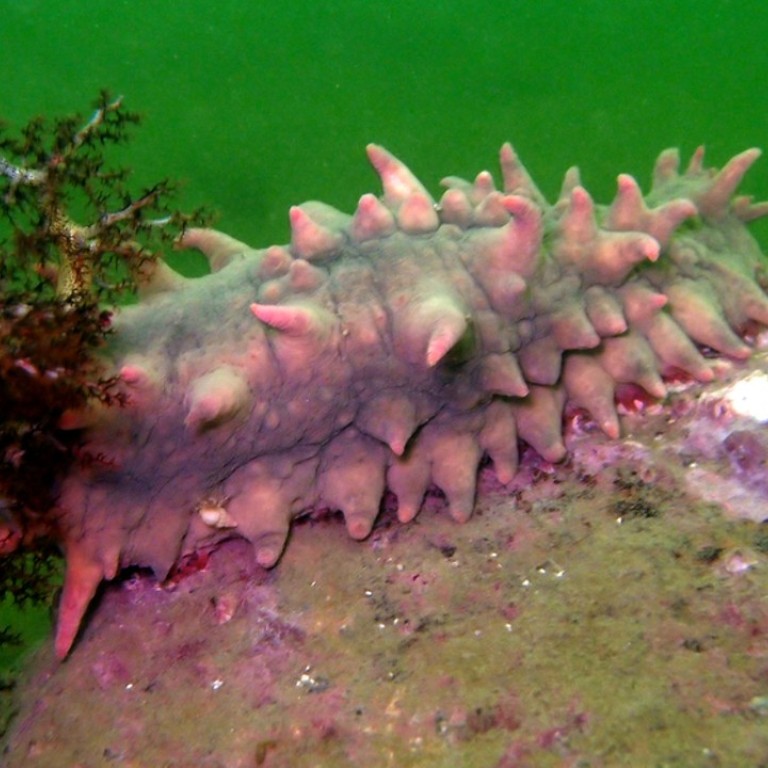
Sea cucumber
In China, sea cucumbers are considered a luxury food and are used to treat kidney problems and impotence. Some species can sell for more than US$600 per kilogramme or 3,765 yuan (Photo: treetstreet/Thinkstock)
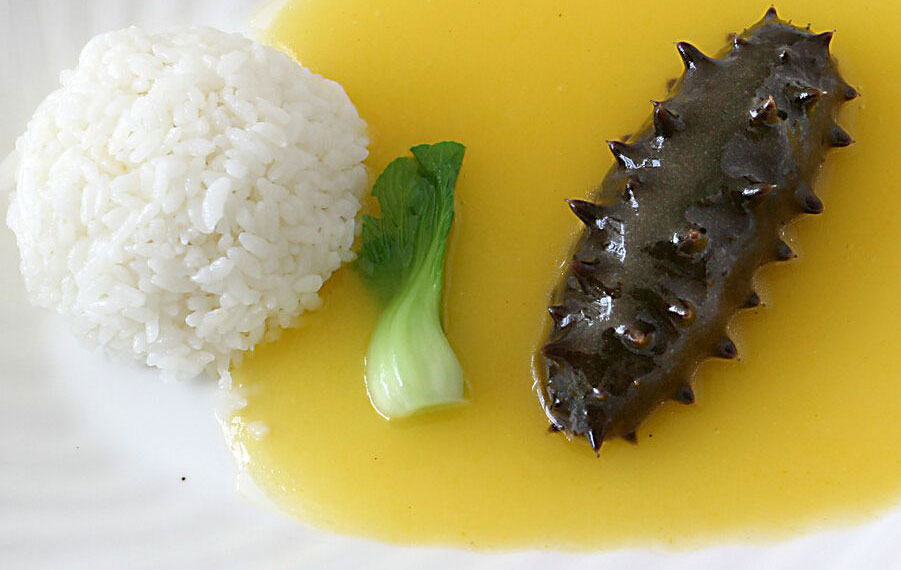
At one time in traditional Chinese cuisine culture, sea cucumbers were reserved for the wealthy, who could afford what has been viewed by the Chinese community as a luxury edible. China's economic boom has seen millions of people leaving poverty to become part of the growing Chinese middle class. With that rise in financial status, the voracious appetite for table delicacies has seen the popularity of sea cucumber soar among people who can now afford the expensive treat.

The creatures have a reputation in Asia for their nutritional value, along with their unusual texture; believed to have medicinal properties to treat medical conditions ranging from arthritis to impotency. There are, needless to say, many other wild creatures that Chinese cuisine values for their purported pharmaceutical properties, in a long tradition of Chinese medicine. Chinese are known to pay astronomical sums for creature delicacies to which they ascribe miraculous health properties.

It is why donkey populations worldwide have declined, through export to China in such unsustainable numbers as to threaten the species, from Brazil to Pakistan. It is why wild animals such as rhinoceros, tigers, antelopes, snakes buffaloes, deer, bear, sharks, elephants, monkeys ... the list goes on ... and on -- are similarly under threat. Threatening the very existence of many animals whose numbers are increasingly precarious.


Because of the huge popularity of sea cucumbers, the oceans have been literally vacuumed of their presence around China, leaving the animals to become a rarity in their wild state because of the demand increase of the last several decades. Natural stocks of local species have been depleted. Leading to aquaculture, raising sea cucumbers in pens or ponds. Others are raised in the sea in conditions approximating their natural habitat, and these are considered to be free-range.

The local economy on the Liaodong Peninsula has undergone a transition where tidal flatlands have been transformed to a patchwork of ponds, the entire area so huge, they appear in satellite maps. Fed by ocean water, the ponds are seeded with the young and in a year's time they'll have grown sufficiently large to harvest. Huge structures that breed sea cucumbers destined for the ponds are located further inland.

"People here all rely on this", explained Liu Aiqing, while weighing sea cucumbers pulled by divers from a nearby pond. With a value of over $8 billion annually, sea cucumbers are now the most valuable of farmed sea products in China, according to Bao Pengyun, marine biologist who helped contribute to the development of the industry in China through his research at Dalian Ocean University.

The animals feed off the rocks and sand where they thrive while purifying surrounding water. Total eradication of the creatures would have a devastating result through the food chain, from either end. Some estimates place 70 percent of the world's edible species of sea cucumbers as over-exploited, from the South Pacific, to the Mediterranean, to the Gulf of Mexico.

As far as Mr. Bao, the marine biologist is concerned, little difference exists between sea cucumbers raised in pens or those raised in free range, and those from the wild. "Very much the same", he insists. "The difference is tangible", contends Mou Jie, a woman who set out with friends to drive up the coast to take a ferry to deposit her on Guanglu, where she plans to buy the delicacies.

Image result for china, sea cucumbers
South China Morning Post

Sea cucumbers from cold waters grow more slowly than others, taking three years to reach maturity, rather than one, giving them the reputation of being more nutritious. Whether fresh, partially processed or dried, wild sea cucumbers are priced at two to three times the penned versions. Dried, the most expensive can cost close to $1,000 a kilogram.

And then there are those who claim sea cucumbers to be flavourless, with the texture of cartilage or rubber. Actually, they have little taste of their own; like another Eastern food product that some swear by and others swear at -- tofu -- sea cucumbers pick up flavour from whatever it is they are cooked in, or with. Plucked alive from the sea, lightly blanched, then bathed in a sauce of garlic, cilantro and chili oil, their taste then assumes that of a rubbery piece of cartilage flavoured by a sauce of garlic, cilantro and chili oil.

Takers, anyone?

Image result for china, sea cucumbers
Sea Cucumbers are being eaten to death : National Geographic


Labels: , , , , , , ,

Saturday, January 27, 2018

The Human Toll of Traditional Religious Chauvinism

"This is what makes me upset. Even people who consider themselves very sophisticated, very educated, very cultured, they are still doing this."
"What this is, is segregation. And we as a society don't talk enough about it. We don't talk about dignity, we don't talk about women's rights."
Radha Paudel, social activist, Nepal
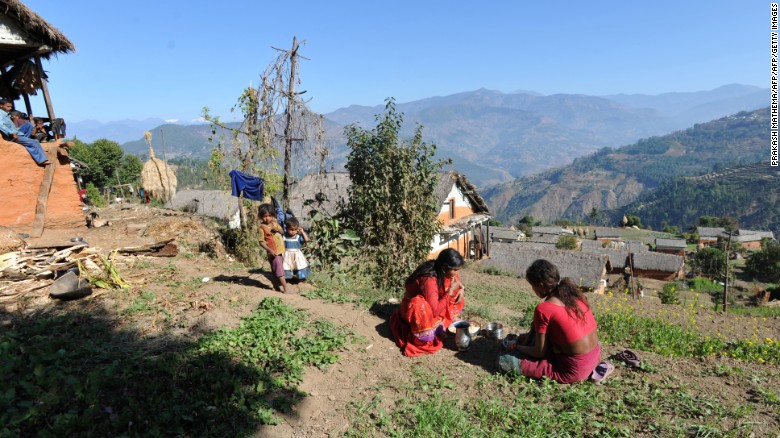
Women in a chhaupadi hut during their menstruation periods in western Nepal, in February. A tradition of isolating menstruating women in huts persists in rural areas despite the dangers and a 2005 court order. Credit Prakash Mathema/Agence France-Presse — Getty Images

Gauri Kumari Bayak, 22 years of age, was a woman determined to be of social use to her community. She was a woman with a social conscience who also had ambitions of her own. One of them was to complete her high school education. And she also took to earning her own money by sewing dresses for people who could pay for the service. She attended school during the day and in her spare  hours taught illiterate women to read. In the evening she did her sewing.

And now, thanks to a tradition in Nepal where menstruating women are accustomed to sequestering themselves away from others until such time as they were no longer 'unclean', she is no longer around to teach women to read, to sew dresses on contract, much less to complete her aspirational challenge of obtaining her high school matriculation before moving on to other things in her life. She died on January 8 of asphyxiation.

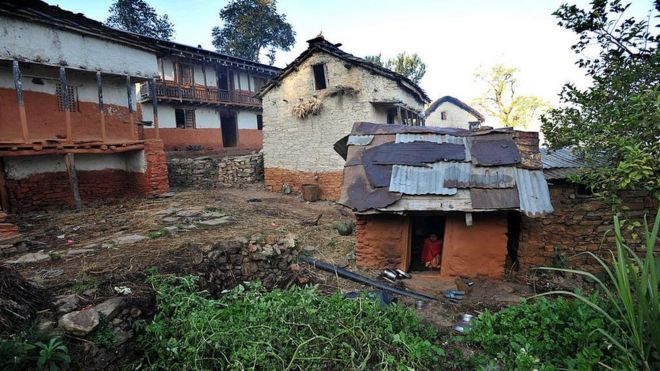
She had built a small fire inside an isolated hut on a cold night, to keep warm. She was in that hut where she gathered firewood nearby because she was impure as a menstruating woman, and was prepared to spend the night in a cold hut. Ms. Bayak is not alone in her victimization by a tradition that rural Nepalese honour. Dozens of women and girls in recent years have met their death upholding this tradition.

There are campaigns to end the practise and the Nepalese government itself has legislated against the tradition. Still, menstruating women prepare to bed down at night outside the family home for fear of offending tradition. They go into grass-roofed huts, or rough stables to sleep with cows or goats. Many of these women have been raped by intruders and some of them die from exposure to the cold.

The tradition was given illegal status last summer when the Nepalese government legislated against anyone forcing a women or girl to leave her home lest it be polluted by her menstruating presence. But the threat of violators being subject to imprisonment or fines does not appear to have made inroads into a tradition that people have been long accustomed to honouring when it comes into effect in August.

In Ms. Bayak's instance, poverty and ignorance could not be blamed since she and others of her family were relatively educated by standards of one of the poorest countries in Asia. Her Hindu religion, strictly enforced particularly in rural areas, must take most of the blame for influencing believers that women are unclean during the periods of their menstruation activity lest they infect others.
Thirteen year old Nepalese villager Sarswati Biswokarma sits inside a 'chhaupadi house' in the village of Achham, some 800km west of Kathmandu, on 23 November 2011
In some parts of Nepal, women sleep in huts like these during their periods   AFP

Menstruating women were  held to be toxic, that their presence could pollute a temple, that in handling the family food everyone would become ill, and if they touched a tree it would never again bear fruit. The young woman aspired to become a tailor in Kathmandu. Her village in western Nepal where she lived with her husband's show-owning family, would have expected her to honour ancient tradition. She herself insisted it was her duty to do so.

Her husband, a police officer working in Kathmandu, the nation's capital, now grieves her absence. He had never insisted that his wife follow the chhaupadi tradition, he said. But she was herself faithful to it, in a geography where the temperature drops almost to freezing as it did the night she died. The shed she sought shelter in, according to police accounts, had no windows. Police found fresh embers near her body where she had built a small fire.

It isn't just the environmental elements but the biological hazards as well that can threaten women who follow tradition. Last summer while honouring the chhaupadi ritual of ancient Hinduism, another young woman who banished herself to a small hut died after she was bitten by a poisonous snake.

Women in Nepal face systemic discrimination across a host of issues.
Women in Nepal face systemic discrimination across a host of issues.  CNN

Labels: , , ,

Saturday, April 15, 2017

Cogito Ergo Sum

"By going back in one leap millions of centuries, [science] has succeeded in being witness to that primordial Fiat Lux (Latin for 'let there be light'] when, out of nothing, there burst forth with matter a sea of light and radiation, while the particles of chemical elements split and reunited in millions of galaxies ... Hence, creation took place."
"We say: therefore, there is a Creator. Therefore, God exists!"
Pope Pius XII

"Even when science cannot provide satisfactory answers -- Why is there more matter than antimatter? How did life begin? How does a material brain produce the subjective experience of thought? -- those who are skeptical of the textbook answers are lonely voices among a faithful mainstream, and shamed for it."
Joseph Brean, National Post: Redeeming Thomas
"We have a society that has a secular government [Canada] and there is a general assumption of faith being very private."
"On the other hand, when you actually take a look at everyday society, the majority of people are people of faith to one degree or another, and faith informs and influences many of the ways we deal with each other on a day-to-day basis."
"Some of the discomfort about some of the language [e.g. morality, forgiveness, mercy] does pose a challenge to faith leaders that perhaps they have not been as effective as they should at explaining themselves to their fellow citizens."
"We've conditioned ourselves to think that faith is extremely private and personal and not something to be talked about in polite company."
"The reality is we do that at our peril. Faith shapes how we relate to each  other, and if we're going to prosper as a society in the future we need to understand each other in a context of increasing faith diversity."
Ray Pennings, executive vice-president, think tank Cardus

"[The privately faithful 30 percent of poll respondents] are people who actually believe in God, believe in heaven, believe in an afterlife. They have largely not been involved in organized religion. They will go to funerals and weddings and that sort of thing, but their faith is largely a private matter, and it's really driven by their prayer. They pray on a regular basis."
"[The spiritually uncertain also 30 percent] seem to be a bit confused about where they want to be. On some issues they kind of side with the non-believers, but they haven't given up totally on everything."
"They ... believe that there's a God, but they're uncertain about the role of God."
"The word 'religion' itself has become a little bit of a four-letter word."
"The march toward secularism that has dominated Canadian society for the last couple of decades appears to be in a bit of a reversal and will be reversed over time if these trends continue, because clearly population growth is coming from immigration."
Angus Reid, founder, chairman, Angus Reid Institute
https://s-media-cache-ak0.pinimg.com/originals/4e/32/6d/4e326d1f85f6e3ba207748e1b4a976c0.jpg
Actors perform the Stations of the Cross to mark Easter during the Holy Week in Ourem, central Portugal. (Photo credit FRANCISCO LEONG/AFP/Getty Images)

A new poll taken to test the prevalence or lack of faith among Canadians at a time when the general assumption is that religion plays less of an important role in most peoples' lives in Canada than ever before, paints a picture of a robust percentage of Canadians fully invested in their faith. The Angus Reid Institute along with Faith in Canada 150 placed poll respondents within four distinct categories reflecting their responses to poll questions engineered to gauge the level of their beliefs and religious practices.

The outcome of that classification resulting from the poll is that 21 percent of Canadians have been identified as religiously committed to hold a strong belief in God or a higher power, regularly attending religious services. Their direct opposite is the 19 percent of Canadians who have been designated into the category of non-believers (otherwise known as atheists). The larger group taking the middle ground have also been divided equally representing the "privately faithful" and "spiritually uncertain" (likely those said to be agnostic, in more familiar terms).

Each of these middle section groups have been divided equally to represent 30 percent. The poll's purpose was to distinguish and identify the numbers of Canadians categorized as believers and non-believers, and those who fall into a less clearly-defined category in the medium level of the spectrum. Respondents' reactions to a series of words toward which they were asked to register 'negative' or 'positive' resulted in 25 percent saying religion was positive, and 33 percent speaking of it as 'negative'.

"Evangelism", and "theology" gained the lowest estimation scores, while "forgiveness", "morality" and "mercy", on the other hand, were given the highest positive scores to reflect how those words generated a positive energy among respondents. Notable variations across regions in Canada were also identified where in the Prairie provinces about 30 percent of respondents gained the classification of religiously committed in comparison with 14 percent in Quebec, and 19 percent in British Columbia.

According to pollster Angus Reid, British Columbia represents "in many respects the most godless part of Canada", 27 percent fitting into the non-believer category. Quebecers, on the other hand, while deigning to avoid church attendance, still retain deep religious roots from their heritage, with only 18 percent identified as non-believers, while 36 percent are spiritually uncertain, and 32 percent privately faithful. "It's not that Quebecers have totally given up on God. They have given up on religion", clarified Mr. Reid.

Immigrants and visible minorities appear far likelier to be committed to religious faith, with visible minorities making up 16 percent of the group sampled, yet accounting for 29 percent of all religiously committed respondents.

Religious beliefs: All Canadians (in percentages)

  • 67%   God or a  higher power exists;

    60%   Life after death;

    53%   God is active in this world;

    57%   Heaven;

    41%    Hell 

    Image result for photo, oruro, bolivia, crucified christ, sand
    The Denver Post      Pope Francis lies down in prayer for Easter services at the Vatican

Labels: , , , , ,

Thursday, December 22, 2016

One-Industry Town Producing Light-Magic

"It's a magical, marvellous town. We are a people of artisans, musicians, pyrotechnics. It's a form of expression, of art, of making people happy."
"There are a lot of people who criticize this art, but we see it differently. It's our daily life."
Jose Guadalupe Solono Sanchez "Doc Pyrotecnia", Tultepec, Mexico

"It's incredible to see the work that people do here. It's what moves the town."
"[She heard  the sound of fireworks; a whistle, a pop and a crack] Then, it was no longer normal [when a loud blast shook the ground]."
Mary Rubio, resident of Tultepec, Mexico

"You couldn't see anything [through the flames and the smoke]."
"I've never felt something this sad [devastating loss of lives, destruction of the open-air fireworks market]."
"It's what sustained the municipality [its pyrotechnic industry]."
Solano Sanchez, Tultepec resident, Mexico
Fireworks explode from the San Pablito market in Tultepec, Mexico, on Tuesday, December 20. Authorities say dozens were killed in blasts at the market, which was especially busy with people buying fireworks for the holidays.
Fireworks explode from the San Pablito market in Tultepec, Mexico, on Tuesday, December 20. Authorities say dozens were killed in blasts at the market, which was especially busy with people buying fireworks for the holidays. CNN

"I came back and I helped her [his 83-year-old mother]. We were halfway the distance we had to cover to get out when I got hit by a large piece of brick and broke my hand and my hand was like hanging."
"I thought she was dead but no, thank God, no she wasn't. At that moment one of my nephews came in with other people and they carried us out, risking their lives because shrapnel was flying all over the place."
"Yes, we're going to keep on working. It's our livelihood,"
Miguel Urban Bojas, 49, injured fireworks vendor
Mr. Bojas the fireworks vendor was injured, along with his elderly mother, and both hospitalized. When they recover they will return to the livelihood they have been engaged in for all of their lives. Generation after generation in this Mexican town of 150,000 people located north of Mexico City, have been employed in the pyrotechnics industry, producing fireworks. The town is known for its spectacular fireworks displays that take place regularly in celebration of all manner of special occasions.

Those who produce the fireworks are master at the trade and take pride in their unique handicraft. These artisans consider themselves to be experts at the tradecraft they take such care with in imaginative and traditional design, supported by the town, and supporting the town. And the community in which they live cannot imagine themselves bereft of their fabulous, popular pyrotechnics events which can bring in tourists from all over Mexico and from abroad to witness for themselves the spectacular displays of colourful explosives.

Fireworks 'castles' waiting to be set off for a competition. Photo: Alejandro Linares Garcia

Mr. Bojas and his mother, though unfortunate victims of a fireworks display gone awry, were fortunate in that they came away with their lives intact. The death toll from that run-amok pyrotechnical event was 35, with many more others in the crowded market wounded from burns, from shrapnel, from smoke inhalation. There were eleven people reported as missing, somewhere in the remains of that conflagration waiting to be discovered.

The ear-splitting, multicoloured violence of the blast provided its own show, one that people of the town had experienced before in the relatively recent past when magic turned to tragic. The firestorm was the result of a powerful chain-reaction in the open-air fireworks market which also destroyed over 80 percent of the 300 stalls in the San Pablito fireworks market. The booths packed with firework merchandise on display and for sale, provided additional fuel for the run-amok fire to feed upon.

Tuesday's massively destructive explosion was the third such calamity to have occurred at this market since 2005. In the Gulf Coast city of Veracruz at a similar market, 29 people died in a 2002 explosion. An explosion of illegally stored fireworks destroyed part of the city of Celaya in 1999 when 63 people died. Another 58 people died in 1988 when a fireworks explosion at the La Merced market in Mexico City occurred.

It has been over two centuries that the people of Tultepec have specialized in the artisanal production of fireworks, skills handed down from generation to generation. The fireworks season lasts from August through to December and in that period of time the vendors of the town's fireworks expect they will sell 100 tonnes of fireworks. During fireworks festivals, music is matched to the pyrotechnical displays.

Elaborate "castle" contests take place where towers constructed of wood, reed and paper are festooned with fireworks that are set off, illuminating the towers and the atmosphere above in a spectacular display of fairyland showers of brilliant colour and scintillating light. Solano Sanchez's mother, father and grandparents all work in the production of fireworks. He is himself a specialized musician promoting the industry of the town's dedication to fireworks production.

Visiting survivors of the catastrophe that destroyed the market, burning it to the ground, and with it also damaging nearby houses, Mexican President Pena Nieto declared: "We made a commitment to support everyone, the 300 stall owners of that market to recover and support them so that they can continue their activities next year normally".

Labels: , , , ,

Friday, June 19, 2015

Mystery Not Exactly Solved

"There's some kind of irony there."
"It is very clear that genome sequence shows he is most closely related to contemporary Native Americans."
"We can see very clearly that Kennewick Man is more closely related to present day Native Americans than he is to anybody else,"
"We probably will never be able to say who is, in fact, the closest living relative of Kennewick Man."
Eske Willerslev, University of Copenhagen

"We're just glad the findings are able to prove what we've maintained all along. For us, it's great news."
"... We want him back in the ground for his final resting place, and not to be poked and prodded."
Jim Boyd, chairman, Colville tribal council, Washington State, U.S.A.

This clay facial reconstruction of Kennewick Man, who died about 8,500 years ago in what's now southeast Washington, was based on forensic scientists' study of the morphological features of his skull.
This clay facial reconstruction of Kennewick Man, who died about 8,500 years ago in what's now southeast Washington, was based on forensic scientists' study of the morphological features of his skull.   Brittney Tatchell/Smithsonian Institution 
 
"It is a much narrower and longer — relatively longer — cranium, and the way the base of the cranium is configured it is different from what we see in Native Americans."
Physical anthropologist Douglas Owsley of the Smithsonian Institution
In times long distant from our own, of prehistory, a land bridge is held to have linked Siberia across the Bering Sea, enabling early proto humans to reach North America from Asia. Some 25,000 years ago early populations moved southward along the Pacific Coast, then spread east to the Atlantic, and south into South America. Human life is held by anthropologists to have originated in Africa across time immemorial.

And from Africa, man bipedalled his way elsewhere in the world, to finally arrive on the North American continent. Migrations continued to spread humankind by sea over the Pacific, and much later from Europe by Vikings until Columbus 'discovered' America. Moving from vast aeons ago to the present, in 1996 a young man made his way into mud flats on the Columbia River and found a rock, dislodging it to realize that it had vestigial teeth and was in fact a skull.

Well preserved remains of a 9,000-year-old man had been found. Excavation led to the finding of an almost complete prehistoric skeleton, revealing the presence of nearly 400 bones. A stone spear point was embedded in the skeleton's hip, revealing new bone growth in the healing process. This skeleton was named Kennewick Man. He was found to have been 5-foot 8-inches in height, judged to be between 40 or 50 years old, and right-handed.

From the condition of his muscular-skeleton remains it was ascertained he had spent his lifetime spear hunting, his bone chemistry leading to the conclusion he had spent most of his life on the Pacific Coast on a diet of fish and related marine life. And he had been ceremoniously buried, on his back, arms at his sides, palms down. He was found because erosion of recent vintage had revealed his remains.

He was named by modern local indigenous people, the Confederated Tribes of the Colville Reservation, the "Ancient One', and claimed as one of their ancestors. And it was their intention to take possession of the remains and to bury them once again, with ceremony not unlike the original interment proceedings. Understandably, the Native American claims were opposed by anthropologists; scientists wanted to delve deeper into the mystery of what and who he was.

Such revelation might have indicated the migration of a white European, of an Asian, a Polynesian, the possibilities endless, and the re-shaping of the understanding of the migration process perhaps enhanced in the final analysis. Initial attempts in the extraction of DNA were fruitless due to contamination. The U.S. Army Corps of Engineers control the area where Kennewick Man's remains were discovered; the government supported the native claims.

In 2000 the U.S. Interior Department ruled in favour of the five tribes' claims that he was one of their own. And preparations were underway to hand the remains over under laws protecting native grave sites. Anthropologists, wanting the opportunity to conduct DNA investigations sued for access. In 2004 a court ordered the remains be made available for scientific enquiry on the basis that the government and native tribes had not succeeded in proving kinship.

A later experiment succeeded in extracting a full genome from a minuscule piece of bone from Kennewick Man's hand. Using DNA samples from the local Colville tribe, and that small part of a hand bone, it was proven that Kennewick Man was indeed of Native American heritage representing either as an ancestor of modern native populations or a related specimen with a common ancestor.

As a result of that skeletal discovery, each side in the dispute; one the native population wishing to honour a ancestor had their claims proven but not entirely to the satisfaction of still-unconvinced scientists; secondly, the scientists were given the opportunity to proceed with their investigation looking for linkage and time frame, before The Ancient One was buried once again, with all due ceremonies attending him.

Still, not everyone is satisfied that scientific enquiry has been fulfilled in its mission. And there's at least one scientist who isn't convinced by the genetic evidence. Physical anthropologist Douglas Owsley, an expert on bones, displays a cast of Kennewick Man's skull in his laboratory — alongside skulls of three Native Americans. Kennewick Man appears decidedly different. To bury him now would be precipitate, and unfair to science, feels Dr. Owsley.

Labels: , , , ,

Wednesday, September 10, 2014

Erebus -- the Gates of Hell

"We don't know when it started, or who took the decision, but some time in May 1848 British sailors from HMS Erebus and HMS Terror began butchering and eating their comrades. We do not know if they killed the living, picking out the weak, the young and the expendable, or whether they confined their attentions to the dead. But make no mistake they ate their shipmates, not one or two, but forty or fifty. British sailors carefully and deliberately used their knives, vital symbols of their profession, to strip the flesh from men who had been their friends. Their sharp blades left tell-tale marks on the victims' bones, marks that have endured to this day..."
Andrew Lambert, Prologue: The Gates of Hell, Sir John Franklin's Tragic Quest for The North West Passage

"That's the clue [recovered ship's davit] that tells you: look here. That's the flag. You can see the tackle from the ship ... different riggings in the centre."
John Geiger, president, Royal Canadian Geographical Society

"I am delighted to announce that this year's Victoria Strait Expedition has solved one of Canada's greatest mysteries, with the discovery of one of the two ships belonging to the Franklin expedition lost in 1846."
"We do have enough information to confirm its authenticity."
Canadian Prime Minister Stephen Harper

One of the Arctic's most enduring mysteries has at long last been solved; the whereabouts of Sir John Franklin's two ships from his last expedition to the frozen north in search of the fabled Northwest Passage. His second wife, Lady Jane Franklin, a personage in her own right with connections to influence and high society and the British admiralty, did all in her considerable will and passion to demand that Britain send out one rescue mission after another in search of her husband. To no avail.

And then over a century-and-a-half later, a Canadian prime minister for whom such historical mysteries connected to Canada's Arctic past, threading into the present, was determined to launch a modern-day search to succeed where in the past so many others had failed brought news of success. Two weeks ago on his annual trip to the Arctic, Prime Minister Harper spent several nights himself aboard HMCS Kingston, travelling from Pond Inlet to Arctic Bay in Nunavut.

Now, back in Ottawa, he had the great pleasure of announcing to the world that the mystery, at least part of it, has been solved. While it is not yet clear which of the two ships, the Erebus or the Terror, is the one that has finally been located at the 11-metre depth of the Arctic in Queen Maud Gulf, when deep-sea divers examine the well-preserved wreck for clues, including the bodies of those who sank with her, much will be revealed. It was known that lead poisoning killed some of the men and others died of a lethal combination of tuberculosis and pneumonia.

And then botulism also enters the mortuary scene. Past Franklin searchers picked up quantities of human bone on the west and south coasts of King William Island and the mainland at Starvation Cove in the last hundred years. It is not likely that Franklin's skeleton would be found among those on the sunken ship; he is held to have died before the vessels were abandoned, and Cape Felix seemed the likeliest interment spot.

One of the ill-fated ships has now been found, however, thanks to modern sonar technology. Days ago a coast guard helicopter pilot had seen a dark object the size of a man's forearm lying in the Arctic snow. On retrieval the orange-brown piece of metal in the notional shape of a tuning fork, had the markings of the British Royal Navy; a portion of a lifting mechanism for one of the two lost Franklin ships.

The unmanned, remotely-controlled submersible that was searching for sign of a submerged wreck had already scoured large areas of the ocean where it was thought most likely the ships were to be found. Discovered 11 metres below the water's surface, the as-yet unidentified of the two ships was surprisingly intact. It was, in fact, pure luck; the submersible had been blown off course by weather-and-water conditions, which brought it, amazingly, to hover right over the sunken vessel.

According to Ryan Harris, a senior underwater archaeologist and one of the people leading the Parks Canada-led search for the ships, the sonar image clarified that some of the deck structure remains intact, including the main mast; a discovery that followed by a day that of the fragment by a team of archaeologists in the King William Island search area, representing the first such artifacts to be found in the modern era.

"Mr. Harper has always been passionate about Canada's North and about the potential of Canada's North and its role in history and its importance to its sovereignty. The Franklin expedition, even though at the time a British expedition, fits into that history. It's about the Northwest Passage and opening up the North. It's not been any secret to us, the prime minister has placed a high importance on the North and there's no surprise he has shown such an interest and attention to this. There wouldn't have been an event today if he hadn't ratcheted up the government's commitment to the search", stated Guy Giorno, one-time chief of staff to the prime minister.
Franklin Expedition ship found
This is a prime minister who has an especial interest in Canadian history, following in the footsteps of his own father. Not only the history of Canada's far North, but the history of Canada's traditional sport, hockey; a man who made himself sufficiently knowledgeable to write a highly acclaimed history book of the game. But his talents don't stop there; he has a particular interest in music as an accomplished pianist and a singer whose voice carries him with distinction in impromptu performances accompanying his piano playing.

This is a man of multiple talents, including that of an able politician who has achieved to the highest political rung in Canadian politics. And who has led the country with distinction and honour. Yet the bored electorate consider him uncharismatic, dull and barely worth another run at the office he so ably administers carrying Canada well into the 21st Century.

Labels: , , , ,

 
()() Follow @rheytah Tweet