Ruminations

Blog dedicated primarily to randomly selected news items; comments reflecting personal perceptions

Thursday, August 12, 2021

An Old War Revisited From Lung Cancer To Cardiovascular, Pulmonary and Neurological Diseases

Healthday
"Over time, this imbalance can play a significant role in causing certain illnesses including cardiovascular, pulmonary and neurological diseases, as well as cancer."
"We were surprised by the gravity of the effect that one vaping session can have on healthy young people."
"This brief vaping session [the basis of the research study] was not dissimilar to what they [study subjects] may experience at a party, yet the effects were dramatic."
"While there’s a perception that e-cigarettes are safer than tobacco cigarettes, these findings show clearly and definitively that there is no safe level of vaping. The results are clear, unambiguous and concerning."
Holly Middlekauff, professor of cardiology and physiology, David Geffen School of Medicine, UCLA
Man holding e-cigarette expels smoke
Oxidative stress levels as much as quadrupled after nonsmokers used an e-cigarette for just a half-hour, scientists found.   Shutterstock/Pavel Kant

New research published in JAMA Pediatrics concludes that a mere 30 minutes of vaping can result in an imbalance between free radicals (molecules which damage cells) and antioxidants (compounds which inhibit free radicals), elevating cellular oxidative stress. The result is the potential for a significant increase in cellular oxidative stress level, leading to the creation of an internal environment which can result in a range of illness, including cancer, over time.

Popularly considered to represent a safer method of consuming tobacco, e-cigarettes or vape pens, it would appear, are anything but. Detrimental developments in the body foreshadowing serious health issues result from the use of these devices meant to deliver nicotine and other chemicals in vapour form rather than smoke. 

The test devised by researchers led by Dr.Middlekauff at UCLA saw researchers recruiting 32 men and women between ages 21 and 33, divided into three groups. The groups were represented by 11 non-smokers, nine regular tobacco smokers, and a dozen e-cigarette smokers. Oxidative stress was measured by the research team through the collection of immune cells prior to and following the three groups having engaged in a 30-minute vaping period.

The researchers found that oxidative stress levels in non-smokers were two to four times higher than prior to the test, after the test subjects had vaped for 30 minutes. A similar increase was not seen in the other two groups, the theory being that the other study subjects had started from a higher baseline of oxidative stress stemming from their prior exposure as smokers and e-vapers which led to a less notable increase.

These findings sound the alarm respecting the safety of vaping, given the reality that vaping has become extremely popular among the young globally. In Canada, roughly15 percent of youth between the ages of 15 and 19 claimed to have vaped within a 30-day period, with 87 percent specifying a nicotine product. And while another 36 percent said they had initiated use of the devices on a casual basis, of those who had reported vaping, one-third owned to habitually vaping on a daily basis.

Vaping
Researchers say the results suggest there is no safe level of vaping, Getty


Labels: , , , ,

Thursday, December 12, 2019

At Your Own Risk, Chinese e-Cigarettes

"Once the national standard comes out, I can follow its targets and make big investments."
"I won't have to worry that something will happen, but now I don't know which day the sword would fall."
Ou Junbian, owner, Sigelei, e-cigarette exporter

"We can guarantee that they [cannabis e-cigarettes] are safe to be consumed through the stomachs, but is it safe enough to be absorbed through the lungs?"
"To be honest, in this respect, neither we nor the industry has evidence that is particularly solid."
Jiang Xingtao, director of flavors, RELX, e-cigarette seller
A saleswoman exhales vape as she talks to a customer at the Vape Shop that sells e-cigarette products in Beijing, China January 30, 2019. REUTERS/Thomas Peter - RC126DC074A0
Reuters
China, in response to a vaping boom among young Chinese, is preparing to mandate compliance by producers of e-cigarettes to standardizing ingredients and manufacturing. With the establishment of a "national standard", producing companies are expected by law to provide details on the number and dosage of ingredients, to place warnings on packages and to devise methods of testing e-cigarettes, ensuring compliance.
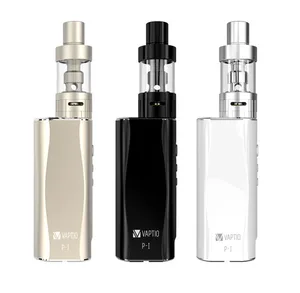
Factory supply!! Original colorful Vaptio P1 electronic cigarette manufacturer China

Up to the present, the government of China has permitted the industry free rein, enabling them to thrive, no supervision by any government agency to ensure quality and safety. The vast country has over 9,500 e-cigarette production companies many with haphazard quality controls, resulting in knockoffs, unsafe ingredients and leakage of vape liquid. Vaping oils with nicotine levels higher than the package states were produced by eight of those companies.

Obedience to the new guidelines will have the effect of production costs increasing, a circumstance likely to result in hundreds of small e-cigarette exporters going out of business. The new standards when brought into law will have an opposite effect for most manufacturers since clear guidelines will ensure that manufacturing companies who comply may then legally sell their product in the vast Chinese market.

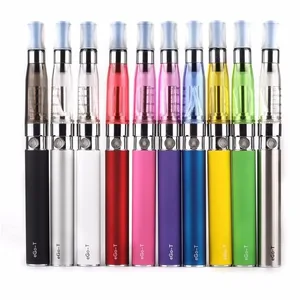
Original Electronic Cigarette Manufacturer China E Cig Rebuildable Atomizer Ego Ce4 Kits Vaporizer Pen
This is an industry that has viewed China as a haven, where ninety percent of the world's e=cigarettes are made. High-profile venture capital funding has invested hundreds of millions in some of the nation's top e-cigarette brands such as RELX, FLOW and Yooz. Chinese e-cigarette exporters have seen their sales drop precipitously to the United States in the wake of vaping-related health crises where thousands of American users have become seriously ill, and 47 have died.

Coincidentally, the domestic market which began to open up three years earlier appears to have taken up the slack, with an increasing interest in vaping in China. An estimated ten million Chinese e-users has turned Beijing's attention to the popular pastime, mostly young people among whom it is appealing to vape sleek devices with flavours such as chilled strawberry and orange soda.

China's e=cigarette market alone was valued at $750.4 million in 2018, according to global market research consultancy, Euromonitor, almost triple the 2014 valuation. Of a population of close to 1.4 billion people, there are over 300 million smokers. Vaping among the young has raised public concern, urging that regulations be drawn up and put into law and into practise to ensure public health safety in vaping.

It was revealed in early November on the website of People's Daily, the Communist Party's official news organ, that most e-cigarette companies went on selling their products online in defiance of the ban. China Central Television, the state broadcaster, filmed Beijing authorities calling on e-cigarette companies to comply with the ban and a day later Alibaba's Taobao and JD.com., two of the nation's most popular e-commerce platforms, no longer listed their availability.


Labels: , , , , , ,

Saturday, January 19, 2019

That Nicotine Buzz

"A kid can inhale it and get a good nicotine buzz."
"Is this a fad or is it the beginning of primary nicotine addiction?"
"We think most users are  using it a few times a month. But there are clearly some who are using it every day."
Dr. Neal Benowitz, San Francisco

"Perhaps it will be a passing fad. We don't know."
"But, when kids come to you and tell you that half the kids are JUULing, it's a valuable piece of information."
"Obviously, there's a certain allure, and that's interesting and worrisome."
Robert Reid, deputy chief, division of prevention and rehabilitation, University of Ottawa Heart Institute
Teens use e-cigarettes for 'dripping,' study says
"To me, these are products that are really appealing to kids. ... Millions of kids are trying these e-cigarette products. Studies show that one in five eighth-graders that currently use tobacco products got there by starting with e-cigarettes."
"So these e-cigarettes are also a gateway for traditional tobacco use for many young kids.There are warnings on the labels of some vape liquids containing nicotine that are pretty clear: 'Nicotine is an addictive chemical; For use by adults 18 and older'." 
Joseph Allen, assistant professor of exposure assessment science, Harvard T.H. Chan School of Public Health
"Our main concern is adults having the tools that they need to quit smoking. Young adults, if they are not smokers, they absolutely should not start using a nicotine product."
"Spend some time in a vape shop and see the customers that come in for these wildly named products. They are adults. They are over 25 years old, and they are the same type that watches 'Family Guy' on Sunday nights."
"It's something that is a little lurid, appeals to adults. We're not a country of serious, uptight people that just want straightforward products."
American Vaping Association President Greg Conley
 
"I definitely think about ... how it affects what I'm putting into my lungs, because I don't really know too much about it. ... I'm not even sure how it turns into vape. ... But I haven't been too concerned about it, obviously, because I'm still using it [since first starting to vape in her teens]."
"It [warning label on her JUUL box, read for the first time] says 'California Proposition 65 warning: This product contains chemicals known to the state of California to cause cancer or birth defects, or other reproductive harm.' OK, I never read that before. Doesn't make me feel great, but that's what it says, so, I guess, yeah, that is the only warning. But that's probably the only warning that needs to be on there."
"[Did the warning change her mind about vaping?] No, definitely not."                      Bella Kacoyannakis, 20, East Longmeadow, Massachusetts
Twenty-year-old Bella Kacoyannakis started vaping when she was still in her teens.
Twenty-year-old Bella Kacoyannakis started vaping when she was still in her teens
According to the company that produces the "Apple of vaping" -- the device that has spread through high schools in the U.S. and Canada as well as university dorms -- headquartered in San Francisco, it has one interest only, to improve the lives of smokers, to aid them in their determination to stop smoking cigarettes, nothing more, nothing less. Dr. Benowitz, whose clinic happens to be located several blocks from the JUUL headquarters, notes when he met the company founders three years earlier his message to them was: "You have to make sure this doesn't spread through high schools."

Spread it has; like the proverbial firestorm of popular acclaim for a product whose allures has taken young people always on the lookout for the latest cool attraction, by storm. The past decade has seen a notable decrease of young smokers, a situation that has gone into reverse with the introduction of e-cigarettes and vaping devices causing health authorities to pose hard questions, according to Dr. Benowitz, an expert on nicotine toxicology, speaking at a national conference on smoking cessation held in Ottawa, Ontario.
Students outside West Carleton Secondary School in Ontario hold e-cigarettes. (Hallie Cotnam/CBC)
A recent survey of teens and substance abuse throughout the province found ten percent of Ottawa high school students had vaped in 2017, in comparison to six percent who said they had smoked. The recent nature of this phenomenon means that little is as yet understood about whether young users do so socially, or whether as time goes on they will become confirmed cigarette smokers, becoming lifetime users of nicotine. This is an issue identified as worrisome by physician and University of California professor, Dr. Benowitz.

Admittedly, the hit of nicotine delivered through e-cigarettes is acknowledged to be less harmful than that from cigarettes. Public Health England points out that e-cigarettes are 95 percent less harmful than cigarettes, and some British and French jurisdictions have enlisted vape store personnel as advisers for smoke cessation. The danger rests in the smoke, according to research. Sweden, with its high use of snuff-like smokeless tobacco, "snus", lists a low rate of lung cancer.

Concerns remain, however, that devices like JUUL differ from those first-generation e-cigarettes since JUUL uses nicotine salts, diminishing that harsh taste but delivering high nicotine content. Flavours used for vaping products such as mango and creme brulee may appeal to adult smokers but these are flavours that young smokers also respond positively to. And while vaping may be less harmful than smoking, concerns abound about nicotine's effects on the still-developing adolescent brain.

A vape trick video has over eight million views on YouTube. (Posted to youtube by vAustinL)

Labels: , , , , ,

 
()() Follow @rheytah Tweet