Ruminations

Blog dedicated primarily to randomly selected news items; comments reflecting personal perceptions

Thursday, December 07, 2017

Victimizing Health Care Workers

"We had no idea of the magnitude of the problem or  how serious it was. We actually ended up being quite disturbed."
"It is very hard to ignore the parallels of gender and violence against women in our society with what we were hearing. It mimicked in so many ways the way domestic violence has been treated."
"We do not believe in workplaces that employ mostly women that health and safety is being given the same priority that it is in industrial facilities that employ mostly men."
"There were terrible physical traumas, people whose lives have been changed forever, people with post-concussion syndrome, people whose faces had been smashed and they now are disfigured."
"We spoke to a nurse who had — all in separate incidents — a fractured leg, a fractured arm, a deep bite wound, a stab wound. And these were not unusual stories."
"Somehow people have been told in a lot of ways that they are to expect this sort of treatment. But what I see, looking at it in a broader way, is it’s very similar to what’s coming out now in Hollywood, that there’s this culture of silence and shame."
"One of the things that came out is they [workers reporting abuse] received so little support. It was really different from one community to another, one facility to another. There were some people who said they had had very sympathetic supervisors who helped to support them through that difficult post-incident period, but I would say the majority felt that they got no support and, in fact, it was the opposite."
Margaret Keith, occupational and environmental health researcher, University of Windsor, Windsor, Ontario

“Even when the incidents were reported, there was very little action taken to remediate the situation to prevent it from happening again."
"It’s a barometer of what is going on in the health-care system. And if we don’t want our mothers and fathers and our neighbours and ourselves being treated that way, then I think we really have to be seriously thinking about what the culture is that all that occurs in."
"In some of the facilities, it's a daily occurrence: women being grabbed, verbal harassment. It is hard to imagine having done this study that one could ignore the role of gender in this story."
"It's one of the reasons that this issue has been kept out of the public view because the victims are not allowed to speak, which is another parallel, I think, to violence against women."
Jim Brophy, occupational and environmental health researcher, University of Windsor
The study looked at 54 hospital workers across Ontario, according to Jim Brophy,  who co-authored the report, Assaulted and Unheard: Violence against Health-care Staff.
The study looked at 54 hospital workers across Ontario, according to Jim Brophy, who co-authored the report, Assaulted and Unheard: Violence against Health-care Staff.    CBC

Two researchers have produced a study, entitled Assaulted and Unheard: Violence Against Healthcare Staff, which sets out the impressions they gained from interviewing health-care workers across Ontario, with a focus on workplace violence in health-care settings. Their study was published in the Journal of Environmental and Occupational Health Policy. In their interviews about the research they conducted and those whom they interviewed, they point out that this is a topic that is seldom addressed because it is quite simply ignored, although the fallout is serious and health-care workers are in a state of perpetual concern and distress.

The two university researchers, James Brophy and Margaret Keith, both with the University of Windsor, both occupational and health researchers, were aided by the work of Michael Hurley, president of the Ontario Council of Hospital Unions, part of the research team. They reached the conclusion that vastly under-reported violence perpetrated upon health staff workers in Ontario is ubiquitous and although a primary concern to the workers, is concealed from public awareness reflecting a culture of silence in the health-care field.

All of the 54 health-care workers who were interviewed had witnessed violent events borne by health workers. Only one among them had not personally had similar experiences when they too were victims of violence. This was reflected in the results of another survey which concluded that 68 percent of health workers in Ontario spoke of having experienced violence in the year past, and for some of those workers not merely one occasion but on multiple occasions. It is worth considering whether the rise in opioid-related use causing health emergencies has had some impact in this respect.

Some of those whom the researchers interviewed spoke of having had teeth knocked out, their faces smashed, and having suffered concussions along with other serious injuries leaving them in a state of debilitation and traumatization. Many others described having been sexually assaulted, and though they may have reported these episodes of shocking violence, their complaints were brushed aside by superiors informing them that what they had experienced was simply to be regarded as part of the job they had committed to.

The impression overall that the three researchers gained through these interviews was that health workers are fearful of speaking about the issue, let alone reporting them in many instances. And as a result of that lapse of reporting because the victims know their concerns will not be taken seriously let alone expecting that anything might be done to remediate the situation, the problem remains unacknowledged. For speaking up about violence against nurses while at a conference, a nurse working in North Bay was fired.

The conclusion reached by the researchers was that an increase of resources could assist in reducing violence against  health workers, making a link between staffing cuts and a rise in such events, where the health-provision workplace has become a toxic environment for workers, dangerous to their physical and psychological well-being. Earlier in the year a clerk in a Smiths Falls hospital had been stabbed by a patient using scissors he snatched from a desk. The simple enough expedient of having a Plexiglas barrier would have avoided this attack.
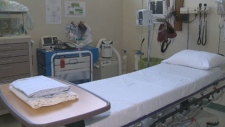
Hospital
Researchers conducted focus-group interviews with more than 50 hospital staff members who had experienced verbal, physical or sexual assault, mostly perpetrated by patients.  CTVNews

Labels: , , ,

Saturday, January 30, 2016

Realities, Actions and Consequences

"The video shows three hands in the vicinity of the guard's gun as he was being choked from behind by Mr. Hind. The guard then fell to the floor, and fatally shot the male who began the assault [Donny Ouimette]."
"Mr. Hind then again attacked the guard from behind as the guard was standing up from the floor. Mr. Hind was shot as he and the guard grappled for control of the handgun."
Toronto East regional coroner Jim Edwards

"There has to be changes so this won't happen again. Nobody else should have to go through this. It needs to be finished. It's not finished."
"I wanted to see for myself what really happened. I needed to know [how her brother died]."
"Next [in the video shown her by Toronto police detectives at her request] you see [Ouimette]. He came up pretty quickly and bodychecked the security guard. It was not a little push, it was a bodycheck."
"The way he walks in [man shown on video] and moves, I knew it was Ryan [her brother]."
"[The attacked security guard fell to the ground] Kicking him, punching him, stomping on him."
"Ryan circled him [security guard prostrate on floor] and went to the counter ... and looked up. All of a sudden, when the security guard was on all fours [Ryan] attacked him. The next thing you see is Ryan roll off the security guard."
"Everyone who knew Ryan knows that that was not the way he was. He was the one, out of all of us, who was supposed to make it."
Brenda Hind, Toronto resident
Still from Global News video

Almost a year ago, on February 28, 2015, at three o'clock in the morning outside an east-end Toronto McDonald's, an off-duty security guard was standing at the counter of the restaurant looking at the menu, trying to decide what he wanted to order. What happened next was revealed in a closed-circuit camera in the store and which was shown to the sister of one of a trio of violent men who attacked the security guard, at her insistence because she wanted to know precisely what had happened in the altercation to leave her brother dead.

What happened is that a trained security guard, overwhelmed physically by the violent aggression of three strange men who had for reasons of their own, too late to share with anyone, decided to surprise a perfect stranger with the force of their instantaneous distemper at the presence of someone whom they had no knowledge of. There could not possibly be a more virulently hostile act than the viciously savage assault that took place there that night.

"Ryan's life had to mean something", says his sister. "Just letting it go -- no accountability for anybody, no changes so this won't happen to someone else -- then he died for nothing." There is no gainsaying that conclusion. But simply because a sibling in mourning struggles to understand why her brother is no longer among the living, others struggle to attempt to understand why anyone would choose to threaten the life of anyone else; in this case a perfectly innocent man who worked for GardaWorld.
Donny Ouimette, left, and Ryan Hind, the two men who were shot and killed by an armed security guard in a McDonald's in February.
Donny Ouimette, left, and Ryan Hind, the two men who were shot and killed by an armed security guard in a McDonald's in February

Of all the unguarded people three men who had spent the night going from bar to bar might chose to vent their violent temperament on, they certainly chose unwisely. Even so, were it not for the fact that this man managed, under extremely violent circumstances to preserve his life even while his attackers appeared to feel he had no right to life and it was their intention to threaten it, abuse it, and remove it, he succeeded in the end in defending himself and in the process completely remove the threat to himself by doing to them what they planned for him.

The surveillance video was obviously there for a distinct purpose, however potential, and it proved its value.  In the video, the guard on his work break was shown at the counter as two men entered the restaurant and attacked the guard; one, then the other, as the surprised guard struggled against them. Repeatedly watching the video themselves, police had far earlier concluded that the man had done "absolutely nothing to provoke" his attackers.

When the overwhelmed guard fell to the floor the beating the men -- and there appeared to be three of them -- were viciously focused on simply continued. One of the men was no longer visible in the video and it was assumed that this is when a gunshot struck him. Soon the other man too was not visible and the video showed only the brother of the sister watching the video unfold standing over the guard trying to raise himself off the floor.

The man stood back as the guard succeeded in partially raising himself, then pounced on him and the two wrestled on the floor, until suddenly the sister's brother rolled away, off the guard. He was later pronounced dead at the scene, from gunshot wounds that hit his chest. It took months of procedural investigation but in July police stated that the guard would not be charged. The public, unaware of any of the details leading to the event, nor what took place in sequence and consequence, questioned that decision.

Police responded by stating that investigators and prosecutors had no intention of laying charges since there was "no reasonable prospect of conviction". The sister of one of the two dead men, 39-year-old Ryan Hind, who with his friend, 25-year-old Donny Ouimette had been shot by the guard insists she will not let matters lie as they are. Her brother, she stated, struggled with substance abuse and had attempted suicide on more than one occasion. The toxicology report indicated traces of cocaine, marijuana, alcohol and anti-depressants circulating in his system.

After viewing the video, Brenda Hind wrote a note to the security guard whose identity has been kept anonymous, delivering it via police, to inform him that her crusade just tangentially involves him; she feels no animus, she declared in her note against him personally ... "that's what I want the security guard to know: he [her brother] wasn't trying to hurt [him], he was trying to hurt himself." But she insists that her campaign should prevail; she wants to know why the guard was alone, why he was armed on his break, and might extra training have prevented the shooting.

She has urged that there be a coroner's inquest. Toronto Police Chief Mark Saunders appeared in agreement, as a result of public pressure, that a coroner's inquest would provide a perfect forum for details in the incident to be released to the public. Toronto East regional coroner Jim Edwards had other ideas, when he declined an inquest request, feeling nothing whatever would be gained from the process. To explain why, in the fall he wrote a five-page letter to Brenda Hind.

"I do not wish to offend you in any way. However, I have personally viewed the surveillance recordings several times ... and am very concerned that public disclosure of the behaviour exhibited by your brother and [Ouimette] would be prejudicial to both of their reputations. The guard sustained a gunshot wound to the hand, and later told [police] officers he feared for his life."

Neither viewing the surveillance video, nor the letter of explanation have sufficed to convince the sister of a man who with his companion decided to set out to make a wreckage of another human being's life that they being the authors of their own misfortune paid the consequences in the final analysis. Had the security guard not been armed, even while on his break, that might very well have been his final break; as it turned out it was to his advantage and he lives now to muse over fate.

Should people in uniform always present in pairs in public? To ensure they will not become targets of abuse by social deviants? Someone who is focused entirely on saving himself from a death threat at the hand of three violent adversaries is highly unlikely to -- with a background of "extra training" in empathy or sensitivity toward people with mental health issues or under the influence of drugs or alcohol -- be gentle in attempts to both secure his life and theirs as well.

Labels: , ,

Monday, November 25, 2013

Accusations, Counter-Accusations

"He screamed these words: 'You hurt my dog. You deserve to die', and then he took out a knife and repeatedly stabbed Pandora until she died. And as Pandora lay there lifeless, this old man fled the scene with his dog in an SUV."
"Ask me if I would let my very small child around this dog while I'm in another room? My answer is yest, absolutely. I did. Many times. And given the chance again, I would let that beautiful, intelligent, beloved dog care for my daughter in a heartbeat. Sadly, I will never have that opportunity. My daughter has lost her best friend. That pit bull that was murdered today She helped me raise, and care for my almost four-year-old daughter."
Amy Leigh, sister of owner of pit bull Pandora, Kitsilano Beach Park, Vancouver
Pit bull’s killer kept stabbing after his pug was out of danger, says sister of dead dog’s owner

Pandora the pit bull is shown with the niece of owner Samantha Fairbridge. The girl’s mother Amy Fairbridge said: ‘I would let that beautiful, intelligent, beloved dog care for my daughter in a heartbeat.’ — SUBMITTED PHOTO

In Burnaby, city council there recently boosted fines and impound periods for dogs involved in vicious incidents. If a pet bites someone, dog owners can be fined $500. If the dog appears to be aggressive and engages in aggressive overtimes but does not proceed to actually biting, a $200 fine can be levied. The idea is to make residents of the city consider whether they really want to own dogs considered to be potentially dangerous, like pit bulls.

Not all pit bulls are dangerous, nor are pit bull crosses, necessarily. But it's tough to rise above breeding, and their reputation for attacks does not arise out of a collective feverish imagination. Under that bylaw breeds considered to be vicious include Stafford bull terriers, American pit bull terriers; any dog identified as a pit bull or a mixed breed with pit bull predominant. They must be registered as such.

In Vancouver itself the fine for an un-muzzled, aggressive dog stands at $500. The fee for an aggressive dog that has been impounded runs to $430.  Samantha Fairbridge, owner of the pit bull, was walking her dog Pandora near Kitsilano Beach Park. And a man, 72, walking a little pug came across Ms. Fairbridge and her dog. The man's dog was not leashed, Ms. Leigh had obeyed the sign asking that dogs be kept on leash in the park.

The dogs came nose to nose. And Pandora suddenly lunged at the small dog, her jaws locked around the pug. Both owners desperately attempted to pull the pit bull off the pug. When their efforts were of no avail, the man pulled a folding knife from a pocket and killed the attacking dog. The injured pug received quick medical attention, to stitch up the wounds on its neck, and it will survive its ordeal.

The pug, in obedience to posted signs asking that dog owners keep their pets leashed, should obviously have been on a leash. Its owner trusted that no harm would come to it, but he might have been in a better position to control such an outcome had he kept a leash firmly attached to his little dog's collar. Short of placing a muzzle over her beloved pit bull's face, its owner appears not to have been able to envision Pandora ever behaving in such a manner.

Better, in the final analysis, that if something snapped in Pandora's head, it was another dog that she attacked, and not the almost-four-year-old child, when its mother was out of the room. The thought of a dog, regardless of its behaviour, being stabbed repeatedly is hugely repugnant. For an animal lover to kill an animal makes little sense, although for a man to seek to protect an animal he loves from a strange animal threatening to kill it, does.

"You can see both sides and understand why people feel sorry for both of them", said Lorie Chortyk, general manager of community relations at BC SPCA. Prevention, she stressed, would be the best advice she could offer. NO dog should be permitted to run about unrestrained in on-leash areas, she cautioned.

It seems, however, there is more to the story than has been originally reported. There was an eyewitness to the event and he has stepped forward to challenge the account given by Pandora's owner. Alex St.Jacques not only witnessed the attack, but he also involved himself to attempt aiding the situation to a safe conclusion.

"I could see it, [the man] was trying and trying and trying [to separate the dogs]. He had his hands in the mouth [of the pit bull] and was gouging at the eyes, anything he could do to separate them. And as a last resort he felt he had to save his boy. It's like saving a child. People that are dog lovers or animal lovers will understand, it's like your family", he explained.

The initial report was that the elderly man stabbed the pit bull ten times, shouting obscenities all the while. Not according to the eyewitness. Ms. Fairbridge had said in an interview: "My dog bit the pug on the ear and was not letting go ... So the owner of the pug ran up and immediately pulled out a knife and began to stab my dog. As he was doing so, he was yelling, 'you deserve to die'."  And then he picked up his dog and fled, she charged.

"The dog was never stabbed repeatedly", contradicted Mr. St. Jacques. "I saw one puncture wound on his side near his lung. The pit bull had the pug in his mouth shaking it violently like it was going to kill it -- there was no such thing as repeatedly stabbing him. And this aggressive vocabulary that I heard that he was saying 'you deserved to die', there was no such thing. The only thing he said was 'your pit bull was going to kill my dog' and that was it. And he left because he was scared for his dog."

Labels: , , , ,

Friday, November 08, 2013

Inexcusable Violations

"As a woman and a mother I am outraged and angered by this inhumane, traumatizing and inexcusable violation."
Amina Mohamed, Kenyan foreign minister

"She is doing very well. They are hopeful she will walk again. We wouldn't know how big a problem rape is in essence just because we do not have all the numbers of reported cases, but from the number of cases that we do receive, it is a very, very high number."
"When you have a statistic that low, [number of convictions] what are you inspiring the public to do? The institutions that are supposed to protect and serve us, for instance police and prosecutors, have to start doing a better job. We have to put it out there that there is going to be punishment for people who sexually violate other people."
Lydia Muthiani, deputy executive director, Coalition on Violence Against Women
Kenya rape protests
AFP
The sixteen year old girl was gang-raped, then thrown into a pit latrine in the western Kenyan town of Tingolo. After hospitalization and care she is in a wheelchair. She underwent two surgeries -- one for a fistula, and the second for spinal surgery. When the girl's mother had originally reported the rape to police they said her daughter should be taken to a pharmacy and take painkillers.

Cultural traditions in rural Africa by custom force a victim of rape to leave her home, and to move to another town where her rape might not be known. The incident which occurred in June received little notice until news sources picked up the sentence meted out to her attackers. Police instructed the young men that they would have to mow the grass at the police post, and then they were permitted to leave, sentence carried out.

Since that time the young girl's plight and the punishment given her rapists have become a tinderbox of inflamed emotions. The Internet activist group Avaaz raised a petition calling for prosecution of the men involved and an investigation of the actions of the police involved. Almost 1.4 million people signed that online petition.

Unfortunately, the whereabouts of the young men involved is currently unknown. The chairman of a council of elders in Busia County where the girl lives wants "severe action" taken against the officers who took the complaint of rape and "mishandled it". Some understatement that is. Kenya's inspector general of police has signalled his support of the victim from his personal Twitter account.

The young girl's grandmother has stated: "I want those policemen that released the boys that they had in custody to arrest the parents of the boys who raped my granddaughter so that they can say where the boys are hiding." It's a start, one might like to think, of a social conversion of a virally vicious custom that has too long made victims of women and girls.

Women hold underwear as a symbol of calling for change as hundreds of people participate in a rally in Nairobi, Kenya.DANIEL IRUNGU/EPA    Women hold underwear as a symbol of calling for change as hundreds of people participate in a rally in Nairobi, Kenya.

Labels: , , ,

 
()() Follow @rheytah Tweet