Ruminations

Blog dedicated primarily to randomly selected news items; comments reflecting personal perceptions

Thursday, December 07, 2017

Victimizing Health Care Workers

"We had no idea of the magnitude of the problem or  how serious it was. We actually ended up being quite disturbed."
"It is very hard to ignore the parallels of gender and violence against women in our society with what we were hearing. It mimicked in so many ways the way domestic violence has been treated."
"We do not believe in workplaces that employ mostly women that health and safety is being given the same priority that it is in industrial facilities that employ mostly men."
"There were terrible physical traumas, people whose lives have been changed forever, people with post-concussion syndrome, people whose faces had been smashed and they now are disfigured."
"We spoke to a nurse who had — all in separate incidents — a fractured leg, a fractured arm, a deep bite wound, a stab wound. And these were not unusual stories."
"Somehow people have been told in a lot of ways that they are to expect this sort of treatment. But what I see, looking at it in a broader way, is it’s very similar to what’s coming out now in Hollywood, that there’s this culture of silence and shame."
"One of the things that came out is they [workers reporting abuse] received so little support. It was really different from one community to another, one facility to another. There were some people who said they had had very sympathetic supervisors who helped to support them through that difficult post-incident period, but I would say the majority felt that they got no support and, in fact, it was the opposite."
Margaret Keith, occupational and environmental health researcher, University of Windsor, Windsor, Ontario

“Even when the incidents were reported, there was very little action taken to remediate the situation to prevent it from happening again."
"It’s a barometer of what is going on in the health-care system. And if we don’t want our mothers and fathers and our neighbours and ourselves being treated that way, then I think we really have to be seriously thinking about what the culture is that all that occurs in."
"In some of the facilities, it's a daily occurrence: women being grabbed, verbal harassment. It is hard to imagine having done this study that one could ignore the role of gender in this story."
"It's one of the reasons that this issue has been kept out of the public view because the victims are not allowed to speak, which is another parallel, I think, to violence against women."
Jim Brophy, occupational and environmental health researcher, University of Windsor
The study looked at 54 hospital workers across Ontario, according to Jim Brophy,  who co-authored the report, Assaulted and Unheard: Violence against Health-care Staff.
The study looked at 54 hospital workers across Ontario, according to Jim Brophy, who co-authored the report, Assaulted and Unheard: Violence against Health-care Staff.    CBC

Two researchers have produced a study, entitled Assaulted and Unheard: Violence Against Healthcare Staff, which sets out the impressions they gained from interviewing health-care workers across Ontario, with a focus on workplace violence in health-care settings. Their study was published in the Journal of Environmental and Occupational Health Policy. In their interviews about the research they conducted and those whom they interviewed, they point out that this is a topic that is seldom addressed because it is quite simply ignored, although the fallout is serious and health-care workers are in a state of perpetual concern and distress.

The two university researchers, James Brophy and Margaret Keith, both with the University of Windsor, both occupational and health researchers, were aided by the work of Michael Hurley, president of the Ontario Council of Hospital Unions, part of the research team. They reached the conclusion that vastly under-reported violence perpetrated upon health staff workers in Ontario is ubiquitous and although a primary concern to the workers, is concealed from public awareness reflecting a culture of silence in the health-care field.

All of the 54 health-care workers who were interviewed had witnessed violent events borne by health workers. Only one among them had not personally had similar experiences when they too were victims of violence. This was reflected in the results of another survey which concluded that 68 percent of health workers in Ontario spoke of having experienced violence in the year past, and for some of those workers not merely one occasion but on multiple occasions. It is worth considering whether the rise in opioid-related use causing health emergencies has had some impact in this respect.

Some of those whom the researchers interviewed spoke of having had teeth knocked out, their faces smashed, and having suffered concussions along with other serious injuries leaving them in a state of debilitation and traumatization. Many others described having been sexually assaulted, and though they may have reported these episodes of shocking violence, their complaints were brushed aside by superiors informing them that what they had experienced was simply to be regarded as part of the job they had committed to.

The impression overall that the three researchers gained through these interviews was that health workers are fearful of speaking about the issue, let alone reporting them in many instances. And as a result of that lapse of reporting because the victims know their concerns will not be taken seriously let alone expecting that anything might be done to remediate the situation, the problem remains unacknowledged. For speaking up about violence against nurses while at a conference, a nurse working in North Bay was fired.

The conclusion reached by the researchers was that an increase of resources could assist in reducing violence against  health workers, making a link between staffing cuts and a rise in such events, where the health-provision workplace has become a toxic environment for workers, dangerous to their physical and psychological well-being. Earlier in the year a clerk in a Smiths Falls hospital had been stabbed by a patient using scissors he snatched from a desk. The simple enough expedient of having a Plexiglas barrier would have avoided this attack.
Hospital
Researchers conducted focus-group interviews with more than 50 hospital staff members who had experienced verbal, physical or sexual assault, mostly perpetrated by patients.  CTVNews

Labels: , , ,

Monday, December 19, 2016

Occupational Disease Claims for Compensation

"I didn't know what to do or say. I was stunned. Literally sick, mentally and physically sick, because of the answer [Ontario Workplace Safety and Insurance Board refusing benefits based on workplace-inspired illness]."
"The system has failed us all [General Electric Peterborough employees]. And one [report] saying everything is fine has defeated everyone who got sick or died. It's gut wrenching."
"What we say doesn't carry any weight."
Roger Fowler, cancer survivor, former GE employee

"I didn't know it was asbestos, but I mean when Roger would come home, he'd go right downstairs and strip his clothes off and throw them in the washing machine."
"You could see the fibres too."
Gladys Fowler, Peterborough 
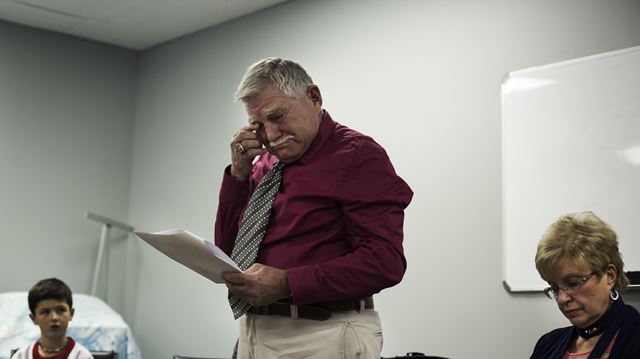
Roger Fowler wipes away his tears while reading one of his poems during the Celebration of Life, which is an annual event organized by former GE employees to honour those who have passed from cancer.

"There's a systematic barrier to actually looking at what's happening to these blue-collar workers behind factory walls."
"If compensation boards recognize these cases, then the onus is on the government to go do something about them. We're caught in this vicious cycle."
Dr. Jim Brophy, occupational disease expert

"It is no longer accepted that you do published science when you're being paid by one side and the outcome of that science reflects on the future of your boss."
Dr. Noel Kerin, representing Occupational Health Clinics for Ontario Workers
In the past decade over half of the 660 occupational disease claims registered for a range of conditions including brain, bowel and lung cancer brought against General Electric Peterborough by former employees were refused or withdrawn citing insufficient evidence. Of that total, 280 were accepted. One scientist describes what those workers were regularly exposed to as a "toxic soup" of chemicals. That toxic soup has impacted their lives causing dreadful disease onset and early death.

Roger Fowler, at age 46 had his rectum removed as a result of colorectal cancer and now depends on a permanent colostomy bag. Two years later, from so many surgeries he had undergone, he was forced to deal with huge hernias applying pressure on his bladder. By the time he reached 56 he was free of all symptoms of colorectal cancer, caused, he is clear, by his work under asbestos-wrapped pipes that scattered chunks of that toxic material over him.

He and all the other former GE employees cast blame on a system which expects a rigid standard of proof before compensation is won. A GE report issued in 2002 that pointed out that "no significant excesses" of cancers resulted from work at its facility, appears to have been accepted as fact, belying the anecdotal and medical reports supporting the workers' absolute belief that it was the quality of their employment that led to their disease onset.

The GE study analyzed the link between eight of the carcinogens commonly in use at the plant and the episodes of cancer deaths, to find excesses of some types of cancer such as lung cancer mortality up to 57 percent higher than the general population occurring among GE male employees. But a study that followed claimed that the cancer excesses identified in the first study, when controlling for factors such as age and smoking, were significantly diminished.

Marilyn Harding at General Electric

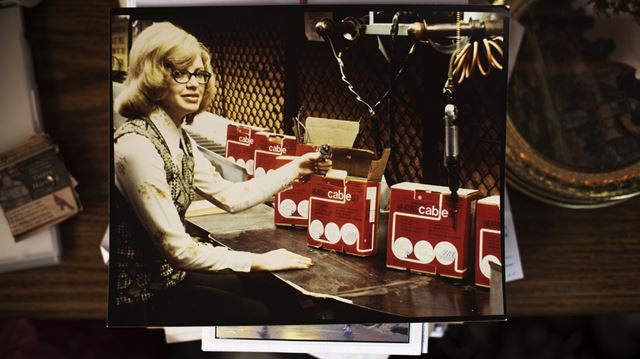
photo by Melissa Renwick     Marilyn Harding worked at General Electric for almost 40 years and has survived bladder and breast cancer. A photo taken a few months after her daughter's birth shows her assembling lead heating cables, beside an asbestos machine, which she says contaminated the entire work station.

The study was supervised by GE's staff industrial hygienist, Dr. Roland Hosein, who held the position of vice-president of environment, health and safety for General Electric, eventually becoming a member of the Workplace Safety and Insurance Board Research Advisory Council. Dr. Hosein is also an adjunct occupational health professor at University of Toronto. A spokesman for GE stated that allegations of conflict of interest in the matter were unfounded, a statement that Dr. Kerin who studied the workers at GE with cancer in 2004, categorically rejects.

The Peterborough plant, furthermore, has a long history of environmental disturbances resulting from its operation. A chemical reaction to a 2,000-gallon resin tank at the GE plant in 1972 was responsible for a plume of gas rising across the city. Firefighters dispatched to the factory developed recurring illnesses like lung diseases and heart problems; whether they were ever compensated is not generally known.

Yet again, in 1982, the plant was responsible for dumping 20 gallons of poisonous cyanide solution through a leaking pipe into the sewer system in Peterborough. And in 1994 the company was unable to sell land it held, to the city of Peterborough for a new arena since the soil was discovered to be contaminated with polychlorinated biphenyls (PCBs), a cancer-causing substance almost impossible to flush out of soil and sediment.

A Ministry of Environment 2015 report stated that the plant's storm sewers failed to meet "site criteria" for PCBs. Those sewers drain directly into the Otonabee River which runs through Peterborough and on into Rice Lake.  GE halted the use of PCBs, now banned province-wide, in the 1970s, but the soil around the plant remains saturated with them, next to impossible to dislodge from the environment.

At the GE plant, work placed those who were employed there exposed to an array of carcinogens  decades ago, causing dire disease onset. Proof of the absolute evidence that the compensation board calls for is difficult to gather. The risks to health documented at the plant make it clear that workers making their claims for compensation should be offered the benefit of the doubt, and the plant not be given a free pass on its use of those chemicals with the resulting exposure.

"The whole question is, what do you do in the face of scientific uncertainty? And that's no longer a scientific question. It's a question of values and whether you value human life or you don't", said Bob Matteo, former director of health and safety with the Ontario Public Service Employees Union.

General Electric plant in Peterborough
General Electric plant in Peterborough | Photo by Melissa Renwick

Labels: , , ,

Sunday, October 09, 2016

Entitlement Gone Awry

"Airline jobs were really reserved for men."
"When we [women, first hired as commercial airlines pilots in early 1970s] started, there were no maternity leaves, because there were no female pilots."
Captain Bonnie Tiburzi Caputo, 67, retired

"Having a child is a personal choice and asking the rest of us [unionized pilots] to fund your choice will be a difficult sell to the pilot group."
Message from local union leader to female pilots

"It's by far not my favourite place to make my child's next meal [airplane lavatory]. But it's a sacrifice I knew I would have to accept because I came back to work [after childbirth]."
"It's incredibly distracting and painful [delaying pumping breast milk more than three to four hours], like when you need to go to the bathroom and can't."
First Officer Brandy Beck, 41, Frontier Airlines pilot
First Officer Brandy Beck, Photo Theo Stroomer, The New York Times

"This is part of breaking down the cockpit door -- that's the glass ceiling here."
"How do you make a job work when it was designed without you in mind?"
Joanna L. Grossman, labour law and gender issues expert
Now there's a tempest in a cockpit. Women seem to feel entitled to any and all occupations, the equal of men in professional aptitude and performance, and perhaps that is true in most cases, yet possibly not all, given circumstances and specific situations where a woman's determination to follow her aspirations may impact deleteriously on the performance of co-workers, and more to the point, impact on the safety of other people.

Take, for example, Brandy Beck, mother of a newborn who had no wish to be assigned a job other than pilot while breastfeeding her child. Her concern was that she was a pilot and she wanted to continue doing her job. On the other hand, she was also a mother and she was obliged, since she opted to provide her child with her breast milk, to pump her breasts on a regular basis. To achieve that end, here is what happened.

When the plane she was co-piloting reached cruising altitude and was placed on autopilot, this would be her opportunity to inform the flight captain she needed to take a break. Operating policy has it that in the absence of a co-pilot the sole pilot remaining in the cockpit needs to wear an oxygen mask. A flight attendant is tasked to barricade the aisle outside the lavatory to give the lactating pilot time and privacy and ensure passengers do not attempt to intrude.

That done, a flight attendant is assigned to join the captain in the cockpit to satisfy the rule requiring that at minimum two people must be in a cockpit at all times. At which point Ms. Beck, co-pilot is free to remain in the lavatory pumping breast milk for a 20-minute session specific to that singular purpose. That singular purpose calls away a co-pilot from an important in-flight function to satisfy her personal needs and that of her child.

There is inconvenience to the captain in the cockpit, to the flight attendant who must accommodate the lactating pilot's privacy, and any passengers who might wish to make use of the lavatory may not for the 20-minute pumping session involved. And the larger issue is that during flight, when anything might conceivably occur, one of two pilots on board a plane is no longer in the cockpit where her professional duties lay.

That pilot is paid up to $200,000 for her professional expertise, and certainly not to satisfy her personal needs. The number of female pilots is vanishingly small; women account for roughly four percent of the 159,000 certified airline pilots in the United States, a stagnant number. While globally, about three percent of pilots are women, according to surveys.

Because female pilots are so few in number their needs related to maternity, parenting in the early years and related issues don't come up in collective bargaining agreements that unions negotiate. Little wonder that some members of the majority gender oppose proposals that would benefit female pilots of childbearing age, citing the prohibitive cost of doing so.

Ground assignments on a temporary basis present as an alternative for airlines pilots living handy to company headquarters, but not too many do. The issue of accommodating female pilots of childbearing age is a complex one. What is not complex is the complications that ensue in providing accommodations.

Equal entitlements sound very cozily accommodating, but in the process of that accommodation too much is disrupted and too many are unaccommodated. The expert on labour law and gender issues has answered her own question: How do you make a job work when it was designed without you in mind? You step aside from active duty in the air for a temporary period, and that's how the job works.

Labels: , ,

Thursday, September 10, 2015

Honouring Seasonal Farm Workers

"Eight years, me and my family go through this. It was a hard time. I don't want anybody to go through this difficult time again."
"Both stories are the same. I was very upset. Both drivers did not follow the law. I think too much -- day and night. I was very upset, then I made a decision. I wanted to do something for awareness."
Jagjeet Sidhu, Abbotsford, British Columbia

"The concept was all about how to transform such a horrific event into something that would be a monument to farm workers and not a memorial to tragedy."
"The three women -- the maid[en], the matron, the matriarch -- which roughly represent the three women [killed in the crash], came into it really powerfully as well. We really felt like we were on a sacred wave to do this...."
"It is a living, nurturing, sustaining entity. This was a terrible, devastating loss for them, so it means a lot for us to have some form of healing in this memorial.... Instead of the memorial being about mourning and devastation, it's about looking to the future."
Christine Lauze, creative artist

"I think the design's beautiful. I think that people spend a lot of money focusing on safety -- as in keeping terrorists out of the country. Why is there not so much safety concern regarding things that are happening inside the country?"
"This is not an angry daughter speaking from her perspective. This is just a citizen saying that justice was not served."
"I hope that when this tree is built that people will not just admire its beauty but will also understand why it's there... a reminder of the hard work of farm workers, and as a reminder to passersby that their lives are just as important."
Avneet Sidhu, 16, daughter of Sarabjit Sidhu, Abbotsford

"She was a healthy person who went to work and never came back. It's still really hard for the families. Everything comes back again to face us every year."
"When he's having a hard time, my father can sit there and relax under the memorial."
"When you see that tree there, with its arms up to the sky, it's like they're saying, 'Look at us, we are the ones who work on farms to bring food to your homes'. They should be treated as human beings. It's a great memorial and a good message to all the other employers who treat their workers like animals."
Harsharan Bal, son of Amarjit Kaur Bal
Golden Tree to honour B.C. farm workers
 Sukhman Sidhu, 7, left, and Avnoor Sidhu, 9, look out at a model of a sculpture which is being created in memory of their mother Sarabjit Sidhu and two other women farm workers who were killed after their overloaded van crashed March 7, 2007. Photograph by: Ric Ernst Ric Ernst , PNG

There really wasn't enough room in the van into which 17 women farm workers were crowded. They sat crammed together, and of course there wasn't a seat belt for everyone; in fact there were no seat belts. The women were on their way to work in a van whose seats had been exchanged for wooden benches, driving on bald tires with a fraudulent inspection permit ... and no seatbelts and the driver was not properly licensed.

Three women were killed when the overloaded van rolled over as they drove along Highway 1 near Abbotsford, British Columbia. There was Sarabjit Sidhu, wife of Jagjeet Sidhu, a 31-year-old mother of three young children; a 13-month-old boy and two daughters. The crash in 2007 killed two other farm workers, Sukhvinder Kaur Punia, 46 and Amarjit Kaur Ball, 52.Their families were distraught, bereft, devastated.

The 2007 crash of a van transporting farmworkers killed three people and sparked a push for safety that continues to this day. - File photo
The 2007 crash of a van transporting farmworkers killed three people and sparked a push for safety that continues to this day.— image credit: File photo
Several months after the loss of his wife, Jagjeet, travelling along a B.C. highway witnessed a tractor-trailer travelling at high speed passing him and smashing into a deer, then racing off. Jagjeet stopped his vehicle, saw an uninjured deer walk toward the dying animal, to nudge it back into life. He approached the deer and it seemed evident to him that it was a nursing doe. He held a water bottle to the deer's lips, and felt helpless and newly bereaved.

And then he went on to spend the next eight years struggling to inform the public about the rights of workers and the lack of safety standards on their behalf that made them so vulnerable. His campaign led him to speak to mayors, to radio hosts and to labour leaders. The most visible manifestation of his efforts now is set to be installed next to the Clearbrook Library in Abbotsford in a month's time when the Golden Tree, a monument to farm workers, is to be unveiled.

The sculpture is seven-metres in height, of an apple tree into which has been incorporated three female figures within the gilded trunk and branches. Artists Christina and Dean Lauze took on the challenge of creating a monument that would speak to human rights, the vulnerability of blue--collar and farm workers, and the hopes of the future.  Sculpted fibreglass covers the 1.5 tonnes of steel in the tree's creation. Its upper branches will be covered in 23.5-karat gold leaf to symbolize both lofty aspirations and earthly realities.

The BC Federation of Labour and its member unions along with the provincial government collaborated to largely fund the $310,000 memorial, the first of its kind in Canada to commemorate seasonal farm workers. Last year the provincial government in British Columbia stated it had implemented many of the coroner's key recommendations, following the 2007 crash. Random inspections of 15-passenger vans were increased and they were reclassified as "high risk vehicles" ensuring each passenger has a seatbelt.

The province replaced 40 kilometres of concrete freeway barriers in the Fraser Valley, Delta and Surrey with flexible steel cable, with the intention of reducing impacts on passengers in the event of a crash.The B.C. Federation of Labour remains to be impressed. Its president, Irene Lanzinger, points out that other key recommendations were ignored. And though there was a recommendation to change legislation so agricultural business recognizes seasonal workers as full employees, they are still treated as second-class in employment standards, living conditions, and health and safety.

"Vigilance around health and safety just has to be constant," she says. "There are many good employers out there, but there are always employers who want to cut corners or cut costs, who don't put the safety of their employees at the top of their lists."

GoldenTree_610px.jpg
Memorial bears fruit: artists Dean and Christina Lauzé bring together families of killed farmworkers. Photo by David Ball.

Labels: , , , , , ,

 
()() Follow @rheytah Tweet