Ruminations

Blog dedicated primarily to randomly selected news items; comments reflecting personal perceptions

Wednesday, November 24, 2021

The Many Puzzling Outcomes of COVID

"It seems that the Oxford-AstraZeneca vaccine initially induces higher levels of T-cells than the mRNA vaccines."
"These T-cells are important for long-term immune memory and also for inhibiting virus replication and killing infected cells once an infection becomes established."
"Since the AZ vaccine is slightly better at inducing these T-cells, the implication is that it may provide longer-term protection against hospitalization and death."
"I think this is the point that Dr.Soriot was making."
Eleanor Riley, professor of immunology and infectious disease, University of Edinburgh
New Scientist Default Image

A woman receives her covid-19 vaccination booster jab, London, UK  Leon Neal/Getty Images

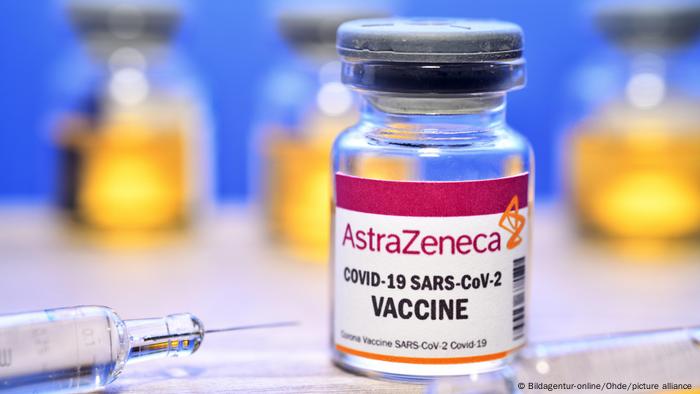
The chief executive of AstraZeneca, Pascal Soriot on Tuesday responded to a puzzle that scientists are mulling over. That while the defences of Europe are crumbling against COVID-19 with steadily mounting infections and deaths related to the coronavirus, Britain in contrast is managing to keep its serious cases relatively low in both hospitalizations and resulting deaths. The explanation he offered was that the Oxford vaccine produces a more durable T-cell response, which could be what is ensuring that older people in Britain are safer than their continental counterparts in the prevention of hospitalization and death.

Cases remain high in Britain, the country is struggling just like other parts of Europe, with rising numbers but hospitalization and death appears under a firmer control than elsewhere. The AstraZeneca vaccine has been hugely unpopular in Europe, viewed with great suspicion. Leading to France, Germany, Spain and Belgium restricting its use to those under 65 in the early roll-out stage. Suspicion was aroused that there was insufficient data to ensure it was effective in older people.

Now, Dr.Soriot suggests that data demonstrate the AstraZeneca shot offers long-term protection, with a response that appears more durable than the mRNA vaccines produced by Pfizer and Moderna. The data of which he speaks is not yet published and has not as a result been reviewed by any outside sources for whom it would be of consuming interest. T-cells, without a shadow of a doubt, have an important role to play in protection against COVID. Antibodies wane over time, but T-cells remain able to trigger powerful immune responses, and to directly destroy infected cells, as well to work against new variants.
New Scientist Default Image

Closed Christmas stands in the city centre, Vienna, Austria.  Lisa Leutner/AP/Shutterstock

The University of Birmingham in April found five weeks following a first dose people over 80 given AstraZeneca or Pfizer showed similar antibody responses. In the AstraZeneca  group, double T-cell response was observed. Along with the strength of the T-cell response held to be three times higher than for the Pfizer group. Oxford University researchers found, in mid-June a still robust T-cell response from AstraZeneca doses at six months that even with a single dose; antibody immunity drops aside.

Scientists from Oxford and Switzerland in July concluded that long-term immunity could be greater for adenovirus vaccines like AstraZeneca resulting from "cellular training camps" for T-cells that they create. On the other hand, in the long term, mRNA vaccines also produce strong T-cell responses, perhaps more so than AstraZeneca, according to more recent research. A new paper published in Nature found Pfizer produced close to a six times greater number of T-cells than AstraZeneca, some 18 to 42 days following the second dose.

Data collected in real-world situations consistently indicate that the mRNA vaccines gain a slight improvement in prevention of infection and avoidance of serious disease than does AstraZeneca, an inconsistency with claims better protection is provided by the Oxford vaccine. Another interpretation of the situation could be that Britain has had so much recent infection that COVID is near to becoming an endemic virus. In the United Kingdom the booster program began earlier so that at present over 12 million adults now have had their third, 'booster' dose, which is recognized as having prevented tens of thousands of deaths.
 
A man walks through fallen leaves beside a wall covered in hand-drawn hearts and messages commemorating COVID victims in London

A wall in London commemorates people who died of COVID-19.  Credit: Toby Melville/Alamy/Reuters


Labels: , , , , , ,

Tuesday, October 26, 2021

Thin Edge of the Wedge

"[The study showed a small increased risk after vaccination.]" 
"However, these adverse events were dwarfed by the neurological disorders seen after testing positive for Covid."
"Guillain-Barre syndrome, myasthenia-like disease, subarachnoid haemorrhage, encephalitis, and Bell's palsy were all quite common, especially in the first two weeks after testing positive for Sars-Cov-2."
Professor Peter Openshaw, Imperial College London 
 
"There are risks clearly associated with the vaccine but there are more substantial risks associated with infection."
Aziz Sheikh, professor, primary care research and development, University of Edinburgh
 
"The really big message from this is these are very rare neurological events that might be associated with the vaccine."
"But there is overwhelming evidence of the effectiveness of the vaccine against serious illness."
"I also work as a GP and we want to make sure people are taking up the vaccine and booster jabs, and by doing that we will protect the health of the nation in the best way we can."
Professor Julia Hippisley-Cox, University of Oxford, United Kingdom
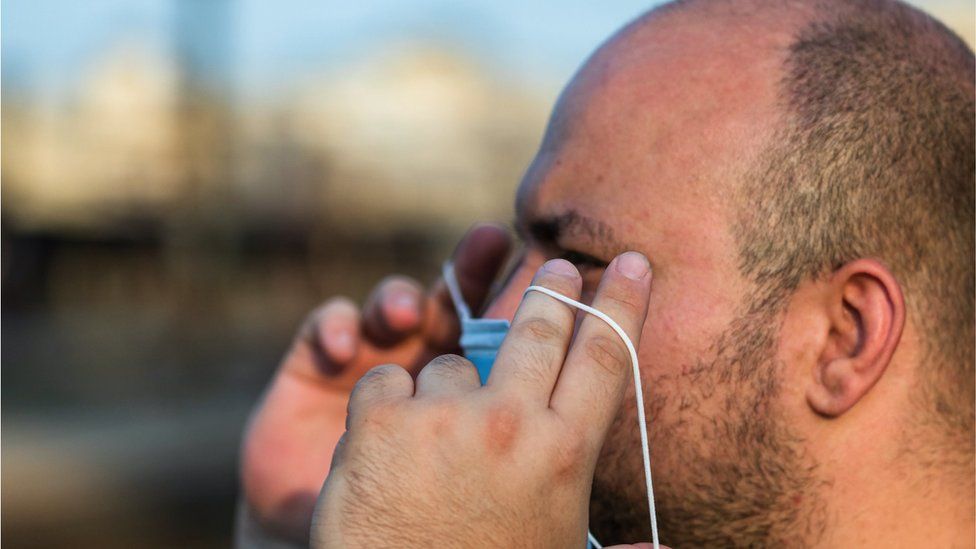
File picture of a man putting on a mask
Rare neurological conditions may occur after Covid vaccination, but the risk is far higher in people who catch Covid, new research suggests.  Getty Images

While Britain used its own home-grown anti- COVID vaccine developed by researchers at Oxford University, the vaccine drew controversy and suspicion right from the word 'go' a year previously when
Europe in particular began to question its safety and efficacy, withdrawing its use altogether finally. A casual onlooker might be forgiven for thinking briefly that this was a bit of pay-back for Britain having the gall to leave the EU through Brexit. But there were legitimate issues seen with the vaccine, as for example its impact on the heart, and blood clots, albeit in rare instances particularly seen in some age groups.
 
Now Oxford University has completed a research project finding that Guillain-Barre syndrome episodes have been linked to the AstraZeneca vaccine. They found as well that Guillain-Barre can result as a complication from COVID-19; again in small numbers, but greater than what occurs as a result of inoculation with the vaccine. Guillain-Barre is a condition affecting the nerves, manifesting commonly as numbness and pain in hands and feet.
 
With no connection to the Oxford scientists who had created the vaccine, a group of academics from Oxford conducted some research, finding that for every ten million doses administered in Britain 38 cases of Guillain-Barre syndrome surfaced -- in comparison with a non-COVID, non-vaccine baseline. On the other hand, 145 excess cases per ten million people were seen to have occurred, after testing positive for COVID.

Data was extracted from over 30 million people in Britain, used to assess how people's chances of developing adverse neurological complications were, due to the vaccine, or/and the virus. An individual inoculated with AstraZeneca was found to be close to three times likelier to develop Guillain-Barre syndrome two to three weeks following inoculation -- in comparison with never receiving a vaccine dose.

If an individual was infected with COVID, the risk was found to be significantly higher, some five times as likely to develop the condition, within a month of testing positive. According to the research results, 15 to 21 days following the AstraZeneca dose, individuals can be 29 percent more at risk of Bell's palsy than normal. In contrast, within a month of testing positive for COVID, an individual becomes 34 percent more likely to develop Bell's palsy.

The study showed that following the first dose of vaccine, there were:

  • 38 extra cases (compared to the baseline risk of getting the condition) of GBS for every 10 million adults having the Oxford-Astrazeneca vaccine
  • 60 extra cases of haemorrhagic stroke (a bleed in the brain) for every 10 million adults having the Pfizer vaccine

For people who had a coronavirus infection on the other hand, there were approximately:

  • 145 extra GBS cases per 10 million with a positive test
  • 123 extra brain inflammation disorder cases like encephalitis meningitis and myelitis per 10 million people
  • 163 extra cases of myasthenia-like disorders (immune conditions affecting the nerves and muscles) per 10 million people
AstraZeneca
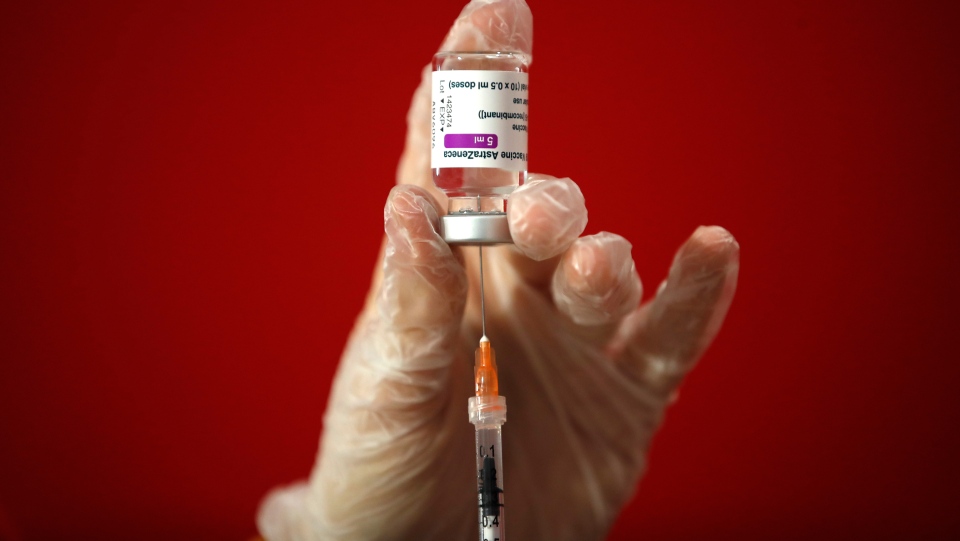
A health worker prepares a dose of the AstraZeneca vaccine to be administered to a patient. (AP Photo/Alessandra Tarantino)

Labels: , , , ,

Tuesday, May 18, 2021

The Case for AstraZeneca

AstraZeneca vaccine
 (Cecilia Fabiano/LaPresse via AP)
"[The COVID-19 immunization  effort is a] race against time. [Canada's vaccine strategy has been to act] on hearsay and not a lot of facts."
"At my last look you guys are 3.6 percent vaccinated with two doses, so just wait for the [B.1.617] variant] to rip through the Canadian population, and then the problems you've had with these very rare [blood] clotting events will look pretty insignificant." 
"My advice is get people two doses, as fast as you can and hunker down. So, for the Canadians to be out thinking about whether they should have a second dose, you know, eating marshmallows around the campfire looks a bit silly to me, frankly."
"I just think this game of waiting around for the perfect solution, while there's a massive pandemic coming in your direction -- that does not look smart to me."
"Unless you've got two doses of mRNA vaccine sitting in a back room, you need to get on and vaccinate people with any one of the four good vaccines."
"All this messing around is going to cost lives. It's a public health decision, it's not some academic game."
Sir John Bell, Regius Professor of Medicine, Oxford University

"It would seem to be quite an excellent choice to make and have a second dose with AstraZeneca vaccine, knowing that you had no issues on your first dose ... but we also want to answer a couple of questions."
"One is what is the capacity for an informed consent of individuals who may want to choose to have all mRNA vaccine as a second dose, and we want to make sure that you have that option in front of you when you're going to make that choice."
Dr.David Williams, Ontario's chief medical officer of health
As vaccination numbers across Canada rise, provinces are preparing to start looking ahead, if vaccine targets can be met    CBC
 
The use of AstraZeneca in Canada has been suspended for first doses in the provinces of Manitoba, Ontario and Nova Scotia, in uncertainty over the vaccine's rare side effect, which causes a rare blood clotting condition. Ontario has not yet decided whether it will offer those who received a first dose of AstraZeneca, to be given the same vaccine as a second dose. Alberta is hedging its bets with plans to reserve its supply of AstraZeneca for second doses. So it's a mixed bag in Canada at a time when those provinces are struggling with both the presence of more infectious variants, and a rising tide of cases.

And then there is the issue of Canada having called upon COVAX stores for its 'share' of vaccines contrary to the real and deep purpose of the vaccine-sharing plan; to distribute vaccines to developing countries resulting from developed countries having pooled contributions to the sharing-and-distribution effort. While it was legitimate for Canada to request its 'share' it's also counter-productive and morally questionable, to the purpose of COVAX; wealthy countries sharing among developing countries.

So Canada received its COVAX 'share' of AstraZeneca and in the current climate of suspicion over the rare vaccine-related blood clotting has put their use on hold. And while they're in freezers, in storage awaiting a decision over their use, Canada is now steadily receiving an ongoing contracted-for vaccine doses from Moderna and Pfizer, and Johnson & Johnson. Having extracted its due from the global alliance to distribute doses more widely in countries without the capacity to purchase volumes of their own, some of the AstraZeneca doses will be expiring.

According to Ontario's chief medical officer of health, the province is awaiting the federal government's decision on the issue of mixing and matching vaccines prior to offering second doses to AstraZeneca recipients. The hesitation over the use of AstraZeneca was spurred in early May when the National Advisory Committee on Immunization, tasked with advising the federal government with guidance on vaccine use in Canada, stated it "preferentially recommended" mRNA vaccines such as Pfizer and Moderna.

Viral vector vaccines like AstraZeneca and Johnson & Johnson's single shot, were recommended by NACI to be offered to Canadians aged 30 and older should they prefer an earlier vaccine "rather than wait for an mRNA vaccine." Exactly the kind of advice that runs counter to what Dr.Bell advises for optimum population coverage against the SARS-CoV-2 virus. According to Dr.Bell, Oxford University is currently conducting a study on mixing AstraZeneca and Pfizer vaccines and initial findings reveal that some side effects will result.

"Our experience to date is that it produces pretty severe reactogenicity, so severe that we don't think it's going to be viable. By that I mean, you get your second dose if you flip it over, you'll get really sick, so I would not advise that." Researchers found that mixed vaccine dosing schedules produced more frequent mild-to-moderate reactions after the second "booster" dose, in comparison to standard non-mixed vaccine schedules.

"The results from this study suggest that mixed dose schedules could result in an increase in work absences the day after immunization", advised Matthew Snape, associated professor in pediatrics and vaccinology at Oxford, the chief investigator on the trial.
 

Labels: , , , , ,

Saturday, April 17, 2021

Shopping for Preferred Vaccines

"Literally, people are shopping for vaccine. It makes doctors feel like we're used car salesmen. I have never encountered anything like this before."
"It's like buying tickets to a rock concert. People keep trying to get better seats."
"There are anti-vaxxers, but this is a different thing. No one had ever asked me before about the manufacturer of a vaccine."
"This is people taking misinformation and using it as an excuse to shop around. People are being entitled and privileged. The right thing to do is to take whatever is offered to  you. It's boomers being privileged."
"Let people who have no other options take the Pfizer. You take the AstraZeneca. They are both proven to prevent severe illness from COVID."
"People think they can pick and choose. They're just doing what suits them. It's demoralizing."
Dr.Nili Kaplan-Myrth, family practise, Glebe, Ottawa, Ontario
 
"People have looked a the risks, but not the benefits. This [AstraZeneca] vaccine gives 100 percent protection against severe disease and death."
"One hundred percent I would recommend this vaccine."
"This is the time to step up and be super-clear that we have to do this now."
Dr.Elizabeth Muggah, president, Ontario College of Family Physicians
covid ont

The Province of Ontario is in deep trouble, deeply engulfed in a full-scale, third-phase epidemic of massive numbers of daily new COVID cases, each day the numbers creeping higher with no signs on the horizon of relief. Experts are suggesting that those numbers will continue to rise and then escalate. No longer is there hope for control as the medical community and the provincial government work to inoculate as much of the population as is possible in the face of vaccine supply uncertainties and the growing incidence of more infectious mutations of the SARS-CoV-2 virus.

Throw in a growing hesitation of people willing to be vaccinated even while area hospitals are being overburdened with daily new hospitalizations and serious cases requiring intensive care have swamped the ability of hospital authorities to find room for them, with lack of beds and attending medical personnel shortages. Yet, even in the face of this dire and steadily worsening situation, people fail to appear for their scheduled vaccination appointments and vaccines, already in short supply, are going to waste.

"I've heard about this. It's a big deal. In the short term, it's holding us back in terms of vaccine coverage. Longer term, it's not going to be an issue, as we will have increasing amounts of mRNA vaccine", commented David Fisman, professor of epidemiology at Dalla Lana School of Public Health, University of Toronto. In the meanwhile, until partial-to-full vaccine coverage can be achieved, people are falling ill, people are dying, Ontario finds itself in the unenviable position of overtaking the U.S. in terms of COVID cases per million population.

Dr.Kaplan-Myrth is beside herself with frustration. In her practise she was able to procure 200 doses of Astra-Zeneca vaccine, gearing up to begin administering it to her patients, but those patients have been reluctant to take the vaccine. Some say outright they have no intention of taking the vaccine they don't want. AstraZeneca's 'reputation' has suffered in the wake of reports of rare blood clotting events. These are patients willing to wait until Pfizer's vaccine becomes available. Of the 200 doses, she was able only to book 39 doses, having personally called patients, and finally opening the offer to the general public on Twitter.

"To best protect yourself and others, we agree that the best COVID-19 vaccine is the one that reaches your arm first", the Ontario College of Family Physicians posted message reads, in an effort to persuade the public not to wait for a "preferred" vaccine, with the warning that waiting increases the risk of being infected with COVID-19. The Bruyere Family Health Team of which Dr.Muggah is a member, received 600 doses of AstraZeneca, sent out email alerts to patients. Appointments were booked and they plan to administer the vaccines in the hope that people will actually show up.

Matthew Chow has reached out personally by phone to 200 people on a client list, working as a pharmacist in the emergency department of Toronto General Hospital, volunteering to administer vaccines. Of the 200 people he reached on the list, only a dozen agreed to book an appointment for AsraZeneca's vaccine. "And some required a bit of prodding", he said. He notes that his brother, also a pharmacist but in Scarborough, a less affluent area and a COVID hotspot, has been able to fill slots for the AstraZeneca vaccine with no problem, characterizing it as a socioeconomic divide.

A Quebec woman over 55 had developed clots following the Covishield vaccine dose she received, produced by the Serum Institute of India on contract with AstraZeneca for a biologically identical version. She is now recovering at home. Dr.Supriya Sharma, Health Canada chief medical adviser speaks of an extremely low risk of developing blood clots for some patients, while at the same time,     COVID-19 risks for clots are far more significant. "Get whatever vaccine is available to you. It's that simple", she advised. 

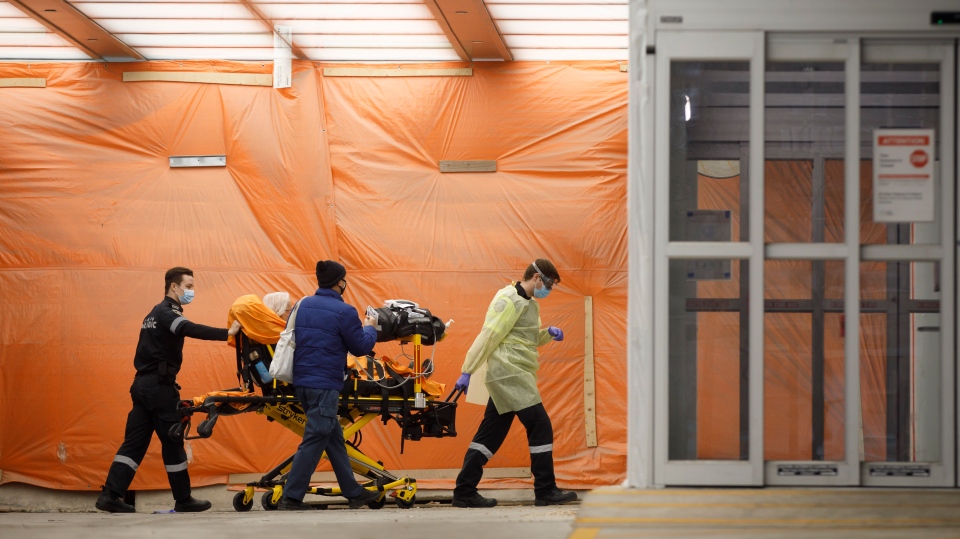
"My friends, we are losing the battle between the variant and the vaccine", a worried Premier Doug Ford advised. "Our hospitals can no longer function normally. They are bursting at the seams. We are setting up field hospitals. Our children's hospitals are admitting adults. This has never happened in Ontario before. It's never happened in Canada before", explained Adalsteinn Brown, co-chair of Ontario's COVID-19 science advisory table, reflecting on the number of ICU patients flooding hospitals.

Ontario's hospital intensive care units had 421 patients critically ill with COVID-19 as of Tuesday, more than at the worst point of the pandemic's second wave. (Sam Nar/CBC)

Labels: , , , , ,

Friday, April 16, 2021

Risk of Blood Clots : COVID versus Vaccines

"They're acting the way they [regulators and advisory committees] would if it were normal times. We're not in normal times. And I think they need to take that into account."
"I don't think they're responding the way they need to in a plague that's killing many thousands of people every month [globally]."
"They need to be very careful about how they send messages, meaning any message they send should begin with the death rate, hospitalization rate and burial rate for COVID for the week they're making the announcement."
Arthur Caplan, bioethicist, head, division of medical ethics, NYU School of Medicine, New York City 

"Confirmation of the first Canadian case of a COVID vaccine-induced blood clot was] kind of historic."
"Canada felt like it was protected from this, because it hadn't happened here."
"[Blood clots following inoculation are concerning] -- very concerning, don't get me wrong -- [but they're rare]."
"The work now being done is, how is it that this vaccine can induce these antibodies, and what is it about those few individuals who had this happen?"
Ishac Nazy, director, McMaster University Centre for Transfusion Research laboratory, Hamilton
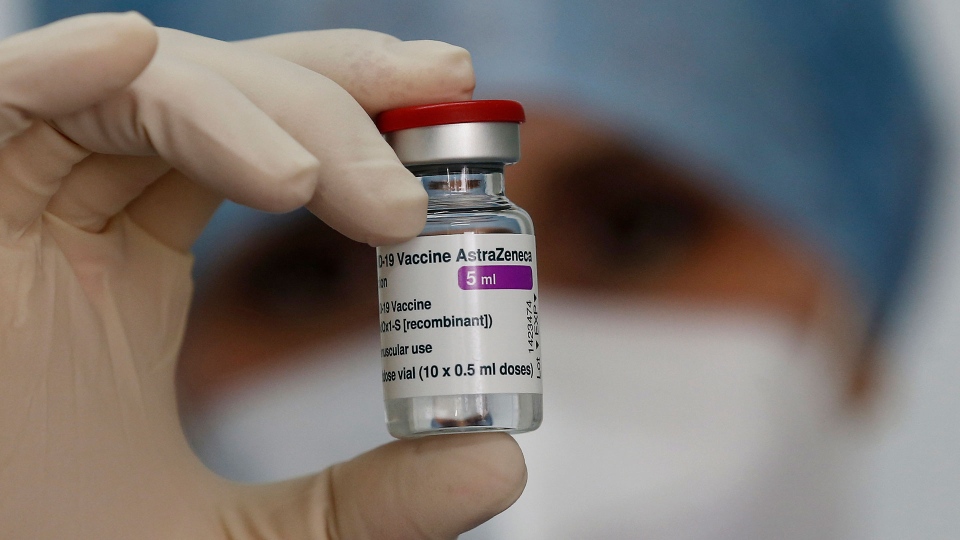
The Oxford-developed AstraZeneca vaccine.
Oxford researchers ran a study of COVID-19 patients
A new study recently released before publication out of Oxford University researchers reveals that COVID-19 is up to ten times likelier to cause a rare brain blood clot than would any of the current vaccines. Vaccines analyzed to confirm that they carry roughly the same remote blood clot risk; four in one million, to five in one million -- irrespective of whether it is the AstraZeneca, the Pfizer or the Moderna vaccine.

The U.S. Food and Drug Administration has placed a pause on doctors making use of the Johnson & Johnson vaccine, out of an "abundance of caution". This, at a time that Canada is expecting a shipment of up to ten million doses of the J&J vaccine. The FDA was motivated to act following reports that six women between the ages of 18 and 48 -- days after being vaccinated with the J&J vaccine -- had suffered a rare type of blood clot. Approximately 6.9 million Americans have already been vaccinated with the J&J vaccine. One among that blood-clot-group of six women died and another remains in critical condition.

Most provinces in Canada have now suspended the use of AstraZeneca for people under age 55, on the advice of the National Advisory Committee on Immunization, which is now considering whether to update its recommendation. All involved regulators and advisory committees in light of the uncertainties and new revelations relating to COVID and vaccines coming to the fore, are reacting cautiously and conservatively.

The situation is a delicate one at a time of steeply rising case counts of coronavirus among the general public and the suspicions that blood clots have raised in the public mind raises a risk of seriously setting back vaccination campaigns. A reported 80 percent refusal rate for AstraZeneca's vaccine is now standard in Italy. France has seen public confidence plummet for the vaccine, while Germany and Spain have as well. So it is not surprising that reports are emerging of Canadians refusing the vaccine in the face of authorities pleading with the public to "take the first shot offered".

This week, Health Canada continued to express confidence in its approval of AstraZeneca and J&J vaccines for all ages, following a review of available data. Dr.Supriya Sharma, chief medical adviser, places the risk of a clotting with AstraZeneca at one in 250,000. Independent advisers with Health Canada are in the process of reviewing whether to modify their no-one-under-55 recommendations for AstraZeneca in light of "substantial uncertainty" of benefits against that age group's risks.
 
A man is inoculated with the AstraZeneca Covid-19 vaccine at a vaccination centre in the Catalonia Railway Museum. File photograph: David Ramos/Getty Images
 
People are lacking the information they need to be enabled to make informed personal decisions. They require data that will inform them how large the risks from continuing to vaccinate are, versus risks from pausing. According to the Oxford researchers, the COVID risk for cerebral venous thrombosis (CVT) -- a clot in the cerebral vein responsible for draining blood from the brain -- is some eight times greater than with the Oxford/AstraZeneca vaccine, those under 30 included.

Professor of psychiatry at the University of Oxford, Paul Harrison and his study co-authors state comparisons must be cautiously interpreted "since data are still accruing". Based on an electronic health record network with a total of 81 million people in the United States, researchers counted the number of CVT cases that came to light in two weeks after a diagnosis of COVID -- following the first dose of a vaccine.

CVT -- according to their estimates, occurred in 39 out of one million patients. In people receiving Pfizer or Moderna vaccines, the risk was 4.1 per million, whereas CVT has been reported in five per million following a first dose of the AstraZeneca-Oxford vaccine. The McMaster Platelet Immunology Laboratory tests blood samples sent in from doctors, for antibodies whose presence can activate platelets leading to clotting. The lab forms part of a national surveillance system for vaccine-induced blood clots. 
 
What remains unclear is why it is that females seem at particular risk. A Quebec woman to date is the country's only confirmed case. She is recovering at home. What also remains as yet elusive is what it is that triggers the production of the clotting antibodies.

As per an official statement by Oxford University, the number of CVT cases diagnosed in the two weeks following diagnosis of COVID-19, or after the first dose of a vaccine. (REUTERS)
"[Health Canada's advisers are reviewing whether to modify no-one-under 55 position for
AstraZeneca in view of] substantial uncertainty [of the benefits given risks for that age group while preparing recommendations for the Johnson & Johnson vaccine]."
"Are they looking at different information when they should be sharing the data? If there's one government federal system, a single entity that is making that decision, they need to get their act together. If people are confused, it's because they're not doing their job."
"This is a situation where experts communicate badly and blame the audience."
"It's not that hard for officials to find out what information people need and give it to them in clear, concise terms. How are the authorities weighing those two risks [blood clots and risks from pausing]? How good is their information? How soon will it be better?"
"[Research shows people want the truth] It also shows that they can understand the critical facts if care is taken in drafting and testing the messages. It's not that hard."
Baruch Fischhoff, risk communication expert, Carnegie Mellon University, Pittsburgh

Labels: , , , , , ,

 
()() Follow @rheytah Tweet