Blog dedicated primarily to randomly selected news items; comments reflecting personal perceptions
Monday, January 10, 2022
The New Omicron COVID Presentations
"We are still catastrophizing COVID. The emotion and fear are so overwhelming."
"We have somehow made when you have a positive result equal disaster in a lot of people's minds."
"It's very difficult to try to break through this."
Dr,Martha Fulford, infectious diseases specialist, chief of medicine, McMaster University Medical Center
"[Canadian doctors see a lot of COVID in emergency departments] And it's all Omicron."
"The cases coming to the emergency room are basically all comers [ranging from mild symptoms, no shortness of breath but worried people who want to be tested -- up to those with seriously] robust [pneumonia]."
"Why that scares me is that it tells me that this virus is as bad a player as any other before it. It can be a milder virus, but it can also be quite severe."
"You don't want to spread panic, but you also don't want to be blase about what can be a very dangerous virus."
"Most people are coming [to emergency] because they feel very unwell. Most are using emergency services appropriately. We want to continue to get the message out there, if you have mild symptoms, you should stay home to decrease the risk of exposure to other people, particularly our emergency room staff. But of course, if you are ever concerned you come right into emergency, and we'll always be here. Not just Humber, but any hospital."
Dr.David Jacobs, radiologist, Humber River Hospital, Toronto
"We aren't seeing as many patients gasping for air. Thankfully the COVID patients aren't as sick. BUT there are SO many of them."
"But for most, COVID seemed to topple a delicate balance of an underlying illness [diabetes, for example where a COVID infection can trigger serious ketoacidosis, potentially fatal]. It's making people really sick in a different way."
Dr.Craig Spencer, emergency doctor, New York City
"We're not seeing a lot of admissions for respiratory failure, we're not seeing a lot of patients being put on high-flow oxygen being intubated."
"What we are seeing is people who are being admitted because they are extremely weak, dizzy, a fall risk. [Respiratory distress and respiratory failure are not encountered as much]; That's not so much an issue thi8s time." "We're not seeing a huge number of COVID pneumonia [patients] and people requiring intensive respiratory support. We're not seeing that very much at all."
Dr. Eric Legome, emergency sites, Mount Sinai Health System, New York City

A number of
scientists have expressed concern that while Omicron appears to be
milder, it is highly transmissible, meaning hospital numbers and deaths
could rise rapidly without intervention. Photograph: Ben Stansall/AFP/Getty Images
New strain, new symptoms, new presentations and a sigh of relief; concerns over yet another mutated COVID virus hammering health systems, exhaled. But wait; there's the signal issue of infectability and sheer, overwhelming numbers of new infections overwhelming health care systems, upsetting the balance of 'less threatening--more infectious' against 'less infectious--more dangerous', and the outcomes level out. The sheer volume of infections mitigate against relief and produce serious cases flooding ICUs and causing deaths. With SARS-CoV-2 you just can't win for losing.
Imagine, if another strain were to appear just when Omicron appears to be cresting. A strain with the qualities of both. Say, Delta picking up about 10 Omicron mutations. Mightn't that result in a far more dangerous strain; the threat of Delta's more serious outcomes allied with far greater infectiousness. Well, it's been named Deltacron and it has surfaced in Cyprus. And given the lightning speed with which Omicron shoved Delta aside as the dominant strain in a matter of weeks, the world has yet to assess how threatening this new strain will be.
One step forward, two steps back has become COVID's overwhelming presence in our lives. As matters now stand, emergency rooms in Canadian hospitals are being overwhelmed by endless numbers of people suspecting they have been infected with COVID, showing symptoms ranging from that of a mild cold to severe COVID pneumonia, surfacing mostly in the unvaccinated and the vulnerable. Front line doctors report arrivals in hospital with minimal symptoms driven by anxiety.
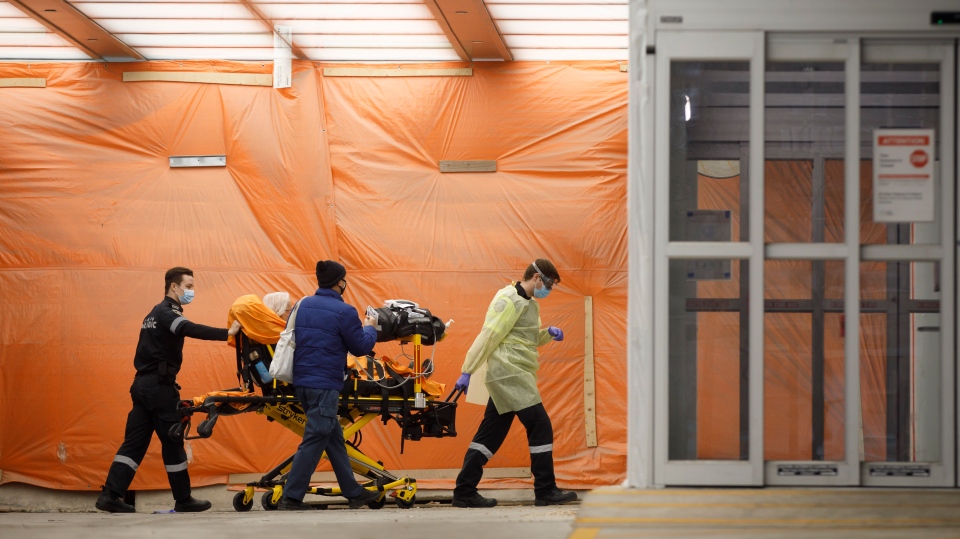
A health-care worker wearing PPE transports a patient in the dialysis
unit at the Humber River Hospital during the COVID-19 pandemic in
Toronto. THE CANADIAN PRESS/Nathan
Denette
The public is confused, with no clear idea how to respond if they've contracted COVID. Explosive growth has been seen in hospitalizations with the advent of the hugely contagious Omicron variant. Ontario has directed its hospitals to put off non-emergency surgeries, to brace for a potential "tsunami" of infections in coming days and weeks, as daily case numbers explode. Still, January 2022 is not a reflection of March 2020, when no vaccines were available.
Doctors and health-care workers in New York City during the first SARS-CoV-2 wave were trailblazers -- where now hospitalizations soared beyond 10,000 this week for the first time in 20 months. Back in March 2020 lung inflammation was the first wave's major issue when people were suffering respiratory failure. As with earlier waves there are some people who present short of breath, requiring supplemental oxygen, but they're now a distinct minority.
According to new research Omicron infects and homes itself in the bronchi, not as deep in the lungs as per Delta. That difference appears to explain its spreadability and less severe outcome.
Bit as with previous strains, it is the unvaccinated that appear to make up a disproportionate number of the sickest patients with COVID. Severe cases of Omicron are little different than those seen in the Delta infection heights and the first wave. The difference now is vaccination status, immune status and age grouping. Again, as with all strains of COVID, it is the elderly who are the most vulnerable, alongside the immuno-compromised.
Among patients presenting in hospital emergencies and hospitalized most are there because of COVID, and a lesser but comparable number are hospitalized as an incidental diagnosis; admitted for example for a broken leg or appendicitis or to deliver a baby and they happen to have COVID, explained Dr.Jacobs."Of those in the ICU their numbers are "Much much lower than we've had with previous waves".
Because COVID is the universal threat, people search for clear guidance "And it's very hard for them to know and access reliable information. They want treatment, they don't know what's available for treatment and there is very little public guidance around this", stated Dr.Andrew Morris, professor of medicine at University of Toronto, an infectious diseases specialist at Sinai Health System in Toronto.
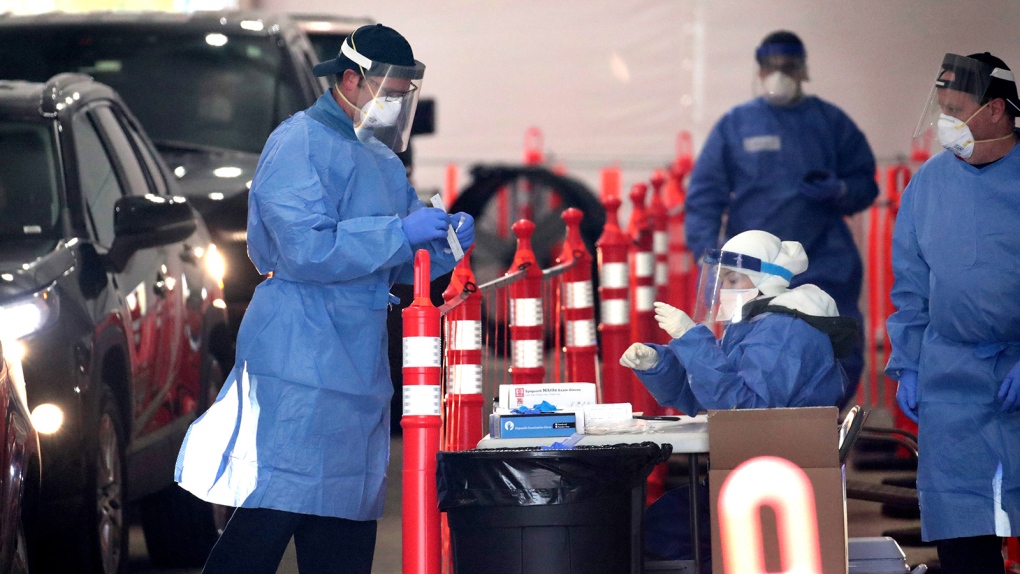
A
drive-thru testing site in Baldwin Park, Calif., on Monday. The Omicron
variant became dominant in the United States last week, according to the Centers for Disease Control and Prevention. Credit...Bing Guan/Reuters
"It seems that the Oxford-AstraZeneca vaccine initially induces higher levels of T-cells than the mRNA vaccines."
"These T-cells are important for long-term immune memory and also for inhibiting virus replication and killing infected cells once an infection becomes established."
"Since the AZ vaccine is slightly better at inducing these T-cells, the implication is that it may provide longer-term protection against hospitalization and death."
"I think this is the point that Dr.Soriot was making."
Eleanor Riley, professor of immunology and infectious disease, University of Edinburgh
A woman receives her covid-19 vaccination booster jab, London, UK Leon Neal/Getty Images
The chief executive of AstraZeneca, Pascal Soriot on Tuesday responded to a puzzle that scientists are mulling over. That while the defences of Europe are crumbling against COVID-19 with steadily mounting infections and deaths related to the coronavirus, Britain in contrast is managing to keep its serious cases relatively low in both hospitalizations and resulting deaths. The explanation he offered was that the Oxford vaccine produces a more durable T-cell response, which could be what is ensuring that older people in Britain are safer than their continental counterparts in the prevention of hospitalization and death.
Cases remain high in Britain, the country is struggling just like other parts of Europe, with rising numbers but hospitalization and death appears under a firmer control than elsewhere. The AstraZeneca vaccine has been hugely unpopular in Europe, viewed with great suspicion. Leading to France, Germany, Spain and Belgium restricting its use to those under 65 in the early roll-out stage. Suspicion was aroused that there was insufficient data to ensure it was effective in older people.
Now, Dr.Soriot suggests that data demonstrate the AstraZeneca shot offers long-term protection, with a response that appears more durable than the mRNA vaccines produced by Pfizer and Moderna. The data of which he speaks is not yet published and has not as a result been reviewed by any outside sources for whom it would be of consuming interest. T-cells, without a shadow of a doubt, have an important role to play in protection against COVID. Antibodies wane over time, but T-cells remain able to trigger powerful immune responses, and to directly destroy infected cells, as well to work against new variants.
Closed Christmas stands in the city centre, Vienna, Austria. Lisa Leutner/AP/Shutterstock
The University of Birmingham in April found five weeks following a first dose people over 80 given AstraZeneca or Pfizer showed similar antibody responses. In the AstraZeneca group, double T-cell response was observed. Along with the strength of the T-cell response held to be three times higher than for the Pfizer group. Oxford University researchers found, in mid-June a still robust T-cell response from AstraZeneca doses at six months that even with a single dose; antibody immunity drops aside.
Scientists from Oxford and Switzerland in July concluded that long-term immunity could be greater for adenovirus vaccines like AstraZeneca resulting from "cellular training camps" for T-cells that they create. On the other hand, in the long term, mRNA vaccines also produce strong T-cell responses, perhaps more so than AstraZeneca, according to more recent research. A new paper published in Nature found Pfizer produced close to a six times greater number of T-cells than AstraZeneca, some 18 to 42 days following the second dose.
Data collected in real-world situations consistently indicate that the mRNA vaccines gain a slight improvement in prevention of infection and avoidance of serious disease than does AstraZeneca, an inconsistency with claims better protection is provided by the Oxford vaccine. Another interpretation of the situation could be that Britain has had so much recent infection that COVID is near to becoming an endemic virus. In the United Kingdom the booster program began earlier so that at present over 12 million adults now have had their third, 'booster' dose, which is recognized as having prevented tens of thousands of deaths.
A wall in London commemorates people who died of COVID-19.Credit: Toby Melville/Alamy/Reuters
"It's a good vaccine. But it's not an mRNA vaccine, and we have approved it."
"It's not a bad idea, as long as you have an honest conversation with people about what the risks and benefits are, and one of the risks, of course, is a pretty severe blood-clotting event."
"If it would get more people vaccinated, and people can make an informed decision, I think it would be really wise to have an alternative, if people wanted it."
Dr.Isaac Bogoch, infectious diseases specialist, Toronto
"Your body doesn't have the cellular machinery to reverse from RNA to DNA. It's kind of like speculating you can flap your arms and fly without feathers."
"[All vaccines authorized in Canada are] really, really good. Humans are made of twisted timbers. [Some say the technology is] too new [though researchers worked on it since the 2003 SARS-1 outbreak]."
"There's always an excuse for hesitation that can be built around any technology. I just see this as the latest in that long history."
Dr. Amir Attaran, professor of law and health policy, University of Ottawa
(Dirk Waem/BELGA/AFP via Getty Images)
A desperate solution is sought to an impasse between health authorities and the millions of Canadians still uncertain, along with hard-core anti-vaxxers who refuse to be inoculated against COVID-19 imperilling plans to vaccinate sufficient numbers of eligible people to produce the hoped-for 'herd-effect' that would neutralize the menace of contagion by SARS-CoV-2 causing COVID. Those in government who rely on the professional advice of medical experts see agreement that the one-shot Johnson & Johnson vaccine might fill part of the vacuum.
In Saskatchewan and Alberta, the two western provinces of Canada with the lowest vaccine uptake rate and the commensurately higher infection rate hope is that in offering the Janssen single-shot those who are hesitant might be convinced to being vaccinated. The J&J vaccine is a viral vector like AstraZeneca. The National Advisory Committee on Immunization had advised in May that Pfizer and Moderna represented preferred vaccines in view of a rare risk of a blood-clotting disorder.
Following that, thousands of AZ appointments were never met, attributed to news reports of its potential side effects. March saw authorization of the Janssen vaccine and months later the government of Canada announced its donation of ten million unused doses to low-income countries in view of plentiful supplies of Pfizer and Moderna with little demand for any other vaccine. Offering the J&J single-shot vaccine is a gamble, with uncertainty over how many people will express interest in "a vaccine but not an mRNA" vaccine.
Johnson&Johnson, however, recently recommended a booster shot, in other words a second dose, to increase antibody levels. Blood-clotting potential in these vaccines is a concern. Thrombosis with thrombocytopenia syndrome causes unusual blood clotting and low platelet levels in blood which increase risk of strokes or heart attacks. U.S. data reveal an estimated one in 300,000 people vaccinated with Janssen's COVIDvaccine have the potential to develop TTS in comparison to one in 100,000 with AstraZeneca.
mRNA vaccines on the other hand, are not seen to risk TTS events. Which hasn't stopped misinformation that mRNA vaccines have the potential to modify DNA, permanently altering people's attributes, including causing sterility in women. That Pfizer and Moderna make use of genetically engineered messenger RNA instructing body cells in producing spike protein that SARS-CoV-02 uses to latch onto and invade cells makes people suspicious of its supposed intrusion into other areas of cell integrity.
J&J has been used in the U.S. to vaccinate 15 million Americans, where the largest concerns motivating the unvaccinated to become inoculated against COVID have been, understandably, rising hospitalization rates and death rates, according to the Kaiser Family Foundation. According to Health Canada -- of 15,090 reports of adverse events after vaccination representing 0.029 percent of all doses administered, 4,288 (0.008 percent of all administered doses) were rated to be serious complications.
Some Albertans are demanding access to the Johnson & Johnson vaccine
for faster access to full immunity - particularly now the province has
adopted an opt-in vaccine passport system. (Christophe Gateau/dpa/The Associated Press)
Stress and Strain in the U.S. Medical System With the Delta Variant of COVID-19
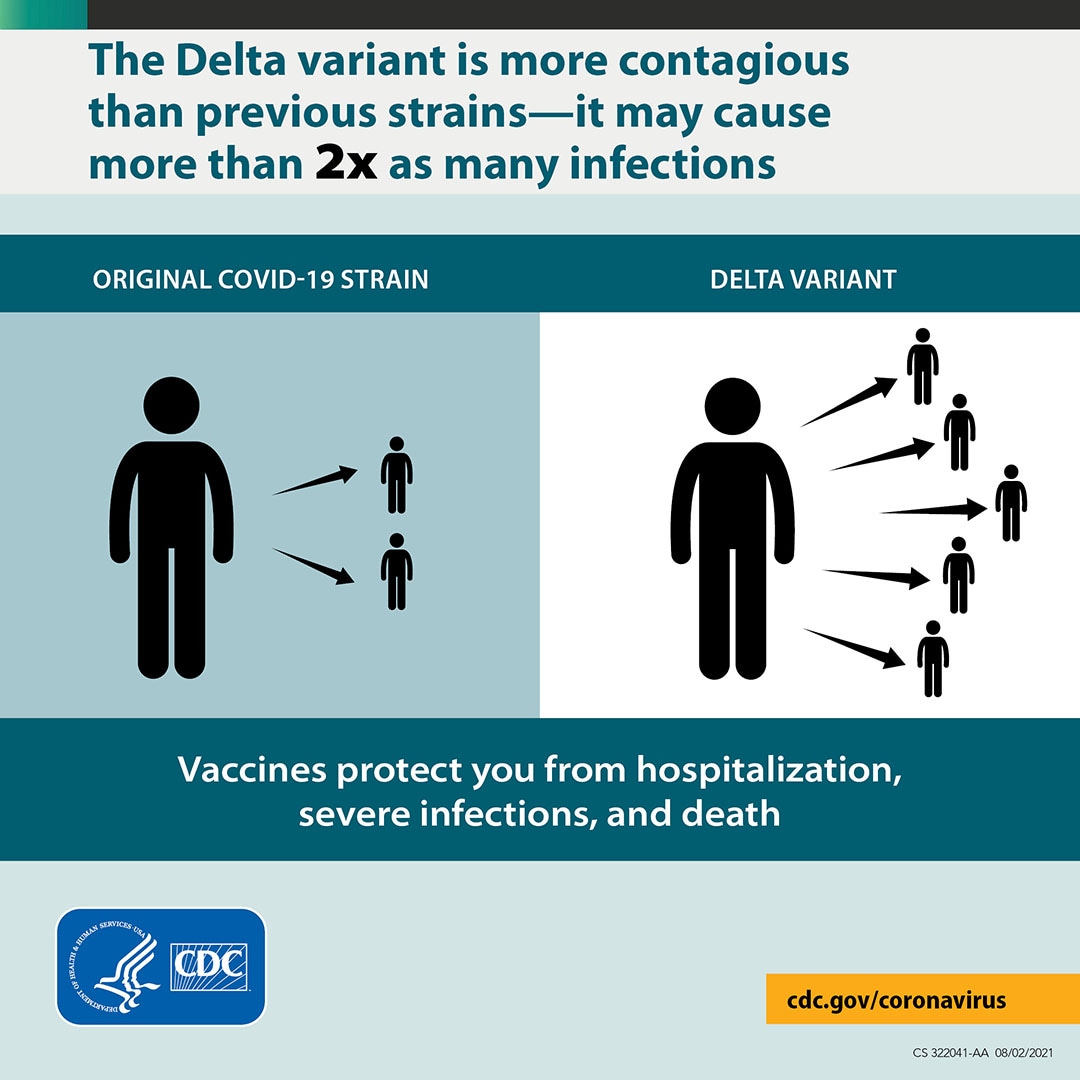
The Delta variant causes more infections and spreads faster than early forms of SARS-CoV-2
The Delta variant is more contagious: The Delta variant is highly contagious, nearly twice as contagious as previous variants.
Some data suggest the Delta variant might cause more severe illness than previous strains in unvaccinated persons.
In two different studies from Canada and Scotland, patients infected
with the Delta variant were more likely to be hospitalized than patients
infected with Alpha or the original virus strains.
Unvaccinated people remain the greatest concern:
Although breakthrough infections happen much less often than infections
in unvaccinated people, individuals infected with the Delta variant,
including fully vaccinated people with symptomatic breakthrough
infections, can transmit it to others. CDC is continuing to assess data
on whether fully vaccinated people with asymptomatic breakthrough
infections can transmit. However, the greatest risk of transmission is
among unvaccinated people who are much more likely to contract, and
therefore transmit the virus.
Fully vaccinated people with Delta variant breakthrough
infections can spread the virus to others. However, vaccinated people
appear to be infectious for a shorter period: Previous variants
typically produced less virus in the body of infected fully vaccinated
people (breakthrough infections) than in unvaccinated people. In
contrast, the Delta variant seems to produce the same high amount of
virus in both unvaccinated and fully vaccinated people. However, like
other variants, the amount of virus produced by Delta breakthrough
infections in fully vaccinated people also goes down faster than
infections in unvaccinated people. This means fully vaccinated people
are likely infectious for less time than unvaccinated people. Centers for Disease Control and Prevention
"We saw the largest single-day increase in hospitalizations and have
eclipsed our previous high of COVID hospitalizations,"
"There are currently only eight ICU
beds available in the state."
Arkansas Governor
Asa Hutchinson
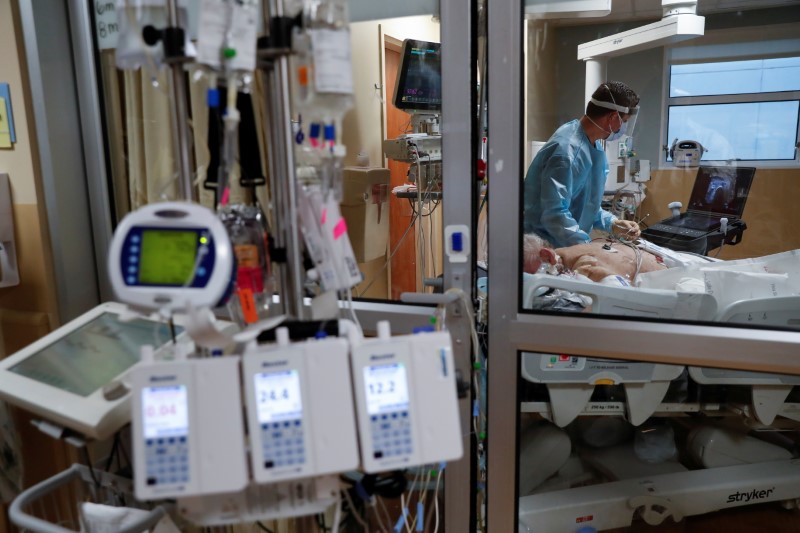
An intubated patient inside a negative pressure room in the Covid-19 ICU at a hospital in Joplin, Missouri, on Aug. 3.Photographer: Angus Mordant/Bloomberg
The United States, which suffered the worst case load, hospitalization and death rates of any country, undertook a massive vaccination campaign to reduce the malignity of the SARS-CoV-2 virus and the first wave abated to the point where a sigh of collective relief relaxed the overall vigilance against the infectious and sometimes-deadly virus causing COVID-19. The horizon looked brighter everywhere until the virus began producing variants of the original strain that promised to be more infectious, slightly resistant to vaccines and producing more serious outcomes.
One of those variants is the Delta strain which certainly turned out to be more communicable in a population and this is the strain that has been wreaking havoc in a return wave of COVID all over the world. In the U.S., a six-month high of new cases is being realized, thanks to the rapid spread of the variant, all the more in those areas of the country where low vaccination uptake has taken place. COVID cases now average 100,000 nationwide three days following each other, an increase of 35 percent over the week before.
A nurse prepares to enter a room to treat a patient in the Covid-19 ICU ward at a hospital in Jonesboro, Arkansas, on Aug. 4. Photographer: Houston Cofield/Bloomberg
The state of Arkansas has the misfortune of representing the greatest number of fatalities by population in a nation where a rise of 40 percent has been seen in hospitalizations -- and deaths registering an increase of 18 percent. Records for hospitalization were set in Florida over an eight-day period. The second-largest teaching union in the country announced it is backing mandated vaccinations for American teachers with a view to protecting students too young for inoculation.
The reason for that precaution is obvious enough, seeing that the number of children with COVID-19 being hospitalized is rising country-wide, representing a trend which, according to health experts recognizes the Delta variant as more likely to infect children, as opposed to the original Alpha strain of the virus. The reduction in cases overall in the country in late spring into summer led to pressure to ensure that parts of the population remaining uncertain or uneasy or reluctant to be vaccinated, is gaining momentum.
California, New York and Virginia have mandated vaccinations for their populations; failing that, that weekly testing be undertaken for state employees. Several cities have stood out for their firm position requiring municipal employees to be vaccinated for the public good. New rules were set out last month by the Biden administration that federal workers must provide proof of having been vaccinated, or alternately undertake regular testing, while a mask mandate has been reimposed, along with travel restrictions.
A critical care respiratory therapist works with a coronavirus disease (COVID-19) positive patient in the intensive care unit Reuters
Private enterprise is also choosing to become involved, mandating COVID-19 vaccinations for their employees. Large national employers like United Airlines, Tyson Foods Inc. and Microsoft are among those corporations mandating vaccination for their employees. Large-scale events have been cancelled, although some events plan to carry on -- like the small town in South Dakota, where the annual Sturgis Motorcycle Rally is set to carry on as usual, preparing to welcome hundreds of thousands of motorcycle enthusiasts.
"[The brain also processes short- and long-term goals differently], and political leaders can be particularly prone to dominance of immediate over long-term goals when they focus on economic recovery and getting re-elected over the unavoidably longer-term problem of stopping the pandemic."
"What happens in everyone's brain is that we get a mixture of judgments about what's true, with what we want to be true. We're not computers. We're all both enhanced, but also limited by the fact that we're working with our emotions as well as our thinking processes."
"People grumbled about it [the COVID-induced Christmas lockdown], businesses were suffering, and so [political leaders] were highly motivated to think, 'oh, good, we got out of that second wave, we're going to be OK'."
"They were all too ready to ignore the advice given by the various medical authorities, saying, 'not so fast, we could get a rebound, because the variants are coming'."
"We're bored, we're frustrated, people have fundamental social needs to interact with other people and these needs are not being met."
"So what are people doing? Well, they're going for short-term emotional decisions, based on those needs. 'I've just got to get out of here. I've got to see some people'. Rather than doing the long-term calculation, which tells you if we can stand here for a few more months, then in fact the pandemic will probably be under control, thanks to the vaccinations that are flooding in. And we'll be OK."
Paul Thagard, philosopher, professor emeritus, University of Waterloo
Healthcare
workers get ready to prone a 47-year-old woman who has COVID-19 and is
intubated on a ventilator in the intensive care unit at Toronto's Humber
River Hospital on Tuesday, April 13, 2021.Photo by Nathan Denette/The Canadian Press
"I cannot see a situation where some degree of ICU triage doesn't happen."
"Demand will outstrip supply of staffed beds."
Dr.Michael Warner, head, critical care, Michael Garron Hospital
Premier Ford reaching out to other countries to acquire more COVID-19 vaccines, government says CTV News
New modelling predicts that COVID-19 infections in Ontario could ascend beyond 15,000 cases daily by the end of June. A true nightmarish scenario, but one based on how case numbers have been piling up, increasing daily in the first quarter of 2021. In 2020, the first full year of the pandemic, everyone longed for 2021 to arrive in the-then certainty that the nightmare that was lived through from the introduction of the SARS-CoV-2 virus into Canada would by year's end be under control, and life, in 2021, would return to 'normal'.
But wait; while we wince at that projected worst-case scenario of 15,000 new case counts daily, the prediction goes even higher, to 30,000 daily cases. Currently, with the case numbers being recognized at 4,200 or 4,700 daily, hospitals are groaning under the weight of new admissions while intensive care units admissions are devastating the capability of seeing to the needs of very sick people. So much so, that some patients are being flown by helicopter across the province to other hospitals not as yet so crowded and willing to share the load.
There is now a six-week stay-at-home order, while 100,000 people a day are being vaccinated, in the hope that over the next 30 days, three million COVID-inoculated people in a province of 14 million will enable the achievement of a level of control over the coronavirus running rampant, led by the U.K. variant, with the South African and Brazil variants rushing along behind. Provincial borders have been closed. All enterprises deemed to be non-essential have been shuttered until at least May 20. "Hang in there, please", pleaded Dr.Adalsteinn Brown, co-chair of the provincial science advisory panel.
Hospital medical staff at ICUs fear the possibility that swamped ICUs may force decision-making as is occurring in Brazil where doctors are running out of intubation drugs meant to sedate patients before connection to ventilators. In British Columbia the situation looks little better; their third wave has eclipsed the first two in numbers, hospitalizations and deaths, while Alberta has the highest per capita case count in Canada and Saskatchewan teeters "on the cusp of having a huge problem".
Confused messaging, poor leadership, errant communication, and no clear structure for prioritizing medical advice along with a pronounced inability to swiftly plan out and launch successful programs to cope with the disaster, all contribute to the general state of incompetence and the public's growing suspicion that government heads and medical experts are all singing out of different playbooks.
"When do we start saying that 2022 will be a whole lot better than 2021?"
"Honestly, it's heart breaking that we're over a year into this, that we've allowed this to happen."
"Once
we have everyone immunized and our numbers are low, then we can start
talking about opening up, like Israel, like the U.K."
"Until we're there, we've got to go hard."
Dr.Andrew Morris. professor of infectious diseases, University of Toronto
Construction workers set up a makeshift hospital at Sunnybrook Hospital in Toronto. (Nathan Denette/The Canadian Press)
"Literally, people are shopping for vaccine. It makes doctors feel like we're used car salesmen. I have never encountered anything like this before."
"It's like buying tickets to a rock concert. People keep trying to get better seats."
"There are anti-vaxxers, but this is a different thing. No one had ever asked me before about the manufacturer of a vaccine."
"This is people taking misinformation and using it as an excuse to shop around. People are being entitled and privileged. The right thing to do is to take whatever is offered to you. It's boomers being privileged."
"Let people who have no other options take the Pfizer. You take the AstraZeneca. They are both proven to prevent severe illness from COVID."
"People think they can pick and choose. They're just doing what suits them. It's demoralizing."
Dr.Nili Kaplan-Myrth, family practise, Glebe, Ottawa, Ontario
"People have looked a the risks, but not the benefits. This [AstraZeneca] vaccine gives 100 percent protection against severe disease and death."
"One hundred percent I would recommend this vaccine."
"This is the time to step up and be super-clear that we have to do this now."
Dr.Elizabeth Muggah, president, Ontario College of Family Physicians
The Province of Ontario is in deep trouble, deeply engulfed in a full-scale, third-phase epidemic of massive numbers of daily new COVID cases, each day the numbers creeping higher with no signs on the horizon of relief. Experts are suggesting that those numbers will continue to rise and then escalate. No longer is there hope for control as the medical community and the provincial government work to inoculate as much of the population as is possible in the face of vaccine supply uncertainties and the growing incidence of more infectious mutations of the SARS-CoV-2 virus.
Throw in a growing hesitation of people willing to be vaccinated even while area hospitals are being overburdened with daily new hospitalizations and serious cases requiring intensive care have swamped the ability of hospital authorities to find room for them, with lack of beds and attending medical personnel shortages. Yet, even in the face of this dire and steadily worsening situation, people fail to appear for their scheduled vaccination appointments and vaccines, already in short supply, are going to waste.
"I've heard about this. It's a big deal. In the short term, it's holding us back in terms of vaccine coverage. Longer term, it's not going to be an issue, as we will have increasing amounts of mRNA vaccine", commented David Fisman, professor of epidemiology at Dalla Lana School of Public Health, University of Toronto. In the meanwhile, until partial-to-full vaccine coverage can be achieved, people are falling ill, people are dying, Ontario finds itself in the unenviable position of overtaking the U.S. in terms of COVID cases per million population.
Dr.Kaplan-Myrth is beside herself with frustration. In her practise she was able to procure 200 doses of Astra-Zeneca vaccine, gearing up to begin administering it to her patients, but those patients have been reluctant to take the vaccine. Some say outright they have no intention of taking the vaccine they don't want. AstraZeneca's 'reputation' has suffered in the wake of reports of rare blood clotting events. These are patients willing to wait until Pfizer's vaccine becomes available. Of the 200 doses, she was able only to book 39 doses, having personally called patients, and finally opening the offer to the general public on Twitter.
"To best protect yourself and others, we agree that the best COVID-19 vaccine is the one that reaches your arm first", the Ontario College of Family Physicians posted message reads, in an effort to persuade the public not to wait for a "preferred" vaccine, with the warning that waiting increases the risk of being infected with COVID-19. The Bruyere Family Health Team of which Dr.Muggah is a member, received 600 doses of AstraZeneca, sent out email alerts to patients. Appointments were booked and they plan to administer the vaccines in the hope that people will actually show up.
Matthew Chow has reached out personally by phone to 200 people on a client list, working as a pharmacist in the emergency department of Toronto General Hospital, volunteering to administer vaccines. Of the 200 people he reached on the list, only a dozen agreed to book an appointment for AsraZeneca's vaccine. "And some required a bit of prodding", he said. He notes that his brother, also a pharmacist but in Scarborough, a less affluent area and a COVID hotspot, has been able to fill slots for the AstraZeneca vaccine with no problem, characterizing it as a socioeconomic divide.
A Quebec woman over 55 had developed clots following the Covishield vaccine dose she received, produced by the Serum Institute of India on contract with AstraZeneca for a biologically identical version. She is now recovering at home. Dr.Supriya Sharma, Health Canada chief medical adviser speaks of an extremely low risk of developing blood clots for some patients, while at the same time, COVID-19 risks for clots are far more significant. "Get whatever vaccine is available to you. It's that simple", she advised.
"My friends, we are losing the battle between the variant and the vaccine", a worried Premier Doug Ford advised. "Our hospitals can no longer function normally. They are bursting at the seams. We are setting up field hospitals. Our children's hospitals are admitting adults. This has never happened in Ontario before. It's never happened in Canada before", explained Adalsteinn Brown, co-chair of Ontario's COVID-19 science advisory table, reflecting on the number of ICU patients flooding hospitals.
Ontario's hospital intensive care units had 421 patients
critically ill with COVID-19 as of Tuesday, more than at the worst point
of the pandemic's second wave. (Sam Nar/CBC)
"Folks, there will be some really dark days ahead, some turbulent waters, but we will get through this."
"Now, more than ever, we need, I need you to do your part. Stay home, save lives, protect our health-care system."
"The last thing I've ever believed in, ever, is having a curfew that when you pull out of your driveway after eight o'clock, the police are chasing you down the street. I just do not believe in that."
Ontario Premier Doug Ford
"[As numbers of people in ICU units increase], we will have to confront choices that no doctor ever wants to make and no family ever wants to hear."
"There will be choices about who will get the care they need, and who will not. There will be choices about who receives oxygen or is transported to hospital."
"[Even under a] very optimistic [one percent growth scenario by the first week in February over 700 ICU beds would be full of COVID-19 patients. Should a] more reasonable range [of case increases ensue between three and five percent, the reality of 1,000 to 1,500 ICU-beds may be occupied]."
In Ontario, the driving concern of government and health authorities is the rising trend of increased COVID cases, and should such trends persist, deaths caused by COVID-19 could double from the current 50 to 100 by February's end, placing the coronavirus in competition for the single-greatest cause of mortality daily, surpassing cancer and heart disease. This is a potentially fearful reality should the current situation of rising cases not be arrested.
In Canada's most populous province, since the turn of the new year roughly 200 long-term care residents have died of COVID-19; over 1,000 deaths among long-term residents occurred since September once the second pandemic wave began. Fully forty percent of the province's long-term care homes are in outbreak. A 72 percent increase in hospitalizations for COVID has resulted across Ontario, leading to a large number of new patients being cared for in intensive care, while heart surgeries, cancer therapies and other health emergencies have been delayed, which will result in more deaths from those causes.
With the steadily rising 'positivity rate' in the population, the highest infection rates today are proving to be in younger people. Looking ahead to mid-February, Ontario could be seeing between 20,000 and 40,000 new cases daily if there is no success realized in stemming the rising tide. All of which points to the rates of non-compliance with government-issued recommendations and regulations. Of people surveyed, thirty-five percent claim never to have, or only occasionally, practised physical distancing.
The Ontario government has announced a state of emergency, a provincial
stay-at-home order and new restrictions, as COVID-19 modelling revealed
Tuesday that the health-care system is on the verge of being
overwhelmed. (Evan Mitsui/CBC)
Of the people questioned, thirty-two percent had visitors over to their homes in the last four weeks to share a meal or for a social gathering. One-third of this group failed to follow measures such as masking or indoor distancing. A scenario arises where teens gather to meet together outdoors eschewing the need to distance. They return home eventually to their families. Their parents then visit grandparents, not knowing that they are carrying with them the virus that will infect the older person. The deadly chain effect is inadvertent but prevalent.
The province's premier has now issued an emergency declaration, the second for Ontario throughout the course of the pandemic, which gives the government the authority to make new emergency orders under the Emergency Management and Civil Protection Act whereby the province gives the Ontario Provincial Police, local police, bylaw officers and provincial workplace inspectors the authority to ticket those who fail to comply with stay-at-home orders. Gatherings will be broken up and premises temporarily closed.
Schools in a wide rang of southern Ontario are to remain closed until the 10th of February. Recommendations for other regions will be dispensed by the chief medical officer of health by January 20. "You aren't leaving your house, simple as that", said Premier Ford, in distinguishing between a curfew and a stay-at-home order. Other than for necessary purposes such as food shopping, visiting a pharmacy, keeping a medical appointment, outdoor exercising with discretion, people must remain home.
Stores that offer curbside pick-up, hardware and liquor outlets must abide by a 7:00 a.m. to 8:00 p.m. opening framework. Rapid COVID tests weekly will be supplied in support of key sectors such as manufacturing, warehousing, supply chains and food processing with an aim to identify and isolate cases. All businesses must ensure that all employees who can work remotely will remain at home other than those who must be on site. Outdoor gatherings to be reduced to five people, total.
This, amidst fears of a growing proliferation of the more infectious variant of COVID-19 that has surfaced in the United Kingdom and has now been found in Ontario, Quebec, Alberta and British Columbia. The initial such cases were found in travellers who had recently returned from the U.K. to Canada. Others are beginning to emerge from people who have no record of recent travel. "If that's confirmed, we have evidence then of community transmission. And that is a very serious concern", said Ontario's associate chief medical officer of health, Dr.Barbara Yaffe.
A storefront on Roncesvalles Avenue displays a "for lease" sign as part
of a protest against the Ontario government's pandemic lockdown rules in
Toronto on Tuesday Nov. 24, 2020. THE CANADIAN PRESS/Jody White
"The count that worries me? Over 100,000 COVID-19 cases yesterday. Deaths up 21 percent."
"There has been silence on this from the White House and the Dems. This is a tsunami ..."
"Pay attention."
Gregg Gonsalves, epidemiologist, assistant professor of public health, Yale
"Hospitals are full. don't look at 'beds' available on websites. Hospitals are already running at capacity."
"Health care workers are burning out. If all we needed were beds, we could just put people into hotels."
"[There should be a legislated] mask mandate [across the country to prevent further deaths]."
"People are dying, hospitals are collapsing ... We can survive with good leadership."
Eli Perencevich, epidemiologist M.D. University of Iowa
"I got news for you, pal. COVID-19 is over. It's done. We have therapeutics, so deaths are way down; we are very close to a vaccine. We've got to ride it out now."
"But if we don't have a strong economy there is no way we can do anything. Trump is correct. Without a good economy, there is no way to dig our way out of this."
Nick Arnone, owner, HLSM software, Plains, Pennsylvania
Cases and hospital admissions have been steadily rising EPA
A poll taken just prior to November 3 resulted in a surprising result, given that the election pundits were confident that the number one issue in this U.S. general election that would decide whether President Donald Trump would be given a second four-year term, was COVID-19 uppermost in most people's minds as the foremost concern in popular opinion. What was discovered was that roughly 35 percent of voters responded that the economy was their most important issue.
Correspondingly, about 17 percent cited the pandemic, while roughly two in ten polled said they were most motivated by racial inequality. Slightly over fifty percent of voters stated containing the virus is more important despite that it does harm to the economy, and at the same time slightly over four in ten felt that the most critical issue would be to rebuild the economy -- even if that process impairs ongoing work to control the virus. A country in wild and wide disagreement on every issue front and centre to the nation's cohesion.
Cohesion? There is no 'united' on the issues, parked sloppily on opposite sides of the political divide. The new view is that of the Disunited States of America. On entitlements, on race issues, on equality, on how to best handle a raging infection rate that is reaping huge benefits for the Angel of Death. A record number of new COVID cases was reported on Wednesday, tipping over 100,000 for the very first time, and all indications prevail that it will not be the last time.
Over 9.4 million Americans infected with the SARS-CoV-2 virus to date, a staggering 233,000 of whom have died of COVID effects. Totals that distinguish the United States as having the worst tolls globally, in absolute terms. In one day alone 102,831 new infections were logged accompanied by 1,097 deaths in a 24-hour period Wednesday, numbers provided by the Johns Hopkins University case trackers.
More cases have been recorded in the past seven days than in any other week in twenty-three states. Another five states; Colorado Indiana, Maine, Minnesota and Nebraska; all set new single-day case records and while the number of daily deaths remains considerably less than in April, their incidence has increased by 21 percent in the last two-week period.
In some states, health officials have sounded the claxon warning their ability to handle an influx of new hospital admissions as winter flu season approaches will be impeded with dual demands staggering he health care system. For many people, however, a larger concern than COVID troubles their lives, the daunting prospect of an inability to pay their bills or send their children to school. Normalcy has been turned on its head o spin helplessly.
And then came Friday, with the revelation that Wednesday's troubling statistics have been outdated and outdistanced as the United
States set yet another record of 122,000 daily
coronavirus infections surpassing the previous record, and Covid-19 hospitalizations continue to
climb, even as health experts issue dire predictions.
Friday's 122,626 new coronavirus cases -- the highest single day
reporting since the pandemic began also marked the third straight
day the country has surpassed 100,000 daily coronavirus cases, with an additional 1,110 deaths.
Members of the Wisconsin National Guard operate a mobile COVID-19 test
centre on the grounds of Miller Park on Oct. 29, 2020 in Milwaukee,
Wisc. (Scott Olson / Getty Images / CNN)