Ruminations

Blog dedicated primarily to randomly selected news items; comments reflecting personal perceptions

Monday, May 24, 2021

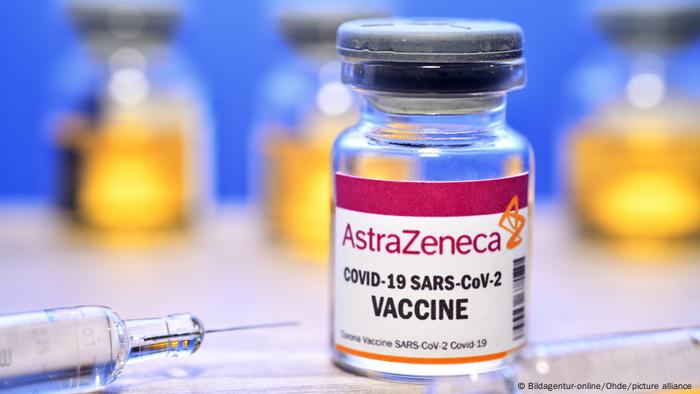
Doubting the Efficacy and Safety of a Vaccine

"The benefits of the AstraZeneca vaccine against COVID-19 with the associated risks of hospitalization and death, continue to outweigh the risks of the vaccine for the vast majority of people."
"Our safety monitoring systems are working and working effectively, these extremely rare side effects have been identified and analyzed by the best of scientific minds and enabled us to provide scientifically based up-to-date information and advice."
"The balance of benefits and risks of the vaccine is very favourable for older age groups, but it is more finely balanced for younger people, and so we advise that this evidence should be taken into account when considering the use of the vaccine."
Dr.June Raine, chief executive, U.K. Medicines and Healthcare Products Regulatory Agency 
People drink and eat in outdoor street dining areas as lockdown restrictions are eased amid the coronavirus pandemic in Soho, London on April 24, 2021. (Toby Melville/Reuters)
"The U.K. did not have a great supply of the Pfizer vaccine and so, given the decision to vaccinate your population versus a very prolonged vaccine rollout with a pretty significant wave that they had in January 2020 they pushed forward with AstraZeneca."
"They were bold about it, but they should be congratulated on it. They followed the science and they pushed an aggressive campaign to get as many people vaccinated as quickly as possible."
If you were to put everything on a scale and add public good to it, it absolutely would make sense to continue to get as many vaccines to as many people as possible and finish their series."
"But we live in an individual society with individual decision-making and so this is part of the consequences."
Dr.Zain Chagla, infectious disease expert, associate professor, McMaster University, Hamilton, Ontario

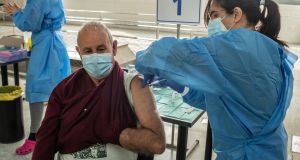
A man receives a dose of AstraZeneca’s COVID-19 vaccine at a conference center in Rome on 24 March. Italy halted use of the vaccine on 15 March, but resumed immunizations 4 days later. Antonio Masiello/Getty Images

Oxford-AstraZeneca is a vaccine developed in the United Kingdom, so it's hardly surprising, given its fairly high efficacy rate that the U.K. was among the first countries worldwide to approve its use, dispensing millions of doses expeditiously, while the rest of the world was still considering whether to approve the vaccine. In Britain, Pfizer has been utilized half as much, representing the second most-used vaccine in the country.

Developed at Oxford University, the U.K. estimates as of mid-May that 23.9 million doses of AstraZenca were dispensed as a first dose, with nine million second doses. In comparison 11.7 first doses of Pfizer were dispensed, with 9.9 million second doses. Moderna vaccines are only just now beginning to enter Britain, with roughly 200,000 doses being dispersed. The United Kingdom now stands as one of the world's leading countries in vaccinations with at least the first dose having been used to inoculate 56 percent of the population, and fully vaccinating 32 percent of residents.

Britain's view of the rare blood clots associated with AstraZeneca is that of a risk well worth taking in the struggle to contain the SARS-CoV-2 virus causing COVID. The country has been determinedly aggressive in rolling out the vaccine. A situation quite the reverse of what has been happening in Canada. Where the use of AstraZeneca has fallen under a cloak of trepidation over the rare occurrences of vaccine-caused blood clots, despite that COVID-19 is capable of and has indeed caused infinitely greater numbers of blood clots and deaths.
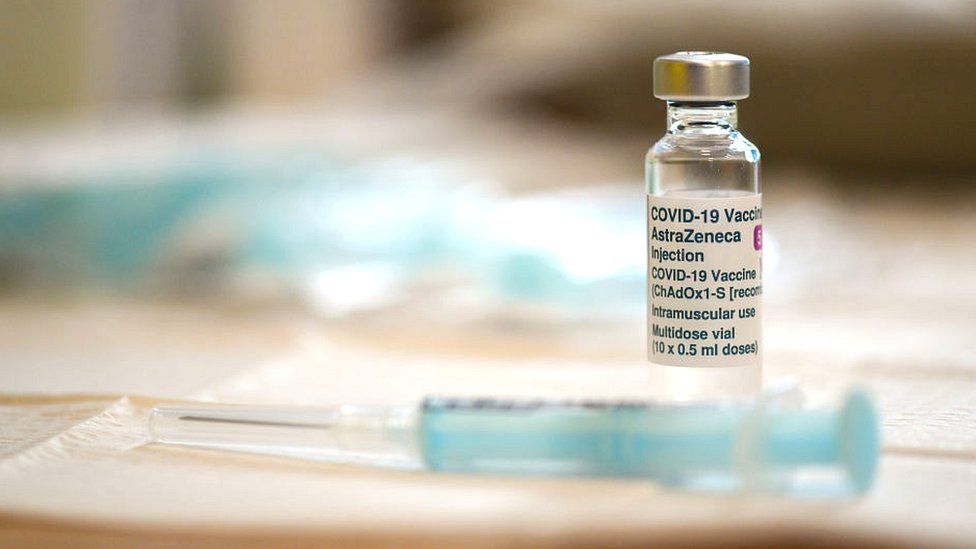
 
AstraZeneca Covid-19 vaccine and syringe are seen at the medical centre
Getty Images
After temporarily suspending the use of AstraZeneca altogether, the province of Ontario has altered its decision somewhat announcing it would once again use the vaccine, for those people who have already been given their first dose of AstraZeneca, as a follow-up. Other provinces which also had suspended the use of AstraZeneca have not yet decided whether to relax that position. 
 
In the United Kingdom, roughly 250 cases of the rare blood clots associated with the vaccine have occurred. Given the total number of vaccines used, the medical experts place the risk at about one in 100,000 in first doses. Only a handful of clots have arisen in the use of second doses; a rate of one in a million. Percentages that rate similarly in the Ontario experience. 
 
The key difference, according to Dr.Raine, being that the rare, potentially deadly clots are identified in the U.K. medical system, enabling health authorities to treat the clots as they occur. People under 40 who may be at higher risk of acquiring clots are advised to consider waiting for the Pfizer vaccine, while emphasizing that any vaccine is safer than acquiring COVID.

"What we're saying and what we've said all along is that mRNA vaccines are the preferred vaccine", said Dr.Shelley Deeks, co-chair of the National Advisory Council on Immunization in Canada, a volunteer advisory group comprised of health experts, tasked to produce recommendations on vaccine use to the federal government. Their position is that Canadians who can wait for an mRNA vaccine are advised to do so preferentially, bypassing the AstraZeneca vaccine, in an excess of caution.

In early January, Britain was identifying close to 60,000 cases on a daily basis. At the present time, under 3,000 are being presented, with hospital occupancy at its lowest since September. Contrasting with Canada's peaks in early January and in May at around 8,000 cases, with but half the population of the United Kingdom. Britain's 66 million residents recorded over 128,000 COVID deaths, in comparison to Canada's 25,000 deaths among its 36 million population.
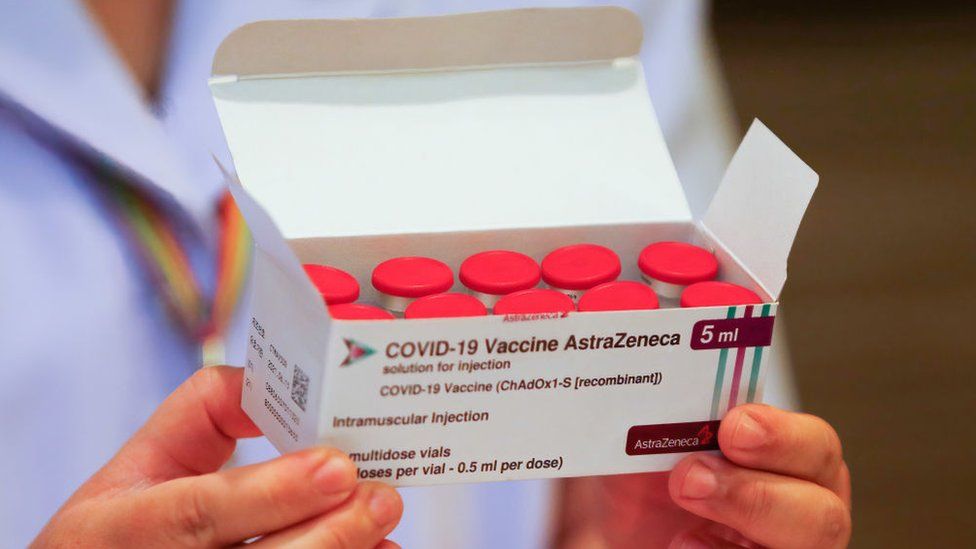
A health worker holds a box of the AstraZeneca vaccine
Sopa Images
Canada is now faced with a moral dilemma. Having advised the population to wait for a mRNA vaccine as represented by Pfizer or Moderna, the country has a stockpile of AstraZeneca vaccines whose expiry date is ticking steadily away; some will expire at the end of May, other stock in June. Canadian provinces must decide whether to proceed with their use during the overall drive to inoculate a large percentage of the population, or to donate them to another country that will intend to use them before they expire.

Countries in desperate need for vaccines would welcome a fresh infusion. "That answer probably needs to come now, especially if doses are expiring at the end of the month You really only have a two-week window to get those doses into people", explained Dr.Chagla.

Labels: , , , , ,

Friday, April 16, 2021

Risk of Blood Clots : COVID versus Vaccines

"They're acting the way they [regulators and advisory committees] would if it were normal times. We're not in normal times. And I think they need to take that into account."
"I don't think they're responding the way they need to in a plague that's killing many thousands of people every month [globally]."
"They need to be very careful about how they send messages, meaning any message they send should begin with the death rate, hospitalization rate and burial rate for COVID for the week they're making the announcement."
Arthur Caplan, bioethicist, head, division of medical ethics, NYU School of Medicine, New York City 

"Confirmation of the first Canadian case of a COVID vaccine-induced blood clot was] kind of historic."
"Canada felt like it was protected from this, because it hadn't happened here."
"[Blood clots following inoculation are concerning] -- very concerning, don't get me wrong -- [but they're rare]."
"The work now being done is, how is it that this vaccine can induce these antibodies, and what is it about those few individuals who had this happen?"
Ishac Nazy, director, McMaster University Centre for Transfusion Research laboratory, Hamilton
The Oxford-developed AstraZeneca vaccine.
Oxford researchers ran a study of COVID-19 patients
A new study recently released before publication out of Oxford University researchers reveals that COVID-19 is up to ten times likelier to cause a rare brain blood clot than would any of the current vaccines. Vaccines analyzed to confirm that they carry roughly the same remote blood clot risk; four in one million, to five in one million -- irrespective of whether it is the AstraZeneca, the Pfizer or the Moderna vaccine.

The U.S. Food and Drug Administration has placed a pause on doctors making use of the Johnson & Johnson vaccine, out of an "abundance of caution". This, at a time that Canada is expecting a shipment of up to ten million doses of the J&J vaccine. The FDA was motivated to act following reports that six women between the ages of 18 and 48 -- days after being vaccinated with the J&J vaccine -- had suffered a rare type of blood clot. Approximately 6.9 million Americans have already been vaccinated with the J&J vaccine. One among that blood-clot-group of six women died and another remains in critical condition.

Most provinces in Canada have now suspended the use of AstraZeneca for people under age 55, on the advice of the National Advisory Committee on Immunization, which is now considering whether to update its recommendation. All involved regulators and advisory committees in light of the uncertainties and new revelations relating to COVID and vaccines coming to the fore, are reacting cautiously and conservatively.

The situation is a delicate one at a time of steeply rising case counts of coronavirus among the general public and the suspicions that blood clots have raised in the public mind raises a risk of seriously setting back vaccination campaigns. A reported 80 percent refusal rate for AstraZeneca's vaccine is now standard in Italy. France has seen public confidence plummet for the vaccine, while Germany and Spain have as well. So it is not surprising that reports are emerging of Canadians refusing the vaccine in the face of authorities pleading with the public to "take the first shot offered".

This week, Health Canada continued to express confidence in its approval of AstraZeneca and J&J vaccines for all ages, following a review of available data. Dr.Supriya Sharma, chief medical adviser, places the risk of a clotting with AstraZeneca at one in 250,000. Independent advisers with Health Canada are in the process of reviewing whether to modify their no-one-under-55 recommendations for AstraZeneca in light of "substantial uncertainty" of benefits against that age group's risks.
 
A man is inoculated with the AstraZeneca Covid-19 vaccine at a vaccination centre in the Catalonia Railway Museum. File photograph: David Ramos/Getty Images
 
People are lacking the information they need to be enabled to make informed personal decisions. They require data that will inform them how large the risks from continuing to vaccinate are, versus risks from pausing. According to the Oxford researchers, the COVID risk for cerebral venous thrombosis (CVT) -- a clot in the cerebral vein responsible for draining blood from the brain -- is some eight times greater than with the Oxford/AstraZeneca vaccine, those under 30 included.

Professor of psychiatry at the University of Oxford, Paul Harrison and his study co-authors state comparisons must be cautiously interpreted "since data are still accruing". Based on an electronic health record network with a total of 81 million people in the United States, researchers counted the number of CVT cases that came to light in two weeks after a diagnosis of COVID -- following the first dose of a vaccine.

CVT -- according to their estimates, occurred in 39 out of one million patients. In people receiving Pfizer or Moderna vaccines, the risk was 4.1 per million, whereas CVT has been reported in five per million following a first dose of the AstraZeneca-Oxford vaccine. The McMaster Platelet Immunology Laboratory tests blood samples sent in from doctors, for antibodies whose presence can activate platelets leading to clotting. The lab forms part of a national surveillance system for vaccine-induced blood clots. 
 
What remains unclear is why it is that females seem at particular risk. A Quebec woman to date is the country's only confirmed case. She is recovering at home. What also remains as yet elusive is what it is that triggers the production of the clotting antibodies.

As per an official statement by Oxford University, the number of CVT cases diagnosed in the two weeks following diagnosis of COVID-19, or after the first dose of a vaccine. (REUTERS)
"[Health Canada's advisers are reviewing whether to modify no-one-under 55 position for
AstraZeneca in view of] substantial uncertainty [of the benefits given risks for that age group while preparing recommendations for the Johnson & Johnson vaccine]."
"Are they looking at different information when they should be sharing the data? If there's one government federal system, a single entity that is making that decision, they need to get their act together. If people are confused, it's because they're not doing their job."
"This is a situation where experts communicate badly and blame the audience."
"It's not that hard for officials to find out what information people need and give it to them in clear, concise terms. How are the authorities weighing those two risks [blood clots and risks from pausing]? How good is their information? How soon will it be better?"
"[Research shows people want the truth] It also shows that they can understand the critical facts if care is taken in drafting and testing the messages. It's not that hard."
Baruch Fischhoff, risk communication expert, Carnegie Mellon University, Pittsburgh

Labels: , , , , , ,

Saturday, March 13, 2021

AstraZeneca-Oxford Vaccine's Bad Press

"It's very important to understand that, yes, we should continue to be using the AstraZeneca vaccine."
"[The vaccine is] excellent."
"All that we look at is what we always look at: Any safety signal must be investigated."
Margaret Harris, spokeswoman, World Health Organization

"[Of the ten million patients who received the vaccine AstraZenec Canada's review has uncovered] no evidence of an increased risk of pulmonary embolism or deep vein thrombosis in any defined age group, gender, batch or in any particular country."
"In fact, the observed number of these types of events are significantly lower in those vaccinated than what would be expected among the general population."
Carlo Mastrangelo, head, corporate affairs, communications and sustainability, AstraZeneca Canada
Empty vials of the AstraZeneca-Oxford COVID-19 vaccine at a vaccination centre in western France. Some countries have temporarily halted use of the vaccine while clotting reports are investigated. Canada is among the countries continuing to use it. (Fred Tanneau/AFP/Getty)
 
According to Dr.Zain Chagla, infectious disease physician at St.Joseph Hospital in Hamilton, Ontario, the normal incidence of blood clots is roughly one in 1,000 patients over the course of a year and when millions of people are being vaccinated, the development of clots is not unusual. Whether those developing clots might have done so without the inoculation however, is perhaps the crux of the matter.

Nine countries in Europe along with Thailand have put a pause on use of AstraZenca's vaccine doses. Some permanently, others targeting only certain batches -- awaiting further investigation of the occurrence of blood clots which some have linked to the use of the AstraZeneca-Oxford vaccine. In actual fact no experts have suggested a link exists between the vaccine and the development of blood clots.

On Friday, the World Health Organization emphasized what they've been saying since rumours of a link surfaced, by unequivocally endorsing AstraZeneca's vaccine for its efficacy and safety. It has been pointed out that the WHO views the shot as the least expensive, most high-volume of the vaccines launched to date, identifying it as the mainstay of the developing world's vaccination programs.

In Canada, its initial 500,000 doses of AstraZeneca are being used in inoculating target groups -- with the exception of anyone over age 65 until such time as further research clarifies its usefulness for an older demographic. Health Canada announced its authorization of the vaccine based on a thorough, independent review of the evidence presented by the pharmaceutical company, determining the vaccine meets Canada's stringent safety, efficacy and quality standards.

As far as Canadian health authorities are concerned, while maintaining a vigilance over the European investigations of the Oxford-AstraZeneca vaccine following reports of blood clots post-inoculation, there appears no evidence the vaccine caused the clots. "To date, no adverse events related to the AstraZeneca COVID -19 vaccine or the version manufactured by the Serum Institute of India (where the Canada-destined vaccine is sourced) have been reported to Health Canada or the Public Health Agency of Canada".

It would be well to bear in mind that Israel, the country which has outstripped all others around the globe in swiftly and successfully administering the AstraZeneca vaccine to a majority of its population has seen no problems arise there. Its success has been celebrated and the country's initiative and efficiency in administering the vaccine so widely is held as an astounding success story the rest of the world aspires to emulate.

In Denmark which halted AstraZeneca vaccine after an undisclosed number of blood clots were reported and a patient died, health authorities explained they halted the use of the vaccine in a spirit of caution and not because there were any suspicions that a connection existed between the vaccine and the blood clot development.

The issue is under study by the EU regulator European Medicines Agency which observes that 30 blood clots in over five million patients who received the vaccine is not unusual nor out of step with what is considered the normal rate of blood clots in the general population.  So while Denmark, Iceland, Norway and a handful of other European countries have suspended use of the vaccine, other countries including Germany, France, Poland, Nigeria, the United Kingdom and Canada continue its use in view of a lack of evidence it poses a health risk.

Health Canada's chief medical adviser Dr. Supriya Sharma, adds that with no scientific basis for a link between blood clots and the AstraZeneca shot there is no reason to discontinue or pause its use: "There's not a good biological explanation about why a vaccine of this type, injected into a muscle, would cause that kind of adverse event ."

Image
The available data suggest that among 5 million people who received the AZ vaccine, 30 developed a blood clot. So, 30 in 5 million. Our research team has shown that among those with COVID about 2% developed a blood clot. So about 100,000 in 5 million. cmaj.ca/content/193/1/


Labels: , , , , , ,

Thursday, May 07, 2020

More Worrying COVID Symptoms : Blood Clots

"We hope to get some understanding of how much these blood clots have been contributing and try to prevent them."
"We hope to achieve the development of a much lower rate of blood clots and potentially affect mortality, which is the ultimate goal."
"That [prevention of strokes] is one reason we wanted to get on this right away."
Dr.Philip Wells, head, department of medicine, The Ottawa Hospital
A patient in bed surrounded by doctors.
Clotting may be a major factor in organ damage from COVID-19, according to new findings.(AP: Zhang Yuwei via Xinhua)

The "this" that Dr.Wells refers to is the discovery of yet another complication racked up by the SARS-CoV-2 virus in its rampage through the human community; the identified connection between blood clotting and COVID-19. First noted by doctors in China, alerting researchers and physicians everywhere, including at The Ottawa Hospital deciding to take the lead to attempt reducing the risk to patients, through a deeper understanding of the connection between COVID and blood clots.

When it became evident that blood clots were a key factor in COVID-19, doctors at The Ottawa Hospital wasted no time in implementing new protocols and at the same time studying the impact of a menace that proves continually there is much to learn about the novel coronavirus, including the realized reality that COVID patients become at higher risk of blood clots. The issue here for the doctors is how these patients can be protected.

Dr.Wells is head of one of the leading research units in blood clots, and researchers at the hospital acknowledged their facility had to "take the lead" in finding answers to these vexing problems. At the present time, patients with risk factors for blood clots are routinely injected with anticoagulants on admission to hospitals throughout Canada. It soon became evident the routine dose was insufficient for patients with COVID-19, Dr.Wells stated.

'COVID toes,' patches on the feet, a rare inflammatory syndrome in children.
The Canadian Press

In some centres rates of blood clots have been reported among COVID patients that were "shockingly high", leading The Ottawa Hospital to increase the amount of anticoagulant administered to COVID patients, based on their physical weight. Preventive diagnostic imaging is also being used in monitoring for blood clits on COVID patients as well as regular tests to monitor the prevalence of blood clots and whether the new protocol makes a difference in patient outcome.

Unknown as yet, is whether and to what extent these blood clots have contributed to deaths from COVID-19. Similar to other COVID-19 symptoms, those of blood clots include chest pain and rapid respiratory failure, indicating an urgent requirement for research to better understand the virus and its many complications. More aggressive treatment to prevent blood clots may aid in preventing strokes, yet another related complication of COVID.

COVID-19

Some of the papers written about blood clotting in COVID patients suggest between one-quarter and one-third of patients admitted to hospital might have the complications, points out Dr.Marc Carrier, head of hematology at The Ottawa Hospital, although rates seen in Ottawa have been substantially lower. Evidence also exists that blood clots could be a factor in the mysterious "COVIDtoes" complication most commonly seen in children and young people.

These peculiar symptoms turn up as purple or blue lesions on a patient's feet or toes, typically painful to touch. Patients describe experiencing a hot or burning sensation related to them. Patients with COVIDtoes, according to experts who made a study of the condition, usually have no other symptoms associated with the virus; no cough, fever, or shortness of breath, and they tend as well to test negative.

Dr.Carrier noted that the earliest report out of China linking COVID to blood clots led to the awareness that blood clots could be very important in COVID patients "and also, that there might be something we can do about it. It is still a moving target. We are still learning", he said.

A masked health practitioner holds a thermometer.
Treatment guidelines are changing to more aggressively target blood clotting in COVID-19 patients.(AAP: David Mariuz)

Labels: , , ,

 
()() Follow @rheytah Tweet