Ruminations

Blog dedicated primarily to randomly selected news items; comments reflecting personal perceptions

Monday, May 18, 2020

Micro-Earth, Biosphere 2 -- The Ultimate Haven

"We were in quarantine for two years. Or we put the rest of the world in quarantine for two years."
"Any time there was a special occasion of drink or food, all the conflict [among the eight people who volunteered to live within the confines of Biosphere 2 for two years] drained away. No one wanted to spoil it."
"Whatever food and drink really makes people happy in quarantine should be pursued. This isn't fun unless we can have feasts and parties and do home brewing [under quarantine from COVID-19]."
"Wherever you are, you are supported, and you are living, because we have a healthy Earth biosphere. Fall in love with every bit of it. The plant on the windowsill, the tree on the corner. We have to understand that every breath of air that we take, every drop of water, every bit of food is produced by our biosphere."
"That's the awareness we need to come out of this pandemic. We're all connected. It's showing us the downside of it. But we need to recognize the flip side. Think of this amazing biosphere that's given us birth."
"Biosphere 2 was so far ahead of its time that it offered an understandable way of getting around what a biosphere was. We weren't making a model of planet Earth, thank you very much. It was a little slice."
"It totally transformed me, and everyone else who was in there. I'm still digesting it. The incredible bodily connection that all of us felt with that living system, to where it was unthinkable that we would harm it in any way. The mindfulness with which we took care of the biome. The tender loving care that we took, and the visceral sense that we were connected was also part of the human dimension."
"That knowledge and that love went from my brain, my mind, to my body. To where my body got it. My bodily understanding that I was connected to that world."
On one level being alone with seven people was like being in an encounter group, or group therapy, for two years. I got to see ways I related to other people that I didn't like. I had to change who I was."
Mark Nelson, 77, former 'Biospherian'
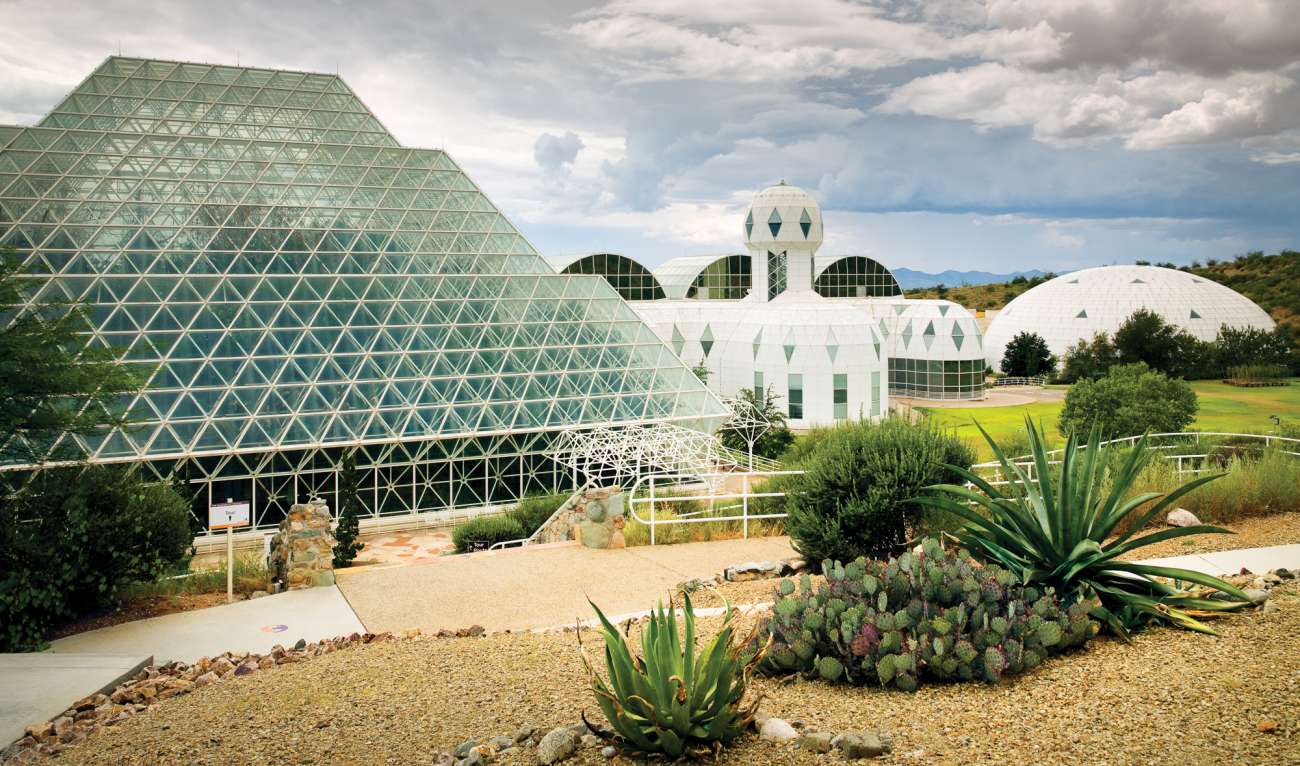
Biosphere 2, Mark Nelson, 1991

"Leonardo da Vinci talked about flying machines. Centuries later the Wright brothers built one. Biosphere 2 may prove to be the Kitty Hawk of biospheric life-support systems."
"Then again it may prove to be one of those airplanes everybody sees in the movies and laughs at that had 16 wings flapping at the same time."
Biosphere 2 patron Ed Bass, 1991
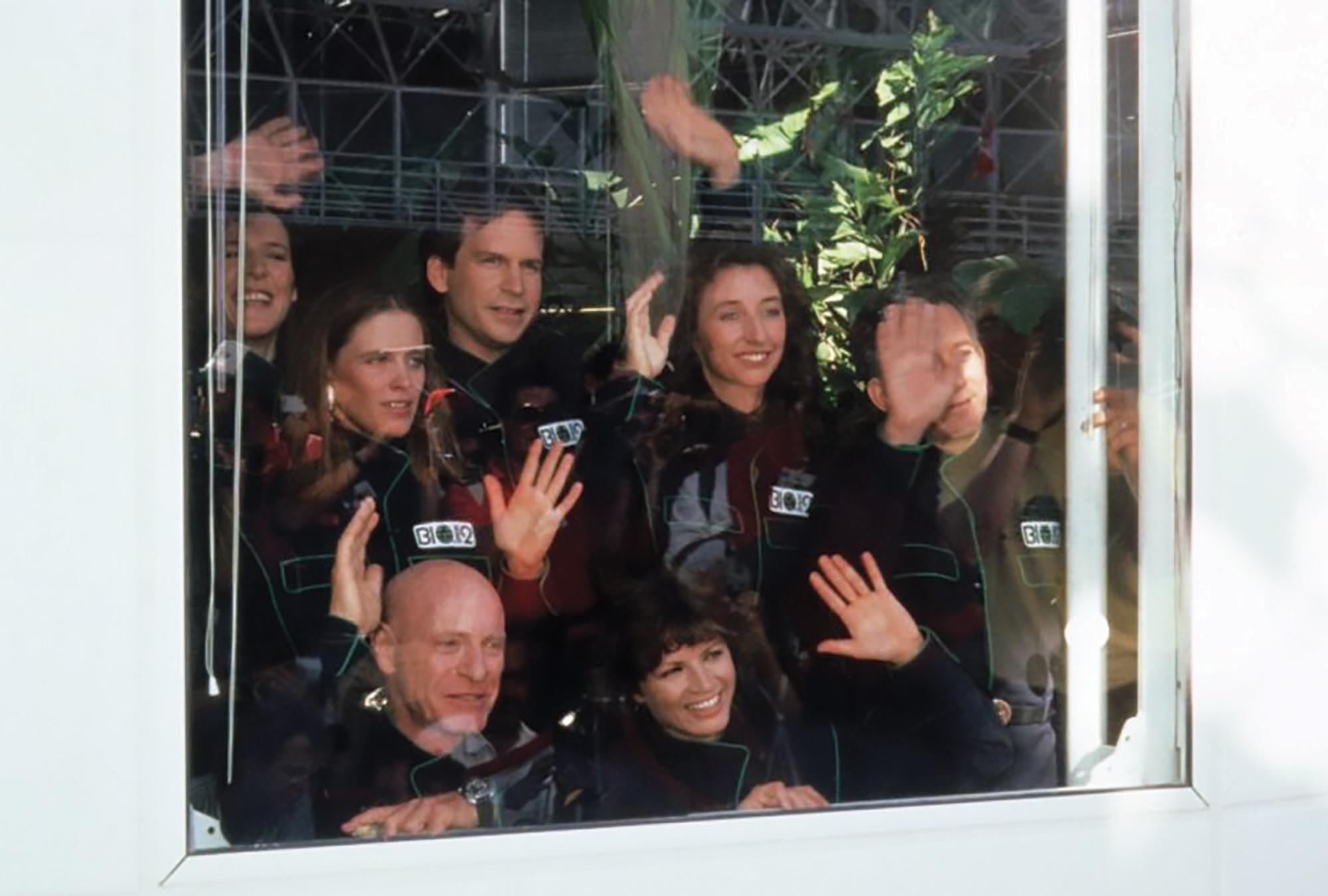
It was an imaginative, forward-looking experiment. A costly one, to invest in the needed infrastructure, to develop a system that was as true to the Earth's atmosphere and support of living creatures and vegetation as possible, to allow for self-isolation in a grand experiment where a group of eight people intended to see whether they might succeed at being self-sufficient, as stewards of a miniature Earth, drawing from its resources whatever they needed to sustain life, not only for themselves but for the creatures living alongside them, from insects to birds, mammals to vegetation.

It was quite an ad hoc experiment. The inhabitants of Biosphere 2 who named themselves 'Biospherians', were five Americans, two Brits and a Belgian, comprising four of each gender, included among them a botanist, a marine biologist and a physician. The very same professions, in fact, that sea-voyaging geographical exploratory missions of the past setting out to discover new continents and other inhabited locations worldwide with different cultures and levels of civilization generally brought along, in humanity's search to know the world they lived within, through the ages.

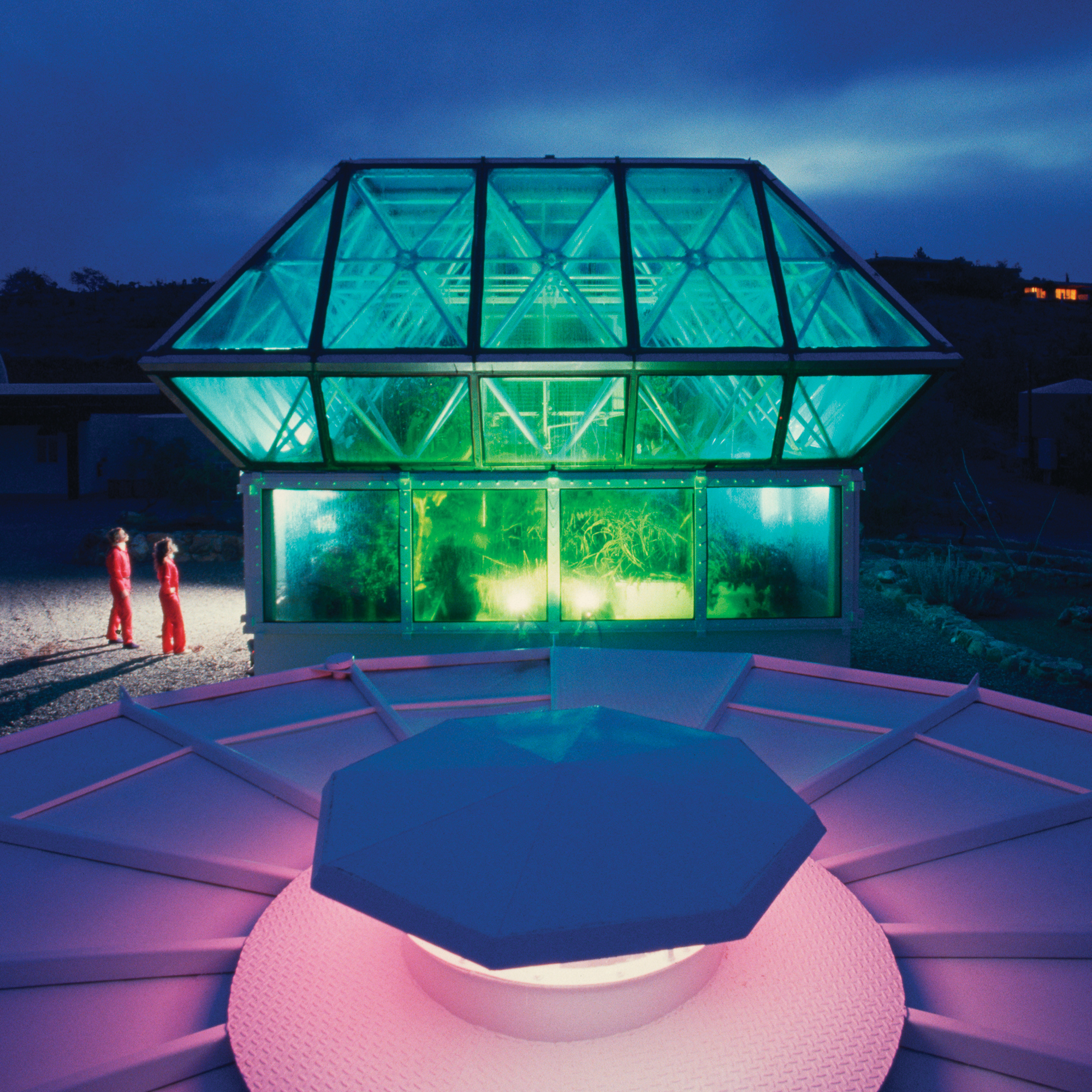
In cloistering themselves and shutting themselves away from the outside world, their adventure in living was meant to instruct the participants on how to manage lives separated from all that was familiar as they re-acquainted themselves with the natural world at a level none had ever before experienced and developed sustainable techniques. Biosphere 2 was planned and created to enable the eight people within to creatively live independently. The complex into which they had sequestered themselves was of an immense size, purpose-built through the 1980s in the Arizona desert..

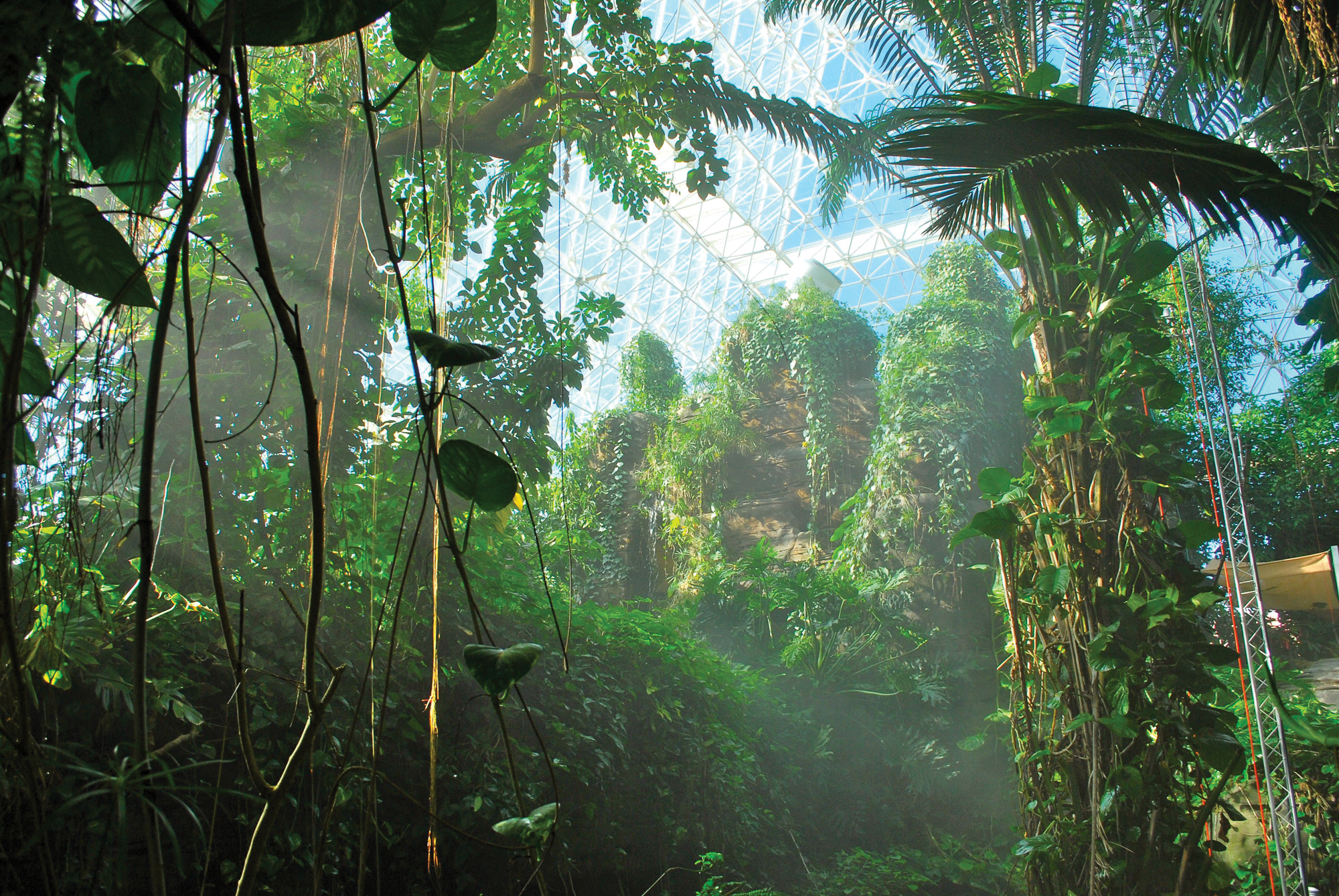
The Biosphere had an ocean with coral reefs, a miniature rainforest, a desert, and a wide range and plenitude of flora and fauna, living among the eight humans. One of whom badly injured herself which mandated she be withdrawn from the closed atmosphere to undergo surgery on her hand. Once her injury was resolved, she returned to the Biosphere. Among a few controversial revelations was that the 'all-natural system', of the breathing, living atmosphere meant to sustain life 'naturally' through its micro eco-system, was the presence of a carbon dioxide scrubber to ensure fresh air could be pumped in to avoid potential hypoxia.

As Mark Nelson wrote for publication in a Dartmouth College journal, as a former Dartmouth alumni, the group grew all their food, raising and slaughtering livestock. They had a laboratory, they were busy maintaining equipment and had their personal living quarters. Everyone was required to work from three to four hours daily, five days a week, to help produce the food they depended on for nutritious health. With no agricultural background among any of them, they were spurred by the reality that if they didn't produce they wouldn't eat.

And eat they did, learning to produce 80 various crops, from rice to yams, peanuts, sorghum, millet, beets, wheat, carrots, peppers, bananas, figs, tomatoes, kale, eggplant, onions, papaya, beans, sweet and white potatoes, squash and herbs. Biosphere 2 was host to 3,000 species of plants and animals.
Crops were grown with biological controls, and organic matter was recycled for composting. And lessons were learned; the cockroaches they hosted meant to recycle organic matter grew exponentially in numbers and began threatening the crops. A situation seen in ants, as well.

Bees and hummingbirds, two of the most delightful animals, and reliable pollinators eventually failed to survive the atmosphere. And eventually the atmosphere itself failed in its purpose to sustain life when oxygen thinned out necessitating the opening of the sealed domes so fresh air could be circulated and replenished. Despite inconveniences and downright emergencies where the inhabitants of Biosphere 2 had little option but to temporarily abandon the airtight sanctity of the domes, they persevered and lived for the appointed two years, isolated and self-sufficient.

Mr. Nelson himself now lives and works on a working farm, serving as an ecology research centre and retreat in New Mexico, called Synergia Ranch, a group he first joined after graduation from Dartmouth College in 1968.
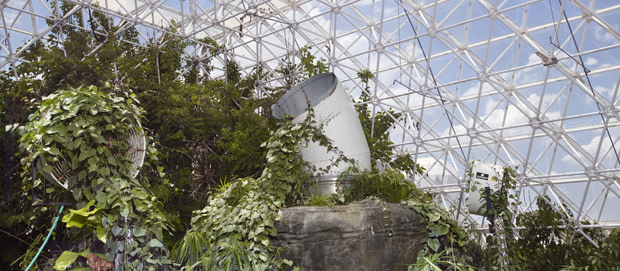
biosphere1
Biosphere 2's 91-foot-tall rain forest contains more than 150 plant species and now provides scientists a test ground for ecosystem experiments. Douglas Adesko

Labels: , , , ,

Tuesday, January 14, 2020

Leisure Pleasures for Grandmothers in New Caledonia

"The study zone is in the most touristic bay in Noumea, so I often meet people when I am doing field work on sea snakes. When I was snorkelling on my own studying sea snakes, I used to meet a friend of mine called Aline that was snorkelling and taking photos on the same reef. In order to help me, she started taking photos of sea snakes and would send them to me by mail."
"We stated chatting in the water and I explained to her what I was doing, and she told me she wanted to help."
"As soon as the grandmothers set to work, we realized that we had massively underestimated the abundance of greater sea snakes in the bay. We realized they are important mesopredators on the reef."
"If there is one thing I want everyone to learn from this, it's that you should never underestimate grandmothers."
Claire Goiran, marine biologist, University of New Caledonia

"We meet every morning between 8 a.m. and 8:30 a.m. We wear our diving equipment and we swim for one hour or two."
"Sometimes in summer, we can swim for three  hours. Back on the beach we have tea and enjoy the beauty of the site. It is very relaxing."
Marilyn Sarocchi, 63, New Caledonia, Coral Sea
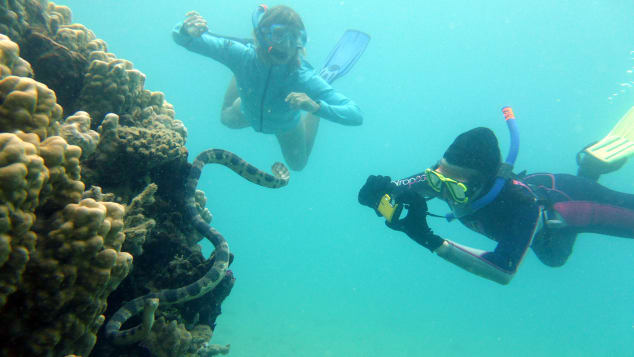
The “fantastic grandmothers,” from left: Geneviève Briançon, Aline Guémas, Monique Zannier, Monique Mazière, Sylvie Hébert, Cathy Le Bouteiller and Marilyn Sarocchi. Image by Claire Goiran/UNC.

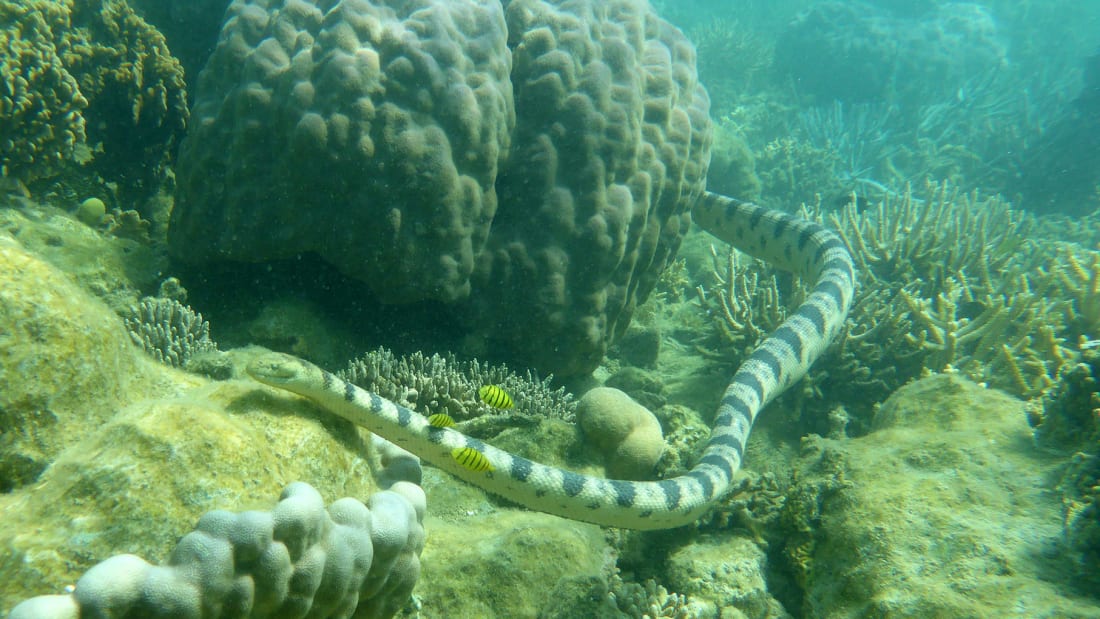
The journal Ecosphere recently published an article highlighting an unusual collaboration between scientists studying the presence of sea snakes around the waters off the coast of Australia and the French territorial island archipelago nearby of New Caledonia teeming with over 9,300 marine species, including dugongs, manta rays and venomous sea snakes. The greater sea snake, which can reach close to 1.5 meters in length, capable of killing a human with a single bite, among them.

Sea snakes for the most part live offshore and given that they are expressly dangerous to handle, few scientists are inclined to risk studying the species and their hard-to-reach habitat. Rick Shine, an evolutionary biologist at Macquarie University, Australia, and Claire Goiran from the University of New Caledonia paired up to find out what they were able to, about the greater sea snake.

Their efforts to survey the Baie des Citrons, a bay in Noumea, the capital of New Caledonia, were not very effective. They had a limited time frame to spare, and lacked full-time volunteers as assistants so theirs was a slow start. In the first three years of their study they managed to catalogue a mere 45 greater sea snakes. But then, in June of 2017, a fortuitous meeting took place on a beach between Dr. Goiran and Aline Guemas, a 61-year-old retiree, who offered to help in the search.

snorkeling grandma photographs sea snake
Monique Mazière and Sea Snake 79, nicknamed "Déborah."
Claire Goiran/University of New Caledonia

Ms. Guemas came along with Dr. Goiran on weekly surveys to photograph sea snakes and record the location where they were found. This turned out to be extremely useful for Dr. Goiran who soon suggested to Ms. Guemas she might recruit other retirees to volunteer for the same purpose. Soon, a team of seven volunteers had been assembled, their enthusiasm and usefulness soon becoming obvious, earning them the sobriquet of the "fantastic grandmothers".

Since they began their volunteer work on the bay, hundreds of snorkel surveys have taken place in the Baie des Citrons, where they identified hundreds of greater sea snakes. Monique Zannier, 75, one of the women whose ages range from 60 to 79, admits to no concern over the reputation of the sea snakes. "The Baie des Citrons is our playground", she boasts.

A group of snorkeling women who call themselves the “fantastic grandmothers” is helping scientists better understand the venomous greater sea snake. Image by Claire Goiran/UNC.

The researchers now rely on the women to help numerate and track the hundreds of greater sea snakes that come into Noumea's bays. Their data collection includes greater detailed information on the ecology of greater sea snakes than is found for any other wide-ranging sea snakes worldwide, according to Harold Heatwole, professor of zoology at the University of New England in Australia.
"Remarkably, they found a large number of lethally toxic sea snakes in a small bay that is occupied every day by hordes of local residents and cruise ship passengers — yet no bites by the species have ever been recorded at Baie des Citrons, testifying to their benevolent disposition."
Rick Shine, evolutionary biologist, Macquarie University, Australia 
Two of the grandmother dive to photograph the snake's tail for identification.
Claire Goiran

"I have been studying sea snakes in the Baie des Citrons for 20 years, and thought I understood them very well — but the Fantastic Grandmothers have shown me just how wrong I was."
"The incredible energy of the Grandmothers, and their intimate familiarity with ‘my’ study area, have transformed our understanding of the abundance and ecology of marine snakes in this system. It’s a great pleasure and privilege to work with them."
Claire Goiran

These remarkable women have documented at least 250 of the snakes. They showed through photographs they've taken, that within a 25-month period 140 greater sea snakes visited the Baie des Citrons, suggesting that greater sea snakes may have a larger role in the ecosystem function than previously thought, as animals in the middle of a food chain; both predators and prey.

The conservation status of at least 23 species of the sea snakes is unknown, resulting from a lack of data, leaving Dr. Goiran to hope that their data collected by the grandmothers will be of help to conservationists in improving protection for sea snakes of which only two of the 60 species in total are considered critically endangered.

A greater sea snake in Baie Des Citrons in New Caledonia, a French territory in the South Pacific.

Labels: , , , ,

Saturday, August 04, 2018

The Profoundly Affecting Grief of Animals

"There's evidence that cetaceans such as dolphin and whales are often attending to dead bodies. Sometimes, it's because of curiosity or exploration and not necessarily emotion. Other mother dolphins and whales have kept their calves buoyant."
"What's different about J35 is her persistence. How resilient can she be? How long can she keep this up? Is she eating? Is she taking care of herself?"
Barbara King, professor emerita, anthropology, College of William and Mary

"There's an optic that's more powerful than any other statistic."
"It's a picture of what we can assume is a heartbroken mother who herself is necessary and precious to this population [of orcas]."
Jason Colby, professor, environmental history, University of Victoria
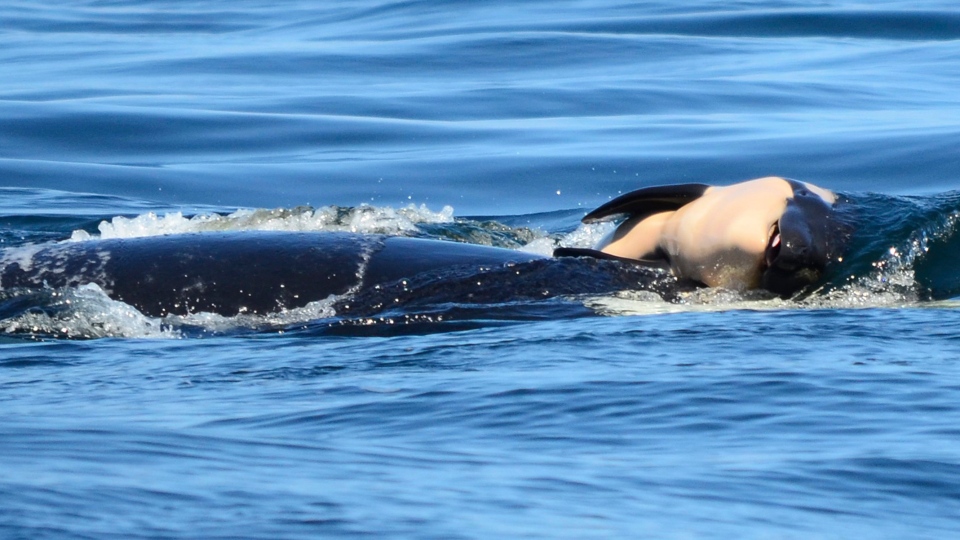
In this photo taken Tuesday, July 24, 2018, provided by the Center for Whale Research, a baby orca whale is being pushed by her mother after being born off the Canada coast near Victoria, British Columbia. (Michael Weiss/Center for Whale Research via AP)

Orcas have been listed for the past decade in both Canada and the United States as an endangered species. There is an alarming deficit of Chinook salmon comprising the black-and-white orcas' main diet. Other threats ranging from toxic contamination to disturbing noise and other troubling potential threats from boat traffic -- interfering with their foraging or communication -- that contribute to their threatened status.

Lacking the essential fat and energy required to ensure their health status lends itself to reproduction, female orcas have been seen to experience problems with pregnancy due to nutritional stressors that biologists link to a critical shortage of salmon. Last year, University of Washington and other researchers undertook a multi-year study that indicated two-third of the orcas' pregnancies have failed for the last seven years.

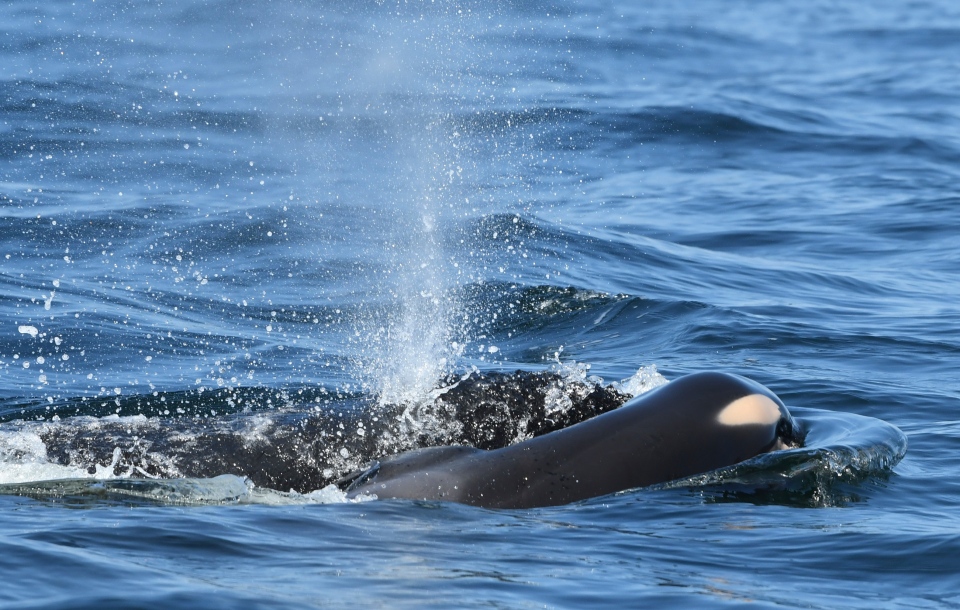
In mid-July, a 20-year-old whale tagged as J35 gave birth to an orca calf. The baby whale failed to survive, dying just days after its birth. Its grieving mother has since been seen clinging to her dead calf, off the Gulf Islands of British Columbia. Other members of her pod are travelling alongside the bereaved mother, helping her to keep her baby afloat. She quite obviously is not prepared to discard her dead calf.

The scientific community might have been elated at the birth, finally, of an orca calf, only to discover that promising sign was short-lived for a species moving along the endangered scale of existence. The mother orca appears to have been devastated by the loss of her baby, taking extraordinary measures to keep the calf afloat, while knowing it is dead.

She and the members of her family have been pushing the dead calf along, propping it up, swimming with it for miles upon end in the waters of Washington State and British Columbia. According to experts, grief at the loss of any pod member, much less a calf, is part of the species' mourning ritual; what is unusual, they say, is the lengths the orcas have gone to, to try to support the mother refusing to let her baby go.

Researchers at the Whale Museum on San Juan Island have collected fecal samples from the group in the interests of knowing more about the situation. They plan to attempt a recovery of the dead calf, in an effort to examine it to determine why it failed to thrive after birth. The situation is of high concern for the preservation of these killer whales since there is now a total of only 75 of the southern resident whales that typically spend spring to fall in Pacific Northwest waters.


In this photo taken Tuesday, July 24, 2018, provided by the Center for Whale Research, a baby orca whale is being pushed by her mother after being born off the Canada coast near Victoria, British Columbia. (Michael Weiss/Center for Whale Research via AP)

Labels: , , ,

Wednesday, July 11, 2018

Global Efforts in Wildlife Protection? Another Urban Myth

"Other nations look at what's happening in Australia and the United States [in the protection of wildlife preserves], and they say, 'Why should we bother'?"
"[Governments tend to boast about their virtuous protection of sensitive natural geographic areas but do nothing practical to protect them; they are] selling a myth."
"We show that governments are significantly overestimating the space they have made available for nature. Governments are claiming these places are protected for the sake of nature when in reality they aren't. It is a major reason why biodiversity is still in a catastrophic decline, despite more and more land being protected."
"If you only counted the lands in protected areas that are not degraded, 77 of those [111 convention signatory] nations don't meet the bar."
"Helping them succeed requires more sustained and dedicated effort and we are undertaking research to identify those intact, biologically important places around the world that still need protection and the mechanisms that will best ensure they are protected."
Dr. E.M. Watson, conservation scientist, University of Queensland, Australia

"If we are going to take natural history seriously, and all the things our communities and our economies depend on from natural areas, we have to start putting parks in the right places."
"In Canada, we value our natural environment but we also put a lot of value on natural resource extraction." 
"There's a commitment from the federal government to protect 700,000 square kilometres of land. That's an area the size of Alberta."
"One of the first places we have to look is our recreational parks and how do we balance the recreational opportunities we provide in those areas with the conservation values we have."
Dr. Oscar Venter, conservation scientist, University of Northern British Columbia
Marriott Basin, British Columbia   Photo: JSR
No fewer than 168 nations signed on to the 1993 Convention on Biological Diversity, pledging to conserve 17 percent of terrestrial and ten percent marine protected areas by the year 2020. Governments are well aware of the need to protect their geological land mass hosting wildlife species specific to their areas of the world, as well as marine life in the waters they hold territorial claims to. As a result, since the early 1990s, various nations have extended their protected natural areas, covering close to 14 percent of the terrestrial Earth, and a rough five percent of the oceans, set aside for wildlife protection.

When governments in various nations inform their populations of the initiatives undertaken in the protection of natural areas and their inhabitants, it leaves the desired impression that these are governments cognizant of the vital importance in securing these natural resources for posterity. The impression is left that these are areas that are protected from industrial scale mining, logging or any other disruptive activities harmful to natural ecology and the biosphere. It's one thing to designate an area protected, however, and quite another to commit to measures that will ensure these are protected areas.
Chilliwack, B.C.  Photo: JSR
Dr. Watson of University of Queensland in Australia, senior author of the new report recently published in the journal Science, resulting from an examination of 50,000 protected wildlife areas and reserves both terrestrial and aquatic throughout the world, points in particular to the Barrow Island Marine Park in Australia, home to rare mammals, reptiles, birds and invertebrates, many of which are found nowhere else on the planet. Despite its protected status, government gave permission for construction and expansion of an energy complex supplied by over 450 oil and natural gas wells.

He points out that no natural sites are particularly protected from that other imperative -- development for economic purposes --  where even World Heritage sites recognized by UNESCO are often treated closer to farmland to be exploited, than to wilderness areas requiring protection. Tanzania saw UNESCO willing to approve a uranium mine in its Selous Game Reserve, home to a large elephant population once, and the Selous was subsequently moved to the list of endangered World Heritage sites.

Target issues in the Convention on Biodiversity appear straightforward and easily achieved, yet governments ignore the admonition inherent in the convention to protect areas "of particular importance to biodiversity", preferring to focus on size of the area concerned in isolation of the more important issue of where those protected areas are identified, according to a recent study in Nature Ecology and Evolution. Remote regions are chosen to designate as protected areas where inconvenience is at a minimum, placing protected areas in regions with fewer endangered species.


As an example, Brazil designated marine protected areas of sizeable dimensions, ignoring the better option of near-shore areas with a greater diversity of vulnerable wildlife threatened more immediately from human activity. The country gets Brownie points for designating great swaths of territory as protected while bypassing the greater priority of selecting areas that truly are in need of protection. Cost, convenience, and avoidance of disrupting human activity seems paramount to the alternate option of the greater good.

According to the authors of the Nature Ecology and Evolution study, the pretense of protecting species based on optics alone in the number of hectares placed under protection is faulty and designed to fail its purpose. Studying the home ranges of over 4,000 threatened species globally for a study in 2014, it was found that protected areas tend to miss 85 percent of regions truly in need of protection, so that should all 168 convention signatories meet 2020 protected area targets they would still miss 84 percent of threatened species because of the focus on size, not targeting urgent areas.

The result being, that despite meaning well, the human tendency is to slip up under the influence of a country's priorities turning to economic development. This at the sacrifice of biodiversity leaving species and subspecies to continue on their extinction trajectories as the world loses important members of the global animal kingdom: mammals, aquatic creatures, insects, birds -- of an endless, irreplaceable array of loss.


Labels: , , , ,

Tuesday, April 24, 2018

I, Virus

"Unimpeded by friction with the surface of the Earth, you can travel great distances, and so intercontinental travel is quite easy [for viruses]."
"It wouldn't be unusual to find things swept up in Africa being deposited in North America."
"If you could weigh all the living material in the oceans, 95 percent of it is stuff you can't see, and they are responsible for supplying half the oxygen on the planet."
"Viruses aren't our enemies. Certain nasty viruses can make you sick, but it's important to recognize that viruses and other microbes out there are absolutely integral for the eco-system."
Curtis Suttle, marine virologist, University of British Columbia

"Viruses modulate the function and evolution of all living things."
"But to what extent remains a mystery."
Matthew B. Sullivan, Ohio State
Joshua Weitz, Georgia Tech
Steven W. Wilhelm, University of Tennessee
Viruses and bacteria fall back to Earth via dust storms and precipitation. Saharan dust intrusions from North Africa and rains from the Atlantic.  Credit: NASA Visible Earth

More commonly the general layperson knows viruses as an inimical presence to human health. Scientists, however, are learning more about them all the time. Three of whom last year recommended a vigorous new initiative be undertaken to focus on their presence, to enable a greater understanding of viral ecology. Recognized as the elite predators of the world of microbes they cannot reproduce and are co-dependent on a host. When they attach to a host they take over cells and this process is called 'infection'.

This enables the virus to replicate, injecting its own DNA into the host and in the process those alien virus genes become useful to the host, resulting in their becoming an integral part of the host's genome. Research has progressed; recent research identified an ancient virus that at one time inserted its DNA into the genomes of four-limbed animals, the ancestors of homo sapiens. That minuscule part of the genetic code, the ARC, forms part of the nervous system of modern humans playing a vital role in human consciousness; nerve communication, memory formation and higher-order cognition.

Scientists estimate that between 40 to 80 percent of the human genome may have graduated from primitive viral invasions. Understanding the function and ecology of viruses and their prey will eventually enable better understanding of the role they play in the world's ecosystems, so research is geared at factoring their presence into an understanding of a formidable connection in how the world works.

In Spain's Sierra Nevada mountains, a team of international researchers set out to retrieve viruses falling from the sky, placing four buckets in position to gather any possible samples, the thought being that a stream of viruses circle the planet above our weather systems, below the level of height achieved by airplanes. This is an entirely new realm of scientific study. The team of scientists was amazed to collect around 800 million viruses falling on each square metre of Earth, surpassing expectations entirely in a magnitude never imagined.

It has been hypothesized that most of the viruses cascading down onto the Globe, are swept into the air by sea spray, with some of their numbers scattering in dust storms. Dr. Suttle and his team's findings were published in the International Society of Microbial Ecology Journal, the first to actually count the numbers falling to Earth, representing the virosphere. These viruses are held to originate on the planet but become upwardly swept. On the other hand, some researchers hold to the theory they may originate in the atmosphere.

And though viruses equate in most peoples' minds with illnesses like influenza-onset, as infectious agents inimical to people's health, as the most abundant organisms on the planet alongside bacteria, they are essential to existence in countless measure, from our immune system to our gut microbiome, to land and sea ecosystems, climate regulation and species' evolution, all aided by the vast array of unknown genes contained in viruses, spreading and inserting them in other species.

Dr. Suttle's laboratory experiments included filtering viruses out of seawater, leaving behind bacteria. With the viruses absent, plankton present in the water failed to grow, since microbes were not present to liberate nutrients in the organisms they infect. By altering the composition of microbial communities, viruses assist in the balance of ecosystems. A virus attacks algae as it spreads in toxic blooms in the ocean, causing it to explode and die, effectively putting an end to the outbreak.

virus
Credit: CC0 Public Domain     Viruses are the most abundant and the least understood entities on Earth. They might also exist in space, but as of yet scientists have done almost no research into this possibility.
Viruses are the most abundant and one of the least understood biological entities on Earth. They might also exist in space, but as of yet scientists have done almost no research into this possibility.

Read more at: https://phys.org/news/2018-01-viruses-space.html#jCp

But while viruses have an undeniably positive impact, they can also become invasively injurious to species, causing changes and leading to extinction. When West Nile virus altered the composition of bird communities, crows died while ravens thrived. Mosquito-borne avipoxvirus spreads into the mountains of Hawaiian forests, once too cold for mosquitoes to thrive.

An example of species' extinction occurred when a viral disease called rinderpest arose when the Italian army brought along a few head of cattle to North Africa in 1887 and the virus spread across the Continent, killing cloven-hoofed animals from Eritrea to South Africa, wiping out 95 percent of herds in some instances. "It infected antelope, it infected wildebeest and other large grazers across the whole ecosystem", explained Peter Daszak, president of Ecohealth Alliance.

Drought exacerbated the situation, the result being that large numbers of people died of starvation in lock-step with the spread of rinderpest killing the animals they depended upon as a food source. Two thirds of the Masai people who depended on cattle, died in 1891. An intensive round of vaccinations helped to completely wipe out rinderpest, in Africa and globally by 2011.

Berliner et al review current virology research pertinent to astrobiology and propose ideas for future astrovirology research foci. Image credit: Arek Socha / FL.

Labels: , , , ,

 
()() Follow @rheytah Tweet