Ruminations

Blog dedicated primarily to randomly selected news items; comments reflecting personal perceptions

Tuesday, July 14, 2020

The Devastation of Cafe Culture

"It will be a slow and staged comeback for us as a lot of the offices in London are not coming back on until after summer, and some may even open only next year."
"If you feel like having a cappuccino, ordering it online doesn't really work as coffee is all about the social aspect."
Robert Robinson, Notes coffee-shop chain, London

"Manhattan traffic is still very light. The Hamptons is very busy."
"It makes sense for us. It's where many of our customers go."
Max Crowley, Bandit coffee shops, Midtown, Chelsea, New York

"We believe that consumers will move down price points, and turn more to cheaper, instant coffee, as they tighten their belts amidst the gloomy economic outlook."
"Consumers will continue to embrace home brew and instant coffee, both because they will still avoid heading out to cafes, and also because it is generally a cheaper alternative."
Taohai Lin, consumer and retail analyst, Fitch Solutions
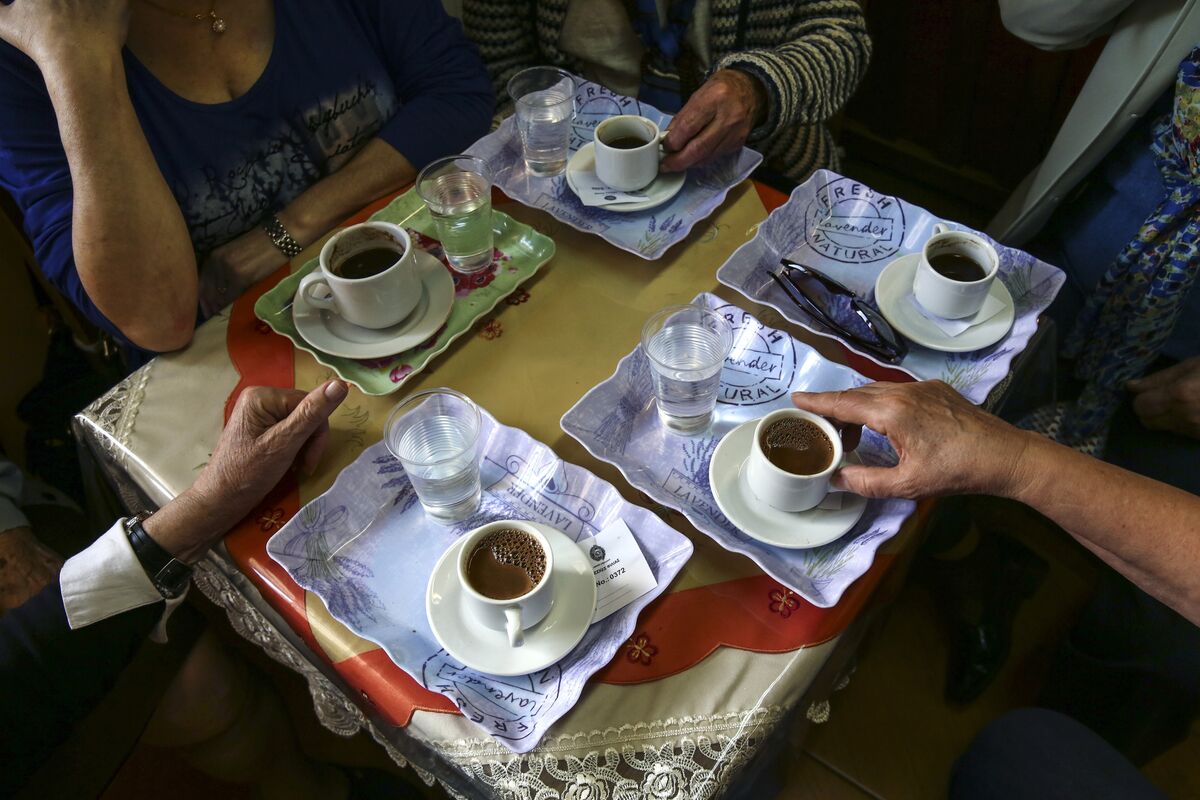
Coffee drinkers.
Coffee drinkers. Photographer: Yorgos Karahalis/Bloomberg

Yet another victim falling prey to the dread SARS-CoV-2 virus. In a sense, not surprising. After all, the popularity of coffee houses, cafes and specialty coffee shops, just like restaurants and hotels and fast-food takeouts all got hit in a similar manner. With the initial wave of COVID-19 and the response mandating closure of all commercial enterprises where people tend to gather, why not coffee? Of course coffee's wake-up role could be redeemed by home brewing. After all, that's what people did before the sweep of the social/commercial coffee industry.


And while home brewing made sense during lockdown, since people were at home anyway and they had to feed themselves once they were satisfied they had acquired enough toilet paper for comfort of mind and body, producing home brewed coffee should have been a natural. It was, but it seems that hasn't rescued coffee; consumption has been down, worldwide. The wallop of caffeine was there, but somehow it just wasn't the same; the 'scene' was missing, the social aspect, the sang-froide.

Cafe culture simply cannot be successfully emulated in a home setting. That's it, in a nutshell. The U.S.Department of Agriculture has seen the writing on the wall, noting global coffee consumption set to fall. Yes, there's been a surge at grocery stores selling the beans for panic-pantry stuffing, but the shutdown of cafes and restaurants, typically accounting for roughly 25 percent of demand, was overwhelmed by under-demand.
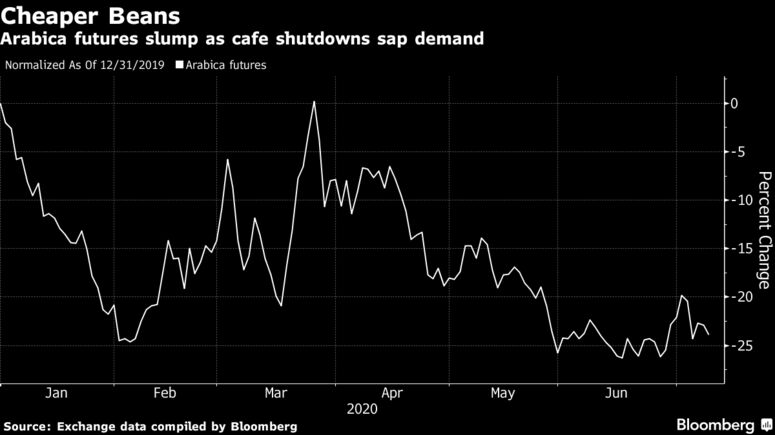
Arabica futures slump as cafe shutdowns sap demand

Marex Spectron research has estimated that over 95 percent of the out-of-home market shut down at some point during the pandemic. And despite the gradual opening prefacing the second wave of COVID, consumers have held back, hesitant to go out in droves despite the reopening of economies. Morning commuters and afternoon breakers supported area coffee shops and they've been hard hit. During the pandemic Dunkin' Brands Group Inc. lost its breakfast crowd.

A format featuring "pickup" stores sans tables and chairs sees Starbucks Corp. retooling its model --  a stark departure from the ambiance that made its cafes such an appealingly popular hangout. An estimated 125 million people globally work on coffee crops for their livelihood; with a hobbled recovery for coffee demand presenting a troubling picture for a quick recovery. The future for Arabica beans could see a 10 percent descent in the second half of the year to about US90 cents a pound, according to Citigroup.

The International Coffee Organization warns of a prospect of child labour proliferating in areas of production in lock-step with poverty hitting local farmers. The fastest growing market for coffee is Asia where consumption at restaurants and cafes is expected to recover, as countries emerge from lockdowns. In Brazil, one of the country's largest cafe chains, Suplicy Cafes Especials was unable to pay farmers for cargoes already delivered. "Some of our franchising partners already warned us that they will close", the company's CEO Filipe Braga warned.
Starbucks
The Starbucks logo  downtown Chicago. (AP/Gene J. Puskar, )

McDonald's Corp. warns if a second wave hits, it could stop reopening plans of all dine-in services in its U.S. restaurants, while Starbucks is operating about 95 percent of its U.S. stores, even while sales were down 43 percent in May.

In London, robusta futures are down 13 percent, while Arabica beans slumped 25 percent in New York.

Dalgona coffee, anyone?

Labels: , , , ,

Thursday, June 18, 2020

Could There Conceivably Be A More Contentious Issue?

"It has never been 100 percent safe to send children to school. There's always been a risk of contracting some infectious disease, whether it's the flu, the Norovirus or other viruses."
"Children are at risk of being injured ... and suffering mental and physical harm from bullying."
"But of course we can manage these risks and put mitigating factors in place to deal with them. This is exactly the kind of approach we have to take now."
Dr.Ronald Cohn, CEO, Sick Children's Hospital, Toronto
Experts say recent data shows children are not the super-spreaders of COVID-19 they initially believed they would be. (Erik White/CBC)
The conundrum of all the most difficult choices any society could possibly face; how best to safeguard the nation's children from the opportunistic clutches of a new, mysterious disease that has wrought havoc the world over, and still allow those children to experience as normal a childhood and education opportunities as possible? There is never any complete agreement on any issue; there are always supporters and detractors of perceived solutions, and in this instance there are both, as might be expected.

Canada's largest and most prestigious hospital specializing in care for children has issued a new report, one that the country will look upon as an instruction manual on how to proceed in re-opening classrooms at every level of education, and at the same time exercise due caution in the interests of protecting one of the most vulnerable demographics in any society. The report emphasizes the need to return children to the classroom if for no other reason, aside from attaining an age-appropriate education, than to continue their socialization and ensure sound mental health ensues.

The advice contained in the report will of necessity be a surprise to some and disturbing to others, while being greeted as a welcome solution by yet others. Greater incidents of infection could be a result of requiring students to wear face masks; separating children while they socialize outside the classroom would result in negative psychological effects, although maintaining a discreet distance between student desks is advanced, along with the cancellation of assemblies.

Jurisdictions in East Asia, as an example, the first to be confronted with the SARS-CoV-2 virus causing COVID-19, took an entirely different, infinitely more rigidly protective view on how to manage the safety of children returning to school following the first wave of the global pandemic. Hospital experts in Toronto informed a virtual news conference with the release of the report that children have suffered anxiety, depression and loneliness, facing a heightened risk of family discord and abuse throughout the lockdown period.

OTTAWA, ONTARIO - TUESDAY SEPTEMBER 2, 2008 - Today was the first day back to school for many youngsters at Orleans new Avalon Public School.  Photo by Ashley Fraser, The Ottawa Citizen - City - 91386 -

Those same experts stressed that the psychological benefits of resuming in-person classes in the coming usual school fall resumption period outweigh COVID-19 risks, particularly in alignment with frequent handwashing and ensuring that ill children remain at home. According to an Australian report on the experience of reopening schools, few cases of the coronavirus were found among students, with no evidence of students being a vector for adult infection: "Children are not the primary drivers of COVID-19 spread".
"That seems like the easiest of wins, especially for older kids; [urging public health authorities to decree mask use in certain public places mandatory as a key practise in curbing the spread of the virus]."
"My nieces are 11 and 13. They live in Massachusetts. They are required to mask. It's not a big deal."
"This whole document reeks of the kind of laissez-faire approach that got us into trouble with long-term care facilities and which now has Sweden in so much trouble."
"The complete lack of thought given to the role schools may play in amplifying disease that kills adults is just astounding."
"If you wanted to create super-spreader events, the way to do it would be to gather large groups indoors and have them sing, as this document appears to countenance."
Dr.David Fisman, head, epidemiology division, school of public health, University of Toronto
 Virtual learning could be offered for immunosuppressed. (Juliya Shangarey/Shutterstock)

"In young children in particular, masks can be irritating and may lead to increased touching of the face and eyes which could increase the risk of infection."
"Strict physical distancing should not be emphasized to children in the school setting as it is not practical and could cause significant psychological harm."
"Close interaction, such as playing and socializing, is central to child development and should not be discouraged."
Sick Children's Hospital Report

Children, emphasizes Dr.Cohn, despite earlier indications, do not seem to be "super-spreaders" of COVID-19. It seems more evident on the other hand that it is adults who tend to infect young people. Schools, in his considered opinion, are not at all likely to become a significant amplifier of COVID-19. Recent research appears to downplay the potential of children being major vectors for the coronavirus. British scientists produced a paper citing family clusters of cases indicating children to rarely be recognized as the instigator: "At the current time, children do not appear to be super-spreaders".
"[Keeping children out of school has already caused] significant adverse consequences."
"Parents are telling me their children are struggling with the lack of routine and structure."
"Children are sad, irritable, clingy and lonely."
Dr.Catherine Birken, pediatrician

"We are working closely with the best medical and scientific leaders in Canada -- including the Hospital for Sick Children and the COVID-19 Command Table -- to develop health protocols that keep our schools safe."
"We will take a cautious approach that underscores our complete commitment to safety."
Ontario Education Minister Stephen Lecce
Dr. Michelle Science says steps should be taken to ensure some physical distancing in schools, but trying to enforce safe distances among kids is impractical. (Ben Nelms/CBC)


Labels: , , , ,

Thursday, April 16, 2020

Re-Opening the Economy in Denmark

"I won't be sending my children off no matter what."
"I think a lot of parents are thinking, 'Why should my little child go outside first'/"
Sandra Andersen, founder, My kid is not going to be a Guinea Pig, Facebook

"I don't think it's right for the kids not to hug their friends."
"We keep the kids home, because the situation in the day cares before the COVID-19 outbreak were not OK, and the conditions they are setting up now are even worse."
Nonne Behrsin Hansen, Copenhagen, Denmark

"Suddenly, these moms feel like they just have to throw their kids to the front line and I think their reaction is: 'Don't mess with our kids."
Esme Emma Suteu, founder, Momster

"We're all a bit nervous and we'll have to ensure that we stick to hygiene rules."
"We have a lot of washing hands during the day. We don't have masks and we have to keep a good distance from each other so that's a very difficult task."
Elisa Rimpler, Danish Union of Early Childhood and Youth Educators

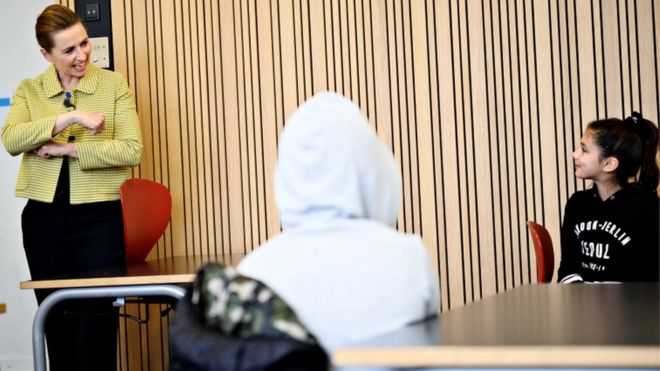
The Danish prime minister welcomed children on their return to school in Valby on Wednesday
The Danish prime minister welcomed children on their return to school in Valby on Wednesday     Reuters  

One of the first countries in Europe to decide to close down its schools in reaction to the influx of novel coronavirus cases, Denmark with its population of just under 6 million now feels the time is right to re-open them for children up to the fifth grade to "get the economy going again", according to Prime Minister Mette Frederiksen. To free up parents by allowing the children to return to school, so their parents can return to the workforce to rescue a faltering Danish economy.

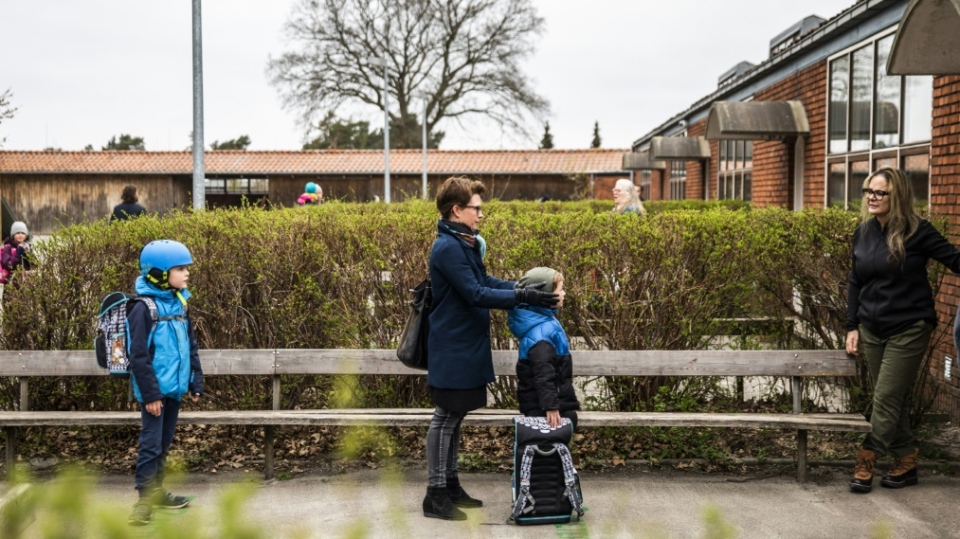
Instructions have gone out to teaching staff to ensure that social distances are maintained between children. Among the population there are many who are less than pleased, even while others express confidence in the move. An online network of thousands of Danish mothers signed onto Momster have little confidence that Danish authorities have matters relating to the novel coronavirus under control.

Concerns that newly reopened schools and daycare centres may serve to open a new front of COVID transmission leading to a second wave of cases has moved thousands of Danish parents to express their foreboding by keeping their children at home, despite the official re-openings. Denmark has not seen the kind of flood of coronavirus cases seen elsewhere in Europe, like Italy or Spain, France or Britain, but the decision has brought a heated debate over priorities; health safety or the economy.

Denmark first in Europe to reopen schools after coronavirus lockdown
Children distancing at Korshøjskolen in Randers . Bo Amstrup/Ritzau Scanpix

Up to Tuesday the virus had infected over 6,600 Danes and resulted in close to 300 deaths. Shops were ordered closed, along with bars, restaurants, cinemas and gyms.

It was when the Danish health authority recommended an easing up after the lockdown of a month's duration had succeeded in reducing the rate of new cases, to relax the lockdown by opening up schools to children up to age eleven.

At the department of infectious diseases, Aarhus University, scientist Christian Wejse acknowledged parents' concerns "because we've spend a month trying to avoid contact". But he stated that the age group of children in question fall into a category "where few fall ill, and those who do won't get very sick". He points to Sweden as an example, where schools have remained open and no dramatic rise in infections has arisen. Children, he assured the skeptical, seem not to be a major driver of infections.
"I feel great, really good about the kids going back to school."
"I think we're all going to be sick at one point and they told us the children are going to be less sick and affected by this virus."
"I think it's good that they're going back to school... We need to go back to daily life."
Caroline, 38, mother of two, Copenhagen

Denmark schools
Schools in Denmark were closed on March 17 in an effort to curb the COVID-19 epidemic, though many had shut before then. (AFP)

Labels: , , , , ,

 
()() Follow @rheytah Tweet