Ruminations

Blog dedicated primarily to randomly selected news items; comments reflecting personal perceptions

Thursday, June 24, 2021

Courting the Devil, Damning the Penguins
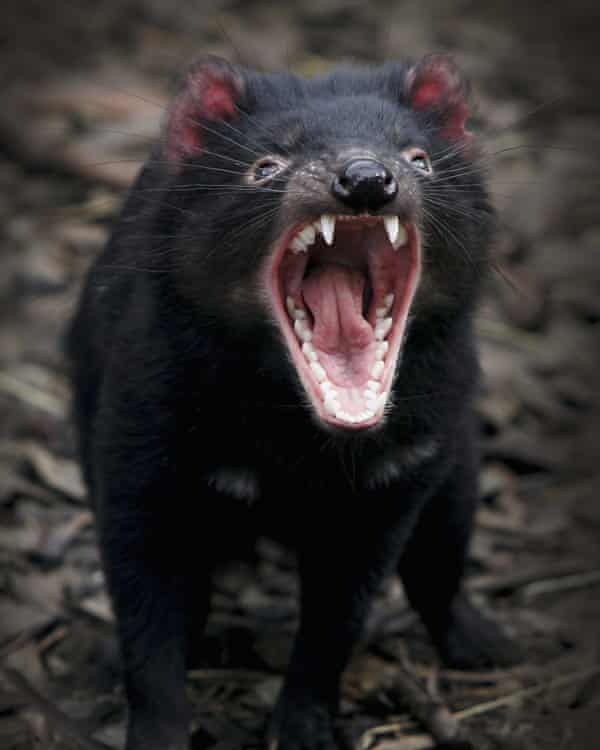
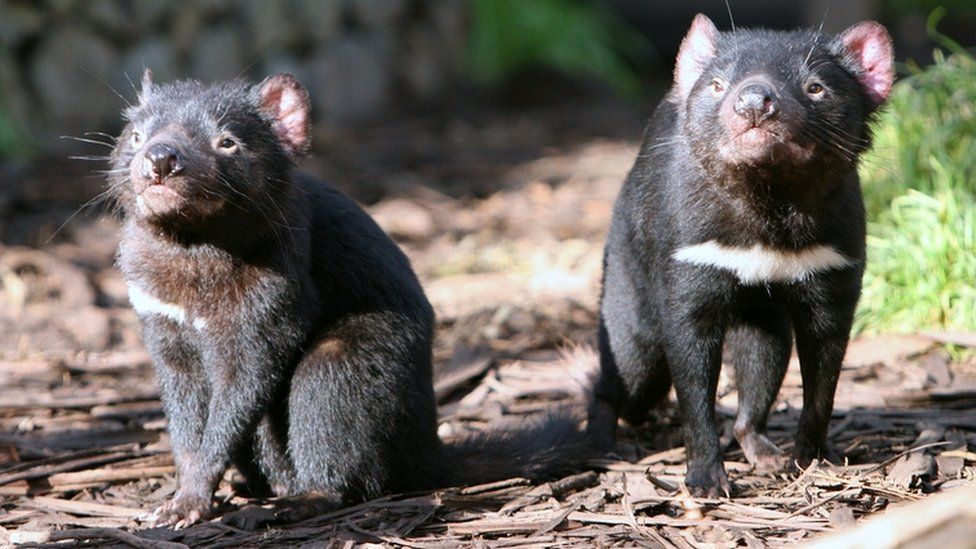
Tasmanian devil
Photograph: Ian Waldie/Getty Images
"All of the colonies of penguins once nesting around the Maria Island foreshore are gone because of the [Tasmanian] devils."
"Parks, and wildlife rangers, went out 18 months back  and couldn't find a single pengiun breeding in any of the previously known penguin colonies on the island."
"So, the devils have wiped out the penguins. It's 100 percent. The shearwaters have also been hammered."
Eric Woehler, BirdLife Tasmania convener

"...Because of their larger size and ability to dig, devils had greater impacts on nesting shearwaters than either cats or possums [which are native to the island]."
2020 BirdLife Tasmania study
Tasmanian devils
A project to preserve endangered Tasmanian devils on a small island has backfired after the predators killed seabirds in large numbers, a conservation group says.   BBC

Wildlife experts and biologists have the best intentions when they set out to 'correct' nature. To solve problems some envision importing alien species to aid and assist struggling or threatened indigenous species of vegetation or wildlife, and all too often the imports, settling into their new environments find it so to their liking they run rampant and end up threatening the existence of native species either by monopolizing their territory or their food sources or by consuming the native species to extinction.

This appears to be what has occurred when the Australian island of Maria off Tasmania became the recipient of relocated Tasmanian devils whose existence was threatened by a dread cancer, contagiously infecting animal herds. It was decided that as an experiment in survival, 28 of the devils deemed healthy and uninfected were to be settled on Maria Island. The island had no devil population prior to the relocation.
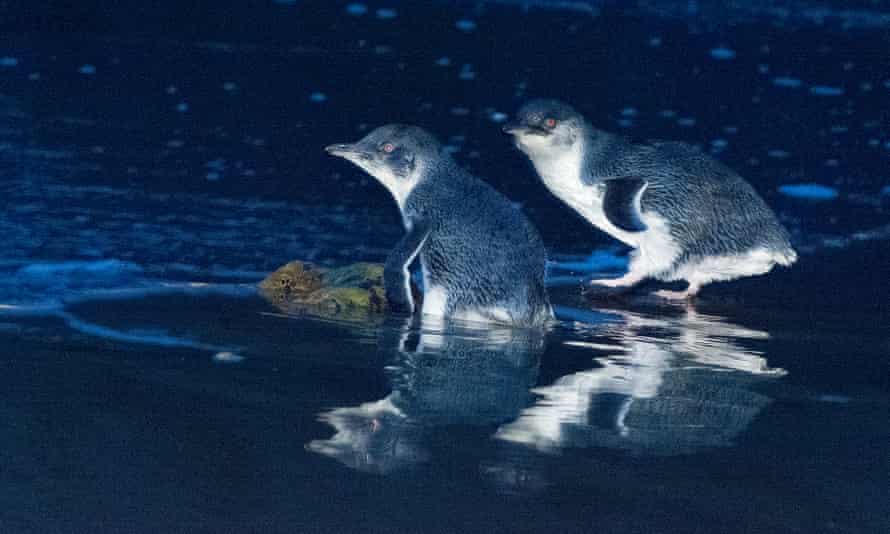
 
Little penguins – the species has been eliminated from Maria Island by introduced Tasmanian devils.
Little penguins – the species has been eliminated from Australia’s Maria Island by introduced Tasmanian devils. Photograph: Eric Woehler
 
In the annals of 'what could go wrong?' another classic example ensued. While relocating the original 28 as 'insurance' that the species suffering from facial tumour disease afflicting the animals throughout the state, the purpose was to shield the species against extinction. The devils increased to number 200 in time and they hunted a species of little penguins whose home was the 44 square mile island. Tasmanian devils are known for their voracious appetite, and the penguins were their target.

Article Image
The little penguins numbered 3,000 breeding pairs and now they are no longer to be seen on the island. Equally troubling, the number of short-tailed shearwaters also served as dinner for the devils and they too have been 'eliminated', according to a paper published in the journal Biological Conservation. Eric Woehler of BirdLife Tasmania spoke of the inevitability of the island's loss of bird life with the relocation of the devils as having been predictable.

The Tasmanian Department of Primary Industries, Parks, Water and Environment had warned that local populations of little penguins and shearwater would have to be monitored. On the other hand it did not foresee that introducing the devils would be likely to result in local extinction of the birds. 

There are times when nature takes a hand in resolving issues it has initiated. A study that took place in 2020 found that the Tasmanian devils were becoming resistant to the deadly facial tumour disease passed by biting, with devastating consequences to the survival of the animals. Their numbers had declined by 80 percent in the past several decades. And now, it seems, they will be recovering their numbers through the natural survival expedient of resistance to the disease.
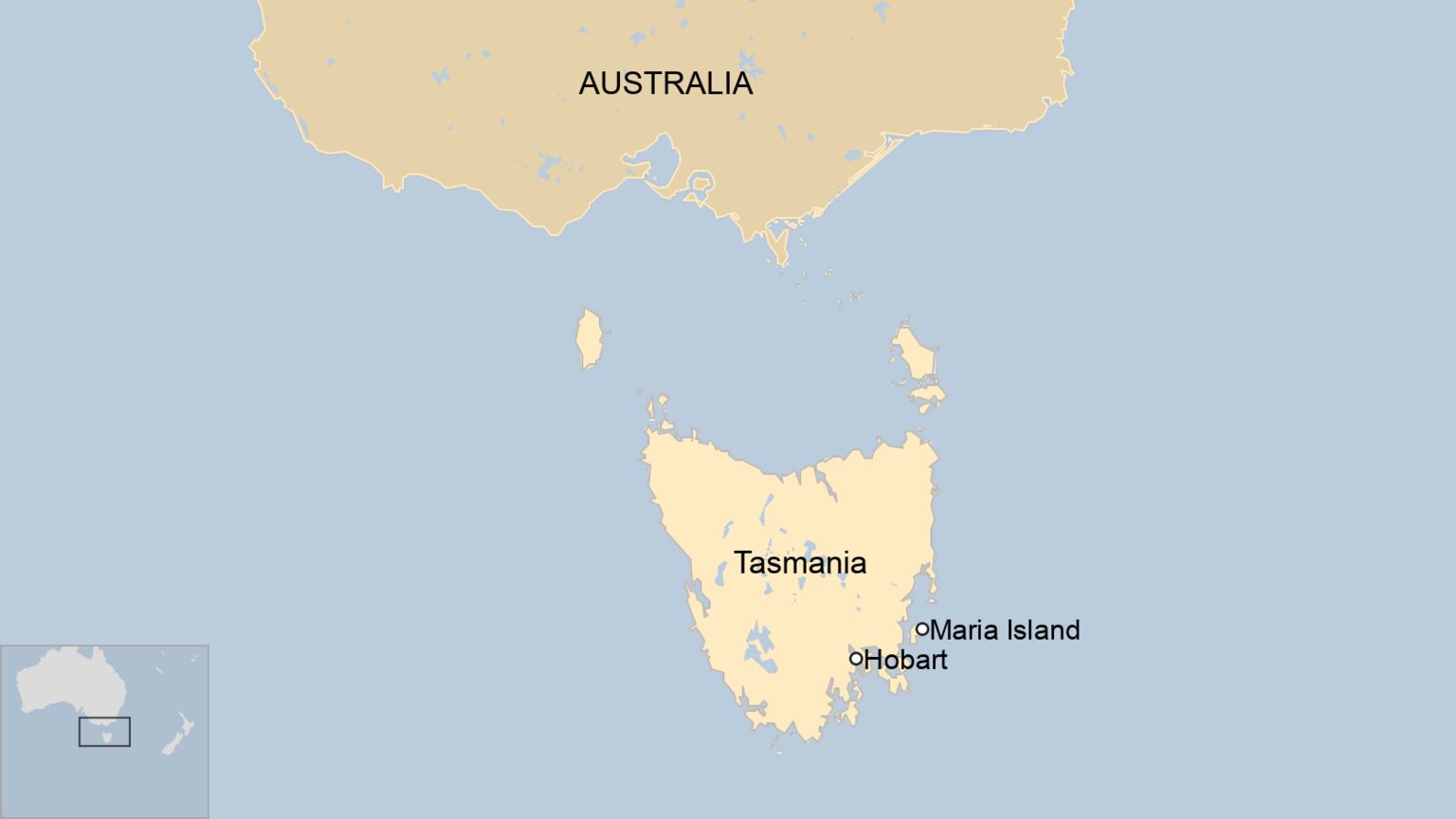
 
A map showing where Maria Island is in Tasmania
"[The Tasmanian government] continually monitors, evaluates and reviews the devil population."
"All effective conservation programs are adaptive and the Save the Tasmanian devil Program will continue to evolve in line with new knowledge in science and emerging priorities."
Tasmanian government statement

Labels: , , , , , , , ,

Wednesday, July 04, 2018

Conserving the Arctic Biosphere

"That is one area [Lancaster Sound, Northwest Passage] that has the potential for high conflict. It's an obligatory pathway for both vessels that are going in and out of the passage as well as marine mammals that are migratory."
"There's been a lot of research to suggest that vessels may have impacts on marine mammals."
"We're at this precipice where vessels are poised to expand into these regions. The idea behind this study is to provide a comprehensive assessment to help plan for the future." 
"These obligatory pinch points [narrow passageways where ships and animals are most likely to intersect; the Bering Strait separating the U.S. and Russia, and Lancaster Sound in the northern Canadian territory of Nunavut] are used by migratory species to get in and out of the Arctic, but they are also necessary passageways for vessels using these sea routes."
"Identifying the relative risks in Arctic regions and among marine mammals can be helpful when establishing strategies to deal with potential effects."

Donna Hauser, marine scientist, University of Alaska
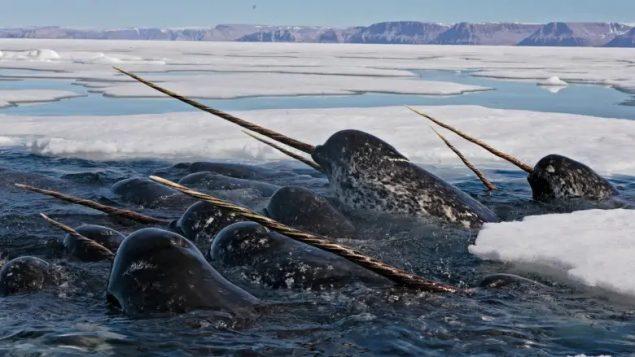
A unique Arctic species, already affected by climate change, could soon be facing another challenge, greatly increased Arctic shipping. ( Paul Nicklen-WWF)

"Narwhals have all the traits that make them vulnerable to vessel disturbances -- they stick to really specific areas, they're pretty inflexible in where they spend the summer, they live in only about a quarter of the Arctic, and they're smack dab in the middle of shipping routes."
"They also rely on sound, and are notoriously skittish and sensitive to any kind of disturbance."
"I think we can learn a lot from areas that have already been thinking about these kinds of conflicts between ships and marine mammal populations -- for example the North Atlantic right whale, or fin and blue whales around California."
"We could aim to develop some mitigation strategies in the Arctic that help ships avoid key habitats, adjust their timing taking into account the migration of animals, make efforts to minimize sound disturbance, or in general help ships detect and deviate from [proximity with] animals."
Kristin Laidre, polar scientist, UW Applied Physics Laboratory's Polar Science Center, study co-author
A freighter in Navy Board Inlet near Lancaster Sound, Nunavut. CNW Group/WWF-Canada
Tens of thousands of bowhead, beluga and narwhal migrate through Lancaster Sound as well as along a part of the central Arctic coast of Russia; both considered to be vulnerable areas for regional wildlife. Although polar bears and seals are both accounted for in the region in great numbers, it is not they who face risks but other Arctic animals more vulnerable to certain harm due to increased, and the expectations of greater increases in sea traffic by ships.

Even though shipping through the passage remains as yet relatively sparse (China is looking to the Arctic to expedite and reduce costs for its vast enterprise of shipping Chinese-made products world-wide) because of the diminishing presence of sea ice responding to climate change and a warming environment in the Arctic, expectations are that each decade will see an approximately 13 percent change both in prevalent ice cover and the ongoing access of the passage to shipping traffic.

The presence of ships influence whales to alter swimming speed or dive rate. That combination of change for vulnerable sea animals can have the effect of driving them out of the territory or cause them to remain in fraught areas where sea ice can rapidly coalesce, freezing the mammals in place. These are also, as it happens, animals on which Arctic Inuit -- whose heritage culture includes hunting of the mammals -- depend upon as a vital food source.
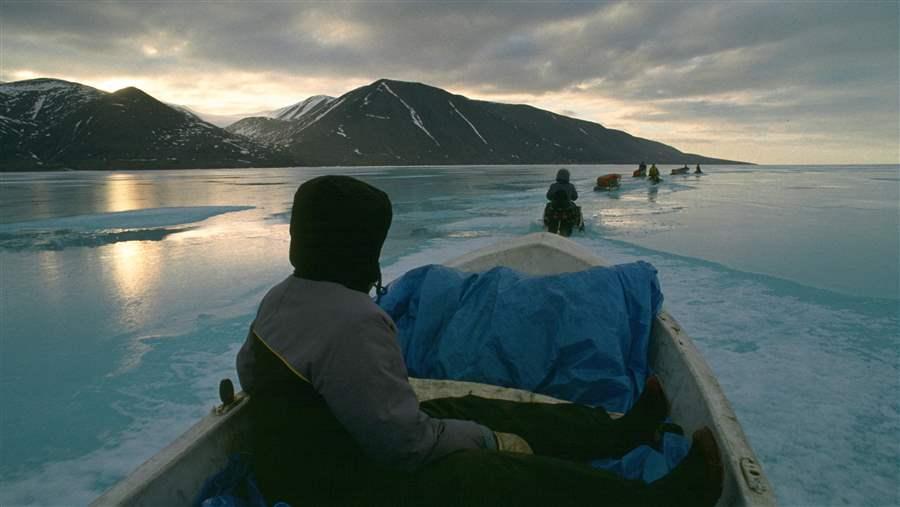
Inuit hunters
Lancaster Sound, at the entrance to Canada’s Northwest Passage, is slated to become the country’s fifth national marine conservation area. Inuit hunters, integral to the protection efforts, rely upon the area’s concentration of marine mammals to sustain their traditional way of life.    © Richard Olsenius/Getty Images

It was only a matter of time before travel through the Arctic Ocean became a target in shortening shipping routes with the discovery of the thinning of the Arctic ice fields. The Russian route appears to present the most potential for commercial ships. The Northern Sea Route hosted over 200 ships from 2011 to 2016, all large vessels. Over 100 vessels passed through the Northwest Passage in that same time frame, more than half of which were small, private vessels such as personal yachts.

Apart from purely commercial shipping on the increase, it also won't be long before passage through the Arctic waters that have for so long been closed to any possibility of marine shipping, will open for tourism entrepreneurship. No better time than the present before all the activities for various purposes become commonplace, impacting on marine life, to set rules and boundaries. And to adequately do that, acquiring reliable wildlife data of the region is a necessity.

Enter Dr. Hauser's and her colleagues' paper published in the Proceedings of the National Academy of Sciences. "We know from more temperate regions that vessels and whales don't always mix well, and yet vessels are poised to expand into this sensitive region. Even going right over the North Pole may be passable within a matter of decades. It raises questions of how to allow economic development while also protecting Arctic marine species." The study represents the first comprehensive survey of the population of vulnerable Arctic marine mammals' exposure to shipping along two main routes to estimate which of the routes and which mammals face the greatest risks from heavier regional traffic.

The researchers examined 80 different populations of narwhals, belugas, bowhead whales, seals, walrus and polar bears making the North their home, the goal being to judge just how vulnerable they would be in the presence of large ships transiting through the territory. The study focused on how habitat could intersect with likely sea routes in the target month of September when ice has its least presence and shipping would be increased as a result.

It is imperative that authorities get this just right; gauging the study results and the concomitant recommendations of the researchers for the purpose of addressing potential harm to Arctic wildlife so dependent on the area they migrate through, to provide the food they require for survival on their traditional migration route. In the best of all possible worlds, commercial shipping could be accommodated with certain restrictions meant to ensure the vital interests of protection of ocean biodiversity.

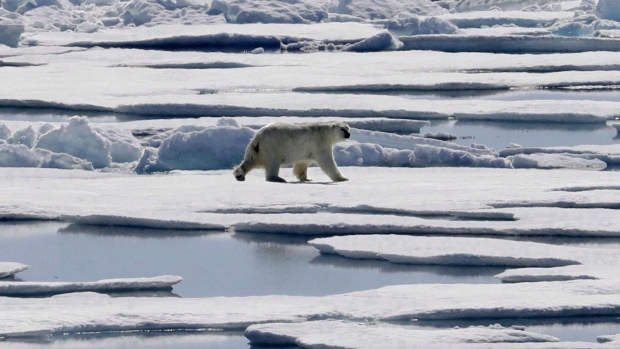
Polar Bear
In this July 21, 2017 file photo a polar bear walks over sea ice floating in the Victoria Strait in the Canadian Arctic Archipelago. New research suggests that increased shipping is likely to make parts of the Northwest Passage among the most dangerous places in the Arctic for the whales and other mammals that live there. THE CANADIAN PRESS/AP/David Goldman

Labels: , , , , , , ,

 
()() Follow @rheytah Tweet