Ruminations

Blog dedicated primarily to randomly selected news items; comments reflecting personal perceptions

Friday, March 17, 2023

Harvesting The Seas

octopus swimming at night
Octopuses are highly intelligent, and have been observed trying to escape from aquariums  Gabrielle Yap / EyeEm
"[The octopus farm] will inflict unnecessary suffering on these intelligent, sentient and fascinating creatures, which need to explore and engage with the environment as part of their natural behaviour."
"[Octopuses' diets require large quantities of animal protein to sustain], contributing to overfishing at a time when fish stocks are already under immense pressure."
Elena Lara, Compassion in World Farming

"Were calling on the EU to include a ban on octopus farming before it ever sees the light of day, in order to avoid plunging more sentient beings into a living hell."
Reineke Hameleers, CEO, Eurogroup for Animals   
 
"To kill them with ice would be a slow death … it would be very cruel and should not be allowed."  
"They are] as intelligent as cats. [A more humane way would be to kill them as many fishermen do, by clubbing them over the head]."
Prof. Peter Tse, cognitive neuroscientist, Dartmouth University
 
"[High-welfare octopus farming is] impossible [killing in ice slurry] would not be an acceptable method of killing in a lab." 
 "Large numbers of octopuses should never be kept together in close proximity. Doing this leads to stress, conflict and high mortality … A figure of 10-15% mortality should not be acceptable for any kind of farming."
Jonathan Birch, associate professor, London School of Economics
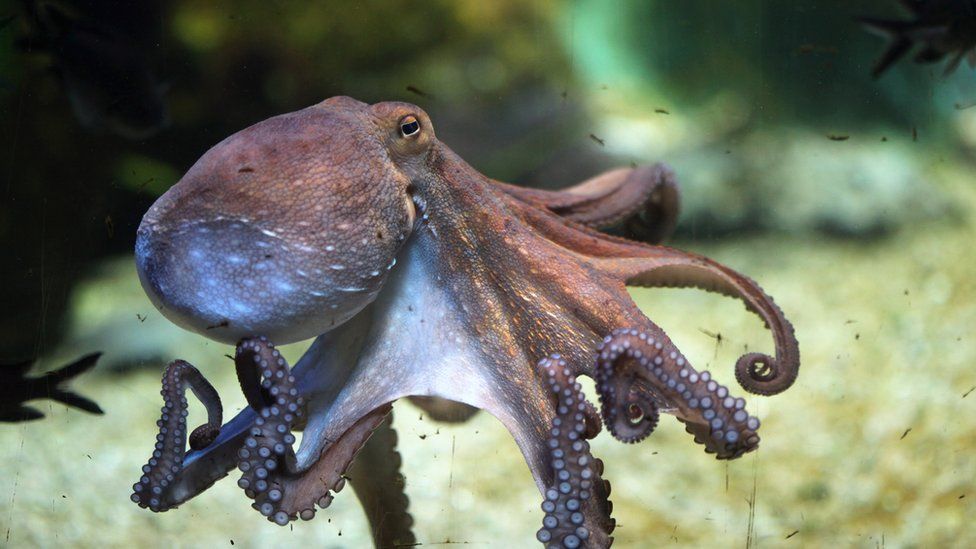
common octopus swimming along
Wrangel

 A Spanish seafood company, Nueva Pescanova, is preparing to establish the world's first octopus farm to be built in the Canary Islands. Its plan to harvest the animals by freezing them to death has been universally condemned as cruel. Plans by the company include the production of roughly a million octopuses for human consumption annually. According to Nueva Pescanova, the octopuses would be maintained in tanks shared with others under constant light. In the animals' natural environment they are solitary, preferring a dark ambience.

Plans are to kill the octopuses by placing them in water at a temperature of -3C -- already in use commercially in the slaughter of fish. Studies on this methodoligy of harvest show that it results in a slow, stressful death. The "ice slurry" method, according to the World Organization for Animal Health, "results in poor fish welfare". The technique should be banned unless fish are first stunned, argues the Aquaculture Stewardship Council.
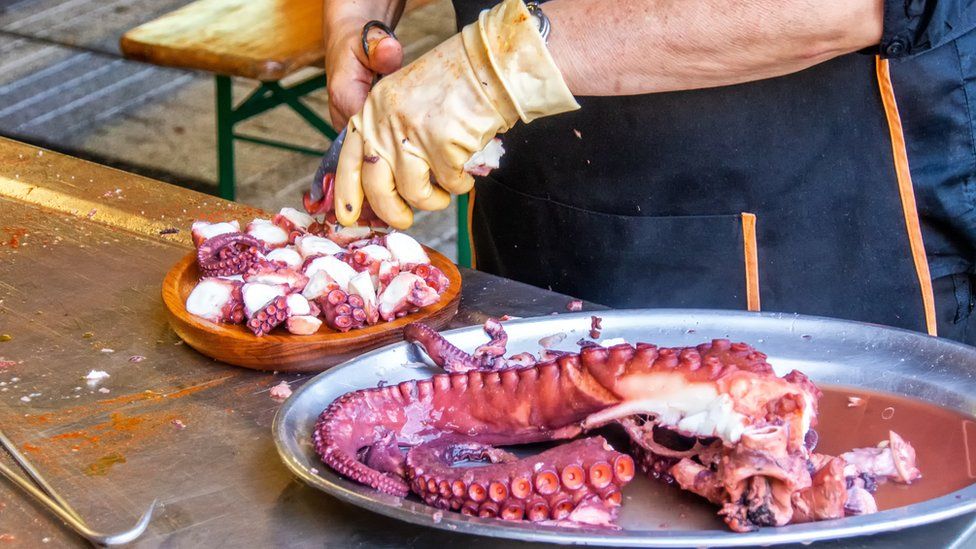
octopus being cut up
The global octopus trade is now estimated to be worth more than £2.2bn    Gerardo G. Mourín - ggmourin@gmail.com
 
According to animal rights groups responding to the planned octopus farm, it is to be condemned since confining octopuses in barren underwater tanks will cause the animals suffering. It also risks stress-induced reactions of aggression, territorialism and cannibalism; conditions forced upon the animals by corrupting their living arrangements. Experimental trials to farm octopuses indicate the mortality rate in these systems would end up around 20 percent. 

The General Directorate of Fishing of the Canary Islands must come to a decision whether to approve the new facility which is planned to be comprised of around a thousand tanks located in the port of Las Palmas de Gran Canaria. Animal rights groups are calling on the Authority to refrain from issuing a license for the farm. The European Union has been asked to ban such facilities.\

In 2019, Nueva Pescanova made an announcement to the effect that it had achieved a breakthrough in research, that it could be possible to farm and breed octopuses in communal tanks. Their plan is to supply international markets, including the United States and Japan.
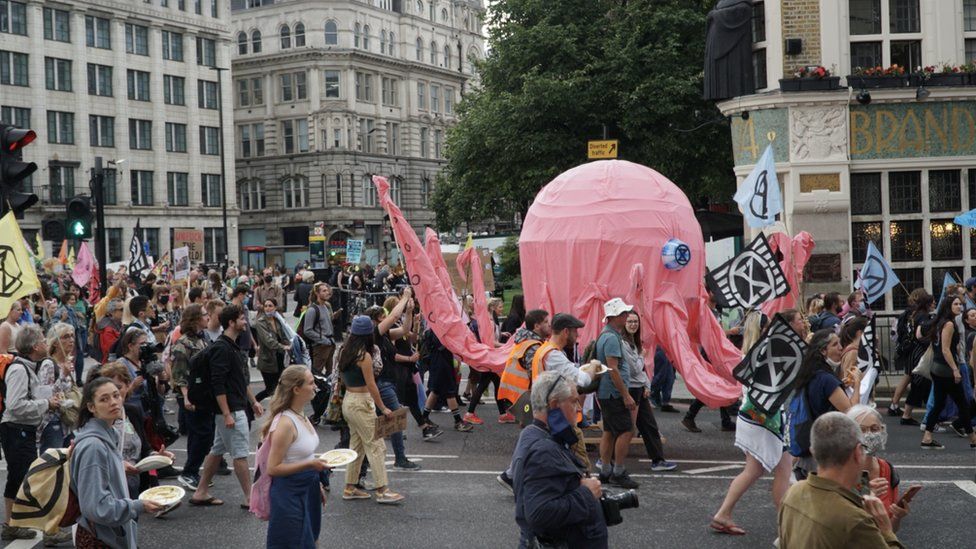
giant pink puppet octopus being marched down street in London
People in London march against octopus farming - there have been protests in other countries   Animal Rebellion


Labels: , , ,

Friday, March 22, 2019

The Rising Tide of Meat Avoidance -- In Pets' Diets

"People who avoid eating animals tend to share their homes with animal companions, and a moral dilemma may arise when they are faced with feeding animal products to their omnivorous dogs and carnivorous cats. One option to alleviate this conflict is to feed pets a diet devoid of animal ingredients—a ‘plant-based’ or ‘vegan’ diet. The number of pet owners who avoid animal products, either in their own or in their pets’ diet, is not currently known. The objective of this study was to estimate the number of meat-avoiding pet owners, identify concerns regarding conventional animal- and plant-based pet food, and estimate the number of pets fed a plant-based diet.
Ontario Veterinary College, University of Guelph survey, PLOS ONE

"[Fewer than two percent of dogs and cats in the study sample were fed a strictly plant-based diet, however] that's still a large number of animals that are potentially affected."
"Nutrition for pets really does shadow what's going on in human nutrition. People have been hearing about how vegan diets are linked to lowered risks of cancer and other health benefits in humans." "There is also growing concern about the environmental impact of animal agriculture. So, while only a small proportion of pet owners are currently feeding plant-based diets to their pets, it is safe to say that interest in the diets is likely to grow."
Sarah Dodd, veterinarian, Ontario Veterinary College, University of Guelph
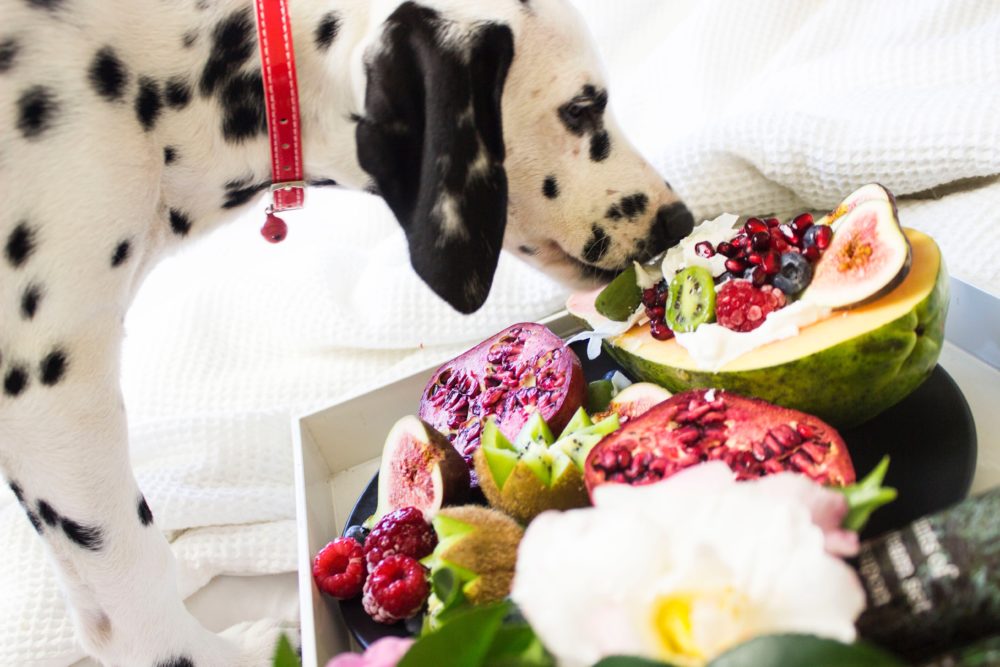
a photo of a dog with a tray of fruit and cream
(Rarnie McCudden from Pexels)
The study out of Ontario Veterinary College, University of Guelph's, the first to look into the issue of "meat avoidance" for companion pets concludes that 35 percent of pet owners showed an interest in changing their pets' diets from one heavy on animal products to a vegan or plant-based diet, mostly because they themselves are practising meat-avoidance. Close to 20 percent of Canadians are alert to a new nutrition bias against animal products in their diet and have taken to minimizing or eliminating meat from their dinner tables.

According to a recent survey, 1.3 million Canadians identify as vegetarians, with 466,000 Canadians dedicating themselves to veganism, excluding dairy and eggs along with meat. When they restrict their own diets to non-meat essentials a moral conflict ensues considering their pets' diets, heavy on products for which meat is a major ingredient. Dogs are naturally omnivorous, while cats are carnivores, their diets heavily dependent on meat protein for optimum health.

Cat owners in Britain have been warned that charges could be laid under animal welfare laws should they impose a vegan diet on their pets. As with humans, theoretically dogs could survive on a diet based on plant matter as long as essential nutrients normally derived from meat are present. There is, however, an absence of studies evaluating the nutritional quality of pet foods kibbled or canned, based on plant matter to the exclusion of meat entirely. Cats would fail to thrive outside a meat-based diet.

A survey with the title "Pet Feeding Practices" was circulated online to the attention of dog and cat breeders, which the PLOS ONE journal-published study was based upon. There were 3,673 responses, mostly from pet owners in Canada, the U.S. and U.K. with dietary information provided for 2,940 dogs and 1,542 cats with the majority of pet owners (84 percent) indicating they eat an omnivorous diet, six percent identified as vegan, six percent as vegetarian and the remainder pescetarian (including fish, excluding meat).

Many dogs (10 percent) and cats (3 percent) were intermittently fed vegetarian or plant-based foods while 97 percent of dogs and 99 percent of cats were given food containing meat. An interest was expressed by 35 percent of pet owners in feeding their pets a diet based on plants, though not yet having made the transition. Half that number felt "further stipulations needed to be met" before finally committing to the change in diet -- specifically nutritional sufficiency evidence.

Of vegans who responded, 27 percent reported feeding pets an exclusive plant-based diet, with double the number of dogs as cats fed exclusively plant-based diets. No evidence has been published through research on possible health benefits accruing with avoidance of meat in dogs or cats, the researchers concluded.

As well, vitamin deficiencies could arise as a result of eating only plant-based foods. Respondents indicated (half the omnivores surveyed and over half vegetarians) they felt it to be immoral for pets to be fed a diet their natural needs mitigate against.

The problem, as Ms. Dodd -- who specializes in veterinary nutrition -- sees it, is that  a rising trend exists where pet owners have committed to consciously limiting meat in their companion pets' diets.


Labels: , ,

Friday, March 08, 2019

Non-Existent Fashion Scruples

"[The Crocodylus niloticus listed under Appendix I of the Convention on International Trade in Endangered Species of Wild Fauna and Flora is] threatened with extinction."
"Trade in specimens of these species is permitted only in exceptional circumstances."
The Washington Convention

"Morally, one has to wonder whether it's appropriate to be selling an item that so much cruelty has gone into producing."
"[The right thing to do would be to give it a proper burial or to destroy it] rather than sell it off and promote the idea that luxury bags made from brutally killed endangered animals are something desirable for society."
Camille Labchuk, animal rights lawyer, executive director, Animal Justice
Interior view of the crocodile-skin Birkin bag up for auction by the government of Canada. Public Services and Procurement Canada

In 1984 actress Jane Birkin happened to meet Hermes chairman Jean-Louis Dumas on a flight, according to Hermes publicity material. The actress informed the man who headed one of the most prestigious producers of handbags in France that her search for a stylish yet practical bag with enough room to carry baby bottles had eluded success. "No sooner said than done, the empathetic, clever Monsieur Dumas designs a deep and supple holdall", claimed the Hermes website. Not only did Jane Birkin get a bag to her specifications, but the bag itself was named in her honour.

At some later date when she became aware of the endangered species designation given to the very animals from which her bag and others like it were produced, she asked that her name be taken off the bag's identity. What happened to her original bag is perhaps not known; whether it saw the use she contemplated when she travelled with her little girl, or whether she set it aside for a more utilitarian, less celebrated label that worked just as well or even better than the one produced for her.

However, one of these bags modelled after her own and produced by Hermes had been seized by court order, forming part of a forfeiture, which is how it came into government hands in 2014. It has been retained in storage up to the present time, but was recently put up for auction by an agency specializing in selling surplus government items. Potential bidders had to make appointments to view the bag: "Walk-ins will be turned away", stated the government auction listing.

And the potential of bidding for the French designer bag was of necessity limited to those who could or would attempt its ownership through a minimum bid of $26,289. A whole lot of money for anyone to slap down for possession of a mere handbag. It is by necessity a plaything and proud possession of the moneyed and the unscrupulous. Celebrity bait. The bag is advertised as in pristine condition, a minor scratch on the interior lining.

An authentication letter accompanies it from an executive of the manufacturer established in New York, certifying its market value; approximately $30,000 -- and up. In 2017 just such a bag was sold at auction for an astonishing $380,000 by Christie's auction house in Hong Kong, proving in action that old maxim that too many people have more money than brains.

Another, sold more recently in London at christie's went for $300,000. As far as legalities are concerned there is little of issue in selling such a handbag since the purpose of the the Washington Convention is to prevent trade across borders, not within borders; added to which a personal effects exemption applies, into which category a handbag would likely fall.

Still, since the Nile crocodile is listed at the highest level in the international treaty restricting trade in endangered species, the government agency overseeing the sale of this item warns that whoever becomes the successful bidder, will be unable to export the bag without a special government permit. This bag, produced in Paris in 2011, in government hands for the past five years should have, as Ms. Labchuk suggested, been destroyed, in reflection of its unethical moral status.

Jane Birkin. Christophe Ena/AP file photo

Labels: , , , ,

Thursday, August 30, 2018

Conservation, Inuit Tradition, Climate Change

THE CANADIAN PRESS/Jonathan Hayward
"They had to sit tight. It was pretty scary. They didn't sleep and they were out there for a while."
"It looks like it was a mother [polar bear] and a cub. The mother and the cub were killed."
"[The hunters] killed at least one more. There were multiple other bears in the area that were attracted by blood and scent."
Rob Hedley, administrator, hamlet of Naujaat, Nunavut

"I can't even describe the pain we're feeling right now."
"Those [bears] could have been caught if we didn't have these laws from the government."
"[Bears] are in our land and they are very, very dangerous. I just want Inuit to kill all the bears they see."
"It was a heavy burden to share the sad news with our community."
Helena Malliki, Naujaat, Nunavut

"The past few years, sightings and encounters have been rising. We're at a different level now."
"The guys I've been talking to say the bear population is at a level where it's safe to not have a quota."
Gordy Kidlapik, Rankin Inlet
"The seal harvest dropped dramatically [once the European ban on seal fur destroyed the market]."
"Bears start to move ashore [once the sea ice cover is lost]. Once all those bears are on shore, the likelihood of them coming into conflict with people increases."
"The ecosystem is changing. People in polar bear habitat have to look at changing some of their behaviour."
Andrew Derocher, polar bear biologist, University of Alberta
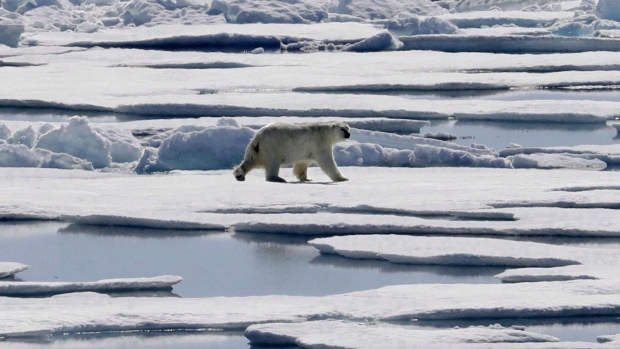
A polar bear walks over sea ice floating in the Victoria Strait in the Canadian Arctic Archipelago. RCMP say a hunter died after a polar bear attack near Naujaat, Nunavut. (David Goldman/Canadian Press)

Inuit communities in Canada's far north are resentful of interference by the federal and territorial governments that limits their hunting of polar bears. Quotas limiting the numbers of polar bears to be killed in each of the territorial regions act to constrain Inuit from thinning out the bear population, they contend. The result, they charge, is an overabundance of the powerful beasts who then threaten the existence of the people of the north. Inuit say they are exposed to greater numbers of 'interactions' with bears on the land than ever before.

In early July a man from Arviat was enjoying a family outing on an island close by the community with his children. A polar bear suddenly appeared. The 31-year-old Inuit man shouted to his children to run as he placed himself in harm's way to protect his children. He was killed, and the children survived, having run to safety. More recently, two Inuit hunters spent three days huddling alongside the body of a third hunter, killed by a polar bear. Four bears circled their camp, as the hunters hoped for rescue.

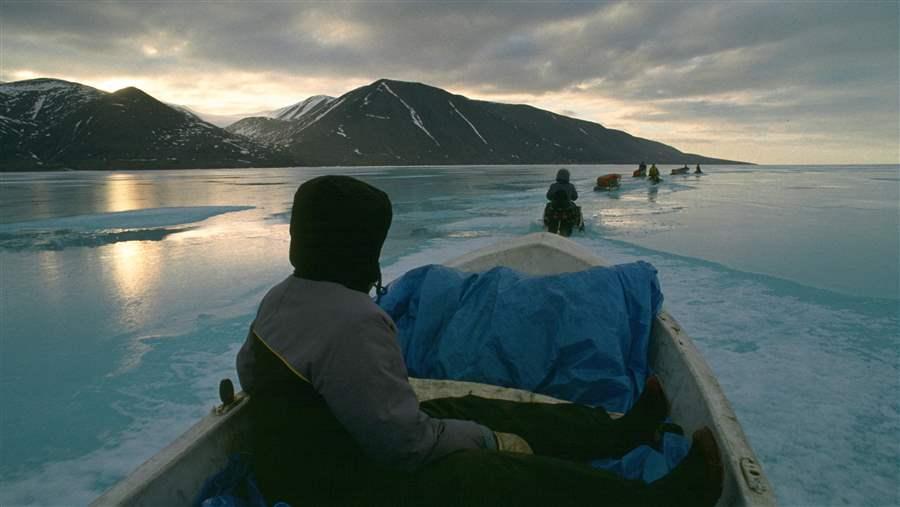
The bitter response from Inuit at the news that another of their community members has been killed by a rampaging bear, is that southern interference by people who have no idea of the dangers northern people can be exposed to, are the architects of legislation that complicate their lives in the interests of conserving bears, even while their habitat is being impacted by climate change. The stranded men had left from Naujaat on the northern shore of Hudson Bay on August 21, planning to hunt for narwhal and caribou.

Expectations were that they would be returning last Thursday; when the three hunters hadn't returned by Sunday, police were notified. The following day federal, territorial and local teams set out to investigate, knowing approximately where the hunters had been headed. Heavy sea ice conditions blocked the search boats, so the Coast Guard icebreaker Louis St.Laurent went into action, its helicopter discovering the hunters early the next day, 100 kilometres east of Naujaat.

The two hunters who had remained by their dead companion had been injured, but not seriously. Polar bear biologist, Dr. Derocher, commenting on the situation, pointed out that the quotas being criticized for hampering the Inuit from thinning out the presence of polar bears, ensuring the safety of the community, are set in Nunavut but only after consultation with hunters. Lacking careful management of the bears, the likelihood of a backlash from the international community, he pointed out, would have a deleterious effect on the communities' well-being.
A mother polar bear and her cub near Churchill, Man. A hunter from Naujaat, Nunavut, was killed after a polar bear and cub attacked him and his two friends on Thursday. (Elisha Dacey/CBC)

The European Union would possibly spearhead a ban on exports of polar bear products from Canada, essentially destroying an important income source for those Inuit communities. Inuit would end up killing even fewer bears, just as occurred when the ban on seal fur destroyed that market. Local hunters, he pointed out, had failed to take their allotted one hundred bears last year, despite the complaints of insecurity now being cited by community members in the wake of those two deadly polar bear attacks.

He also pointed out that the Foxe Basin bear population around Naujaat has seen the loss of some 30 days of sea ice seasonally over the last number of decades. Once the sea ice is unstable, the bears that usually hunt seals and other polar wildlife from the ice, abandon their uneasy perches for land. And this is when the intersection of bear and man becomes acute. A problem, however, attributed now to climate change propelling the bears into areas where that interaction becomes more common, with its potential for unfortunate occurrences.

The last death has been attributed to an interaction between the hunter, a mother bear and her cub. Bears are known to be acutely protective and angrily reactive to anything they perceive to be threatening to their cubs. This is elementary, and common knowledge. That a seasoned hunter would come to grief in this type of scenario is indeed inexplicable. The mother and cub were killed at the scene of the unfortunate encounter, along with another bear.

Labels: , , , ,

Wednesday, July 04, 2018

Conserving the Arctic Biosphere

"That is one area [Lancaster Sound, Northwest Passage] that has the potential for high conflict. It's an obligatory pathway for both vessels that are going in and out of the passage as well as marine mammals that are migratory."
"There's been a lot of research to suggest that vessels may have impacts on marine mammals."
"We're at this precipice where vessels are poised to expand into these regions. The idea behind this study is to provide a comprehensive assessment to help plan for the future." 
"These obligatory pinch points [narrow passageways where ships and animals are most likely to intersect; the Bering Strait separating the U.S. and Russia, and Lancaster Sound in the northern Canadian territory of Nunavut] are used by migratory species to get in and out of the Arctic, but they are also necessary passageways for vessels using these sea routes."
"Identifying the relative risks in Arctic regions and among marine mammals can be helpful when establishing strategies to deal with potential effects."

Donna Hauser, marine scientist, University of Alaska
A unique Arctic species, already affected by climate change, could soon be facing another challenge, greatly increased Arctic shipping. ( Paul Nicklen-WWF)

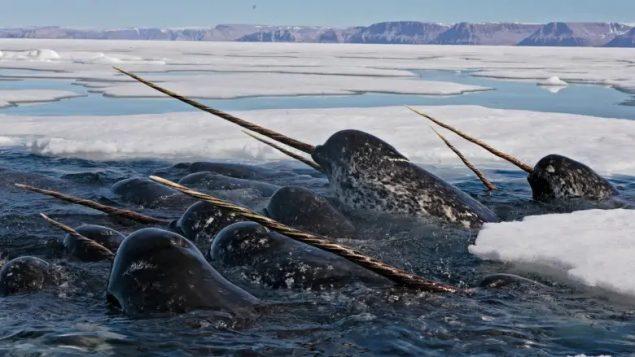
"Narwhals have all the traits that make them vulnerable to vessel disturbances -- they stick to really specific areas, they're pretty inflexible in where they spend the summer, they live in only about a quarter of the Arctic, and they're smack dab in the middle of shipping routes."
"They also rely on sound, and are notoriously skittish and sensitive to any kind of disturbance."
"I think we can learn a lot from areas that have already been thinking about these kinds of conflicts between ships and marine mammal populations -- for example the North Atlantic right whale, or fin and blue whales around California."
"We could aim to develop some mitigation strategies in the Arctic that help ships avoid key habitats, adjust their timing taking into account the migration of animals, make efforts to minimize sound disturbance, or in general help ships detect and deviate from [proximity with] animals."
Kristin Laidre, polar scientist, UW Applied Physics Laboratory's Polar Science Center, study co-author
A freighter in Navy Board Inlet near Lancaster Sound, Nunavut. CNW Group/WWF-Canada
Tens of thousands of bowhead, beluga and narwhal migrate through Lancaster Sound as well as along a part of the central Arctic coast of Russia; both considered to be vulnerable areas for regional wildlife. Although polar bears and seals are both accounted for in the region in great numbers, it is not they who face risks but other Arctic animals more vulnerable to certain harm due to increased, and the expectations of greater increases in sea traffic by ships.

Even though shipping through the passage remains as yet relatively sparse (China is looking to the Arctic to expedite and reduce costs for its vast enterprise of shipping Chinese-made products world-wide) because of the diminishing presence of sea ice responding to climate change and a warming environment in the Arctic, expectations are that each decade will see an approximately 13 percent change both in prevalent ice cover and the ongoing access of the passage to shipping traffic.

The presence of ships influence whales to alter swimming speed or dive rate. That combination of change for vulnerable sea animals can have the effect of driving them out of the territory or cause them to remain in fraught areas where sea ice can rapidly coalesce, freezing the mammals in place. These are also, as it happens, animals on which Arctic Inuit -- whose heritage culture includes hunting of the mammals -- depend upon as a vital food source.
Inuit hunters
Lancaster Sound, at the entrance to Canada’s Northwest Passage, is slated to become the country’s fifth national marine conservation area. Inuit hunters, integral to the protection efforts, rely upon the area’s concentration of marine mammals to sustain their traditional way of life.    © Richard Olsenius/Getty Images

It was only a matter of time before travel through the Arctic Ocean became a target in shortening shipping routes with the discovery of the thinning of the Arctic ice fields. The Russian route appears to present the most potential for commercial ships. The Northern Sea Route hosted over 200 ships from 2011 to 2016, all large vessels. Over 100 vessels passed through the Northwest Passage in that same time frame, more than half of which were small, private vessels such as personal yachts.

Apart from purely commercial shipping on the increase, it also won't be long before passage through the Arctic waters that have for so long been closed to any possibility of marine shipping, will open for tourism entrepreneurship. No better time than the present before all the activities for various purposes become commonplace, impacting on marine life, to set rules and boundaries. And to adequately do that, acquiring reliable wildlife data of the region is a necessity.

Enter Dr. Hauser's and her colleagues' paper published in the Proceedings of the National Academy of Sciences. "We know from more temperate regions that vessels and whales don't always mix well, and yet vessels are poised to expand into this sensitive region. Even going right over the North Pole may be passable within a matter of decades. It raises questions of how to allow economic development while also protecting Arctic marine species." The study represents the first comprehensive survey of the population of vulnerable Arctic marine mammals' exposure to shipping along two main routes to estimate which of the routes and which mammals face the greatest risks from heavier regional traffic.

The researchers examined 80 different populations of narwhals, belugas, bowhead whales, seals, walrus and polar bears making the North their home, the goal being to judge just how vulnerable they would be in the presence of large ships transiting through the territory. The study focused on how habitat could intersect with likely sea routes in the target month of September when ice has its least presence and shipping would be increased as a result.

It is imperative that authorities get this just right; gauging the study results and the concomitant recommendations of the researchers for the purpose of addressing potential harm to Arctic wildlife so dependent on the area they migrate through, to provide the food they require for survival on their traditional migration route. In the best of all possible worlds, commercial shipping could be accommodated with certain restrictions meant to ensure the vital interests of protection of ocean biodiversity.

Polar Bear
In this July 21, 2017 file photo a polar bear walks over sea ice floating in the Victoria Strait in the Canadian Arctic Archipelago. New research suggests that increased shipping is likely to make parts of the Northwest Passage among the most dangerous places in the Arctic for the whales and other mammals that live there. THE CANADIAN PRESS/AP/David Goldman

Labels: , , , , , , ,

Monday, January 01, 2018

Swaddling Baby Elephants

"Our largest community of knitters and crocheters are in South Africa. After that, it's the U.S.A., U.K., Australia, Canada, New Zealand and Europe."
"We make crochet and knitted blankets for a variety of orphaned baby wildlife animals, including but not limited to rhinos, elephants, chimpanzees, baboons, vervet monkeys."
"Mostly, members use 100 percent acrylic yarn, as it's easy to wash and wears well."
"As for design, we give our members carte blanche and believe me, some blankets are nothing short of a masterpiece."
Jo Caris, coordinator, Blankets for Baby Rhinos, France

"We haven't had weather this cold in 40 years."
"[Campaigns to persuade tourism operators to adopt humane methods to handle the animals means] no more riding, no more performing [in the animal wildlife entertainment industry]."
"[When the blankets were received at the Winga Baw camp] all seven [elephant] babies, they loved it."
"[Many of the rescue adult elephants in care are disabled, blind or ill]."
Sangdeaun Lek Chailert, founder, Save Elephant Foundation, Thailand
Wildlife Trust

In Myanmar, the Winga Baw camp experienced vastly unseasonal cold weather when a cold front made its way from China to portions of Southeast Asia, making people in Thailand, Myanmar, Laos and Cambodia extremely aware of the need to remain protected from the cold. So in those countries where seasonal cold rarely presents as a problem, the result was that people who don't normally require the use of warm clothing did, donning coats to keep themselves warm.

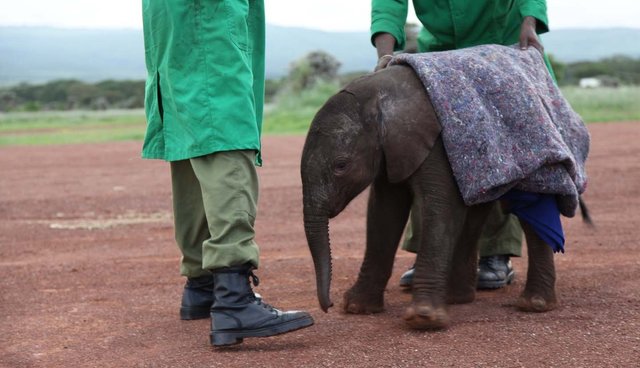
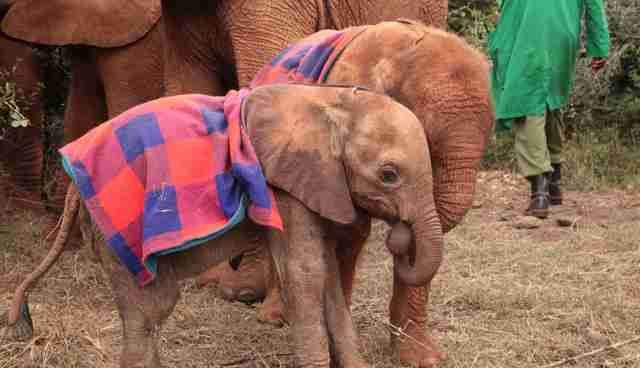
There are seven baby elephants in the Winga Baw camp and the workers began to collect straw in an effort to keep the elephant infants warm when temperatures fell to 8 degrees C recently. Concerns over the comfort and health prospects of the baby elephants were lifted when the charity Blankets for Baby Rhinos, a wildlife conservation craft group led by a dedicated rhino conservator and a veterinarian, sent along cold-protective blankets for the small elephants.
Wildlife Trust

There are no fewer than 28 camps operated by Ms. Chailert, located in Myanmar, Thailand and Cambodia to offer protection to elephants abused in the tourism and entertainment industries in those countries. She has herself, for the last decade, campaigned in an effort to persuade tourism operators to alter their method of relating to the elephants in their care. All together 77 rescued elephants are receiving loving care in those rescue camps.

"Many are orphans as a result of the illegal wildlife trade, in particular the current trend for elephant skin", explained Ry Emmerson, project director for Save Elephant Foundation. The current situation, however, where infant elephants were being protected by the unusual cold by being swaddled in blankets does represent a first in their rescue experience.

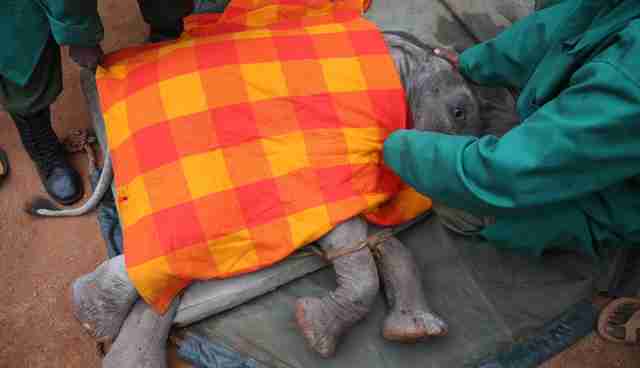
The blankets are tied around the elephants' midsection at the Winga Baw camp, to ensure they keep warm. The blankets are removed before their daily mud bath, then when the swim is finished, the blankets come back on. The blankets have unusual but species-specific dimensions of 120 centimeters by 120 centimeters for baby elephants, and 120 centimeters by 160 centimeters for elephant toddlers of four months or older.

Wildlife Trust


Labels:

Friday, March 10, 2017

Referencing the Holocaust

"[They] had to witness helplessly as the Jews of that [Hungarian town in 1944] town were herded by  gendarmes into cattle cars and how the gendarmes threatened and drove off local citizens, including his [supporter of client Anita Krajnc] mother, who were trying to give them [Jews being transported to death camps] water." 
"The Nazi[s] forced Jews and gays and gypsy [sic] and those they saw as others into trains and trucks and carted them off to slaughter. Is it the same right that the Crown now argues that [the farmer] has, that it was legal?"
"There are many important parallels that we can draw from the two things. One is our inability to have emotional contagion, somehow. Why don't we feel the suffering of others? How do we close ourselves out to that, whether it be Jews being herded into a train or whether it be pigs?"
Gary Grill, lawyer appealing before an Ontario court

"Everyone knows that giving water to thirsty Jews on a cattle train is a small act of charity and what really should have happened is they should have been saved, you know, from being gassed and murdered. And what I did was a small act of charity to that pig who was slaughtered."
"I feel guilty. If I'm guilty of anything it's for not doing enough and I'm sure the people who didn't do enough for the Jews and for others, that's the guilt that they feel." 
Anita Krajnc, defendant charged with public mischief
Anita Krajnc gives pigs water near a slaughterhouse in Burlington, Ont. Krajnc is on trial charged with criminal mischief charge for her act.
Anita Krajnc gives pigs water near a slaughterhouse in Burlington, Ont. Krajnc is on trial charged with criminal mischief charge for her act. (Elli Garlin)

It grates on Jewish sensibilities to hear time over time, the Holocaust as an episode of the most barbaric, sordid episodes in human history, a near-total genocide, being named as an example of horrors befalling victims of far more trifling events. As though the casual evocation of the grim history of a totalitarian government bent on overturning the world order, adding a sideline of mass extermination could be compared with infinitely less far-reaching, but compellingly sad events.

As though such comparisons deliberately trivialize the annihilation of millions of innocent children, their mothers, fathers, grandparents -- leaving survivors traumatized in a lifetime of mourning -- while the stunned world that preferred to avert their eyes under the pretense that such barbarity represented an overactive imagination, did nothing in response to stop the carnage.

In this instance, comparing that dread time in history to the carting off of animals to a slaughterhouse, with no pity or concern for the conditions in which the animals were kept prior to slaughter.

But this woman, 49-year-old Anita Krajnc, responded in compassion to the plight of thirsty pigs and attempted to give them water to assuage their thirst. In so doing, earning the umbrage of the farmer who was carting the animals, leading to the criminal charge of mischief for daring to approach and proffer some relief to the animals.

Now on trial for her public offence, her lawyer has likened her reaction and the response it elicited to the incomparably desperate condition of human beings treated like cattle on their way to the slaughterhouses of the Third Reich.

A society, however, immune to feelings of compassion for the anguish and suffering of animals, reflects a society which is so hardened-off of emotional support for other animals, that it is hard to imagine it would react compassionately if it were other humans in their midst who were the subject of inhumane treatment, and seen to be suffering before their very eyes. As such, perhaps it is apt indeed to contrast and conflate the two events.

It is no small cruelty to maltreat animals, no less so than to do the same to human animals.

The German population is known to love animals and to care for them, on the other hand. Their general support for ensuring that life was tolerable for animals they viewed as requiring the care of humans did not, unfortunately extend during the Nazi era to those other animals living among them who were considered to be dispensable sub-humans in a general atmosphere of anti-Semitism, and contempt for Gays and for Roma.

The window dressing of animal care on the one hand, and the willingness to submit to the propaganda machine portraying Jews as expendable scum, a convincing argument in the mass psychosis of hatred.

Is this a case for a universal conscience, or an example of the magnitude of horror minimized by slighting the existential rights to conscionable support of all animals?

Labels: , , , , , , ,

Monday, October 31, 2016

Commit With Caution

"She's never acted high: falling face-first into her food bowl, chowing down."
"She comes out and socializes."
Lisa Mastramico, Long Beach, California

"Dogs are very sensitive to the effects of THC [tetrahydrocannabinol]. Most pet owners who end up bringing their animals in are in denial."
"[But] they eventually] come clean and say their dog ate one of their brownies [laced with marijuana, with THC the psychoactive property, toxic to animals]."
Steve Blauvelt, veterinarian, Bend, Oregon

"These products show potential, but there’s not a lot of research at this point. No one is even sure what the correct therapeutic dosage is. For example, in the ‘Frequently Asked Questions’ section on one of the websites, a customer asks, ‘How much should I give my pet'?"
"And they answer—I’m paraphrasing here: ‘Whatever you think would help.’ Well, that’s extremely vague."
"We get quite a few marijuana calls at Poison Control. Cats like the plant material better, whereas dogs like to get into the edibles. Depending on how much they get into will determine how aggressive we need to be."
"Most of the time they’re wobbly like they’re drunk, they dribble urine. But 25% of them become extremely agitated, which certainly is not something I would want to put my elderly pet through. In fact, dogs that get into the really large amounts of THC, often need to be put on fluids and have their heart rate monitored." 
"Most of these treats have very low levels of CBD, so they are much safer [than when a cat or dog accidentally eats something of the human's]. It looks like these certainly could be helpful products in some cases, but right now we don’t have enough information. Whether it’s THC or other cannabinoids, the problem is we have no therapeutic dose. We don't know, 'are you underdosing your animal or overdosing your animal?' These are the things we need to determine."

Tina Wismer, medical director, ASPCA Animal Poison Control Center  

"The cannabis plant has many compounds in it. Most people grow cannabis for the euphoric experience of THC. But they’ve been overlooking cannabidiol—commonly known as CBD—which is non-psychoactive."
"What we’ve seen is that some of these dogs respond very rapidly. One woman from Fort Bragg was ready to put down her dog due to how sick and in pain he was, but the day before he was scheduled to go under, she administered our treats and just like that the dog was up, walking around, and acting normally again."
Matthew J. Cote, brand manager , Auntie Dolores, San Francisco Bay  
Still from video -- NBC News

Following the legalization of medical marijuana in Colorado, two veterinary hospitals in the state indicated that the number of dogs treated for marijuana overdoses quadrupled in the five years following. That occasioned a study, published in 2012 in the Journal of Veterinary Emergency and Critical Care. Cannabis features dozens of cannabinoids, including THC [tetrahydrocannabinol]  and CBD [cannabidiol]. The former is imbued with the psychoactive properties that make it so attractive to recreational marijuana users.

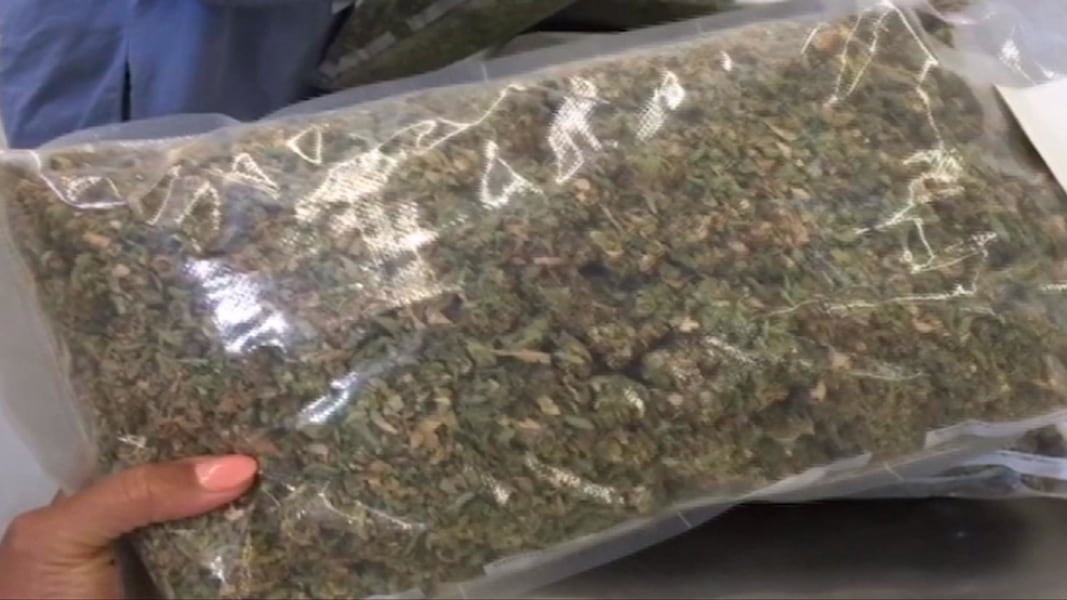
And then there is CBD which confers benefits without the high feeling, harmless to humans, harmful to animals. Used to make textiles and paper, industrial hemp is also used in marijuana products manufactured exclusively for pets, containing negligible THC levels. Veterinarian Steve Blauvelt is concerned about the welfare of family pets, brought to veterinary clinics in distress, after coming across their owners' prized marijuana collections, or reacting to sneaking a marijuana laced cookie off a kitchen counter.

The American Veterinary Medical Association has not yet announced their official position on the use of medical marijuana for ailing and elderly pets, to relieve symptoms of ill health or suspected pain due to chronic health conditions. In Nevada,  however, where medical use for humans has been made legal, the state legislature has debated a bill permitting veterinarians to prescribe medical marijuana for pets. There is the issue of health claims that producers of marijuana treats and capsules must avoid.

PHOTO: Treats made with cannabis from a dispensary are now being marketed to old and ailing dogs.
Getty Images
These products, since they have not been approved by the U.S. Food and Drug Administration, may run afoul of the FDA when products are being marketed with health claims since they are regarded as an "unapproved new animal drug", and as such making claims for health properties is seen by authorities as violations of the law (the federal Food, Drug, and Cosmetic Act). At the same time, there are enthusiastic testimonials from grateful pet owners, concerned about the deteriorating health of their pets and seeing them respond positively to products they have acquired containing marijuana.

Little Kitty was twelve years old, with arthritis, spending her days hiding in a closet, snuggling in her plush blanketed bed installed there. Her owner, Lisa Mastramico, looked for something that would make life a little more comfortable for her beloved cat. She had attempted a number of different supplements, but nothing worked. Eventually she obtained a medical marijuana card, enabling her to procure edible oils produced for pets, derived from cannabis, to be squirted into the mouth.

Little Kitty has been restored to her former, younger self, happy to sunbath on the rug in the living room and demonstrating by her manner that the oils administered to her by her owner have virtually given her a new lease on life. "She comes out and socializes", enthused Ms. Mastramico. Other people who love their pets use cannabis-based products to relieve a wide range of pet ills, inclusive of seizures, inflammation, anxiety and pain. And the results have all been reported as positive.
States where medical marijuana is legal​

There are some veterinarians who approve of the use of these products, but veterinarians are not authorized to write prescriptions even though marijuana-based products are now in use to ameliorate adverse health conditions for cats and dogs and as well for pigs, horses and other animals. A 12-year-old chow-shepherd mix living in Los Angeles developed bone cancer in 2012 requiring that his front left leg be amputated. The prescribed painkiller left Emmett dizzy. His owner bought him a cannabis-based tincture, sold in California dispensaries. It took four months, but Emmett is now his old self.

Sweet Leaf Shoppe, a medical cannabis delivery service in Los Angeles, was founded by Melinda Hayes in 2014. Her purpose was to work with pet owners and their animals, and in her dispensary she now gives aid to forty animals. Her own boxer-terrier mix Diva, tore a ligament in her right knee; her pitbull-Shih Tzu mix has allergies and anxiety syndrome, and her box turtle Tug, suffers from disorders of the shell and the bones. With her own three pets, Ms. Hayes treats them with cannabis products.

She has aspirations to increase her business to become a full-service storefront operation welcoming and open to the public to bring their pets in for consultations and follow-up care. "This way, I can combine my two favourite things, dogs and pot", she stated.
Denise says marijuana has improved Miles’ quality of life since the dog developed terminal cancer. (Photo by R. Scott Nolen)

Labels: , ,

Monday, October 10, 2016

Poaching Aiding Species' Extinction

"We already knew about the scale and severity of poaching, but what was not known before was the long-term ramifications of that poaching."
"This paper shows that things are substantially worse than we expected for forest elephants in terms of how fast they can rebound."
"We're hoping to start piecing the puzzle together and glean more information about these animals. Not the least because it's hard to get motivation and political will to protect things we don't see or know much about."
George Wittemyer, ecologist, Colorado State University


Just as there are various types of humans that have developed special characteristics that benefit them for existence in specialized environments, like the Masai and the Bushmen whom evolution outfitted for the lifestyles they would lead in the savannas on the one hand, in the forests on the other, nature has equipped other animal species in the very same way. The savanna elephant of African lineage is a larger version of the forest elephant; reproduction is slower for the forest elephant, faster for the savanna elephant.

The slow reproduction rate of forest elephants combined with the existential threat of poaching is endangering these beasts at a time when poachers have slaughtered close to 30 percent of Africa's savanna elephants from 2007to 2014, leading to a decline of close to 8 percent yearly. While savanna elephants browse and roam about the grasslands of east and southern Africa, their smaller cousins, now known to represent a distinct species, exist in densely jungled central and western Africa.

A recent survey, named the Great Elephant Census, made no effort to track forest elephants since they are enclosed in the forest, and cannot be identified from the air, a counting method the savanna elephants lend themselves to. Research, however, points to illegal killing of forest elephants to harvest their tusks being responsible for a 62 percent decline in numbers from 2002 to 2013.

Populations of African forest elephants increase in size slowly, putting the animals at greater risk of extinction than their savannah counterparts.  Richard Ruggiero/USFWS

Their situation is exacerbated by their slow reproduction rate, incapable of 'catching up' to their dwindling numbers thanks to illegal killings. A report in The Journal of Applied Ecology clarified that forest elephants represent one of the slowest reproducing mammals on Earth. If all the poachers that targeted these elephants suddenly grew a conscience and ceased, it was calculated that 90 years would be required for forest elephant populations to bulk up to pre-2002 numbers.

 In 1990, a scientist at the Wildlife Conservation Society, Andrea Turkalo, initiated observations of forest elephants in the Central African Republic's Dzanga Ndoki National Park. The assumption was that forest elephant reproduction would be similar to that of savanna elephants which bear young at age 12, every four years. The researchers soon discovered that reproduction age for forest elephants averages 23 years of age with offspring every five years during their 60-year lifespan.

The theory is that in dense jungles, productivity is reliant on the canopy where what drops from the treetops represents the available food for animals on the ground, essentially limiting the available nutrients required to foster growth and the reproduction function.

Labels: , ,

Tuesday, August 16, 2016

YouTube Outrage and Outreach

"Dude ... I am going to make it my mission ... to hunt you down ... and then I'm going to do to you ... what you did to that bear ... then I'm going to take your head ... and it will be kept as my [expletive] trophy."
"Mark my words ... I WILL find you ..."
Video comment

"A real hunter kills quickly and humanely and shows respect for the animal that he has killed."
Video comment

"I drilled him perfect. I just did something that I don't think anybody in the world has ever done. I can't believe that just happened ... He's going down, I drilled him perfect!"
"That was the longest throw I ever thought I could ever make."
"Oh yeah, I got mad penetration."
Josh Bowman, American hunter
A YouTube video posted on June 5,2016 shows American hunter Josh Bowmar spearing a black bear from about 12 to 15 yards away with a homemade spear. The hunt was near Swan Hills, about two hours north of Edmonton. Screen capture.
A YouTube video posted on June 5, 2016, shows American hunter Josh Bowmar throwing a spear at a black bear from about 10 to 12 metres away. The hunt was near Swan Hills, about two hours north of Edmonton.

This man obtained a hunting permit on entering Alberta last June. And he began his unorthodox thrill about two hours north of Edmonton, near an area called Swan Hills. After his hunting expedition he posted a video of what he had succeeded in accomplishing. Bowman felt he had done something admirable; in the months since that video was posted several hundred thousand people have viewed it, and a number of comments were posted, none of them complimentary to this peculiar hunt.

What the man did as an avid hunter and a man considered a U.S. National Collegiate Athletic Association athlete complete with "All American honours" in javelin throws, was use a spear he had made, to impale a black bear with. He set up a lure with a bait bin, and as the animal approached, the 'hunter' released the spear which struck the bear in its side from about ten to 12 metres' distance. The bear fled into the bush.

A camera picks up this intrepid hunter walking over to where the spear lay, crowing about his precision hit as dusk began to fall. Then the video picks up again the following day, to show some of the bear's intestines hanging about on low branches. And finally, Bowman discovering the animal about 60 to 70 yards on from where he had struck it. It appears that a Swan Hills outfitter team had aided the Bowman hunt.

Not only is the hunting community rather less than pleased with this display of stupidity and animal cruelty, but the environment and parks department of the province has asked Fish and Wildlife officers to investigate to determine whether charges can be laid under existing laws. And the existing laws are to be updated to distinguish this type of 'hunting' to be disallowed in future.

A YouTube video posted on June 5,2016 shows American hunter Josh Bowmar spearing a black bear from about 12 to 15 yards away with a homemade spear. The hunt was near Swan Hills, about two hours north of Edmonton. Screen capture.
A YouTube video posted on June 5, 2016, shows American hunter Josh Bowmar throwing a spear at 
a black bear from about 10 to 12 metres away. The hunt was near Swan Hills, about two hours north 
of Edmonton. 

Labels: , , ,

Monday, July 11, 2016

Assessing the Liability of Breed Tendencies

"It certainly is a problem that is manifesting in many different ways."
"These dogs are from Log Angeles [and are] brought over unassessed, they're put into families that don't know what they're getting themselves into and they're not provided with any support."
Kathy Powelson, Paws for Hope Animal Foundation

"Every freaking day there's another story: 'My child's leg was bitten off, it might have to be amputated'."
"My cat was pulled in half."
"These stories are so horrific and so soul-destroying."
Mia Johnson, National Pit Bull Victim Awareness, Vancouver

"It's life and death for them [rescued pit bulls]."
"It's unfortunate that they have that sort of stigma. You're more likely to get bitten by a chihuahua than a pit bull."
Cindy Smith, Wings of Rescue, Woodland Hills, California
A file photo of a rescued pit bull.
SPCAA file photo of a rescued pit bull.

Needless to say the argument of a chihuahua bite over a pit bull bite is absurd. Consider the relative size, the breeds' temperament, the jaws that lock and those that don't, and the potential danger inherent in a bite from one over the other. Chihuahuas like many small breeds tend to be yappy pests. With the wrong trainer and the wrong exposure, pit bills are formidable fighting machines easily capable of maiming and killing other animals and human beings.

That, apart from each having the capacity to form strong bonds with humans, and some specimens among each -- fewer presumably pit bulls than chihuahua -- responsive to calming methods of training and forging healthy relationships with other animals and with human companions. That said, they are animals not bred specifically to be docile and alert to commands. And like any animal, including man, they are capable of surprise attacks and perpetrating great harm.

International teams of well-meaning animal-welfare volunteers meet at the border between Canada and the United States where dogs that have been abandoned are handed over from a California source to Calgarians eager to give those dogs new homes and a future in Canada. This exchange is no one-time situation of a dog here, a dog there, but a well organized, repeat event with as many as 30 pit bulls at a time taken into Canada from the U.S.

The situation has given pause to many animal rescue groups for its frequency and the reality that what has become common practise is fraught with problems. For one thing, Canada has enough of its own pit bull rescues where new homes are sought for them. If priority is given to dogs rescued from the U.S., then there is less opportunity for Canada-sourced pit bulls to find homes, particularly in provinces or cities that frown at their presence and tend to ban them to begin with.

At the same time reports are growing in volume of pit bull attacks. And there is a growing movement to crack down on entries of pit bulls over the border; disfiguring and even worse-outcome attacks will do that to a concerned population. Needless to say, there is denial on the part of rescue groups who claim the dogs are unfairly maligned and require rescue from certain death in the U.S.

The American group Wings of Rescue flies some 40 dogs from shelters in Los Angeles into Alberta every 90 days, with 75 percent of those dogs being pit bulls or pit bull mixes. The Canadian rescue group, BARC is said to visit California shelters, selecting dogs with "stellar" personalities, according to Cindy Smith. These dogs are also entering British Columbia, New Brunswick and Nova Scotia.

According to Kim Faulkes a former rescue-society administrator, at least 600 pit bulls arrived in Canada last year alone. In the background are hideous events such as the recent death of a 55-year-old woman in Montreal, mauled by a neighbour's pit bull. Before that, an elderly Kamloops, B.C. woman was killed by a pit bull owned by her grandson.

Rife in the news has been reports of "disfiguring injuries" suffered by 13 Canadians this year; whereas there were 54 such attacks between 2004 and 2015.

The breed has its defenders who insist pit bulls are not aggressive but their irresponsible owners have made them so, and the media coverage that accompanies the issue simply heats up public distrust of the breed. At the opposite end, critics of the breed refer to studies in peer-reviewed medical journals concluding that the breed is responsible for serious dog-attack injuries requiring hospitalization.

"You save a dog from the United States, and kill a dog in Canada", added Kim Faulkes with the Canadian Rescue Standards Group out of Ottawa. It's a completely polarizing situation.

Labels: , , , ,

Wednesday, June 22, 2016

Normalized Canine Butchery

"Grandpa strokes my poodle on his lap and says, 'This is just the right size for a bowl of bosintang. He's joking, but whenever he says that, I snatch my dog from him."
Kim Yoo-na, 14, Wonju, South Korea

"It's the difference between heaven and hell [the life of a pet dog and one raised to be eaten in South Korea]."
"I was not ashamed of my way of making a living [raising dogs to be slaughtered for the table], but I was not proud of it either."
Gong In-young, dog-meat farmer, Wonju, South Korea
Thailand's Illegal Dog Meat trade
Trucks containing 130 dogs are seized on the highway between Thailand and Vietnam. Photograph: Luke Duggleby

Ten to twenty million dogs are slaughtered for their meat in China on an annual basis. A tradition that dates back to the time of Confucius. Dogs are bred, raised, kept in cages then sold to slaughterhouses in China, South Korea and other Asian nations where people consider dog meat an indispensable part of their cuisine. Mr. Gong, for example, keeps dogs locked up in steel cages, and there they are kept their entire lives; fed until they are mature enough to be taken to the slaughterhouse, their meat going to the marketplace.

That this is the tradition that keeps Mr. Gong in business supplying a market for ardent dog-meat aficionados has not kept this 55-year-old from loving and doting on an elderly Spitz on his farm, whom he has named Snow-White and who is viewed as one of his family. The dissonance in how he views the two, his beloved pet, well cared for and treasured, and the dogs that have no present and no future; his mind is shut, as a farmer and dog breeder-for-meat, to their plight.

Animal-rights groups have been attempting to reach people like Mr. Gong, to instill in them a humane reaction to the tradition of viewing dogs as table meat. Those groups estimate that 30 million dogs, most of which have been stolen or are feral, are slaughtered annually for meat throughout Asia. In South Korea the trade in dog meat is of an industrialized nature.

Over 17,000 dog farms, some raising over a thousand animals each, supply two million dogs to the marketplace for dog meat. This is a tradition held to be centuries-old, according to government data. Huskies, Rottweilers, Golden Retrievers and other breeds are held in Mr. Gong's cages complex, barking and struggling at the wires of the cages they're held in. As the dog-eating season in summer draws near, dog traders come to visit.

The value of a 36-kilogram dog is about $250. In transporting the dogs, they are crowded into cages unable to move; some suffocate before arrival at slaughterhouses where they are meant to be electrocuted. From there, wholesale meat dealers deliver the carcasses to dog-meat restaurants. Koreans name their special dog dish "bosintang", or "soup good for your body", popularized at a time when meat was in short supply.

It is a culinary history of which Koreans take great pride, including those who shun the dish, taking umbrage when foreigners criticize the practise. Yet South Korean tastes are changing as are their attitudes toward the practise of eating dog meat, particularly among the young for whom keeping pets has replaced eating dogs. The very idea of eating dog meat is grotesque and disgusting to young Koreans.

Mr. Gong's own son would never touch dog meat. Recently, he watched as the process of taking 17 of his dogs in flight to the United States under an agreement with the Humane Society International group whose campaign against dog farms in South Korea has made some inroads. Mr. Gong expressed his reaction, viewing photographs of the dogs now living abroad as pets, saying he "felt better".

Yulin, in southern China, has an annual dog-meat eating festival, where protests from animal rights activists have had no effect whatever. At dozens of restaurants across the city, vendors slaughtered dogs, cooking their meat for their avidly awaiting clients. In reaction, activists bought dogs from dealers planning to slaughter them, doing whatever little they could to ease the plight of individual dogs under the circumstances.

Labels: , , , , ,

Friday, May 06, 2016

What Is A Dog?

"Here were animals that had their own unique kind of social behaviours. So we started to study them."
"I taught classes in the Mexico City dump."
"[Rescue groups] kidnap and mutilate [street dogs, from the Caribbean and elsewhere to bring them to American shelters to live as pets] where they are made totally dependent."
Raymond Coppinger, professor, Hampshire College, Amherst, Massachusetts
What is a Dog?
Ray and Lorna Coppinger, Hampshire College, What Is A Dog?

There are thought to be globally, around 250 million dogs that are household pets, companions to people, domesticated and wholly dependent on humans to sustain their lives. These are the dogs we see as we go about our daily business, accompanied always by their owners, taking them for walks and fuelling a pet-dog industry from food grooming services to veterinarian services.

We do know that there are feral dogs living in societies that have accustomed themselves to seeing dogs returned to nature, foraging and forging a life for themselves that we view as miserable as they become ill, starve and die prematurely. People passionately care for the welfare of dogs. We have a bond with dogs as with no other creature on Earth. They are affectionate toward us, rewarding us for our affection toward them.
A dog at a ceremony marking the start of the monsoon season at Wat Bo Temple, in Siem Reap, Cambodia, in July 2014.
Jean-Philippe Dobrin

They are reliable and companionable, and caring creatures, and we strive to ensure that their too-brief lives have meaning and dignity. But we are oblivious to the reality that aside from the domesticated dogs we so admire and love, there are dogs that are wild, that have never known life as a cosseted companion to a human being.

Lorna and Raymond Coppinger have their theories about man's best friend, when dogs are not man's best friend, but harbour their own responsibilities to themselves. They posit that on Earth there are about a billion dogs. And since 250-million of that total is accounted for as pets, another 750-million -- or three times the number of global pets -- are other types.

They are called village dogs, street dogs, free-breeding dogs and their purview is the world's garbage dumps. These are not, assert the Coppingers, stray dogs or lost pets, but rather scavengers successfully adapting themselves to care for themselves and they represent the closest specimens of the dogs that originated thousands of years ago.

Specializing in canine science for decades, the Coppingers, biologist and science writer, have shed light on the emergence of working dogs; sled dogs, herding dogs, sheep-guarding dogs, as well as the origin and evolution of dogs.

Dogs, according to the Coppinger theory, were self-domesticated when some wild canines understood that hanging around where humans live could be useful. These dogs evolved as scavengers whose dependence on humans was not emotional but practical. In the 1990s their travels took them to various parts of the world, where they noticed street dogs everywhere.

According to the Coppingers, village dogs reflect a common heritage whether they are in Africa, Mongolia, China or the Americas. Like any other species their numbers are dependent on their supporting food source. In the tropics, according to the Coppingers, food waste from about 100 people will produce enough garbage to support seven free-living dogs.

A biologist at the Cornell University College of Veterinary Medicine in Ithaca, New York, Adam Boyko has compiled village dogs' DNA from around the world. He reached the conclusion that village dogs in Mongolia are central to the issue of dog diversity; geographically closest to where dogs first evolved.

Last fall a study was published by Wieslaw Bogdanowica at the Polish Academy of Sciences in Warsaw which led a team of scientists to analyze the DNA of free-breeding dogs in Eurasia. These dogs, it was concluded, are different from purebreds and mixed breeds. "I would like to call them superbreed", stated Dr. Bogdanowicz.

Labels: , ,

 
()() Follow @rheytah Tweet