Ruminations

Blog dedicated primarily to randomly selected news items; comments reflecting personal perceptions

Monday, January 19, 2026

"An Era of Barbarism"

"Humanity is experiencing something very complex, and [the U.S.] is governed by a president who considers himself an emperor."
"We must show him that ideas are worth more than weapons."
"This march is a message of our unity. Independence is sacred, and we will defend it tooth and nail, if necessary."
Rene Gonzalez, 64, Cuban protester, Havana demonstration
 
"The current U.S. administration has opened the door to an era of barbarism, plunder and neo-fascism."
"No one here surrenders."
"The current emperor of the White House and his infamous secretary of state haven't stopped threatening me."
"Cuba does not have to make any political concessions, and that will never be on the table for negotiations aimed at reaching an understanding between Cuba and the United States."
Cuban President Miguel Diaz-Canel 
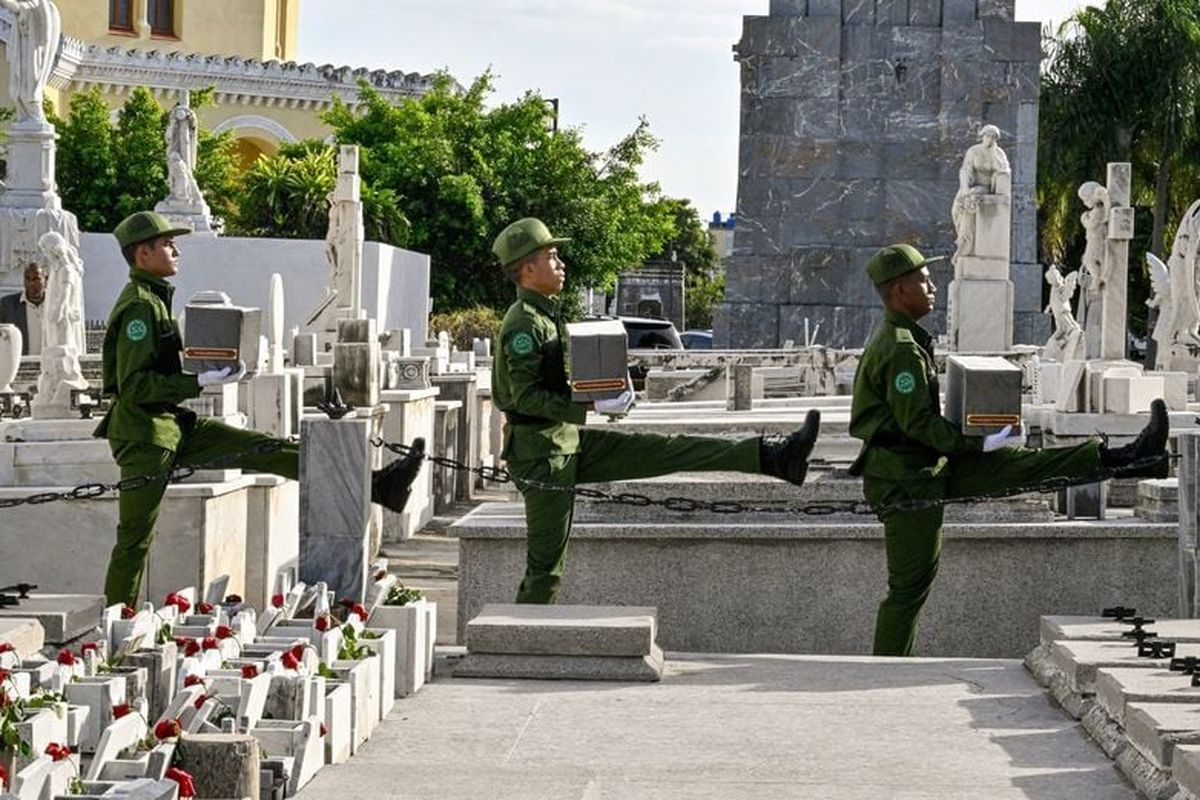
Members of the Cuban military honour guard carry urns containing the remains of soldiers killed in the U.S. strike and the capture of Venezuelan President Nicolas Maduro and his wife, Cilia Flores, in Caracas on January 3, during the funeral for Cuban soldiers at Colon Cemetery in Havana, Cuba, January 16, 2026. Adalberto Roque/Pool via REUTERS  (Adalberto Roque)
Members of the Cuban military honour guard carry urns containing the remains of soldiers killed in the U.S. strike and the capture of Venezuelan President Nicolas Maduro and his wife, Cilia Flores, in Caracas on January 3, during the funeral for Cuban soldiers at Colon Cemetery in Havana, Cuba, January 16, 2026. Adalberto Roque/Pool via REUTERS 
 
On Friday, tens of thousands of Cuban citizens demonstrated outside the U.S. Embassy in Havana, furious over the death of 32 Cuban officers, killed during the U.S. military raid that captured Venezuelan leader Nicolas Maduro two weeks before. The open-air Jose Marti Anti-Imperialist plaza across from the embassy was crowded in the rally the Cuban government organized during high tensions between Cuba and the United States, following the attack on Venezuela of January 3.
 
Cuban officers, part of President Maduro's security detail, were killed when the raid on his Caracas residence took place. The show of popular strength was Cuba's answer to U.S. President Trump's demand that Cuba 'make a deal' with him before it is "too late". Cuba, Trump crowed, could no longer depend on Venezuela's oil and money to buoy its fractured economy.  The 1960s-forward U.S. sanctions imposed on Cuba as punishment for its communist government has strained the island mercilessly.
 
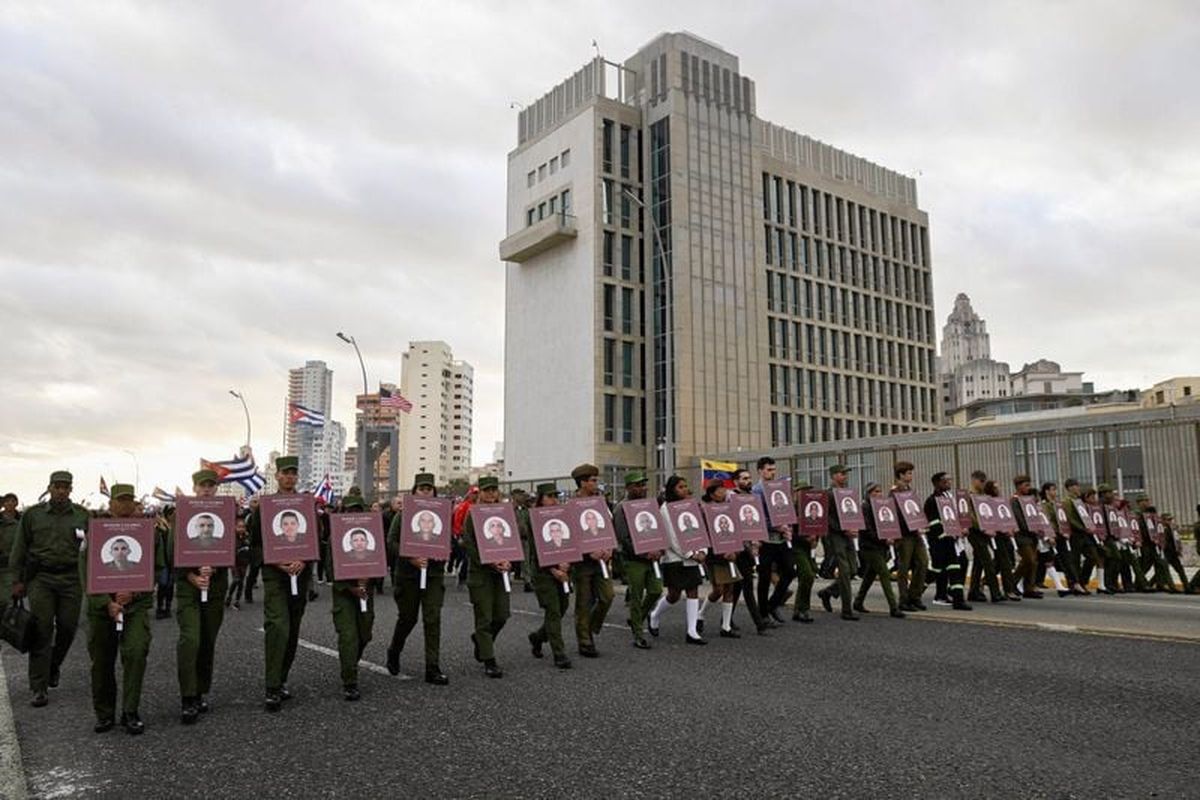
The crowd of protesters transitioned their demonstration into a "combatant march" parade, a custom hearking back to the late Fidel Castro, where a line of people led the crowd, holding up photographs of the 32 officers that were killed in Venezuela. "Down with imperialism! Cuba with prevail!", shouted the crowd. 
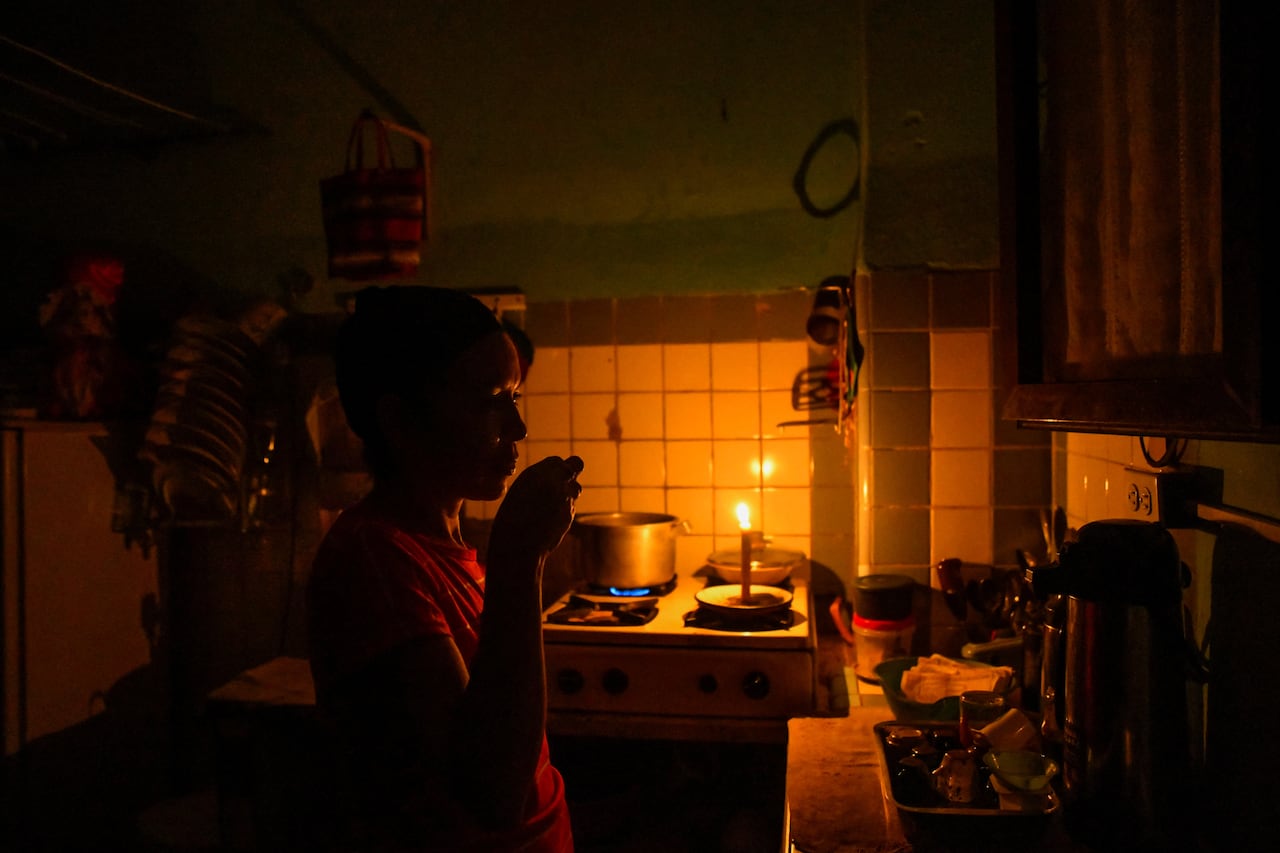
 
A woman prepares a coffee during a power outage in Havana.
A glimpse of a coffee being made by candlelight during a power outage in Havana in March. The disruptions are often blamed on Cuba's aging power generation system, which has been stressed by fuel shortages, natural disasters and economic crisis. (Norlys Perez/Reuters)
 
Cubans have faced shortages of the basic needs of daily life. The economy is now in worse shape than it has ever been. Up to the present the government had supplied the population with a monthly allotment of rice, beans and other staples through distributed ration cards. Although the rations lasted a mere ten days, now, because of food scarcity, government ration stores can barely stock the essentials, rendering the ration cards fairly worthless.
 
There is an app available where people must sign up for an appointment to buy gas, three weeks in advance of prospective purchase. Latterly the waiting queue has been three months. With scant fuel available for municipal purposes, trucks have been unable to collect trash. Pickups of domestic garbage have been faulted, and the result is outbreaks of mosquito-borne diseases like dengue fever and chikungunya. Treatment drugs are no longer locally available.
 
Venezuela once provided 90,000 barrels of oil daily to Cuba although the last quarter of  2025 saw oil deliveries dwindle to 35,000 barrels. Now, with the U.S. in control, there will be none. Private enterprises were legalized in 2021 where private stores stock consumer goods comparable to those of U.S. supermarkets, but demand exorbitant prices. In Cuba a typical monthly pension is less than $7; a carton of 30 eggs is priced at $8.
 
"The domestic economy is in a free fall", said Ricardo Torres, a Cuban economist, now a fellow at American University in Washington. People now do their cooking over firewood. Cuba now produces 25 percent less power than in 2018.  
 
https://thumb.spokesman.com/b7uB7Qs2NZnw1fZzFnsAfrhAa0g=/1200x800/smart/media.spokesman.com/photos/2026/01/16/696addb4cb086.image.jpg
Cuban military personnel carry portraits of soldiers killed in the U.S. strike on Venezuela and the U.S. capture of President Nicolas Maduro and his wife, Cilia Flores, during a march outside the U.S. Embassy to protest against what they denounce as U.S. aggression in the region, in Havana, Cuba, January 16, 2026. REUTERS/Norlys Perez (Norlys Perez)
 
 
"I, who was born there, I, who lives there, and I'll tell you."
"It's never been as bad as it is now, because many factors have come together."
"It's dark [severe lack of energy], people are sick and they don't have medicine [adequate food and medical drugs in acutely short supply]."
"There is food, and plenty of it [at MiPyMEs private enterprises] but the prices are incredible."
"Nobody with a salary, not even a doctor can hardly buy in those stores."
Omar Everleny Perez, economist, Havana resident 

Labels: , , , , , , ,

Sunday, December 25, 2016

Cuba Prospering From Tourism . . .

"The government has consistently failed to invest properly in the agriculture sector. We don't just have to feed 11 million people anymore. We have to feed more than 14 million."
"In the next five years, if we don't do something about it, food will become a national security issue here."
Juan Alejandro Triana, economist, University of Havana

"It's a disaster. We never lived luxuriously, but the comfort we once had doesn't exist anymore."
Lisset Felipe, 42, Havana

"We cannot sit with our hands crossed before the unscrupulous manner of middlemen who only think of earning more."
Cuban President Raul Castro

"I don't even bother going to those places [private restaurants]. We eat rice and beans and a boiled egg most days, maybe a little pork."
Yainelys Rodriguez, 39, Havana
Workers in a lettuce field this past week at a farm in Alamar, outside Havana. Credit Mauricio Lima for The New York Times
Cubans are recipients of government food subsidies in the form of ration books to aid them in accessing certain staples like rice, beans and sugar. When it comes to food items such as fresh produce however, Cubans are on their own. And there has arisen a reality in Cuba where fresh produce is increasingly unavailable and what is available is priced too steeply for most ordinary Cubans to afford. But not for the 3.5-million tourists who arrived in Cuba last year.

The shortage of fresh produce has several causes, the most obvious, now that the United States has eased its decades-old sanctions and moratoriums on travel by Americans to Cuba with the recent lifting of the trade embargo, is that tourists have been streaming into the island-nation known for its sunny climate and beautiful beaches. And those tourists look for good food at restaurants catering to tourists and at holiday resorts whose kitchens scoop up what is available in agricultural products.

Cap that off with inefficiency in the use of arable lands and their production, bureaucratic red tape and corruption all of which tie up productivity, and add in a lack of fertilizer, leading to a reduced yield. Price hikes have been instituted for foods once considered staples: onions and peppers, pineapples and limes, and people can no longer afford them. The island's private sector in agriculture views the influx of tourists and the money they bring in as a boon to their business.

Government has instituted price ceilings but that patchwork doesn't appear to have filtered down the chain for affordable produce to be available for the Cuban table. Goods have transitioned to commercial markets where vendors and farmers can anticipate higher prices to compensate for their growing efforts. At state-operated markets shelves are full of sweet potatoes, yucca, rice, beans and bananas, a small amount of watermelons. But tomatoes, green peppers, onions, cucumbers, garlic or lettuce, avocados, pineapples or cilantro remain scarce.

At a co-op market close to the state-operated markets, vendors set their own prices and there fruits and vegetables absent from state-run stalls are stacked in abundance. Grapes, celery, ginger and spices are all there -- for a price that Cubans generally cannot afford. Where buyers representing private restaurants [some 1,700 exist in Havana] daily buy up fruits, vegetables and nonperishable edibles on budgets that bear no relation to those of the average household. "Almost all of our buyers are paladares" [the Cuban word for private restaurants. explained one vendor.

Cubans point out that the price of half a kilo of onions and half a kilo of tomatoes at the inflated prices charged for private restaurants would take fully ten percent of a government salary for a family, of around $25 monthly. "We have to be magicians [to prepare decent family meals]", said Leticia Alvarez Canada. "The prices have just gone crazy in the last few years."

It seems that Cuban entrepreneurs prefer the economic advantage of the U.S.-style capitalist free market system to that of collectivism championed by social-conscience communism....?

In this Feb. 27, 2016 photo, Raul Valdes Villasusa, 76, smokes a cigar as he collects tobacco leaves on his farm in Vinales in the province of Pinar del Rio, Cuba. Farmers earn money from the government for their tobacco crop, and keep a small portion for their own use. (AP Photo/Ramon Espinosa)
At least tobacco isn't in short supply. (AP Photo/Ramon Espinosa)

Labels: , ,

Thursday, December 15, 2016

"But You Never Forget and You Shouldn't Forget"

"I found humanity in Newfoundland. People were so kind to me. People helped me, people kept me in boarding houses, wouldn't charge me a penny. "They fed me."
"And I'm very happy I came to Newfoundland."
Philip Riteman, Holocaust survivor
Seventy years ago this man was in his early teens. He lived with his family in a Polish shtetl, Shershev, until 1941, when Nazi Germany invaded, driving his family along with other Jewish villagers out of the town they had always lived in generation after generation, herded to live in ghettos, those infamous collecting points from whence they eventually were shipped in cattle cars to work and death camps.
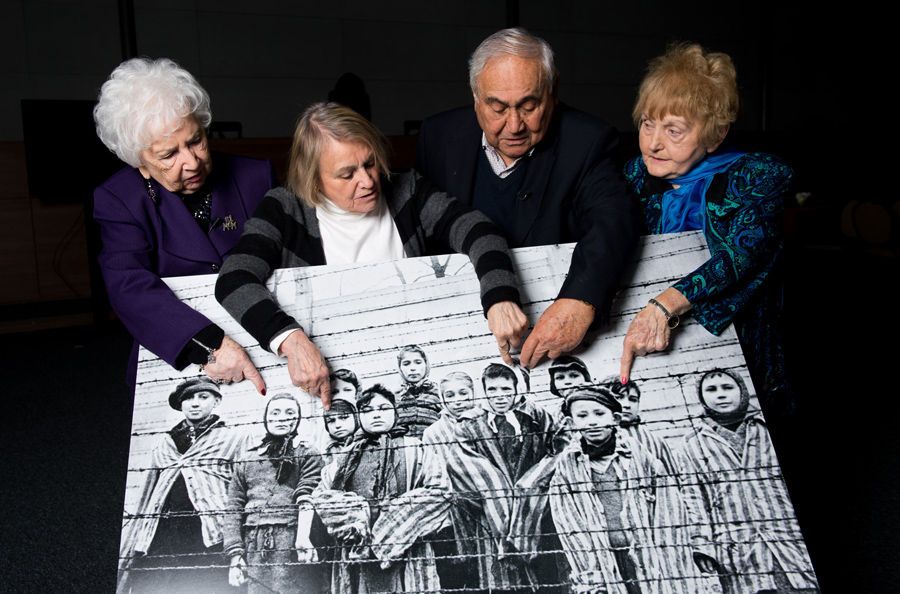
From left: 79-year-old Miriam Ziegler, 81-year-old Paula Lebovics, 85-year-old Gabor Hirsch and 80-year-old Eva Kor pose with the original image of them as children taken at Auschwitz at the time of its liberation on January 26, 2015 in Krakow, Poland. #   Ian Gavan/Getty Images

Philip Riteman's family was sent to Auschwitz. There his parents, five brothers and two sisters as well as his grandparents, aunts, uncles and cousins were put to death. "I'm the only survivor. Many times I wish I didn't survive -- why me?" he queried in a classical survivor's reminiscence and sorrow. "I think about Newfoundland all the time. People ask me where I'm from, I say, I'm a Newfie boy", he has also stated,with pride.

At age 17, weighing 75 pounds, he was liberated in May of 1945. At that time he was convinced he was without family or friends, that there was nowhere he could go to, to resume life and normalcy. But the Americans who liberated the prisoners at Auschwitz  discovered through some compassionate sleuthing that he had relatives in Canada as well as in the dominion of Newfoundland, not yet a part of Canada.

While the government of Prime Minister Mackenzie King refused entry to Canada for this refugee child, Newfoundland welcomed him, and he was united with an aunt who lived there. In recognition of his having made a success of himself through his business acumen, despite the horrible tribulations he had suffered as a child, he is slated to receive the Order of Newfoundland and Labrador at Government House in St.John's.

His is one such story, and there are countless others. No Jews, under threat of extermination by Nazi Germany, were welcomed by the-then government of Canada  under Prime Minister MacKenzie King whose principal adviser on the "alien" refugee file assured King that "none was too many" to save from certain death and in the process defile Canada with their living presence.

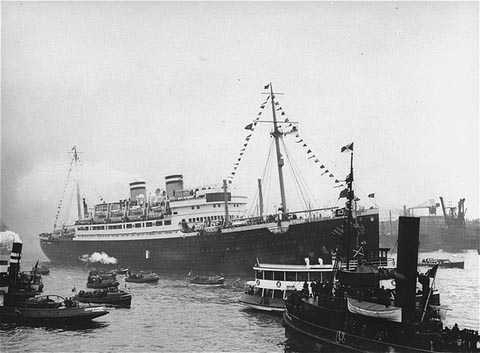
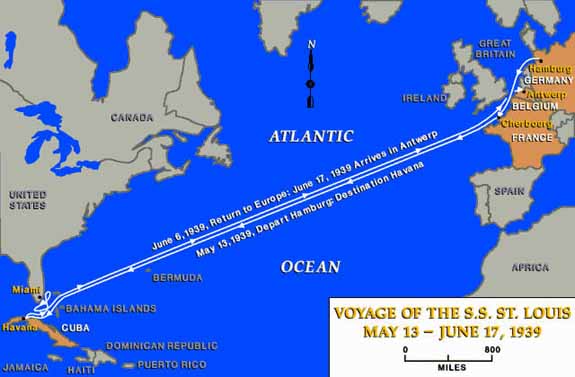
Ana Maria Gordon was another such Jew who with her family attempted to escape the dreadful fate that the Axis Powers under Nazi Germany meted out to Europe's Jews. Her family lived in Kosice, Slovakia and her father assembled enough money to buy passage on a ship along with visas to enable them to enter Cuba and find haven there. She was four years old at the time that her family boarded the SS St.Louis, leaving Hamburg on May 13, 1939.

The luxury liner co-opted temporarily for a rescue mission to take desperate Jews out of Germany four months before war was declared, was bound for Havana, where the government of the day had agreed to absorb those Jews who paid for special visas. The German Captain Gustav Schroeder, happily was a decent and honourable man (later memorialized at Yad Vashem), determined to treat his passengers with respect.

"He was a wonderful man, a wonderful man. He was a real captain who said 'my passengers come first'. [However during the passage] people heard things and started getting nervous, you felt the atmosphere was changing. They [Cuban authorities] didn't let us off the ship", said now-82-year-old Ana Gordon. The Cuban authorities held up disembarkation for greater sums to be forthcoming from the passengers. But German law hadn't permitted Jews to take money or property with them, and there was no more to be had.

In desperation the passengers turned for help to the United States, which responded by refusing them entry. And then it was Canada's turn to deny entry to the Jewish passengers knowing that if they were forced to return to Germany their lives would be fraught with danger. Washington and Ottawa knew full well what awaited the returning passengers to Germany.  So the captain had little option but to return to Europe with his 907 remaining passengers.


S.S. St. Louis surrounded by smaller vessels in the port of Havana (USHMM Photo)


Captain Schroeder, however, had different ideas than to return his passengers to Germany, and so he helped to negotiate asylum for them in Britain, Belgium, France and the Netherlands. The Jews on that fated voyage were disappointed in the failure of their attempt to find haven in Cuba, the U.S. or Canada, but satisfied that they would be safe where they finally ended up. Until, of course, the troops of the Third Reich marched into Belgium, France and the Netherlands, and the nightmare resumed.

While 250 of the passengers died in the ensuing years of deliberate genocide, others managed to survive. Ana Gordon and her family ended up  in Buchenwald and Ravensbruck. Her uncle, married to a non-Jewish German, was given the choice of sterilization or camp internment, and he chose sterilization. The Gordon family survived, miraculously, were liberated by Soviet forces and eventually re-united.

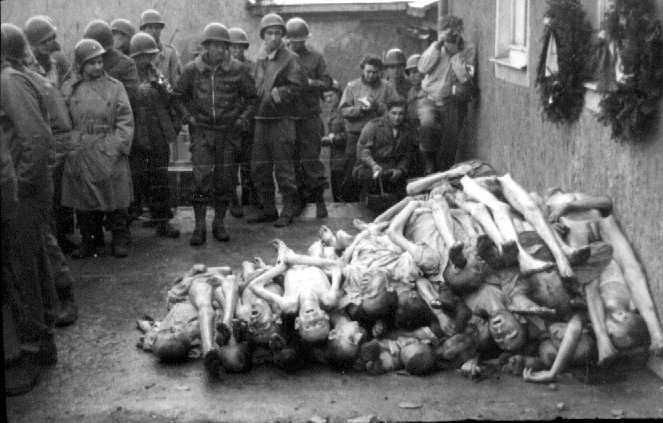
Buchenwald corpses piled high
Buchenwald corpses piled high  --  Holocaust Education and Research Team

Ana Gordon was eight years of age by the time she and her mother were released from the notorious Ravensbruck camp for women, north of Berlin. "What do remember? Too much. I was there close to two years. It was awful, just awful. At this stage after so many years, you know", she says from her home in Toronto, she cannot find it in her to harbour resentment against the Canada that shunned entry to her and the other shipload of Jews, shrugging.

"But you never forget and  you shouldn't forget. These things happen . . . and I'm afraid that they can happen [again]."

Labels: , , , , ,

 
()() Follow @rheytah Tweet