Ruminations

Blog dedicated primarily to randomly selected news items; comments reflecting personal perceptions

Saturday, May 30, 2020

COVID-Bored and Restless?

"The pandemic has made people see how connected we are as a planet. We all play a part in it [contributing to the well-being of communities and the planet]."
"We can still travel and we can still see beautiful places and iconic places, but make it more connected to the destination."
"This is a rare chance to get to certain destinations when they're not crowded."
"I want to go to Italy this summer. It's been knocked back quite a bit and I want to show my support for the country. It's a beautiful place."
Bruce Poon Tip, founder, G Adventures, small-group travels, Toronto
Water rushing over the edge at Niagra falls, the most visited tourist attraction in the world
Niagara Falls, Canada/United States
"Travel is an important tool for economic development as well as for conservation and sharing knowledge."
"I think that companies that can show they are doing something good for the community, or the planet, as well as for their customers will ultimately benefit."
"Many countries and destinations already have different visa restrictions and the like, but with the health regulations for post-COVID, there will be additional health checks and social distancing requirements."
"No one has a crystal ball, so no one really knows for sure to what extent travel will change. But international travel will have to adjust as countries and companies accommodate new regulations and restrictions."
Rachel Dodds, professor of of Hospitality and Tourism Management, Ryerson University
View of three small pyramids and three large pyramids behind them
The Great Pyramid of Giza, Egypt
Over 90 percent of the world's population -- representing 7.1 billion in total -- live in countries that now have travel restrictions, thanks to the global pandemic and the need to shut down business as usual and borders to international traffic, to protect their populations from exposure to that highly infectious pathogen that has succeeded as a global threat, to make millions sick, overwhelm national health-care systems, cause death to hundreds of thousands of health-compromised and elderly and collapse the global economy. 

Post-lock-down, while the pandemic, though still ravaging communities, appears to be slowly ebbing, even as a second and perhaps more successive waves (of possibly more severe mutated strains of the virus) are anticipated by the scientific community -- issuing cautions to governments not to re-open their economies too precipitously and warning people not to abandon caution on social distancing -- various countries have scheduled their re-openings at different times and to various extents.

In the process, an estimated 100.8 million jobs have been shed to the present, according to the World Travel & Tourism Council, based in London. And while it took an indecently short period of time for the alarm to spread over the role of international travel in spreading the SARS-CoV-2 virus causing COVID-19, with the horror stories of how those giant floating towns that great ocean liners had become as living laboratories of infection, the new version of international travel will take quite a bit longer to establish its credentials.

Clouds above the Stonehenge on a sunny day
Stonehenge, England
People may begin to book their travel itineraries with an eye on visiting places that were relatively unscathed by the novel coronavirus, like the Caribbean, Eastern Europe and Vietnam. The travel sector was valued at $13 trillion globally, employing over 330 million people in the year before COVID-19 entered the scene. And having people from wealthy nations travel to other countries whose heritage, culture and geography was found to be fascinatingly different, was also a mechanism for redistribution of wealth around the world.

Mr. Poon Tip, musing on the ways and means and obvious frailties to infection of the past, states his expectation that large, crowded resorts and cruise ships will become infinitely less attractive to travellers in the future who will look toward visiting different places at a different scale of travel. Above all, there will be a greater need to assure people when they travel, that doing so is safe under new guidelines and restrictions.  Where post-COVID additional health checks and social distancing requirements will demonstrate in part the changes to security and safety.

The acropolis in Greece
Acropolis, Athens, Greece
A greater demand for boutique hotels, charter yachts and off-the-beaten-path experiences will arise, guesses Mr. Morgan from the perspective of agencies whose specialty is luxury and experiential travel. For the time being, Canada and the United States have agreed to maintain a closed border for the present, while the European Union and Europe's passport-free travel Schengen zone, have closed borders to non-essential travel even as Austria, Germany and France gradually re-open their borders. 

Italy, Belgium, Iceland and Turkey all are considering re-opening to international travel in June, while Spain and Greece are aiming at international opening in July. An agreement between Australia and New Zealand for a trans-Tasman travel bubble is being formalized, as it seems the idea of creating travel bubbles between countries has found wide favour. 

Ambitious travellers aged between 30 and 50 are considered to be likeliest to plan for international travel, an age group and numbers that will expand as time goes on. Fears that hamper people planning for post-pandemic travel, will abate considerably once a vaccine has been found for the virus. And the countries hit hard by the relentless virus, with its death toll and economic fallout, countries always highly dependent on tourism, will work harder than ever to convince the world community that tourism is a reciprocal gift that enriches all who engage in it.
"The motivation behind how and why people travel will also look different."
"The importance of human connection will be at the forefront after so many weeks and months in isolation."
Tim Morgan, general manager, Virtuoso, Canada
Lush green trees surrounding the Great Wall of China
The Great Wall of China

Labels: , , , ,

Wednesday, May 10, 2017

Domestic Health Tourism

"Building health-care capabilities there will require attracting excellent talent to work and live in the pilot zone, and good doctors are already badly needed in China's major cities."
"It was very appealing a few years back when approval of innovative drugs was relatively slow, but if the pilot zone can’t build full-fledged medical teams and business models in the next two to three years, its attractiveness will be greatly weakened." 
Chen Bo, associate partner, McKinsey & Co. consultancy

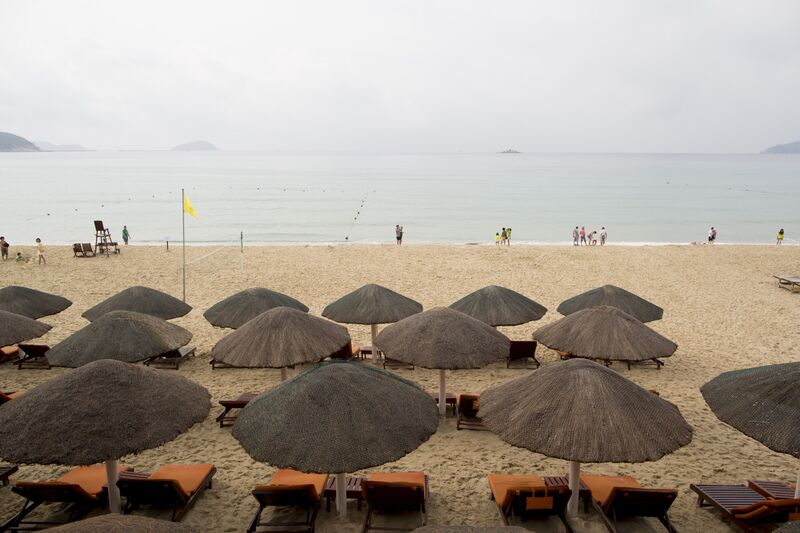
"The pilot zone covers over 20 square kilometers and is characterized by a beautiful ecological environment, pleasant climate and abundant natural resources"
"The crystal-clear Wanquan River moves placidly through the center of the project site, forming a unique “water-island-farmland” that is ideal for leisure and tourism."
China Boao 
Hainan     Photographer: Brent Lewin/Bloomberg
Medical tourism has been a cash cow for countries that offer luxurious accommodation for foreign guests seeking state-of-the-art medical technology for surgical procedures they cannot obtain in their home countries without long waits. For those with the inclination, and the cold, hard cash, travel to foreign climes where -- some procedures are available that are unproven to be of medical merit and as such viewed with suspicion in countries whose authorizing mandates require scientific proof of efficacy, draws people desperate to try methods that seem potentially miraculous because all that science and medicine offers at home has failed to bring the comfort of survival from the harrowing destruction of body and soul from dread diseases -- alternatives beckon.

India and China stand out as the foremost destinations for those desperately seeking a cure for what ails them, or the guarantee of a longer life despite the disease whose dread effects are inexorably shortening their life. People do embark on these destinations, looking forward to relaxing in the comfort of a holiday aura where all their client needs are professionally looked after, and their medical condition assessed while competent medical practitioners are prepared to operate in a medical theatre with all the latest high-tech accoutrements.

Sometimes people fail to note that post-surgery, follow-up is required and when they return home they look for that follow-up from the medical community at home, itself faced with the dilemma of a perhaps unorthodox procedure which may have produced troubling side-effects or compromisingly serious fall-outs. China's Hainan, a tropical island known for its tourism draw, recognized how beneficial it would be to the area to marry tourism and medical care in a South China Sea paradise, attractive to Chinese consumers of medical procedures, not foreigners.

For it is a strange paradox of human nature that we often look elsewhere, outside the closest confines of what is familiar to us, seeing in our minds advantages to travelling abroad for superior treatment. It has been estimated that roughly a half-million Chinese travelled abroad to attain medical services last year; a reversal of the Chinese welcome of foreigners eager to acquire organ transplants which appear very available in China, where there is a distinct shortage in their home countries. A situation in and of itself, of a supply of organs to satisfy the needs of foreign seekers of transplants that raises suspicion within the outside medical community.

In China, a vast country with the largest population in the world, millions of people die from cancer and heart disease yearly, yet approvals for the latest in international therapies have produced a regulatory bottleneck, even as Chinese hospitals struggle to cope with increasing demands for their services and the affluent in China choose to travel to Japan even for physical checkups, and alternately to the United States, to obtain genetic screenings. Chinese entrepreneurs would prefer to keep their clients at  home to spend their money in China.

So in 2013 the provincial government of Hainan set aside 647 hectares of farmland alongside a river where a lavish, state-of-the-art medical tourism hub could be constructed. Fishing villages and rice paddies have given way to palm trees and hospitals built in that lavish holiday setting so attractive to people of leisure means. A full 27 projects have been envisioned, from hospitals to plastic surgery clinics, and that is just the beginning, in a concerted mission to "retain domestic consumption". And thus was born the Hainan Boao Lecheng International Medical Tourism Pilot Zone.
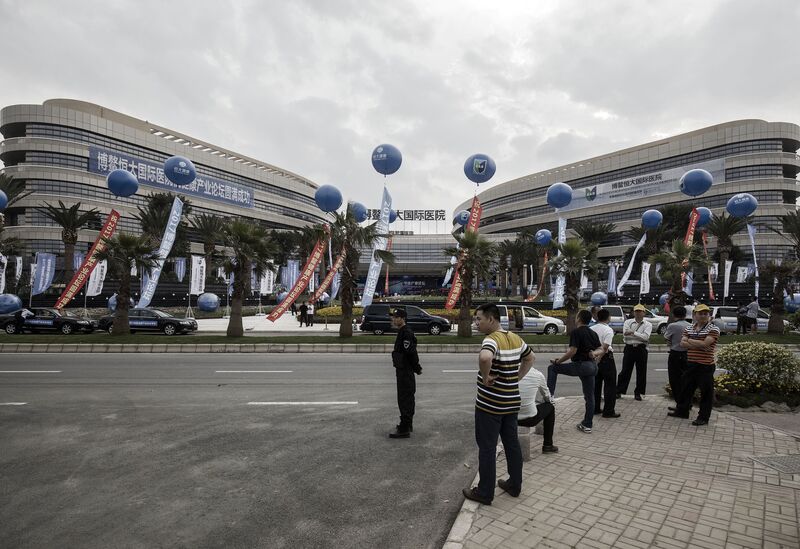
The Evergrande International Hospital inside the Boao Lecheng International Medical Tourism Pilot Zone.  Photographer: Qilai Shen/Bloomberg

The Guangzhou-based medical services company Evergrande Health Industry Group Ltd., has the prestigious advantage of advertising a link with Boston's Brigham and Women's Hospital, a teaching hospital of Harvard Medical School, in the United States. The link is a professional one of tutelage, with Brigham's connection to Evergrande being in an advisory capacity. As well, a new cancer drug not approved for use in China, has been given special dispensation for its use for a handful of patients under a special access channel; in the West that would be called using humans for experimental purposes; in China it becomes a significant draw.

Approved in the United States, Merck's cancer drug Keytruda is unavailable on the Chinese mainland, but will be used at first sparingly, in the new medical complex. Clinical trials, Merck has made clear, are being conducted with Keytruda in China. The medical hub's managers envision at least a million medical tourists to converge on Hainan annually by 2025. Unfortunately, the country is experiencing a shortage of qualified medical professionals, and should that continue, drawing patients to the hub may be compromised by an inability to fully service them.

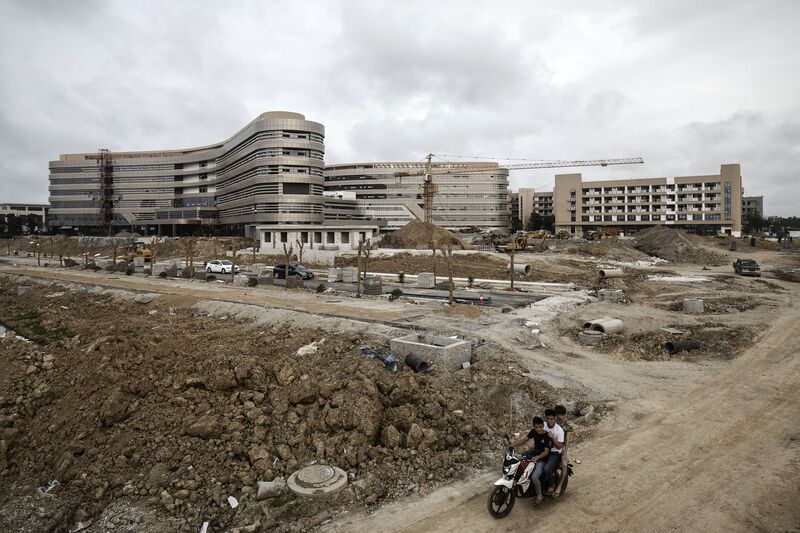
Construction of the Evergrande International Hospital.  Photographer: Qilai Shen/Bloomberg
"We plan to recruit 100 obstetricians and gynaecologists and 100 pediatricians this year by offering high salaries and establishing professional maternity centres."
"We are working on improving the medical and education sectors. Hainan will build first-class hospitals, kindergartens, primary schools and middle schools in every county, to cater for everyone."  Hainan Governor Liu Cigu, China

Labels: , , ,

Sunday, December 25, 2016

Cuba Prospering From Tourism . . .

"The government has consistently failed to invest properly in the agriculture sector. We don't just have to feed 11 million people anymore. We have to feed more than 14 million."
"In the next five years, if we don't do something about it, food will become a national security issue here."
Juan Alejandro Triana, economist, University of Havana

"It's a disaster. We never lived luxuriously, but the comfort we once had doesn't exist anymore."
Lisset Felipe, 42, Havana

"We cannot sit with our hands crossed before the unscrupulous manner of middlemen who only think of earning more."
Cuban President Raul Castro

"I don't even bother going to those places [private restaurants]. We eat rice and beans and a boiled egg most days, maybe a little pork."
Yainelys Rodriguez, 39, Havana
Workers in a lettuce field this past week at a farm in Alamar, outside Havana. Credit Mauricio Lima for The New York Times
Cubans are recipients of government food subsidies in the form of ration books to aid them in accessing certain staples like rice, beans and sugar. When it comes to food items such as fresh produce however, Cubans are on their own. And there has arisen a reality in Cuba where fresh produce is increasingly unavailable and what is available is priced too steeply for most ordinary Cubans to afford. But not for the 3.5-million tourists who arrived in Cuba last year.

The shortage of fresh produce has several causes, the most obvious, now that the United States has eased its decades-old sanctions and moratoriums on travel by Americans to Cuba with the recent lifting of the trade embargo, is that tourists have been streaming into the island-nation known for its sunny climate and beautiful beaches. And those tourists look for good food at restaurants catering to tourists and at holiday resorts whose kitchens scoop up what is available in agricultural products.

Cap that off with inefficiency in the use of arable lands and their production, bureaucratic red tape and corruption all of which tie up productivity, and add in a lack of fertilizer, leading to a reduced yield. Price hikes have been instituted for foods once considered staples: onions and peppers, pineapples and limes, and people can no longer afford them. The island's private sector in agriculture views the influx of tourists and the money they bring in as a boon to their business.

Government has instituted price ceilings but that patchwork doesn't appear to have filtered down the chain for affordable produce to be available for the Cuban table. Goods have transitioned to commercial markets where vendors and farmers can anticipate higher prices to compensate for their growing efforts. At state-operated markets shelves are full of sweet potatoes, yucca, rice, beans and bananas, a small amount of watermelons. But tomatoes, green peppers, onions, cucumbers, garlic or lettuce, avocados, pineapples or cilantro remain scarce.

At a co-op market close to the state-operated markets, vendors set their own prices and there fruits and vegetables absent from state-run stalls are stacked in abundance. Grapes, celery, ginger and spices are all there -- for a price that Cubans generally cannot afford. Where buyers representing private restaurants [some 1,700 exist in Havana] daily buy up fruits, vegetables and nonperishable edibles on budgets that bear no relation to those of the average household. "Almost all of our buyers are paladares" [the Cuban word for private restaurants. explained one vendor.

Cubans point out that the price of half a kilo of onions and half a kilo of tomatoes at the inflated prices charged for private restaurants would take fully ten percent of a government salary for a family, of around $25 monthly. "We have to be magicians [to prepare decent family meals]", said Leticia Alvarez Canada. "The prices have just gone crazy in the last few years."

It seems that Cuban entrepreneurs prefer the economic advantage of the U.S.-style capitalist free market system to that of collectivism championed by social-conscience communism....?

In this Feb. 27, 2016 photo, Raul Valdes Villasusa, 76, smokes a cigar as he collects tobacco leaves on his farm in Vinales in the province of Pinar del Rio, Cuba. Farmers earn money from the government for their tobacco crop, and keep a small portion for their own use. (AP Photo/Ramon Espinosa)
At least tobacco isn't in short supply. (AP Photo/Ramon Espinosa)

Labels: , ,

Monday, December 14, 2015

Cocktails at Antarctica

"[Researchers have] only got so much money. There are only so many ships, there's only so much time in the academic year. We're up there four times a summer, and these researchers might get to go once. We saw an opportunity to fill that gap in, to do research where it's not being done already."
"This project is important because it is a test of amateurs being able to collect good data."
"We had a huge amount to learn, but ... we were able to settle into producing accurate and consistent data, which we then felt confident uploading for use."
Alex Cowan, geologist, contracted expedition staff
Citizen Science at the North Pole -- August 1, 2015 -- Photos by Lauren Farmer
 
"Glaciers we used to take people to are now gone. They're not only no longer in the water, they're so far back on the land that we can't reasonably hike to the foot of them."
"We do have an impact when we go there [Arctic]. It's well managed and our impact is small, but ... I think there's a real responsibility to do more than go there and take."
"For a first-time visitor, it's an incredibly powerful experience, but it doesn't really penetrate sometimes. I firmly believe that getting involved in the science means staying out longer, getting a little colder, getting out of your comfort zone, but ultimately you get a more vivid experience."
"You don't go to Antarctica for the cocktails, you know?"
Ted Cheeseman, ecological tour operator
Polar travel adventures as tourists now have a new twist to them. Typically, such expeditions have on board scientists, biologists, geologists, who contract with a travel companies to such ecologically exotic places to explain to tourists the landscapes they are observing and the ecology and the wildlife they happen to come across. When, for example, university is out for the summer months, professors of biology, or botany sometimes find it personally useful to sign on to expeditions as contracted specialists, available to give lectures and to act as guides for tourists travelling to the Arctic.

Whale-watching expeditions, for example, then offer the expertise of contracted marine biologists who will explain to those interested in delving deeper into the biology and habits of whales, just what is involved, bring the experience alive and educating tourists at the same time; entertainment and information in one fell swoop of the intersection of travel and academia. The duo of geologist Alex Cowan and photographer Lauren Farmer, working as contracted expedition staff last year discussed that intersection.

Travellers on an Northern expedition are conscripted to gather data to be used research for climate scientists.
Lauren Farmer   Travellers on an Northern expedition are conscripted to gather data to be used research for climate scientists

And from that discussion arose the concept of citizen-science. Ordinary people already sign on to giving additional assistance to government bodies, for example, in reporting certain weather events enabling forecasters to get a more wide-ranging idea of what's happening with the atmosphere. Enthusiastic birders tallying their ongoing sightings, help ornithologists and other agencies to get a clearer picture of migration and other issues of interest to science. The idea that Cowan and Farmer hatched was the involvement of ordinary people, as tourists on cruise ships to ecologically sensitive locations.

After recruitment of those interested in volunteering their time, a small circle of citizen scientists emerge, who are exposed to some training to enable them to understand what is required. Four round trips between Murmansk, Russia and the North Pole with Poseidon Expeditions enabled Cowan and Farmer to test their initiative with what they ultimately named the Sea Ice Research Team. All the volunteers were trained to measure the temperature and salinity of melt ponds in the Arctic Ocean, to aid scientists in producing accurate models of the speed of sea ice melt.

The work has been recognized as potentially valuable to ecologists. It is being used by the Arctic Research Consortium of the United States Sea Ice Prediction Network. The growing popularity of Arctic tourism in the cruise industry, with increasing numbers of tourists on passenger vessels travelling across Nunavut is a recognized trend that researchers are now exploring for its potential to bring them much-needed data. As with the Arctic, so too with the Antarctic. There, tourists are to track whale movement through documentation assembled in photographs. Researchers then record whale sounds applying multi-sensor tags, tracking the animals' underwater movements.

The travel industry years ago initiated a new type of travel; tourism abroad where people could volunteer to work on projects in underdeveloped countries. It gave people a sense of purpose to their tourism travels. This new line of tourist-involvement in gathering data useful to scientists is yet another way to allow tourists the opportunity to feel that they are being productive even while they are indulging their penchant for travel and sight-seeing. It is a more in-depth commitment, but one that promises to result in personal satisfaction of having been of use to science.

Labels: , , , ,

 
()() Follow @rheytah Tweet