Ruminations

Blog dedicated primarily to randomly selected news items; comments reflecting personal perceptions

Saturday, May 10, 2025

ALS Clinic Breakthrough, Sunnybrook Health Sciences Centre

https://bloximages.chicago2.vip.townnews.com/thestar.com/content/tncms/assets/v3/editorial/8/8a/88a04e79-1d2a-425a-8239-04346756c739/681e43b4f1309.image.jpg?resize=1200%2C815
A focused ultrasound helmet is attached to an MRI scanner as part of an early-stage clinical trial exploring the delivery of immunoglobulin to the brain of a patient with ALS at Sunnybrook Health Sciences Centre in Toronto on Wednesday, May 7, 2025. THE CANADIAN PRESS/Laura Proctor

"This is a major milestone. Now that we have the capability of opening up the blood-brain barrier to exactly target where ALS starts, I'm really excited about the future."
"ALS is a horrible, terminal, incurable neurodegenerative disease that results in the progressive decline of motor neurons in the brain and spinal cord."
"Sadly, we have about three or four deaths a week in our clinic alone, and it's awful. Literally, thousands of patients have died on my watch. And I think about that every day and how we haven't yet had major interventions to change that."
"We know that the immune system is not normal in ALS. We know that it shifts to sort of a pro-inflammatory state where the immune system is assisting in the destruction of these motor neurons."
Dr. Lorne Zinman, neurologist, director, ALS clinic, Sunnybrook Health Sciences Centre
https://research.sunnybrook.ca/wp-content/uploads/sites/3/2025/05/FUS-and-ALS-treatment-322-1024x683.jpg.webp
The research team comprised of neurosurgeons, physicists from the focused ultrasound lab, ALS clinician-researchers, imaging research technicians, and anesthesiologist. Sunnybrook Research Institute

In a research trial with a 70-year-old patient who was intravenously given immunoglobulin to cross the blood-brain barrier to reach the precise area targeted by researchers there is hope that this new therapy may alleviate and outmatch the ALS process leading to premature death. Dr. Zinman is excited about the significance of the result with this experiment, searching for a therapeutic treatment for the devastating neurological disorder.
 
The 70-year-old is the first to undergo a Phase1 clinical trial to determine safety in administering drugs through non-invasive ultrasound waves to ALS patients. Five others are lined up behind this first trial, to undergo a similar trial, expanding the program. This first trial is the world's first with an ALS patient receiving a drug in this manner. The experimental procedure called focused ultrasound for patients with Alzheimer's disease and those with essential tremor, a neurological disorder causing uncontrollable shaking, was previously studied by Sunnybrook researchers.
 
"The blood-brain barrier is there to protect us, so it keeps viruses, bacteria [and] toxins outside the brain", explained neurologist and co-lead investigator of the clinical trial, Dr. Alessandro Abrahao of the Sunnybrook ALS clinic. The barrier is problematic in that it blocks access to the brain for drugs potentially treatable for ALS. The solution appears by temporarily opening the barrier to allow drugs entrance, and then closing the barrier again once the therapy has been delivered. 
 
https://research.sunnybrook.ca/wp-content/uploads/sites/3/2025/05/FUS-and-ALS-treatment-232-1024x683.jpg.webp
Dallan McMahon (Research Associate) and Ryan Jones (Senior Research Engineer-Physicist) support the neurosurgeon (Dr. Nir Lipsman) in preparing for the non-invasive procedure to deliver focused ultrasound. Sunnybrook Research Institute
 
An intravenous infusion of immunoglobulin, an anti-body therapy, begins the process. Following which a helmet is placed on the patient's head, designed with 4,000 transducers to deliver focused ultrasound waves causing the microbubbles previously injected, to expand and contract in the targeted area blood vessels. The blood-brain barrier is opened by the expansions and contractions where the immunoglobulin needs to get through.
 
With helmet in place, the patient is placed within an MRI machine to enable the research team to view the focused ultrasound targeting the correct part of the brain, in real time. This, the researchers stress, is a very early-stage trial. Later stage trials with a greater number of participants will be required before a potential treatment for ALS develops. Patients diagnosed with ALS are typically given a three- to five-year survival rate. 
 
The immediate follow-up is to determine whether the immunoglobulin has had an effect, when the researchers search for biomarkers of inflammation in the patient's blood and cerebrospinal fluid.
 
https://www.ctvnews.ca/resizer/v2/73TRMFAIQJFYJJJ2AIPCFU6RGQ.jpg?auth=44c19b3e66fdf78f3210ca25ee5d96efff724805bee855dc80b19183f02d4c7b&width=1440&height=808
Canadian researchers have launched a world-first study to fight ALS. (Sunnybrook)

Labels: , , ,

Sunday, May 09, 2021

Dosing (Carefully) With Radiation

"The primary goal of a therapy for Alzheimer's disease should be to improve the patient's quality of life."
"We want to optimize their well-being and restore communication with family and friends to avoid social isolation, loneliness and under-stimulation."
"Although the study was a small pilot and should be interpreted with caution, our results suggest that low-dose radiation therapy may successfully achieve this."
Dr.Morris Freedman, scientist, Division of Neurology, Baycrest Rotman Research Institute

"Numerous neurological disorders, including Alzheimer's disease, are thought to be caused in part by oxidative stress that damages all cells, including those in the brain."
"We have natural protection systems to combat the damage, but they become less effective as we get older."
"Each dose of radiation stimulates our natural protection system to work harder."
"It’s not the image that we’re after [of a CT scanner] ... It’s the radiation. That’s what stimulates recovery in the patient."
"We should track biological markers of oxidative damage and neurodegeneration during therapy. Ultimately, we want a treatment that would delay the onset of Alzheimer’s in people who are at risk.”
Dr.Jerry Cuttler, Atomic Energy of Canada scientist, retired
This shows a brain and pair of hands
High doses of radiation are known to have harmful effects on our health. However, low doses, such as those used for diagnostic CT scans, can help the body protect and repair itself. Image is in the public domain

Research recently published in the Journal of Alzheimer's Disease expressed the finding that modest amounts of radiation may help to maximize the body's natural capacity to protect and repair itself, through prompting the production of vital antioxidants. This represents a new pathway to treating Alzheimer's disease with the use of low doses of radiation, seen to vastly improve behavioural and cognitive abilities of patients exposed to the therapy -- virtually overnight -- the pilot study concluded.

Only four patients were involved in the study, with no placebo group included. The theory behind the study was based on a case report of a patient suffering from symptoms of severe Alzheimer's disease in 2015, a woman who had been given several doses of radiation to her brain that was seen to improve her movement, speech, appetite and cognition. High radiation doses have the potential to devastate the human body, while low doses appear beneficial in certain circumstances.

All four study participants were suffering from severe Alzheimer's symptoms. They all received three installments of low-dose radiation at two-week intervals at Sunnybrook Health Sciences Centre in Toronto. Before and after treatment their behaviour and ability to communicate was closely monitored. Statements and allied evidence was collected from family, friends and caregivers of the four participants, three of whom demonstrated significant improvement within days of receiving their first radiation dose.

The results are decidedly encouraging. However, given the limitations of the study, the researchers involved felt that future follow-ups should focus on the reinforcement of the findings across larger clinical trials.

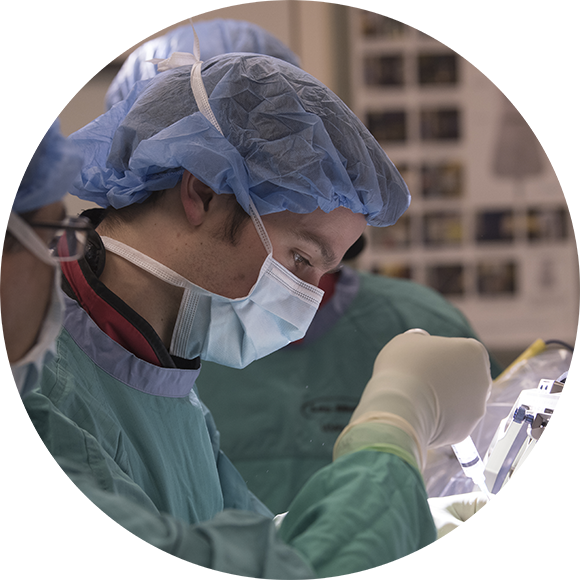
This shows an anesthesiologist taking care of a patient while under anesthetic
NeuroscienceNews.com
"I had an amazing visit with my dad this evening."
"I'm speechless from last night. He was excited to see me -- he spoke to me right away and gave me multiple kisses -- real kisses like years ago."
"He was clapping his hands to the music. My mom agreed it's been years since he has done this. Everyone is amazed."
Daughter of one of the treated patients

Labels: , , , , ,

Friday, January 03, 2020

Deep Brain Stimulation Experiment for Alcoholism/Alcohol Use Disorder, Sunnybrook Health Sciences Centre

"[My concern after deep brain stimulation for alcohol use disorder] was whether or not my hair would grow back."
"A family history of liver disease plus alcohol was my undoing."
"I maybe [now] have two or three drinks if I do drink. And I can stop."
"I think in some ways it [drinking to wind down tension] also helped me, relaxing me enough to the point where I could think, and contemplate. [But after leaving the National Microbiology Lab in Winnipeg things] got really bad. It [alcohol consumption] got to be the main focus of my life." 
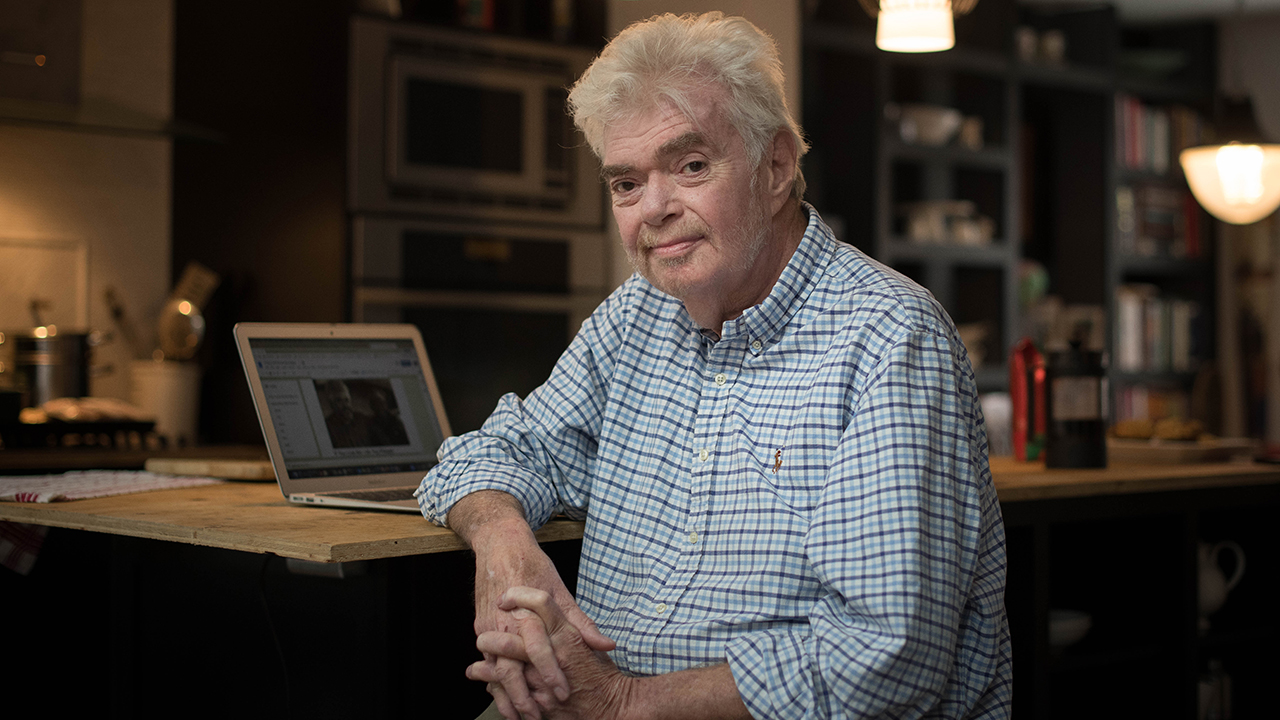
Frank Plummer, former scientific director, National Microbiology Laboratory, Canada
Frank's story
Dr.Frank Plummer

"People seem prepared to accept more risk for alcohol consumption than they do for other risky activity."
Report, Centre for Addiction and Mental Health

"It was normal [in the '70s] to go for a drink every lunchtime, and then go out for a drink after work."
"Today, when you go to an off-licence it's hard to find a wine that's only got 12 percent."
"Quite a lot of people use it [alcohol] for anxiety, actually -- it's one way of getting rid of their anxiety."
"I had one subject who said, 'I've drunk every day for ten years. I'm terrified of stopping'."
"[They -- study volunteers] were desperate to go back to drink [feeling socially isolated]. Some of them felt like they were pariahs at dinner parties because they were the only ones who weren't drinking or were sober."
"For many people, stopping can be quite liberating."
Dr.Kevin Moore, consultant hepatologist, University College London/Royal Free Hospital

"Alcohol is known to trigger the endorphin system, and the social consumption of alcohol may thus have the same effect as the many other social activities, such as laughter, singing and dancing, that we use as a means of servicing and reinforcing social bonds."
"[The idea that a brief] detox [can] refresh [the liver and lead to other health benefits is] clearly untrue, since the durability of the observed biological effects remains to be established."
Dr.Moore and colleagues, study, BMJ Open
Associated with an increased risk of stroke and heart disease, alcohol consumption is no trifling matter. It has also been linked to cancer development in the digestive tract, naso-pharynx, liver, rectum and breast; classified as a Class 1 carcinogen by the International Agency for Research on Cancer; it is known to promote cancer in humans. The American Public Health Association and other groups would like to see cancer-warning labels on beer, wine and liquor based on their contention that few people know of these connections.

According to a recently released study, alcohol accounts for more productivity time losses in Canada than does any other substance. Close to 15,000 deaths annually in Canada are attributable to alcohol, according to a recent policy paper from the Centre for Addiction and Mental Health. A greater number of Canadians (77,000) are hospitalized for alcohol-related illnesses or injury than for heart attacks. In Ontario, forty percent of people drink more alcohol than they themselves think is safe. Canadians consume ten litres of pure alcohol per capita annually; 3.6 litres more than the world average.

In December's issue of the Canadian Journal of Public Health a study estimates total cost of lost workplace productivity as a result of premature death, long-term disability, 'preseneeism' and absenteeism resulting from substance use was in the neighbourhood of close to $16 billion back in 2014. As pointed out by Dr. Nir Lipsman, director of Sunnybrook's Harquail Centre for Neuromodulation, "There's the accessibility of it, the social acceptance nature of it."


At one time in the not-so-distant past, people consumed more alcoholic drinks, but back then the drinks hadn't the alcohol content they do at present. A pub pint decades ago contained three percent alcohol whereas the average alcohol content in today's craft beer products comes closer to six percent. "Today, when you go to an off-licence it's hard to find a wine that's only got 12 percent " alcohol content where once it was bottled at 10 or 11 percent.

In the  United Kingdom, there has been a downward revision of weekly drink guideline limits. Public health encourages "non-dependent drinkers" to view short-term abstinence as a method of control. Dr. Moore and other researchers recruited 94 moderate-heavy drinkers to take part in a study, representative of the 25 percent of the population tending to drink above recommended guidelines. A month of abstinence saw volunteers with significant improvements in insulin resistance, in blood pressure and in body weight.

As well, two cancer-related growth factors, both thought a requirement in encouraging the growth of tumours to have been decreased in circulating concentrations. The result of which was that those people on return to drinking tended not to consume as much alcohol as previously, citing their appreciation of how much better their sleep patterns had become, let alone their ability to focus and the improvement in their concentration capacity.

On the plus side for drinking are the social benefits of modest alcohol consumption, with one study finding social drinkers have a greater circle of friends and are able to forge deeper bonds with those friends. Alcohol tends to enhance psychological well being. What drove Dr. Plummer to drink was the pressures inherent in operating a research group in Nairobi during the AIDs epidemic, followed by a 400-person national microbiology lab in Winnipeg. He found his condition so alarming that a more "robust" medical solution seemed an appropriate choice to combat his growing alcohol dependence.


He looked into deep brain stimulation, akin to a peacemaker for the brain. A battery is implanted in the chest wall under the collarbone, attached to which is an electrode in the brain to target dysfunctional wiring in the nucleus accumbens; nerve cells involved in pleasure and motivation. Dr. Plummer decided to engage himself in a trial that would address disordered brain circuitry. Head fixed in a halo apparatus, under local freezing, surgeons incised into his scalp.

"It wasn't painful, just not pleasant", he said describing the process. The noise and vibration "was like putting your home hand drill up to your head." Deep brain stimulation for alcohol use disorder remains experimental, being tested on just six patients at Sunnybrook Science Centre in Toronto. Following a day or two in hospital post-procedure, people typically return home while the optimal electrical dose formula for each individual is sought through a period trial and error that can take weeks and months. And the electrical stimulation is always in play.

The surgery carries small but real risks, including bleeding, swelling, infection and implant failure; not meant for social drinkers or those responsive to conventional medical and rehabilitation treatment, but for those who are treatment resistant. Alcohol, as a result of Dr. Plummer's successful surgical therapy, no longer interests him. He is busy "just enjoying life for the first time in a very long time. My life is full of lots of other things than alcohol. I hope that sharing my story will help destigmatize the conversation about alcohol use disorder, as well as improve the science and understanding around it."
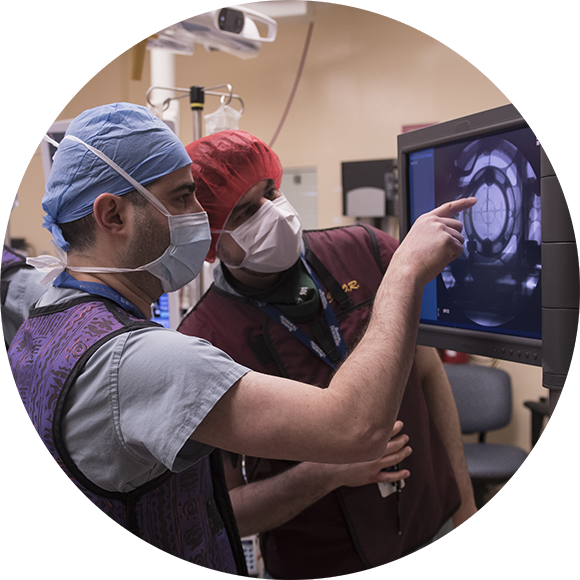
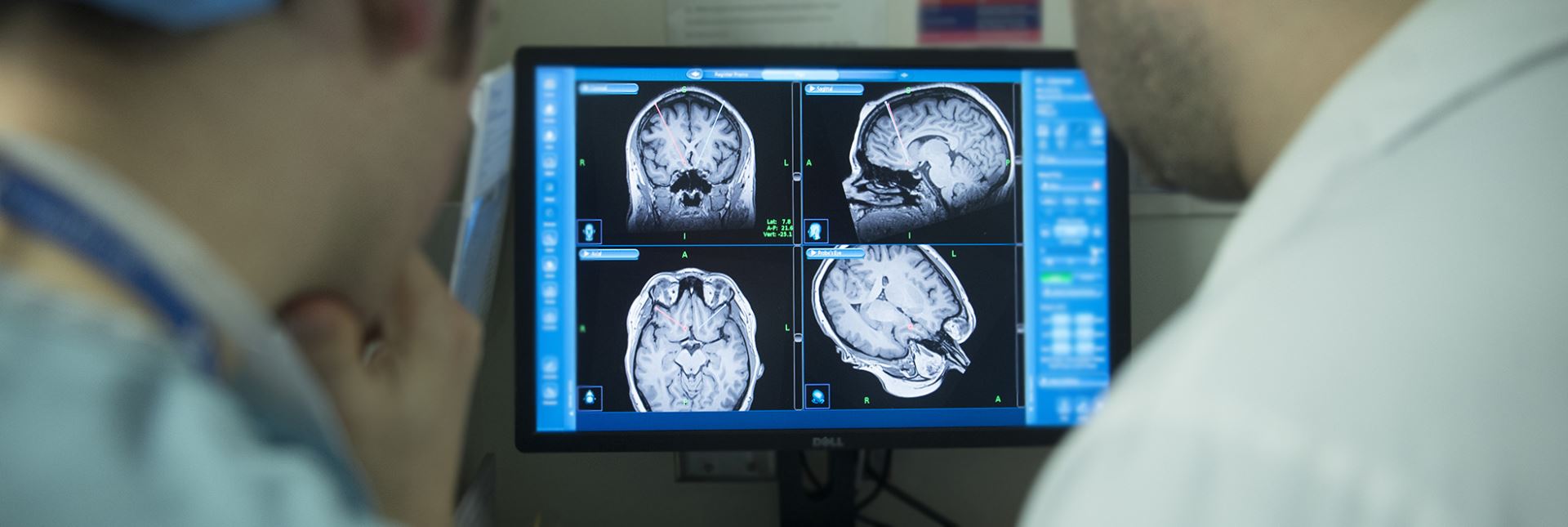
Clinicians view a monitor with a brain scan
"Despite advances in AUD [alcohol use disorder] interventions in the last half century, we have a long way to go in developing direct-to-brain treatments that make a significant impact on outcomes." "We are so grateful to Frank and other study participants. We hope that our DBS [deep brain stimulation] study will advance our understanding of AUD and other addiction disorders as we work towards developing innovative treatment options for patients with these challenging and disabling conditions."
Dr. Nir Lipsman, director, Sunnybrook’s Harquail Centre for Neuromodulation

"By directly targeting dysfunctional ‘wiring’ in the brain, the hope is to influence these circuits to a healthier state."
"In Frank’s case, we saw significant improvements in mood and alcohol consumption. The nucleus accumbens is not only an addiction-related area of the brain but also involved in mood, anxiety and depression. Helping to relieve symptoms may have helped play a role in his progress."
Dr. Benjamin Davidson, study co-investigator and surgical resident, Sunnybrook

Labels: , , , ,

 
()() Follow @rheytah Tweet