Ruminations

Blog dedicated primarily to randomly selected news items; comments reflecting personal perceptions

Sunday, August 09, 2020

Treating/Curing Obesity

"We're definitely hoping physicians and people work on their own biases."          "Our fixation on diet has been failing us for fifty years. Going on a diet guarantees you're going to lose a little bit of weight but you'll gain a significant amount back." "People with obesity are also less likely to receive treatments for other health issues, as physicians are less motivated to treat them."                                       "For physicians, patients and policy-makers, we want them to see this as a disease that deserves treatment. And it deserves empathy and compassion."            Dr.Sean Wharton, Internal Medicine Specialist, Wharton Medical Clinic, Hamilton, Ontario

Obesity guidelines move away from focus on weight loss

Over 60 Canadian health professionals, researchers and individuals living with obesity worked together to help develop -- in tandem with Obesity Canada and the Canadian Association of Bariatric Physicians and Surgeons -- the Canadian Adult Obesity Clinical Practice Guidelines. Dr.Wharton is one of the authors of the new clinical guidelines. It took two years to produce the guidelines to treat obesity in Canada, representing the first major update to obesity treatment since 2007.

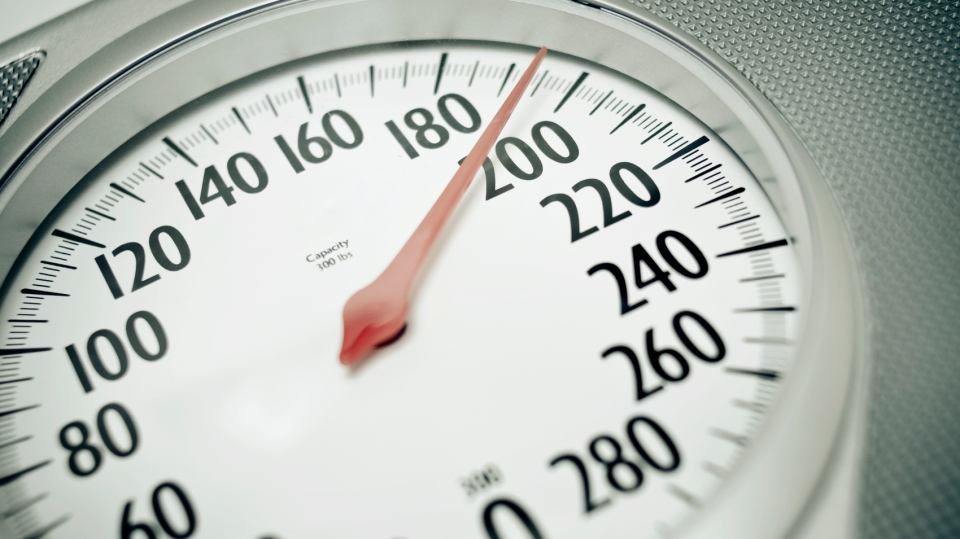
The new recommendations for treatment of obesity in Canada where its authors assessed over 50,000 published peer-reviewed articles on obesity to arrive at their considered conclusions, has been published in the Canadian Medical Association Journal. According to the new guidelines, medical professionals are instructed that obesity be viewed and treated as a chronic illness. And as such recommending diet and exercise as a solution will no longer suffice. 

An integral part of treatment is to realize that the stigma surrounding obesity must be ended.

 Genetics, trauma and mental-health issues. (designer491/Shutterstock)

Henceforth, obesity requires viewing as a neurobiological issue, one driven by hormones influencing people's eating habits and behaviours, requiring  patients to be invested in understanding and managing their bodily reactions to the hormones. Medications like glucagon-similar peptide 1 agonists have the potential to increase levels of hormones making people exp0erience a full feeling after meals; similarly antidepressant/anti-addictive medications can be prescribed to manage cravings and hunger pangs.

Bariatric surgery can be contemplated, having the effect of reducing stomach size, an approach which also affects hormones and gut bacteria involved in affecting hunger. People suffering from obesity can be taught through cognitive behavioural therapy to readjust the way in which they view food. The attending physician is the guide, leading the patient to a fuller understanding of the condition afflicting them, who then becomes an invested partner in treatment, through acquiring knowledge.
Obesity
 A new guideline to treat obesity recommends a shift  (Tsuji/Istock.com)

Dr.Wharton feels the language aura around obesity and treatment should undergo a change as well, transitioning from the old familiar word 'diet' to "medical nutrition therapy", an effort to aid in changing eating patterns. The understanding is that one's eating habits which have undergone a voluntary change are based on the understanding that a medical condition underlies the new changed eating pattern. And along with that patient cooperation in the therapeutic mode of eating, obsessions with calories should be abandoned.

"Lower calories", Dr.Wharton observes, "will come", as a natural corollary to committing to sensible nutritional choices. The new guidelines fit seamlessly into the pandemic situation, with obesity being viewed as a major risk factor for developing diabetes and contracting COVID-19. According to research, adipose tissue of people living with obesity can lead to inflammation, complicating these conditions which can ultimately result in more severe symptoms.

Link Found Between Density Of Fast-Food Restaurants And Heavier People

Labels: , , , , , , ,

Wednesday, February 19, 2020

How Many of These Delicious Waffles Would You Like?

"The ecological footprint of an insect is much smaller compared to animal-based food sources." "Besides, we can grow insects in large quantities in Europe, which also reduces the footprint of transport. After all, palm fat is often imported from outside of Europe."
"Insect fat is a different type of fat than butter. Insect fat contains lauric acid, which provides positive nutritional attributes since it is more digestible than butter."
"Moreover, lauric acid has an antibacterial, antimicrobial and antimycotic effect. This means that it is able, for example, to eliminate harmless various viruses, bacteria or even fungi in the body, allowing it to have a positive effect on health."
Daylan Tzompa-Sosa, researcher, Ghent University, Belgium
"Bakery products with insect fat are more likely to be appreciated, because the insects are merely a form of fat substitute,” said researcher Joachim Schouteten.   Getty Images
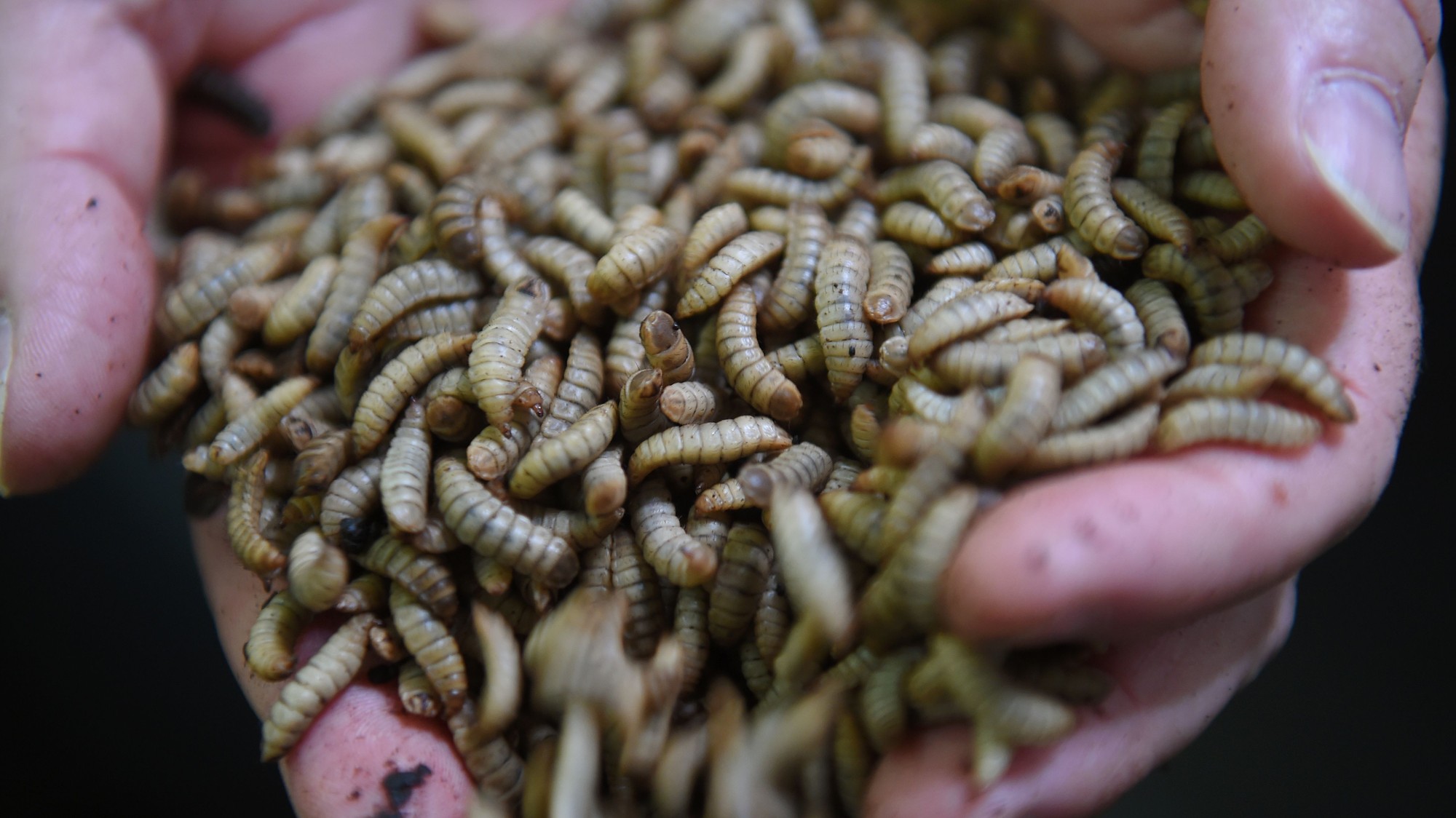
There's that "ugh" factor of course, to overcome. It doesn't exist in Africa or Asia, as an example, but it certainly does in the West. Where the prospect of foods with additives of insect content will be viewed as less than positive, even if it comes with the assurance that eating insects rather than cows is more environmentally friendly, and even more nutritious than the common, everyday diet we invest our dinner tables with. But processing common foods with a 'butter' sourced from black soldier fly larvae may be the wave of the future.

Mealworm burgers sound grim, to be sure, and most people who look for alternatives to beef burgers would prefer to be served vegetable-sourced Beyond Burgers, but this aversion may eventually be overcome as demonstrated by a newly published research study. No, study participants weren't served cricket pasta or mealworm bolognese sauce and caterpillar energy bars; that's all for the near future. This study began rather modestly by researchers at Ghent University in Belgium.

Credit: Ghent University
They decided to focus on innocuous waffles and envision that all manner of pastries at some near future date may be infused with the same kind of 'butter' they used in the waffles, taking the place of dairy butter. Reflexively you might mutter that you'd prefer to stick with 'real' butter. But the Belgian scientists conducted a blind taste test serving 344 people three different iterations of waffles, cakes and cookies. With each of the pastry types one batch was produced with all butter, another with 75 percent butter and 25 percent black soldier fly larvae fat, while the third had a 50/50 butter and larvae fat content.

Well, yum, you know... Cake samples with one-quarter insect fat succeeded in eluding the tasters' suspicions that any insect content was included; they could taste no difference between the all-butter version and the one-quarter insect fat offering. The taste participants in the study were informed beforehand that the pastries could contain "an insect ingredient", yet none among them realized that what they tasted and relished had a larvae fat content in the 25 percent apportioned to the cake.
Image result for belgian study, insect larvae
Vice

"In the case of waffles, they did not even notice the presence of insect fat when half of the butter had been replaced", wrote the researchers in their paper published in the journal Food Quality and Preference. "Also, the texture and colour were hardly affected as compared with butter", they elaborated of the cruel joke they played on initially advised, but naive taste-testers. It reminds me of when my children were young and hated liver, but relished the 'meat loaf' I'd once made with liver I had first ground up, then mixed with an egg, tomato sauce, breadcrumbs and spices.

They enjoyed that meat loaf, even asked for seconds, and I was so pleased that I blurted out when they had finished their meal that what they had just eaten and so obviously appreciated was the very same healthy kind of meal that they refused and termed disgusting. Their faces blanched, and one of the three looked as though he was prepared to upchuck. That was an experiment I never repeated because I promised them that this represented the first and last time; the only way I could convince them I didn't hate them at all, but cherished them and to prove it, put all such future attempts to permanent rest.
Carabid beetles (Photo: Thierry Hubin, RBINS)
Photo: Royal Belgian Institute of Natural Sciences

A 2012 study published in PLOS One found raising insects requires 25 times fewer land resources than is true for cattle. And a 2015 research paper published in the journal Water, demonstrated that mealworm raising uses one-third less fresh water than is needed for conventionally farmed animals.

Using insect fat, the researchers suggest, even as a partial substitute for butter or palm oil, would have clearly positive environmental impacts. An estimated two-billion people worldwide need no introduction to appreciating insects in their diets. They are high in protein and rich in number. Eventually people in the West may open their minds, their shopping habits and their dinner table preferences to include the sustainable harvest of insects. They're all around us, everywhere we look. And there's incomparably more of them on this planet than any other living creature.

Image result for belgian study, insect larvae
Without even cringing ... The Globe & Mail
 

Labels: , , , ,

 
()() Follow @rheytah Tweet