Ruminations

Blog dedicated primarily to randomly selected news items; comments reflecting personal perceptions

Sunday, August 09, 2020

Treating/Curing Obesity

"We're definitely hoping physicians and people work on their own biases."          "Our fixation on diet has been failing us for fifty years. Going on a diet guarantees you're going to lose a little bit of weight but you'll gain a significant amount back." "People with obesity are also less likely to receive treatments for other health issues, as physicians are less motivated to treat them."                                       "For physicians, patients and policy-makers, we want them to see this as a disease that deserves treatment. And it deserves empathy and compassion."            Dr.Sean Wharton, Internal Medicine Specialist, Wharton Medical Clinic, Hamilton, Ontario

Obesity guidelines move away from focus on weight loss

Over 60 Canadian health professionals, researchers and individuals living with obesity worked together to help develop -- in tandem with Obesity Canada and the Canadian Association of Bariatric Physicians and Surgeons -- the Canadian Adult Obesity Clinical Practice Guidelines. Dr.Wharton is one of the authors of the new clinical guidelines. It took two years to produce the guidelines to treat obesity in Canada, representing the first major update to obesity treatment since 2007.

The new recommendations for treatment of obesity in Canada where its authors assessed over 50,000 published peer-reviewed articles on obesity to arrive at their considered conclusions, has been published in the Canadian Medical Association Journal. According to the new guidelines, medical professionals are instructed that obesity be viewed and treated as a chronic illness. And as such recommending diet and exercise as a solution will no longer suffice. 

An integral part of treatment is to realize that the stigma surrounding obesity must be ended.

 Genetics, trauma and mental-health issues. (designer491/Shutterstock)

Henceforth, obesity requires viewing as a neurobiological issue, one driven by hormones influencing people's eating habits and behaviours, requiring  patients to be invested in understanding and managing their bodily reactions to the hormones. Medications like glucagon-similar peptide 1 agonists have the potential to increase levels of hormones making people exp0erience a full feeling after meals; similarly antidepressant/anti-addictive medications can be prescribed to manage cravings and hunger pangs.

Bariatric surgery can be contemplated, having the effect of reducing stomach size, an approach which also affects hormones and gut bacteria involved in affecting hunger. People suffering from obesity can be taught through cognitive behavioural therapy to readjust the way in which they view food. The attending physician is the guide, leading the patient to a fuller understanding of the condition afflicting them, who then becomes an invested partner in treatment, through acquiring knowledge.

Obesity
 A new guideline to treat obesity recommends a shift  (Tsuji/Istock.com)

Dr.Wharton feels the language aura around obesity and treatment should undergo a change as well, transitioning from the old familiar word 'diet' to "medical nutrition therapy", an effort to aid in changing eating patterns. The understanding is that one's eating habits which have undergone a voluntary change are based on the understanding that a medical condition underlies the new changed eating pattern. And along with that patient cooperation in the therapeutic mode of eating, obsessions with calories should be abandoned.

"Lower calories", Dr.Wharton observes, "will come", as a natural corollary to committing to sensible nutritional choices. The new guidelines fit seamlessly into the pandemic situation, with obesity being viewed as a major risk factor for developing diabetes and contracting COVID-19. According to research, adipose tissue of people living with obesity can lead to inflammation, complicating these conditions which can ultimately result in more severe symptoms.

Link Found Between Density Of Fast-Food Restaurants And Heavier People

Labels: , , , , , , ,

Monday, February 17, 2020

Corporate Conscience of Contrition? 

"The World Health Organization names childhood obesity as one of the most serious public health issues of the 21st Century. And it's a key reason why Unilever is committing to new principles on marketing and advertising foods and beverages to children."
"It's a move designed to help parents, caregivers and kids make informed choices about the food and drinks they buy, and to address the rise of social media, and the vast increase in products on sale."
Unilever Company statement 

"Their bottom line is profit, not public health."
"Without policies that put some rules around marketing to children across all companies, it's hard to believe one company is going to sacrifice its profits to effectively reduce consumption of unhealthy foods."
"Policies would be good in that sense because they level the playing field."
Fran Fleming-Millei, director, marketing initiatives, Rudd Center for Food Policy and Obesity

"They can say, 'We've already done all these things and we're being proactive', as a delay tactic."
"They can pledge things that sound great but have a lot of loopholes."
Shu Wen Ng, associate professor, nutrition department, University of North Carolina, Chapel Hill
H/O: Ben and Jerry's Cherry Garcia
A scoop on Ben and Jerry’s Cherry Garcia ice cream on Free Cone Day in 2016.  Source: Ben and Jerry's

Dr.Ng takes a pragmatic view of one of the oldest multinational companies of consumer goods suddenly posing as a good corporate citizen with an empathetic outlook on the growing epidemic of obesity among children whose cause is fairly well recognized as processed and junk food availability as advertised by their makers as wholesome, delicious and just waiting for children to use all the wiles at their disposal to convince their mothers they'll eat their vegetables if they can anticipate 'treats' afterward.

Companies may make pledges of the kind that Unilever has just released in the interests of gaining credit for minuscule changes or ingredient reformulations, then touting them as improvements when those changes were already in the pipeline because head office is aware that the U.S. Food and Drug Administration's Nutrition Facts labelling would of necessity lead them in that direction. The new panels outlining nutritional data list total calories in a larger font and serving size requirements have been altered to reflect volumes actually eaten.

A Twister ad
Getty Images
Any added sugar content not merely those that product ingredients naturally consist of are to be listed along with updating the list of nutrients required or permitted for label declaration. Unilever has pledged that it will no longer market and advertise foods and beverages to children under age twelve on television, in print, and for children under thirteen through social media channels, by year's end. Products running the range from frozen dairy confections to cookies and breakfast cereals. No longer will it run ads on television and other media where children under 12 represent over 25 percent of the audience.

Ice cream products will no longer be promoted in schools or in children's films, and nor will Unilever continue to use celebrities or social media influencers, much less licensed cartoon characters in marketing to draw children's attention under age twelve. According to a National Survey of Children's Health report released in October, among youths aged ten to 17, obesity rates averaged 15.3 percent nationwide. In Mississippi that rate soared to 25.4 percent. Since the 1970s obesity rates for children and adolescents have tripled and more.

In 2010, Unilever and 18 of the world's largest food corporations signed the Children's Food and Beverage Advertising Initiative, where they pledged they would no longer advertise Skippy and Popsicle brands to children under six years of age.  It would advertise those food and beverage products that met certain nutritional criteria for children between ages six and 11. The company debuts, alongside its announcement, a "Responsibly Made for Kids" label.

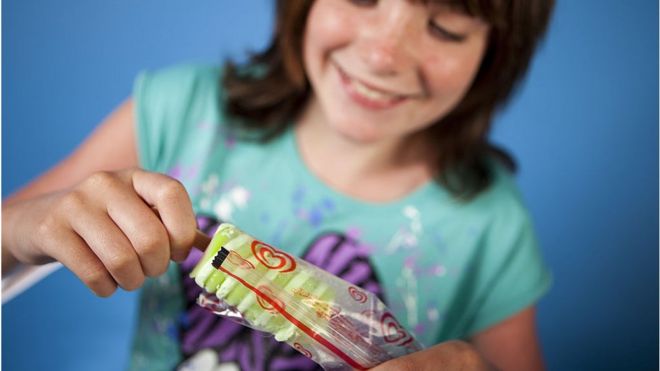
Unilever, which makes many popular ice cream brands, has pledged to stop marketing ice cream products directly to kids. (Calla Kessler/The Washington Post)
Unilever to stop marketing products directly to kids.Calla Kessler/The Washington Post

Every ice cream in the kids' range will, by the end of 2020, contain no greater total calories than 220, with a maximum of 12 grams of sugar per portion. To meet that sugar limit, points out Fran Fleming-Millici of the Rudd Center for Food Policy and Obesity, many of the Unilever products will have seen artificial sugars added; additives not meant nor recommended for children's consumption. And, as associate professor Dr.Ng adds, many food and beverage companies choose voluntarily to restrict marketing to children with the thought of delaying stronger government-imposed regulations.

Chile, among other countries in Latin America, also confronted with rising obesity levels in children, has led the way to reduce advertisement exposure directed at children for foods high in added sugar, saturated fats, calories and added sodium. All these additives in food products require them to display black stop signs on front-of-package labels. Such black stop signs ensure these products cannot be sold or promoted in schools, or included in television advertisements targeting children -- or marketing strategies aimed at children.
These cookies are a triple-label threat: They're high in sugar, saturated fats and calories.
Eileen Smith for NPR

As a result of Chile's proactive vision, when these rules were adopted in 2016, consumption of sugar-sweetened drinks saw an almost 25 percent drop. Food, beverage and restaurant companies in the United States spent $13.5 billion in advertising costs across all media in 2016, according to the Rudd Center, representing a 7 percent increase since 2007, irrespective of the commitments from major food companies who had signed the Children's Food and Beverage Advertising Initiative.

Unilever
@Unilever
We’re changing the way we go about marketing and advertising our ice cream, food and drinks to children. Find out more here: bit.ly/31L3WdB
9:58 AM · Feb 12, 2020

Labels: , , , , ,

 
()() Follow @rheytah Tweet