Ruminations

Blog dedicated primarily to randomly selected news items; comments reflecting personal perceptions

Monday, January 23, 2023

Ravenous, Are We?

"We've discovered that  you really need that gut signalling to have long, sustained reduction in AgRP activity."
"In the absence of that gut signalling, you really don't shut off these hunger neurons."
"[Hanger researchers identify neuron activity in the hypothalamus, a brain region co-ordinating hunger and emotion. Hunger activates these brain cells known as AgRP neurons for the proteins they express. These neurons are colloquially spoken of as 'hangry neurons']."
Amber Alhadeff, researcher, Monell Chemical Senses Center, Philadelphia

Two people eating
Scientists asked participants to record their emotions and hunger levels five times a day for three weeks. Pexels
 
Researchers are now beginning to make biological sense of how our brains and emotions are affected by what we eat, or what we fail to eat when we should. A study out of Britain concludes that the feeling of hunger is associated with emotions on the negative scale. The word "hangry" was added to the Oxford English Dictionary in 2018 in recognition of its acceptance as a real phenomenon. Not everyone becomes angry when they are hungry, but many do.

And the very link between hunger and mood has long been known, but never before ascribed to biological connections with hormones. Messages are hormonally sent everywhere in the body, travelling through the bloodstream. Research being undertaken at present focuses for the most part on the body communication system through hormones and neurons. Hunger coincides with a drop in glucose linking to hormonal changes affecting brain functioning.

Eating something can raise low blood glucose; a combination of protein, fibre and complex carbohydrates works best to raise blood glucose. Low blood glucose instructs the body to release adrenalin and cortisol, hormones that naturally raise blood sugar, enabling function even with a drop in blood sugar. On the other hand, cortisol and adrenalin flooding the bloodstream creates a natural reaction of alertness to threats. High alert in combination with hunger can result in irritability associated with hanger.

Dr. Alhadeff's laboratory at the Monell Chemical Senses Center studies food intake behaviour and how gut-brain  communication influences what we eat. When lack of food activates AgRP neurons in mice, a signal of hunger is sent by the neurons. The cells also signal a "negative valence"; an emotion of discomfort generally associated with fear, anxiety and anger. Once the mice eat, AgRP neurons calm and both hunger and negativity signals abruptly halt.

Dr. Alhadeff hypothesizes hungry neurons to represent remnants of a era in distant human history when people foraged for food and more than just hunger was needed to motivate us to find food. This neuron group still has a lasting impact. 

A woman eats a cheeseburger
Researchers say that hunger turns up the dial on anger.   Dmitry Ageev / Getty Images/Blend Images

Labels: , , , ,

Sunday, August 09, 2020

Treating/Curing Obesity

"We're definitely hoping physicians and people work on their own biases."          "Our fixation on diet has been failing us for fifty years. Going on a diet guarantees you're going to lose a little bit of weight but you'll gain a significant amount back." "People with obesity are also less likely to receive treatments for other health issues, as physicians are less motivated to treat them."                                       "For physicians, patients and policy-makers, we want them to see this as a disease that deserves treatment. And it deserves empathy and compassion."            Dr.Sean Wharton, Internal Medicine Specialist, Wharton Medical Clinic, Hamilton, Ontario

Obesity guidelines move away from focus on weight loss

Over 60 Canadian health professionals, researchers and individuals living with obesity worked together to help develop -- in tandem with Obesity Canada and the Canadian Association of Bariatric Physicians and Surgeons -- the Canadian Adult Obesity Clinical Practice Guidelines. Dr.Wharton is one of the authors of the new clinical guidelines. It took two years to produce the guidelines to treat obesity in Canada, representing the first major update to obesity treatment since 2007.

The new recommendations for treatment of obesity in Canada where its authors assessed over 50,000 published peer-reviewed articles on obesity to arrive at their considered conclusions, has been published in the Canadian Medical Association Journal. According to the new guidelines, medical professionals are instructed that obesity be viewed and treated as a chronic illness. And as such recommending diet and exercise as a solution will no longer suffice. 

An integral part of treatment is to realize that the stigma surrounding obesity must be ended.

 Genetics, trauma and mental-health issues. (designer491/Shutterstock)

Henceforth, obesity requires viewing as a neurobiological issue, one driven by hormones influencing people's eating habits and behaviours, requiring  patients to be invested in understanding and managing their bodily reactions to the hormones. Medications like glucagon-similar peptide 1 agonists have the potential to increase levels of hormones making people exp0erience a full feeling after meals; similarly antidepressant/anti-addictive medications can be prescribed to manage cravings and hunger pangs.

Bariatric surgery can be contemplated, having the effect of reducing stomach size, an approach which also affects hormones and gut bacteria involved in affecting hunger. People suffering from obesity can be taught through cognitive behavioural therapy to readjust the way in which they view food. The attending physician is the guide, leading the patient to a fuller understanding of the condition afflicting them, who then becomes an invested partner in treatment, through acquiring knowledge.

Obesity
 A new guideline to treat obesity recommends a shift  (Tsuji/Istock.com)

Dr.Wharton feels the language aura around obesity and treatment should undergo a change as well, transitioning from the old familiar word 'diet' to "medical nutrition therapy", an effort to aid in changing eating patterns. The understanding is that one's eating habits which have undergone a voluntary change are based on the understanding that a medical condition underlies the new changed eating pattern. And along with that patient cooperation in the therapeutic mode of eating, obsessions with calories should be abandoned.

"Lower calories", Dr.Wharton observes, "will come", as a natural corollary to committing to sensible nutritional choices. The new guidelines fit seamlessly into the pandemic situation, with obesity being viewed as a major risk factor for developing diabetes and contracting COVID-19. According to research, adipose tissue of people living with obesity can lead to inflammation, complicating these conditions which can ultimately result in more severe symptoms.

Link Found Between Density Of Fast-Food Restaurants And Heavier People

Labels: , , , , , , ,

Wednesday, December 12, 2018

Stress Management: Biological Consequences

"They [research fish] acted very strangely and their stress response was weird."
"These kinds of exploratory behaviours [fish examining parameters of new tank] are super important in all vertebrates. It's kind of a coping behaviour [where an animal establishes how it must react in its new surroundings]."
"What we found is that it [the change] persists for two generations. We call that transgenerational effects." 
"We are in generation 1.5 of fluoxetine [Prozac] use now. It came on the market in 1987."
"There are also major benefits to these types of drugs; in fact, they can be life-saving in some situations. However, it is important to follow a physician's advice and take the prescribed dose."
"The future discussion should take into account that such medications have longer-term effects than we ever imagined, as our work clearly shows that what we do today can influence future generations."
Professor Vance Trudeau, researcher, University of Ottawa
Effects of Antidepressants Span Three Generations in Fish

ffects of Antidepressants Span Three Generations in Fish   The Scientist

"It was a really challenging study. The variables had to be consistent, generation after generation."
"A short dose can actually affect generations to come -- six days early on in life."
Dr. Marilyn Vera-Chang, University of Ottawa biology research associate
University of Ottawa’s Dr. Marilyn Vera-Chang checks on her fish in the lab. Julie Oliver / Postmedia

In a new research experiment conducted at a University of Ottawa laboratory, fish eggs and newly-hatched fish were exposed to Prozac at levels typical of what, in a human pregnancy, would cross the placenta to reach an embryo. The side-effects of such drugs had been studied for years by these researchers but their new point of entry was the potential effects of the drugs on reproduction. Humans suffering from depression are routinely prescribed drugs such as Prozac but the chemicals comprising the drugs don't remain in situ; they are passed with the patient's urine and end up in streams, rivers and lakes.

Needless to say aquatic creatures and most certainly fish are then exposed to these chemicals. And since sewage treatment is ineffective in disposing of the chemicals they remain, however diluted, in water that will be circulated and reused, exposing other animals including people when the water is returned to their household taps, to such chemicals, albeit in obviously lesser potency. This is the wider effect of pharmaceuticals used for a wide multitude of treatments within societies that are now medicated beyond anything imagined a generation or two earlier.

The research laboratory where Professor Trudeau and Dr. Vera-Chang work was the locus of efforts to examine possible changes in the reproductive systems of the following fish generations representing offspring of fish exposed to Prozac. The results of their new study surprised them in that they witnessed an unexpected change in fish behaviour. Introduced to a new tank, fish typically mimic what they would do in their natural environment to explore new surroundings. In a tank they swim up down and about. In their natural habitat this aids fish to understand when it is safe to search for food and when to hide.

The Prozac-exposed fish failed to exhibit the expected exploration when placed in a new tank; they swam to the tank's bottom and there they remained. Although Prozac was the only drug of its kind used, it was anticipated that similar results would occur when other drugs of the same class of antidepressants were used, since they all target a brain chemical, serotonin. When the two researchers understood that tranquilizer-exposed fish begot two following generations with the same altered behaviours they assumed an "epigenetic" effect was occurring.

This is an effect where children and grandchildren of the fish that had been exposed as eggs or newly-hatched to Prozac are endowed with normal genes yet there is as-yet-not-fully-understood effect that turns the genes' normal actions and reactions on and off in a peculiar manner. They also discovered present unusual amounts of the stress hormone cortisol; unusual in that they were lower than they normally would be. There is the usual scientific caution that zebra fish are not humans.
FILE – Prozac. Darron Cummings / AP

And as such Professor Trudeau, despite the findings cautions he would "absolutely not" advise people who use Prozac or any other antidepressants to cease doing so. There is evidence that women who use the drug during pregnancy have children with low cortisol who are "a little bit more timid" than other children. "That was known, and our bigger question was: Does it go away? What about their kids? ... What are the implications for humans?"

The paper, published in PNAS, one of the world's three top-ranked science journals, will certainly draw wide attention since such antidepressants are widely prescribed and used. Sewage treatment plants cannot remove pharmaceuticals that are flushed through people's toilets. The active chemicals remain stable even when they're flushed out of the human body in urine. Yet though these drugs are in such wide use, Professor Trudeau who studies hormones and the brain, emphasizes how little we know of effects drugs used may cause effects to future generations decades from the present.
A zebrafish treated with the antidepressant fluoxetine doesn’t explore its tank as much as control fish.
Movie courtesy of the University of Ottawa

"These are major, major, important questions. In the last ten years, there are now a few key examples where scientists are showing the effects of certain chemicals that get transferred across generations."
"They [researchers] found effects on behaviour [with the use of non-drug chemicals: Bisphenol-A found in plastics and vanclozalin, a fungus-killing chemical used on fruits and vegetables], on stress hormones, on brain function that transfer across generations."
"Not all pharmaceuticals will give a generational effect. But there is now a pattern developing [where] we have to start asking the question: Is there something beneficial passed on or is there something negative passed on? But most definitely we have to start thinking about this."
"It is absolutely a big issue. It is up and coming, though I would say that most physicians would not be thinking about it -- not yet, anyway."
Professor Vance Trudeau, researcher, University of Ottawa
A zebrafish treated with fluoxetine and cortisol will explore its tank like untreated fish.
MOVIE COURTESY OF THE UNIVERSITY OF OTTAWA

Labels: , , , ,

Monday, March 19, 2018

Proceed With Caution...

"Our society deems essential oils as safe, however they possess a diverse amount of chemicals and should be used with caution because some of these chemicals are potential hormone] disruptors."
"Lavender oil and tea tree all pose potential environmental health concerns and should be investigated further."
Dr. Jeffrey Tyler Ramsey, scientist, National Institute of Environmental Health Sciences

"[The purported connection between tea tree oil and increased levels of estrogen is] a putative link that has been made and is being overstated and perpetuated."
"[Case studies] are not definitive in their own right."
Letter, journal Reproductive Toxicology, 2013
main article image

"Not everyone exposing themselves to such oils has adverse effects, so it is possible there are particular individuals who may be more sensitive to the effects of the chemicals, or perhaps are using the products in excess."
"There is a complex relationship between estrogen, testosterone and other hormones in the body, that cannot be replicated in these experiments."
"Clearly, the longer-term effects of such exposure are unknown."
Ieuan Hughes, pediatrician, University of Cambridge, England
At the March 2018 meeting in Chicago of the Endocrine Society, attendees were introduced to new research conducted at the National Institute of Environmental Health Sciences by scientists Jeffrey Tyler Ramsey and Dr. Kenneth Korach. Their research indicates that some commonly used and readily attainable essential oils such as lavender and tea tree have the potential to disrupt hormones, leading to abnormal breast growth in prepubescent boys.

The scientists with NIEHS studied eight chemicals found in both lavender and tea tree oil and which are also common to at least 65 other essential oils. The chemicals were tested in the laboratory on human cells to determine how estrogen and testosterone receptors were affected. It was determined through this study that the chemicals stimulated the cells to encourage prepubertal gynecomastia, identified as breast growth in prepubescent males.

In 2007, researchers at NIEHS first found evidence of this phenomenon when the research team studied three young boys who had begun, prior to puberty, to develop breasts -- with no underlying medical conditions that might explain this physiological abnormality. All three of the boys, however, used topical over-the-counter products containing lavender oil and tea tree oil. The boys were instructed to cease using the products, leading breast growth to stop.

The hypothesis was drawn that chemicals found in these essential oils were acting to disrupt normal hormones and in the process increasing levels of estrogen, simultaneously lowering levels of testosterone and promoting abnormal breast growth in the boys. Despite the findings, there is no general agreement in science that such oils have negative health effects when used correctly, and nor is there evidence that such "natural" therapy offers positive effects.

Tea tree oil, derived from Australian tea trees, is known for its antibacterial effect with people using it to aid in acne control, to treat athlete's foot, and to rid themselves of fungal infections. Some believe it is a natural remedy for dandruff and lice. It is also used commercially in some household cleaning products. But it is not a non-toxic natural product. It is meant solely to be used topically, not ingested. The National Capital Poison Center in the U.S. has seen over ten percent of people who had swallowed tea tree oil seeking medical attention, in 2011.

Natural remedy websites claim lavender to be indispensable as an essential oil. The oil, derived from the lavender flower is reputed to have a relaxing, calming effect on people; said as well to aid in sound sleep, and marketed as an aromatherapy tool for the reduction of pain and swollen, sore muscles or joints. Its purported efficacy as an anti-inflammatory, antifungal and antibacterial natural agent is legendary. Scientific evidence on the usefulness of the product in the control of dandruff, use in preventing motion sickness is scant. The oil is used as well in many cosmetic products.

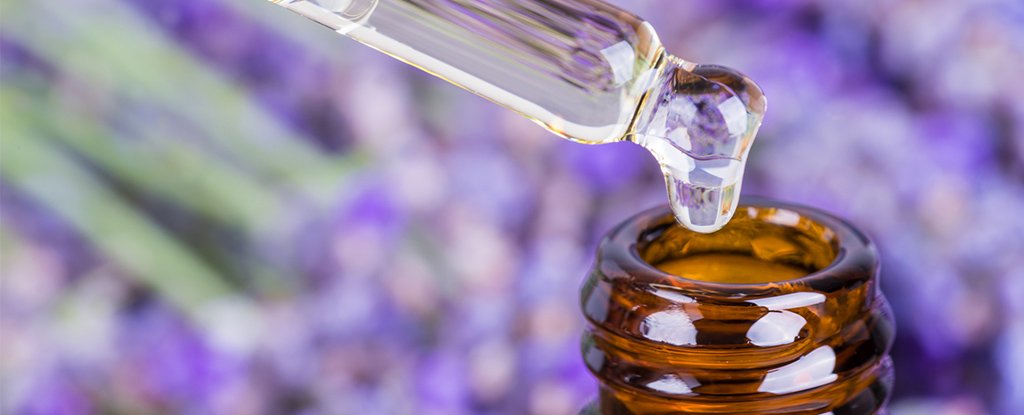
New research suggests lavender and tea tree oils could contain chemicals that disrupt our endocrine system
New research suggests lavender and tea tree oils could contain chemicals that disrupt our endocrine system   (Credit: fermate/Depositphotos)

Labels: , , ,

 
()() Follow @rheytah Tweet