Ruminations

Blog dedicated primarily to randomly selected news items; comments reflecting personal perceptions

Tuesday, April 04, 2017

Diagnosing a Rare, New Childhood Genetic Anomaly

"Nobody could give us a diagnosis, so he was passed from one specialist to another over the years and various people did various tests."
"He[her infant son] showed signs of so many different diseases.They tested him for Crohn's disease, ulcerative colitis; it turned out not to be either."
"Daniel was over the moon to get a diagnosis. When they found out what was wrong, it was a real relief. In his mind, it's all about the cure. Now that there's a diagnosis, there's now going to be a cure."
"While we have never let his illness define him, and he remains a very positive and energetic boy, it was always on the back of his mind."
Christina Arulrajah, Toronto
Daniel5
Daniel suffered a stroke at four weeks old. (Christina Arulrajah)

"All the doctors thought that he must have a genetic cause to his disease."
"ARPC1B, we know, plays a very important role in the immune system and how different cells int he body -- mostly found in the blood -- work."
"Sometimes it's surprising that one defect causes such widespread different types of disease in one patient, but this one mutation explains all the problems Daniel had."
"It [identifying the genetic mutation] gave us enough evidence to know that this was a brand-new disease that hadn't been described before."
"If you do a bone-m,arrow transplant or you replace his immune system, this should cure him of his disease."
Dr. Aleixo Muise, gastroenterologist, Hospital for Sick Children, Toronto

Daniel Nevins-Selvadurai's painful symptoms baffled doctors at Toronto's Hospital for Sick Children for years.
Daniel Nevins-Selvadurai's painful symptoms baffled doctors at Toronto's Hospital for Sick Children for years. (Hospital for Sick Children)

Bad enough to realize that a child has serious and puzzling symptoms of things going dreadfully awry with his body imperilling the state of his health and possibly his very existence. At the ripe old age of three, little Daniel Nevins-Seivadurai had blood in his stool, which might have been a harbinger of inflammatory bowel disease he could have inherited. Yet when specialists performed tests related to all the genetic mutations the condition was linked with as causatives, they all were returned negative.

At four weeks of age, Daniel had symptoms of an illness that his mother took to be influenza. He was rushed to Sick Children's Hospital in Toronto where examining doctors informed his mother that her baby had suffered a stroke. The baby recovered fully but he also became a frequent visitor to SickKids as a patient with a weak immune system and a rising roster of painful symptoms such as stomach problems, blood in his stool, and rashes and infections resulting in sepsis.

And as the child grew older the symptoms bedevilling his parents and the doctors examining him were more diverse in character with the added development of unusual rashes and the appearance of lumps in his legs that were painful. He also had an abnormally high white cell count, along with low platelets in his blood. Clearly pointing doctors in the direction of a problem they were unable to identify, with his immune system.

The specialists who were engage in attempting to discover the source of Daniel's problem represented those whose expertise was in blood disorders, cancer, rheumatology, immunology and gastroenterology, yet none was able to establish the cause and origins of the little boy's mysterious illness. The very fact that the symptoms were so wide-ranging puzzled specialists while the one thing they all appeared to agree on was that the source must have a genetic component.

Coincidentally, in 2014, a research team of which Dr. Muise was the head, engaged a project meant to explore the genetic basis of IBD (Irritable Bowel Disease) with the use of an advanced technology to study the DNA of selected patients -- and Daniel's genome happened to be included among those under investigation, with the use of a technique known as whole-exome sequencing.


Daniel's genome tests revealed a mutation as yet unknown to medical science. The defect appeared in a gene known as ARPC1B, known to produce a protein required by the body's cells to change shape, move, divide and perform other vital bodily functions. And Daniel's ARPC1B gene expressed none of this critical protein. Two other patients, related to one another but not to Daniel, also were discovered to have a mutation leaving them with very little ARPC1B protein. And over time another 20 children globally have also been identified with this same genetic mutation.


The discovery of this entirely new disease appearing in children, as a rare genetic mutation was published in the journal Nature Communications. Daniel's doctors feel confident that a bone-marrow transplant will succeed in giving him entirely new blood cells -- immune cells included -- that will not include the genetic mutation. Leading to a search for an appropriate donor for the now-ten-year-old little boy.


Daniel2
The difference between a normal platelet and the platelet of someone with Daniel's protein deficiency. (Hospital for Sick Children)
His mother has hopes that should a successful bone-marrow transplant take place, all the medications that Daniel has been taking in the treatment of his various symptoms over the past seven years, can cease. The steroids he has taken over long courses have affected normal growth patterns for the little boy.


Labels: , , , , ,

Tuesday, January 31, 2017

CRISPR Foods, Everyone?

"This is not Frankenfood."
"There is nothing taken out or added to the plant. It's what nature would have produced."
"[Edits in crop plants] alter the mix of fatty acids to produce soybeans to make, for example, an improved cooking oil]. Better than olive oil."
 Dr. Andre Choulika, chief executive, Cellectis
CRISPR illustration
Popsci.com files -- CRISPR illustration

"We've never been against any of this technology. We don't say it's inherently bad or these crops are inherently dangerous."
"It's just [that] they raise safety issues, and there should be required safety assessments."
Michael K. Hansen, senior staff scientist, Consumers Union

"The objection that people have is a more visceral and vague objection to messing with DNA."
"It's hard to see that the public would see the difference [in this alternate type of gene-editing, as opposed to genetically modified]."
Richard C. Mulligan, professor of genetics, Harvard Medical School
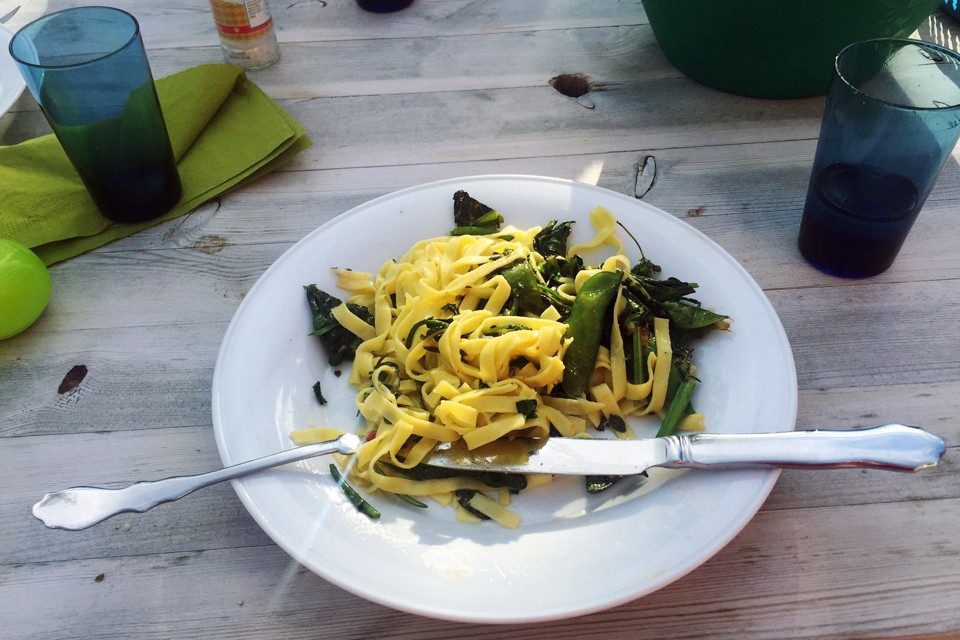
Pasta with CRISPR-edited cabbage
Photo: Stefan Janssen -- The first CRISPR meal, featuring genetically altered cabbage

Soon to appear on supermarket shelves everywhere is a new generation of crops identified as gene-edited, not genetically modified. New precision instruments capable of snipping and tweaking DNA at exact places on  a plant's cells. And the new process of editing is capable of producing non-browning mushrooms, or longer-lasting potatoes, or soybeans where the fatty acids are 'healthier'.

The older methods so discredited in the consuming public's mind of engineered genes, not permitted entry to some countries and certainly not into the European Union, the newer techniques such as CRISPR do not add genes from other organisms into the host plants. Gene-edited crops are already being raised in several U.S. states, not requiring oversight or regulations; some have even been eaten, unbeknownst to the consumer.

Cellectis, one company that is developing gene-edited crops, introduced the world to them when it hosted a dinner at an upscale restaurant, inviting scientists, journalists and celebrities to attend and eat dishes produced from gene-edited soybeans and potatoes. The potatoes were edited to remain fresher and not result in the production of carcinogens when fried.

A subsidiary of Cellectis, Calyxt is in the developmental stages of a new version of wheat crops, including one enhanced to greater fungal diseases resistance. And yet another wheat crop that will be less carbohydrate-intensive, and higher in dietary fibers. DuPont Pioneer is another company developing gene-edited crops, using the technology for a new type of corn -- not for consumption, but for producing starch, to be used in adhesives.

Regulations as they currently exist were originally written with the earlier generation of genetically modified organisms in mind. That technology saw scientists using bacteria and viruses -- usually from plant pests -- to insert new genes into the nuclei of plant cells to merge with the plant's DNA. While it was a successful merging, it was realized that there was no way to control where the new genes would be inserted, leading to concerns of possible genetic disruptions or crossbreeding occurring with non-GMO crops.

A comparison has been made, to help people better understand the new process . . . to moving a cursor in a word processor to a specific location to insert a small text alteration . . . and this is the way that edited food crops work. The European Commission has mounted a scientific panel, as part of the ongoing debate over this new technique, commissioning it to study gene-editing.

Calyxt uses a technique named Talen in its gene-editing, to create molecules to act as a template matching a specific area of DNA, and making an incision at that point. For the soybeans using the Calyxt method, turning off two genes was the only alteration required.


Labels: , , ,

Wednesday, June 01, 2016


Frankenfood or Healthy Produce?

"Frankenstein monsters, things crawling out of the lab. This the most depressing thing I've ever dealt with."
"In spite of hundreds of millions of genetic experiments involving every type of organism on earth and people eating billions of meals without a problem, we've gone back to being ignorant."
"Today we're facing the same objections we faced 40 years ago."
Robert Goldberg, plant molecular biologist, University of California, Los Angeles

"[The use of GM crops] has lowered the price of food. It has increased farmer safety by allowing them to use less pesticide. It has raised the output of corn, cotton and soy by 20 to 30 percent, allowing some people to survive who would not have without it. If it were more widely adopted around the world, the price [of food] would go lower, and fewer people would die of hunger."
David Zilberman, U.C. Berkeley agricultural and environmental economist

"A lot of naive science has been involved in pushing this technology. Thirty years ago we didn't know that when you throw any gene into a different genome, the genome reacts to it. But now anyone in this field knows the genome is not a static environment. Inserted genes can be transformed by several different means, and it can happen generations later [potentially resulting in toxic plants appearing]."
David Williams, cellular biologist, University of California, Los Angeles
gmo foods, genetically modified foods

"No substantiated evidence [exists that genetic modification of crops can produce unsafe food. In the U.S., Canada, Britain and Western Europe], no differences have been found that implicate a higher risk to human health safety [caused by genetically engineered foods]."
National Academies of Sciences, Engineering, and Medicine, United States
Unfortunately, the very nature of science itself is represented by never-ending enquiry and debate and research to produce results that are reliably reproducible. There is no such thing as 'settled' science. The human understanding of science and nature and the world around us and the manner in which everything interacts with everything else is that nature itself is a mysterious force that humankind will always struggle to comprehend. The most confirmed understanding of science can be overturned by more recent findings.

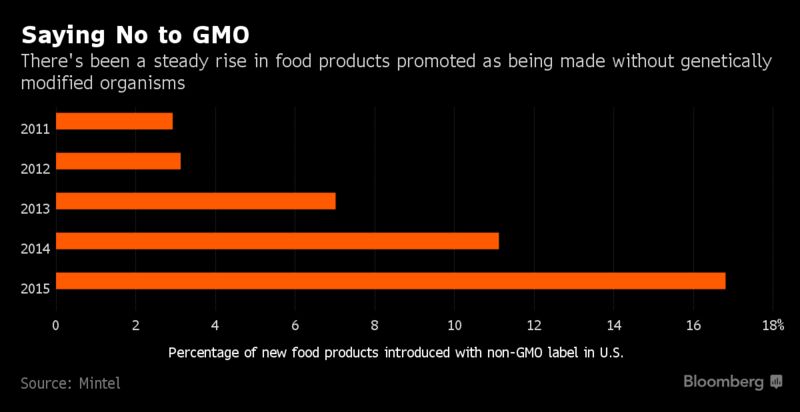
Generally speaking, however, most Western scientists are firm in their belief that food derived from genetically modified crops is safe for human consumption, and no more does it comprise a threat than food conventionally produced. The public, however, remains unconvinced. Which is to say a significant proportion of the public distrusts the very idea of genetically modified food. In a sense it's not all that surprising, since, like the production of pharmaceuticals, big corporate business is involved in funding research into GM crops; the same businesses that find it lucrative to produce those GM seeds.

The recently released  report produced by the National Academies of Science has published its finding, in addition, that no evidence has been discerned to implicate genetically modified crops with danger to the environment, while not gainsaying whatever the necessity to continue monitoring results. There are as well countless other studies that find no risks to the environment from GM agriculture.

Surveys of public opinion, however, find no more than 37 percent of Americans trust that genetically modified food is safe to consume. While 86 percent favour that labelling specifying that food has undergone genetic modification be a requisite, as a result of lingering belief in  health risks accompanying their use. Research conducted by Sydney Scott and Paul Rozin of University of Pennsylvania and Yoel Inbar of University of Toronto has revealed something of interest.

A representative sample of people were asked if they supported or opposed genetically engineering of plants and animals; asked to use this statement: "This should be prohibited no matter how great the benefits and minor the risks from allowing it", if they were assailed with doubts relating to GM safety.The response was that 65 percent of participants opposed genetic engineering, with a majority of those absolutely convinced that GM must be banned, risks and benefits aside.

This was a response that the researchers found puzzling, and then they understood that a simple human reaction was involved, the emotion of disgust. People who are strongest in their opposition to genetic modification are disinterested in balancing risks and benefits. They oppose any product that has been genetically engineered, because the very concept of that interference with nature is what disgusts them; their reaction is a visceral, not a reasoned one.

And the operative word here is 'natural'. Anything that is 'natural' is fine; anything that has been tampered with by science is not. Balance that against the estimation by the United Nations Food and Agriculture Organization that the world must grow 70 percent more food by 2050 to match population growth. And that climate change will have the effect of complicating farming on some of the world's most arable land. And here is where GM crops walk into the picture, capable of producing higher yields, of being grown on dry and unsuitable land, withstand high and low temperatures and tolerate the presence of insects, disease and herbicides.

All of which seems to fail to impress the majority of the public who reject genetic  modification of food, even though it has taken place forever by nature itself, and for thousands of years by human intervention. Much of the world at the present time is banning, restricting and shunning GM foods. Almost all corn and soybeans out of the U.S. is genetically modified; the European Union accepts only two GM crops. India and China have not approved most GM crops. Inclusive of an insect-resistant rice producing higher yields with less pesticide.


Millions of Africans regularly face starvation, yet countries there refuse to import GM foods, lower costs aside. Kenya, where widespread malnutrition stalks the land bans GM foods. Golden Rice, a special rice crop engineered to include vitamin A is not accepted, despite that vitamin A deficiency is the cause of over a million deaths annually and a half million cases of irreversible blindness in the developing world caused by a lack of vitamin A in diets.

Twenty-five years ago celebrity figures went public with their distrust of GM foods, convincing the general public there was much to distrust and fear. Greenpeace, the Sierra Club, Ralph Nader, Prince Charles and many celebrity chefs stood foursquare against the use of genetically altered foods, causing European consumers to view them with alarm. And the truth really is that no one really knows whether plants with altered genes could change our own DNA. Theoretically it is considered by some to be possible, albeit improbable.

The viruses and bacteria whose genes appear in GM foods are those we are in any event regularly exposed to and consume. Some bacterium are used in organic farming as natural pesticides. Naturally occurring viruses have inserted their DNA into crop genomes for millions of years. "When GM critics say that genes don't cross the species barrier in nature, that's just simple ignorance", says Alan McHughen, a plant molecular geneticist at U.C. Riverside.

The human race has been selectively breeding crops and in the process altering plants' genomes, for millennia. Ordinary wheat would not exist outside of farms, because its seeds do not naturally scatter. It has been 60 years since scientists have used "mutagenic" techniques, scrambling plant DNA with radiation and chemicals, in the creation of strains of wheat, rice, peanuts and pears that are now agricultural mainstays. 

Labels: , ,

 
()() Follow @rheytah Tweet