Ruminations

Blog dedicated primarily to randomly selected news items; comments reflecting personal perceptions

Monday, June 28, 2021

Ample Blame to Share on a Wide Scale of Forfeited Responsibility

"There were probably some who died of dehydration. [Efforts of personnel unable to help since they] didn't have time [to do more for the residents]."
"[Personnel shortages resulted in neglect of basic hygiene for residents]."
Occupation therapist, witness, coroner's inquest
 
"I'm tired of hearing people say, 'That wasn't my job'."
Coroner Géhane Kamel, Montreal
 
"Some [care workers] were absent because they were scared, some because they had symptoms."
"They [dementia patients] walk hand in hand. They sleep in people’s beds. And if we try to stop them, you set off behavioural problems like you wouldn’t believe."
"You can’t restrain them. You can’t tie them up."
"It was one of the hardest decisions I had to take with Maude. So we left them there. What it meant is that we were condemning them. Not easy for a manager."
"Most of the 21 contracted COVID-19 but more survived than in other units in the nursing home. It might have been because their wandering kept them in better shape than other seniors who were confined to their rooms during their crisis and slowly declined."
Marie-France Jobin, Supervisor, Sainte-Dorothée, Laval long-term care home
The deaths in CHSLDs in the first wave of the pandemic prompted many questions about how the facilities are run. (Ryan Remiorz/The Canadian Press)

The horribly dismal number of residents of long-term care homes in Canada struck with COVID-19 outbreaks, chronically short of personal care support workers, and unschooled in how to react to the presence of a highly contagious virus, the need to segregate the ill in places where there were multiple occupants of a single room, and instances where patients with dementia had a tendency to wander, led to an unsupportable number of deaths. In the Saint-Dorothee residence alone, one hundred and eight people died in last year's first wave.

The coroner's inquest is an attempt to understand more fully the level of dysfunction and incompetence that led to this disastrous outcome. Most of the witnesses by court order have had their identities protected through a publication ban, presumably leaving them free to speak without fear of retribution. About two-thirds of the facility's employees had logged off sick at the time. The remainder of the employees obviously attempted to do as much as they could, and that cannot have resulted in meeting the most basic needs of the residents.

The therapist who was giving evidence spoke of staff shortages which prevented employees from adequately caring for the seniors, along with the other vulnerable patients living in the home. Many of the residents were barely hydrated and had been given little to eat before they died. One of the residents had developed bedsores, left for hours in incontinence briefs, crying out to be changed. When one of the residents was finally given a bath, she wept in gratitude.

A funeral home worker removes a body from the Verdun CHSLD seniors residence Wednesday April 15, 2020 in Montreal. At the CHSLD Sainte-Dorothée, bodies were left exposed for hours because funeral homes were overwhelmed. (Ryan Remiorz/The Canadian Press)

In desperation, patients were restrained as preventive measures to ensure they were unable to move around freely. One patient with dementia insisted on trying to use the telephone "I had to attach him to his chair because he wanted to talk to his wife", the witness explained. An admission rife with matter for speculation; little wonder a patient whose most basic, routine requirements were being neglected attempted in a desperate cry for help to speak to his wife who would become inconveniently involved questioning staff why her husband's needs were neglected.

Left in their rooms, no exercise or physical therapy on offer affected patients' ability to walk, the therapist testified. She had volunteered to assist at the long-term care home, receiving no training. She had been witness to a director at the home breaking down in front of staff members, screaming and crying in sheer frustration. A second witness, a dietitian, described the institute as a "ship without a captain", so disorganized it might take days for the kitchen staff to be made aware that a patient had died before meals were no longer sent up to the room.

Another patient attendant testified that there had been no direction for the workers who had been left to their own devices on a floor of 34 patients. Among them some had a tendency to wander from their rooms. The night co-ordinator remained in her office advising she had no time to help, during this time. 
 
Two assistant directors at the Laval health authority previously testified that staff at the home were tested for COVID-19 in early April 2020. According to the patient attendant "nobody was aware that there had been testing". The outcome of the situation in the number of deaths at six long-term care homes and one seniors' residence in the province are all under investigation in coroner Gehane Kamel's mandate.
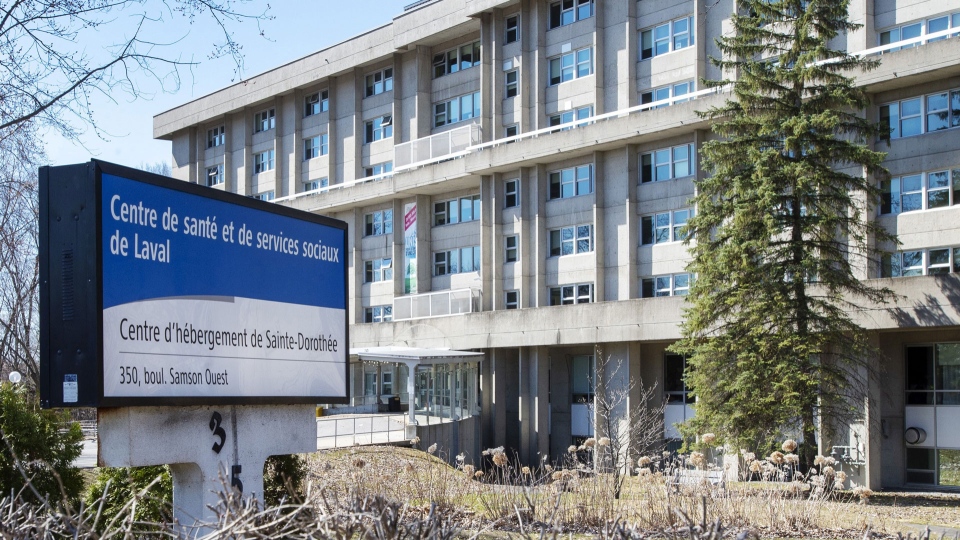
Laval care home
The Centre d'hebergement Sainte-Dorothee is seen Tuesday, April 7, 2020 in Laval, Quebec. THE CANADIAN PRESS/Ryan Remiorz

Labels: , , , , ,

Wednesday, March 03, 2021

The Holy Grail of COVID Vaccination

"We have to put away that idea that our value to society has anything to do with where we are on the priority list. If you're in a priority group for whatever reason, you can't say 'Skip me for now and give my dose to someone who needs it more."
"[There's a constant refrain from young and middle aged staff members] don't vaccinate me. Give it to my 77-year-old mother." 
"[Providing inoculation to essential caregivers as priority groups means an [iron ring] is developed protecting long-term care residents and personal care workers]."
"There's a lot of consistent data that vaccination prevents you from getting sick and dying of COVID. And there's a substantial drop -- about 75 percent -- in  your ability to transmit the virus."
Dr.Gerald Evans, chair, division of infectious disease, Queen's University
Anil Reddi has been allowed back inside his mother's care home to help feed her but only because she stopped eating. (Submitted by Anil Reddi)
"[Getting vaccinated was] emotionally complicated. I wonder if my acceptance of the vaccine takes it away from someone who would have worse outcomes if they contracted the virus."
"My main role on the hotline was advising callers about when and where to seek care. The guidance and protocols we’d been given were simple. Given capacity constraints in New York City, covid-19 tests were only being offered to people sick enough to need hospital admission. Thus, in guiding the callers, we were to screen people for dyspnea over the phone. I would listen to the story of each caller and assess their breathing, and tell them: if you ever feel short of breath, seek medical care immediately. Otherwise, stay home."
"But, as more evidence has emerged on covid-19, it appears that hypoxia caused by the virus doesn’t necessarily make people feel short of breath even if their oxygen saturations are dangerously low. People who may need medical intervention may not actually be dyspneic."
"In retrospect, I can’t help but wonder: did the advice I and other volunteers gave—to stay home unless severely symptomatic—cause unintended morbidity and mortality? Were there people I spoke to who should have presented to a hospital earlier, and would they have had better outcomes if they had? What about the other symptoms I didn’t discuss with them: how many patients had electrolyte derangements from diarrhea? Or strokes with neurological features I never warned them to look out for? Data suggest that many people in New York died at home —and that they were disproportionately from black and minority ethnic groups. I was following guidelines, but even so, did I ever inadvertently exacerbate these inequalities by telling some of the most vulnerable people not to seek care?"
Dr.Eric Kutscher, New York ICU physician, opinion piece, British Medical Journal

Regrets, guilt, second-guessing, overwhelming emotions; feelings of helplessness. Emotions felt by everyone for a variety of reasons; from people in the medical profession checking back on their recent memories and wondering why or if they could have or should have done things differently with the limited information on hand in trying to cope with the fallout from a new, voracious, threatening and harmful virus about which very little was known.

To the ordinary person feeling afflicted and fearful over the spread of the SARS-CoV-2 virus that news stories focus on, particularly the unknowns and those unfortunates who died in droves and others, post-COVID still suffering symptoms, much less the findings of its destructive capability on the body's internal organs. Everyone wants to be vaccinated to augment their body's immune system resistance against the dread foreign invader. Vaccine rollouts reflect the amount of doses available through the few pharmaceuticals that have succeeded in creating a safe and effective COVID vaccine.

And those scarce doses are being carefully husbanded as medical committees and governments at every level consider which are the most vulnerable populations to be prioritized for early vaccinations. Front-line medical workers, of course. The elderly and health-compromised living in long-term care institutions and retirement 'residences'. Those with chronic diseases that make them more vulnerable to the effects of the virus. People in low-income, disadvantaged circumstances; ethnic groups known to be more vulnerable.
 
Naila Shah, 60, is a resident at Seven Oaks long-term care home. Before the pandemic, her family visited twice a day to help with her care. (Submitted by Shah Family)
 
And there are some groups who are surprised when they are informed they are considered to be priority. They are younger, healthier than the conventional target groups yet they are persuaded that they belong, through circumstances among those prioritized for inoculation against COVID. They know that there are many, many others awaiting the psychological relief and the physical protection awaiting them once they've been vaccinated; people whose age and health dictate logically that they be vaccinated before the younger, hale demographic.

Those making the decisions about who comes first and who can wait, know that lives hang in the balance, linked to how they decide and who they decide must be first in line. It is well enough known that vastly disproportionate numbers of deaths have occurred among elderly residents of long-term care homes and retirement residences -- about 70 percent of deaths. It is logical that they must be inoculated before others less needful of protection. Just imagine the surprise when family members of the elderly in long-term care homes are given consent forms to sign, not only on behalf of their elderly relative, but themselves.

Cannabis Q & A
They are considered to be essential caregivers. And essential caregivers; basically family members who were accustomed to attending the care facilities on a frequent basis to give personal touches of care to their elderly family members some of whom suffer from various forms of dementia and cannot recognize their sons and daughters, are 'essential caregivers', slated for early vaccination at the very same time their elderly relatives are. That too seems logical and needful, until the rest of the story is absorbed.

That since long-term care homes and residences became hotbeds of COVID-19 infections and highly contagious, all family members, those who visited only occasionally and those who devoted hours upon hours of personal care to their elderly in close personal contact, have not been permitted entry physically to the premises holding their parents. It has been a year since visits have been out of bounds. Although communication can be made waving hands at one another through closed windows. Or speaking on cellphones. Or personal care worker-assisted Zoom calls.

Labels: , , , , , , ,

Tuesday, October 13, 2020

The Tragedy of Canada's COVID Long-Term Care and Retirement Homes

"[Residents were gasping for air, their oxygen level had plummeted, they clearly had COVID-19 and were dying] and no one was there to provide the proper care, or look after them."
"I'll just be very open with you. It's still something I think about every day. It haunts me. I wish I could have done more."
"If we think back to those early days in February and March, what we were all worried about was a scenario like Italy and New York. A lot of the focus was on protecting acute care -- acute care hospitals, making sure we had enough ventilators. Some of those fears are coming back, and rightfully so. But we also have to do all we can to protect long-term care."
"These homes are not on separate islands."
"We know from the first wave it was health workers who unknowingly spread the virus."
Dr.Amit Arya, palliative care doctor, University of Toronto, McMaster University

"It's unsurprising to me, sadly, that we're having outbreaks in long-term care homes."
"[...The second wave began around the beginning of September] And since that time we've continued to accumulate two to three long-term care homes a day that are going into outbreak. Because who works in long-term care homes? They're people who don't live in long-term care homes. They come from the community where the transmission is high, and they are going to become infected themselves by living in the community and unknowingly import the virus [into care homes]."
"What happened in the spring was truly a humanitarian crisis. If we do not create emergency response plans that include things like this, the same level of catastrophe will happen again."
Dr.Nathan Stall, geriatrician, Sinai Health System, University Health Network, Toronto
Toronto’s Seven Oaks long-term care home, which was hit hard by a COVID-19 outbreak affecting residents and staff, is pictured on April 9. Deaths in long-term care represented more than 70 per cent of all COVID-19 deaths in Quebec, Ontario and Alberta. (Evan Tsuyoshi Mitsui/CBC)
 
What happened in the spring is what Dr.Amit Arya, who was part of a long-term rapid action response team dispatched into homes when they were in desperate straits came face to face with: residents ill, unprepared care workers, insufficient PPE, not enough workers to look after the most basic needs of the ill, the elderly, the infirm who went unattended, unfed, unwashed, thoroughly neglected, all too many of whom ended up dying. When the rapid action response teams entered those homes they sometimes found residents dead in their beds.

With a second wave of COVID-19 hitting provinces like Ontario, Quebec and Alberta in particular, Dr.Arya has horrible visions of similar scenes becoming a reality once again. In the spring when case numbers at homes and deaths were revealed to a horrified public, governments vowed to protect the vulnerable with new legislation, new hiring, new regulations. That was then, this is now. COVID is shifting from high case numbers in the young age 20 to 39 group that revealed itself over the summer to an increasing number of cases in older people.

Dr.Theresa Tam, chief public health officer of Canada has warned of a growing number of outbreaks in long-term care: "While these outbreaks involve a smaller number of cases than in April and May, we know that spread in these facilities often leads to death". Over 9,100 Canadians died in the spring, and outbreaks in long-term care and retirement homes represented fully 75 percent of all such deaths in the country.

Active outbreaks have been identified more latterly in 58 long-term care homes in Ontario alone, and in the past month 40 COVID-19 deaths. The Red Cross has been dispatched into seven homes in the Ottawa area to aid: "assess and stabilize the situation", in the words of federal Public Safety Minister Bill Blair. At the Millwoods Shepherd's Care Centre in Edmonton, 53 residents and 27 staff have tested positive, while seven residents have died.

Quebec, New Brunswick, British Columbia and Alberta have all reported outbreaks in their long-term care homes. An interim report from Ontario's patient ombudsman reflected reports of COVID positive staff forced to attend their work stations with staffing shortages making it beyond difficult to provide even the most basic care -- yet again, in a reflection of the spring situation. According to medical experts, Ontario and Quebec reduced the curve in the spring, containing community spread, while isolating the infection in understaffed, ill-prepared, long-term care homes.
 
 
Over 840 outbreaks took place at that time, the situation becoming so dire that members of the Canadian military were asked to attend nursing homes where they discovered residents were unwashed, dehydrated and occasionally, dead. Dozens of studies and advocates had given fair warning for decades of just such a once-in-a-lifetime pandemic, but to no avail. No governments anywhere were prepared for the eventual arrival of a global pandemic, all were taken by surprise when the SARS-CoV-2 virus causing COVID-19 made its appearance, bolting out of China.

British Columbia stands out for its foresight where a system of full-time work was promoted with standardized wages and sick leave for health workers limited to a single home. At the second week of September Ontario reported 1,827 resident deaths from COVID-19 in long-term care homes, in comparison to 156 deaths in B.C. homes where multiple-resident shared rooms were uncommon, but not in Ontario where shared rooms are standard.

Countries that implemented additional long-term care precautions at the same time as standard stay-at-home orders had fewer long-term care infections and deaths, says Tracy Johnson, CIHI's director of health systems analysis and emerging issues. (Evan Mitsui/CBC)

Labels: , , , , , ,

Thursday, July 09, 2020

The Forgotten Disposables

"I think they [authorities] need to look at whether we are having deaths due to heat in long-term care homes. The problem is, if they don't look, they are not going to find it."
"In a normal year these rooms are incredibly hot. I have been in old homes and new homes where there is no air conditioning and I could not stand it."
"Every year when we get heat waves we get calls and I can't imagine that the premier's office doesn't get calls. Every June we start getting calls from people shocked that the home they chose for their parents doesn't have air conditioning."
"It is definitely something that should have been on his [Ontario Premier] radar."
Jane Meadus, staff lawyer, Advocacy Centre for the Elderly

"[The air conditioning units in older homes] are not sufficient in soaring temperatures."
"A major part of fixing this issue will take addressing the long-term infrastructure problem facing long-term care homes in Ontario."
"We have been advocating for upgrading older homes over the pas ten years and we hope to see this process underway as soon as possible."
"This is an issue that needs to be addressed across the long-term care sector, for both residents and front-line staff who are working tirelessly through the pandemic in full PPE [personal protection equipment]." 
Rebecca Scott-Rawn, spokesperson, Extendicare Long Term Care
The daughter of a resident at Extendicare Guildwood says her mother is sweltering in her room with no air-conditioning, not even a fan. Seniors’ advocates say air-conditioning should be made mandatory in long-term care homes.

The Ottawa Valley is a geographic area of weather extremes; extreme cold and snow accumulation in the winter, and extreme heat and humidity throughout the deep summer months. A century ago, struggling to cope with such temperatures presented a quandary to residents of the areas comprising the Ottawa Valley; they 'pioneered' the geology and the atmospheric conditions as hardy survivors. In this modern era where advances in heating and cooling to cope with adverse weather events make it possible for the greater population to access coping technology there is little excuse for institutions designed to care for the elderly and the health-compromised not to come equipped with air-conditioning.

Extreme heat conditions prey on the elderly and the health-compromised; their physical comfort should be assured as much as possible, and living conditions that moderate the effects of both extreme cold and extreme heat should be an integrated part of what is offered in long-term care homes. When most people rent apartments or buy houses, air conditioning in a climate of high humidity is an issue of enquiry. Making it puzzling that people arranging for elderly relatives to be placed in such homes bypassing such a critical issue as to later claim they had no idea that homes they decide upon lacked the forethought to cool the inner environment for their residents and staff.

Ottawa, the capital of an advanced society, a wealthy and technology-based nation, appears to have failed the most elementary of tests in ensuring that the elderly and health-impaired, placed in long-term care homes, could rely upon the same comfort that any shopper can access entering a commercial establishment. Calls have now been raised by advocates of improved senior housing to have Ontario's coroner track heat-related deaths in long-term care homes. Quebec records such deaths, Ontario does not.

Many long-term care homes operating in the province lack what is considered a basic amenity in control of  temperatures in living interiors. A situation which can be directly linked to elderly people living in such homes succumbing to the dual effects of impaired health exacerbated by extreme heat conditions. Deaths in long-term care homes are not investigated by the coroner's office, so deaths attributed to other factors may be linked to extreme heat exhaustion in the elderly.

With the advent of the novel coronavirus mandating that routines and exposures be handled differently, the impact on elderly residents in such homes is notable. In homes where common areas may be air conditioned but not individual rooms, relief in the common areas is denied as a result of self-isolation, where residents are kept in their rooms. Fans which might otherwise be useful in moving air around, are disused, linked to concerns of spreading COVID-19.

There is no legal requirement for care homes to be fully air-conditioned, a simple fact that the province's premier was unaware of. Under the Long Term Care Act, such homes are required to have at least one designated cooling area for every 40 residents; unworkable under the changed regimes caused by the global pandemic. On the other hand, care homes are required by that same Act to have a plan for the prevention and management of hot weather-related illness. 

The issue, newly brought to the fore in the wake of a horrendous death count resulting from COVID in such homes, has awakened the conscience of provincial government where the premier is considering making air conditioning mandatory in homes.

The summer of 2020 will go down in history books for the crushing weight of the global pandemic all over the world, making millions of people ill, with the SARS-CoV-2 virus responsible for the untimely deaths of over a half-million people world-wide. 

In the Ottawa Valley, this summer is also turning out to be one of the hottest on record, with prolonged and frequent heat waves, ongoing days of 30C and higher, along with high humidity. Both municipally-operated and privately operated long-term care homes are now facing criticism over their lack of vision in failing to implement plans to include air-conditioning in homes where the elderly feeble live in unspeakably difficult conditions.

Premier Doug Ford says his government will move 'rapidly' to require Ontario long-term care homes to have air conditioning. (Nathan Denette/The Canadian Press)


Labels: , , , ,

 
()() Follow @rheytah Tweet