Ruminations

Blog dedicated primarily to randomly selected news items; comments reflecting personal perceptions

Tuesday, June 22, 2021

COVID''s Long-Haul Neurological Effects

"This study shows there are brain consequences of a long-term nature [from COVID-19]."
"As people focus on the acute effects of COVID-19, the long-term effects have been playing second fiddle. It may be the long-term effects have a greater impact on society; they may be with us for a very long time."
"[The long-term impact of serious brain impairment following COVID could be] not unlike dementia [in some people]."
"[The U.K. study] demands we take a closer look [at the effect on the brain of COVID-19]."
"This is a hidden challenge to Canadian society that needs to be addressed in the same way we are addressing lots of neurodegenerative ailments."
Dr.Alan Evans, professor of neurology and psychiatry, Montreal Neurological Institute, McGill University
GettyImages-1205852013
Harvard Health Publishing
 
The most definitive evidence yet to emerge of the serious long-term impact of COVID-19 on the brain has been examined by new research out of the United Kingdom, focusing on the new reality of the brains of people who had COVID, show loss of grey matter. Brain scans were performed before the pandemic, representing part of a massive U.K. health imaging study. Some of those taking part in the study were invited to return for additional testing after they had experienced the SARS-CoV-2 virus causing COVID-19.

A second round of brain scans completed, researchers compared these before-and-after scans. The same was done with before-and-after scans of people who had not undergone COVID-19. Enabling the researchers to compare the before-and-after scans of both groups. Among other things, it was seen that most of those who had tested positive experienced mild or moderate cases. "Significant effects of     COVID-19 in the brain with a loss of grey matter" in several regions (those involving smell and taste) of the brain were identified.

Gwenaelle Douaud of Oxford University led the study, making a point of noting some of the changes seen in peoples' brains following COVID-19 were similar to brain changes identified with dementia. The research, according to experts in the field, emphasizes the need for a coordinated effect to support and treat thousands of Canadians whose after-effects of COVID include cognitive and neurological issues. COVID long-haulers' claims of loss of ability to concentrate, brain fog, and cognitive deficits are commonly dismissed by health professionals.

As a result, long-haulers across Canada and around the globe took to forming support groups to give assistance to one another in coping. "There is a level of seriousness attached to having physical changes in the brain simply from having  COVID infection and I am not sure we ha a good grasp on that yet", stated Chanadra Pasma of Ottawa, herself coping with numerous long-COVID symptoms over the past year.

Britain, the United States and Italy have funded and organized research into long COVID. Italy and England set up rehabilitation centres for long-COVID clinics. to assist patients. An April study published in Lancet Psychology found 34 percent of COVID-19 survivors had a diagnosis for a neurological or psychological condition six months following their infection. The number of long-haulers by one estimate comes in at over 400,000 (including a high percentage of front-line health workers infected at a higher rate in comparison with the population at large).

Some, not all long-haulers, suffer cognitive after-effects; some suffer symptoms such as rashes and exhaustion. One long-hauler continuing to suffer from cognitive issues a year following infection formed an online COVID Long Haulers Support Group Canada.
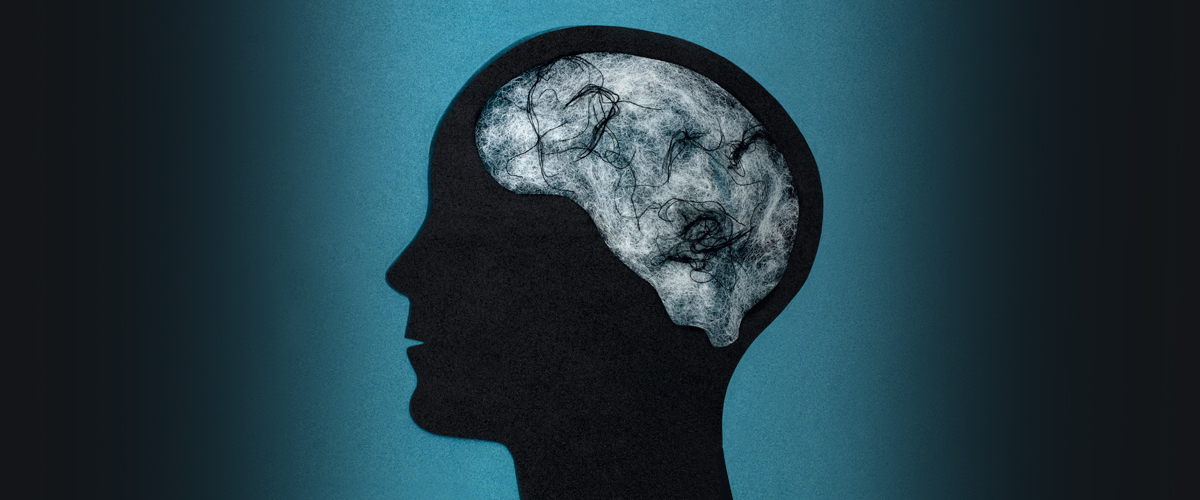
Profile of person where their brain looks like fog
"It messes up your life. This is extremely debilitating and, long term, we don't know what is going to happen", said Susie Gouldint, a long-hauler who suffers from brain fog, tinnitus, dizziness and balance issues among other symptoms. She underwent rehabilitation at a brain injury clinic for a three-month period. It helped but her symptoms persisted. McMaster University scientist Dr.John Connolly is one researcher studying the impact COVID-19 can contribute to loss of brain function, as chair of cognitive neuroscience of language at the university.

He finds the U.K. brain scanning preliminary findings "very alarming". Those 'very alarming' findings have a tie-in to his own lab's research. Viruses, he explains, can affect people for months or years. With the neurocognitive impacts of COVID-19, the question is "whether these will resolve some time in the future".

Labels: , , ,

Tuesday, June 15, 2021

A Growing Litany of Serious Woes Post-COVID

Feixiong Cheng, Ph.D.  Cleveland Clinic
"Identifying how COVID-19 and neurological problems are linked will be critical for developing effective preventive and therapeutic strategies to address the surge in neurocognitive impairments that we expect to see in the near future."
"While some studies suggest that SARS-CoV-02 infects brain cells directly, others found no evidence of the virus in the brain."
"We discovered that SARS-CoV-2 infection significantly altered Alzheimer's markers implicated in brain inflammation and that certain viral entry factors are highly expressed in cells in the blood-brain barrier."
"These findings indicate that the virus may impact several genes or pathways involved in neuroinflammation and brain microvascular injury, which could lead to Alzheimer's disease-like cognitive impairment."
"Ultimately, we hope to have paved the way for research that leads to testable and measurable biomarkers that can identify patients at the highest risk for neurological complications with COVID-19."
Feixlong Cheng, researcher, Genomic Medicine Institute, Cleveland Clinic

"It's a kind of mental cloudiness -- like you're in a daze."
"You hear a lot about it with mild out-patients, but we also see it more severely in the ICU."
"Hallucinations and confusion are commonly experienced during all sorts of severe illnesses."
Joseph Khabbaza, pulmonary and critical care physician, Cleveland Clinic
People with long haul COVID experiencing cognitive issues may not find much comfort in the conclusions reached by researchers in a new study out of the Cleveland Clinic, published in the journal Alzheimer's Research & Therapy. But researchers managed to reveal a close network relationship between COVID-19 and Alzheimer's. The study revealed that an overlap between the virus and the brain changes may be causing those cognitive issues.

Considered a new finding and rare at one point in this ever-expanding saga of COVID effects on the human body physically and psychologically, those enduring COVID long-haul symptom cases now more commonly identified, inspired researchers at the Cleveland Clinic to set out to obtain a clearer understanding of the pathways through which the virus produces neurological complications. They succeeding in uncovering a relationship between the virus and Alzheimer's.

One of the debilitating symptoms experienced by long-haulers is often called brain fog ... a term describing the approximately ten percent of COVID sufferers with troubling symptoms remaining of their bout with the SARS-CoV-2 virus causing COVID. This form of cognitive impairment, like delirium and hallucinations was believed at first to reflect the outcome of the battle waged by the body's immune system against the virus.

Alzheimer’s-like dementia cognitive impairment linked to COVID-19: Study
Setting out to explore any relationship between the virus and neurological diseases, the researchers made use of artificial intelligence to enable them to map underlying similarities across conditions, finding COVID-19 features a close network relationship with multiple neurological diseases -- notably Alzheimer's -- where an infection has the potential to lead to symptoms very similar to dementia. A search for associations was launched between the virus and the types of neuroinflammation and microvascular injury recognized in the brains of Alzheimer's sufferers.

That search succeeded in convincing the researchers that the virus may conceive a stranglehold leading to neuroinflammaton and injury of the microvascular condition of the brain. Which in turn may lead to cognition impairment with stark similarities to the ultimately fatal disease of Alzheimer's. There are no good-news stories to be found associated with the SARS-CoV-2 virus infecting with COVID-19.

covid-19 brain fog
New research has looked at cognitive symptoms associated with the virus. Getty

Labels: , , , ,

Tuesday, March 19, 2019

Progress in Virtual Reality Aiding Accurate Surgery

"It [deep brain stimulation surgery] makes a remarkable difference in a patient's quality of life."
"That is why this virtual reality environment is so helpful, because it actually allows us to turn it [visual brain mapping] into an intuitive, visual three-dimensional experience that can be used to more accurately place the electrode, as opposed to looking at the top of the skull and closing your eyes and trying to think, 'Where am I'?"
"We are talking about a refinement of millimetres. But millimetres matter."
"In deep brain stimulation surgery, because the target is very small and in the middle of the brain this leaves the surgeon with the problem of how to visualize the person’s brain to understand the area and where to put the electrode."
"This is really exciting. The deep brain stimulation electrodes will be more precisely placed because we’ll be able to integrate accurate images from the patient’s anatomy and visualize it in three dimensions."
Dr. Adam Sachs, director of neuro-modulation and functional neurosurgery, The Ottawa Hospital

"[Although virtual reality has been used for patients], doctors wearing the headsets instead of patients is fairly limited, largely because technology wasn't there in the past."
"We’re excited about working with the Sachs Lab because it is a perfect clinical example of using 3-D visualization to better understand a spatial problem."
"In this caseactually seeing a target for deep brain stimulation removes the burden on the surgeons of trying to create a 3-D model in their head."
"As far as we know, no one else is pursuing this type of thing, and it could have a global impact."
Dr. Justin Sutherland, medical physicist, radiation oncology department, The Ottawa Hospital
Dr. Adam Sachs virtually pokes around inside a virtual human brain at The Ottawa Hospital’s General campus Monday, March 18, 2019 with the help of new virtual reality technology. The 3D Virtual Reality Lab at the hospital has innovated technology scheduled to be rolled out this year that is the first of its kind, allowing neurosurgeons to increase their accuracy during deep brain stimulation for patients. Julie Oliver / Postmedia

The virtual reality laboratory at The Ottawa Hospital is still in the developmental phase of creating the cutting-edge technique whereby neurosurgeons are enabled to virtually 'step within' a patient's brain to achieve a close-up view of where an electrode will be ideally placed during deep brain stimulation surgery. Dr. Sachs, a researcher with the Ottawa Hospital Research Institute, anticipates he will be using this new high-tech tool within a few months in his hospital operating rooms.

For the past few years virtual reality has been a medical tool assisting in the training of physicians, and as well a tool useful in guiding patients with their rehabilitation, PTSD or other medical issues. Never before has virtual reality, however, been utilized in the way this direction is taking it as a technique developed for the purpose of improving the accuracy of surgery for patients with Parkinson's and other neurological diseases.

The medical physicist Justin Sutherland, on the left, explains the virtual reality technology as Dr. Adam Sachs neurosurgery pots almost inside someone's brain at the Ottawa Hospital general campus Monday, March 18, 2019   Julie Oliver

The goal of the surgery is to help in the reduction of tremors, slowness, stiffness and walking problems that Parkinson's and other neurological diseases cause to the sufferer. The expectation is that not only will mobility be improved, but the procedure can conceivably end up with a decreased reliance on medications whose side effects are decidedly unwanted. The issue is the implantation of a microelectrode no thicker than a human hair, through the skull and into a specific brain area; highly technical, precision-work.

Currently, surgeons make use of MRIs and brain atlases (visual brain mapping) to achieve a mental diagram of how the patient's brain appears. Negatively, the brain atlases are two-dimensional, produced from a compilation of many patients' brains. The use of virtual reality will aid in improving precision since surgeons can make use of accurate images from the patient's own brain in three dimensions, using MRIs and CT scans. Precision is key, critical in achieving the goal of deep brain stimulation.
Neruosurgeon Dr. Adam Sachs uses virtual reality wands to manipulate a three dimensional image of the brain


Labels: , , , ,

 
()() Follow @rheytah Tweet