Blog dedicated primarily to randomly selected news items; comments reflecting personal perceptions
Thursday, December 09, 2021
Omicron and Vaccine Boosters
"An 80 percent of epitopes in the spike protein recognized by CDS+ T-cells are not affected by the mutations in the omicron variant; two doses may still induce protection against severe disease."
Pfizer-BioNtech statement
"Our preliminary, first data set indicate that a third dose could still offer a sufficient level of protection from disease of any severity caused by the Omnicron variant."
"Broad vaccination and booster campaigns around the world could help us to beter protect people everywhere and to get through the winter season."
Dr.Ugur Sahin, CEO, BioNTech
The booster is said to improve the level of neutralizing antibodies Reuters
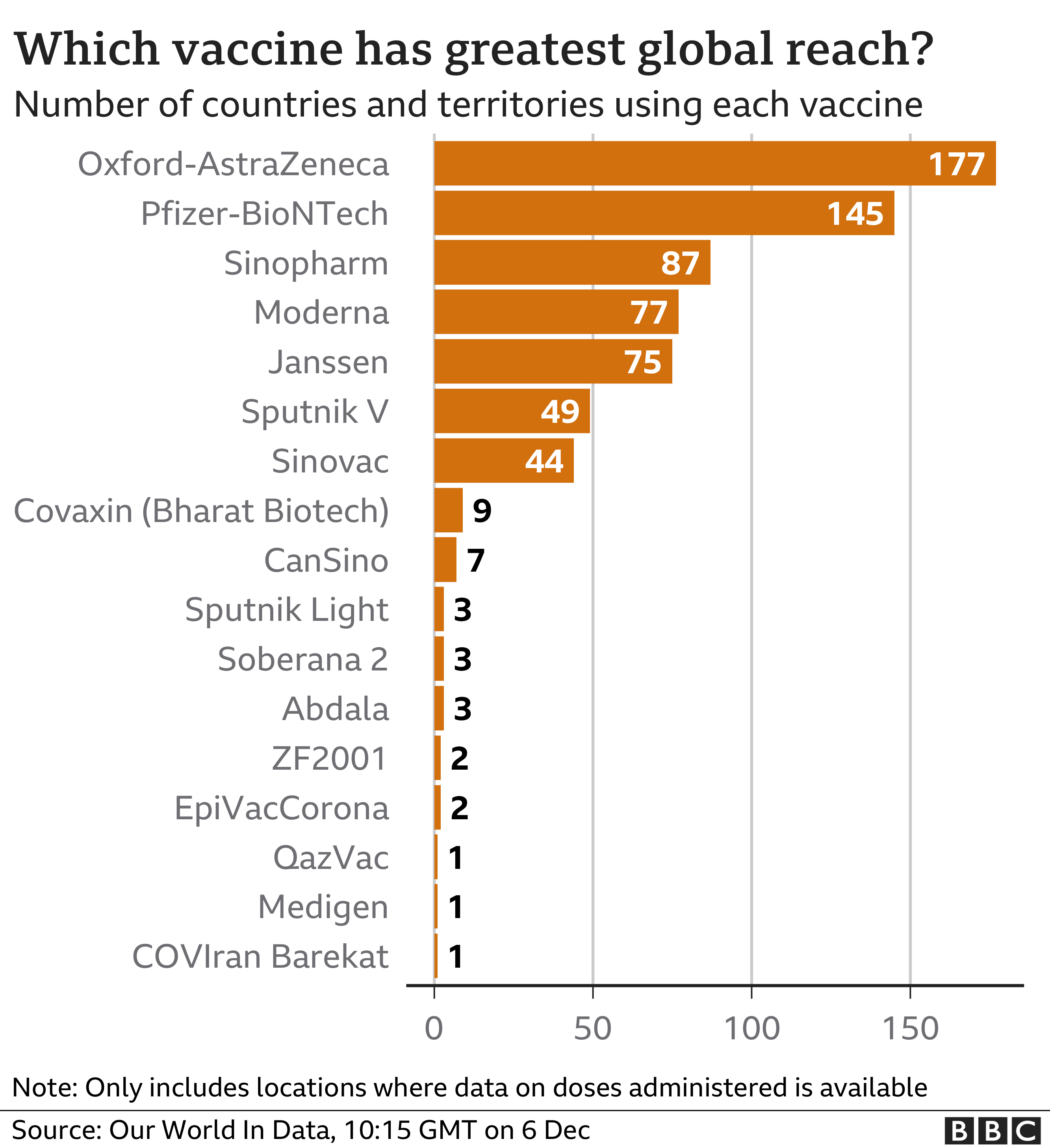
With this assurance emanating from the two pharmaceutical producers whose mRNA vaccine has become the most trusted in the world, that their vaccine formula against contracting the SARS-CoV-2 virus causing COVID-19 can be relied upon to continue offering vital protection against severe illness and death, a huge sigh of relief must surely have emanated from government sources and medical scientists the world over.
They said it, and their reputation rests upon their assurance that three doses of the Pfizer-BioNTech COVID vaccine are seen to be effective against the Omnicron variant, the mutated strain with the most mutations of any that has yet been examined, the cause of global consternation and trepidation for what it might possibly lead to. That it is more virulently transmissible appears to be a given on the evidence, but that it leads to more serious health consequences and is able to evade the vaccines' protective assurances is only now beginning to play out in real time.
From the announcement by the two companies it would seem that boosted individuals boast the same level of protection against the new variant comparable to that of people with two doses had acquired against the original coronavirus. There has been a worldwide rush conducting neutralizing studies by scientists to gauge how pre-existing immunity from both vaccination and prior infection plays out, to determine whether Omicron would be able to sidestep those defences.
The variant's emergence in South Africa, identified with a daunting constellation of mutations warned scientists that it could be more infectious and more effective at avoiding the protection offered by vaccines. Experiments have now produced early results which show the number of antibodies required to halt the replication of the virus in a test tube; an early indication how effective the new variant is in avoiding antibodies.
Pfizer's press release announced that two doses of its vaccine performed 25 times poorer for Omnicron in comparison with the original versions of the virus. Despite which, only real life, long-term data is capable of providing information on a direct reduction in vaccine effectiveness. Leading scientists to the conclusion that precise, reliable information can be expected to emerge within the next several weeks.
Pfizer-BioNTech stands by its conclusion indicating "two doses of (the Pfizer-BioNTech vaccine) may not be enough to protect against infections with the Omicron variant". At the same time, the company feels other aspects of the immune response activated by the vaccine as for example T-cells, are likely to be unaffected by the new variant, and still able to protect against severe disease.
It was found by researchers examining people who had received three doses of the mRNA vaccine -- double-jabbed with a booster -- that the antibody effectiveness improved 25-fold, returning to approximately the same effectiveness level as two jabs for the original, wild-type virus.
Pfizer stands by its result indicating "two doses of (Pfizer)avirus.
Inoculating Children Against COVID : Closing the Gap
"We are eager to extend the protection afforded by the vaccine to this younger population, subject to regulatory authorization, especially as we track the spread of the Delta variant and the substantial threat it poses to children."
Albert Bouria, chairman, CEO, Pfizer Inc.
"This is a good-news story. This is great news, in the right direction, but there are still multiple extra steps before we see the vaccine in kids' arms."
"It is going to take many weeks to review [Pfizer-BioNTech data], but probably not months."
"This will require rigorous review. That might take some time to ensure it is done with the highest standards. But obviously we are all anxious."
"I think it would be a huge deal for quelling some of the anxieties of parents. When it comes to keeping outbreaks out of schools, I think it would help enormously. And it gets us closer to having the herd-immunity conversation."
"It is not clear whether herd immunity is possible. But, if it is, it can't be achieved without kids."
Dr.Raywat Deonandan, epidemiologist, University of Ottawa
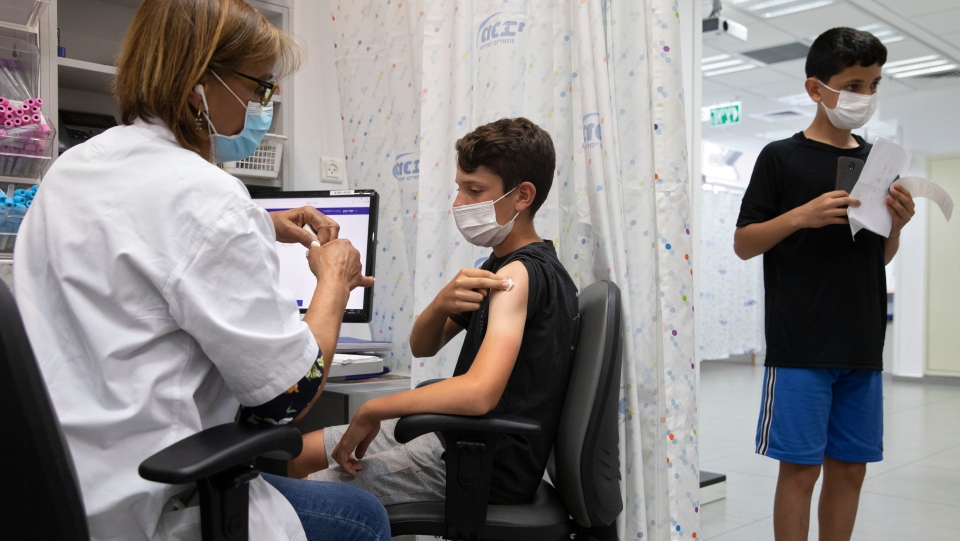
An Israeli youth receives a Pfizer-BioNTech COVID-19 vaccine in the
central Israeli city of Rishon LeZion, Sunday, June 6, 2021. Israel
started vaccinating children from 12 to 15 on Sunday. (AP
Photo/Sebastian Scheiner)
Pfizer-BioNTech have announced that according to their clinical trials involving children of the ages between five and 11 their COVID-19 vaccine is safe, producing a robust immune response. Children in that age demographic were given a lower dose of vaccine -- one-third of the dosage given to older children and adults, and successfully produced antibodies to COVID, the signal measure of efficacy; with none suffering adverse effects.
The next step for the company is to apply for authorization from federal health agencies to enable the vaccine to be used for children in that age range in Canada, the United States, Europe and other places globally, wasting the least amount of time possible in a race against COVID.The announcement signalled the first indication that the vaccines should be available shortly for children. A reality of significant relief for both parents and the medical community.
That children under 12 years of age lacked an authorized vaccine is considered to represent a vacuum in an otherwise-well-covered area of safe and effective protection against the SARS-CoV-2 virus causing COVID-19, where the universal goal is to achieve herd immunity with the hopes of eventually moving away and out of the pandemic. As elsewhere, federal authorization must be achieved before young children can be inoculated.
Only kids 12 and older are eligible — so far — to get
vaccinated against COVID-19 in the U.S. But the shots could be available
for younger children as soon as this fall, say researchers studying the
vaccine in that age group.Chris O'Meara/AP
Health Canada, speculates Dr.Pham-Huy, would likely receive Pfizer's application by late September or early October before a review of its data on safety and efficacy in children can move forward. Since the dosage for younger children is smaller than that for adolescents, it may take longer for the review to be completed.
The results from a Phase 2 and 3 trial indicated in participants from five to eleven years of age that the low-dose vaccine was "safe, well tolerated and showed robust neutralizing antibody responses", though the data has not yet been made public. As Dr.Deonandan explained the matter, Pfizer relies on antibody response in children in the trial as evidence of the vaccine's efficacy since there was insufficient data to calculate vaccine success.
In the tests conducted for adults the measure of success in vaccine efficacy was determined by how many test subjects among vaccinated and unvaccinated people become ill with the virus. An insufficient number of children contracted the virus in the Pfizer study to enable calculations to flow from data. Substituting that measurement of success with showing robust antibody levels in vaccinated children resulted in a "favourable safety profile".
The Pfizer/BioNTech
coronavirus vaccine is "safe, well tolerated" and produces a "robust"
antibody immune response in children aged five to 11, according to the
findings of a US trial. Getty Images
"Certainly, I think if it is a very low cost, very safe, very effective way to prevent the spread of COVID-19, then I don't see why we wouldn't vaccinate children purely for that reason."
"If it came to pass that we weren't able to achieve herd immunity without some kind of mandate, and in particular a mandate for children, it's something we should definitely consider."
"It's not forcing people to be vaccinated; it's not forcibly injecting them or anything like that, of course."
Anthony Skelton, associate professor of philosophy, Western University
"There are two ethical questions when it comes to vaccination. Do the benefits outweigh the risks for this individual -- is it in their interest to have a vaccine? And, secondly, is there somebody else who needs it more?"
"For children, at this point in time, I think the answer to the first question is uncertain; for younger children it's more uncertain, simply as a function of the fact that there has been very little experience in them."
"Even if the vaccine is highly effective in children, it can only eliminate an already tiny risk."
Dominic Wilkinson, professor of medical ethics, University of Oxford
"Realistically, if we want to reach herd immunity in the short term it's likely that we're going to have to vaccinate kids."
"Because the vaccines aren't perfect at preventing transmission, you're talking about vaccinating all of the eligible population age 12 and older, which we know we're not going to hit."
Ashleigh Tuite, University of Toronto infectious disease epidemiologist
A
dilemma has arisen over whether it’s right to vaccinate young children —
not so much for their own good, but to help achieve herd immunity.Photo by Getty Images
There are several reasons why children should be vaccinated, posits philosopher Anthony Skelton. If vaccines prove to be safe and effective in younger children the option is less risky than trusting that if they become infected everything will turn out well. Science still has not established many things about COVID-19 outcomes following infection, and researchers have much yet to learn about long COVID in children. Although Pfizer's vaccine used to inoculate older children see some reactions that are "pretty small and manageable", concerns are raised over unnecessarily vaccinating them.
According to Dr.Skelton, children are part of the 'herd' in a population and there are concerns that Canada will be unable to reach effective herd immunity with the boost that vaccinating only over-12-year-old children will give, and bypassing all younger children in the drive for herd immunity. The 0-to-11-age group account for 12.5 percent of the country's population, at a 4,783,562 total, according to Statistics Canada.
In Canada some 271,000 COVID infections were reported in children under age 19 and of those roughly 1,400 children were hospitalized, and thirteen of the total perished due to COVID. Most children infected withCOVID experience mild or no symptoms whatever. Rare, occasionally life-threatening conditions, such as multisystem inflammatory syndrome can occur, a hyper immune reaction to being infected with COVID causing coronary aneurysms. But overall, children seem spared from COVID's serious conditions.
Pfizer-BioNtech is preparing to approach U.S. regulators for an expansion of emergency authorization of its vaccine to be used with children aged five to 11, with younger children to follow, according to a senior Pfizer executive. Awaiting data to unequivocally demonstrate safety and immunogenicity (immune response in children), expectations are that Pfizer will pursue similar timelines to Health Canada in a similar submission. Canada, in May, became the first country globally to authorize Pfizer's vaccine for use with 12- to 15-year-olds.
Both Pfizer and Moderna have been undergoing tests with children to ensure efficacy and safety, and both tested a series of doses to discover safe minimum doses to ensure a immune response. "Kids do have a stronger immune response, so it's super important that we have the right dosing and we figure out the right schedule before to go ahead and do it", explained Dr. Fatima Kakkar, infectious disease pediatrician at Sainte-Justine hospital in Montreal.
A safe dose-to-age formula appears to have been settled by Pfizer, with a three-microgram dose each shot for children ages six months to five years, and 10 microgram doses for five to eleven-year-olds. Adult doses in comparison, have 30 micrograms.
“Even if the vaccine is highly effective in
children, it can only eliminate an already tiny risk,” says Oxford
professor of medical ethics Dominic Wilkinson.Photo by Getty Images
"[It's reasonable to ask children] to do something to help us all, including them, get back the world that we want them to live in and grow up in. I think we need to give children credit: They know what's going on. They worry. They're anxious. They're thinking about what they're seeing."
"This is not about, 'dig a moat around your house, make that safe and stay inside'. We've been through that stage."
"This is about, how can we make our family, our community, our town, our country, our world safe, so that it can be the place that we want children to have the chance to grow up in."
Perri Klass, professor of pediatrics and journalism, New York University