Ruminations

Blog dedicated primarily to randomly selected news items; comments reflecting personal perceptions

Wednesday, March 08, 2023

Sleep 101: do NOT Stint on ZZZZZZZZs

"I think these findings emphasize that just getting enough hours of sleep isn't sufficient, you really have to have restful sleep and not have much trouble falling and staying asleep."
"It's never too late to exercise or stop smoking, it's also never too early."
"Even from a young age, if people can develop these good sleep habits of getting enough sleep, making sure they are sleeping without too many distractions and have good sleep hygiene overall, it can greatly benefit their overall long-term health."
“So, if we can improve sleep overall, and identifying sleep disorders is especially important, we may be able to prevent some of this premature mortality."
"And we should be talking about and assessing sleep more often."
Dr. Frank Qian, clinical fellow in medicine, Harvard Medical School
 
“Compared to individuals who had zero to one favorable sleep factors, those who had all five were 30% less likely to die for any reason, 21% less likely to die from cardiovascular disease, 19% less likely to die from cancer, and 40% less likely to die of causes other than heart disease or cancer.” 
Study Statement 

"That [gender differential in study outcomes] was an interesting part of the study for me, and I hope we can find that answer with more research. [One potential reason for that gender difference could be the difficulty of evaluating women for obstructive sleep apnea, a potentially deadly condition in which breathing stops every few minutes. The more severe the apnea, the greater the risk of coronary artery disease, heart attacks, heart failure and strokes]."
"Women with obstructive sleep apnea often get under-diagnosed or misdiagnosed because they may not present with the classic symptoms that we see when we’re evaluating men.Maybe we need to ask different questions or look at different parameters, or is there something we’re missing here?"
Dr. Raj Dasgupta, sleep specialist, associate professor of clinical medicine, University of Southern California’s Keck School of Medicine
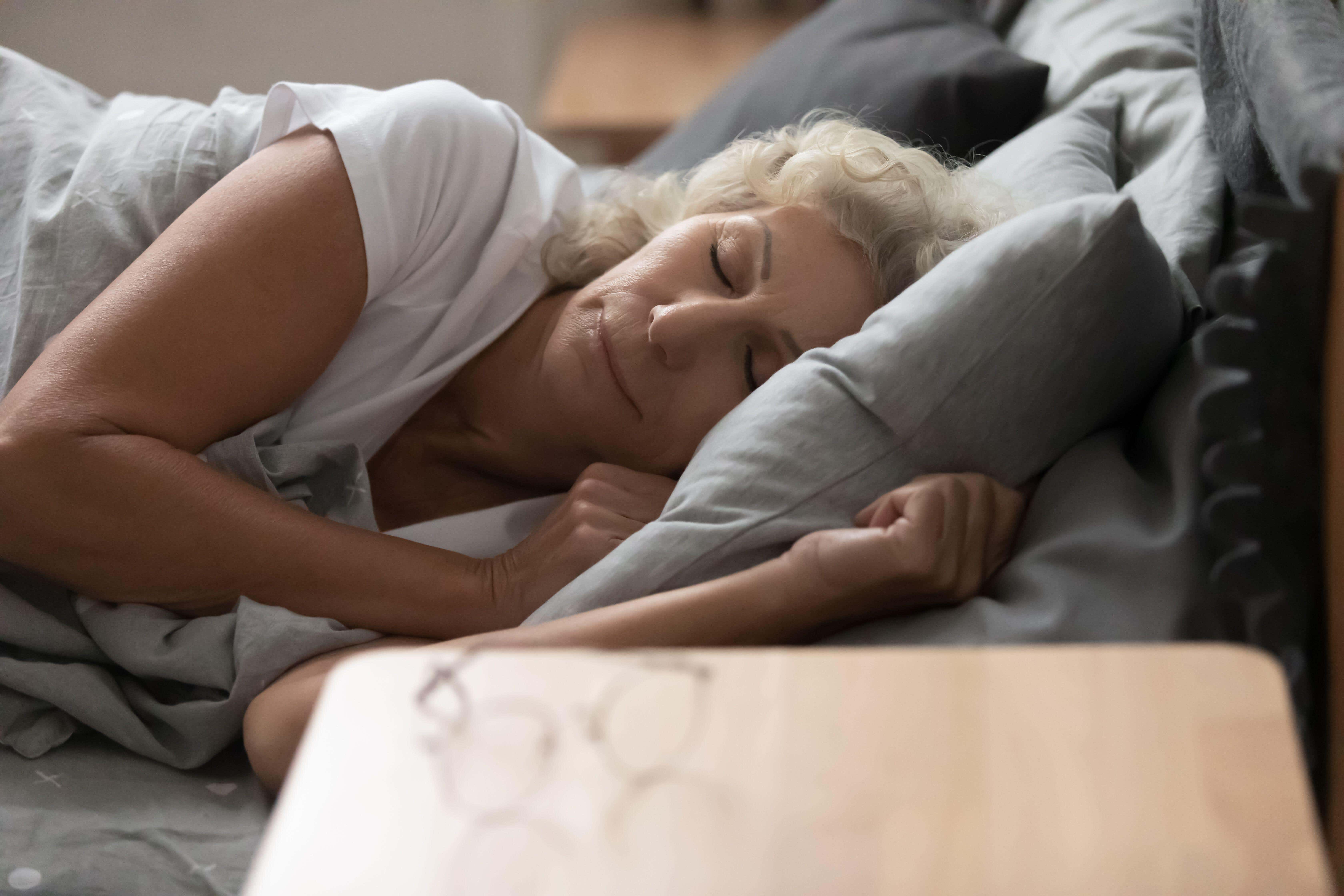
Getting good sleep could add years to your life, a study suggests (Alamy/PA)

A new study on the qualitative benefits of sleep was presented recently at the American College of Cardiology's Annual Scientific Session, Researchers involved in the study looked at data collected from 172,321 individuals participating in the National Health Interview Survey that took place between 2013 an 2018. 

It has been fairly well established by science that insufficient sleep will increase risk of health conditions such as high blood pressure, heart disease, obesity and diabetes. This study, however, shows for the first time that good sleep has benefits leading to increased life expectancy. To the present a premise that had never been put through a study microscope.

Now, scientists at Harvard University have definitively found that a good night's sleep has the potential to add years to one's life. Studying data from over 170,000 people, researchers found that those people who enjoyed good-quality sleep lived longer than those whose sleep patterns are found wanting in quality and duration.

According to the study, life may be extended by close to five years for men and over two years, for women. Eight percent of deaths from any cause may be linked to poor sleep, according to the study results. Those who realized the largest benefit slept for between seven and eight hours nightly and experienced no difficulty falling asleep, nor problems staying asleep.

And nor did any of these subjects make use of sleep medication. They routinely reported feeling well-rested on waking at least five days each week. Life expectancy in those who reported quality sleep was 4.7 years greater for men and 2.4 years for women.
"Certainly all of us... have those nights where we might be staying up late doing something or stressed out about the next day."
 "If that's a fairly limited number of days a week where that's happening, it seems like that's OK, but if it's occurring more frequently then that's where we run into problems."
Frank Qian, study co-author, Harvard Medical School 

Based on an assessment of five different factors in quality sleep, researchers determined the key habits for high-quality sleep are…

  1. Seven to eight hours of sleep per night
  2. Difficulty falling asleep no more than twice a week
  3. Trouble staying asleep no more than twice a week
  4. Not using any sleep medication
  5. Feeling well rested after waking up at least five days a week

Labels: , , , , ,

Wednesday, August 18, 2021

Sleeping Solo

"Few things impact the quality of your sleep each night more than your sleep environment."
"That includes who's sleeping beside you and how well you sleep together."
Meir Kryger, professor of medicine, School of Medicine, Yale 

"Considering all the emotional and physical benefits of sleep, the sum of two healthy/rested individuals who make up a loving couple are greater than their individual parts."
"[I'm] a huge proponent of couples sleeping apart." 
"A bed is always for two things only; sleep and sex. When you crawl into bed, one of those two Pavlovian bells should go off."
Eric Marlowe Garrison, chair, American Association of Sex Educators, Counselors and Therapists

"Sleep deprivation can cause devastating physical and emotional fallout. Electing to sleep apart can often minimize or eliminate sleep problems and save or enhance a relationship."
"The most important sign that sleeping apart may enhance a relationship is that restful and adequate sleep for one or both partners is being compromised because of physical incompatibilities that disrupt sleep."
Joseph Cilona, psychologist, Manhattan 

"Tired, sleep=deprived parents are rarely at their best."
"The choice to sleep apart can be problematic if it is not mutual or agreed upon by both members of the couple."
Aude Henin, co-director, Child Cognitive Behavioural Therapy Program, Department of Psychiatry, Massachusetts General Hospital
Glenn Harvey
 
Overall, the general quality of sleep is just as important as its quantity and likely, somewhat more so. Medical experts recommend 7 hours of nightly sleep but if the sleep is disturbed and an uncomfortable experience, the timing is compromised by the experience. The Centers for Disease Control and Prevention research concludes that fewer people sleep well and research has divulged that may be because the person sleeping beside you is the reason.

Professor Kryger of Yale's School of Medicine, author of The Mystery of Sleep: Why a Good Night's Rest is Vital to a Better, Healthier Life, pinpoints the problem squarely on the struggle with sleep problems like restlessness, parasomnia (sleep terrors and sleepwalking), sleep apnea and late-night trips to the bathroom already afflicting people so that their existing reduced state of quality sleep patterns are exacerbated when sleeping next to someone with some of those same symptoms of sleep-depriving qualities.
 
A furniture showroom circa 1930 showing an “ideal bedroom.”
Topical Press Agency/Getty Images
 
Sleeping next to someone who constantly alters their sleeping positions, pulls the covers toward them, having a sleep schedule unlike your own, equate to a poor night's sleep due to a variety of disturbances all diminishing the quality of sleep. Sex Counsellor Eric Garrison speaks of meeting with thousands of couples anxious to improve their intimate relationships and through those interviews finding separate sleeping arrangements (from twin beds in the same chamber positioned close to each other, to double master bedrooms) helps to nourish marital bonds.

Poor sleep can result in relationship conflicts, according to a study out of University of California at Berkeley. Another study out of Paracelsus Private Medical University concluded that a lack of sleep and relationship problems often companion one another. Sex therapist Garrison emphasizes his finding that couples who sleep apart may also develop an improved sex life. In that a good night's rest tends to reduce stress -- and there is nothing quite like stress to dampen sexual desire.

Improved sleep patterns resulting in superior rest nightly is also involved in reducing the risk of chronic health problems, and may also improve motor functions as well. "We are better at everything when we have had enough sleep", explains professor of family and social science, Paul Rosenblatt, from the University of Minnesota, who cautions that couples who sleep apart may also feel less safe sleeping alone, or be concerned about the loss or cost of additional room required to make sleeping apart possible.
"The primary downsides of sleeping apart are the possibility that there could be a loss of intimacy or closeness, which could lead to feelings of disconnectedness."
"[Couples who decide to sleep apart should] schedule some time to be together in bed to cuddle, be intimate and just experience some closeness."
"For many couples, it's the time before sleep that makes the marital bed so sacred."
Wendy Troxel, senior behavioural and social scientist, Rand Corp.
Lesbian couple asleep in bed, photo by LeoPatrizi/Getty Images
Photo by Leo Patrizi/Getty Images


Labels: , , , , ,

 
()() Follow @rheytah Tweet