Ruminations

Blog dedicated primarily to randomly selected news items; comments reflecting personal perceptions

Wednesday, August 18, 2021

Sleeping Solo

"Few things impact the quality of your sleep each night more than your sleep environment."
"That includes who's sleeping beside you and how well you sleep together."
Meir Kryger, professor of medicine, School of Medicine, Yale 

"Considering all the emotional and physical benefits of sleep, the sum of two healthy/rested individuals who make up a loving couple are greater than their individual parts."
"[I'm] a huge proponent of couples sleeping apart." 
"A bed is always for two things only; sleep and sex. When you crawl into bed, one of those two Pavlovian bells should go off."
Eric Marlowe Garrison, chair, American Association of Sex Educators, Counselors and Therapists

"Sleep deprivation can cause devastating physical and emotional fallout. Electing to sleep apart can often minimize or eliminate sleep problems and save or enhance a relationship."
"The most important sign that sleeping apart may enhance a relationship is that restful and adequate sleep for one or both partners is being compromised because of physical incompatibilities that disrupt sleep."
Joseph Cilona, psychologist, Manhattan 

"Tired, sleep=deprived parents are rarely at their best."
"The choice to sleep apart can be problematic if it is not mutual or agreed upon by both members of the couple."
Aude Henin, co-director, Child Cognitive Behavioural Therapy Program, Department of Psychiatry, Massachusetts General Hospital
Glenn Harvey
 
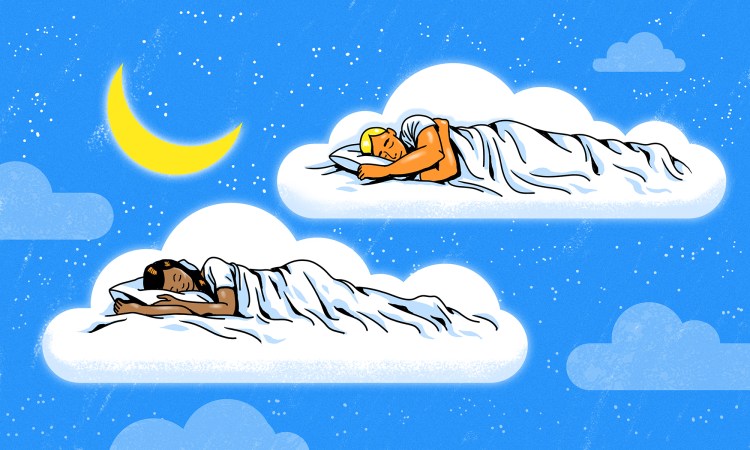
Overall, the general quality of sleep is just as important as its quantity and likely, somewhat more so. Medical experts recommend 7 hours of nightly sleep but if the sleep is disturbed and an uncomfortable experience, the timing is compromised by the experience. The Centers for Disease Control and Prevention research concludes that fewer people sleep well and research has divulged that may be because the person sleeping beside you is the reason.

Professor Kryger of Yale's School of Medicine, author of The Mystery of Sleep: Why a Good Night's Rest is Vital to a Better, Healthier Life, pinpoints the problem squarely on the struggle with sleep problems like restlessness, parasomnia (sleep terrors and sleepwalking), sleep apnea and late-night trips to the bathroom already afflicting people so that their existing reduced state of quality sleep patterns are exacerbated when sleeping next to someone with some of those same symptoms of sleep-depriving qualities.
 
A furniture showroom circa 1930 showing an “ideal bedroom.”
Topical Press Agency/Getty Images
 
Sleeping next to someone who constantly alters their sleeping positions, pulls the covers toward them, having a sleep schedule unlike your own, equate to a poor night's sleep due to a variety of disturbances all diminishing the quality of sleep. Sex Counsellor Eric Garrison speaks of meeting with thousands of couples anxious to improve their intimate relationships and through those interviews finding separate sleeping arrangements (from twin beds in the same chamber positioned close to each other, to double master bedrooms) helps to nourish marital bonds.

Poor sleep can result in relationship conflicts, according to a study out of University of California at Berkeley. Another study out of Paracelsus Private Medical University concluded that a lack of sleep and relationship problems often companion one another. Sex therapist Garrison emphasizes his finding that couples who sleep apart may also develop an improved sex life. In that a good night's rest tends to reduce stress -- and there is nothing quite like stress to dampen sexual desire.

Improved sleep patterns resulting in superior rest nightly is also involved in reducing the risk of chronic health problems, and may also improve motor functions as well. "We are better at everything when we have had enough sleep", explains professor of family and social science, Paul Rosenblatt, from the University of Minnesota, who cautions that couples who sleep apart may also feel less safe sleeping alone, or be concerned about the loss or cost of additional room required to make sleeping apart possible.
"The primary downsides of sleeping apart are the possibility that there could be a loss of intimacy or closeness, which could lead to feelings of disconnectedness."
"[Couples who decide to sleep apart should] schedule some time to be together in bed to cuddle, be intimate and just experience some closeness."
"For many couples, it's the time before sleep that makes the marital bed so sacred."
Wendy Troxel, senior behavioural and social scientist, Rand Corp.
Lesbian couple asleep in bed, photo by LeoPatrizi/Getty Images
Photo by Leo Patrizi/Getty Images


Labels: , , , , ,

Wednesday, July 10, 2019

Rx: A Good Night's Sleep

"Our study represents one of the largest to date that shows this link, and it shows that the more nights of insufficient sleep you get as a college student, the more likely that you will exhibit a wide range of mental health symptoms."
"The fact that sleep health was so strongly related to mental health is important since the majority of college students don't get the recommended amount of sleep needed for optimal health and functioning."
"So, these young adults aren't sleeping enough, and not only does that increase their likelihood for things like worse academic performance and health, but it also takes a toll on their mental health as well."
Dr. Michael Grandner, director, Behavioral Sleep Medicine Clinic, University of Arizona, Tucson

"What I thought was striking was the number of students they were able to study and the strong relationship between insufficient sleep and multiple domains of mental health."
"This is an important finding as mental health problems are common in this age group, and unfortunately insufficient sleep is also very common in this group."
"This study would suggest that healthcare providers and universities should put more emphasis on getting adequate amounts of sleep to not only help [with] overall physical health, but [also] mental health."
Dr. Raman Malhotra, associate professor of neurology, Washington University School of Medicine, St.Louis, Missouri
Lack of Sleep is Causing Mental Heath Issues in College Students
DepositPhotos

"It was really surprising to see how strongly insufficient sleep was associated with a wide variety of mental health symptoms among college students."
"Also, it was intriguing that while student-athletes experienced on average fewer nights of insufficient sleep and better mental health, the relationship between insufficient sleep and mental health was as strong or stronger in athletes compared to non-athletes."
lead author Thea Ramsey, undergraduate student, University of Arizona, Tucson
That college and university students don't get enough sleep is not unknown; it is, in fact, universally acknowledged. Lack of sufficient sleep doesn't benefit anyone. People under pressure to perform cerebral functionality, much less physically, will fail to perform optimally when they're tired physically and their brains haven't been refreshed through adequate sleep. The link with health has been long known and people are often informed of the harm they're doing to their well-being with sleep deficits.

New research findings were brought forward at the June 11 annual meeting of the Associated Professional Sleep Societies, emphasizing that with each night of inadequate sleep a roughly 20 percent risk of mental health symptoms arises. Undergraduate student Thea Ramsay, lead author in the study, interpreted the findings as fuel for a recommendation that college students would benefit enormously from sleep health education.

Ms. Ramsey and her advisor Dr. Grandner and colleagues studied data derived from over 110,000 students through the National College Health Assessment, defining "insufficient sleep" as nights students missed having adequate sleep, resulting in feeling rested. The result of their analysis of this data led to the conclusion that inadequate sleep linked to a 19% to 29% increase in mental health symptoms.

Their findings presented at Sleep 2019, focused on statistics such as loneliness increasing by 19% for each night of inadequate sleep; depressed mood by 21%; anxiety by 25%; desire to inflict self-harm increased by 25%; suicidal thoughts increased a whopping 28%, and exhaustion 29%, aside from other, related evaluated symptoms of ill health resulting from sleep deficits.

A subgroup of close to 8,500 students' data was examined as well by the researchers leading to similar associations, despite Ms. Ramsey having anticipated differences in athletes' response to insufficient sleep might be found. Instead, the studied data failed to support any difference between the two groups in deleterious effects resulting from insufficient sleep.

According to the American Academy of Sleep Medicine, adults 18 years and older should aim for at least seven hours or more nightly of good, sound sleep to avoid outcomes as diverse as weight gain, to the sleep-debt-linked onset of critical health conditions. The research presented on June 11 at Sleep 2019 was published online in the journal Sleep.

Sleepy office worker at desk with multiple coffees.
When an individual does not get enough sleep to feel awake and alert, they begin to experience symptoms of sleep deprivation.
The main symptom of ongoing sleep loss is excessive daytime sleepiness, but other symptoms include:
  • yawning
  • moodiness
  • fatigue
  • irritability
  • depressed mood
  • difficulty learning new concepts
  • forgetfulness
  • inability to concentrate or a "fuzzy" head
  • lack of motivation
  • clumsiness
  • increased appetite and carbohydrate cravings
  • reduced sex drive
 Medical News Today
  • Not getting enough sleep prevents the body from strengthening the immune system and producing more cytokines to fight infection. This can mean a person can take longer to recover from illness as well as having an increased risk of chronic illness.
  • Sleep deprivation can also result in an increased risk of new and advanced respiratory diseases.
  • A lack of sleep can affect body weight. Two hormones in the body, leptin and ghrelin, control feelings of hunger and satiety, or fullness. The levels of these hormones are affected by sleep. Sleep deprivation also causes the release of insulin, which leads to increased fat storage and a higher risk of type 2 diabetes.
  • Sleep helps the heart vessels to heal and rebuild as well as affecting processes that maintain blood pressure and sugar levels as well as inflammation control. Not sleeping enough increases the risk of cardiovascular disease.
  • Insufficient sleep can affect hormone production, including growth hormones and testosterone in men.

Labels: , ,

Saturday, February 02, 2019

Heading Off Sleep Deprivation -- and Decreased Health Outcomes

"[Humans are terrible at judging how sleep-deprived they truly are. A person suffering from sleep withdrawal is akin to] someone at a bar who has had far too many drinks picking up his car keys and confidently telling you, 'I'm fine to drive home'."
Matthew Walker, director, Center for Human Sleep Science, University of California, Berkley
Shutterstock
Dr. Walker has written that morning people account for approximately 40 percent of the population; night people for 30 percent. According to Dr. Walker this reflects evolution dating back to caveman days when people slept in groups. At one time through history entire families shared a sleeping area in one-room cottages. Modern work schedules adhere largely to early start times forcing people inclined to stay up late into an unnatural sleep-wake cycle, coming hard up against DNA hardwiring.

The Stanford Pulse Institute released survey results in 2014 with the finding that 76 percent of workers felt tired on multiple week days, while 15 percent tended to nod off on the job once a week at least. A plague appears to have infected the modern world resulting in a search for a cure fuelling a 'wellness' industry where desperate people will try just about anything to solve their problem of chronic tiredness due to insufficient sleep.

In an effort to reach a solution whereby people will begin to feel energized and alert, touted 'solutions' have come to the fore: mushroom elixirs, essential oils, lemon water, IV vitamin drips, light therapy, B12 booster shots, eliminating gluten, sips of apple cider vinegar, vitamin packs, and more. When, in effect, all people really need to solve their problem of miserable tiredness ghosting their days, is a good night's sleep.

It's not a mystery to most people, in actual fact. The need for adequate sleep has been drummed into us from childhood forward, by concerned parents, by the medical community, by observers noting the dark circles under our eyes, by our own common sense. But we don't even listen to our rational selves, so why would we listen to health professionals whose advice we think we can do without? So we settle for feeling sluggish, moody and without motivation, dragging through the day.
Lost sleep, a phenomenon previously neglected by medical science, is now held responsible for a growing range of ailments.
Illustration by Richard McGuire
According to the National Health Service in Britain lack of sleep -- meaning anything less than eight or nine hours nightly-- increases risks for obesity, heart disease and diabetes -- and also incidentally shortening like expectancy. If that's not sufficient grounds to take another look at our casual observance of required sleep hours, then what is? That a deficit of sleeping hours can lower our immune systems, cause anxiety, depression and long-term mood disorders, raise our blood pressure, cause inflammation, increase cancer risk and decrease fertility, might do it...

And then there's the World Health Organization which has made a declaration that a "sleep loss epidemic" in industrialized nations is occurring, and night-shift work has been categorized as a probable carcinogen resulting from circadian disruption. In Canada, the average adult sleep time of seven hours and seven minutes according to Statistics Canada, just doesn't cut it.

Sleep researcher Patrick Finan of Johns Hopkins found that adults who manage less than seven to nine hours of sleep nightly actually can age their brains by three to five years. Sleep-deprived people are three times more likely to catch a cold, and 33 percent more likely to develop dementia, according to his findings. Fewer than five hours of sleep a night increases the risk of obesity by fifty percent.

Driving accidents caused by drowsy drivers kill one person each hour in the United States, thus pointing to responsibility for more vehicular collisions annually than those caused by alcohol and drugs in combination. "Driving with having only earned four to five hours of sleep in a 24-hour period can be just as impairing as driving legally drunk", according to the director for traffic safety, advocacy and research with AAA.

Night-shift workers or those using electronic devices can benefit from wearing blue-light blocking glasses, according to a 2013 study by researchers at the University of Toronto. On the other hand, research by Harvard Health recommends the use of red lights for night lights since they least impact on circadian rhythms. Turning down the thermostat at night helps sleep since our core temperature needs to decrease by a degree Celsius to initiate sleep.

The aim is to mimic the natural temperature dips occurring after sunset in nature, within your bedroom. A bedroom temperature of around 18.3 degrees Celsius, according to Dr. Walker, is ideal for most people. And remember to decline that coffee at night, have it no later than four in the afternoon, and even so remember caffeine's quarter-life is 12 hours. A single serving of coffee at lunchtime will result in a quarter of that caffeine remaining in your system at midnight.
Medical News Today
Sleepy office worker at desk with multiple coffees.

Labels: , ,

Wednesday, July 25, 2018

The Power of Positivity and Lifestyle Choices

No matter what your age, you have the power to change many of the variables that influence how long you live, and how active and vital you feel in your later years. Actions you can take to increase your odds of a longer and more satisfying life span are really quite simple:
  1. Don't smoke.
  2. Enjoy physical and mental activities every day.
  3. Eat a healthy diet rich in whole grains, vegetables, and fruits, and substitute healthier monounsaturated and polyunsaturated fats for unhealthy saturated fats and trans fats.
  4. Take a daily multivitamin, and be sure to get enough calcium and vitamin D.
  5. Maintain a healthy weight and body shape.
  6. Challenge your mind. Keep learning and trying new activities.
  7. Build a strong social network.
  8. Follow preventive care and screening guidelines.
  9. Floss, brush, and see a dentist regularly.
  10. Ask your doctor if medication can help you control the potential long-term side effects of chronic conditions such as high blood pressure, osteoporosis, or high cholesterol.                                                                                                                                       Harvard Medical School
Can apple cider vinegar help with weight loss?
Good advice from the medical experts. Changing lifestyle that fails to reflect due regard to one's current and future health requires commitment. We become habituated to many things in life, and to contemplate making these commitments is to acknowledge that we have the potential to vastly improve the state of our health, our satisfaction with life and end up with a longer, more active and healthy lifespan. For people who become accustomed as they age to a sedentary lifespan to determine that in the interests of becoming healthier and living longer they must become more active, that realization may seem burdensome.

For people who have become reliant to eating on the run, and consuming commercial products in favour of whole foods, it becomes a wholesale change in perspective to set aside dependence on processed foods in favour of eating more whole grains, fruits, vegetables, poultry, fish; choosing fresh and unprocessed over nutrition-deficient and calorie-dense foods. And then there is also the issue of being involved in life, using our brains to pursue new avenues of interest to keep our minds malleable and involved.
15 Heart-healthy Foods to Work into Your Diet
It can be done, and often the living proof is those in society who are now in their 70s and 80s who live fulfilling lives not only because their DNA has endowed them with good genes, but because their lifestyles have always been practical in outlook and dedicated to pursuing an ongoing status of robust health. They engage in brain exercises, reading and informing themselves, they expend energy in the physical exercises of their choice be it swimming, sports, hiking, bicycling, dancing; whatever.

And they make certain they have adequate daily rest, because sleep and sound sleep patterns resulting in adequate hours of sleep -- an average of at least 7 hours nightly -- is a basic requirement to achieving and maintaining good mental and physical health. Maintaining balanced blood sugar and good muscle mass result from balanced energy levels, all aids in preserving gut and immune health for an enjoyable and long life.
Mediterranean diet may be more helpful than statins
The brain requires Omega-3 fatty acids to function optimally, to reduce inflammation and build and repair cell membranes, all of which help in managing stress, protecting against diabetes onset and cardiovascular conditions. Good sources of Omega-3 are salmon, sardines, mackerel, flaxseed, chia seeds, canola oil, walnuts and soybeans, among others, readily incorporated into a healthy, diverse diet. We also need to hydrate our brain to prevent brain cells from dehydrating resulting in headaches, constipation, muddled thoughts.


With age, the absorption of nutrients in the gut becomes more difficult; drinking ample water helps the gut to remain healthier. Cognitive function is improved with B vitamins. B vitamins also help in the absorption of nutrients with an age-related decrease in stomach acidity. Medications can also block the ability of the body to absorb B vitamins, just as stress can. B vitamins are found in eggs, beans, nuts, seeds, green vegetables, fish and whole grains. As well as red meat, broccoli, spinach, oranges, avocados, bananas, and more.
Image result for what foods are b vitamin strong?

As we age, lean body mass is lost, continuing with advanced age. Fat mass increases as muscle mass decreases, which can lead to chronic conditions like diabetes and heart disease. Lose enough muscle mass and chances of falling increase; with age bone mass decreases as well with the potential to lead to osteoporosis. Ensuring sufficient protein is consumed from beans, nuts, seeds, fish, chicken is vital as the body ages. This is where moderate weight-bearing exercise and yoga can help with muscle strength and body flexibility.

Nuts and seeds provide Vitamin E, a beneficial antioxidant supporting immune function, along with Vitamin C, when we consume citrus fruits, berries, leafy greens and tomatoes. Coloured fruits and vegetables provide boosts to the immune system as well. The daily addition of Vitamin D is advised since as we age, deficiency in that critical vitamin occurs. We absorb Vitamin D through exposure to the sun, and levels decrease markedly through the winter months. This is a vitamin that supports the immune system, prevents cancer and adds to bone and heart health.

Last, but certainly not least, is the attitude we bring to life. Appreciating the life we  have and the way we lead it; feeling positive thoughts gives a boost to good health. Many scientific studies have pointed to a healthy emotional state being instrumental in aiding people to overcome serious health problems. A research team at the Israel Institute of Technology several weeks back published a paper in the science journal Nature Communications when they discovered a connection between emotional state and the body's capacity to combat cancer.
Image result for elder exercises
How Seniors Can Benefit from Adopting an Exercise Regimen - AgingCare.com

Labels: , , , , ,

Saturday, July 14, 2018

Searching For Functionally Disturbed Sleep Solutions

"Sleep Apnea is an increasingly common disorder that results in restricted airflow during sleep cycles. There are two variations of it, known as Obstructive Sleep Apnea [which is caused by a blockage of the airway] and Central Sleep Apnea [caused by the brain failing to signal the muscles to breathe efficiently]. The direct result of either variation of the disorder is an inability to receive sufficient oxygen, often resulting in a stoppage of breathing multiple times each night."
"It's the bane of my existence as a sleep doctor."
"A lot of what sleep doctors do in the first few months after diagnosis is help people be able to use their CPAP."
Dr. James Rowley, pulmonologist, Wayne State University, Detroit
Joelle Dobrow demonstrates how she puts on her sleep apnea breathing device at her home in Los Angeles. It took her seven years to find one she liked. “I went through 26 different mask styles. I kept a spreadsheet so I wouldn’t duplicate it.” (Reed Saxon/Associated Press)
The medical condition known as sleep apnea has been recognized as a condition leading to serious health issues and the condition has been known to the medical community for the last twenty years and more. Breathing that stops while someone is sleeping, and then starts again after a pause of as long as a minute has been associated with poor health outcomes of a truly serious manner, but treatment of the condition remains uncertain. There are no drugs available that help manage the condition, though there are protocols in the use of mechanical assists of questionable value.

For people suffering from the condition, throat and tongue muscles tend to relax and when they do they block the breathing airway during sleep hours. Sleep apnea tends to afflict people who are overweight and sedentary, those with compromised facial structure or simply through the process of aging. Hundreds of times nightly these people briefly stop breathing, and after a pause resume breathing, usually with a physical start and an auditory gasp, followed by stentorious snoring.

Quite apart from these interruptions in a normal sleeping pattern preventing sufferers from enjoying a deep sleep required to restore the body's and brain's physical resources, sleep apnea of any duration has the potential to cause strokes, heart attacks and problems related to normal heart rhythm. Such people are likelier than their counterparts who don't suffer from this malady, to succumb to premature death.

Needless to say, each of the conditions leading to sleep apnea -- obesity, lack of exercise or an underlying chronic health condition can themselves lead to early death. One drug has held out a modicum of hope, a THC (active ingredient in marijuana) pill, known as dronabinol, and often used to ease chemotherapy side effects. A small experiment with 73 people in the study did suggest it can help moderately, without being entirely successful.
beautiful sleeping woman
The search continues, however for some tried-and-true measure of relief for sleep apnea sufferers. The first choice for specialists in the field is a remedy that has received a good deal of study, called continuous positive airway pressure (CPAP), a motorized device designed to pump air through a mask; a device designed to open a sleeper's airway. An estimated five million Americans have given CPAP a try, but up to a third have discarded it, citing discomfort and inconvenience.

Mouthpieces which dentists fix into place have worked well for some but often result in jaw pain. Surgery is yet another option, but one that is frequently unsuccessful. The obvious recommendation that patients lose weight, take care with their diet and exercise to embark on a new, healthier lifestyle to prevent and/or lift the symptoms of sleep apnea seems to represent too much of a challenge for those struggling with the issue of poor sleep and its associated incrimination in other health issues.

No proof has yet arisen through experimentation that CPAP helps apnea sufferers to live longer -- yet evidence has demonstrated that its use can have the effect of reducing blood pressure, reduce snoring, improve daytime sleepiness and reduce the frequency of night-time breathing stoppages. In so doing, it improves quality of life for those using it successfully in an effort to soften the deleterious effects of sleep apnea.

  oral applience therapy

Labels: , ,

Friday, May 25, 2018

To Sleep, Perchance To Dream....

"In a landmark study of human sleep deprivation, University of Chicago researchers followed a group of student volunteers who slept only four hours nightly for six consecutive days. The volunteers developed higher blood pressure and higher levels of the stress hormone cortisol, and they produced only half the usual number of antibodies to a flu vaccine. The sleep-deprived students also showed signs of insulin resistance — a condition that is the precursor of type 2 diabetes and metabolic slowdown. All the changes were reversed when the students made up the hours of sleep they had lost."
"The Chicago research helps to explain why chronic sleep debt raises the risk of obesity, heart disease, stroke, and diabetes."
Harvard Health
Getty Images
"Because sleep is when the body and especially the brain regenerate and repair themselves, sleeplessness has been identified as a factor in an endless list of afflictions, including hypertension, heart disease, diabetes, obesity, memory loss, bipolar disorder, reduced immunity, mood swings, impaired carbohydrate metabolism and increased heart-rate variability. Not to mention depression and substance abuse and the impairment of memory, self-expression and the ability to read emotions in others. Oh, and a hundred thousand motor-vehicle accidents a year."
Ian Brown, The Globe and Mail

It's a familiar condition, lack of sufficient sleep, and few of us link that congenital (for some) condition with actual health harm that can be quantified and which in the final analysis not only makes us miserable emotionally, but incapable of operating our bodies functionally. The road to extremely ill health, including depression and ill temper and social isolation is paved with many sleep-deprived nights that are too short and deprive us of optimum health conditions. The rough rule of thumb is that we need one hour of sleep for every two hours of waking activity.

Science and those in the field of health sciences, have been warning us for quite a long time that we are short-changing ourselves by not sleeping adequate hours. Whether we're engaged in shift work or night-time work, or just try to manage too many activities in too-short time-frames, losing out on sleep as a result, we're heading for trouble with insufficient sleep to allow our brain and bodies the time needed for restoration, repair and rest. That includes infants to adults, to the elderly retired.

Inability to function as one should leads to irritability and frustration, and in the long term leads into impaired health of a truly frightening level. There is nothing particularly new about these findings. It has long been well known that the effects of sleep deprivation can be horribly injurious to the human mind and body. It is why sleep deprivation has been used as a tool of torture for hundreds, possibly thousands of years. Simple observation has led to the conclusion that humans cannot function effectively with lack of rest.

On the good news front, however, people who are unable to ameliorate their sleep schedules by planning to change their habits can take heart from the results of a new study that concluded if people lacking sufficient night-time sleep every day during the week, managed to sleep in late over the weekend, it could make a substantial difference on making up sleep deficit. Individuals, according to the research published in the Journal of Sleep Research, who made up their deficit with weekend long sleeps, were found to have no raised risk for mortality.

"Sleep duration is important for longevity", points out Torbjörn Åkerstedt, first author of the study, at the Stress Research Institute, Stockholm University, and Karolinska Institute. Data was collected from over 38,000 adults through a lifestyle and medical survey in 1997, throughout Sweden, with a fallow up of 13 years, that made use of a national death registry. "I suspected there might be some modification if you included also weekend sleep, or day-off sleep", noted Dr. Åkerstedt.

The research results revealed, with factors linked to gender, body mass index, smoking, physical activity and shift work accounted for, that those under age 65 who managed only five sleeping hours nightly, seven days a week, had a 65%  higher mortality rate, compared to others who slept six or seven hours nightly. The increased risk of death, however, skipped those who slept five or fewer  hours during the work week, but slept in on weekend mornings to total eight or more hours of sleep.


So while consistent sleep deficits represent a true and alarming health hazard, it gives little comfort to know that reversing the order and having too much sleep nightly can also prove harmful to human health. Those individuals who consistently oversleep -- sleep for eight or more hours nightly, seven days a week, were discovered almost equally vulnerable, with a 25% higher mortality rate compared with those who kept to six or seven hours a day.

Symptoms

Sleepy office worker at desk with multiple coffees.
When an individual does not get enough sleep to feel awake and alert, they begin to experience symptoms of sleep deprivation.
The main symptom of ongoing sleep loss is excessive daytime sleepiness, but other symptoms include:
  • yawning
  • moodiness
  • fatigue
  • irritability
  • depressed mood
  • difficulty learning new concepts
  • forgetfulness
  • inability to concentrate or a "fuzzy" head
  • lack of motivation
  • clumsiness
  • increased appetite and carbohydrate cravings
  • reduced sex drive

Effects

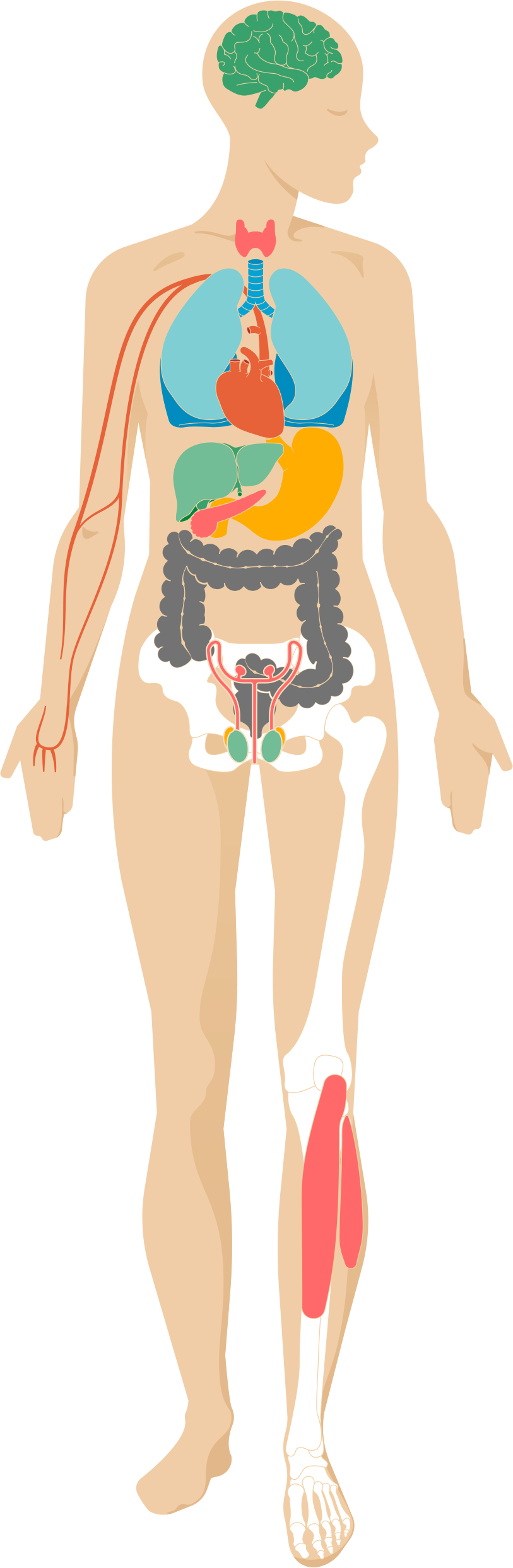
Sleep deprivation can negatively affect a range of systems in the body.
It can have the following impact:
  • Not getting enough sleep prevents the body from strengthening the immune system and producing more cytokines to fight infection. This can mean a person can take longer to recover from illness as well as having an increased risk of chronic illness.
  • Sleep deprivation can also result in an increased risk of new and advanced respiratory diseases.
  • A lack of sleep can affect body weight. Two hormones in the body, leptin and ghrelin, control feelings of hunger and satiety, or fullness. The levels of these hormones are affected by sleep. Sleep deprivation also causes the release of insulin, which leads to increased fat storage and a higher risk of type 2 diabetes.
  • Sleep helps the heart vessels to heal and rebuild as well as affecting processes that maintain blood pressure and sugar levels as well as inflammation control. Not sleeping enough increases the risk of cardiovascular disease.
  • Insufficient sleep can affect hormone production, including growth hormones and testosterone in men.  Medical News Today


Labels: , , ,

Wednesday, January 17, 2018

We are such stuff
As dreams are made on, and our little life
Is rounded with a sleep

Most people don’t get enough sleep. We are a society that burns the candle at both ends, a nation where people stay up all night to study, work, or have fun. However, going without adequate sleep carries with it both short- and long-term consequences.
In the short term, a lack of adequate sleep can affect judgment, mood, ability to learn and retain information, and may increase the risk of serious accidents and injury. In the long term, chronic sleep deprivation may lead to a host of health problems including obesity, diabetes, cardiovascular disease, and even early mortality.
Healthy Sleep: A resource from the Division of Sleep Medicine at Harvard Medical School
"The fact that extending sleep led to a reduction in intake of free sugars -- the sugars that are added to foods by manufacturers or in cooking at home as well as sugars in honey, syrups and fruit juice -- suggests a simple change in lifestyle may really help people to consume healthier diets."
Dr. Wendy Hall, Department of Nutritional Sciences, King's College London

"Sleep duration and quality is an area of increasing public health concern and has been linked as a risk factor for various conditions."
"We have shown [through research] that sleep habits can be changed with relative ease in healthy adults using a personalized approach."
"Our results also suggest that increasing time in bed for an hour or so longer may lead to healthier food choices."
Haya Al Khatib, lead researcher, study


We all know that sleep deficits make us cranky and prone to malfunction, both physically and mentally. Missing sleeping hours occurs to most people on occasion, and there are always plans to 'make it up' at a later date, possibly in the days following that night when lack of adequate rest made us feel groggy and ill-tempered as morning dawned and we wrested ourselves out of bed to face the day.

The medical community is fairly firm, the conclusion beyond doubt, that lack of sleep leads to a dissatisfying day in the short term and health consequences in the long term. Now, a new study out of King's College London has found that people who sleep for longer periods at night are less likely to reach for sweetened foods or comforting carbohydrates. Sleep deficits were acknowledged previously to represent a risk factor for obesity, altering hormone levels which control appetite.

What this study concluded was that by getting more sleep -- an additional 90 minutes of it optimally -- people tended to select healthier food choices within a week, ending up consuming an average ten grams less sugar daily. The study trial enlisted twenty-one volunteers who slept for fewer than the recommended seven hours a night, who were exposed to counselling in a bid to help change their sleep habits.

Each was then asked to maintain a constant bedtime, to resist drinking caffeine before bedtime and not to eat anything close to retiring for the night. Instead, to just relax and be comfortable through the evening hours before heading to bed. An average of 90 minutes was added by each of the volunteers to their daily sleep patterns over the seven-day study period. By week's end, they were consuming less sugar and carbohydrates than they had at the beginning of the week.

As for the control group whose sleep failed to improve, no such change was seen; their sleeping patterns remaining the same deficit-laden events, ensured that they would also continue reaching for comfort foods high in carbohydrates, and sweetened 'treat' foods. Previous studies undertaken over the years had already observed the connection between short sleep periods and poorer quality diets.

Most of us need around eight hours of good-quality sleep a night to function properly – but some need more and some less. What matters is that you find out how much sleep you need and then try to achieve it.
As a general rule, if you wake up tired and spend the day longing for a chance to have a nap, it’s likely that you’re not getting enough sleep.
A variety of factors can cause poor sleep, including health conditions such as sleep apnoea. But in most cases, it’s due to bad sleeping habits.
National Health Services (NHS.UK) 

Labels: , ,

 
()() Follow @rheytah Tweet