Ruminations

Blog dedicated primarily to randomly selected news items; comments reflecting personal perceptions

Wednesday, December 24, 2025

The Practicality of Helsinki's Underground Bomb Bunkers

"[Russia's full-scale attack on Ukraine] changed a lot. In '22, there was a humongous increase in calls coming in: Where's my shelter? Where's my shelter'?"
"We build, and we let people know we build."
"We are also letting our opponents, possible enemy, know: 'We have the capability and means to protect'."
"Your terror will not succeed." 
Pasi Raatikainen, senior civil defense planner, Helsinki 
 
"We were thinking, with modern warfare security, you don't need to go into hiding anymore."
"But Russia showed us, they don't do modern warfare."
"It's old-fashioned bombing of civilians. Even with drones."
"It's useful to go to shelters."
Teemu Kurkela, founder JMM Architects, Helsinki 
https://img.atlasobscura.com/gGwCkwpeLJYpAB50twJ46Zw47SWqOvpjOzyVJBi6t-w/rt:fit/w:1280/q:81/sm:1/scp:1/ar:1/aHR0cHM6Ly9hdGxh/cy1kZXYuczMuYW1h/em9uYXdzLmNvbS91/cGxvYWRzL2Fzc2V0/cy9kMTRjNDg3OTcz/ZDJlM2EwZmZfVGVt/cHBlbGlhdWtpbyAg/Y2h1cmNoIEhlbHNp/bmtpXzJCRFhQNFAu/anBn.jpg
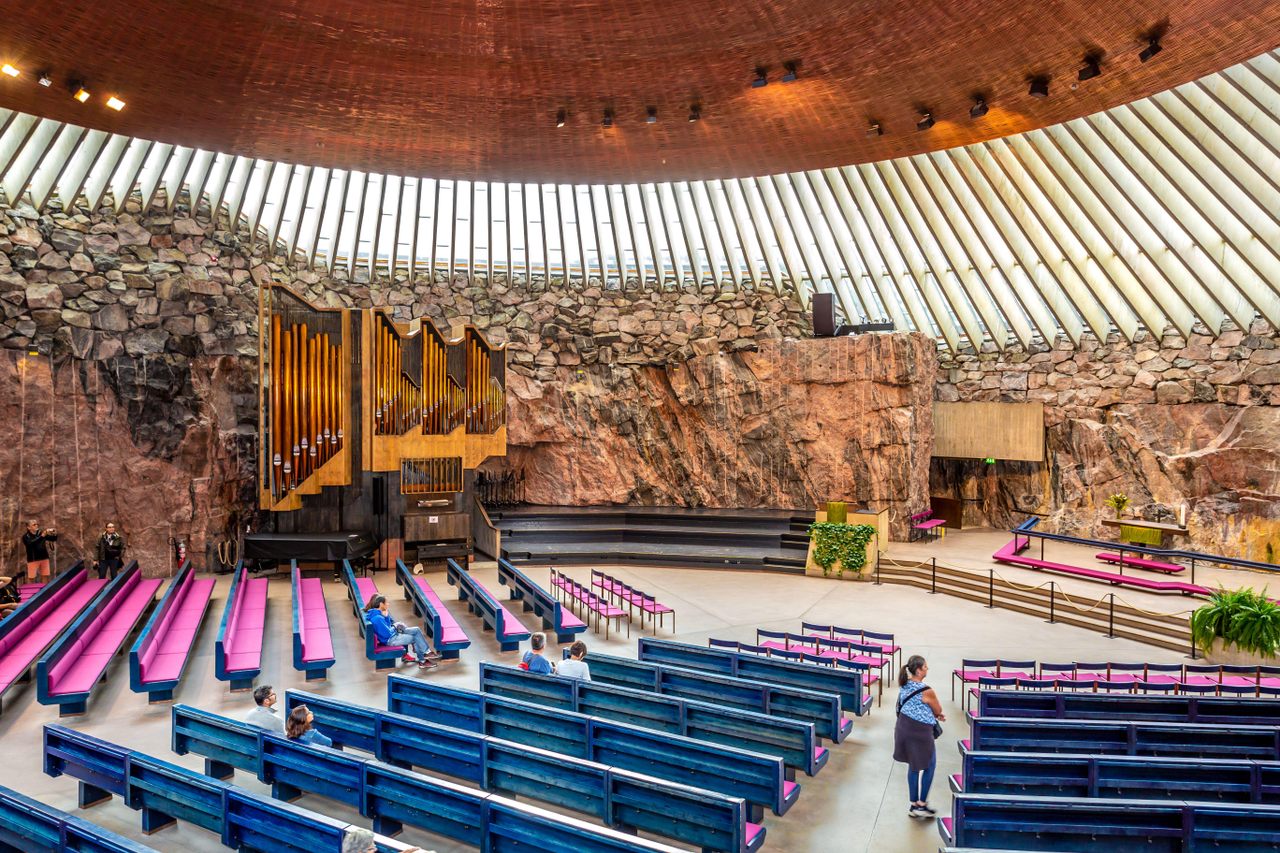
Below the bustling streets of Helsinki, Temppeliaukio Church is one of several subterranean sites that attract locals and tourists alike. Subodh Agnihotri/Alamy
 
Finland's president Alexander Stubb does not mince words, nor concern himself that warning against Moscow's likely plans to extend a version of its 'Special Military Operation' elsewhere among Russia's near-abroad once it finishes with Ukraine, will have the effect of unduly alarming Finns, potentially causing widespread public panic. And that is due to the fact that Finland has been through this before, and Finns have the good sense to feel a certain level of apprehension, leavened by their trust in their own government to have the security of their nation uppermost in mind and under control.
 
Finland long ago built a network of "aestonsuoja" -- civil defense shelters for haven from bombs from its violently aggressive neighbour with which it shares an uneasy border of 830 miles. Unlike most other European countries that had built civilian shelters, and following the collapse of the Cold War, felt sufficiently reassured that the fangs had been drawn from the dragon that threatened their autonomy and way of life, to abandon them, Finland kept its intact.
 
https://img.atlasobscura.com/vY_qX-xKtbHI-JoqEqxZajwf8Ai3WgvEtEoUjQWnfpA/rt:fill/w:1200/el:1/q:81/sm:1/scp:1/ar:1/aHR0cHM6Ly9hdGxh/cy1kZXYuczMuYW1h/em9uYXdzLmNvbS91/cGxvYWRzL2Fzc2V0/cy9iZTg2N2YzZTEx/YzY0ZWQ4YzdfX01h/YW5hbGFpbmVuSGtp/X015bGx5cHVyb19G/b3JtdWxhY2VudGVy/LmpwZw.jpg
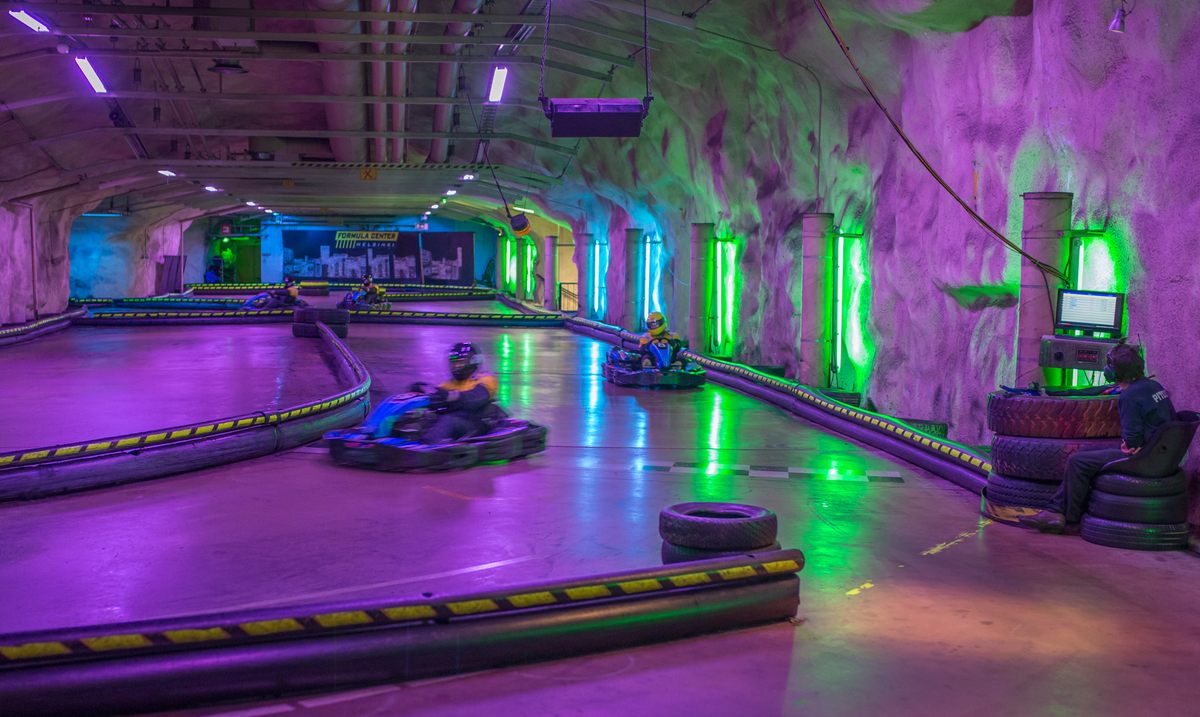
At the Underground Formula Center beneath eastern Helsinki’s Myllypuro neighborhood, go-kart enthusiasts race around a course. Courtesy of City of Helsinki
 
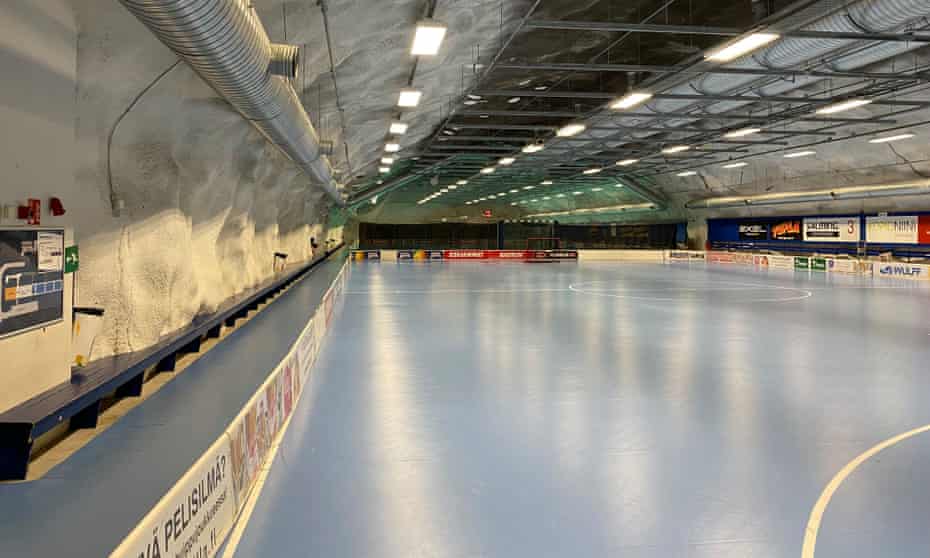
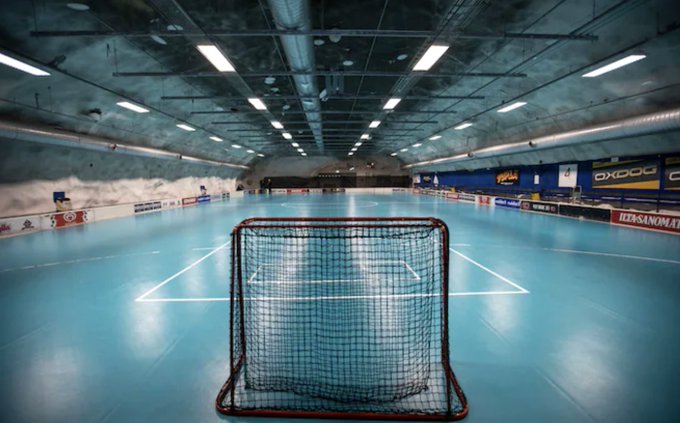
As a result, there are about 5,500 civil defense shelters, a number more than sufficient to comfortably shelter Helsinki's 700,000 residents at a time of need. Some fifty of the sites are located in immense subterranean spaces where they serve as parking lots, metro stations, skateboard parks, go-kart tracks, archery ranges and the city's popular Itakeskus swimming hall. The Vapaan Taiteen Tila performance space is located in one of these spaces, offering stage productions and art exhibitions in a cave.
 
Each of these subterranean halls were designed to be able to withstand blast waves and building collapses, as well as radiation. They serve as fortified bunkers in the event of a military invasion -- even with the potential of a nuclear blast in mind. Play Caves are immensely popular with children  and their parents, viewed as safe and engaging places of fun and games. They are complete with rope ladders and trampolines, challenging the acrobatic derring-do of the young, accessible through well-known mazes.
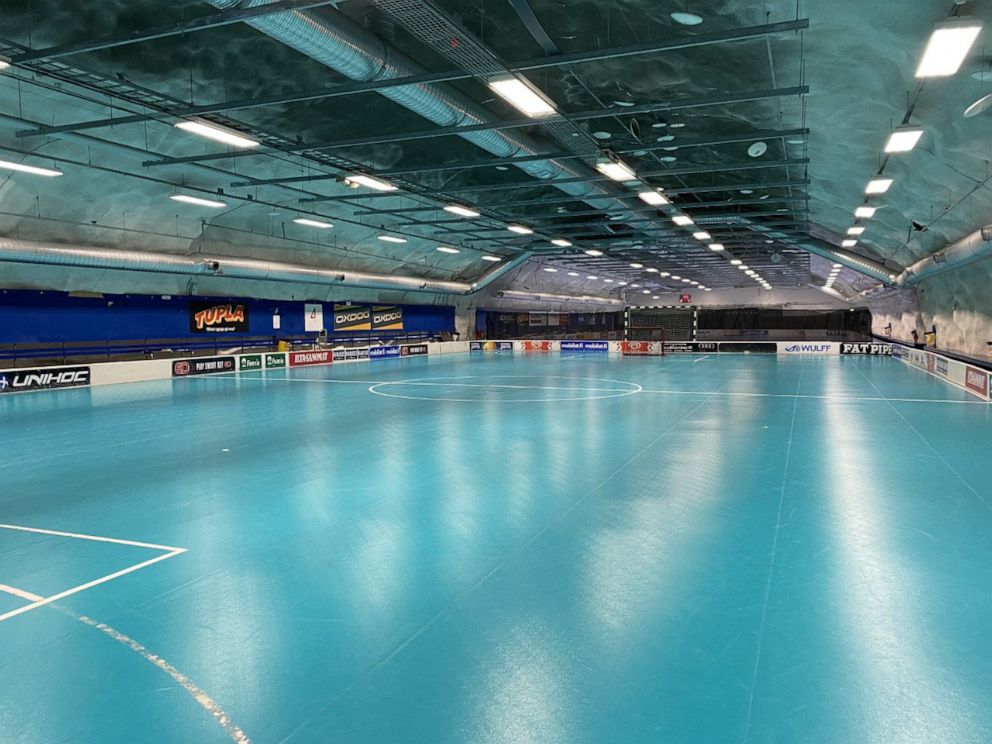
 
A view of an underground hockey rink in Helsinki, Finland, a city with a secret "Underground City" underneath it.   ABC News
 
The city rents out the cave spaces on the condition that they can retain their security utility by conversion to shelter use within a 72-hour period. Shelters located in residential and commercial buildings share the same conversion requirements. A map and telephone hotline assists residents in locating nearby shelters. Before Russia's invasion of Ukraine and its expansionary threat to Russia's other neighbours, Finnish architects felt the shelter mandate to be out of date. Unfortunately, territorial aggression and the conflict that accompanies it is never out of date.  
 
The Itakeskus shelter accommodates an Olympic-size pool, water slides, high dives, a gym and saunas. Transformed into its original shelter purpose it can house 3,800 people during a time of conflict. "It's just part of who we are. Everybody here knows how to use a gun", commented 37-year-old real estate developer Isto Okonhovi for whom the space that readily doubles as a bunker recalls hearing war stories from his grandfather, twice injured by Russian bombs.
 
The Museum of Civil Defense operated by the Civil Defence Association of Helsinki is located in one such cave where volunteers are trained to serve as shelter operators. "We need to have them if war should break out, and demand is high. It feels important to be able to help", explained Jukka Lehtiranta, chairman of the association board. 
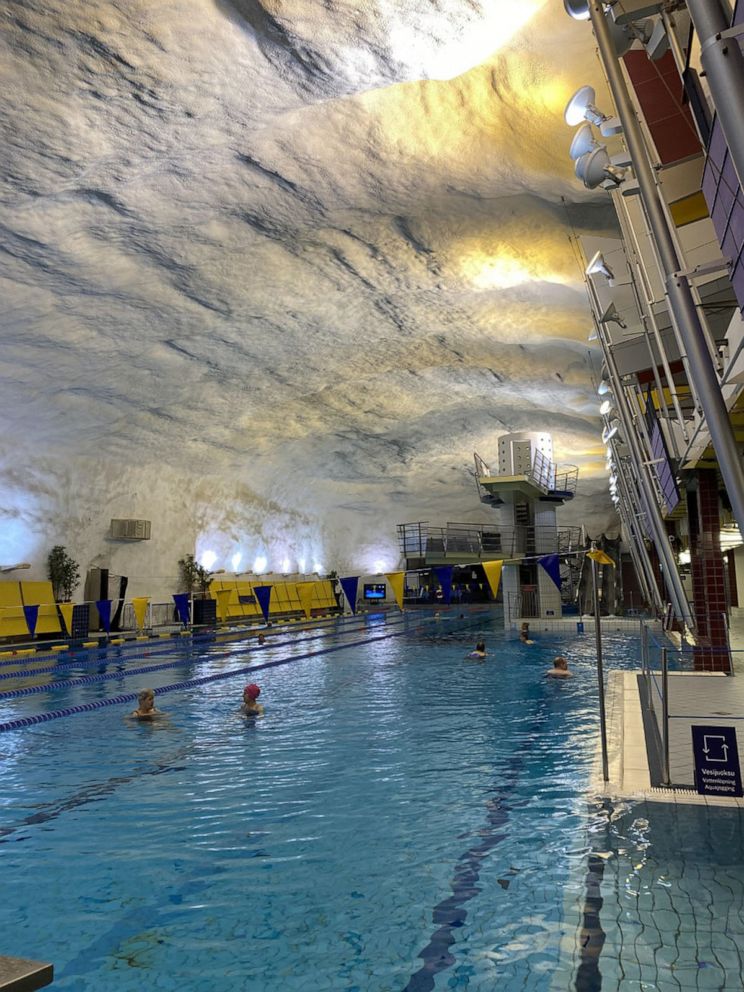
 
Swimmers relax in an underground pool in Helsinki, Finland. All buildings above a certain size in Finland are required by law to have their own bunkers.   ABC News
 

Labels: , , , , ,

Friday, June 27, 2025

Europe: Preparing for War

"Russia emptied four brigades out of the Leningrad district to Ukraine, most of them actually killed."
"The reality is that when this war ends, Russia will start building up its soldiers on our border. But this is nothing new, it's not problematic."
"I'd ask people to stay cool, calm and collected. We know exactly what we're doing. We have full control over what's going on."
Finnish President Alexander Stubb
 
"The long term is just that Russia needs to take defence on the border with Finland more seriously now that Finland is a NATO member."
"If NATO and Russia go to war in the Baltics, the Finns aren't going to just sit there. They're likely going to counterattack and annex the Murmansk Peninsula – and the Russian nuclear forces and the Northern Fleet are all based in Murmansk."
"So the Finns can do quite a lot in terms of disrupting that by cutting the supply lines between St Petersburg and Murmansk."
Ed Arnold, senior research fellow for European security, International Security department, Royal United Services Institute defence think tank, United Kingdom
https://www.helsinkitimes.fi/images/2025/05/screeenshot.png
Before and after images from the Russian bases. Photo: Planet Labs PBC/Airbus /screenshot from SVT
 
Earlier this month Finland's public broadcaster, YLE reported the presence of a garrison being built for an artillery brigade by Russia, in a town close by the two countries' frontier. Half of the North Atlantic Treaty Organization's (NATO) land border is guarded by Finland against NATO's well-known adversary. A border that stretches out along over 1,300 kilometres.
 
There is a long history of conflict between Finland and Russia. As such, it is not surprising that Finland has been among the most dedicated European supporters and providers of military aide to Ukraine. In the face of Moscow's future intentions against Finland, its president states that his country remains "calm and collected", knowing through long experience what may be presenting for the not-too-distant future.
 
According to NATO Secretary-General Mark Rutte, such preparations are of no surprise to NATO as well. The Kremlin, suggested Mr. Rutte, may be counting on a five-year opportunity when Russia's war imposed on Ukraine has been concluded, to turn its attention elsewhere, and Finland appears the most likely initial target.
 
Nordic officials have their own version of a potential timeline before such an attack takes place, giving it a shorter window, hastening preparations in the knowledge that Russia will focus on rebuilding its capacity to carry out a conventional attack on yet another of its neighbours. 
"Before 2022 there was an unmanned aerial vehicle regiment somewhat operating in the field – so it wasn’t totally abandoned. But it wasn’t being used for larger equipment such as helicopters."
"But now, after 2022, they have been refurbishing it, renovating it, clearing the overgrown areas – so it seems that they are intending to also ramp up their activities in that area too."
"We are seeing military activity, and we are seeing the Russians developing their military infrastructure and most likely training new soldiers. But it's not anything too radical at the moment."
"It's really difficult to say yet, because the war in Ukraine is still heavily ongoing, and achieving a truce seems to be extremely difficult. The future will show just how heavily the Russians will invest in all of this – military bases, new units, soldiers and so on. But as far as we know now, it's going to be significant."
Finnish military historian Emil Kastehelmi 
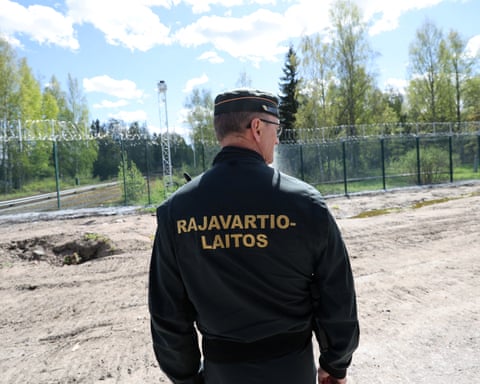
Rear of a border guard standing in front of the fence on the Finnish-Russian border
Finland’s border guard has completed the first 35km of a planned 200km fence on its eastern border with Russia. Photograph: Leonhard Föger/Reuters
 
Last week Finland's parliament approved a withdrawal from the Ottawa Convention, banning anti-personnel landmines. The vote was 157 to 18 in Helsinki, when lawmakers firmly committed to back the government's proposal. The release from the convention was a political decision taken in April while addressing risks from Russia.
 
NATO leaders had agreed on a massive increase in defence spending for its member-states, each to pledge honouring a five percent gross domestic product to boost the 32-member-organizational military capacity in mutual defence against a common enemy. At the same time the group reiterated its "Ironclad commitment" to respond as a unified military group in defense of any of its members coming under attack. 
 
Some 175 kilometeres from the border, three large storage halls have been built in Petrozavodsk, each of which is judged to have the potential to  hold around fifty armed vehicles. As of April 2025, a fourth facility has been under construction. The new structures, according to analysts, may be intended to conceal an accurate number of the military vehicles to be stationed there.  
"[The developments appear to confirm earlier Russian statements about] military-technical measures [in response to NATO’s enlargement]."
"When we applied [Finland and Sweden] for NATO membership, Russia said it would take such steps. We are now seeing that happen."
Sweden’s Chief of Defence Michael Claesson 
 
"[The Russian government in April 2023 when Sweden and Finland jointed NATO, vowed to take] counter-measures."
"The enlargement of NATO is an encroachment on our security and on Russia’s national interests."
"We’re going to be following what happens in Finland closely … and how it threatens us."
Kremlin spokesperson Dmitri Peskov
"[The Finns’] whole position was … we need to be ready to be able to face the Russians on our own."
"So that's their mindset, and it's how their military is configured. They can get 284,000 troops on declaration of war. That's significant."
"That’s probably more than the UK can get together, probably more than Germany, more than France – probably more than anyone else bar Poland at the moment."
Ed Arnold, senior research fellow for European security
 

Labels: , , , , , ,

Thursday, May 19, 2022

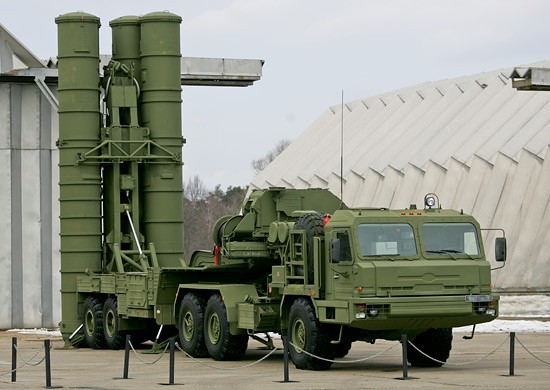
"Russia has earlier indicated that it is placing for example these S-400 anti-aircraft missiles in the Kola Peninsula, and it has earlier said it’s placing these missiles in Crimea."
"This is normal practice. Russia is using these systems to replace the older S-300 rockets."
"The reporting was a bit surprising. There was a tinge of foreign policy in the Moscow Times piece that cited President Putin’s comments on (potential Finnish membership of) NATO."
"The positioning of S-400 Triumf missiles near Saint Petersburg is evidence that Saint Petersburg is an important metropolis for Russia."
Finnish Defence Minister Jussi Niinistö
Russian Iskander-M missile launcher on display during Victory Day parade Photograph:( AFP

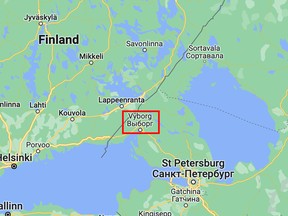
 A convoy is shown on a video  obtained by Reuters, comprised of over a dozen military vehicles, some thought to be carrying Iskander missiles en route to Vyborg, a Russian city adjacent the border with Finland.The deputy chairman of Russia's Security Council, Dmitry Medvedev -- a close colleague of Vladimir Putin who once played musical chairs with Putin, occupying the presidency while the prime ministership was temporarily taken by Putin in a bid to return to the presidency legally under the Russian constitution which he later manipulated to make it legal for him to continue as President -- warned should Finland and Sweden join NATO, Russia would undertake to move nuclear weapons closer to the two countries whose move to join NATO the Kremlin viewed as threatening.
 
"There can be no more talk of our nuclear-free status for the Baltic", he remarked on April 14.

Traditionally neutral, Finland and Sweden decided to break with that Cold War convention, in favour of defending themselves against a neighbour whose moves of aggression could be anticipated on the basis of the example before the eyes of the world, where Ukraine is now in active conflict forced upon it by Moscow's 'special military operation'. Neither Finland nor Sweden have any aspirations to test their own military's mettle facing off against a potential Russian invasion without an additional bit of defence; the combined strength of the North Atlantic Treaty Organization.

This represents somewhat of a miscalculation on the part of Vladimir Putin, consumed with rage over NATO expansion within the Russian Federation's 'near abroad', taunting Moscow as it were, with its too-close-for-comfort presence. An already-suspicious Putin arrived to a state of paranoia, a state which possibly inured him to the kind of introspection that might have warned him that he would be risking a great deal by launching into a conflict with Ukraine whose reaction to being occupied on a larger scale than the Donbas was obviously underestimated.
Putin seated at a desk, facing a televised video conference.
Vladimir Putin chairs a meeting via teleconference on May 17.   EPA
 
The scenario that Mr. Putin envisioned and was intent on forestalling, was in fact accelerated by his very actions in bringing war to Ukraine with its burden of civilian and military deaths, destroyed cities, millions of displaced homeless and refugees and Russia's own massive losses in dead commanders as well as servicemen, and the destruction of war machines resulting from Ukrainian defence and bold counter-attacks. The missiles were reportedly parked inside Russia's borders next to Ukraine before the February24 invasion before the decision was made to move them at this juncture.

Now that NATO acceptance of Finland and Sweden is assured, Mr. Putin finds it useful to move the nuclear-capable-warhead missiles to locations close to its borders with Finland. Finland appears to be calmly assessing the situation, finding nothing too much out of the ordinary by the move taken by its mercurial neighbour. And taking it all in stride as far as its reaction can be seen and analyzed by the outside world looking in. What is being discussed and analyzed within Finland in the security of government and military chambers may be another story.
S-400 Triump is an anti-aircraft weapon system. Photo: mil.ru
 
From NATO's perspective, the organization stands to gain by taking Finland and Sweden under its protective wing in the sense that they would become instant "net contributors" to European security. The two countries' absorption into the group would simplify defence of NATO's Baltic members, increasing the alliance's borders with Russia with the addition of 1,900 kilometers representing the border between Russia and Finland.

Turkey, which has long since become a liability politically within NATO, balanced against the immense size of its military, is the fly in the ointment with Recep Tayyip Erdogan threatening to weigh in against their accession. The Nordic countries, demands Ankara, must stop its support for Kurdish militant groups on their soil. Their bans on arms sales to Turkey must also be lifted. This, from a NATO member-country which contracted the purchase of Russian weapons for its military, disrupting the interoperability of NATO member groups' military hardware.
 
vyborg
 

Labels: , , , ,

Saturday, May 07, 2022

Neighbourly Relations: Finland in Russia's Belligerent Shadow

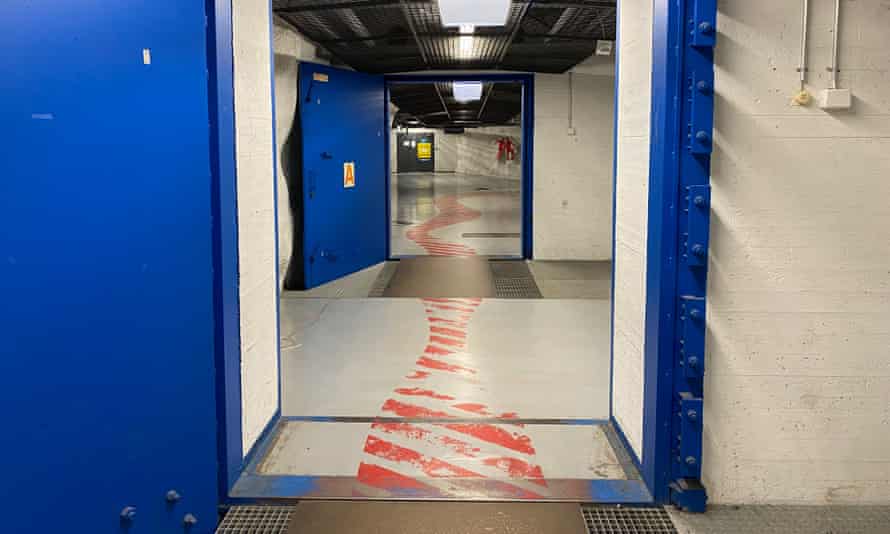
A sports centre in Helsinki can quickly be turned into a bomb shelter to accommodate more than 6,000 people.
A sports centre in Helsinki can quickly be turned into a bomb shelter to accommodate more than 6,000 people. Photograph: Pjotr Sauer/The Guardian
"I sleep much better at night knowing we have these bomb shelters. Especially now with what is happening in Ukraine." 
"These shelters can protect against practically any bombing or chemical attacks. We have water, clean air and beds that can people going for weeks."
"It was built like this on purpose, [maze-like, with different rooms, including a cafeteria and a children’s playroom]. Studies have shown that people react better to rooms that have walls, where there are boundaries that create a sense of privacy."
"It’s sad to see what is happening in Ukraine. I see the poor people hiding in the metro or in theatres. It shows again how important it is what we do."
Tomi Rask, safety instructor, Civil Defence Centre, Helsinki, Finland 

"Russia is never specifically mentioned, but it has always been understood that the country should be prepared to make the threshold for a Russian attack as high as possible."
"We had no idea at the beginning of the pandemic how bad it was going to get, what it will do to our economy. But then our prime minister came out and said that the deal [to replace its ageing combat jets with 64 F-35 planes and weapons systems in a deal worth £6.97bn.] will go ahead signalling that the country’s security is paramount."
Charly Salonius-Pasternak, security expert, Finnish Institute of International Affairs
A bomb shelter in Helsinki
A bomb shelter in Helsinki. Photograph: Pjotr Sauer/The Guardian

There are countless countries in the world that share long borders, some undefended, as hugely unlikely that one would ever launch any kind of violent aggression against the other, and some moderately defended against the other. For Finland, with its total 5.5 million population, the undercurrent of concern is always there that its neighbour with its population of 144 million, its huge, well-armed military that has just invaded another neighbour, all the signs are there of a potential repeat of the November 1939 Soviet invasion across its border.

On that occasion, as with this current situation with the Russian invasion of Ukraine, the expectation was that the much smaller population and its military would quickly fold. In both instances, Moscow erred, hugely. The Finns made a good accounting of themselves back in 1939; well-trained soldiers, familiar with their own terrain and the additional climatic hardiness, repelled the invasion but still suffered a forced negotiation with a wartime penalty of over 300,000 casualties.

As long ago as that occasion was, the lesson has never faded from memory, with the expectation that what occurred then could recur at any time. Leading Finland to prepare itself for such needed  contingencies by implementing a full policy of "total defence", where every bridge, tunnel and overpass in the country was built complete with charge pits. In them explosives could be placed as required to slow an invader. And in addition, the innovation of turning small roads into runways.

The bunker's sports hall | Credit: Jeff Gilbert
Its bunker system is only one part of a wide-ranging policy of “total defence”, in which the whole country could be mobilised in the event of an attack. Photo via Telegraph

It is the defence of the entire population that exemplifies the full measures that Finland undertook, however. The situation somewhat akin to the tiny Jewish state of Israel committing to installing bomb bunkers for its population in an overall defence that is of more immediate need, when conflict could break out at any time between Israel and the Palestinians; a pincer movement from Hamas in Gaza, Hezbollah in Lebanon and Shiite militias streaming over the border from Syria.
 
Some of those huge underground bunkers built by Finland have been given a double purpose, serving as entertainment venues for the population in a practical use of bunker architecture and facilities not in immediate use as bomb bunkers. Near the centre of Helskini is a play area called the Hakaniemi Arena, with colourful slides, trampolines and tunnels, lying 25 metres below ground, hollowed out of bedrock under the city.

The cavernous space designed to withstand nuclear, biological and chemical attacks. Families with children visit the play area and make full use of its recreational facilities, regarding it as a civic infrastructure offering quality play time for children as a sport centre. A small orange and blue triangle above ground level identifies the complex as a defence shelter. A shelter that has the capacity to house up to 6,000 people.

Until it is put into use for its original purpose, rooms off to the side are closed to the public. There is where beds are stored, where air filtration systems await, along with temporary toilet facilities and similar living essentials. There are two layers of blast doors between the indoor space and the outside world; each 35 cm in thickness. One designed to stop a blast, the other to seal the atmosphere.

In the capital city alone, 5,500 bunkers exist, offering a protective place for 900,000 people. In the entire country shelter spaces offer room for 4.4 million in over 54,000 locations.Any building by law over 1,200 square metres must have provision for a shelter. The government itself  has built and maintains over 44 large public shelters in Helsinki. There are storage rooms, sports halls, swimming pools in the shelters' civilian functions which must be amenable to being stripped within 72 hours.

Civil defence instructor Tomi Rask explains that the public would be informed through television, radio, a website and a special app along with outdoor sirens, should an urgent need for the bunkers arise. Preparation for the possibility of chemical accidents and natural disasters are a risk, but while never explicitly stated in official statements, invasion by Russia with which a 1,340 km. border is shared, is the major concern.
 
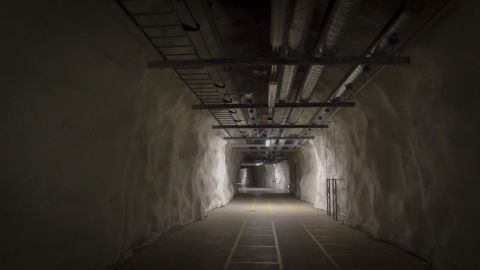
Helsinki's network of tunnels can fit the city's entire population.
Helsinki's network of tunnels can fit the city's entire population.   CNN/Karim Peltone 


Labels: , , , , ,

Thursday, June 17, 2021

And Our Special for the Day ... Are You Prepared to Drink Outside the Box?

"The poop is used in a food-safe way to smoke malt to create a unique stout beer."
"The goose droppings are gathered from local parks where geese are causing a messy problem."
"Now, the local parks get cleaner and the special edition summer beverages are perfect for a picnic in the park -- a true two birds with one stone type of solution."
Ant Brew, Wasted Potential Imperial Stout

"Each beer is a lesson in circularity. Food waste from local supermarkets, roadside weeds, and even goose poop can be used to make something new and nice."
Green Lahti promotional video

"This beer shows that we can make use of almost anything from old fruits to moss, and even goose poop."
"If something is good for beer, we are not afraid to try it."
Ant Brew

"They say you can't polish a turd. But this is where the sheep dung really shines."
"The taste is quite astringent, as notes of cloves combine with a lingering ashy aftertaste."
"Memorable!"
Whiskystories
Ant Brew Wasted Potential Imperial Stout made from goose droppings
Lahti, Finland is the prize-holder of the 2021 European Green Capital, with 90 percent of household waste recovered and recycled. Remarkable, but their aspirations don't stop there Their goal is to succeed in becoming totally waste-free by 2050. They plan to find a use for everything normally considered a waste product, including what comes out of the business end of a goose. The bright idea of using animal waste to ensure that even waste isn't wasted, saw the city of Lahti team up with the brewery that operates in Lahti.

And so, Wasted Potential was launched as a series of craft beer with sustainability uppermost in mind. What could be more responsibly green, after all? Transforming goose droppings by repurposing it to create a beer with a distinctive taste. So do feces and beer production just naturally go together? It's likely that no one at the average pub had given it much thought, and if they did, it would likely be rejected out of hand. Holding aloft an ice-cold beer labelled 'poop included', might not appeal to everyone.
 
The poop is sterilized before it's used to flavour the malt. (Ant Brew)
 
In a city dedicated to cleaning up the environment and teaching its inhabitants that nothing need go to waste, the pick-up is likelier to be casually accepting, however. Just remember that primitive societies and those where wood is scarce as a natural product to cook with, commonly used dried animal dung as a cooking fuel; freely available and at hand in herding communities. A natural resource to beat all natural resources, so to speak.

Sheep dung-smoked delicacies like lamb and Arctic char are commonly available at restaurants in Iceland, where peat or wood for cooking with is fairly scarce. And for Christmas fare, there is nothing quite like lamb or mutton smoked over sheep dung. Floki Icelandic Whisky credits its special aroma to barley-filled oak barrels smoked over sheep dung in the production of its young malt.

In Tasmania, Australia, Belgrove Distillery uses sheep dung-smoking technique in the production of its "Wholly Shit" rye whisky. When chef Gordon Ramsay hoisted a shovel in an episode of his television series Uncharted, he caused quite a stir in the audience. Indiovu Gin in South Africa infuses its award-winning product with dried, washed, sterilized, macerated and redried elephant dung. "Think of it as a tea bag" offers Les Ansley, its co-founder.

Ant Brew's Wasted Potential Imperial Stout won't be ready for the tasting market just yet. It is fermenting in tanks at the present time, to be released later in the summer of 2021. Its initial offering in the series is a beer brewed with expired fruit purees and orange peels, discarded after the juicing process.
"This series of beers is our way to create important discussions about food waste, utilization of waste, urban farming, and local and wild food among beer enthusiasts."
"We are constantly developing ways to utilize new ingredients in brewing, and are not afraid to think outside of the box."
Karl Puttonen, manager, Ant Brew
Finnish microbrewery Ant Brew is using goose droppings to make a special-edition imperial stout.
Finnish microbrewery Ant Brew is using goose droppings to make a special-edition imperial stout. Photo by Toivo Heinimäki

Labels: , , , , ,

Sunday, August 11, 2019

ReCycling? First the Good News....

"We're obliterating our natural ecosystems predominantly to produce monocrops that go into the industrial food web, and what's bad on land is even worse underwater [e.g.rainforest destruction coral reef bleaching]."
Keiran Whitaker, Entocycle start-up, London
The larval form of the black soldier fly is over 50 per cent protein by weight. (Frances Willick/CBC)

"The Olympics story [producing Olympic and Paralympic medals from e-waste-retrieved metals] is really good [because it brings attention to the issue] of creative re-cycling."
"It shows that the way we do things at the moment has terrible consequences for society, in terms of the negative health impacts and obviously impacts to climate change."
Vanessa Gray, official, United Nations environmental agency
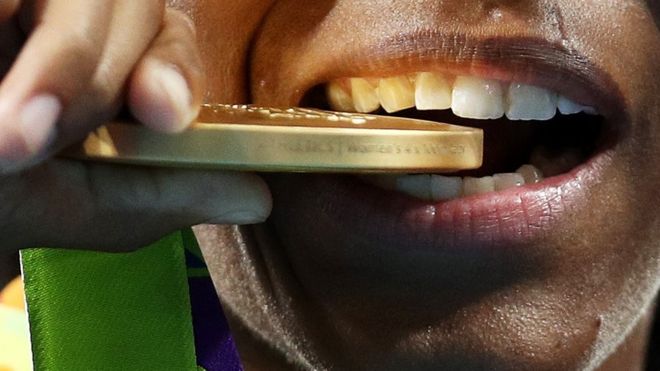
Gold medal
Japan is exploring the feasibility of forging the Olympic 2020 medals using precious metals salvaged from electronic waste. Getty Images

In London, England, the brainchild, Entocycle, of Kevin Whitaker uses local food waste that has been created in manufacturing food products to feed to black soldier fly larvae. The larvae consume the waste and it is converted into protein. That's the point when the insects are ground into a flour high in amino acids, combined with other ingredients to produce feed pellets for animals.

That's not all; the excrement created by the flies -- called frass -- can then be used as well, as agricultural fertilizer. Long-range expectations are that once the public adjusts to this new way of producing food, the insect flour could be used and eaten by people. The result would be enormous; fewer forests razed to produce cropland or pasture, and the fertilizer production held to be responsible for one percent to two percent of global greenhouse gas emissions avoided in the process.

The global issue of waste is the need to ensure that less of it is created, and that which is created can be used in purposeful ways, avoiding excess environmental and atmospheric pollution. There is, in fact, a wave of imaginatively creative thinking consuming the minds of entrepreneurs guiding them to correct current inefficiencies in producing and handling waste products, to turn them into useful substances in an effort toward reduction.

In Finland a company has been absorbed in a production method to dramatically change the way fabrics are extracted from wood to produce clothing. Cotton and viscose rayon, representing the second and third most common textile fibres, are produced from plants. Wood pulp is used to produce most viscose rayon with the use of an assortment of chemicals, that themselves are a source of criticism.

The Rainforest Action Network finds about 120 million trees are used for the production of textiles annually, an obvious practise harmful to the world's forests whose presence cleans our atmosphere absorbing carbon dioxide, while producing clean oxygen kind to the lungs of humanity. A Finnish textile fibre company called Spinnova founded by two former physicists is transforming the process.


One of the company's founders thought of patterning the spinning of plant fiber in the very way that spiders produce silk. And now Spinnova uses a mechanical method to produce fibre, a process that makes use of about 99 percent less water than the production of cotton, without the use of harmful chemicals. Wood pulp harvested from Brazilian wood is used by Spinnova and it plans to make use of agricultural waste material as well as discarded clothing in its fibre production.

Japan, a tiny set of three islands in the Pacific, has a population of 130 million people. Famously, Japan produces technologically advanced communications tools and its turnover rate as new models reach the consumer market is enormous, leaving it with an electronic waste (e-waste) conundrum. There was a time when Japan simply buried used or unsold stale-model computers. Japan also likes to move its production along; Japanese love their cars, and update their models and acquisitions by the driving public constantly.

Older vehicles that fail to pass stringent technical and safety and pollution standards are shipped abroad, newer models taking their place constantly in auto showrooms and consumers' possession. Disposal of immense numbers of cellphones, computers and televisions complicated by the risks of leaking dangerous chemicals into the environment was a problem seeking a solution, leading to an advanced recycling system.

In over 1,500 municipalities in Japan with their thousands of electronics stores, 42,000 tons of discarded electronics were collected, as well as over five million cellphones. And a process to recover metals was initiated from the trove, representing metals which would be re-used, bypassing a need for additional mining.

Yet out of this innovative solution, another kind of problem has arisen, identified by a paper in the Lancet, pointing out the potential harm to human health. The industry of recycling, employing people to break asunder electronic devices to remove copper, gold, mercury and other materials has the misfortune of producing negative health consequences on those very workers employed to help solve the problem of waste and encourage recycling.

All medals for the Tokyo 2020 Olympics will be made from metal collected by recycling electronic waste

Labels: , , , , ,

 
()() Follow @rheytah Tweet