Ruminations

Blog dedicated primarily to randomly selected news items; comments reflecting personal perceptions

Wednesday, November 03, 2021

Investing In Sleep

"One  hour can indeed be enough to throw our internal clock out of sync. When we change our sleep schedules by an hour or longer from one day to the next, we are sending signals to the brain that we are attempting to transition to a new time zone, making the next night's sleep challenging."
"We discovered that over the course of the day, the brain produces toxins, the accumulation of which is associated with neuro-cognitive decline such as Alzheimer's disease and dementia."
"When we sleep, not only does the brain stop producing these toxins, but it also produces a cerebral fluid which, in essence, pressure-washes the brain to remove the toxins that have built up." 
Dr.Rebecca Robbins, instructor in medicine, Harvard Medical School; associate scientist, Division of Sleep and Circadian Disorders, Brigham and Women's Hospital, Boston
Insomnia updated
Sleep Health Foundation

Pandemic stress the last two years has impacted on the quality of many peoples' sleep through  the psychological upset and other associated factors, where people are discovering that they are suddenly affected with an inability to sleep as soundly and as long as they've been accustomed to. And many, if not most people are anticipating the annual shift in our daily pattern, affecting sleep with the end of Daylight Saving and the re-entrance of Standard Time.

It has long been proven that one hour back and forth (spring forward, fall backward) has a deleterious effect on most people's circadian rhythm. People feel groggy, discommoded, uncomfortable, finding it difficult to adjust to a misplaced hour in their daily lives. More accidents occur the day after the time change. There is time-confusion in peoples' minds for at least a week following the transition. And sleep patterns become interrupted.

There are ample studies warning of long-term brain health with risks increasing of a future of Alzheimer's for people who suffer from insomnia and are incapable, not of their own thinking volition, of enjoying a sound night's sleep on a nightly basis. Heart problems and life expectancy are also impacted by sleep shortages. New research published in the journal Science shows how it is that adequate sleep helps to protect the brain.
 
HealthPrep 
 
With the arrival of cold and flu season "How sleep affects our immunity is so relevant right now", advises Dr. Robbins, with research showing the human body produces and releases proteins called cytokines to target infection and inflammation during sleep. "There is one very interesting study that has looked at rhinovirus, a sister pathogen of SARSCoV-2. The researchers found that those who are sleep-deprived have more than a twofold greater risk of colds and flu", explained Dr. Robbins.
 
Having a bath before bed has been found by researchers to help sleep arrive a 10 minute average faster then snuggling directly into bed. What should be a staple condition in finding uninterrupted sleep and achieving a pattern for it consistently is setting a firm bedtime. Setting a firm time to go to bed and faithfully continuing that firm time for bed night after night, to allow for eight and a half hours' sleep.

Screens should be avoided, but a bedtime book can be useful until the urge to sleep overtakes reading. "When it comes to this wake-up (during the night), resist looking at your phone and get out of bed and try sitting in an armchair or in a cross-legged position on the floor and do a meditation or visualization exercise", Dr. Robbins recommends, based on studies that show getting out of bed in the middle of the night can help to fall asleep 15 minutes faster than merely remaining in bed, awaiting sleep to return.

A cool temperature ambiance is also helpful; say, 18C, mattress and bedding of natural fibres to help regulate body temperature further -- a hint from another study reported in the journal Nature and Science of Sleep.
"There is an expectation that sleep should just come easily because it's a natural process. Then when it doesn't, it can feel like something is wrong."
"But the truth is we need to learn how to sleep and how to prioritize it."
"Sleep is an investment, but one that will pay off."
Dr.Rebecca Robbins
Healthline


Labels: , , ,

Monday, November 30, 2020

COVID's Life Disruptions

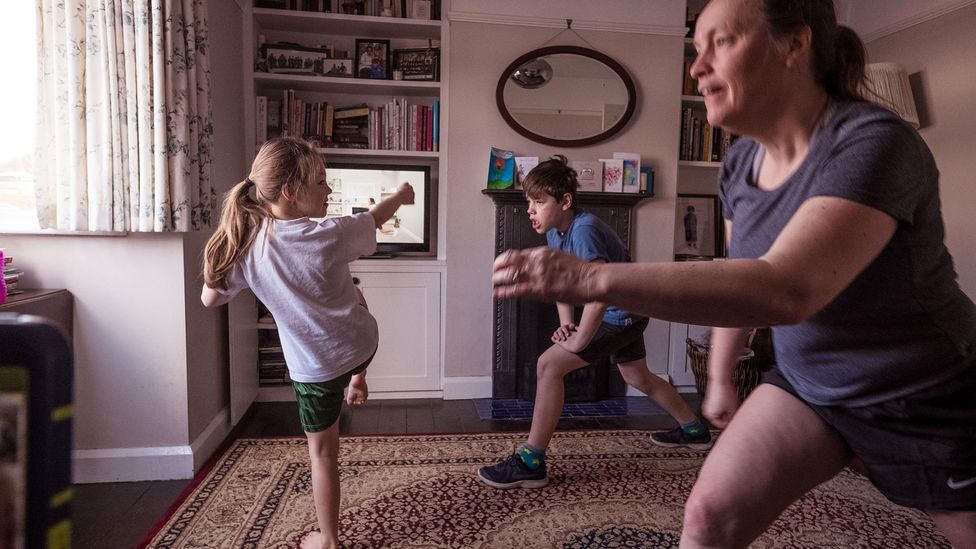
People's daily routines have been severely disrupted by the pandemic, which over time can lead to new ideas of what is normal (Credit: Alamy)
People's daily routines have been severely disrupted by the pandemic, which over time can lead to new ideas of what is normal
"When the only stories you hear [are] about the people that aren't doing what they're supposed to do, and are constantly messing up and making things worse and so on, it makes people forget that that's a very small proportion of the actual populace, and that actually they are the exceptional cases rather than the norm."
"People don't get enough recognition for that [their adherence to distancing, mask-wearing, etc.], and I think that's a bit of a problem."
Simon Bacon, professor, Concordia University, co-director Montreal Behavioural Medicine Centre 

"This [trust in state institutions associated with fewer COVID-19 deaths; social trust and group belonging linked to more fatalities] is likely because trust and affiliation with others are incongruent with physical distancing measures. So you can't see COVID-19."
"And trusting that your neighbour, trusting that your best friend, trusting that your family members are engaging in behaviours that reduce the risk of transmission may increase virus transmission."
Michael Wohl, psychology professor, Carleton University

"I explain what happens to me through circumstances and I explain what happens to you through character. That could lead you to chalk up someone else's failure to wear a mask to their being lazy, for example, while excusing your own decision not to wear one as a one-off, resulting from pandemic-related exhaustion."
"We have to be so careful of this kind of storytelling where the non-compliance gets told as a personal deficiency."
"It's not just disseminating knowledge or instructions, but asking the tough questions about how realistic it is for people to follow advice."
"In our planning, we have to anticipate that this is going to happen with a pandemic this long. The instructions that make sense early in the pandemic when people see this as a big threat and a scary thing, and people are energized to fight it, we're going to need different resources and different supports as it drags on."
"We need to acknowledge that everyone's going to get tired, and figure out how our interventions can account for and accommodate for that fatigue." 
Eric Kennedy, associate professor of disaster and emergency management, York University
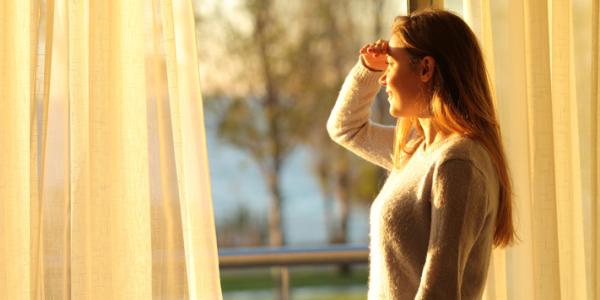
Loneliness might be expected high among those who have been forced to spend lockdown in isolation by themselves, but early research suggests otherwise (Credit: Alamy)
 
The percentage of Canadians reporting wearing face masks outside their homes between March and July most of the time, rose from two percent to 54 percent. Simon Bacon is at work on an international study of COVID-19-related attitudes and behaviours based on data from close to 14,000 Canadians who participated in a study between March and mid-September -- over 80 percent have been consistently handwashing and physical distancing since the beginning of the pandemic.

A fairly high ratio of compliance. And Dr. Bacon feels that 80 percent should be recognized for their steady reliability as a functional base of people who engage not only in safeguarding their own health but that of their community. As opposed to the quite small number of people comparatively speaking, who appear to believe that rules are made for others to follow and they have no obligation, social or ethical to be a part of that compliant majority. Many among them believe that the pandemic represents a scare-tactic on the part of government to bring people to heel.

Messaging focused on most people dedicating their efforts to sound virus-aversion practices is seen by Dr.Bacon as a reinforcing tool that validates the morality of continued behaviour that becomes normalized. Rather than risk people beginning to question why they should continue making an effort when others fail to. He speaks of consistent policy as a byword for public acceptance. In Quebec, he says as an example, people are not permitted visitors in their home from another address in the province's COVID red zones. On the other hand, up to 25 people are able to gather at places of worship.
 
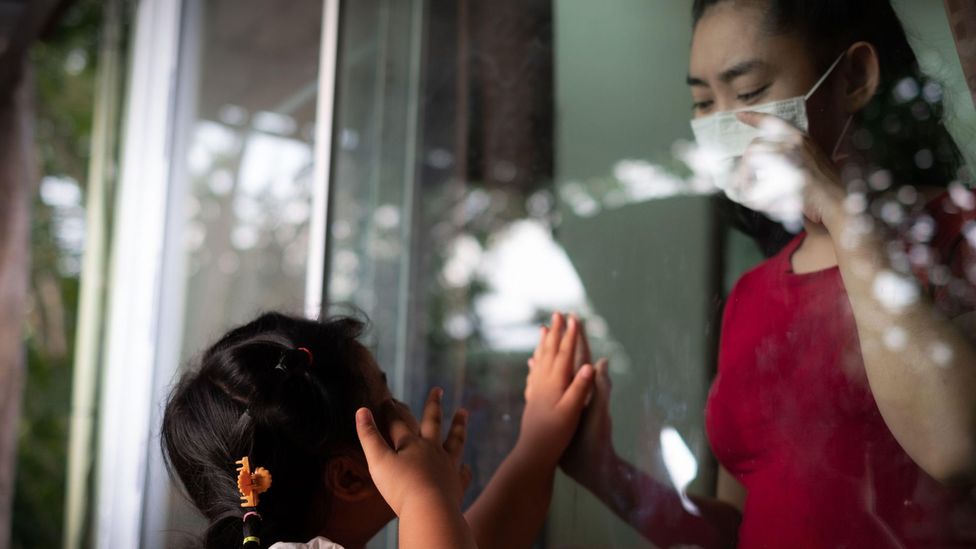
Social distancing has meant that people have had to get along without the usual daily face-to-face contact with friends, family and colleagues (Credit: AFP/Getty Images)
Social distancing has meant that people have had to get along without the usual daily face-to-face contact with friends, family and colleagues
 
"What people then invariably do is they start defaulting to their personal perspective, their personal values. Do they think this is important? Do they think they should be doing this?" 
 
Researchers at McGill and Carleton universities examined data from dozens of countries, to discover that while trust in state institutions was associated with fewer COVID deaths, social trust and group belonging were linked with greater numbers of fatalities.

And according to Dr.Wohl, one of the study's authors, with COVID-19 case and death numbers -- the anonymity behind the numbers, the de-personalization of the sheer numbers of victims -- growing steadily in numbers results in insensitivity within the population formerly personally empathizing; they become too distanced from the reality that simply overwhelms them. 
 
Dr. Kennedy speaks of the necessity of clarity and consistency in messaging along with the importance of transparent explanations why messaging may change, when it does, along with modelling oneself the very behaviour being asked for the public. The message is more advantageously received when a service is more readily accessed. As for example asking people to get themselves out to testing facilities when symptoms arise, but testing centres have limited operating hours or fail to be conveniently located for easy access, taking a prolonged time to complete. 
 
Another critical issue is the tendency of people to begin to succumb to COVID-inspired fatigue. Acclimatizing to threats that become incorporated as part of routine environment.Those new routines can become difficult after time has passed, to continue along with, given their inconvenience and become life-stressors. 
 
Changed work conditions, childcare disturbances, all take a psychological toll to match the physical toll. In current conditions what people once thought of as routine and predictable has undergone a complete transition, a crisis-forced change, one that disturbs their sense of resilient accommodation because it is unrelenting and intrusive in their lives. People despair over that elusive 'light at the end of the tunnel'.

COVID-19 Articles

Labels: , , , , , ,

Thursday, May 21, 2020

Security, Comfort, Safety - Forts for Children

"I feel like  you're in a safe place  your own bubble of cosiness."
"There are no other things affecting you -- you're blocked out from the world. Everything is wrong right now, but it's a safe space where no one worries about you."
"If you lock yourself in your room, people would worry, but if you hide in your fort all day, no worries."
Grayson Drewry, 22, Port Townsend, Washington

"Kids make sense of the world through play. In quarantine, all our needs are amplified."
"Everything is different. They're facing uncertainty -- not knowing how long we're going to be doing this."
"They're feeling what we're all feeling -- great loss."
"Whatever kids create in their imaginative world feels safe and predictable to them. It's like 'Every time I go into this fort, it will be just like I left it'."
"Don't mess with their fort. Let them go to town on making it feel safe and comfortable. It's theirs."
Emily King, child psychologist, Raleigh, North Carolina

"It's primal. [Our brains react with] self therapy."
"It's all aout safety and control. We seek out comfort. We need to restore order. And in COVID, we're doing more of these things."
Carol Stock Kranowitz, educator, author
In Forest Hill, Maryland, six-year-old Nacelle Bumford has several forts, including a tent near her mother's work spot she has named her "office". "We use them as her safe place", her mother explains. Inside the forts Nacelle gets two minutes of "cuddle time", an aid to normalcy and comfort for both mother and child. "She calls me into her 'office' for meetings that we both schedule on her calendar. It makes her feel in control of her day", said Linette Bumford.

David Sobel, professor emeritus at Antioch University's department of education, author of Children's Special Places: Exploring the Role of Forts, Dens and Bush Houses in Middle Childhood, explains that forts have always been important in childhood. He has done research across cultures on the developmental function that forts assume in children's lives, and he concluded they are universal, driven by "biological genetic disposition" as children develop a "sense of self", separate from parents.

According to Dr.Sobel, children initiate fort-building indoors about at age four, and then begin venturing to the outside two to three years on, to construct dens, treehouses and fort-like structures independently. Building forts reflect children's emotional growth as individuals as they create a "home away from home", away from parental control. "A lot of magic happens inside [a fort, fostering creativity", he explains.


For Grayson Drewry, a school assignment to take part in a fort-building competition, gave meaning to her life during a time of confusion. Her mother describes Grayson's seeking comfort in "nests" and forts when stressed. She transformed her bedroom in pastel-pink, building a tent made with sheets and pillows centrally propped by a mop, then decorated it with photographs, and spent most of her day inside. "I needed that!", she said to her mother.

Dr. Sobel pointed out that children now have more time to be creative as their developing brains need a break from computer time, so forts encourage play, beneficial for children, more acutely at the present time. Familiar routines suddenly disrupted, children have a need to feel in control of something, said Emily King. Therapeutic in nature for children, being in an enclosed dark space, sound buffered, the space creating separation from everything surrounding it, children on the autistic spectrum or with attention-deficit disorder can find it soothing.

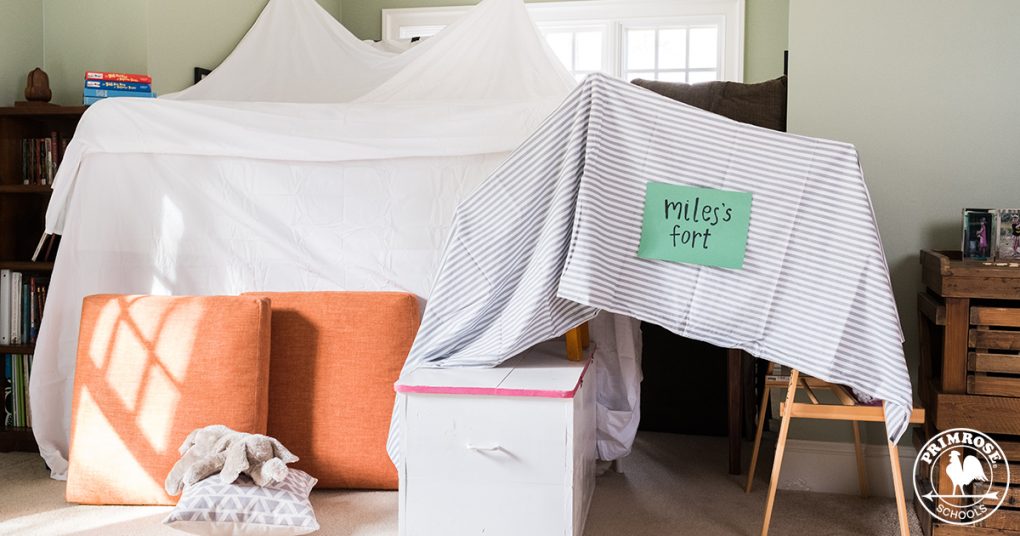
A fort made out of living room furniture, cushions and blankets, labelled 'Miles's fort'

Labels: , , , , ,

 
()() Follow @rheytah Tweet