Ruminations

Blog dedicated primarily to randomly selected news items; comments reflecting personal perceptions

Thursday, October 05, 2023

United Kingdom: Saving Lives, Saving Health Dollars
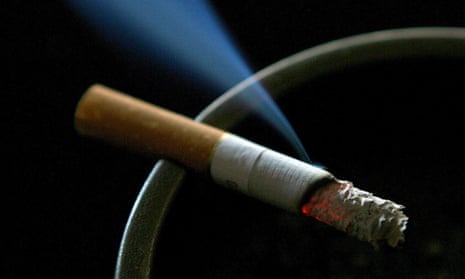
A cigarette burning on an ashtray
Photograph: Gareth Fuller/PA
"[My intention is to] stop teenagers taking up cigarettes n the first place."
"People take up cigarettes when they're  young. Four in five smokers have started by the time they're twenty. Later, the vast majority try to quit ... If we could break that cycle, if we could stop the start, then we would be on our way to ending the biggest cause of preventable death and disease in our country."
"No parent ever wants their child to start smoking. It is a deadly habit – killing tens of thousands of people and costing our NHS billions each year, while also being hugely detrimental to our productivity as a country."
"I want to build a better and brighter future for our children, so that’s why I want to stamp out smoking for good. These changes will mean our kids will never be able to buy a cigarette, preventing them getting hooked and protecting their health both now and in the future."  
British Prime Minister, Rishi Sunak

"This government’s plan to introduce ‘smoke-free generation’ legislation could become its defining legacy, righting a century-old wrong, with tobacco products being the only legally available commodity that, if used as intended, will kill over half of its lifelong users."
Lion Shahab, Academic co-director, tobacco and alcohol research group, University College London
 
"Raising the age of sale on tobacco products is a critical step on the road to creating the first ever smoke-free generation."
"If implemented, the prime minister will deserve great credit for putting the health of UK citizens ahead of the interests of the tobacco lobby."
Michelle Mitchell, chief executive, Cancer Research UK
  • Government to introduce historic new law to protect future generations of young people from the harms of smoking.

  • Smoking is the UK’s biggest preventable killer – causing around 1 in 4 cancer deaths and 64,000 in England alone – costing the economy and wider society £17 billion each year.

  • Move would be the most significant public health intervention in a generation, saving tens of thousands of lives and saving the NHS billions of pounds. 

  • Further crackdown on youth vaping will see government consult on restricting disposable vapes and regulating flavours and packaging to reduce their appeal to children.
It won't be a first, but it is a far-reaching solution, however unpopular it will be, to the massive threat to  human health and longevity smoking represents. It is a radical preventive measure applicable only in England once the proposal is approved by Parliament. But as a health measure for the future, the legal change could not apply in Northern Ireland, Scotland and Wales. It would be up to them to decide whether they too feel such a measure is worthwhile legislating. 
 
New Zealand thought it was, and became the first country to do what the UK is proposing, last year.
 
The UK's Rishi Sunak saw fit this week to propose raising the legal age of cigarette purchases by a year, in Britain. The idea is that after the first year the legal age of purchase would rise another year, year after year, until eventually it reaches the point where it will be illegal for the entire population to purchase tobacco products.The initial goal is to reach the point where it will become illegal for young people to buy tobacco.
The prime minister's proposal was presented at the Conservative Party's annual conference. A step up from the current legislation where it is illegal for anyone to sell cigarettes or tobacco products to anyone under 18 years of age throughout the United Kingdom. The prime minister's office clarified the intention of the incremental changes; to stop children turning 14 years old this year and those even younger, from ever being sold cigarettes legally in England.

There is no intention at this point to criminalize smoking. Anyone who can legally buy cigarettes at the present time, will not be prevented from  continuing to do so in future. The intention wasn't to criminalize smoking. Since the 1970s the number of people in the UK who smoke declined by two-thirds. About 13 percent of the population -- 6.4 million people -- still smoke.
 
 In 2007 the legal age of sale for tobacco was raised from 16 to 18, by the British government. A move that succeeded in reducing prevalence of smoking among 16 and 17-year-olds, by 30 percent. With this latest announcement, a plan to increase the legal smoking age steadily, year over year, the nation's health experts have applauded the plan.

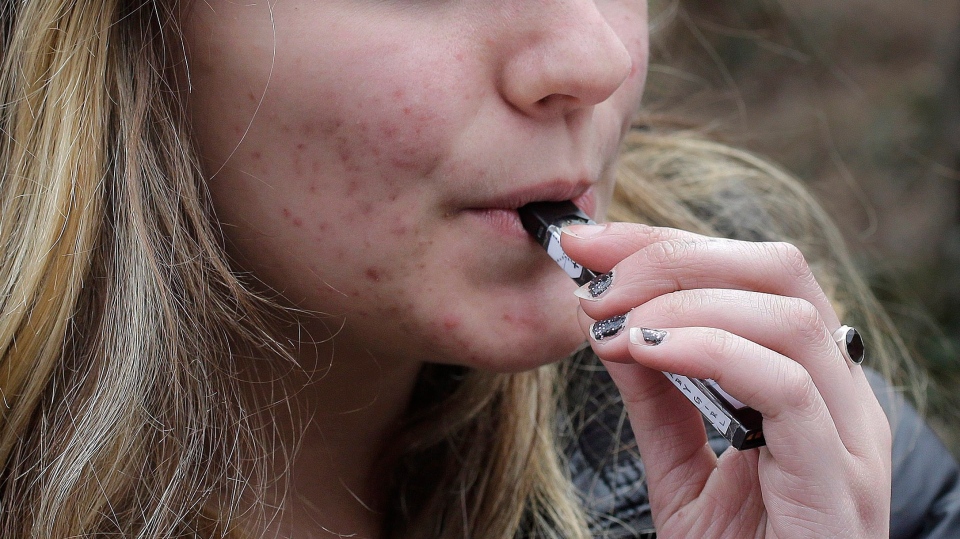
In addition to his tobacco cessation stance, Mr. Sunak said as well that his government would introduce measures restricting the availability of vapes (e-cigarettes), to children. At the present time it is illegal to sell vapes to children in the UK under age 18. Nonetheless youth vaping has tripled in the past three years; more British children vape now, than smoke.
"[This is a] prohibitionist wheeze [that is] hideously illiberal and unconservative."
"[It] will create a two-tier society in which adults buy cigarettes informally from slightly older adults and will inflate the black market in general."
Christopher Snowdon, head of lifestyle economics, Institute of Economic Affairs
A confident-looking middle-aged man of Indian heritage in a suit speaks behind a woodern lectern.
British Prime Minister Rishi Sunak says smoking costs Britain's health services $32.6 billion a year.  ()

Labels: , , , ,

Tuesday, November 05, 2019

Tobacco/Cannabis Health Alert

"We are not seeing the potential benefits [of e-cigarettes helping adult smokers quit regular cigarette smoking], but we are taking the potential risks [in seeing an increase in teen use of e-cigarettes]."
"Your lungs are much more sensitive than digesting it [vaping cannabis oils] through  your stomach. No one knows what the contaminants are in these oils."
"If you are buying something on the black market, then all bets are off."
David Hammond, chair, Canadian Institutes of Health Research in applied public health, University of Waterloo
A woman smokes a Juul e-cigarette in New York. The company says its product is intended for adults who already smoke and never people who are underage. (Brendan McDermid/Reuters)

In Canada between 35,000 and 45,000 deaths attributed to smoking take place annually, with roughly 30 percent of those deaths occurring from cancer. Recreational drug use in Canada includes the three legal products including tobacco, vaping and cannabis, though regulators have yet to fully comprehend the interplay that the three manifest on public health. Cannabis and vaping, newer to public health concerns than tobacco, are now posing challenges of their own.

Challenges that David Hammond, speaking at the biennial Canadian Cancer Research Conference taking place in Ottawa, addressed in his capacity as chair of Health Research in applied public health. In both the United States and Canada, the sale of e-cigarettes has seen a sharp increase, and a large proportion of that increase reflects new sales to teen users.

The conundrum is that despite the expectations that e-cigarettes having the capacity to aid adult smokers cease the use of regular cigarettes, no parallel increases in e-cigarette use has been realized among that adult smokers' demographic. A strong association exists among  youth, however, between vaping first and then proceeding onward toward smoking cigarettes.

Juul opened its first retail store in Toronto this summer. (Albert Leung/CBC)

Dr. Hammond points out that this disparity might arise given youths' propensity to be attracted to risky behaviour, and once one risk-taking behaviour has been absorbed, the next one beckons. Dr. Hammond earlier in the year had led a study that discovered an increase in vaping by Canadian youth. Among 16- to 19-year olds an 8.4 percent vaping increase was reported in 2017, which had additionally increased to 14.6 percent in the like period, August to September by 2018.

A 15-year-old high school student uses a vaping device. (AP Photo/Steven Senne)
Until recently, teen smoking had been observed to be on the decline. This study pointed out an increase in youth smoking regular cigarettes between 2017 and 2018, from 10.7 percent to 15.5 percent, with vaping seen as introducing youth to regular smoking. This was viewed as the first data to emerge since major tobacco companies launched and advertised e-cigarette brands in Canada in the wake of the adoption of Bill S-5, legalizing e-cigarettes with nicotine in May 2018.

Though admittedly e-cigarettes are viewed as less harmful than smoking -- in particular with cancer risk -- the inescapable fact is that they contain nicotine. E-cigarettes are only useful for regular smokers when an entire switch is made from cigarettes to e-cigarettes. For those who choose to smoke both e-cigarettes and to continue with regular cigarettes, little or no risk reduction results from that combination.

In the United States there  have been close to 2,000 serious cases of lung disease related to vaping cannabis oils, with over 30 deaths, thus far. An estimated 80 percent of the cases of that mysterious lung disease point to vaping cannabis oils, mostly acquired through the black market. The Canadian Cancer Society back in June called on government action immediately, to address the increase in youth vaping.

The Canadian Cancer Society wants Saskatchewan to raise to legal age of purchasing tobacco and vaping products to 21. (Aliaksandr Barouski/Shutterstock)

Labels: , , , , , ,

Friday, June 01, 2018

Smoking Cessation

"Some people have suggested the idea of putting a warning on individual cigarettes and using what we call sliding shell."
"I have to tell you these ideas are being studied and I also have to tell you I really like them. They are quite bold."
"When I look at the rates of tobacco use, we have certainly come a long ways[sic], but I personally believe a lot of work needs to be done in this area [persuading smokers to cease imperilling their health]."
"We want to make sure that programs are developed for Indigenous communities by Indigenous communities [with typically high rates of tobacco consumption]."
Federal Health Minister Ginette Petitpas Taylor, Ottawa

"The tobacco companies place the brand name and logos on the cigarette themselves, it's a very good way to communicate with consumers."
"Under plain packaging, they will no longer be able to have that [straight-up advertising] so it is a great idea to have a health warning."
"[It could be as simple as a word like] 'cancer' [or] 'emphysema' [on a cigarette]."
"There are 27 billion cigarettes sold [every year] in Canada. If we can have a health warning on each of those, it's going to inform consumers, it's going to create public discussion, it's going to make the product less appealing and it'll help fight contraband because it will have a unique marking on cigarettes, legitimately sold in Canada."
Rob Cunningham, spokesman, Canadian Cancer Society
"Today, the Canadian tobacco landscape is vastly different from that of a decade ago and we believe it's time for a new progressive approach to be considered by governments," said Marie Polet, President and CEO of Imperial Tobacco Canada.
AP Photo/Nati Harnik,
"How a committee can pass a tobacco bill without hearing from a tobacco company that has close to 50-per-cent market share is beyond us."
"Plain packaging is perhaps the greatest gift the government can give to the illegal operators."
"Plain packaging forces the legal industry to make our products look like illegal ones."
Eric Gagon, spokesman, Imperial Tobacco 
Cancer, and particularly lung cancer, directly linked to tobacco use, can be reduced by influencing people who smoke to realize that their habit is self-destructive. While tobacco use is not the only determinate for cancer onset, it is the most obviously responsible one. Treatment of patients with emphysema  and cancer related to smoking takes up a large part of the Canadian universal health system, a costly exercise in fear and frustration for those afflicted and a use of medicine that could be reduced because it is environmentally caused through a harmful substance and habitual use.

In heart clinics where patients with such issues are treated, posters urging people not to smoke, for a healthier lifestyle, longevity and enjoyment of life make the case for smoking cessation. Hospitals run programs for smokers attempting to quit their habit. Tobacco use deleteriously affects the heart as well as other organs of the body. Four million Canadians out of a population of 36 million remain smokers, the result of which, an estimated 45,000 people die each year as a direct cause of smoking.
Cancer, lung disease, heart disease, the most dread medical conditions arise through tobacco addiction.
"The Quit Smoking Program (QSP) is a nurse-led clinic that provides you with one-on-one support during your attempt to quit. The program provides a non-judgmental and supportive environment where a “quit plan” is tailored to meet your individual needs. Anyone may self-refer to the program, or be referred by a healthcare provider. The cost is covered by OHIP."
University of Ottawa Heart Institute
Health Canada is currently examining a proposed measure to dis-enhance the packaging of tobacco products. Not an entirely new idea by any means, but one that builds on past packaging warnings of the outcome of tobacco use on human health. On the agenda is a stark move to have tobacco manufacturers who pall at the very idea, entomb their product in absolutely plain packaging. Once Bill S-5 designed to make it a legal reality is given royal assent, new packaging regulations for tobacco products will prohibit promotional information, branding and logos.

Tobacco, apart from posing as a health threat to those who smoke, along with other non-smokers who are in close proximity constantly to smokers, causes other kinds of accidents that impact on people's lives. Cigarettes improperly snuffed out, left to smoulder, can flare up and cause house fires. Fires that can themselves be lethal, and at the very least, lead to loss of property and possessions. Because smoking is more prevalent among the least educated and the poor, cigarette-caused fires have the potential to burn up multiple dwellings at a time, leaving large numbers of people homeless.
Study finds link between vaping now and smoking later in life; still from video

The strategy the Health Department is now pursuing is meant to reduce the current rate of smoking in the public from its 15 percent status to five percent or less with the help of the new legislation. Funding is to be provided for investments to protect youth, increase scientific research, fund non-governmental organizations and to make inroads in curbing smoking in Indigenous communities where smoking rates are known to be much higher than among the general population.
"Smoking cessation is a health priority for the University of Ottawa Health Services Family Health Team.  In 2009, our providers adopted the Ottawa Model for Smoking Cessation (OMSC) in Primary Care. It focuses on helping patients quit smoking long term by providing counselling and cessation medications. The program helps patients identify their smoking status, provides advice on strategies to quit smoking; and provides assistance with quitting. The program includes collaboration with the Heart Institute to provide follow-up counselling to help patients remain smoke-free."
University of Ottawa, Smoking Cessation Program

Labels: , , , , , ,

Tuesday, January 23, 2018

Cutting Addictions : Saving Lives

"We need to understand that opioid addiction does not occur in isolation. All these social determinants are intertwined: mental health issues, poverty, housing, food insecurity, trauma. All of these are related to addictions."
"So you need an approach that addresses the whole person rather than just the opioid, or just the cigarette, or just their diabetes."
"It's not black magic: There is neurobiology at play. Tobacco is the king of addiction, and it causes structural changes in your brain, in the receptors, and it amplifies the response."
Dr. Smita Pakhale, respirologist, The Ottawa Hospital
'We’re trying to understand if e-cigarettes can be in our toolbox,' said Dr. Smita Pakhalé of trying to find ways to help homeless people stop smoking. Jean Levac / Postmedia

"When I was able to see that I could reduce my nicotine intake, that gave me a good feeling, and the more I reduced, the better I felt. I thought that if I could do that, why can't I reduce my drinking?"
"Unfortunately, I started [smoking after cessation] again, but I'm still working on trying to quit."
Tara Finnessy, 50, client, Bridge Engagement Centre
Tara Finnessy was, she tells an interviewer, nine years old when she first began smoking. By the age of 11 she was a veteran smoker, completely addicted to tobacco. From there her addiction began to escalate as she grew older until she became dependent on cocaine, followed by heroin, all crutches to help cope with personal tragedies in her life. Hoping to cope in a more reasonable, less-death-defying manner, she turned to methadone, and has been on it for the past fifteen years of her life.

And she is a client at the Bridge Engagement Centre in Ottawa whose mandate is to give aid to people living on the streets, to the addicted, the mentally challenged, the drifters. Medical specialists from The Ottawa Hospital donate their time and expertise to this community project to give help and hope to the seemingly hopeless. Out of this group has come a new study published in the online open access journal, BMJ Open.

Researchers at the Bridge Engagement Centre enlisted 80 inner-city Ottawa residents offering them free nicotine replacement therapies inclusive of patches, gum or inhalers, in concert with peer support, mental health counselling and life-skills training, all of which comprised a study in a comprehensive approach to addictions and the background issues that lead people to become victimized. Dr. Pakhale is director of the Bridge drop-in centre and she led this new study.

Over a six-month period, participants who remained in the program were found to have reduced their daily cigarette use from an average of 20.5 cigarettes a day to 9.3. Study participants reported an 18.8 percent decline in illicit drug use. The breakdown: heroin (6.3 percent), OxyContin (3.8 percent, and fentanyl (2.6 percent) declined among those study participants who had acutely reduced their smoking habit.

The study suggests that smoking cessation represents an opening in people's fixed routine dependencies to be treated for their multiple addictions. Both tobacco and opioids are reactive to the brain's reward centres. One addiction reinforces another, pointed out Dr. Pakhale. Among the homeless and marginalized populations, smoking becomes an endemic addiction.

A study of 858 drug users in Ottawa's inner city undertaken in 2013 concluded that 96 percent smoked cigarettes on a daily basis in comparison to roughly nine percent of the city's general population who did the same. While the vast majority of inner-city smokers would like to quit smoking according to research, a persistent belief exists that smoking represents a minor problem in comparison to housing, mental health and other issues related to addiction.

"That translates into a disproportionate amount of disease and premature death -- preventable deaths -- in this population", pointed out Dr. Pakhale.

Labels: , , , ,

 
()() Follow @rheytah Tweet