Ruminations

Blog dedicated primarily to randomly selected news items; comments reflecting personal perceptions

Monday, December 09, 2019

Eating Well, Controlling Weight

"It speaks to the fact that people selling us this food understand it's not just about hunger."
"Sometimes people get more joy from food than other areas of life. It is a consistent, reliable pleasure, and certainly we see it sometimes in individuals who have experienced certain types of childhood trauma. The people in their lives couldn't consistently be depended on to be positive, and food was the only thing that always made them feel better."
"Food was a comfort, a consistent source of happiness. And it becomes difficult to break that pattern when they become adults. Any time of discomfort or stress food is going to be the go-to mechanism."
"You start to get hungry, your glucose level drops. Your brain uses glucose for fuel, it mobilizes your body to get food, and the cravings start."
"Stress hormones like cortisol get released. People get hungry, they get angry, they get irritable, and they want to eat. Some people really dislike that feeling and will eat to prevent it."
Dr.Valerie Taylor, chief of psychiatry, University of Calgary
Image result for losing weight, diets, health
Everyday Health

People are variously motivated to bring them to the table; some people eat for pleasure, while others eat hoping to avoid discomfort. One in four adults in Canada are now obese. There are reasons other than hunger that people turn to food. It is, after all, an absolute existential necessity. If no food is available starvation threatens. There have been, and continue to be instances in human history where famine is the result of conditions causing the growth and maturation of food crops to fail; from weather to regional conflict.

It is by now well known that people have a tendency to overeat, to consume greater quantities of food than their bodies require for the energy output of a working day. Large numbers of any community turn to dieting in the hope of controlling weight gain, when controlling one's appetite for non-whole-foods is far more effective in the long run. Diets simply do not tend to work. At first unwanted weight is dropped, but there is the all-too-human tendency to revert to habits forbidden by diets and the weight comes back.

Image result for losing weight, diets, health
Harvard Health

On the other hand, the whole diet concept works against human psychology. Anything that is forbidden becomes more alluring. If a dieter is informed not to eat chocolates, not to eat doughnuts  much less any food item classified as low on the nutrition scale and high on the calories, what arises is an inner resistance and resentment. The forbidden fruit haunts the mind and the body's psychology kicks in with cravings. The solution can be as simple as succumbing to a craving rationally; eating one doughnut and not a second, a third and more.

Diets in and of themselves tend not to be sustainable. People mostly return to previous eating patterns -- all the more so if the diet has been a restrictive one where the body reacts when weight is lost and the brain slows down metabolism. Weight re-gain is inevitable with the reversion to the original eating pattern, at a time when metabolism has been slowed. Weight is regained and the body must once again reset itself.

The urge for certain foods is often driven by stress, when we're vulnerable to making impulsive choices. At the same time alcohol appeals to many people as a way to cope with stress, even while alcohol consumption has a tendency to reduce self-control, increasing impulsivity, the while it makes food taste even better. Normal satiety signals fail to penetrate consciousness when the body's ability to self-regulate has been disrupted, as happens when alcohol has been imbibed and attention is turned to food.
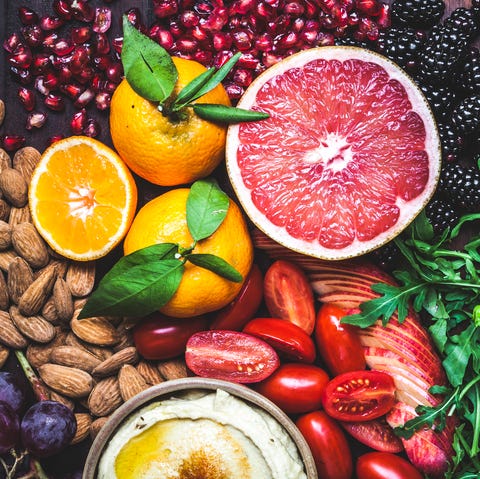
Image result for losing weight, diets, health
Food for a healthy diet

Food consumption as a mitigation of stress in contemplating worrisome life events is yet another factor in weight gain. Positive emotions take the place of stress when there is an increase in glucose as happens with food consumption. Once that positive effect wears off there is a compulsion to repeat the process for pleasurable emotions to return, driving an eating habit to cope with stress. And then there is the issue of recognizing when one is being manipulated by food suppliers.

Food manufacturers have long played the game of paying to have their products prominently displayed on supermarket shelves. Those enticing, colourful food containers appeal to the hungry brain. And for the most part they represent ultra-processing of food. A study published in the journal Cell Metabolism found even when two diets are matched for similar carbs, fat, sugar, salt and calories, people will consume more and gain weight more on ultra-processed foods.

Irrespective of the type of diet people choose for themselves; low-carb, high-carb, keto or vegan or Paleo, recognizing that all of these eating plans turn toward the avoidance of significant amounts of highly processed foods, they have the potential to work well if they are viewed sensibly. In the final analysis, however, people are far better off in the quality of foods they consume if they conduct most of the preparations themselves in their very own kitchens.

Labels: , , , , , ,

Tuesday, November 26, 2019

Advice to the Aging on Weight Control

"It may be imperceptible year to year, but compare the amount of muscle mass with the average 80-year-old to the average 20-year-old and it becomes more apparent. The greater the amount of muscle mass we have, the greater our resting metabolic rate."
"In general, the average 80-year-old will move less in small and big ways throughout the day compared to the average 20-year-old. And exercise, separate from daily activity, probably declines, although that only affects in a large way the smaller proportion of people who exercise regularly."
"Weight gain seems to affect men and women similarly. So, after 20 or 30 years, [adding a pound or more every year] it all adds up. During menopause weight gain [both men and women] is about the same. But [in women] weight shifts more toward the abdominal region, so it appears to be greater weight gain. The same thing happens in men -- greater weight gain with age in the abdominal region -- but it occurs more gradually."
Donald D. Hensrud, associate professor, preventive medicine and nutrition, Mayo Clinic College of Medicine

"Many of my patients admit to moving less overall as they get older, and the first thing I recommend for weight loss is to add weight training -- at least two to three days per week -- to slow down sarcopenia [age-related muscle loss], along with an additional day or two of cardiovascular exercise."
"On top of this, I encourage my patients to meet the 10,000 steps per day goal, so they are taking walks throughout the day or doing house or yard work versus getting home from the gym and sitting all day. This will also impact metabolic rate."
"I encourage my patients to work on portion control and eating a higher volume of lower calorie foods, like fresh fruits and vegetables, since they will fill us up with less total calories and are important for aging, vitality and disease prevention."
Jessica Murgueytio, dietitian, Bethesda Medical Associates
Elderly man lifting weights in a gym

As people grow older there is a gradual loss of muscle mass and that alone accounts for the fact that weight is gained by people as they age. There is a loss of one percent annually of muscle mass with aging, causing a decrease in basal metabolic rate (the process of burning calories while at rest); the lower the metabolic rate of an individual the fewer calories are burnt. Added to which there is a tendency as people age to move about less; spontaneous physical action is reduced with advancing age; scheduled exercise aside.

And then there are hormone changes, with testosterone declines in men and estrogen and progesterone in women, all of which can also have a weight effect. There is a common misconception that post-menopausal women will tend to gain more weight than do men, but the truth is that both sexes gain weight, it's just that weight redistributes more quickly in women than it does in men, ending up all too often in the abdomen.

A recent study suggests that lipid turnover in adipose tissue (where fat is stored in the body) tends to decrease during the process of aging; which is to say fat removal from fat cells slows, and this contributes as well to gaining weight. In a research project, health scientists studied fat cells in 54 men and women throughout a thirteen-year period. All the test subjects indicated lipid turnover rates in decline. Indicating processes in fat tissue "regulate changes in body weight during aging in a way that is independent of other factors", according to Peter Arner of the Karolinska Institute in Sweden.


Experts in the field of medical science recommend that people continue regular exercising, that they monitor their calorie intake, lift weights and move steadily through the day and make an effort to avoid sitting as much as possible. "All types of physical activity burn calories and are important", cautioned Dr. Hensrud. "Resistance training (weightlifting) helps in the loss of abdominal fat. Exercise is the most efficient way to burn calories." In particular,  high-intensity interval training HIIT); short bursts of intense exercise interspersed with brief recovery periods.

Weight gain has been seen to stabilize after people reach their mid-60s, partly as a reflection of people choosing to eat less when they become older, according to Dr. Hensrud. Among people older than 60, obesity rates are at about 41 percent in comparison with close to 43 percent for people ages 40 to 59, and 36 percent for people aged 20 to 36, according to the Centres for Disease Control. "Although physical activity probably continues to decline throughout a life span, energy (calorie) intake also tends to decline in the elderly", he noted.

Labels: , , , ,

Monday, November 25, 2019

Studying Cannabis 

"We found that users [of cannabis], even those who just started, were more likely to be at a normal, healthier weight and stay at that weight."
"Only 15 percent of persistent users were considered obese compared to 20 percent of non-users." "[The difference] could be the cannabis use itself, which can modify how certain cells, or receptors, respond in the body and can ultimately affect weight gain."
"People shouldn't consider it as a way to maintain or even lose weight. There's too many health concerns around cannabis that far outweigh the potential positive, yet modest, effects it has on weight gain."
Omayma Alshaarawy, lead author, study, Michigan State University

"These factors [users more prone to alcohol consumption of sedentary habits] could aggravate pre-existing conditions such as obesity, and borderline glucose intolerance, as well as increase the risk of diabetes."
Antonio Vigano, oncologist, professor, McGill University
items.[0].image.alt

Oncologist Antonio Vigano is familiar with a decrease in his cancer patients' appetite. His daughter conducted a study which showed that cannabis consumption had the effect of improving patients' appetites. At the same time he warned that indirect negative consequences to marijuana consumption might make it a poor approach to slimming down should users be more prone to consuming alcohol or live a more sedentary lifestyle.

For decades, researchers  have focused on a correlation between appetite stirred by the consumption of cannabis. A 1988 study from Johns Hopkins University found subjects who smoked marijuana consumed 40 percent more calories than a control group. A survey commissioned by licensed marijuana retailer National Access Cannabis thirty years on, found 28 percent of 1,525 respondents naming eating the most pleasurable activity in the wake of ingesting marijuana.

Famously, that's a greater average than those citing the pleasures of eating, post-sex, at 17.5 percent.
Hand Holding Marijuana Leaf with Cannabis Plants in Background


THC, (tetrahydrocannabinol), the major psychoactive constituent of cannabis, acts to stimulate ghrelin release, a  hormone released normally from an empty stomach. THC may also enhance the olfactory system, another eating trigger, according to a study by a neuroscientist in Bordeaux. It is well known that using marijuana increases junk food craving. Economists discovered that monthly sales of "high-calorie food" increased by 3.1 percent for ice cream, 4.1 percent for cookies and 5.3 percent for chips, by tracking retail data in U.S. states where cannabis had been legalized.

Despite a lot of snacking going on as a result of marijuana consumption, users appear not to gain weight. Data on 33,000 subjects collected over a three-year period by the National Epidemiology Survey of Alcohol and Related conditions were studied by the researchers at Michigan State University whose findings corroborated that fact.

uncaptioned
MariaLuisa Vigano a Michigan State University researcher, found that while an increase in appetite resulted from marijuana use, encouraging nibbling junk food, "no statistically significant increase in weight" was detected among the subjects. On the other hand, both Professor Vigano of McGill  University and Dr. Omayma Alshaarawy of Michigan State, urge a note of caution; Professor Vigano in citing additional factors, and Dr. Alshaarawy that cannabis use could modify the way cells or receptors respond in the body to affect weight gain.

And then there is the practical view that cannabis users could make themselves consciously aware that their stimulated appetite and consequent snacking required some self-discipline to kick in, to avoid gaining unwanted weight. They may indulge in those tempting munchies to a degree, yet their awareness may at the same time inject a note of caution, inspiring them to adjust their diets accordingly, swapping the junk food for healthy alternatives, or munching the junk food and consuming less at mealtimes.

"It might be a behavioral effect as cannabis users are aware of the munchies effect and might therefore restrict their caloric intake when they are not using."
"Further studies are needed", concluded Dr. Alshaarawy.

Labels: , , , ,

Saturday, May 25, 2019

Seeking Solutions to Obesity

"This proves that [the gene] MC4R is an important, if not the most important, controller of weight." "[And the new pathway provides an obvious target for drugs to protect against obesity]."

Sadaf Farooqi, MBChB, PhD, professor of metabolism and medicine, University of Cambridge

"We think regulation of hunger and satiety is the key."
"There is food everywhere. If you are a little bit hungry and someone puts out a big plate of doughnuts at your meeting, who’s going to reach for the doughnuts?”
Cecilia Lindgren, professor of genomic endocrinology and metabolism, University of Oxford
Two studies published April 18 in the journal Cell have shone new light on the role genetics can play in developing obesity—or protecting against it.  CardiovascularBusiness

Those among us who always seem to be able to eat whatever they like and never gain weight are both admired and resented by the infinitely greater number of people who crave food constantly and frequently overdo it, ending up gaining weight that then threatens to impair their health and longevity, New research has revealed that the people who always look so trim have a faulty gene responsible for their unusual metabolism.

That genetic alteration in that relatively small number of people who don't seem to ever gain weight actually mutes their appetite so they are in fact not all that enthusiastic about eating. On the more positive end of the spectrum, not only do they remain physiologically spare but these people who never consume much food or think constantly about their next meal, have a reduced chance of becoming diabetic or struggling with heart disease.

The U.K. Biobank which has data on a half million people aged 40 to 60, formed the basis of the study published in the journal Cell, while a second study also published in the same journal made use of data from the same population to develop a genetic risk score for obesity which can help predict as early as childhood who would be at high risk for obesity.

The findings from both studies, when taken together, confirm that there are biological reasons for the reality that some people struggle with their weight and others have no need to. The biological impacts are recognized to focus on appetite, not on metabolism, where people who gain too much weight or struggle to retain normal weight feel hunger on a frequency scale not reflected by their naturally thin counterparts.

The appetite-dulling mutation, led by Dr. Farooqi and Nick Wareham, an epidemiologist at the University of Cambridge, drew on Dr. Farooqi's research into the gene MC4R which she has studied for the past two decades. Her study of the gene was primarily in an effort to parse why it is that some people are overweight, not the opposite; why some people are not.

Endowed with MC4R mutations people tend toward obesity. As many as 300 mutations are located in this gene; the most common single gene cause of obesity. Six percent of children suffering from severe obesity can trace the cause to this gene mutation.

Satiety -- the feeling of fullness following a meal -- is destroyed by the mutations. When people eat a meal, the gene is automatically switched on to signal people that they have consumed their nutritional needs for that meal. When people consequently feel that 'full' signal they stop eating, and the signal turns off.

Those people carrying a mutation in MC4R preventing the gene from doing its work are absent the signal of satiety. Consequently they always feel the need to eat, and as a result become overweight, with a risk of diabetes and heart disease 50 percent more elevated than those lacking the mutation.

In some people, according to the new study, the MC4R gene is always turned to 'on'; they feel full always. And 6 percent of the population is affected by that mutant gene.

As for the related study, Dr. Amit V. Khera, a cardiologist at Massachusetts General Hospital and fellow researchers were looking for a method to predict out of a huge collection of minuscule variations in DNA, who might be destined to struggle with weight gain. As a result, the scientists designed an obesity risk score based on DNA alternations, such that people with the highest score weighed 13 kilograms more on average than those with the lowest scores.

The very obese saw 60 percent scoring high. And since the  U.K. Biobank population data consisted of adults, the scientists made use of other genetic studies where at birth, babies with high scores weighed the same as babies with low scores. But by three-and-a-half, they were heavier and by age eight, they were obese. Late adolescence saw them weighing on average 13 kilograms more than children with low risk scores.

"Those eight years might be magical and give you a unique opportunity to make a difference", observed Dr. Joel Hirschhorn, a geneticist at Boston Children's Hospital.


food, hunger
Business Standard

Labels: , , , ,

 
()() Follow @rheytah Tweet