Ruminations

Blog dedicated primarily to randomly selected news items; comments reflecting personal perceptions

Saturday, August 19, 2023

Life is a Learning Exercise to Lubricate the Brain

"I'm actually doing a little bit of work now on how we can get more people [children] in the United Kingdom to play chess, because it's so good for you."
"It's a great skill, and it's really good for helping you think."
U.K. Prime Minister Rishi Sunak
 
"Chess games are good for the brain as they require concentration, working memory, planning and problem solving."
"Therefore, they activate the brain regions involved in those cognitive processes."
"This is like a brain workout but also means you get better in those forms of cognition."
Barbara Sahakian, neuroscience professor, University of Cambridge
Learning-Games-Decreases-Alzheimer-GettyImages-1454277759
MirageC/Getty Images
"For the most part, the numbers of brain cells or neurons stay pretty stable across your lifespan, but these activities affect synapses, which are the connections between neurons."
"As we grow older, we tend to lose synapses in parts of the brain, and if you do things that are very stimulating toy our brain, you can make more connections, and you're just more resilient to the damage that's going on in the early phases of diseases like dementia."
Tara Spires-Jones, professor of neurodegeneration, University of Edinburgh
In the summer, a study that tracked over ten thousand older Australians over the course of a decade was published in the Journal of the American Medical Association (JAMA). The study concluded that chess as well as other cognitively stimulating leisure activities may help to reduce the future risk of dementia. A view shared by neuroscience professor Barbara Sahakian, who says chess players -- those in particular who play competitively in leagues and tournaments -- become fast thinkers.
 
Yet it is not chess specifically and chess alone that is highlighted as a skill found by researchers to be beneficial in later life. Included are card games like bridge or poker, games that involve many of the same calculating skills as does chess, have been found to hold benefits to maintain or improve cognition as people approach their elder decades.
 
Active mental activities including card games, crosswords, puzzles or taking adult education classes were all identified as examples of activities geared to potential helpfulness in reducing the risk of acquiring dementia in years to come. American and Canadian psychologists in 2020 published a study where they described learning a second language as being effective in delaying Alzheimer's disease. 
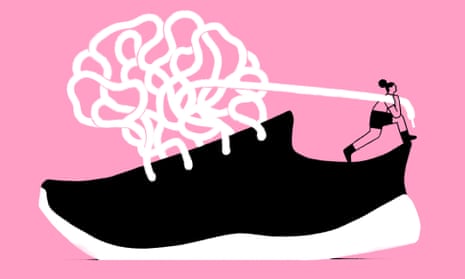
illustration of a trainer with strings knotted to resemble a brain
Illustration: Fran Pulido/The Guardian
According to Professor Tara Spires-Jones, the idea that supports all these activities as measures that people can take to ensure their brain remains in prime working order to help prevent its deterioration in years to come, can be summed up as building a strong brain network through the stimulating of various parts of the brain, simultaneously. It is generally acknowledged that physi9cal activity is associated with lowering the risk of dementia.

This is because physical activity keeps tiny blood vessels in the brain healthy. Greater rates of atrophy or brain shrinkage, which naturally occur with age, result from issues relating to the blood supply to the brain. Increasing that supply maintains the brain's integrity.
"There's the calorie burning from dancing that has an impact alone. But because it's a form of aerobic exercise, getting oxygen to the muscles, you have this increased supply of nutrients to the brain."
"This causes the brain to increase the production of a chemical called brain-derived neurotropic factor or BDNF."
"When you do aerobic exercise, your brain cells create more BDNF, which makes them healthier, and it also makes the neighbouring brain cells healthier."
"All exercise stimulates a process called neurogenesis, which is the birth of new brain cells. But if you stop running today, the benefits of that exercise decrease within just a few days."
"Yet when you build strength in your muscles, you not only give birth to new brain cells that day, but you have more and more neurogenesis even days later."
Joyce Shaffer, Psychologist, behavioural scientist, University of Washington
And there are other, alternate forms of exercising movement that occur in social settings. Dancing classes can act as one of the most beneficial forms of physical activity, according to behavioural scientist Joyce Shaffer. The BDNF increase has an essential role to play in maintaining healthy neurons, keeping the brain agile and capable of readily forming new connections; the essence of memory.

 
senior-learning
Back to school; learning a new skill (language) can benefit the brain. Harvard Health

And there are even more aids that have the potential in exercising the brain; another is through music performance, mastering the ability to play a musical instrument. The International Journal of Alzheimer's Disease nine years ago examined twins; one had learned to play a musical instrument, the other had not. They were followed throughout the course of their lives; the musician found to be 64 percent less likely to develop mild cognitive impairment of dementia.

Leading researchers to conclude that beginning to learn to play any kind of musical instrument in mid- or later-life was one of the most powerful tools in the maintenance of brain health. The reason: music stimulates our brain through a myriad of pathways.
"People think that sound is just relevant to your ears, but it's connected to emotions, memories, what we pay attention to, movement and even how we interact with our other senses."
"Music teaches you to make these connections between sound and meaning, and once you tune your brain that way, you carry this through the rest of your life."
Nina Kraus, professor, neuroscientist, amateur musician Northwestern University, U.S.
Finally, Dr. Shaffer discovered gym strength training to be one of the most powerful methods of preserving cognitive faculties ... more so even than other forms of exercise, such as swimming or running.

Labels: , , , , , ,

Tuesday, August 11, 2020

Awaiting Alzheimer's Brain Untangling Drug : Second Time Around

"People affected by Alzheimer's have waited a long time for a life-changing       treatment and today's announcement offers hope that one could be in sight."        "It is reassuring that this devastating disease remains a priority concern for drug regulators and with no disease-modifying Alzheimer's drugs getting this far before, we are in uncharted territory."                                                                                Samantha Benham-Hermetz, director, policy and public affairs, Alzheimer's Research UK

"[Approval of the drug would be a] historic milestone."                                "Reducing clinical decline and maintaining the ability to live an independent life for as long as possible are things that people living with Alzheimer's and their families value in a potential treatment."                                                                                 "If aducanumab is approved, we expect it will make a difference in the lives of people living with Alzheimer's." Haruo Naito, chief executive, Eisai, Japanese pharmaceutical firm

Alzheimer's drug passed Phase 3 clinical trials now awaiting FDA approval

Back in 2019 manufacturers Biogen and Eisai took steps to put an end to two late-stage Alzheimer's drug trials, making the tough decision to set aside plans that the treatment be developed. Studies had indicated the treatment would be of no benefit to Alzheimer's sufferers. A new analysis has been undertaken since then using a greater amount of data available once the trials were stopped, finding the drugs did indeed work. They had to be administered at an early stage in a sufficiently high dosage to be effective, leading the two drug developers to seek approval a second time.

Alzheimer's disease at the present time is without any kind of truly effective treatment. A cure may be possible, but it may also be a long way into the future. Now, however, experts feel that the first drug that may halt Alzheimer's, will be fast-tracked for approval, representing the most hopeful breakthrough in dementia treatment yet devised. Because the drug is being given "priority review" it is possible that within six months it can be prescribed. Answering the hopes of those who suffer from the relentless mind-occluding disease.

Medicines currently prescribed for Alzheimer's do no more than mask the symptoms. The new treatment works by helping to untangle plaque clumps in the brain and in so doing may be the first successful drug to stop the deterioration the disease causes, according to trial results. Patients given aducanumab were seen to be improved in language skills and time-tracking, along with a more reduced loss of memory. Targeting early signs of dementa will lead to halting the progression of the disease; at the very least slowing its progress before total incapacitation.

Biogen aducanumab

The review is expected to take six months in establishing whether the drug is safe and effective, thus ushering it to licensing first in the United States, and then placing it under consideration elsewhere around the world. Its efficacy has been monitored by scientists around the world, following initially uncertain trial results. 

Five months following the decision to halt the aborted trials, there is now enough confidence to allow the trials to continue, with the knowledge that a higher dosage and earlier application leads to aducanumab's treatment success. This is the first time in 17 years the U.S. Food and Drug Administration is preparing to review a drug for the treatment of Alzheimer's disease, and it would represent the first treatment designed to deter progression of the disease, to be approved by regulators.

Aducanumab is designed to untangle clumps of amyloid beta, the protein plaques which form in the brain, a hallmark of Alzheimer's disease. It is an anti-body drug. The plaques are held to be partially responsible for memory loss and cognitive decline. Chief executive at Biogen, Michel Vounatsos, a multinational biotech firm in Cambridge, Massachusetts stated: "We believe that aducanumab marks the beginning of a new era of potential treatments for Alzheimer's disease".

Credit...Matt York/Associated Press


Labels: , , , ,

Thursday, February 06, 2020

Early Exposure to Air Pollution and Children's Developing Brains

Representative image. (AP Photo)
Representative image,  AP Photo

"The take-home message is that the quality of air we breathe matters, especially to our children."
"This [fewer brain cells and fewer brain connections resulting from poor air quality], in turn, can alter or impair function, depending on where it is located and when this is occurring."
"A question we haven't answered yet is whether these results are the brain failing to develop properly or if brain cells are dying due to exposure. If it's a developmental problem, it's possible the brain can rewire itself to compensate."
"If established cells are dying, the change to function can be more pronounced and possibly permanent."
Travis Beckwith, research fellow, Imaging Research Center, Cincinnati Children's Hospital Medical Center, Ohio
A new study, recently reported in PLoS ONE, suggests that high levels of exposure to traffic-related air pollution may lead to structural changes in the brain of the very young. Reduced thickness of the cortex and decreased grey matter volume were seen in 12-year-old children through brain scans. The children lived under a quarter of a mile distance from a major highway at one year of age. A thinner cortex and less grey matter may correlate with fewer brain cells and fewer connections to the brain.

Dr.Beckwith, lead author of the recently-published study, explains that the cerebellum whose function is to handle fine-tuning in motor control and which may also play a role in regulating emotions and behaviour, was also seen to be affected. In the interests of determining the potential impact of traffic-related air pollution, Dr.Beckwith and his research colleagues took MRI scans of 135 children who had participated in a larger research project.

That long-term study, the Cincinnati Childhood Allergy and Air Pollution Study, recruited families of children under six months of age for the purpose of examining the health impact of early childhood exposure to air pollution. At ages one, two, three, four and seven, child participants in the study were brought to the clinic until the last check-in at age twelve. Caregivers filled out questionnaires enquiring about the children's health, general well-being, housing characteristics and residential history, at each visit.

Air pollution may impact children's mental health

Children were assessed on reading ability, executive function, mental health, intelligence and other neurodevelopmental outcomes at age twelve. Using data from an air sampling network that included 27 sites in the Cincinnati area, estimates for pollution exposure for each child identified outcomes.

The researchers found that children exposed to the highest pollution levels possessed thinner cortexes in comparison with those children with little pollution exposure -- once other factors that might influence brain development, such as maternal IQ and neighbourhood poverty level were taken into account.
"The primary motor cortex is responsible for planning out movements and the execution of those movements."
"The primary sensory cortex [is involved in] tactile senses, such as how things feel, sensing temperature and vibrations as well as identifying objects based on touch."
"The results of this study, though exploratory, suggest that where you live and the air you breathe can affect how your brain develops"
"While the percentage of loss is far less than what might be seen in a degenerative disease state, this loss may be enough to influence the development of various physical and mental processes."
This shows brain scans from the study
These brain images of 12-year-old children show regions of the brain in red, orange and yellow that are most affected by traffic-related air pollution (TRAP). Those regions denote a reduction in cortical thickness linked to elemental carbon attributed to traffic. Of these images, the darker the color, the stronger the effect. Image is credited to Cincinnati Children’s Hospital Medical Center.

Labels: , , , ,

Sunday, February 10, 2019

Making Time for Sleep

"It used to be popular for people to say, 'I'll sleep when I'm dead'. The ironic thing is, not sleeping enough may get you there sooner."
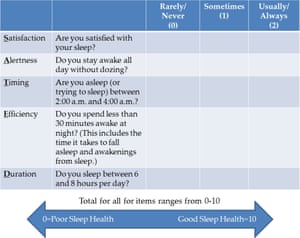
"Most studies of adults find that the midpoint of their sleep should be somewhere between 2 and 4 a.m., so if your timing is different than that, that may lead to increased health risks."
Daniel Buysse, professor of sleep medicine, University of Pittsburgh

"We're competing against moneyed interests, with technology and gaming and all that. It's so addictive and so hard to complete with."
"We've had this natural experiment with the Internet that swamped everything else."
Orfeu Buxton, sleep researcher, Pennsylvania State University

"When you are asleep, it's the most idiotic of all things: You're not finding food, not finding a mate. Worse still, you're vulnerable to production." 
"If there was a chance to shave even ten percent to 20 percent of that time, Mother Nature would have weeded it out through the process of evolution millions of years ago."
Matthew Walker, psychology professor, University of California, Berkeley
Image result for getting enough sleep
www.huffpost.com

"Why do we know so little about this really critical function? I always think of growth charts at the pediatrician's office. Physical growth; you study thousands of children. You know exactly that your child is in the 63rd percentile for kids her age."
"Why do we not have that for the brain?"
Tracy Riggins, developmental psychologist, University of Maryland

Dr. Riggins and Rebecca Spencer, a neuroscientist at the University of Massachusetts at Amherst have teamed up in an effort to study how memory in preschoolers is affected by naps. A previous study undertaken by Dr. Spencer had found preschoolers taught a memory game had a better performance post-nap than had they been kept awake, then tested. She discovered napping aided the strengthening of complex emotional memories exclusively when combined with a good night's sleep.

For the current study the pair has combined to recruit families while they try to understand brain differences between children who nap and those who no longer do, an experiment taking place in the real world at preschools that offer French lessons, swimming or other enriched opportunities to take place instead of nap time. Unless sleep is proven to be a critical brain process assist, a two-hour nap may appear as a waste of time better used to learn something valuable.

Drs. Riggins and Spencer have set out to prove that napping performs an important function that can be compared to the practise of clearing a desk of clutter to organize and file papers to be retrieved at a later time, on the theory that without clearing the desk disorganized piles of paper can become chaotic, their purpose never realized. "This is the drive some people have [for their children] to be the best and the brightest -- some of these high-income preschoolers are trying to cram so much into the day that they're minimizing nap time", explained Dr. Spencer.

"The idea is they're not napping, so they can learn more. But they may lose the attentiveness to be able to learn more", she emphasized.

Insomnia is considered a risk factor for depression and a complaint at the same time, of people with depression where adults over fifty having insomnia symptoms are recognized to be more likely to fall than those without those symptoms. Pain has been linked to poor sleep in some studies, indicating that older people with sleep problems appear more likely to develop pain, and the reverse is also true.

"A lot of medical approaches have ignored sleep", Ken Paller, a cognitive neuroscientist at Northwestern University remarked. "People think about (poor sleep) as one of the complaints someone with depression or other disorders might have, rather than a critical part of the whole etiology of the disease, which is a new idea." An idea that has evoked interest in discovering how to enhance sleep for therapeutic benefit. Some researchers are beginning to examine whether the qualities inherent in sleep's memory consolidation can be enhanced.

Increasingly, scientists are looking at the links between critical sleep for a requisite number of hours nightly and health issues, identifying lack of sleep as a growing public health crisis. To the present, research into sleep disturbance has been studied separately with sleep disorders like insomnia and sleep apnea being treated as research to be studied on a different tracks. The new approach is to combine sleep disorders under the umbrella of adequate night-time sleep to refresh the brain and its cognitive processes.

A Gallup poll established that adults slept an average of 7.9 hours nightly back in 1942. By the year 2013 however, the average adult had taken over an hour off that optimum target and later yet, in 2016, the Centers for Disease Control and Prevention reported a third of adults simply do not sleep for a now-universally recommended minimum seven hours.

Rapid-eye-movement sleep (REM) function when the sleeping brain begins to increase its electrical energy through dreams was discovered in the early 1950s, bringing in a hugely significant enquiry stream into the sleeping brain and its function in overall health achievement. Electroencephalography research followed, to reveal that the sleeping mind experiences cycles in active stages of light and deeper sleep, repeated every 90 minutes or so as long as prolonged and deep sleep takes place.

Brain research is in the process of rapid expansion and the issue of precisely how sleep works in disease and in normal cognitive functioning such as memory has become an intriguing and important new direction of study. Within the scientific community a growing awareness of the importance of adequate sleep identifies its lack as dangerous to human health. One new line of research points to poor sleep's possibility of increasing Alzheimer's risk.

It would appear that even one single night of sleep deprivation incrases levels of the proteins that form toxic clumps in Alzheimer's patients, in the brain. One incident of missing one night's sleep increases anxiety to clinical levels according to researchers who expand the issue to observe that even slight sleep reductions are linked to an increase in the feelings of social isolation and loneliness.

The SATED test: a self-report questionnaire developed by sleep researchers to determine sleep fulfillment

Labels: , , , , ,

 
()() Follow @rheytah Tweet