Blog dedicated primarily to randomly selected news items; comments reflecting personal perceptions
Friday, August 04, 2023
The Mood-Lifting Summertime Sun!
"It [summer depression] certainly deserves more study, certainly deserves more concern."
"The summer ones [symptoms] were in many ways the opposite [of winter depression. Not that hungry, less appetite, insomnia [in comparison to oversleeping, overeating and feeling sluggish with winter SAD]."
"They say constant heat, or I can't stand the light. I've had people say that the light kind of cuts through me like a knife, I can't stand it. And bright light actually can predispose to mania."
"We have these homeostatic or self-adjusting mechanisms. But clearly in some people, they don't work as well as in other people."
People need to be aware that suicidal feelings are more common. they should go get help if that's happening."
"One value of knowing when people get depressed is you can anticipate it and preempt it to some degree."
Norman Rosenthal, psychiatrist, Georgetown University School of Medicine
"Recognize it's not all in your head. It is a real thing."
"[Why some people are more vulnerable to summer depression is] the million-dollar question."
"[Some key neurotransmitters involved in regulating body temperature like serotonin, dopamine and norepinephrine, also regulate mood]. So maybe it's a shared vulnerability to a mood disorder and an issue with the ability to thermal regularly in response to heat and humidity."
Kelly Rohan, professor of psychological science, University of Vermont

Getty Creative
Everyone has head of SAD (seasonal affective disorder) and links it indelibly to the winter blahs, but how many of the public have any idea that heat, humidity and pollen appear to be the credible cause of summer sadness? As a condition, summer depression has received vanishingly little research attention, much less general awareness. The symptoms of each, winter and summer SAD are both marked by sad mood and reduced pleasure.
Summer depression appears to back a more agitated depression, with those affected tending to feel more distressed than lethargic as manifested in winter depression. Summer depression also appears to lead sufferers to an increased risk of suicidal behaviour that peaks in late spring and early summer, but recedes in winter. Experts hazard the guess that patients with depression who feel suicidal in winter may lack the energy to plan for suicide.
Dr. Rosenthal's book, Defeating SAD? A Guide to Health and Happiness Through All Seasons, soon to be released after publication provides an up-to-date, concise description of SAD along with practical strategies to counter the malady. More heterogeneous and varied in nature, Summer SAD makes it more difficult for researchers to study, and so there has been less research on summer seasonal affective disorders since it was first described by Dr. Rosenthal and his associates.
In a Danish study with 2,819 subjects, about 0.1 percent met the criteria for summer SAD. Summer's distinct environmental features of heat, humidity and pollen are believed to be SAD-causative. Heat and humidity are unpleasant and the summer sun's intense light may be activating on sensitive people in a negative manner. Higher rates of suicide in the U.S. and Mexico have been linked to higher temperatures. Social media posts attest to an increased use of depressive language.
In the spring and summer, pollen counts are higher and also may be contributing factors to summer depression. A study in 2019 of 1,206 Old Order Amish found high pollen days corresponded with poor moods in those who generally experienced worse summer moods. An immune response and inflammatory processes caused by allergies may also contribute to depression, given studies that have found evidence that allergies are associated with higher odds of depression.
A study survey of 1.9 million Americans found higher temperatures eroded mental well-bring, with negative emotions and fatigue increasing as temperatures moved above 21C, while positive emotions were on the decrease. The internal environment's response to environmental stressors are clearly at play. Although no clinical trials have tested the method, cooling off may be useful. Patients with summer depression are urged to take cold showers and remain in air-conditioned environments.
Dr. Rosenthal has found that these simple interventions work to alleviate patients' symptoms, but their effects last only as long as patients remained cool; once returned to the summer heat, the ameliorating effect dissipates. According to Dr. Rohan, psychiatric drugs that help with major depression can also work for seasonal depression. Combining various treatments; cooling strategies, medication and evidence-based psychotherapy (cognitive behaviour therapy as example) may hold the key to overcoming summer sadness.
Up to 30 percent of people with seasonal depression will feel it during summertime, according to one expert.Klaus Vedfelt/Getty Images
"Keep up with your exercise.
Many studies have found that regular physical activity can help keep
depression at bay. So even if it’s getting too hot for your normal
activities, find other ways to stay active and head off summer
depression."
"Start earlier in the morning or later in the evening, when
it’s not so hot. Consider fitness equipment for the cool basement. If an
annual membership to a gym is too expensive, consider joining one for a
couple of months just to get you through the summer."
Web MD
(Illustration by George Wylesol for The Washington Post)
"There are so many adults out there who have a negative reaction to a food. It is really important to get a proper diagnosis so that they can really know is this something treatable like lactose intolerance, or is this a life-threatening food allergy that they need to be very careful with." "This is really concerning because chances are they could eat the food and then all of a sudden they have a reaction to a food that they could previously tolerate -- so what changed in their environment or in them that caused them to now develop this food allergy?" "Some of these foods you know that they probably were able to eat because they are such common foods in the diet, but shellfish was interesting -- it could be one that they are trying for the first time as an adult." "If food allergy is confirmed, understanding the management is also critical, including recognizing symptoms of anaphylaxis and how and when to use epinephrine." "We were surprised to find that adult-onset food allergies were so
common. More research is needed to understand why this
is occurring and how we might prevent it." Ruchi Gupta, Lurie Children's Hospital, Professor of Pediatrics, Northwestern University Feinberg School of Medicine
The study data indicate
that the most prevalent food allergens among U.S. adults are shellfish
(affecting 7.2 million adults), milk (4.7 million), peanut (4.5
million), tree nut (3 million), fin fish (2.2 million), egg (2 million),
wheat (2 million), soy (1.5 million), and sesame (.5 million).
NeuroscienceNews.com image is in the public domain.
A newly published study out of the United States and published in the medical journal JAMA, relates that a good number of people convinced they suffer from food allergies have never been tested for any allergy problems and/or been diagnosed by a medical professional. An estimated 11 percent of the American population does suffer from food allergies but close to twice that number are convinced they do.
What the research team set out to do was gauge the validity of allergies, whether self-convinced or physician-diagnosed.
In a survey of over 40,000 U.S. adults, the research team focused on the nature of reported reactions to various food stuffs; throat tightening or vomiting versus bloating, stomach pain or diarrhea, as examples. Roughly 12 million people out of 26 million considered to be legitimate sufferers of food allergies, developed those allergic reactions for the first time as adults, even while among the general population the impression is that allergies are strictly a childhood condition.
As far as experts in the field are concerned, numbers similar to those arrived at in this study focusing exclusively on the allergic experiences of Americans, can be found in other countries of the world. AllerGen, for example, identifies 7.7 percent of Canadian adults and 6.7 percent of Canadian children claim a food allergy.
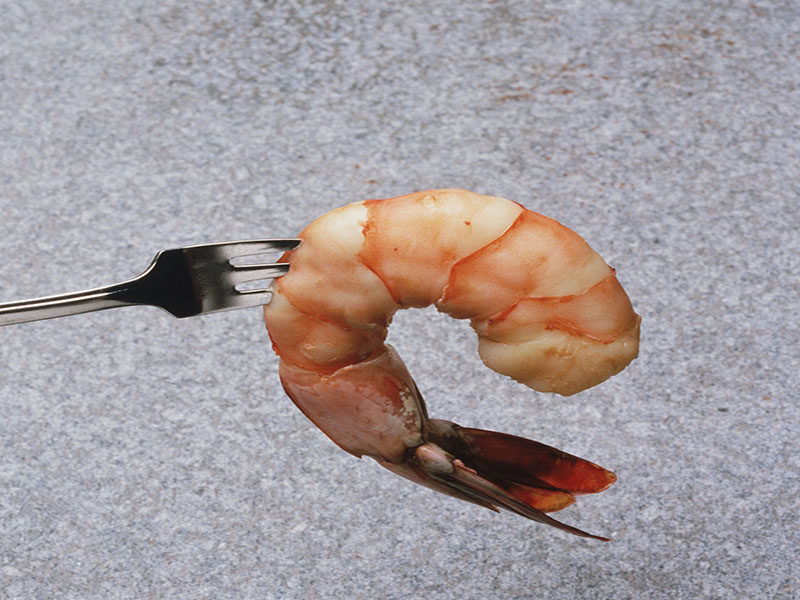
Of the foods eliciting allergic reactions, shellfish appear as the most common triggering reactions, with 2.9 percent of adults convinced they are allergic to shellfish, representing approximately seven million Americans. Milk and peanuts followed, with 1.9 and 1.8 percent representation respectively or five million people reactive to both milk and peanuts. Tree nuts such as walnuts, finfish, like salmon, eggs, wheat, sesame and soy follow on the list of allergens people react to.
The research also found that fewer than half of adults with "convincing" allergies had received an official medical diagnosis, while fewer than 25 percent were in possession of a prescription for epinephrine. With the potential of succumbing to a serious reaction when eating out rating high for some allergy sufferers, a prescription for an epinephrine auto-injector can be critical. Close to half of adults with food allergies developed at least one of those allergies as an adult.
Results of Study Surveys were completed by 40 443 adults (mean [SD] age, 46.6 [20.2]
years), with a survey completion rate of 51.2% observed among AmeriSpeak
panelists (n = 7210) and 5.5% among SSI panelists (n = 33 233).
Estimated convincing food allergy prevalence among US adults was 10.8%
(95% CI, 10.4%-11.1%), although 19.0% (95% CI, 18.5%-19.5%) of adults
self-reported a food allergy. The most common allergies were shellfish
(2.9%; 95% CI, 2.7%-3.1%), milk (1.9%; 95% CI, 1.8%-2.1%), peanut (1.8%;
95% CI, 1.7%-1.9%), tree nut (1.2%; 95% CI, 1.1%-1.3%), and fin fish
(0.9%; 95% CI, 0.8%-1.0%). Among food-allergic adults, 51.1% (95% CI,
49.3%-52.9%) experienced a severe food allergy reaction, 45.3% (95% CI,
43.6%-47.1%) were allergic to multiple foods, and 48.0% (95% CI,
46.2%-49.7%) developed food allergies as an adult. Regarding health care
utilization, 24.0% (95% CI, 22.6%-25.4%) reported a current epinephrine
prescription, and 38.3% (95% CI, 36.7%-40.0%) reported at least 1 food
allergy–related lifetime emergency department visit. Conclusions and Relevance These data suggest that at least 10.8% (>26 million) of US adults are
food allergic, whereas nearly 19% of adults believe that they have a
food allergy. Consequently, these findings suggest that it is crucial
that adults with suspected food allergy receive appropriate confirmatory
testing and counseling to ensure food is not unnecessarily avoided and
quality of life is not unduly impaired. NeuroscienceNews.com
"There haven't really been any major advances in treatment [of allergies] since epinephrine." "It took time for the medical and research community to respond to the severity and prevalence of food allergies. But now, there's so much ..." "When I look at the pace of change, it's grown -- I can't even say how many-fold." Dr. Eyal Grunebaum, head of immunology and allergy, Hospital for Sick Children, Toronto
"It's the same mechanism behind allergy shots for dust mites and pollen [desensitization]." "The reason it was slow to start for food is in part because of uneasiness around making patients eat something potentially dangerous." "That kind of tragedy [when an immunotherapy study in Colorado saw a child die of anaphylactic shock in 1997] derailed study in the area for a long time." Dr. Susan Waserman, clinical immunology professor, McMaster University, Hamilton
"It was inspired by previous observations about peanut allergy in Israel versus the U.K. In Israel, there are almost no peanut allergies and it's believed that's because almost every child is introduced to peanuts early and eats them often in a peanut snack called Bamba." "In the United Kingdom and here, we have this huge hesitancy around peanuts that Israel doesn't have." "Even if it's safe and effective, there are still mixed feelings in the allergy community as to whether [immunotherapy] should be done outside a research setting." "And there's the question of how the health-care system incorporates it. Which prescription plan will cover it? Which allergists will have the time to offer it? ... It's promising, but there are big challenges." Dr. Edmond Chan, head, allergy clinic, B.C. Children's Hospital
Bandolinata via Getty Images
Dr. Chan contributed to an expert panel sponsored by the U.S. National Institute of Allergy and Infectious Diseases in 2015 which was based partially on a 2015 study of 640 children. The conservative and long-held belief that shielding young children from potential allergens has undergone a sea change. The panel introduced new guidelines suggesting that exposure to peanut allergens is beneficial.
According to Dr. Chan, however, it will be quite a while before parents and allergists feel completely comfortable with the concept of introducing children at the earliest possible time in their lives to foods that commonly cause allergies as a method of accustoming the body to the presence of those foods before it begins rejecting them, to avoid a lifelong battle to avoid foods that threaten those very lives, one that starts in childhood and continues on into adulthood.
The method known as oral immunotherapy (OIT) was pioneered at the turn of the 20th Century by Alfred T. Schofield, a London doctor who published A Case of Egg Poisoning in the medical journal The Lancet, where he described his treatment of a boy afflicted with allergies to eggs whom he fed pills containing minute amounts of egg, increasing the dosage gradually until the boy was finally, eight months on, able to eat an egg with no ill effects.
That method today is known as oral immunotherapy, a method of desensitizing the immune system to an allergen that is dangerous in degree. Despite the success of immunotherapy, it is seldom used as a reliable treatment, a situation which may be soon to change. A California-based pharmaceutical company is prepared to submit an oral-administered immunotherapy capsule to treat peanut allergies, for approval in Canada, the U.S. and Europe at some point in this year.
Food allergies affect over 2.4 million Canadians, with peanuts producing the largest population of those averse to the groundnut. Tree nuts, fish and shellfish, follow in prevalence, but peanut allergies affect over two percent of children, in comparison with 0.7 percent of adults. And evidence exists of a generational increase. McGill University researcher Moshe Ben-Shoshan found food allergies highest among those under three years of age, in 2010.
Aimmune Technologies produces a pharmaceutical product known as AR101, a peanut capsule. The technology and the chemical formula has been altered to treat other allergies as well. Dr. Julia Upton, assistant professor in the department of pediatrics at the University of Toronto, also a staff physician at Hospital for Sick Children in Toronto was a sub-investigator for the AR101 clinical trials and aided in the supervision of the Toronto trial site. She now is with another clinical trial on OIT for milk, involving over 100 children.
"Updosing" to higher concentrations of the allergen to reach a "maintenance dose", and daily dosing at home as a follow-up can possibly take a lifetime, she cautions. So OIT has its positive and negative aspects where patients are warned to expect months or even years of doctor's visits until the point is reached where maintenance is carried out by the patient A process leading to about 20 percent drop-out. There can be side effects such as gastrointestinal distress, and low tolerance for many patients.
An allergy patch using a similar principle to OIT by France's DBV Technologies is developing Viaskin Peanut and Viaskin Milk, with mixed results to date. The peanut patch led to increased tolerance for 35 percent of patients, children aged between four and eleven. The Phase 2 trial for the milk patch saw tolerance in the four to 11-year-old group at 57.9 percent (with a placebo group indicating 30 percent tolerance).
Doctors have been testing daily doses of peanut flour, contained in a capsule and sprinkled over food, as a way to prevent peanut allergies. AP Photo/Patrick Sison, File
PPOIT (probiotic with peanut oral immunotherapy)Immunotherapy
"These children had been eating peanut freely in their diet without
having to follow any particular program of peanut intake in the years
after treatment was completed." "This is a major step forward in identifying an effective treatment to address the food allergy problem in Western societies." "The importance of this finding is that these children [in her study] were able to eat peanuts, like children who don't have peanut allergy, and still maintain their tolerant state, protected against reactions to peanut." Professor Mimi Tang, immunologist/allergist, Murdoch Children's Research Institute, Australia
The peanut allergy cure is designed to reprogram the immune system’s response.
Photograph: Josh Westrich/Getty Images
Professor Tang designed a research trial where 48 children were given the probiotic Lactobacillus rhamnosus as well as peanuts in steadily increasing amounts daily for a 18-month period, to enable the building of a tolerance for peanuts. A placebo trial took place as well, the aftermath of which was that four percent only of the children in the trial were judged to be tolerant to peanuts post-trial. (At the original trial's conclusion in 2013, 82% of children who received
the immunotherapy treatment were deemed tolerant to peanuts, compared
with just 4% in the placebo group.)
Her goal was to create a treatment protocol whereby children with severe peanut reactions where death could ensue if a child inadvertently consumed peanuts, would have the end effect of building immunity to such reactions, enabling children to eat a normal diet, including peanuts. Those children involved in the treatment protocol did indeed build the desired immunity to reaction, going on to eat peanuts without fear or consequences. The results of this study were published in Lancet Child & Adolescent Health.
The treatment's immune effects lasted for years following the original study, with close to 80 percent of child participants remaining free of peanut reactions four years on. This is a giant step forward given the fact that in recent decades peanut allergies have dramatically increased particularly in Western countries, given that the anaphylactic shock that threatens untreated children has the potential to kill them.
One in thirteen Canadians suffer a food allergy, according to AllerGen NCE Inc., with 1.93 percent -- over 700,000 people -- encumbered with a serious peanut allergy. After Professor Tang's experimental study, her four-year follow-up revealed that the majority of the children completing the study had been enjoying peanuts free of concerns, with over half of the group consuming "moderate- to-large" amounts with no ill effects.
The fact that the probiotic regimen resulted in 82 percent of children with peanut allergies involved with the clinical trial becoming free to eat the legume, bypassing its former allergic effect represented a stunning success. One that leads to hope that further allergy treatment may present with a permanent cure for the allergy to peanuts.
"You have the potential to stop something in its tracks before it develops." "[There appears to be] ...a window of time in which the body is more likely to tolerate a food than react to it, and if you can educate the body during that window, you're at [a] much lower likelihood of developing an allergy to that food." "This [the new recommendations on early introduction] won't outright prevent every single case of peanut allergy -- there will still be some cases -- but the number could be significantly reduced by tens of thousands." Dr. Matthew Greenhawt, chairman, American College of Allergy, Asthma and Immunology, food allergy committee
"If we can put this into practice over a period of several years, I would be surprised if we would not see a dramatic decrease in the incidence of peanut allergies." Dr. Anthony Fauci, director, National Institute of Allergy and Infectious Diseases, U.S.
Babies who already have skin rash eczema or egg allergies should get a
checkup before being exposed to peanut-containing foods, new guidelines
say.
Photograph: KidStock/Getty Images/Blend Images
New parental guidelines for the introduction of peanuts to children at an early date were released in January to the American public by the National Institute of Allergy and Infectious Diseases. Pureed food or finger food with peanut powder or extract are now to be offered before infants turn six months of age. Earlier yet, if it has been determined that a child is moderately prone to allergies. Parents should rest easy in doing so, since medical specialists have given this a green light.
They also caution that whole peanuts should be reserved for older children since they can represent a potential choking hazard to very young children.
There are more deaths attributable to peanut allergies resulting in anaphylaxis -- or constriction of the airways -- than for any other food allergy. Children who do develop a peanut allergy will not leave that allergy behind as they mature. With these children a strict avoidance of peanuts will permeate their consciousness for their entire lives. For them, it truly is a matter of life or death, should they falter in the need to be ever-vigilant.
Children determined to be at high risk while babies are to be referred to an allergy specialist who may proceed to order further allergy testing. The parental advice from the American Academy of Pediatrics renewed as recently as the year 2000 was that parents were to ensure children seen to be at high risk for allergies were never to be given peanuts until they reached three years of age. These precautions, however, did nothing to decrease the prevalence of peanut allergies.
The new guidelines have turned that advice around, not only in the United States but in the United Kingdom, Canada and Australia as well. Studies undertaken in more recent years have led to the formation of the guidelines which divide young children by their medically identified risk level, where infants at low risk who don't have eczema or an allergy to eggs, and for whom solid foods have been initiated, can be safely introduced to peanut-containing foods at about six months of age.
And the same is true for children identified as being at moderate risk, those with mild eczema. It is the high-risk infants who should be introduced to peanuts as early as four to six months, but under the supervision of a doctor's office, once they begin eating solid foods. Thereafter they should continue to be evaluated by a doctor. Tests showing positive for sensitivity to peanuts don't necessarily translate to allergies, and babies may benefit from eating peanut foods as long as no strong reaction to a skin test demonstrates an allergy in which case avoidance may be prescribed.
Mixing a few teaspoons of smooth peanut butter with an equal amount of warm water to a soupy consistency is recommended by Dr. J.Andrew Bird, a Dallas pediatric allergist. Still, Dr. Greenhawt cautions that foods containing peanuts should not be seen as appropriate for the first solid food given a baby. The peanut-containing food should be given regularly, roughly three times weekly, throughout childhood, for the pre-emptive allergic reaction to remain effective.
Parents and doctors are encouraged to proactively introduce peanut-based foods early. (iStock)