Ruminations

Blog dedicated primarily to randomly selected news items; comments reflecting personal perceptions

Monday, January 09, 2023

Coping With Brain Fog, Looking for Answers

"It's a moment where the public and the medical community are realizing that this is real."
"This is what happens after certain infections."
Akiko Iwasaki, professor of immunobiology, Yale University

"'Am I like the others? Are  you seeing people like me?' I get that question every time."
"I say, nearly always 'Yes. You're not alone'."
Dennis Kolson, neurologist, Penn Neuro COVID Clinic, University of Pennsylvania
GettyImages-1205852013
Harvard Health Blog
 
During the summer of 2021, 65-uear-old Navy veteran, Edwin Hall from Fulton, Mo., spent twelve days in a medically induced coma with COVID. He needed help breathing from a ventilator. While in ICU doctors discovered probable stroke signs. Now, a year and a half later, he tries to cope with brain fog. A condition that makes him feel, he said, "lost". He was forced to retire early, as a result of the recurring symptoms.

Another victim of long-COVID, 52-year-old Colorado Springs resident Dave Nothstein, is still capable of working, but he does so remotely, for an automobile dealership. He is able to work only sufficient hours weekly to pay for his insurance. He was diagnosed with long-COVID in March, at a time when his brain was so fogged he was making carefully detailed lists to enable him to get through the day.

"As silly as it sounds, it included 'make sure to eat breakfast', 'make sure to feed the dogs', 'get the mail', 'do the laundry', 'do the dishes', he said ruefully. 

People suffering from chronic fatigue (myalgic encephalomyelitis), fibromyalgia, postural orthostatic tachycardia syndrome, Lyme disease and depression can also be affected with brain fog, according to experts. Patients after undergoing  chemotherapy may also report brain fog, described often as "chemo brain".
 
Symptoms can have "an adverse effect on occupational, familial and social lives and can result in diminished quality of life", even while the severity and duration vary from person to person, explained Jeffrey Wefel, professor and chief of neuropsychology, at University of Texas MD Anderson Cancer Center. 

After four rounds of chemotherapy for ovarian cancer Angela Hernandez, 36, of Houston, fought through months of brain fog in 2018. "You know when you dream and then you wake up and you can almost remember what you were dreaming about, but then as the seconds pass, the dream gets further and further away. That's kind of what it felt like all the time."
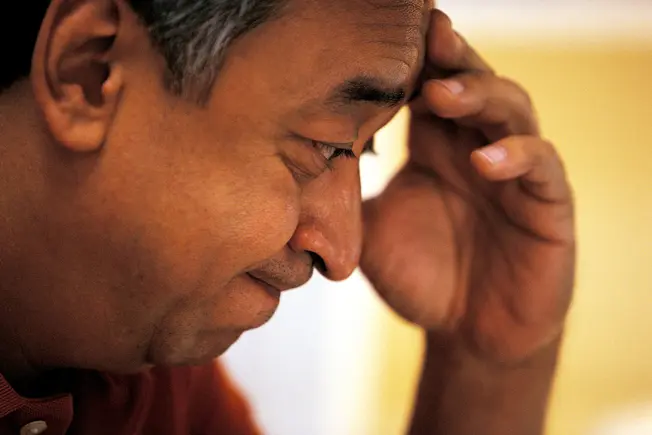
What Is It?
Some people suffering brain fog use words like haze, slow, drunk, lost, in describing the brain fog they experience. Certain chronic illnesses have plagued people for years with brain fog. Joined now by a new wave of people with long-COVID. 
 
According to research, a majority of people experiencing long-COVID symptoms reporting brain fog, are beset with a collection of symptoms, including impaired attention, concentration, memory and processing speed, explained Dr. Iwasaki, co-author of a review article on COVID-19-related cognitive impairment.

Dr.Iwasaki and Michelle Monje, a professor of neurology at Stanford University, examined over 100 studies relevant to cognitive dysfunction following COVID, concluding that a likely common cause is lung inflammation causing inflammation in the brain moving on subsequently to dysfunction of neural cells.

Kelsey Botti's experience began with a concussion from a snowboarding accident in 2012. A 32-year-old physical therapist from Pittsburgh, Botti was diagnosed with POTS, a syndrome characterized often by a fast heart rate, low blood pressure, and frequent dizziness, light-headedness and fainting and in some instances, brain fog.

"I wanted to cry because I was so thankful someone was helping me, and I had a diagnosis and a direction, and then I also wanted to cry because the person that I was, was completely gone", she said. She had undergone months of treatment including medication and a controlled exercise regimen to build her tolerance.Despite bumps and emergency-room visits, her symptoms have improved.

Women touches forehead while holding a mug in her other hand.
"If they don't find the right medical team to understand them, [in their search for a health professional who recognizes that even while the patient looks healthy, they feel terrible], they will pull away from health care and access health care less, so there are less opportunities for them."
Robert Wilson, neurologist, Cleveland Clinic Neurological Institute


Labels: , , , , ,

Sunday, June 17, 2018

Deficits in the Healing Arts

"We need an infusion of new ideas. Cognitive neuroscience would help us characterize the deficits people have and allow us to connect them to particular brain systems."
"Patients and their families want to know what to expect during and after treatment [chemotherapy following cancer surgery]."
"Cancer-related cognitive impairment is real. And those of us in the field are intent on figuring it out."
Todd S. Horowitz, cognitive psychologist, program director, Division of Cancer Control and Population Sciences, National Cancer Institute, U.S.
[Woman undergoing chemotherapy]
Chemotherapy is known to interfere with cognitive abilities, but for how long? MedicalNewsToday
 
For every action there is a corresponding reaction. Pharmaceutical and medical science has allowed us to live longer and ostensibly better. When we have the misfortune to acquire a chronic illness, or when any untoward medical condition of however long a duration assails us, there is a formulaic therapy, a specific drug that will minimize symptoms, or 'cure' the illness, or enable us to live with the inconvenience to our daily health outcomes. Far from ideal, however, since even though the medication addresses the illness itself, the prescription will invariably impact not only on the condition it is engineered to target, but create another condition in the process, minor or major.

Dr. Horowitz and two other researchers at the institute they all represent produced a paper published in the journal Trends in Neurosciences, last week addressing a puzzling and important issue with the hope that they can influence an outcome where specialists in brain science can put their expertise to work to figure out why it is that so many cancer patients suffer from a condition known officially as cancer-related cognitive impairment, and which people who suffer from the condition and their doctors more familiarly term "chemobrain".

The estimates are that between 17 to 75 percent of cancer patients suffer from this condition where sufferers mention a range of impairments. And then to make it even more complicated patients with various types of cancers or those who have been put through a different set of therapeutic protocols speak of a wide range of disabilities in a malfunctioning brain. Researchers, to date, are stumped. There are theories but nothing has been proven. Some believe that chemobrain owes its presence to treatment for cancer destabilizing the immune system, so a toxic flood of inflammatory agents is unleashed on the central nervous system.

The condition is more commonly compared to living with a mental fog. Long after the recovery period from surgery and chemotherapy has passed and medical check-ups post-surgery have been lifted patients are exposed to a "new normal" situation that includes concentration difficulties, inability to recall words, short-term memory, and the end of multi-tasking. The onset of these symptoms lumped together as foggy brain syndrome or chemobrain is as mysterious as its presence. No one knows if it will eventuate, how long it will last, and what precisely is involved, let alone whether it can be treated, or, best case scenario, avoided altogether.

Not much is known about the mechanics involved in the phenomenon which experts attempt to use standard neuropsychological tests for, to determine the extent of cognitive impairment in various "domains", inclusive of attention, processing speed, visuospatial skill and various types of memory with clinical measures devised for the purpose of diagnosing or assessing injury caused through severe brain diseases like Alzheimer's, traumatic brain injury, or stroke. What works for those conditions seems unhelpful in the detection, measurement or explanation of the subtle impairment that stalls the return to normalcy for many cancer survivors.

Return to a normal lifestyle is stalled, temporarily or permanently. That mentally demanding work role for an employee suffering the after effects of cancer treatment becomes an impossibility. Some people are unable to resume driving, much less plan for their future. Experts speak of the possibility that chemotherapy may be responsible for brain inflammation, and DNA scrambling in the brain, or that chemotherapy promotes an acceleration of the aging process, or disables the brain's normal repair mechanisms. A simpler explanation might be that chemotherapy designed to eliminate certain cells, manages to breach the blood-brain barrier, attacking neurons directly.

Confoundedly MRI scans capable of capturing portions of the brain's more elusive structures have shown before patients undergo treatment, breast cancer patients, as an example are seen with reduced volumes of white matter, the brain's vital connective tissue. The scans reveal that paying attention exacts more of an effort on the part of the patient with chemobrain, that their cortical structures show both early- and long-term brain volume losses.

And then, MRI studies capturing activation in particular brain regions have shown a reduction in connectivity in a neural circuit named the default mode network with its central role in diseases of aging, along with those involving inflammation and cell stress. The hope is to be able to achieve a more accurate, dependable understanding of the aspects of chemobrain to give hope to cancer patients, to enable their brain to work as well as their medical-protocol-healed body. The hope is to be able to select specific treatments as strategies in the hopes of reducing the effects of chemobrain, or eliminating it entirely.
Signs and symptoms of chemo brain may include the following:
  • Being unusually disorganized
  • Confusion
  • Difficulty concentrating
  • Difficulty finding the right word
  • Difficulty learning new skills
  • Difficulty multitasking
  • Fatigue
  • Feeling of mental fogginess
  • Short attention span
  • Short-term memory problems
  • Taking longer than usual to complete routine tasks
  • Trouble with verbal memory, such as remembering a conversation
  • Trouble with visual memory, such as recalling an image or list of words
Mayo Clinic

Labels: , , , , , ,

 
()() Follow @rheytah Tweet