Ruminations

Blog dedicated primarily to randomly selected news items; comments reflecting personal perceptions

Monday, February 12, 2024

Does Schizophrenia Lead to Smoking? Does Smoking Lead to Schizophrenia?

"Your brain processing power is divided into two. One is intellect, the other is cognition. Intellect tends to be more stable. Cognition is a more malleable or changing type of processing power of your brain: attention, short-term memory, decision-making. Things can fluctuate from day to day."
"Smoking improves your cognition in the short term. It could be that they're trying to boost their cognition by smoking. Unfortunately, long-term smoking makes the condition worse. They already have cognition problems, and they're smoking. Patients with schizophrenia smoke maybe two or three times more often. It's compounding the problems they have."
Dr. Lauri Tuomenin, neuroscientist, Royal Hospital, Ottawa
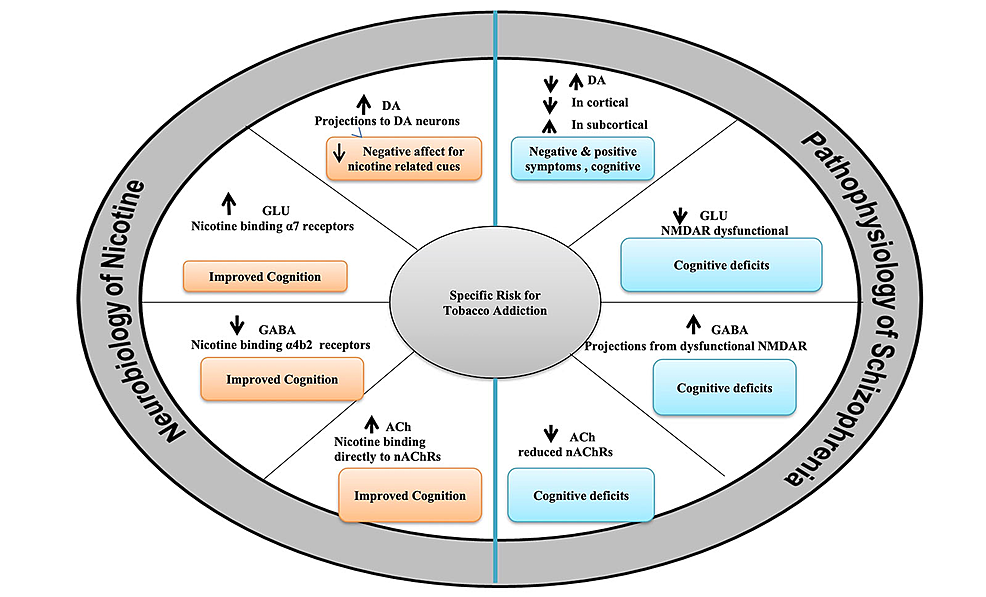
Pathophysiology-of-schizophrenia-and-neurobiology-of-nicotine.
Pathophysiology of schizophrenia and neurobiology of nicotine. Cureus

Dr. Tuomenin at The Royal has set out to discover with the use of brain scans what precisely the relationship is between nicotine and and the complex medical condition known as schizophrenia. What is known is that people diagnosed with schizophrenia tend to smoke at rates much higher than is the case within the general population. Schizophrenia is known by disturbing symptoms such as hallucinations and delusions and 'hearing' voices; the source of the illness is believed to be both genetic and environmental, affecting roughly one in a hundred population with an initial episode occurring at a point between the teens and mid-20s.
 
www.frontiersin.org
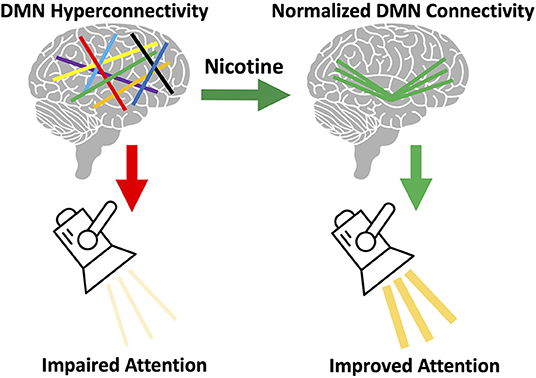
Part of the challenge facing the researchers is to determine whether smoking leads to schizophrenia or is a by-product of the mental illness in an effort to control its symptoms. Two theories are current; that smoking is a schizophrenia risk factor, the other, that those with schizophrenia smoke in an effort to self-medicate, in  hopes of focus acuity. Those suffering from schizophrenia often experience problems with attention, manipulating information, and decision-making. Even before the first episode of psychosis has been experienced in a schizophrenia patient, cognitive symptoms can be present.
 
Anti-psychotic drug treatments, in use for 70 years, have proven effective therapy in treating t he condition; however these drugs do nothing to improve cognition. Which is why researchers hope to discover more with brain imaging to help understand how nicotine affects brain processes. Brain images of about fifty people are to be part of the research by Dr. Tuomenin and his research colleagues; ten to twenty of whom would be habitual smokers without schizophrenia.
 
The cholinergic system is the focus of the research, for the vital role it plays in memory, digestion, control of heartbeat, blood pressure, movement related functions -- all of which are affected by nicotine. Positron emission tomography (PET) scans make use of a small portion of radioactive tracer to create a picture showing t he function of a specific brain process, and the MRI uses a strong magnet and radio waves to capture the detailed pictures of the brain.
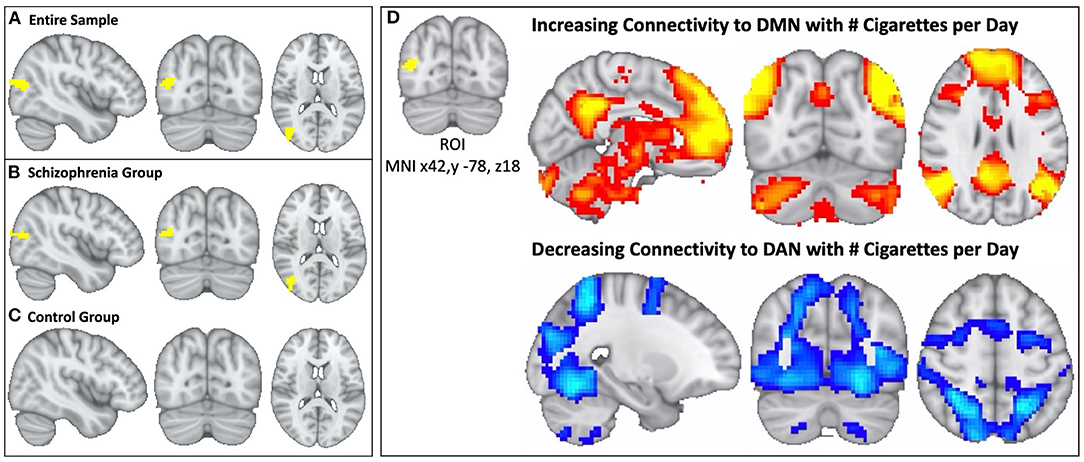
www.frontiersin.orgStarting with psychological and cognitive tests, followed by two scans, one of working memory testing how the brain functions, and another of the cholinergic system using the PET scans, the study takes about ten hours for each participant profile. Ironically enough it has become difficult to recruit smokers who are otherwise healthy for such studies given that the population of those who smoke is on the decline. As well, the researchers are searching for people who, while smoke or vape, do not use cannabis, since the focus is on nicotine.

Cannabis on the other hand, has an altogether other relationship with schizophrenia since its use can trigger schizophrenia in people genetically predisposed, particularly those who use it frequently, use potent products, or began using the drug at a young age. Which still leaves a number of unanswered questions relating to the relationship between smoking and schizophrenia. While the smoking rate has declined markedly in the general population, no indication exists that schizophrenia prevalence has dropped as well.

Some people self-medicate with nicotine to deal with the side-effects of antipsychotic medications; anxiety and restlessness. Those with schizophrenia tend to live isolated lives that tend to encourage nicotine consumption. Connections abound, those with schizophrenia end up with shorter life expectancies, partially attributable to excessive smoking. And then there are separate questions respecting how new ways to consume nicotine such as vaping, may affect schizophrenia risk.

Hopes are high for the discovery of a new class of drugs to treat the cholinergic system, to help those with schizophrenia with hallucinations and delusions, and also have the benefit of effectively treating  the issues of cognition. 
research, nicotine and schizophrenia from www.medicalnewstoday.com
"We know much less about vaping because it's such a new thing. The way you smoke and the way you vape is different."
"People smoke a cigarette and then they wait for another. Vaping is much more constant."
Dr. Lauri Tuomenin

Labels: , , , , ,

Sunday, February 10, 2019

Making Time for Sleep

"It used to be popular for people to say, 'I'll sleep when I'm dead'. The ironic thing is, not sleeping enough may get you there sooner."
"Most studies of adults find that the midpoint of their sleep should be somewhere between 2 and 4 a.m., so if your timing is different than that, that may lead to increased health risks."
Daniel Buysse, professor of sleep medicine, University of Pittsburgh

"We're competing against moneyed interests, with technology and gaming and all that. It's so addictive and so hard to complete with."
"We've had this natural experiment with the Internet that swamped everything else."
Orfeu Buxton, sleep researcher, Pennsylvania State University

"When you are asleep, it's the most idiotic of all things: You're not finding food, not finding a mate. Worse still, you're vulnerable to production." 
"If there was a chance to shave even ten percent to 20 percent of that time, Mother Nature would have weeded it out through the process of evolution millions of years ago."
Matthew Walker, psychology professor, University of California, Berkeley
Image result for getting enough sleep
www.huffpost.com

"Why do we know so little about this really critical function? I always think of growth charts at the pediatrician's office. Physical growth; you study thousands of children. You know exactly that your child is in the 63rd percentile for kids her age."
"Why do we not have that for the brain?"
Tracy Riggins, developmental psychologist, University of Maryland

Dr. Riggins and Rebecca Spencer, a neuroscientist at the University of Massachusetts at Amherst have teamed up in an effort to study how memory in preschoolers is affected by naps. A previous study undertaken by Dr. Spencer had found preschoolers taught a memory game had a better performance post-nap than had they been kept awake, then tested. She discovered napping aided the strengthening of complex emotional memories exclusively when combined with a good night's sleep.

For the current study the pair has combined to recruit families while they try to understand brain differences between children who nap and those who no longer do, an experiment taking place in the real world at preschools that offer French lessons, swimming or other enriched opportunities to take place instead of nap time. Unless sleep is proven to be a critical brain process assist, a two-hour nap may appear as a waste of time better used to learn something valuable.

Drs. Riggins and Spencer have set out to prove that napping performs an important function that can be compared to the practise of clearing a desk of clutter to organize and file papers to be retrieved at a later time, on the theory that without clearing the desk disorganized piles of paper can become chaotic, their purpose never realized. "This is the drive some people have [for their children] to be the best and the brightest -- some of these high-income preschoolers are trying to cram so much into the day that they're minimizing nap time", explained Dr. Spencer.

"The idea is they're not napping, so they can learn more. But they may lose the attentiveness to be able to learn more", she emphasized.

Insomnia is considered a risk factor for depression and a complaint at the same time, of people with depression where adults over fifty having insomnia symptoms are recognized to be more likely to fall than those without those symptoms. Pain has been linked to poor sleep in some studies, indicating that older people with sleep problems appear more likely to develop pain, and the reverse is also true.

"A lot of medical approaches have ignored sleep", Ken Paller, a cognitive neuroscientist at Northwestern University remarked. "People think about (poor sleep) as one of the complaints someone with depression or other disorders might have, rather than a critical part of the whole etiology of the disease, which is a new idea." An idea that has evoked interest in discovering how to enhance sleep for therapeutic benefit. Some researchers are beginning to examine whether the qualities inherent in sleep's memory consolidation can be enhanced.

Increasingly, scientists are looking at the links between critical sleep for a requisite number of hours nightly and health issues, identifying lack of sleep as a growing public health crisis. To the present, research into sleep disturbance has been studied separately with sleep disorders like insomnia and sleep apnea being treated as research to be studied on a different tracks. The new approach is to combine sleep disorders under the umbrella of adequate night-time sleep to refresh the brain and its cognitive processes.

A Gallup poll established that adults slept an average of 7.9 hours nightly back in 1942. By the year 2013 however, the average adult had taken over an hour off that optimum target and later yet, in 2016, the Centers for Disease Control and Prevention reported a third of adults simply do not sleep for a now-universally recommended minimum seven hours.

Rapid-eye-movement sleep (REM) function when the sleeping brain begins to increase its electrical energy through dreams was discovered in the early 1950s, bringing in a hugely significant enquiry stream into the sleeping brain and its function in overall health achievement. Electroencephalography research followed, to reveal that the sleeping mind experiences cycles in active stages of light and deeper sleep, repeated every 90 minutes or so as long as prolonged and deep sleep takes place.

Brain research is in the process of rapid expansion and the issue of precisely how sleep works in disease and in normal cognitive functioning such as memory has become an intriguing and important new direction of study. Within the scientific community a growing awareness of the importance of adequate sleep identifies its lack as dangerous to human health. One new line of research points to poor sleep's possibility of increasing Alzheimer's risk.

It would appear that even one single night of sleep deprivation incrases levels of the proteins that form toxic clumps in Alzheimer's patients, in the brain. One incident of missing one night's sleep increases anxiety to clinical levels according to researchers who expand the issue to observe that even slight sleep reductions are linked to an increase in the feelings of social isolation and loneliness.

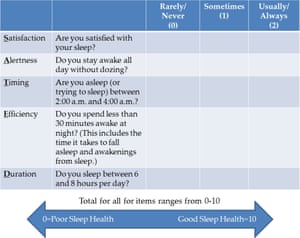
The SATED test: a self-report questionnaire developed by sleep researchers to determine sleep fulfillment

Labels: , , , , ,

Friday, August 24, 2018

Think About It

"We wanted to create premium experience. We've curated every element and obviously are in the Yorkville area [upscale downtown Toronto] to appeal to a certain demographic."
"If you [told] someone in the 1950s you were going for a run, people would be like, 'Who are you running from'?"
"The attitude on fitness has completely changed from 'What's that?' to a niche part of the market to an accepted necessity."
"The brain is the next frontier of that."
Sean Finnell, Mindset Brain Gym co-founder, Toronto
Mastermind

Meditation, it appears, works. The "use it or lose it" admonition we've heard so often about our physiognomy had a reason; exercise or allow the body to slump into disuse and eventually frailty. Mindfulness is the new gym for the brain; sustaining attention to thoughts, to objects, or to actions; cognitive focus for the purpose of refocusing the mind. As a regular performance, meditation has been shown to increase focus, positive emotions, cognitive reasoning skills and rapid memory recall.

In 2012, Gaelle Desbordes, an instructor at Harvard Medical School's Center for Biomedical Imagining, made use of brain scans to demonstrate beyond doubt that brain activity changes remain constant long beyond meditation-practising subjects are no longer meditating. The practise alters the way the mind works. 'Brain gyms' sound like a gimmick and perhaps they are, but they provide lessons for people wanting to be instructed on how to meditate.

At Mindset Brain Gym, newly opened in Toronto, young professionals sit cross-legged in rows under iridescent indigo lights while soothing ocean music provides the background as an instructor guides those present through a session of meditation lasting 30 minutes. The participants' brainwaves are measured with the use of plastic headbands, monitoring the calmness of their minds and the wandering thought "recoveries" produced throughout a session.
Mastermind
"Performance" to improve concentration and memory, "Resilience", to reduce anxiety and promote bounce-backs from failure, and "Human" meant to improve empathy and emotional intelligence are all achieved through these sessions in mindfulness. These lessons are reflected in what happens at a popular meditation studio in the Flatiron District of New York City in "The Dome" studio with its appearance of a giant spaceship interior glowing with multi-colour LED lights.

A boutique sells "moon dust", herb and mushroom blends meant to improve one's state from the sleep cycle to sex life. Also available are "cleansing grains" and "radiance nectar", at a substantial price. Granted, this element of commercialization is recognizable as a silly scam.

At Den Meditation in Los Angeles, classes are offered from an a la carte "private healing menu" including crystal therapy (60 min. for $125); sound therapy (30 min for $65); Theta Healing deep meditation to release past traumas (60 min. for $150). For those with deep pockets, full meditation retreats to destinations such as the Himalayas start at $4,000.

Upselling meditation is what it's called; typical examples of U.S.-style entrepreneurial enterprise. Which fits right in with the culture of virtue-signalling. We know virtue signalling best from watching the political sphere of the Lib-left deeply embedded in its uncompromising 'progressive' agenda and shrill shrieks of condemnation against their conservative political opposites whom they usually describe in such gentle terms as 'right-wing' or 'fascist'.

So premium.Getty Images
 

Labels: , , ,

Sunday, August 13, 2017

Fleecing The Sheep and Laughing All The Way To The Bank

"He's probably an artist who's in more demand today than any other."
"He's so good that he controls everything. He controls when galleries make shows, he controls who they sell a painting to -- he's on top."
Alberto Mugrabi, mesmerized 'art' collector

"Artists whose work is in great demand are in charge."
"They can call the shots and Mark figured that out pretty early."
"Who says he can't [break with tradition and sell directly out of his studio rather than through an agent]? It's an unwritten rule, but he's breaking the rules." 
Ann Philbin, director, Hammer Museum, Los Angeles

"He's the most important artist of his generation."
"I have bought works out of his studio; I've also bought works privately."
"I bought a sculpture of his for the Museum of Modern Art. He tries to sell them to people who are collectors rather than investors."
David Geffen, media mogul, owner of six paintings by Grotjahn

"There was always a conscious conversation about the importance of placing pictures in museums and in great collections."
"It becomes a pretty precise methodology."
"Artists like Mark -- they run their own show, as they should. They're the ones who've taken all this risk and stared into that void."
Timothy Blum, founder, Blum & Poe
Mark Grotjahn Credit Monica Almeida/The New York Times  The artist proudly stands before a sculpture of his that sold at auction for $16.8-million
Leonardo da Vinci, could he but foresee a time in the future when unscrupulous pretenders to art would successfully manipulate greedy acquisitors to believe that faux art reflects talent and original vision, would never have believed that intelligent human beings could stoop so low as to scrape the barrel of credulity and do it willingly, besides. Creating an atmosphere and a culture where the recognition of non-objective art bespeaks the genius of the few, and the challenge is to the viewer to admit that though the work is not visually or aesthetic leasing, it is original.

Its origins, needless to say, in the minds of flim-flam entrepreneurs who have recognized the cupidity and stupidity of a segment of the population that will believe anything that 'experts' in the field of art curation convincingly inform them. While beauty may be in the eye of the beholder, so is a natural inclination to recognize what it truly is. And nothing that this man produces, just like the 'art' produced by so many of his contemporaries in 'modern art' represents beauty or the originality of vision accomplished through a master's hand.

Create it, and they will come is his obvious mantra. But not without having first carefully set the stage. To convince the willingly gullible that what this man has produced (like, for example, Jackson Pollock) represents an authentic work of art, unequalled in bold design and execution by any of his contemporaries and as such a rare opportunity to acquire a colossal work of art whose value, both aesthetic and financial, can only increase in an art-hungry world.
"Untitled (Orange Butterfly Blue MG03) #1"  in his “Butterfly” series, 2003. Credit Douglas M. Parker

The gullible include art dealers whose discerning eye and bumph antennae distinguish them somewhat from enthusiastic art collectors only in that they instinctively know that any artist in their stable who gains the confidence of the art world and those who can afford the absurdly exorbitant prices to claim the prestige of ownership of such artistic nonentities as this respond to his clever pretense, inspiring their confidence and willingness to part with their expendable wealth.

Public and private art galleries succumb just as do those who style themselves connoisseurs of art; they have the academic papers to prove their studies resulted in moving to the head of the class. The prestigious vote of confidence in an artist such as this that results from his splendid art works being acquired to hang on the walls or grace the marble flooring of acclaimed galleries such as the Whitney Museum of American Art, the Museum of Contemporary Art in Los Angeles and the Los Angeles County Museum of Art, let alone New York's Museum of Modern Art and the Guggenheim Museum 'prove' the value of this execrable work.
Works in Mark Grotjahn's studio headed to the Nasher Sculpture Center. Credit Monica Almeida/The New York Times
The now-49-year-old Mr. Grotjahn has managed skilfully to influence the value of his works to an  unusual extent. Perhaps it was the psychological trauma he suffered when at an early show one painting only sold -- and for a miserly $1,750 -- that drove him to 'take charge' of his career in such a masterful manner as to create a legend about himself drawn from his own ego and masterfully parlayed into a general acknowledgement that his supremely gifted talent simply cannot be overlooked.

To those of a skeptical bent who fail to credit his 'art' with a simulacrum of rare artistic brilliance, they must understand the sad depth of their philistine ignorance.

That experience appeared to have soured  him indelibly with the convention that an artist was meant by unwritten rule to be faithful to a one-dealership representation. He has chosen instead to use the services of a number of recognized dealerships, all of whom boast well-heeled clients. And nor does he neglect the impact it can have on collectors to deal directly with the artist himself, a rare privilege he generously grants on occasion to various clients, even permitting them the privilege of buying art directly out of his studio, an unheard-of practise.

He had at one time himself, after earning his Master of Fine Arts degree from the University of California, operated an art gallery in Hollywood. He is intimately acquainted with the trade from both perspectives. The coincidental Hollywood conception of life in America, raucous, uninhibited, violent, sexy, criminal, addicted and wealthy, is a fitting metaphor for the claims that what this heralded artist produces represents the pinnacle of creative art.
"Untitled (Circus No. 1 Face 44.18)" in his “Circus” series, 2012. Credit Douglas M. Parker

Artists producing work of actual merit reflecting their special abilities in the creation of realistic renditions of landscapes, portraiture, allegorical and historical paintings whose artistic expertise speaks to the core of the aesthetic bestowed upon most discriminating viewers must wince if and when they become aware of such shameless charlatans perverting the very substance of art and authenticity in its production. It is this corruption of the beauty and meaning of art that speaks to the degeneration of its recognition and appreciation of its rightful place in our aesthetic.

"Untitled (African, Gated Front and Back Mask M34.b)" is a 2014 bronze based on a cardboard box and tubes. Credit Monica Almeida/The New York Times


Labels: , , , , , ,

Sunday, January 29, 2017

Vitamin A Deficiency and Cognition

"We have known for some time there is less vitamin A in the blood of people with Alzheimer's compared with people who have normal cognitive function. What we didn't know was how important it could be in early childhood development."
"Vitamin deficiency during pregnancy is much more harmful [to the fetus] than a vitamin deficiency later in life."
"If you give vitamin A supplements in the first month or two of life, you can reprogram the brain and restore most of the cognitive function. If you wait two months, the supplements don't work as well."
"The World Health Organization report says there are 250 million preschoolers in the world with vitamin A deficiency. In developing countries, vitamin A deficiency is quite common and likely affects many pregnant women."
Weihong Song, Canada Research Chair, Alzheimer's disease, University of British Columbia
[beta amyloid plaques]
New research shows that mice deprived of vitamin A in the womb may have higher levels of beta amyloid (here shown as plaque in the brain of an Alzheimer's patient). Medical News Today

In 2015, international researchers discovered a link between vitamin D deficiency and the onset and development of Alzheimer's and dementia, by studying and observing over one thousand, six hundred seniors for a period of six years. It is estimated that between 40 and 75 percent of all adults are deficient in vitamin D, representing a group of secosteroids responsible for the absorption of calcium, iron, magnesium, phosphate and zinc. Essentially vitamin D has a hormonal action.

Only a few foods confer the benefits of vitamin D, though the human body absorbs it through exposure to sunlight. Most people require the use of vitamin D supplements to boost the body's critical store.

Now, researchers at the University of British Columbia in Vancouver have published a study appearing in the journal Acta Neuropathologica, pointing out that vitamin A deficiency may trigger Alzheimer's disease late in life. Even mild vitamin A deficiency in animal models had the effect of increasing production of amyloid beta, protein fragments which form plaques in the brain. People with Alzheimer's suffer from amyloid plaques which smother and in time kill neurons as dementia steadily advances.

A new study has found that mice deprived of vitamin A before birth are more likely to develop symptoms of Alzheimer's disease.
A new study has found that mice deprived of vitamin A before birth are more likely to develop symptoms of Alzheimer's disease. (Robert F. Bukaty/The Associated Press)

Gene mutations and environmental factors over a prolonged period of time cause Alzheimer's disease. Mice engineered with a mutated human gene to render them susceptible to Alzheimer's were used in this laboratory study which discovered that fetal malnutrition leads to learning problems that will last a lifetime. Deprived of vitamin A through their mother's diet, fetal mice performed poorly on tests of learning and memory when they reached adulthood.

And this was so irrespective of their being exposed to a normal diet directly post-birth.

Dr. Song and his research collaborators at the Children's Hospital of Chongqung Medical University in China "rescued" brain function in mice with vitamin A supplements applied directly after birth.

Brain health in the developing world and in remote parts of China and elsewhere in the world where food choices are limited, point out why those not obtaining sufficient vitamin A in the diet severely compromises cognitive health. Vitamin A can be found in fish and in brightly coloured fruits and vegetables, all of which may be in short supply in deprived areas where lack of essential foods and fruits deprive people of vitamin A.


"We have known for some time there is less vitamin A in the blood of people with Alzheimer's compared with people who have normal cognitive function," said researcher Weihong Song. "What we didn't know was how important it could be in early childhood development." Martin Dee / Vancouver Sun

Labels: , , ,

 
()() Follow @rheytah Tweet