Ruminations

Blog dedicated primarily to randomly selected news items; comments reflecting personal perceptions

Friday, December 31, 2021

COVID? No Geographic Area Too Remote

"The virus that causes COVID-19 spreads easily between people in close quarters on board ships, and the chance of getting COVID-19 on cruise ships is very high [even if people are fully vaccinated and have received a booster]."
"CDC has issued an Order that requires face masks to be worn by all travelers while on public transportation including all passengers on board and all personnel operating maritime conveyances traveling into, within, or out of the United States. Masks are also required while indoors at U.S. transportation hubs, including seaports and ferry terminals. Travelers are not required to wear a mask in outdoor areas of a conveyance."
U.S.Centers for Disease Control  

"[The decision] is particularly perplexing considering that cases identified on cruise ships consistently make up a very slim minority of the total population onboard."
"The majority of those cases are asymptomatic or mild in nature, posing little to no burden on medical resources onboard or onshore."
Cruise Lines International Association
 
"We don't like to see even one case, but our experience is a fraction of the comparable statistics of virtually any other comparable location or industry."
"Few businesses are subject to such intense scrutiny, regulation and disclosure requirements by so many authorities."
Richard Fain, CEO, Royal Caribbean
Cruise ship in Miami
The Celebrity Summit cruise ship prepares to depart from Port Miami, Saturday, Nov. 27, 2021, in Miami. (AP Photo/Lynne Sladky)
"[The spread of the Omicron variant] may shape how some destination authorities view even a small number of cases, even when they are being managed with our vigorous protocols."
"Some destinations have limited medical resources and are focused on managing their own local response to the variant [when they refuse a cruise ship entry to their waters and deny docking permission]."
"Should it be necessary to cancel a port, we will do our best to find an alternative destination,"
Carnival spokesperson AnneMarie Mathews  
All travellers -- even those fully vaccinated, according to the U.S.Centers for Disease Control -- should avoid cruises. The agency had received reports of 5,013 COVID-19 cases on ships in American waters between December 14 and 29, representing a massive increase over the previous two weeks when 162 cases were reported. Some 91 ships carrying passengers from U.S. waters reported cases in the past seven days that meet the threshold for CDC investigation and recommendation.
 
 Understandably, the Cruise Lines International Association is a trifle annoyed at this intervention and  interruption in their tourism business, thriving now, having recovered from the 'floating coffin' era of a year earlier when the global pandemic had just begun its disastrous sweep through the world. It is the cruise industry's focus to offer tourism on a grand scale, each of these monster vessels carrying the equivalent of a fair-sized town to exotic destinations. It is the mission of the CDC to stop pandemics in their tracks -- if at all possible.
 
Over 80 cruise ships are now being investigated by the U.S. Centers for Disease Control and Prevention, all of which have experienced COVID-19 outbreaks. A new colour-coded system was implemented by the cruise industry and the CDC to help monitor and control virus outbreaks. 85 ships from Norwegian Cruise Lines, Disney, Carnival Corp. and Royal Caribbean Cruise Lines were given yellow flags, triggering a CDC investigation.
 
A yellow flag denotes that coronavirus cases were reported in over 0.10 percent of passengers; with 6,500 passengers on board a cruise ship; seven or more cases have been diagnosed during the previous week, and yet other cases reported among the liner's crew. 25 ships operated by Royal Caribbean were given a yellow label; one, the Odyssey of the Seas, began skipping ports, heading back to Fort Lauderdale Florida after 55 people on board tested positive for COVID-19.

 
The Seven Seas Mariner.
The Seven Seas Mariner, Manfred Segerer/ullstein bild/Getty Images

 Should sustained transmission of COVID-19 go on to overwhelm medical resources on board, the CDC will review a ship for proposed red status; none yet have been labelled with a red flag. The alert system of colour-coding numbers of affected passengers applies only to ships  sailing or planning to enter U.S. waters. In Canada, Transport Canada banned cruise ships in Canadian waters for a year, a ban scheduled to be lifted in February 2022. Canadians continue to be advised by government to avoid all travel on cruise ships outside the country for the present.
 
COVID-19 has led the cruising industry to gigantic losses of an estimated $32 billion, aside from the hit to the industry's reputation which suffered from early reports of mass COVID outbreaks, leaving ships marooned with sick passengers, refused entry to ports. In self-defence the cruise industry enacted strict COVID0-19 mitigation protocols with testing, vaccination mandates, enhanced ventilation systems, mask-wearing, physical distancing and other public health protocols.
 
But COVID-19 is a dangerously sneaky, pervasive, pernicious threat, particularly the Omicron variant. With the best of avoidance protocols in place, the virus eerily turns up in the most unexpected places. While it's easily understood that the virus can proliferate and infect prodigiously as nature permits it to do, in an environment where in effect, thousands of people are sitting ducks on a ship, despite heroic efforts to keep everyone safe, it's a little more difficult to explain how in the most isolated place on the planet, COVID still showed up.
 
As it did in Antarctica at the Princess Elizabeth Polar Station where two thirds of Belgium's 25 staff have been infected. Despite being fully vaccinated, living far from civilization, polar researchers contracted the coronavirus. None of those infected exhibited severe symptoms. The outbreak occurred despite staff passing multiple PCR tests, quarantining, and living in one of the most remote areas on the planet. It entered with a scientist new arrived, who had been cleared by tests prior to arrival.

 
The Princess Elisabeth Polar Station in Antarctica in 2009.


Labels: , , , ,

Monday, November 29, 2021

Woof! Not To Worry

"I get so many questions about this issue."
"Will there be a vaccine? When will there be a vaccine?"
Dr.Elizabeth Lennon, veterinarian, University of Pennsylvania 

"It doesn't look like cats or dogs would ever be a reservoir for this virus."
"We believe that if there weren't sick people around them, they would not be able to continue spreading it from animal to animal -- it would not continue to exist in their population."
"The best way to prevent SARS-CoV-2 in our pets is to prevent the disease in people."
"So please get vaccinated."
Dr.Jeanette O'Quin, veterinarian, Ohio State University
A veterinarian holds a syringe while a cat lays on an exam table.
Science
 
Jaguars are being inoculated against COVID-19, so are bonobos, orangutans and otters, ferrets and fruit bars, at various zoos in the past year, as cases have erupted among them. Billions of people worldwide are now vaccinated against COVID-19, with billions more yet to go. The global medical community and government agencies are working around the clock to ensure that as many populations become inoculated against infections by the coronavirus as possible to present a united front against a frequently-deadly pathogen.

Cat or dog vaccines have been developed; those initial vaccines were then deployed to vaccinate zoo animals. But the issue of having a vaccine against COVID available for household pets appears for the time being and perhaps for the foreseeable future, a dead issue, so to speak. Not so much to ignore a need, or to leave the impression that dearly beloved household companion pets are no one's concern, but because experience has shown that though cats (more so than dogs) and dogs can acquire the infection, they readily rise above it.

Simply put: not a priority. Household pets display few symptoms of COVID, some, like their human counterparts, are asymptomatic and most cases are very mild. When at first it was imagined that a pet pandemic could arise, the possibility of developing a dog/cat-specific vaccine appealed to Zoetis, a veterinary pharmaceutical company in New Jersey, and work began on producing a vaccine candidate. There were, in fact, four promising candidates by fall of 2020.

And then it became obvious to researchers that after all, the issue of pets being infected would not be likely to pose a serious threat to either animals or people. One study of 76 pets living with people who had developed COVID saw 17.6 percent of cats and 1.7 percent of dogs testing positive for COVID and 82.4 percent of the infected pets showed no symptoms.

The most common effect on pets infected with the virus are fairly mild symptoms including lethargy, coughing, sneezing, runny noses or diarrhea. Typically the infected pet makes a full recovery without the need of any treatment. Nor is there strong evidence that cats or dogs may spread the virus to humans. All these factors convinced experts a vaccine for pets was unnecessary.

The U.S. Department of Agriculture which regulates veterinary medicine in the US, announced in November of 2020 that it would not accept applications for cat or dog vaccines "because data do not indicate such a vaccine would have value". At the same time the possibility is not discounted that at some future date it is possible that changes in the virus could mandate that a pet vaccine be given wide use.


Labels: , , , , ,

Tuesday, September 14, 2021

Safeguarding Children's All-Around Health

"When it comes to kids, what I think people have not done a good job of is looking at the overall well-being as important, as opposed to just focusing on COVID."
"And it's become completely clear over the last year-and-a-half that we're causing an immense amount of harm to kids by locking them in their homes."
"While some of those kids can get very sick, most of them respond really quickly to treatment. [The higher we can drive immunization rates of the 12 and older, putting a protective ring around children too young for vaccination] the better off we will be."
"At some point we're going to have to get used to it as another virus that is circulating. I don't know when that point is, but I think people need to start thinking about that." 
"[It's not a science perspective], it's more of a view of society and freedoms. And I am very loathe to impose on people things they don't want to do."
Dr.Ari Bitnun, pediatrician, SickKids, Toronto

"I won't lie. I'm worried myself. I'm really worried not just about hospitalizations, but long-term health consequences."
"It's extremely upsetting to me."
Dr,Dawn Bowdish, immunologist, McMaster University, Hamilton, Ontario
2019 Novel Coronavirus (COVID-19)
"That's probably the most important question we need to learn in the next six to 12 months [how Long COVID manifests in children]. How prevalent is Long COVID? What does it actually look like."
"Of course it's not fine [if a few kids get sick when we argue children need to be in school]. Every single individual who gets sick and has to go to hospital, God forbid is one too many."
"But what is the alternative? We've pretty much had children out of school here in Ontario for over half the year last year."
"Intolerable, it's untenable to think about."
Dr.Ronad Cohn, president CEO, SickKids 
Girl wearing a mask and sitting at a desk
 
Published data indicate heightened levels of anxiety and depression among children and youth, the acknowledged fallout from the seemingly endless pandemic, and the manner in which it affects children in our suddenly altered world culture of alienated society careful of the fearsome effects of the SARS-CoV-2 virus causing COVID-19. Dr. Bitnun is familiar with the sight of young patient home-schooled for an entire year, barely leaving home, with easy access to a refrigerator, who have gained an absurd 40 kilograms in that interim from normal life. 

Greater numbers of children in the United States are being admitted to hospital with COVID-19 in those states with low vaccination rates. Spurring concerns of just how safe is it to return children to the classroom, and most particularly those under age 11 who are unvaccinated...? The spread of the Delta variant has thrown hopes for control of the COVID infection rate for a loop. In some of the most populous areas of Canada case counts are increasing. 

Children infected with COVID tend to demonstrate mild symptoms such as headache and fatigue. For many, no symptoms whatever manifest. And COVID deaths among children remain rare events. Children of all ages can carry high SARS-CoV-2 viral loads whether they have symptoms, or none, according to a recently published paper. That same paper suggests that children are capable of spreading COVID; Children have the potential "to serve as a community reservoir of actively replicating virus, with implications for both new waves of infection and the evolution of new variants".

As for the Delta variant; is it more virulent, more dangerous to children, will it make them more ill than the U.K. variant, or the original strain? Above all, children's susceptibility to acquiring Long COVID is an unknown. It was first identified in adults when people reported a strange array of symptoms; brain fog, breathlessness, headache, heart palpitations for weeks, even months following a mild dose of COVID. For children, data has been puzzlingly conflicting.

Long COVID was found to occur in school-aged children, but remains uncommon, according to a large study out of the United Kingdom. 4.4 percent of 1,734 children involved in the study had lingering symptoms a month after experiencing a COVID infection, yet by eight weeks almost all had recovered. The Office of National Statistics in the U.K in another study estimated closer to 10 percent of two- to 11-year-olds and 13 percent of children ages 11 to 16 had at least one lingering symptom five weeks after infection.

In the United States in major children's hospitals in Florida, Texas, Missouri and Arkansas pediatric cases are on the rise. Almost all admissions involve children under age 12, not yet eligible for shots or teens who haven't been vaccinated. The more virus circulates, in particular hyper-contagious Delta, the more likely it is that children will get infected. Small numbers becoming sufficiently ill heading for hospitalization.

By mid-August, children under 19 accounted for 15, or 0.1 percent of COVID-related deaths, along with 1.9 percent of hospitalizations since the pandemic's start, in Canada. More admissions occurred, related to a post-COVID complication known as MIS-C (multi-system inflammatory syndrome in children) than for COVID. Different parts of the body such as heart, lungs and kidneys can become inflamed, typifying MIS-C. Obesity stands out thus far as the most common underlying risk factor for severe COVID. 

Polls indicate that American parents clamour for their children to return to in-class learning, despite the spike in U.S. COVID cases. No one is interested in downplaying risks of COVID to children. The risk-benefit analysis varies in every family, yet it is monumentally difficult to tolerate any risk whatsoever when it comes to the protection of children.
featured image
"Marinating in a toxic brine of fear and uncertainty can make us sick -- whether from fatigue and insomnia or irritability and burnout."
"And when our children hear us processing endless loops of what-if thinking, they can become worried and depressed too." 
"Fixating on a single threat to children's health can keep us from recognizing their broad human needs."
Dr.Lucy McBride, practising internist, Washington, D.C.

Labels: , , , ,

Thursday, August 19, 2021

The Coronaviruses' Ethical Dilemma

"We're planning to hand out extra life-jackets to people who already have life-jackets, while we're leaving other people to drown without a single life-jacket."
Dr.Mike Ryan, director, health emergency program, World Health Organization
 
"It is a tough question [whether it is ethical to begin giving third top-up doses to people in wealthy countries before sufficient doses arrive in less developed nations]."
"From a global equity point of view, we need to make sure vaccines are distributed everywhere. But we live in a democracy where we have to respond to the electorate. For a political party to say it is not going to give boosters would be difficult."
"I do think we are going to end up there [responding to a fourth wave by third vaccination doses]."
Dr.Kumanan Wilson, senior researcher, The Ottawa Hospital Research Institute, CEO CANImmunize Inc. 

"Evidence shows that beginning four months after receiving two COVID-19 vaccine doses, the immune response in residents who live in long-term care homes wanes significantly compared to the general population."
Ontario Ministry of Health report
Covid Update
The U.S. will start offering COVID-19 vaccine boosters in September, public health officials and medical experts announced    Photo: Marina113/GettyImages
 
While the World Health Organization has called for a moratorium on booster shots, condemning wealthy nations for deciding to offer third vaccine doses to their most vulnerable populations at a time when the rest of the world still awaits their first dose of vaccines, the nations they criticize are faced with a dilemma; the rising tide of Delta variant cases, proving far more infectious than the original Alpha virus, with the vaccines seen to be less effective at preventing Delta infection.

Israel is already well involved in offering third doses to its citizens over age 50. Germany is contemplating following the same route for their vulnerable populations. In the United States the government plans to make booster shots available widely from September. In Canada, health authorities are grappling with the reality that the most susceptible to infection from the Delta strain, health-compromised elderly people living in long-term care facilities with lower immunity to COVID, are at greater risk of infection,

It is those same residents who, during the original COVID wave and subsequent follow-ups suffered most from COVID-19; deaths in that group of vulnerable people outdistanced deaths from any other cohort in Canada, representing the majority of national deaths due to COVID. Ontario's Chief Medical Officer of Health revealed this week that the province was preparing to offer third doses of vaccine to those at highest risk. That would include transplant patients, the immuno-compromised and long-term care residents.

The dominance of Delta widely causing a wild spread of contagion marks it as a difficult virus to counter. In the interests of protecting against risk of severe illness and death, offering third doses to long-term care residents represents "a medical requirement", according to Earl Brown, virologist, emeritus professor at University of Ottawa. "They are more likely to have a problem and die" should they become infected with COVID-19: "That is a medical need". 

As it has now been six months since many long-term care residents were fully vaccinated, their protection, according to medical experts, has waned "significantly". Research shows that extending the period between doses confers improved immunity. Among the elderly immune response is generally not high. But the vaccines have conferred a life-line against serious illness and outbreaks in long-term care homes where serious infections have dropped dramatically.

According to research from the U.S. Centers for Disease Control and Prevention, mRNA vaccines continue to protect people against hospitalization at a rate of roughly 85 percent for 24 weeks, before that protection begins to wane. In a long-term care study Moderna was seen to stimulate a stronger immune response in frail, older adults. The Moderna vaccine uses three times the mRNA. The result is more symptoms are associated with Moderna in younger adults. 

Younger people tend to have stronger immune systems than the elderly. For older people more is better, but for the young the surplus mRNA in Moderna is excess to their immunity needs. Of the 12.6 million people nationally in Canada with full vaccinations, by July 24, 3,417 (or 0.03 percent) were diagnosed with COVID while fully vaccinated, according to the Public Health Agency of Canada.

Pfizer
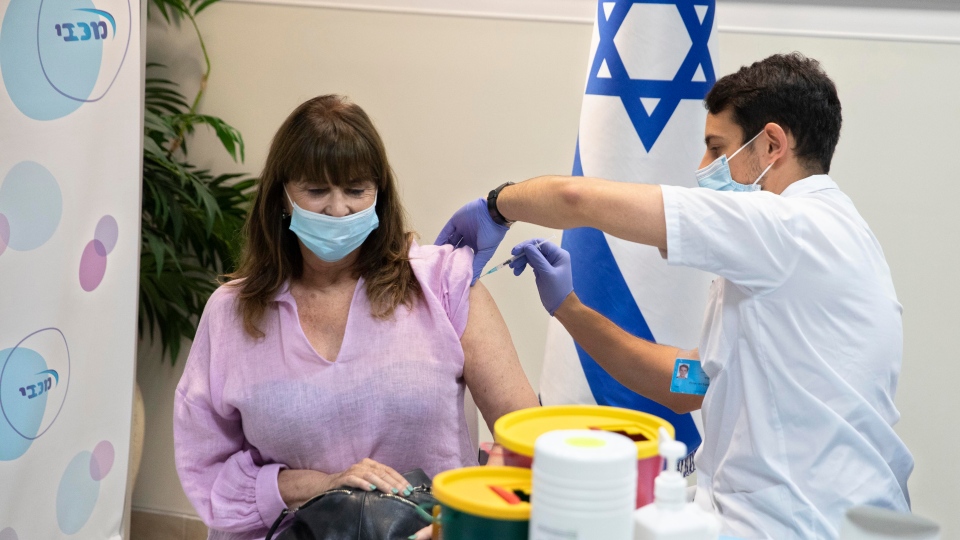
An Israel woman receives a third Pfizer-BioNTech COVID-19 vaccine in the Israeli city of Ramat HaSharon, Friday, July 30, 2021. (AP Photo/Sebastian Scheiner)

Labels: , , , ,

Sunday, April 26, 2020

Social Distancing in Mumbai's Slums

"Police flew a drone over our neighbourhood and saw some people sitting outside collecting water.
So they came and started hitting people with their sticks."
"I was standing in the doorway and they pushed me inside."
Unidentified resident, Dharavi, Mumbai

"I don't feel right about it, we're not animals."
"But this kind of thing is not new for us [experimental inoculations on groups of people living in Mumbai slums]."
"Shopkeepers are raising prices day by day [with staples like matchboxes, rice and nuts now more expensive]."
Sabina Khan, Dharavi resident

"Residents [of the Dharavi slum] feel they will be treated badly, as usual."
"And that comes from their long experience with public hospitals and authorities."
Vinod Shetty, founder, Acorn Foundation, NGO, India
An estimated 700,000 to 1 million people are crammed in the Dharavi slum [Prashant Waydande/Reuters]
Dharavi is a vast slum housing about a million poverty-stricken Indians, just outside the country's industrial city of Mumbai. And within Mumbai, that vast slum represents an economic powerhouse, its annual output of $1.4 billion substantially adding to India's GDP. The slum inhabitants work long hours for minimal pay, typically in factories or serving as labourers and domestic staff for more affluent Indians.

Dharavi Covid
So far, eight patients fromDharavi have died

Javed Shaik, a tour guide, explained that in Dharavi food has become even scarcer during this time of lockdown in India and halted production. Police, he said, attack people with sticks any time they venture outside of their cramped homes. His own is an example, where he lives with five other members of his family in cramped quarters. "It's very, very tiny. It's liked a small cage", he said.

India's coronavirus epidemic has persuaded the government of Narendra Modi to institute lockdown orders. Shops have been closed, and when food becomes short, residents attempt to venture out of their homes to find food where they can. Food markets are open for several morning hours daily, and then there is the black market.
Photo India Today

Authorities have increased measures for the lockdown to be enforced. Hospitals across the country are overwhelmed with a reported 23,452 cases of COVID-19, among them 723 deaths. Dharavi's million population lives in poorly ventilated, dense housing, leading to expectations that residents will be badly affected by the highly contagious virus.

The local economy has reached standstill proportions as increased numbers of people become affected by the virus. Mumbai officials are giving consideration to inoculating people in Dharavi along with another slum nearby, with the antimalarial drug hydroxychloroquine, hoping it might be effective in providing a measure of immunity against the virus, despite that it has never been proven to be useful for that purpose.

When news of that prospect reached residents, some have complained they are being treated like laboratory animals, to trial a potential vaccine with no proven effectiveness for the purpose envisioned. This is a drug known to have serious side-effects, such as increased risk of heart attacks, nausea and blurred vision.

As for social distancing mandated by the central government, it is quite impossible in the packed, crowded living conditions of a slum, leaving containment in a position akin to impossible. Community lavatories service hundreds of people. Throngs of residents stand in line to purchase food at markets open only for several hours in the morning.
Biggest Challenge To Dharavi Is Dharavi Itself: COVID-19 In Mumbai Slum
Coronavirus: Mumbai has the highest number of COVID-19 cases in India

Labels: , , , , ,

Wednesday, November 27, 2019

Unusually Rare, and Unfortunate

"He had been touched and licked, but not bitten or injured, by his dog, his only pet, in previous weeks."
"Pet owners with banal, for instance flu-like, symptoms should urgently seek medical advice when symptoms are unusual."
Paper produced by doctors from the Red Cross Hospital, Bremen, Germany

"[The type of bacterium, capnocytophaga canimorsus, is] completely normal flora of a dog's mouth and usually doesn't cause any sort of significant disease."
"However, in the wrong place, at the wrong time, in the wrong patient ... it can lead to severe infections -- but very, very rarely."
Dr. Stephen Cole, lecturer, veterinary microbiology, University of Pennsylvania School of Veterinary Medicine

Many studies show the health benefits of dog ownership. Dogs not only provide comfort and companionship, but several studies have found that dogs decrease stress and promote relaxation. Dogs have positive impacts on nearly all life stages. They influence social, emotional, and cognitive development in children, promote an active lifestyle, and have even been able to detect oncoming epileptic seizures or the presence of certain cancers. But for all the positive benefits of keeping dogs, pet owners should be aware that dogs can carry germs that make people sick.
Although germs from dogs rarely spread to people, they might cause a variety of illnesses, ranging from minor skin infections to serious disease. To protect yourself and your family from getting sick:
  • Seek routine veterinary care for your pet and
  • Always wash your hands and the hands of children with running water and soap after contact with dogs, their stool, and their food.
By providing your pet with routine veterinary care and some simple health tips, you are less likely to get sick from touching, petting, or owning dogs.
Centers for Disease Control and Prevention (CDC)

He was 63 years old, a German dog owner living in Bremen, and circumstances conspired to rob him of future years, a hugely unusual occurrence, when the man's dog transferred to him through a simple 'lick' that most dog owners interpret as a 'kiss', a common bacterium that most dogs carry. The bacterium transfer rarely results in an infection, but this time it did, on steroids. The man had severe symptoms usually associated with flu, along with laboured breathing, round skin spots like rashes from bleeding capillaries.


When he was admitted to hospital doctors found a stable heartbeat, but an internal temperature of 39C. Because of his laboured breathing an inadequate supply of oxygen reached his tissues, and his kidneys failed to produce urine. Everything about the man's presentation puzzled the doctors who suspected bacteria, but the puzzle continued with a lack of open wounds and no sign of meningitis. By his fourth  hospital day a blood test revealed the presence of bacteria commonly found in healthy dogs' saliva, transmitted most commonly through bites.

Details of the man's experience, and his rapid deterioration despite all that medical science could offer in a modern, well-equipped and highly professionally-staffed hospital were published in the European Journal of Case Reports in Internal Medicine.  It became clear to doctors that the man had severe kidney injury and a deterioration of muscle tissue resulting from kidney failure, as well as a lactic acid buildup in his bloodstream.

Woman hugging a dog

Transferred to an intensive care unit, diagnosed with severe sepsis with skin death and blood clotting, he was treated with antibiotics but his condition continued to grow graver in the following 30 hours. By then doctors were able to diagnose brain disease, paralysis-caused intestinal blockage, blood clotting and kidney failure, all destroying his body. On entering cardiac arrest he was resuscitated, intubated, placed on a breathing machine, and treated for low blood pressure.

Doctors added another antibiotic and an anti-fungal treatment to his regimen following a test that indicated C.canimorsus infection, while some symptoms waned and others became more compromised, and in the end, no amount or type of treatment worked to save the man's life. All his extremities had gangrene; a CT scan showed severe brain swelling caused by lack of oxygen. He lived for 16 agonizing days following his hospital admission.

Researchers caution the public that C.canimorsus infections are blessedly rare, typified by a range of symptoms. And that most people who have contracted severe or fatal infections from the bacteria did so as a result of having had immune, spleen or alcohol abuse issues. Soberingly, this patient's medical history lacked any such conditions.
"The Capnocytophaga canimorsus bacteria is well known to infectious disease specialists as being part of the normal bacterial population that exists in the mouth of dogs, but not in cats or humans."
"Dogs represent a 'peculiar ecological niche for this bacterium [but it] doesn’t cause illness in dogs, and it usually doesn’t cause illnesses in anyone else, either."
"[On occasion, dog bites can be] complicated by this bacteria, but even then it’s rare. This case in unusual in the extreme. This man’s ‘best friend’ was simply being friendly, doing what thousands of other dogs do every day, slurping or licking their masters on their noses, mouths, and lips—it happens all the time."
"[There’s nothing wrong with immunodeficient people having dogs, they] just shouldn’t get that intimate with them."
William Schaffner, infectious diseases specialist, Vanderbilt University Medical Center, Nashville, Tennessee

Labels: , , ,

Wednesday, July 17, 2019

Consorting With Mosquitoes

"Those with type-O blood are about twice as attractive to mosquitoes as those with type-
A, with type-B somewhere in the middle."

"Your skin bacteria can have an influence. We all have lots of different skin bacteria, but some are more attractive and [alternately] repulsive to mosquitoes. Heat is also important, so if you're the sort of person who tends to be running a little warmer than others, you probably attract mosquitoes a bit more."
"The classic advice is covering up. Humans are large, warm, and easy to spot. When it's warm, we're wearing shorts, T-shirts, and swimming costumes, so we have this perfect storm of behaviour."
"Darker colour and reds might make you easier to spot because mosquitoes have quite good eyes."
Professor Adam Hart, entomologist, University of Gloucestershire, Britain

"If you're outside at a time of day when insects are particularly active, such as sunrise or sunset, cover your skin wearing loose sleeves and trousers and wear shoes, not flipflops when outdoors."
"The bite causes inflammation, which causes itching. If you scratch it, it'll make the inflammation worse."
"And you may break the skin. The bite is a microscopic puncture, but if you scratch and scratch it then pretty soon you'll open the skin a lot more, and end up with secondary infections. The best advice is always the boring advice: not to scratch."
Dr. Nick Scriven, president, Society for Acute Medicine, UK
Aedes aegypti mosquito

Like so much else, your genetics mandate how attractive mosquitoes will find your presence. Anyone who is a secretor ; whose saliva contains their blood type antigens; is more likely to be bitten by mosquitoes. One in five of a population are non-secretors, the lucky ones that don't attract the attention of mosquitoes. Famously it is female mosquitoes who bite to extract blood to enable them to lay their eggs to reproduce.

Sweat enables mosquitoes to detect warmth and chemicals and to track carbon dioxide that mammals exude. Metabolic rate affects susceptibility to mosquito bites; giving off higher levels of carbon dioxide is a guaranteed attractor to mosquitoes. Pregnant women with their higher-than-normal breath rates are consequently more prone to mosquito bites. Resting metabolic rate is raised as well, after drinking alcohol as well as post-exercise.

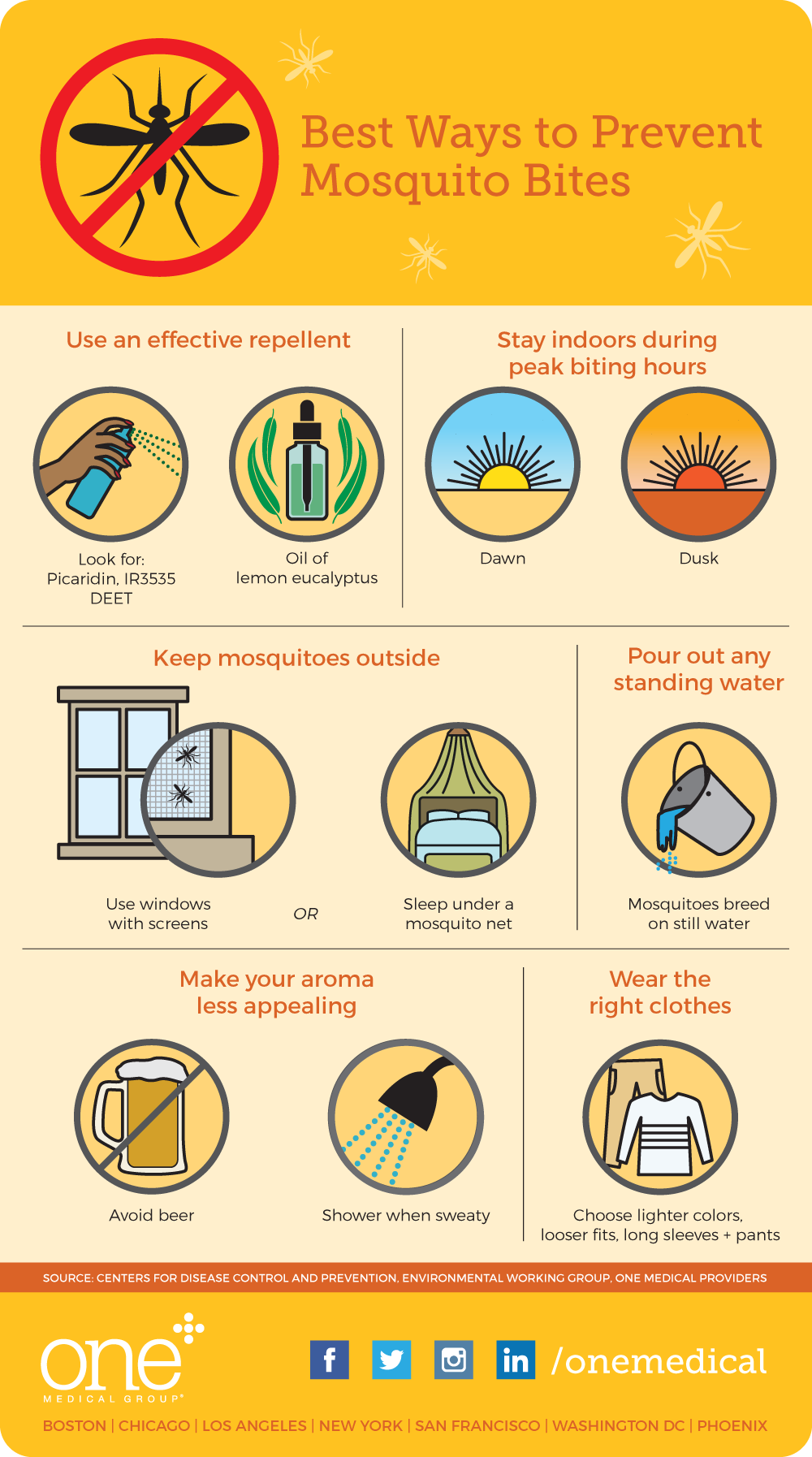
Avon's Skin So Soft gained a reputation as an effective mosquito repellent due to the citronella it contains. But Professor Hart's professional advice is to use repellents containing DEET, a liquid that people would prefer to avoid, citing its unpleasant odour. The imperative is to prevent mosquito bites "...they are really driven to feed on you. People think, 'Oh, we'll get away with it this time', but you probably won't", advises Dr. Hart.
  • DEET
  • Picaridin
  • IR3535
  • Oil of lemon eucalyptus (OLE)
  • Para-menthane-diol (PMD)
  • 2-undecanone
  • Cover up: Wear long-sleeved shirts and long pants.
  • Keep mosquitoes outside: Use air conditioning, or window and door screens. If you are not able to protect yourself from mosquitoes inside your home or hotel, sleep under a mosquito bed net.                                                                               Centers for Disease Control and Prevention, U.S.
The itchiness can be relieved with the use of antihistamines. Alternatively an ice cube placed directly on the bitten area of the skin serves to soothe the affected area. Also recommended by Dr. Hart is "that old faithful, Anthisan cream and just washing the bite with soap and water". Oil-based "bite ointment", comprised of lavender oil, coconut oil and beeswax has been produced by a number of pharmaceutical companies even though Dr. Hart "can't find any studies" testing lavender oil.

Additionally, Britain's National Health Service warns -- tea tree oil, herbal remedies, garlic and yeast extracts or anti-mosquito buzzers are all a waste of time and money and hope. None of them are known to be effective, despite the glowing promises of efficacy.

visual-guide-avoid-mosquito-bites

Labels: , , ,

Thursday, April 11, 2019

Growing Incidence of Deadly Fungal Threat: Candida auris

"Everything was positive -- the walls, the bed, the doors, the curtains, the phones, the sink, the whiteboard, the poles, the pump."
"The mattress, the bed rails, the canister holes, the window shades, the ceiling, everything in the room was positive [for the presence of Canadida auris; fungal germ]."
Dr. Scott Lorin, Mount Sinai Hospital, Brooklyn, New York

"It's an enormous problem [explosion of anti-fungal treatment-resistant fungi]."
"We depend on being able to treat those patients with anti-fungals."
Matthew Fisher, professor of fungal epidemiology, Imperial College London

"It is a creature from the black lagoon [the Canadida auris fungus]. It bubbled up and now it is everywhere."
"[Candida auris is] causing invasive infections globally. It acquires resistance fast, and then it remains resistant. It has the ability to develop pan resistance."
"It’s not acting like a typical candida. This candida is acting much more like a bacteria. We’re not used to yeast acting that way. It’s been challenging to identify, but we’re getting better at doing that."
"To me right now the threatening part is in the sickest of the sick. Those patients who have medically invasive procedures, who are hospitalized. Those are the real at-risk patients."
Dr. Tom Chiller, head, fungal branch, Centers for Disease Control
sick cold tissues
People with weakened immune systems due to illness or age are more likely to be infected with candida auris.
iStock

Antibiotics and antifungals are considered essential tools in combating peoples' infections. But then commercial interests thought it would be a great idea to market antibacterial soaps as a cleanliness and personal hygiene feature and the public in turn responded by buying all manner of soaps that were advertised for their antibiotic content. At the same time veterinarians widely approved of antibiotics for use in farm animals for the prevention of disease, while antifungals have been widely utilized in the prevention of rotting in agricultural plants.

Scientists eventually discovered that this careless wholesale use of fungicides applied to crops has contributed to a surge in drug-resistant fungi that infect humans, just as the epiphany that bacteria became skilled in outwitting anti-bacterials by undergoing swift genetic changes to make them less vulnerable to the effects of the anti-bacterials, eventually morphing into deadly bacteria where infections that became deadly to people with compromised immune systems invaded hospitals.

In the past five years the fungal germ Candida auris has spread swiftly across the globe. Candida auris invaded a neonatal unit in Venezuela, swept through a hospital in Spain, did the same to a British medical centre, forcing it to close its intensive care unit -- and India, Pakistan and South Africa have all suffered the emergence and threats associated with this deadly germ to their most vulnerable populations; the elderly, the very young and the immune-compromised.

New York, New Jersey and Illinois have more recently been invaded with Candida auris to the extent that the federal Centers for Disease Control and Prevention now labels it an "urgent threat", adding it to a list they maintain containing other disturbingly lethal bacterial threats. In May, Mount Sinai Hospital admitted an elderly man for abdominal surgery, when a blood test revealed the C.auris fungus infection. He died at the hospital, but C.auris hung on there.

Subsequent tests revealed that the fungus had invaded his hospital room so completely that special cleaning equipment was required to eradicate it, including the need to rip out part of the ceiling and floor tiles to ensure it was completely destroyed. This is a fungal germ that is impervious to major antifungal medications, revealing it to be an example newly on the scene of one of the world's most intractable health threats concerning health authorities: drug-resistant infections.

That the overuse of antibiotics has led to the effectiveness reduction of drugs by altering bacterial composition to allow them to elude the suppressive effects of antibiotics is well known; the campaign to convince the medical community to prescribe fewer antibiotics -- when to do so is inappropriate or unnecessary -- is decades old. What is new is the growing lethality of fungal infections for which antifungals are increasingly ineffective.

The public has been largely unaware of this newly growing problem, since health authorities want people to have confidence in their hospitals, not fear having to enter them only to contract infections. Hospitals have always been a breeding ground for infections, since they are where people who are ill and who carry infections tend to congregate. Transmission of infections has been fairly well controlled until recent decades, with the emergence of bacteria resistant to eradication.

Yet, once established in a hospital they are increasingly difficult to expunge. And once there are readily spread; carried on hands and equipment within hospitals, present on meat and vegetables fertilized with mature on farms transported by travellers and by exports and imports across international borders as well as patients from nursing homes to hospitals and back again aiding their transfer.

C.auris has turned out to be one of the most dangerous bacteria and fungi that have developed resistance. Over 90 percent of C.auris infections are resistant to one drug and 30 percent are resistant to two or more. "It's pretty much unbeatable and difficult to identify" as "the top" threat among resistant infections is how C.auris, was how it was described by Dr. Lynn Sosa, deputy state epidemiologist  in Connecticut.

According to the Centers for Disease Control, close to fifty percent of patients contracting C.auris will die within 90 days. Despite which researchers have not yet succeeded in discovering where this malignant threat to human health first surfaced. Dr. Johanna Rhodes, an infectious disease expert at Imperial College London recalls a panicked call in 2015 from the Royal Brompton Hospital. The hospital was unable to clear C.auris which had infested the hospital.

"We have no idea where it's coming from. We've never heard of it. It's just spread like wildfire", the hospital informed Dr. Rhodes.

Candida
A non-auris form of Candida from a liver sample is shown under a microscope.
CDC PHIL

Labels: , , , , ,

Wednesday, February 27, 2019

Herd Immunity Through Vaccination

"Did you know your child can get measles by being in a room where a person with measles has been, even up to two hours after that person has left? Measles is very contagious, and it can be serious, especially for young children. Because measles is common in other parts of the world, unvaccinated people can get measles while traveling and bring it into the United States. Anyone who is not protected is at risk, so make sure to stay up to date on your child’s vaccines to minimize the risk of coming into contact with an imported case."
"Doctors recommend that your child get two doses of the MMR shot for best protection. Your child will need one dose at each of the following ages: 12 through 15 months and 4 through 6 years."
"Infants 6 to 11 months old should have one dose of the MMR shot before traveling abroad. Infants vaccinated before 12 months of age should be revaccinated on or after their first birthday with two doses, each dose separated by at least 28 days."
U.S. Centers for Disease Control and Prevention

"Vaccines are more effective than almost any other medicine we use on a daily basis. Most people will be protected by most of the vaccines they receive, and some vaccines in the routine UK schedule are almost 100% effective against some diseases. For example, after two doses of MMR vaccine up to 99% of individuals will be protected from catching measles. However, there will always be a small number of people who fail to make an immune response to a particular vaccine. If their body has not made an immune response, then those people remain vulnerable to the disease."
Oxford Vaccine Group, University of Oxford, Great Britain

"Some people assume that because diseases like polio have disappeared from the United States, it’s no longer necessary to vaccinate children against them. However, polio is still widespread in other parts of the world, and could easily begin re-infecting unprotected individuals if it were re-introduced to the country. Another example is measles, which has become rare in the United States: U.S. outbreaks of the disease have occurred when Americans traveling to countries where measles remains widespread brought the disease back with them. With adequate vaccination rates, most of these types of outbreaks can be prevented. But if vaccination rates drop, “imported” cases of preventable diseases can begin to spread again. In the early 2000s, for example, low vaccination rates in England allowed measles to become endemic once again after earlier vaccination rates had halted its continuous transmission in the country."
The History of Vaccines, College of Physicians of Pennsylvania
Polio Vaccinations
A crowd of people receives inactivated poliovirus vaccine in Protection, Kansas
March of Dimes Foundation
Those who hold fast to the belief that vaccines are dangerous and withhold them from their children are inadvertently turning their children into time bombs in the creation of an explosion of infectious diseases. An unvaccinated 11-year-old returning from a trip to Vietnam where he picked up the measles disease has been the vector for a measles outbreak in Western Canada. As a carrier of disease that child who was unvaccinated and thus vulnerable to picking up the infection became a weak link in an otherwise-protected population.

Aside from those who refuse vaccinations on grounds of believing them to be harmful and the cause of other diseases and health-adverse conditions refuted by science, there does exist an immune-compromised demographic that is so vulnerable they can be harmed to the point of death should they come in contact with an unvaccinated person in a day care setting, on a public bus or in a hospital ward. Infants are not to be vaccinated for the first few months of their lives; avoiding contact with the unvaccinated is critical for them.

People with compromised immune systems because of autoimmune diseases are also vulnerable since vaccines won't work for them, leaving them susceptible to infection. In most Western societies the aim is to ensure that over 90 percent of people have been immunized, creating a barrier to the transmission of infectious diseases and protecting the most vulnerable in society. This is known as "herd immunity". Once the rate of vaccination drops, infants and the immunosuppressed become more likely to come in contact with potential carriers of preventable infections.

Europe is at the present time considered the world centre for vaccine skepticism where in a 2016 survey up to 41 percent responding to a poll professed not to believe that vaccines are safe. The result has been outbreaks of preventable diseases where in the first six months of 2018, 41,000 Europeans were infected with measles, and 37 of them died of the disease. Many among the anti-vaxxers and the undecided believe that a disease such as measles poses no threat, yet one in five cases requires hospitalization and one in every 350 to 1,200 cases will be deadly.

Diphtheria was once the leading cause of childhood death in Canada. And in the United States 500 people annually were killed before the measles vaccine, and 48,000 others were hospitalized. The concern among health professionals is that even a deadly disease like poliomyelitis currently plaguing only small areas of Africa and Central Asia, could be re-introduced into North American schools and hospital wards. A single measles-infected person in 2015 after spending the day at Disneyland was the cause of an outbreak that left 147 people sick -- from Canada to Mexico -- to seven U.S. states.

Of 102 million doses of MMR (measles, mumps, rubella) vaccine administered between 2006 to 2017 in the United States, only 120 resulted in payouts from the National Vaccine Injury Compensation Program. Adverse effects, when they occur from a vaccination rarely go beyond rashes, fever or other mild allergic reactions. It is rare (one in a million) that a vaccine will cause a lifelong disability.

In Canada, there are calls for mandatory vaccination of children; 70 percent of people claim it should be a requirement, to enter the public school system. One estimate has it that it is 5,000 times more potentially dangerous to become infected with measles than to receive the measles vaccine.
Image result for measles vaccinations
WND.com

Labels: , , , , ,

Thursday, January 25, 2018

Surviving Winter: Um ... Good Common Sense? 

"Cold weather is just the straw that breaks the camel's back in terms of having more stress and decreasing your immunity."
"Even if it's just walking for ten minutes [outdoors in winter], that's going to get the circulation going, but it's also for stress relief. When people are stressed, their immune system declines."
"Just be mindful of things."
Dr. Renee Miranda, physician, Center for Integrative Medicine, Ohio State University

"Cold is what we call an exterior pathogenic factor. It's an elemental force that can cause a change in the body."
"The terrain [of environmental conditions impacting illness] is tremendously important, and that's exactly how the Chinese thought about it."
"We say that cold invigorates the yang, which means it calls it to the surface. If you stay in the shower with cold water beating on you, at some point you're going to feel some warmth come to the area as your body compensates for that cold."
Brandon LaGreca, acupuncturist, Oriental medicine practitioner, East Troy, Wisconsin

"It makes sense that there's cross-talk between our immune system and emotions in ways that will protect us."
"If your wei qi [a protective layer of energy covering your body; comparable to modern science's identification of the immune system] is deficient, you feel like you want to curl up, stay at home, and not be around people."
"But if your wei qi is prolific, you want to have a party and invite people over."
Dr. Andrew Miles, Chinese medicine practitioner

Life becomes complicated during winter's cold months when we must adapt ourselves to the changing environment adding stress to our lives. We're concerned about keeping warm, and we suffer from a rise in respiratory infections; cold and viruses appear to go together. The increased incidence of colds that occur in fall and winter is related to the increase in time spent indoors where people are crowded in interiors, windows closed and stale air circulates giving those in that area increased exposure to pathogens, creating illnesses.

Researchers have of late noted that rhinoviruses recognized as the most common cause of colds tend to reproduce more efficiently in cooler temperatures. New evidence appears to support the old theory that cold does indeed play a pivotal role in increasing the likelihood of illness. Cold weakens our defences, according to Dr. Renee Miranda. In a world teeming with microbes having infectious potential, few lead to illness and we owe that fact to our efficient immune system warding off invasion of 'foreign' interlopers.

But when we're sleep deprived, dehydrated, overworked and begin eating junk food to excess as a manifestation of stress, the resources our body requires for immunity becomes depleted, according to Dr. Miranda. This, and then the season changing with the introduction of cold weather adds a new stress, rendering  our situation more amenable to infections gaining ground. Ancient healers considered lifestyle and environmental imbalance as causes of illness.

Cold is considered to be a force of nature that we must take pains to protect our bodies against lest we risk developing health problems, according to traditional Chinese medicine. Louis Pasteur promoted the idea of germ theory in 19th-century medicine, while a contemporary of his felt that infections were caused not by microbes but through environmental conditions allowing microbial invaders to flourish and while scientists gave support to Pasteur's theory as the pathogen being the root of illness becoming reliant on microbe-destroying medicines, new research is evolving greater scientific understanding of how the immune system is affected.

The altered view corresponding more closely with Claude Bernard's (Pasteur's medical science peer) theory that environmental conditions impact illness, aligns with the view held by ancient practitioners of Chinese medicine. Cold represents a formidable force for the promotion of stress and it is at times when we must cope with a cold environment that Chinese physicians discourage cold beverage intake noting that the body expends additional energy to warm these liquid intakes to our internal temperature.

According to ancient Chinese medical texts, instructions are given how to live in a healthful manner during the winter season when nature is cold, dark and still. It is at those times that people are encouraged to align themselves more closely with this yin energy; resting more, and consciously cultivating a gentler, more relaxed and introspective spirit as stress-minimizing reactions to the weather. Winter lifestyle recommendations have the purpose of preserving what Chinese medicine names wei qi; defensive energy.

According to Dr. Andrew Miles, a practitioner of traditional Chinese medicine, if we fail to slow down our pattern of living throughout winter, our wei qi withers to the extent that our reaction must be to obey our instinct to slow down. Dr. Miles made reference to a 2016 study on a recent broadcast of Botanical Biohacking, that found when our immunity is compromised our social behaviour becomes increasingly introverted. A healthy wei qi has the effect of preventing cold's damaging influence from invading the body; conversely weak wei qi leaves us illness-susceptible.


Wearing comfortably appropriate winter gear is supportive of the function of wei qi, insulating your body from the effects of the cold in winter. Of particular attention is the need to ensure neck and abdomen are adequately protected; areas considered to be particularly vulnerable to environmental cold. Wei qi is amenable to replenishment with rest and hot, nourishing foods. On the other hand, some exposure to cold can also effectively support our ability to tolerate cold.

One should familiarize oneself with how much exposure to cold is personally tolerable. If one's wei qi feels robust (you feel energetic), it is a signal that time can be spent outdoors in regulated exposure to the cold, adequately dressed for the occasion. Winter may be a time for rest but there is no excuse, when we're feeling well, to entirely avoid the out-of-doors. Dress for the weather and embark on an outdoor excursion in the cold and the snow, an exhilarating little expedition that can become a daily recreational exercise.

Winter is also a time to diligently wash your hands regularly, to slough off germs that may be picked up unknowingly, particularly when out and about in places where people tend to congregate. While hand-washing plays no part in boosting the immune system, it does aid in minimizing exposure to viruses and bacteria that can cause illness that we are unaware of being exposed to. Finally, Chinese medicine encourages balance in all of life's routines. It is what the Greeks called the Golden Mean, and it is analogous to moderation in all things.


Labels: , , , , ,

Wednesday, January 24, 2018

Not Too Late for Flu Inoculation

"It's tragic whenever there is a death due to influenza in a child. No question about it, it's heartbreaking. Fortunately, it is a rare event."
"But that doesn't mean that deaths due to influenza in otherwise healthy people -- including children -- doesn't happen. They do. They're just rare."
"Most otherwise healthy individuals are going to fully recover from influenza with no intervention."
"We don't want to set off alarm bells. We need to put this into context."
Dr. Danuta Skowronski, influenza expert, B.C. Centre for Disease Control

"We have a tendency to think that because influenza is so common and because almost all of the time you get it, you feel miserable for a few days and then you get better."
"That's our view of influenza and we don't recognize that there are a small number of catastrophically serious cases in children and young, otherwise healthy adults."
Dr. Allison McGeer, director of infection control, Mount Sinai Hospital, Toronto

There are indeed shocking instances when a bout with influenza ends the lives of otherwise healthy and young people. That's what it did for 21-year-old Kyler Baughman of Pennsylvania who died as a result of septic shock related to the flu he was infected with. With flu it's possible, albeit rare, for a secondary bacterial infection to invade the lungs. Occasionally such a lung infection is capable of finding its way into the bloodstream, and that's where sepsis is introduced, when blood so infected can lead to septic shock.

With septic shock, the body's organs shut down, and death ensues. Infectious disease specialists caution that children and adults with pre-existing health conditions who develop the symptoms of flu, inclusive of high fever, chills, body aches, extreme fatigue, cough and sore throat, should seek out immediate medical attention. Treatment with an antiviral medication reduces the risk of complications. Flu can also exacerbate chronic underlying medical conditions such as asthma and cystic fibrosis both in children and adults.

Chronic obstructive pulmonary disease (COPD) and congestive heart failure in older adults produce a more vulnerable target for the flu virus to wreak its ill effects. Pneumonia rates among the most common complications arising from infection, brought on with one of the influenza viruses in circulation this season: A/H3N2 and B/Yamagata are the dominant strains of influenza in this 2017/18 flu season.
A nurse displays a flu vaccine at a free medical and dental health clinic in Los Angeles, California, U.S., April 27, 2016.
Making vaccines isn't always a straightforward process. (Reuters/Lucy Nicholson)

In the United States, thirty pediatric deaths have been recorded from influenza for this season. A ten-year-old boy in Connecticut developed pneumonia and sepsis in the days following his flu infection. His mother described the boy, Nico Mallozzi, as healthy and strong "as an ox", but that condition failed to protect him from death caused by the flu, just as being highly fit failed to protect aspiring personal trainer Kyler Baughman in Pennsylvania.
Nico Mallozzi.
Nico Mallozzi. Photo courtesy of Mimma Mallozzi

As of January 13, when the latest seasonal statistics became available, fewer than five flu-related pediatric deaths were reported in Canada (bearing in mind that Canada has one-tenth the population of he United States), yet 303 children under the age of 17 had been admitted to hospital in Canada, with 48 of them sufficiently ill with influenza that they were admitted to the ICU, according to the Public Health Agency of Canada, on its FluWatch website.

Even though the vaccine now in circulation -- and widely used to inoculate those who respond to public health agencies' urgent appeals to the public to protect themselves -- happens to have a lower-than-expected efficacy given the flu viruses's confounding ability to transform itself into various strains and combinations of strains, making the vaccine formula as much informed guesswork as the occasion permits, health authorities insist it can still aid in reducing the severity of symptoms in those who may contract the flu.

Labels: , , , ,

 
()() Follow @rheytah Tweet