Ruminations

Blog dedicated primarily to randomly selected news items; comments reflecting personal perceptions

Tuesday, February 10, 2026

A Guatemalan Tragedy of Unspeakable Proportions

"All of the villagers in the well were ultimately killed ... I find those killings were done under the watch and orders of Mr. Sosa."
"When the well was being covered up, screams and cries of victims could still be heard. They were left to die a horrible death."
"Members of the patrol unit laughed, as if nothing had happened."
"Mr. Sosa denies that he was present at Las Dos Erres when the massacre took place; however, I place no credence in anything he says."
"Indeed, I consider Mr. Sosa to be a consummate liar."
Federal Court Justice Roger Lafreniere  
https://nsarchive2.gwu.edu/NSAEBB/NSAEBB316/photo1_400.jpg
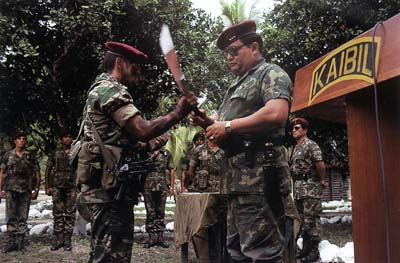
Graduation ceremony at the Kaibil, counterinsurgency unit 
"On January 18, 2011, Jorge Vinicio Sosa Orantes was arrested in Alberta, Canada on charges of naturalization fraud in the United States."
"Sosa Orantes, 52, is a former commanding officer of the Guatemalan Special Forces, or Kaibil unit, which brutally murdered more than 250 men, women and children during the 1982 massacre."
"The massacre was part of the Guatemalan military's "scorched earth campaign" and was carried out by the Kaibiles ranger unit. The Kaibiles were specially trained soldiers who became notorious for their use of torture and brutal killing tactics. "
"According to witness testimony, and corroborated through U.S. declassified archives, the Kaibiles entered the town of Dos Erres on the morning of December 6, 1982, and separated the men from women and children. They started torturing the men and raping the women and by the afternoon they had killed almost the entire community, including the children."
"Nearly the entire town was murdered, their bodies thrown into a well and left in nearby fields. The U.S. documents reveal that American officials deliberated over theories of how an entire town could just "disappear," and concluded that the Army was the only force capable of such an organized atrocity. More than 250 people are believed to have died in the massacre."
U.S. National Security Archive 
Harrowing testimony of 'extreme cruelty' perpetrated by unit commanders like Sosa, who ordered the entire village be slaughtered detailed the horror of that fateful day in extinguishing an entire village. The government military force called the Kaibiles had entered the village of Las Dos Erres, in 1982, home to 200 people, searching for weapons said to have been stolen by guerilla forces from the military, and hidden at the village, during the decades-long Guatemalan civil war. No weapons were found, but the order to butcher the entire population of the village commenced over an agonizing period of hours.
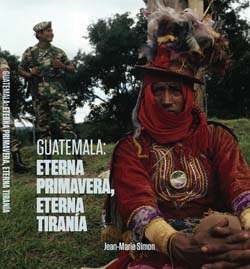
 
https://nsarchive2.gwu.edu/NSAEBB/NSAEBB316/photo3_250.jpg
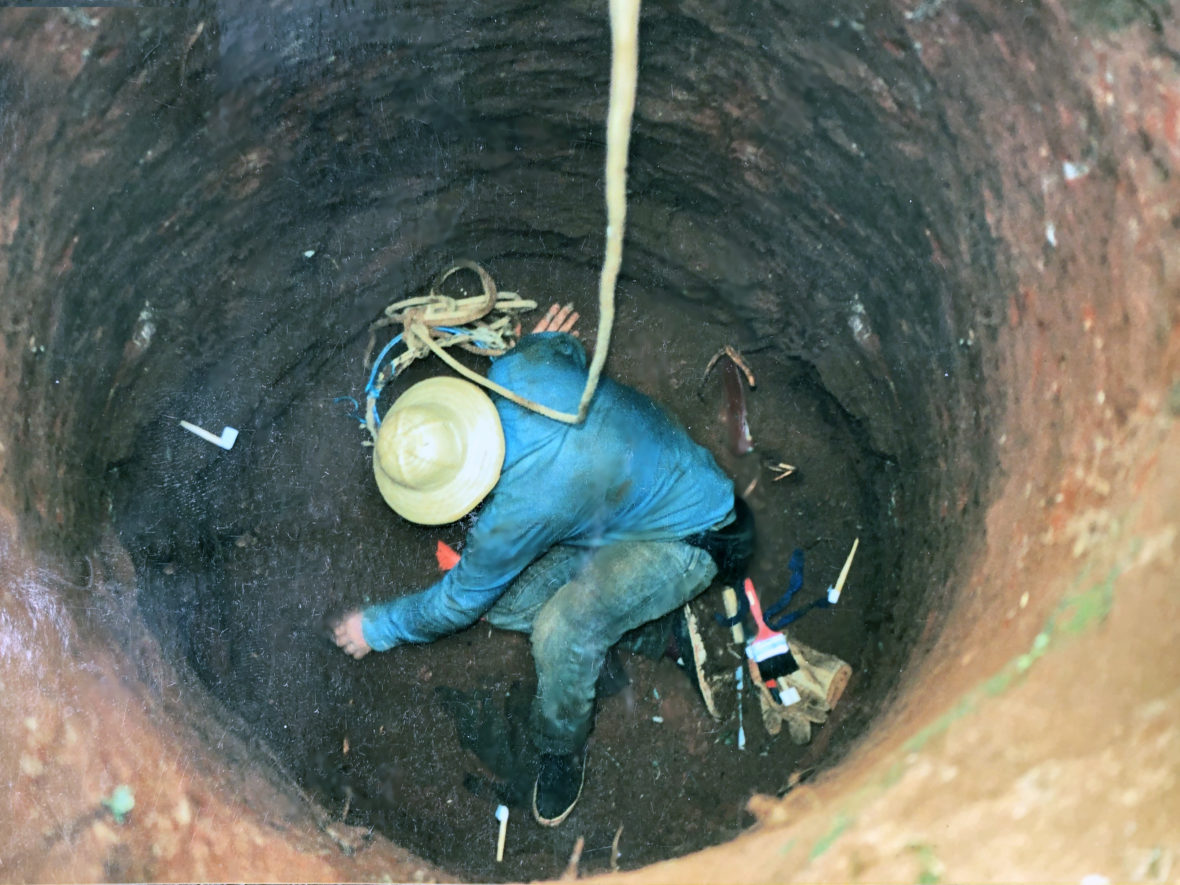
A baby was thrown into a well to drown, children were smashed against trees, and countless other members of the community were flung into that well, some alive, many dead, their skulls crushed or shot. Women were raped and murdered in front of their children. Sosa, in charge, shot a man and threw a grenade into the well to still the wailing cries of people in their death throes. Ten years after the atrocity investigators exhuming the remains found 'a minimum' of 162 had died in the well; the first victims lying at the bottom were children under age 12, and women.
 
Jorge Vinicio Sosa Orantes was fourth in command of the unit at the time, known to have personally committed murder at the time, and who had also ordered the slaughter of civilians. Testimony from one of Sosa's former military colleagues spoke of his having taught his special military unit techniques of torture on live victims at a zone set aside for practise; the "zombie area".
 
He has been living in Canada for 34 years. Guatemalan authorities, after a prolonged investigation, had issued an arrest warrant against the man in 2000, long after he had left the country. Sosa had moved to the United States where he applied for asylum, in 1985. His claim was denied and he turned to Canada in 1987, applying for asylum at the San Francisco-based Canadian consulate. He withheld the vital information from immigration officials that he had served in the Guatemalan military. Granted refugee status, he achieved citizenship in Canada in 1992.
 
Sosa married an American citizen, then applied and received U.S. citizenship in 1997. U.S. officials became aware of his subterfuge of withholding critical background information in his refugee claims --leading to his extradition from Canada to the U.S. where he was sentenced to ten years in an American prison for immigration fraud, in 2014. Canadian immigration officials three years later initiated a legal process asking a court to revoke Sosa's citizenship, declaring him inadmissible to Canada. 
 
https://newsinteractives.cbc.ca/craft-assets/images/_large/School-children-of-Dos-Erres-group-photo-courtesy-Sara-Romero.jpg
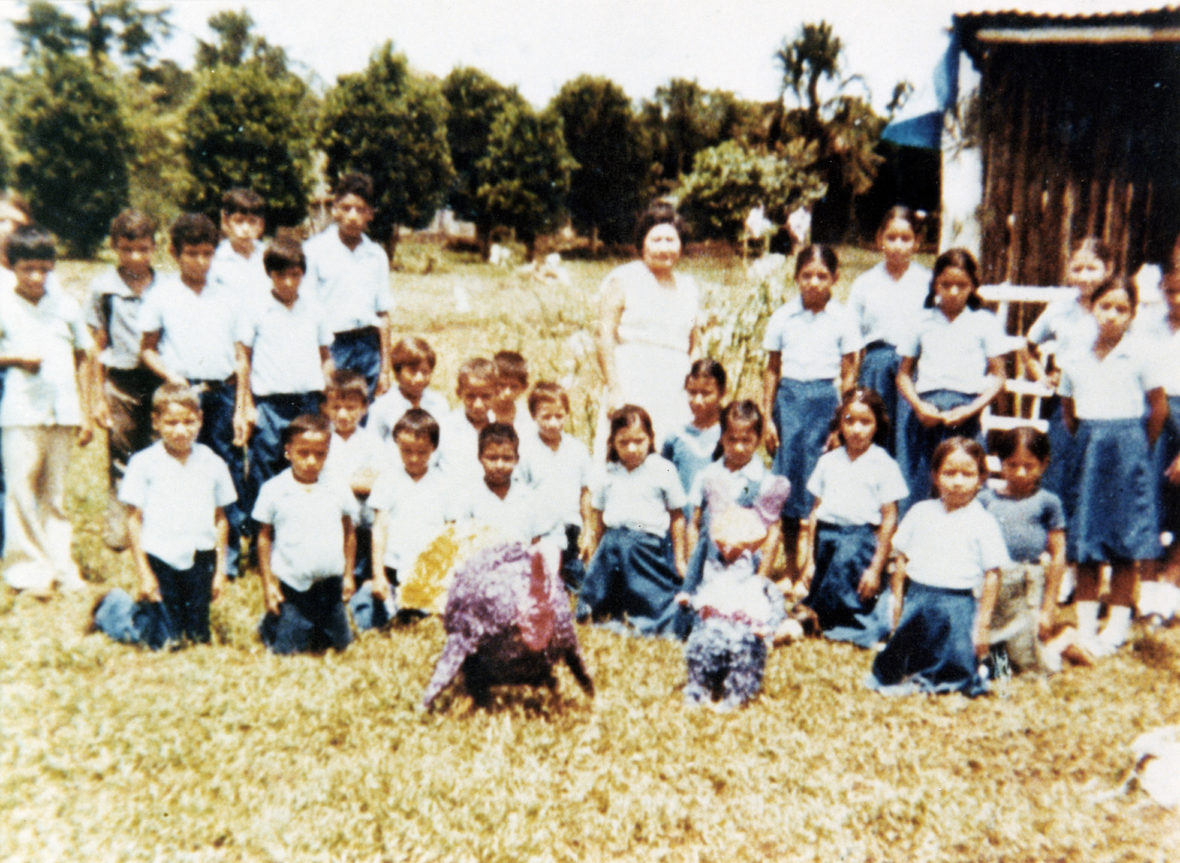
Schoolchildren gather in Dos Erres for an Independence Day celebration on Sept. 15, 1982. (Submitted by Sara Romero)
 
Finally, Canadian citizenship was revoked on the basis of Jorge Vinicio Sosa Orantes having committed unspeakable crimes in Guatemala forty years ago. Federal Court Justice Roger Lafreniere revoked that 34-year-old citizenship, declaring the man inadmissible to the country. Sosa was ordered to pay close to $250,000 to cover costs for the trial expended by the federal government. Costs related to arranging testimony of one of two massacre survivors, of two of Sosa's former military colleagues present at the bloodbath, and eight expert witnesses including Canadian immigration officials.
 
https://newsinteractives.cbc.ca/craft-assets/images/_large/IMG_0159-well-inside-courtesy-FAMDEGUA.jpg
The well in Dos Erres was examined during a dig by forensic anthropologists that was organized by Aura Elana Farfan. (Submitted by FAMDEGUA)
 

Labels: , , , , ,

Wednesday, September 03, 2025

Sudan's Darfur Deadly Landslide

"Initial information indicates the death of all village residents, estimated at more than 1,000 individuals, with only one survivor."
"[The landslide is] massive and devastating." 
"This is beyond our capacity. Masses of mud fell onto the village. Our humanitarian teams and local residents are trying to retrieve the bodies, but the scale of the disaster is far greater than the resources available to us."
Abdulwahid al-Nur, leader, Sudan Liberation Movement/Army (SLM) faction 
 
"We do not have helicopters, everything goes in vehicles on very bumpy roads."
"It takes time and it is the rainy season — sometimes we have to wait hours, maybe a day or two to cross a valley... bringing in trucks with commodities will be a challenge." 
Antoine Gérard, the UN's deputy humanitarian co-ordinator for Sudan  
https://people.com/thmb/HRrQjMOdrp2RVJBlNNK4_-2xkzs=/750x0/filters:no_upscale():max_bytes(150000):strip_icc():focal(746x440:748x442)/sudan-landslide-090225-1-8dc57be4f4d8473a8a0d909d33990d53.jpg
Aftermath of earthquake in Western Sudan  Credit: Sudan Liberation Movement/Army/AFP via Getty
 
Sudan has been in the throes of a deadly civil war for a number of years. The conflict sees the Sudanese military warring with the rival Rapid Support Forces (RSF), once an ally of the government's military. During the Darfur conflict years earlier, government forces and the-then Arab Muslim Janjaweed horsemen raided black Darfurian farming villages, used helicopter gunships on the villagers, driving them from their homes and into nearby forests. Thousands were killed; an estimated 150,000 Darfurians lost their lives in the brutal war which displaced 12 million people. The Janjaweed represented herders, the Darfurians pastoralist farmers.
 
On Tuesday, more misfortune for Sudan's Darfur region when a landslide devastated an entire community, burying a town that held 1,000 people The village of Tarasin in the Jebel Marra range, under control of the rebel Sudan Liberation Movement Army saw a deluge of heavy rain triggering the disaster.
 
Sudan was urged by the African Union to "silence the guns" and in the process permit aid delivery to the deadly landslide's victims. "In these painful circumstances the chairperson of the Commission ... calls on all Sudanese stakeholders to silence the guns and unite in facilitating the swift and effective delivery of emergency humanitarian assistance to those in need", the bloc stated. 
 
https://people.com/thmb/87pkQNUlV0hmq-NirSoRjEFJ3A0=/4000x0/filters:no_upscale():max_bytes(150000):strip_icc():focal(749x0:751x2)/sudan-landslide-090225-2-4989115658c64ddd9fba7760ff560185.jpg
Debris-covered ground in the wake of the deadly landslide. Credit: Sudan Liberation Movement/Army/AFP via Getty
 
 On its website, the SLM published images showing huge sections of a mountainside collapsed, the village buried under thick muck and uprooted trees. Footage revealed people standing on jagged rocks, searching for people buried under the mud. Parts of the Jebel Marra range is controlled by the SLM where the conflict has not penetrated, while hundreds of thousands of people fled there, to escape the civil war violence into SLM-held territory.
 
The geological area is that of a rugged volcanic range that stretches roughly 150 kilometres south-west of North Darfur's state capital El-Fasher, itself under fire, besieged for more than a year, as the RSF strains to capture it. An area particularly susceptible to landslides, in particular during the August rainy season, peaking at this time. 
 
Both factions in the power struggle, between army chief Abdel Fattah al-Burhan where the internationally recognized government is based in Port Sudan, and his former deputy, RSF commander Mohamed Hamdan Dagio, although rivals, have responded to the disaster that struck Sunday. Burhan's Transitional Sovereignty Council pledged to mobilize all available resources in support of those affected in the region by the landslide.  
"Initial information indicates the death of all the villagers, estimated at more than a thousand people, and only one person survived."
"[The entire area was] completely leveled to the ground [in the landslide]."
"We therefore appeal to the United Nations, regional and international organizations, and the living human conscience to help us recover the bodies of the dead from under the soil, whose number is estimated at more than a thousand people, men, women and children."
SLM statement https://people.com/thmb/ol4wJzX5CBrUVjdZzbumSy3iNtI=/4000x0/filters:no_upscale():max_bytes(150000):strip_icc():focal(749x0:751x2)/sudan-landslide-090225-3-14e9b98c507e4eba842ee401a4e8c990.jpg 

Labels: , , , , , ,

Sunday, August 17, 2025

Hezbollah Intransigence

"[The government's decision to remove] the defensive weapons of the resistance, its people and Lebanon during an aggression [facilitates the killing of] resistance fighters and their families and evict them from their land and homes."
"[The government should have instead] spread its authority and evicted Israel from Lebanon."
"The government is serving the Israeli project."
"The resistance will not hand over its weapons as the aggression continues and occupation remains." 
"The party will fight a [historic)]battle if necessary in the face of this Israeli-US project, whatever the cost."
"There will be no life in Lebanon if the government tries to confront the party."
"[The government in Beirut] bears full responsibility for any internal explosion and any destruction of Lebanon." 
Naim Kassem, leader, Hezbollah 
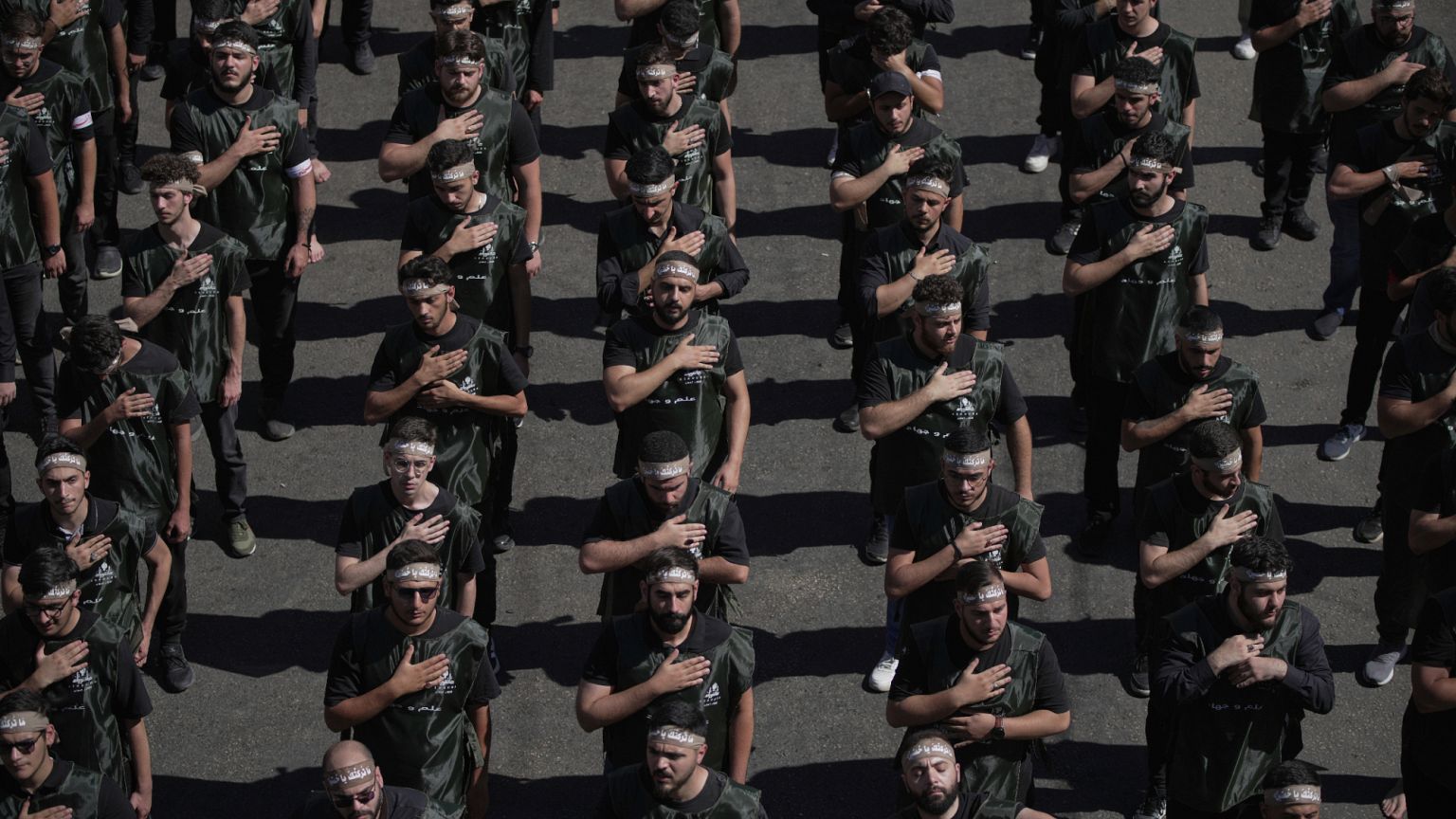
FILE: Hezbollah supporters beat their chests as they march in Beirut, 6 July 2025
Hezbollah troops pledging fealty   Photo: AP
 
Lebanon's hostile factions continue to rent the country asunder, a country once peaceful and the centerpiece of the Middle East's manifold tribal, clan and sectarian heritage communities living tolerably amongst one another in their mostly separate geographic internal Lebanon locations, with a degree of respect for one another. That tolerance was not only social and cultural but political as well, with the government comprised at its elite levels of representatives of the majority groups; Christian, Sunni Muslim and Shia Muslim.
 
Within society itself, the Maronite Christians, Druze and Sunni Muslims dominated, the Shia Muslims relegated to a lower social tier mostly living in poverty and accorded less respect than its sectarian peers. In the 1980s Iran's al Quds division of the Islamic Revolutionary Guard Corps as well as the Syrian Alawite government of Bashar al Assad were tweaking Lebanon's social and political system. The IRGC persuaded Lebanese Shiites that the revolutionary Islam they promoted would help them prosper.
 
Under the tutelage of the IRGC, Lebanon's Shiites received instructions as a non-state military group with an emphasis on jihad. Trained and supplied with weaponry they became a formidable guerrilla group for whom suicide bombing and threats against the presence of French and U.S. peacekeeping troops in Lebanon became a rehearsal for their budding role in the Middle East as a force to be reckoned with, squaring off against Israel during its invasion of Lebanon to oust the Palestine Liberation Organization from its cross-border raids into Israel.
 
Lebanon was transformed into a dysfunctional, violence-addicted state, with its multifarious tribal/sectarian groups at threateningly hostile odds against one another. As the civil war disrupted civic life and Lebanese factions bombed and strafed each other and Western attempts at intervention were attempted, kidnapping and hostage-taking for ransom purposes became world news. As Lebanon eventually attempted to restore itself to a vestige of its peaceful past, efforts at disarming Hezbollah failed and it remained an armed adversary even as it became part of the government in taking political office.
 
Its goal has primarily been the destruction of Israel, as a client of the Islamic Republic. With Hezbollah in Israel's north and Hamas in the south, Iran the ultimate threat to Israel's existence, manipulating its terrorist proxies saw all three engaged in the past several years in an ultimately failed effort to attack and destroy Israel. Hezbollah's decision to support the Hamas 7 October 2023 invasion of southern Israel when thousands of terrorists streamed from Gaza into Israel to slaughter Israeli civilians, and Israel responded by invading Gaza to rout and destroy Hamas, Hezbollah began sending rockets from Lebanon into Israel.
 
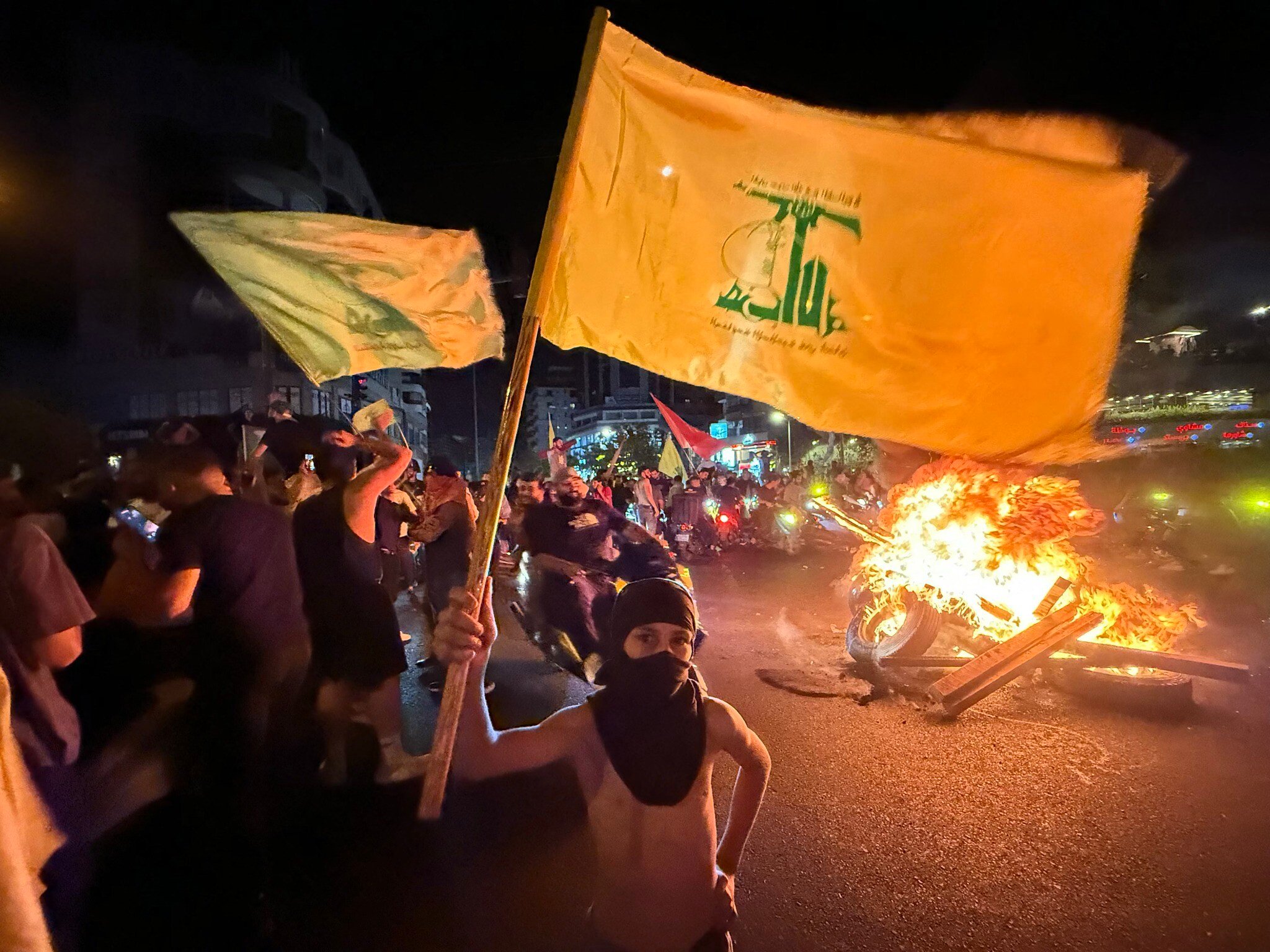
Supporters of Lebanon’s Hezbollah terror group block the streets with burning tires as they rally in cars and motorbikes to protest the government’s endorsement of a plan to disarm it, in Beirut’s southern suburbs, August 8, 2025. (Ibrahim AMRO/AFP)
 
Lebanon has been in crisis mode for decades; coping with the sinister manipulation of Syria and Iran, along with Hezbollah. It has been facing, along with social disruptions, a dire economic situation; it has been limping along, a bare skeleton of survival of its former nationhood as a tolerant society. Latterly the national government has made a decision that Hezbollah must agree to their demand to surrender their weapons and rockets stockpiles, in favour of a tentative agreement with Israel, with the potential of a peace agreement brought into effect by the two nations.
 
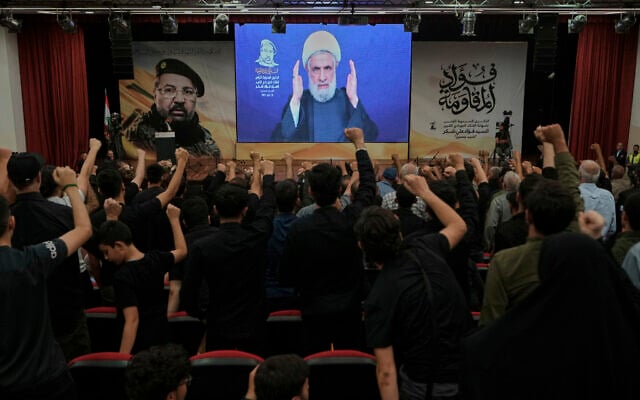
The internal crisis is threatening once again to become an internal conflict, another destructive civil war. Hezbollah, aligned with the Shia Amal movement, one of the main armed groups in the 1975-1990 civil war, represented by Parliament Speaker Nabih Berri, threaten together to contest the government's decision. Protesters, warned Kassem, "will be all over Lebanon and head to the U.S. embassy". The groups within Lebanon that want a return to good government and peace between factions, are opposed to Hezbollah retaining its weapons, insisting only the state should carry arms.
 
Last week the Lebanon government voted for a U.S.-backed plan to disarm Hezbollah by year's end, and a ceasefire with Israel be implemented. International pressure applied on Lebanon to force Hezbollah to surrender its arms following the 14-month conflict with Israel until a U.S.[brokered ceasefire in November is behind the government's move and Hezbollah's resistance. 
 
Hezbollah insists it would only be prepared to discuss a national defence strategy relating to its weapons possession on the condition that Israel withdraw from Lebanon and halts its airstrikes that have killed Hezbollah members since the  end of the conflict. Hezbollah's political leadership and much of its military, along with many of its weapons caches were destroyed in its war with Israel. Just as it has been defanged, so too has its sponsor, Tehran, been weakened militarily. 
 
People raise their fists as Hezbollah leader Naim Qassem delivers a televised speech in Dahiyeh, a southern suburb of Beirut, Lebanon, July 30, 2025. (AP Photo/Bilal Hussein)


Labels: , , , , ,

Wednesday, November 01, 2017

The Good Stock

"We have to grow considerably different things in considerably different ways."
"Certainly for our prime crops, like wheat, the wild relatives are thought to be really important because of the genes that can be crossed back into the wheat lines we have in order to build resilience and adaptation to climate change."
Tim Benton, food security expert, University of Leeds, Britain
REUTERS/Khaled al-Hariri

With the rapid onset of climate change, the world of agriculture is challenged to make the most of arable land to produce enough food stocks to feed the globe, in recognition of the potential of a diminishing reliability on accustomed weather patterns, making some places too cold to grow seasonal crops and other places too arid and hot. Seed banks famously serve as vital repositories of biodiversity, all the more so that original and heritage seeds have been industrially altered genetically for traits that make them desirable to agribusiness.

Lost in the process of this industrialization leading to genetic engineering is biodiversity. Which translates to crops with little variance becoming more susceptible to moulds and bacteria and pests specific to single-type crops. Who might have imagined that a Syrian seed hunter would have been responsible in large part for collecting a vast inventory of primal-era seeds from the geographic area biblically known as the 'fertile crescent'? Stationed in that ancient citadel of human habitation, Aleppo, more latterly under violent siege by the government of Syria's military.

Ali Shehadeh made it his life's work to collect all manner of wild seed grains to achieve a herbarium reflecting seeds foraged from the Fertile Crescent region where agriculture is broadly known to have originally arisen. It is his mission to hunt the genes in the seeds planted in our modern era in their original natural packaging as "wild relatives" from bygone eras, to safeguard those original seeds in the hope they will be sufficiently hardy to feed future generations as more geographic areas of the world become inhospitable to agriculture.
Staff at the International Centre for Agricultural Research in the Dry Areas in Torbol, Lebanon, sort through seed specimens delivered from the global seed vault in Svalbard, Norway.
Staff at the International Centre for Agricultural Research in the Dry Areas in Torbol, Lebanon, sort through seed specimens delivered from the global seed vault in Svalbard, Norway. Photograph: Guardian

His organization, the International Center for Agricultural Research in the Dry Areas (ICARDA), struggles to fulfill its function in view of the viral trifecta of food, weather and war. At one time the government of Syria supported ICARDA, though it failed to fund the enterprise based in Aleppo; interested in the research that promised to ensure Syria was self-sufficient in the production of wheat. However, the experiment drained underground water reservoirs and when a drought occurred, the protests that morphed into armed revolt of the citizenry against the Syrian government was launched.

Civil conflict erupted in 2011, and fighting threatened ICARDA's Aleppo headquarters by 2014. Its nearby field station became a casualty of civil war, its trucks stolen, generators as well, and most of the experimental Awassi sheep bred for increased milk production were stolen and used for meat. Along with the other scientists, Mr. Shehadeh managed to save a few sheep then saw no option but to abandon their field station, becoming refugees in exile, leaving behind their 144,000 seed bank varieties of the region's main crops.

Back in 2008 ICARDA had sent seed samples to the Svalbard Global Seed Vault in Norway. Then, later, ICARDA scientists set up a seed bank in Morocco and another one in the Bekaa Valley in Lebanon. "We are doing our best to recreate everything we had in Aleppo", explained Mr. Shedadeh of the headquarters adjacent the ancient city where the region's collection of wheat, barley, lentils, fava beans and other seeds have been stored.
Lebanon’s Bekaa valley offers a wealth of ecosystems — and now hosts a growing ICARDA seed bank.  Hussein Malla/AP

The region is seeing the occurrence of more droughts, more intensely and more frequently. In hot, dry countries of the Middle East, temperatures are becoming hotter for more sustained periods of time. Precisely what it is that motivates Mr. Shehadeh's obsession with the wild relatives of the seeds most planted by today's farmers. But rather than the genetically modified seeds, Mr. Shehadeh envisions the characteristics of their wild ancestors, better adapted to such harsh climates. "They're the good stock", in his opinion.

Labels: , , , ,

Saturday, August 12, 2017

Analyzing Forensic Clues for Burial Sites

"It's a way of taking in a lot of data, organizing it and analyzing it for spatial patterns."
"If nothing else, it's going to help people search more efficiently for missing persons."
"It's a huge problem [searching for dead remains lost in countries in conflict]. It's bigger than we realize."
"Ideally, you'd like to say, this is a very kind of human behaviour [how and where soldiers, terrorists or secret police dispose of the dead] and we see a lot of consistencies. That way you can take a lot of information from other countries and make reliable predictions about a country you've not been to."
Derek Congram, forensic anthropologist, researcher, University of Toronto
Canadian forensic anthropologist Derek Congram tests soil during work for the U.S. Defence Department locating remains of missing soldiers in Vietnam.          Handout

An ordinarily little-thought-of problem resulting from civil wars, attempts at genocide, tyrannical governments, is that all too often tens of thousands of people disappear never to be seen again, victims whose bodies have been concealed, shut away from public discovery as a way of shielding their murderers from justice. Derek Congram, a forensics anthropologist based in Toronto, has developed a computer system he hopes will aid the search for victims of war and others.

Families want to know the ultimate disposal of their loved ones. Governments that succeeded those who destroyed peoples' lives look for accountability demanded by their populations. Justice can often not be seen to be served when no proof exists that people have been slaughtered, their bodies buried in mass graves, hidden and awaiting gruesome discovery, from Spain to Rwanda to the Congo, let alone Syria and Iraq.

This man's work leading to the production of his computer-based program that seeks the geographic locations of bodies, was published recently in the journal Forensic Science International, and the attention it attracted led a large U.S. Defense Department program to consult with him in the effort to discover the whereabouts of still-missing GIs from foreign war zones.

Mr. Congram is on the cusp of leaving his work in research at the University of Toronto to take up work as a forensic coordinator for the Red Cross in South America where political violence is not unknown. Colombia awaits his attention as it recovers from a civil war where thousands of civilians were killed. In Spain the search continues for the estimated 115,000 people murdered after being taken from their homes half a century earlier.

In the United States the search for its missing soldiers rings up a price tag of $200-million annually. Developing countries where conflict or genocide has occurred represents a vast field of unmarked mass graves crying out for discovery and identification. A UN investigation in Bosnia and Rwanda went forward to solve the location of those who died in mass slaughters.

The Saddam Hussein Iraq years produced countless unsolved murders, among the 20 countries where Mr. Congram has been involved in a U.S. Justice Department project in the past. His new search system is set to analyze known data surrounding the disappeared, to develop an algorithm to predict their possible locations with inputs when possible, including information about such bodies already previously recovered.

Distance of the burial site from where people went missing, and the area under control by the killers are all added to the data base resulting in a map that identifies possible "hot zones" where such remains might be revealed to be buried. Five known civil-war burial locations in Spain became part of a test of the new program. Three of the locations were proven to be within the hot zones identified by the software, with the remaining two located a short distance off.

His work, which comprised his doctoral thesis, led to three years working with the U.S. Defense team to discover the whereabouts of soldiers' graves who were killed in Southeast Asia and Korea in the hopes that the mapping could make the search more efficient when and if they gain access to territory as yet closed off to entry.

Labels: , , , ,

 
()() Follow @rheytah Tweet