Vaccinating Against Alzheimer's?
 |
"Our study suggests that regular use of a very accessible and relatively cheap intervention -- the flu shot -- may significantly reduce risk of Alzheimer's dementia.""More research is needed to explore the biological mechanism for this effect -- why and how it works -- which is important as we explore effective preventive therapies for Alzheimer's.""There has been a concern in the medical community that many sources of inflammation, such as urinary tract infections, worsen the course of patients with Alzheimer's disease.""Hence, we have been worried that vaccinations, a form of inflammation, could also worsen the course of AD.""We were very surprised, because of the concern noted above about the potential to increase AD, when our statistical colleagues told us that the flu vaccination was one of the 'medications' that is so strongly associated with a lower Alzheimer's incidence."Albert Amran, researcher, McGovern Medical School, University of Texas Health Science Centre, Houston
"[The link between a flu shot and reduced dementia risk is] intriguing.""This study indicates there is a benefit of having one flu vaccination on dementia risk.""It is difficult to speculate on the reasons behind this link, and understanding why a seasonal flu vaccine is linked to reduced dementia risk is an important avenue for further research.""This research does not mean that Alzheimer's disease is caused by the common flu and there are potential non-biological explanations for this association, such as people who get the flu vaccine being more likely to take other steps to protect their health."Dr.Rosa Sancho, Alzheimer's Research UK"This is an encouraging finding that builds upon prior evidence that vaccination against common infections diseases -- such as the flu -- is associated with a reduced risk for Alzheimer's and a delay in disease onset.""Regular use of the flu vaccine, especially starting at an early age, may help prevent viral infections that could cause cascading effects on the immune system and inflammatory pathways.""These viral infections may trigger Alzheimer's related cognitive decline."Dr. Richard Isaacson, neurologist, founder, Alzheimer's Prevention Clinic, New York-Presbyterian and Weill Cornell Medical Center
"We do need more research to understand what that connection is.""Is it direct, the vaccine to disease? Or is it protective, as a part of the risk reduction strategies that we have, like lower your BMI [body mass index], watch your sugar intake, keep an eye on your cholesterol and high blood pressure, exercise, get vaccinated.""It's one of those sort of health tips that we need to make sure that our public knows about.""We've always known that vaccines are very important to our overall health. And maybe they even contribute to protecting our memory, our cognition, our brain."Maria Carrillo, Alzheimer's Association chief science officer
 |
Several lines of evidence now suggest that two common vaccines against respiratory illnesses can help protect against Alzheimer's, too. How much brain protection they offer will require more intensive study to quantify, scientists say. Themba Hadebe/AP |
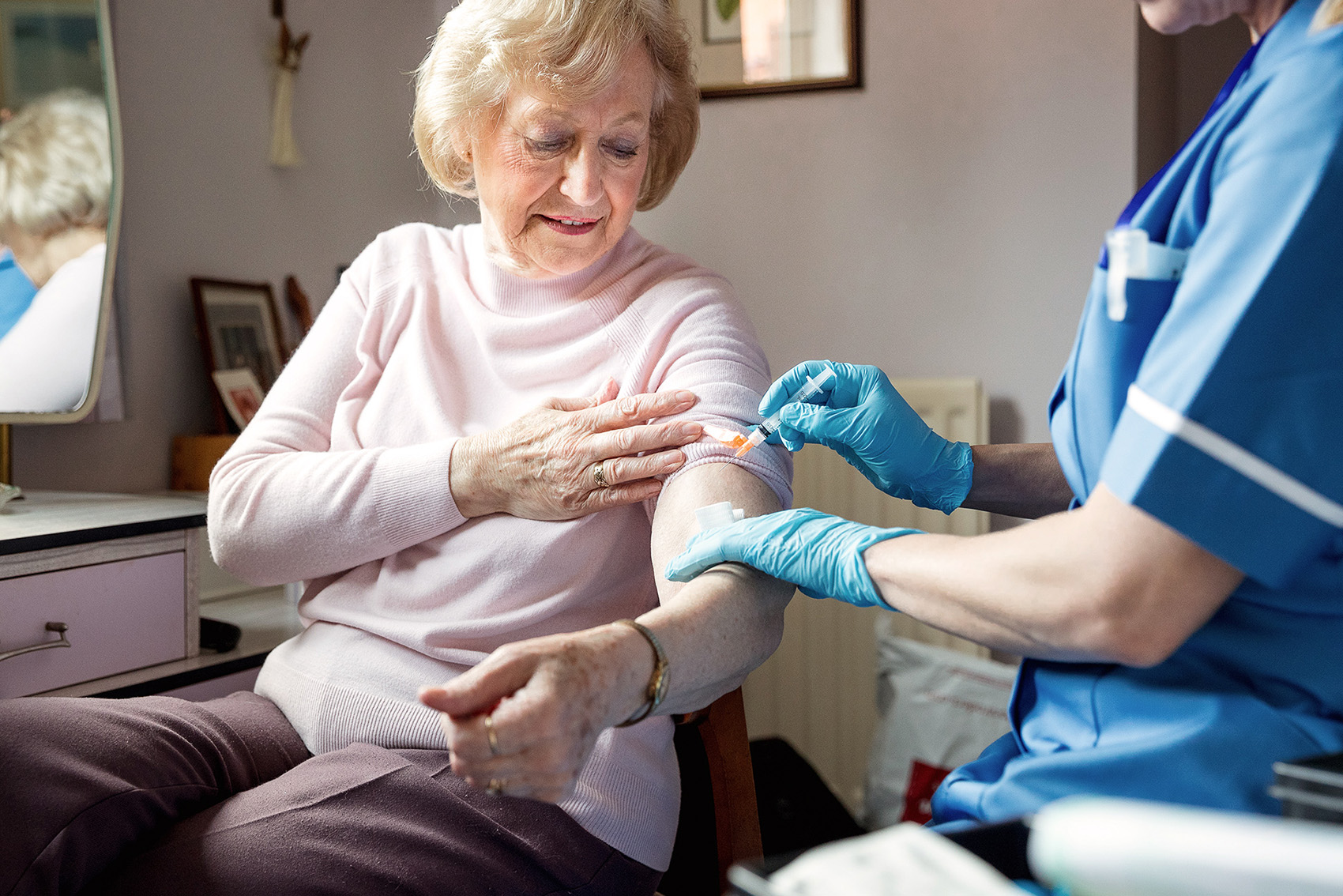
According to research presented at the Alzheimer's Association international conference, an inoculation against flu has the potential to reduce dementia risk by close to a fifth. This, according to a study suggesting that vaccinating people while they're in their relatively younger years could prove to be beneficial in this regard.
The conference also heard that infections in dementia patients could increase death risk seven-fold. While the University of Texas study suggests flu vaccination could reduce dementia development by 17 percent. Bad news/good news.
The protective association between flu vaccine and the risk of Alzheimer's came out of a study of 9,000 people. The reduced risk of Alzheimer's associated with the flu vaccine was greatest in the instances of those receiving their first vaccine at a younger age as compared to those whose first documented flu shot was at age 70. Those of age 60 saw greater benefit accruing to them than their counterparts a decade older.
Research by the University of Copenhagen involving 1.5 million people suggests that people suffering from dementia have a 6.5-fold risk of dying after contracting any infection. Over half the the British population is scheduled to be offered inoculations free of charge in an effort to ensure the National Health Service will be able to cope should there be a second coronavirus wave.
Bearing in mind that complications related to COVID risk increase with age.
The Alzheimer's association pointed out that people with dementia had been infected in great numbers by COVID-19. The irony in the presentation of these findings is that it had generally been assumed previously that vaccination was implicated in Alzheimer's onset.
 |
"We [tried] to make sure that both groups [in the controlled study] had an equal amount of, say,
smoking status, obesity, diabetes, cardiovascular disease [known risk factors for Alzheimer's]", pointed out Dr.Amran. Factors such as education and income, along with indicators like the number of
prescriptions a person had been prescribed, in an effort to ensure that people who received
vaccines weren't just healthier overall were also investigated. As it turned out, they weren't.
Labels: Alzheimer's, Bioscience, Flu Shot, Research
posted by Pieface @ 7:02 PM
0 comments


