Ruminations

Blog dedicated primarily to randomly selected news items; comments reflecting personal perceptions

Thursday, September 23, 2021

Wash n'Wear

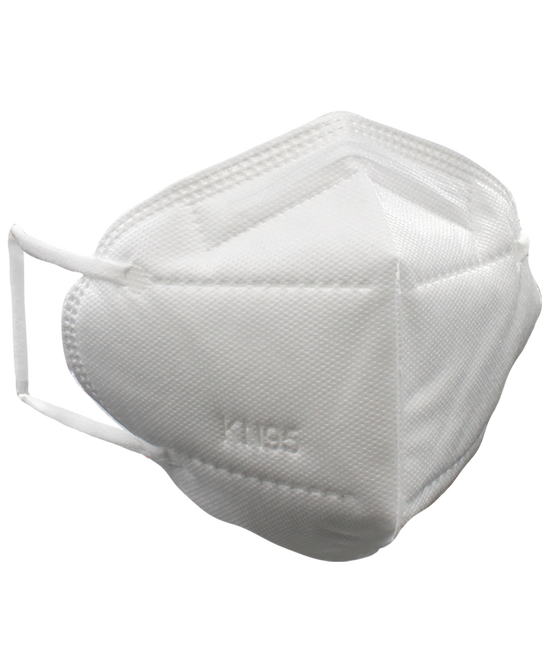
KN95 Mask (20 ct.)
"It's good news for sustainability. That cotton mask that you have been washing, drying and reusing? It's probably still fine -- don't throw it away."
"We were really bothered during the beginning of the pandemic, when going out on a hike or going downtown, and seeing all these disposable masks littering the environment." 
"We're assuming there are no gaps between the mask material and the person's face."
"I think the best mask might be the one that you're actually going to wear. And that is going to fit snugly against your face without being too uncomfortable."
Marina Vance, assistant professor, Paul M.Rady Department of Mechanical Engineering, University of Colorado Boulder
Published in the journal Aerosol and Air Quality Research, a new study concludes that cotton masks -- admittedly not as effective as surgical masks in filtering out viral particles -- still are useful for the task at hand, and certainly are more environmentally friendly. After an experimental 'laboratory-year' of washing and drying cloth squares in lieu of cloth masks, it was established that this care doesn't diminish their effectiveness.

Since the beginning of the global pandemic an estimated 7,200 tons of medical waste is generated daily, the majority comprised of disposable marks. Presumably in America alone. As a faculty member of the university's environmental engineering program, Dr.Vance leaped at the opportunity to collaborate with scientists from the National Renewable Energy Laboratory, testing the longevity of cloth masks.

A series of double-layered cotton squares created for the purpose of testing durability of cloth masks were washed and dried up to 52 times each, representing the equivalent of doing so weekly for the space of a year -- and then analyzed for effectiveness every seven cycles. The masks were subjected to real-world situations in the absence of being tested with human subjects, through being mounted on the end of a steel funnel exposed to a controlled flow of particles circulating in the air, including altered humidity and temperature changes simulating the breathing effect.

After that number of washings, the cotton fibres were seen to have degraded, reflecting repeated washing cycles, but the wear and tear was not found to significantly diminish filtration capacity of the fabric. One change that was detected was a resistance increase in inhalation properties as the masks became more difficult to breathe through, over the course of the study.

The capacity of the masks to filtrate properly rested on their fit, leading to their guarding against airborne particles remaining effective over time. A poor-fitting mask was found in previous studies to admit up to 50 percent of airborne particles, including the virus. Reusable cotton was found to filter out up to 23 percent of the smallest particles (0.3 microns) on which the COVID-19 virus can travel, on being inhaled. 

In contrast, surgical masks filtered out between 42 and 88 percent of particles. KN95 and N95 masks were seen to effectively stop 83 to 99 percent of particles The use of cotton on top of a surgical mask reflects a 40 percent filtration effectiveness. Dr.Vance pointed out other issues such as comfort, affordability and reusability as factors to be considered in making decisions on mask wear. And that ultimately masks should be worn, irrespective of the type, to achieve protection from the SARS-CoV-2 virus.
 
Now some brilliant scientific minds should undertake a study -- or a series of them, if necessary -- to determine why it is that the public carelessly, heedlessly, tosses away used disposable face masks rather than disposing of them properly. Presumably they are discarded because they've served their purpose; to protect the wearer against contracting COVID, and protecting others from being infected by a wearer who is carrying an undetected virus load, so they would be contaminated and yet remain in the public sphere....

Labels: , , , , , ,

Friday, July 12, 2019

Flu Vaccination : Protecting Mother and Baby

"This is a large study and it clearly shows that there were no harmful effects on the longer-term health of children when a pregnant woman got the flu shot."
"Influenza vaccination during pregnancy is -- by all available evidence -- safe for mothers and their offspring."
"This is really important because we know that getting the flu shot in pregnancy reduces women's chance of getting the flu -- and they're a high-risk group."
"But it also can prevent influenza in babies in the first few months of life, which is when they're particularly vulnerable but can't be vaccinated."
"I think most people when they think of getting the flu shot, they think of preventing the flu in themselves -- and that's already a compelling enough reason. But the big thing here is that it has the additional bonus of protecting the babies."
"I think it adds to the evidence, which has been growing rapidly in the last five years, that there's no harmful effects to getting vaccinated against influenza -- either for the mothers or babies."
Dr. Deshayne Fell, scientist, CHEO Research Institute
vaccination pregnancy
According to the Centers for Disease Control and Prevention, about 49 percent of pregnant women in the U.S. opted to get a flu shot during the 2017-2018 flu season.  Photo: Getty Images

An average of 3,500 deaths annually is attributed to the flu in Canada, according to the Public Health Agency of Canada, with most of those deaths occurring among the elderly and infirm. Roughly 36 percent of adults take advantage of a yearly flu vaccine. And although the primary age group for flu-related deaths is the elderly, the infirm, the immunity-impaired, young children as well represent a demographic with a high mortality rate from the flu. Infants under 6 months cannot be vaccinated.

Pregnant women in Canada mostly avoid getting a flu shot; a mere 20 percent opt for it, with research indicating avoidance of vaccination in pregnancy occurs resulting from safety concerns among pregnant women. Now, Dr. Fell, an assistant professor at University of Ottawa School of Epidemiology and Public Health, has responded to those concerns through the result of a study she headed along with other researchers.

She is able to assure pregnant women that the flu vaccine offers protection both to a mother and her baby against influenza, given that maternal antibodies cross the placenta. These are antibodies that confer protection -- passive immunity -- during the critical first six months of a child's life. The study was published in the BMJ (British Medical Journal). Researchers at the Research Institute of the Children's Hospital of Eastern Ontario had a goal; to determine whether vaccination of an expectant women would play a role in health outcomes of children during the first five years of their lives.

Disease and hospitalization rates for 104,000 children born in Ontario between November 2009 and October 2010 -- during the swine flu (H1N1) pandemic were tracked by the researchers. The 31,295 children born to mothers who received the flu vaccine were found to be just as healthy as the 79,954 children whose mothers failed to take a flu shot. The province's health databses were used by researchers to link birth registry information with hospital records.

Flu-related death rates among children are highest for those under six months, when an infant's immune system is still being developed, according to health statistics. The study gave evidence that children of vaccinated mothers were not afflicted with higher rates of death, cancer, serious infections, chronic diseases, sensory disorders, hospital admissions, or emergency room visits.

A slightly higher rate of asthma was detected among the same cohort, along with a slightly lower rate of serious gastrointestinal infections. No biological mechanism to explain the weak link between a mother's immunization and a child's asthma, however. was uncovered. The new study, adding to existing scientific literature indicating the flu vaccine has no negative short-term health effects on mothers or their infants is important as a guiding reassurance to both health professionals and their patients.
"This is an important decision for pregnant women because if they or their newborn babies get the flu, they generally get sicker than the rest of the population."
"We hope the knowledge that the flu shot during pregnancy is safe for children in the longer term will lead to more pregnant woman saying yes to the flu shot."
Dr. Deshayne Fell, study senior author
An Ottawa study shows no increased risk for various diseases in children whose mothers received the H1N1 flu vaccine while they were pregnant. (Jeff McIntosh/Canadian Press)

Labels: , , , , ,

 
()() Follow @rheytah Tweet