Ruminations

Blog dedicated primarily to randomly selected news items; comments reflecting personal perceptions

Tuesday, December 02, 2025

"Harm Reduction" In Ontario

"You've basically got a doctor anywhere in the province telling a pharmacy somewhere else in the province to go ahead, give this person [hydromorphone] tablets."
"It's not medicine. It's just wrong."
"[There is] no  way [that patients receive adequate care under this] predatory [form of telemedicine]."
Dr. Lori Regenstreif, addiction physician, Hamilton, Ontario
 
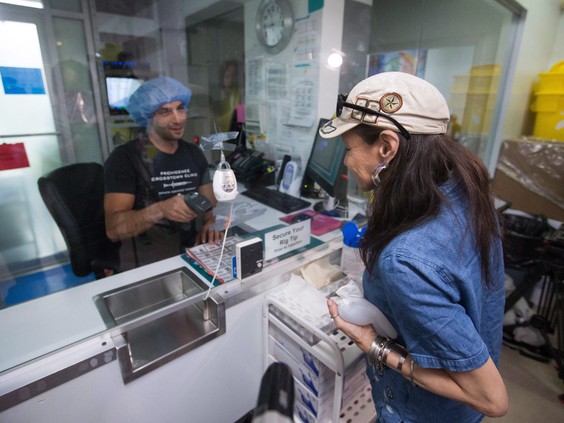
"Many [clinics] operate virtually, with physicians seeing patients every one to two minutes from within a pharmacy setting ... Pharmacies benefit financially through high dispensing and witnessing fees, while physicians incur virtually no overhead costs."
"Urine drug testing is often performed on-site with kits supplied by the pharmacy, further blurring the lines of accountability."
"There appears to be no consistent intake process, documentation standards, or clinical guidelines governing these practices."
Dr. Janel Gracey, addiction physician, Ontario
 
"It's laziness on behalf of the physician, and it's for financial reasons."
"You can see a lot of patients by video link and get a video premium for conducting that service."
"[The practice is] dangerous to society."
Dr. Martyn Judson, addiction doctor, Ontario 
https://i.cbc.ca/ais/1.7071087,1703872541000/full/max/0/default.jpg?im=Crop%2Crect%3D%280%2C0%2C6331%2C4221%29%3BResize%3D805
The term 'safe supply' has been used colloquially by advocates and politicians to refer to the practice of providing people with opioid use disorder alternative drugs that are safer than the street supply. (Ben Nelms/CBC)
 
Dr. Judson, as it happens, pioneered Ontario's use of methadone in the 1990s, reasoning that it would inevitably lead to weaning drug addicts away from their harsh addictions. It is the rationale behind most provinces in Canada establishing 'safe supply' prescribing free recreational drugs to addicts with minimal supervision, assuming that riskier street substances would no longer be attractive to those addicted to hard drugs of the opioid family when less harmful drugs were supplied to them free of charge. 
 
This was a 'do-good', 'feel-good' initiative that gained traction as a result of rising overdose deaths throughout the country, when deadly fentanyl began to make an impact, often used by drug dealers as fillers with other drugs. British Columbia, where overdose deaths skyrocketed made liberal use of safe injection sites, believing that handing out drugs without supervision would lower the risk of street drug use, mostly fentanyl. Until reports began circulating that the free drugs were showing up on the street, where those receiving them sold them to finance the more harmful drugs the initiative meant to keep them from. 
https://i.cbc.ca/ais/1.7018720,1699135390000/full/max/0/default.jpg?im=Crop%2Crect%3D%280%2C0%2C6155%2C4103%29%3BResize%3D805
People take part in a rally in support of the Drug User Liberation Front after the arrest of two workers in Vancouver on Nov. 3, 2023. (Ben Nelms/CBC)
 
The federal government had given its approval to the British Columbia experiment of legalizing all drugs meant for personal use under the safer supply pilot, and then withdrew from and defunded the project when evidence began to accumulate of the pilot's failure. Just as the government of British Columbia itself stepped back from the kind of 'harm reduction' that was fuelling greater drug use, even to impacting a younger demographic for whom the rejected drugs became an introductory course on drug use, at a more affordable street price than harder opioids.
 
Now, in British Columbia, safer supply doses must be consumed under medical supervision, minimizing diversion. In Alberta, safer supply prescribing is functionally banned. Yet in Ontario little attention is given to the money-making 'electronic pill mills' where some medical practitioners set themselves up as one-stop pill-prescribing agents in an easy approach to over-prescribing drugs to the addicted, in concert with certain pharmacies in coordinated protocols financially beneficial to prescriber and supplier, but deadly to their consumers.
 
https://i.cbc.ca/ais/1.7182350,1713905840000/full/max/0/default.jpg?im=Crop%2Crect%3D%280%2C760%2C4032%2C2268%29%3BResize%3D860
Nauman Shaikh, a pharmacist and owner of the downtown Medpoint Care Pharmacy, says he's seen positive changes in patients who are prescribed opioids they would otherwise have to buy on the street. (Kate Dubinski/CBC)
 
Video booth set-ups at pharmacies operate like confessionals; confess and forgiven. Safer supply in Ontario is being co-opted by tele-prescriptions. Drug users simply enter the premises at will to receive massive opioid prescriptions following several minutes of remote consultation; essentially rubber-stamping requests for drug supply, courtesy of the taxpayer. The user, on having their prescription filled at the pharmacy then is free to sell their drugs on the street for the formulaic transaction of resale funding a more desired drug acquired on the street.
 
These taxpayer-funded billings enrich both physician and pharmacy. And please the drug user no end for the freedom to dispense of the unwanted drug and alternately shop for the drug of choice. Large volumes of drug users simply pick up their prescriptions and they can be multiple times daily, while pharmacies collect extra dispensing fees to fatten their bottom line. Whereas in responsible addiction medicine, regular physical exams of patients and attention to psychosocial stabilization and recovery are bypassed.
 
 Concerned physicians who treat the drug-addicted, aware of what is transpiring have attempted to report the issue to the College of Physicians and Surgeons of Ontario whose purpose is to regulate doctors operating in the province. Yet despite Addiction Medicine Canada, an advocacy group led by physicians having sent the College formal requests for safer supply reform, there has been no response.  
 
https://smartcdn.gprod.postmedia.digital/nationalpost/wp-content/uploads/2023/05/Hydromorphone-1.jpg?quality=90&strip=all&w=564&h=423&type=webp&sig=EU1ByWgvrM18ZiwvZ0CSpg
 

Labels: , , ,

Sunday, August 25, 2024

"Safe" Injection Sites?

"Here are the so-called experts in the [federal] government telling us the best thing for us to do is to hand out high-powered pharmaceutical opioids to the drug addicts, that are two to five times more powerful than the drugs they get on the street."
"Make it pure pharmaceutical grade and somehow this is better?"
"There's nothing compassionate about leaving somebody intermittently homeless in minus -40 weather, speedballing methamphetamine with fentanyl, and saying that we're just going to let that person sort this out because it's about free choice."
"You can't build a system out of thin air. It is a huge culture shift. Even the creation of Recovery Alberta -- it's in the name, 'recovery' -- we're changing the way we're thinking about mental health and addiction from its fundamental assumptions for the past 25 years."
Alberta Mental Health and Addiction Minister, Dan Williams
 
"Our first priority must always be protecting our communities, especially when it comes to the most innocent and vulnerable."
"People are not going to die. They are going to get access to services. I do not call watching people inject an illicit drug, health care in the province of Ontario."
"We need to do better and we can do better."
Ontario Health Minister Sylvia Jones 
https://i.cbc.ca/1.7132648.1709646003!/fileImage/httpImage/image.jpg_gen/derivatives/16x9_780/somerset-west-community-health-centre-march-2024.jpg
The supervised drug consumption site run by Somerset West Community Health Centre in Ottawa will be forced to shut down in March. It may apply to become one of the province's new 'HART hubs,' part of the Ontario government's shift away from harm reduction. (Sam Konnert/CBC)
 
Ontario is now moving toward 'doing better' by heeding the cries of residents who decry the operation of 'safe injection sites' in neighbourhoods that have been affected by rising crime reflecting these operations and in particular the placement of many of these sites in close proximity to schools. There is also the considerable dysfunction of their presence attracting illicit drug dealers to the area of the sites to conduct business. And then, the undeniable reality of site 'clients' trading their 'free drugs' on the street for more potent drugs to give them a desired high, thus increasing the availability of drugs on the street.

Supervised consumption sites situated within 200 metres of schools and childcare centres are now being closed down by the Ontario government. This shift in policy will see ten of 17 supervised consumption sites cross-province being shut down. The health minister explained that parents concerned for the safety of their children around these consumption sites has motivated the government to finally act. Citing the increase by 146 percent of violent crime near one particular site.

Not unexpectedtly this announcement took consumption and treatment services personnel by outraged surprise. It took them little time to respond with the warning that the move would inevitably lead to greater numbers of deaths by overdose. Alongside the closure of these sites the government announced prohibition of any new supervised consumption sites from opening, let alone further participation in federal funding for safer supply initiatives. 

A twin announcement of a $378-million investment in 19 new homelessness and addiction recovery treatment hubs to provide primary care; mental health services; addiction care support; social services and employment support; shelter and transition beds; supportive housing; and other supplies and services, including naloxone, failed to impress critics of the wholesale government 'safe supply' restructuring initiative.
"We are gravely concerned that the decision to defund and close consumption and treatment services will have devastating consequences for our community."
"Our services save lives by providing a safe space. That is what consumption and treatment services were designed to do, to reverse overdoses and prevent deaths and connect people to the services they need. Consumption and treatment services are a cornerstone of harm reduction."
Suzanne Obiorah, executive director, Somerset West Community Health Centre, Ottawa

"The announced steps mean unsafe communities, more deaths, overwhelmed emergency services and spiking health-care costs, and leave nurses wondering who the government is trying to serve."
Doris Grinspun, head, Registered Nurses Association of Ontario
The answer to that is quite simply; the government serves all. The placement of the 'harm reduction sites' that are scheduled to close, has been harmful to the communities they are contained in. Violent crime has risen exponentially, so has property damage and theft, drug paraphernalia litters the streets, and fears for the welfare of area children abound. Proximity to schools sees drug users verbally abusing schoolchildren. Inveterate drug users also threaten nearby residents with physical harm. These people too are deserving of the government's concerns.

The Province of Alberta is addressing very similar issues and has dedicated its health system to addressing the issue of mental health, homelessness and drug addiction in a more thoughtful manner. Their Canadian Centre of Recovery Excellence will research best practices, analyze data and ensure that evidence-based recommendations for "recovery-oriented systems of care" are undertaken. Their online portal tracks EMS responses, emergency room visits, overdose reversals and deaths.

And nor is this new direction confined to these two provinces alone; the Quebec government has decided to meet demands of the residents of Montreal where a housing project catering to unhoused people with addiction or mental health issues located across from an elementary school, including a supervised drug-use site has locals and parents fed up with its presence. Open drug use and aggressive behaviour are but two of the issues involved at Maison Benoit Labre.

https://i.cbc.ca/1.6956383.1693830488!/fileImage/httpImage/image.png_gen/derivatives/original_1180/supervised-inhalation-site-monreal.png
Maison Benoît Labre provides services for people experiencing homelessness in the Saint-Henri neighbourhood. (Christinne Muschi/The Canadian Press)

Labels: , , , , , , ,

Thursday, October 13, 2022

Expectation Poor Match for Reality

"The benefits here are pretty substantive [Merck pharmaceutical's COVID oral drug Molnupiravir]."
"I think they're pretty substantive from an economic point of view and they're substantive for the patients who are older [with fewer experiencing extreme symptoms, hospitalized and dying from COVID]."
Dr. Eliav Barr, chief medical officer, Merck Pharmaceuticals, New Jersey

"That [impression that molnupiravir curbs the number of people dying or being hospitalized] cannot be supported any more."
"If you combine all the results from Panoramic and Merck's MOVE-OUT trial, there is no significant effect."
"It just doesn't work."
Dr.Andrew Hill, pharmcology researcher, University of Liverpool
 
"A UK study has found that Merck & Co’s oral COVID-19 therapy Lagevrio was unable to reduce hospitalisations compared to placebo in patients at higher risk from the virus, adding fuel to assertions in some quarters that its authorisation was premature."
"The 25,000-subject PANORAMIC trial conducted by researchers at Oxford University looked at the addition of a five-day course of Lagevrio (molnupiravir) to standard care in people aged over 50, or adults aged 18 and over with conditions that raised their risk of severe COVID-19, comparing it to standard care plus a placebo on all-cause hospitalisation/death within 28 days."
"Preliminary results show that, while Lagevrio hastened the time to recovery from COVID-19 by around six days, it was no better than placebo at keeping patients out of hospital."
Digital Object Thumbnail
 
Results published online a week ago of the Oxford University0\-led Panoramic trial compared two arms of about12,500 patients in the United Kingdom who were given the usual medical care along with molnupiravir, or just the usual care, saw a lowered rate of deaths and hospitalizations -- the primary end point -- reflected similar outcomes in both groups.
 
Patients who received the drug reported their symptoms resolving on an average of 4.2 days earlier and requiring fewer doctor appointments. As well, in a sub-group of subjects, the viral load among molnupiravir patients after seven days was lower than a control group. Of those given the drug the majority received at least an initial vaccine dose while 94 percent had been triple-vaccinated.
 
The Panoramic study also indicated that patients over age 80, along with heart disease and diabetes patients were less likely to die or end up in hospital, on the drug. Yet, patients with compromised immune systems fared better in the non-drug group -- leading study authors to conclude that "estimates were similar for all subgroups".  
 
Results of the independent trial of the medication cast doubt over the efficacy of the drug. The takeaway conclusion was that molnupiravir performs no better than standard care, lowering the death or hospitalization rate of COVID-19 patients, the entire point of the oral drug. Merck insists that in some older patients with health problems, the pills appeared relatively effective.
 
The expectation was that after regulatory approval and distribution, making the oral drug available on prescription the pharmaceutical giant along with its partner Ridgeback Biotherapeutics would earn up to $5.5 billion in global sales this year. Its fiercest efficacy critic, Dr. Andrew Hill is of the opinion that judging by the main criteria whether the number of people dying or going to hospital is curbed by the drug, it is a failure.
 
He points out that the corticosteroid drug budesonide presents similar benefits, for roughly two percent of the cost of the Merck product. The company charges wealthier countries about $900 per course of its oral product. A rival COVID drug, Paxlovid, produced by Pfizer is currently on the market. Last year both these medications surfaced as potential breakthrough treatments in the form of oral medication taken by high-risk outpatients at home, to decrease the burden the virus places on health care.
 
Initial trial results for molnupiravir indicated a 50 percent reduction in death and hospitalization among patients. When the second half of patient results came in, however, it showed peculiarly enough, that those on placebo actually came out with a better showing. Still the general conclusion was a reduction of mortality and hospital admissions by 30 percent.
Merck_molnupiravir
"Molnupiravir, a covid-19 antiviral drug bought by the UK government in the amount of 2.23 million doses, is no better than placebo at lowering the risks of death and hospital admission, a pivotal UK trial has found."
"Preliminary results released from the Panoramic trial of 25 783 people who were randomly assigned to open label treatment with molnupiravir plus usual care or to usual care alone found no significant difference between the two groups for the primary endpoint of death or hospital admission.1 The study has been published as a preprint and has not yet been peer reviewed."
"The UK was the first country to authorise Merck Sharp and Dohme’s molnupiravir (Lagevrio) for the treatment of mild to moderate covid-19 in adults with at least one risk factor for severe illness, in November 2021.2 The European Medicines Agency has still not approved the drug."
The BMJ (British Medical Journal)

Labels: , , ,

 
()() Follow @rheytah Tweet