Ruminations

Blog dedicated primarily to randomly selected news items; comments reflecting personal perceptions

Saturday, August 22, 2020

Risking Student Infection in Return to School
mask 2
Stock Image

"As you double the class size, from eight to 15 to 30, the number of cases and also the lost student days of instruction not only double each time, they triple or quadruple or quintuple. Those losses accelerate as you go to larger and larger classes."        "[Policy makers planning for elementary school class sizes of 30 kids or more] need to immediately reconfigure their school opening plans [to switch to hybrid models of part in-person, part online]."                                                                                  "Student days are like passenger miles -- it's the number of students affected, times number of days lost. When you put mores students in a classroom there is a higher chance one of them will test positive at some point for COVID, and so you've got to close that classroom. By the time you've identified that COVID case there might be other cases in the classroom already.You get aerosol transmission and you generate more cases by the time the classroom gets closed."                    "Many people may infect only one person, or even no one, but in some cases you have a so-called super-spreader who infects a huge number of people."                   Chris Bauch, mathematician, professor of mathematics, Waterloo University

"School is going to accelerate spread of the virus if it's already in the community. This is the same thing that happened when we reopened stores and restaurants. [School reopening] is not going to create more virus, but it's going to make it easier for the virus to spread."                                                                                          "It's very possible you could see cases."                                                        Dr.Chris Labos, cardiologist, epidemiologist, Montreal
jfj50173952-4

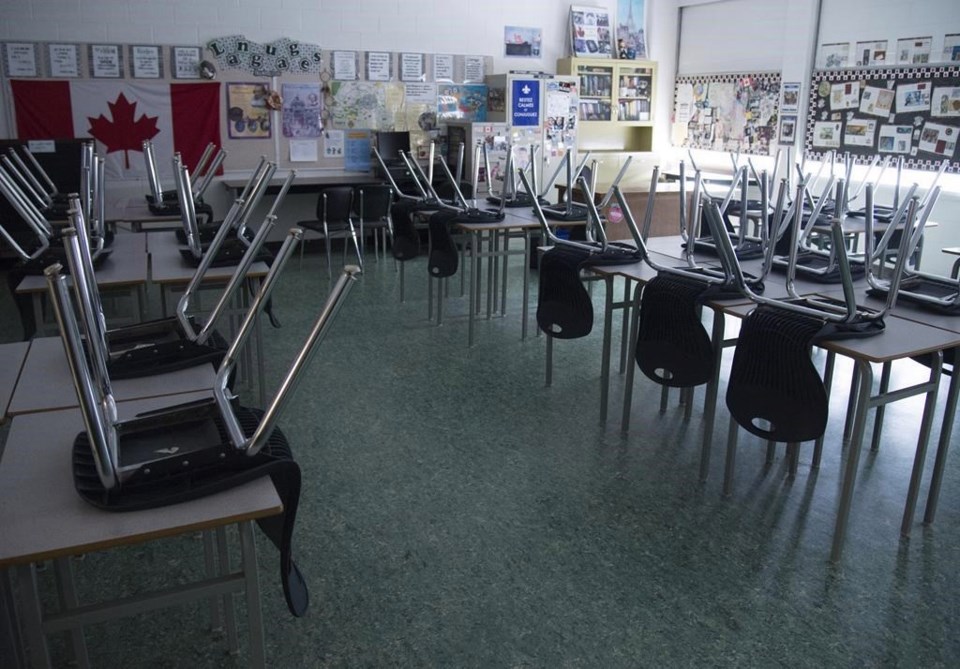
A new study undertaken by mathematics professor Dr.Chris Bauch and collaborators to determine the ideal class size in preventing COVID outbreaks affirmed through modelling that the very size classes many provinces are contemplating for their September school reopenings will predict the numbers of infections of COVID-19 certain to break out in each community. The infection numbers will be analogous to the size of classes in primary school classrooms as well as before-and-after school daycare programs.

Universally, teachers in British Columbia, Alberta, Quebec and Ontario are all making demands to their governments to mandate smaller class sizes in fear of just such scenarios unfolding with the reopening of the new school year. Students attending kindergarten to Grade 8 are set in Ontario to return to school with no reduction planned in class sizes. They are scheduled to spend the school day in a single group, limiting contact with other children in their school 'bubble'. Masks are required in grades 4 to12 only.

As a test instance, experts view what has happened in Israel as high schools reopened in May, when weeks afterward, major COVID-19 cases began spiking. In Berlin, hundreds of students and teachers from dozens of schools were infected with the coronavirus; now are in quarantine, two weeks following their school reopenings. 

Researchers who designed the new modelling study looked at the effect of different student-to-teacher ratios in a primary school class, along with school-based daycare to obtain an understanding of transmission of the SARS-CoV-2 virus causing COVID-19.  Despite masking, social distancing and hand washing, the model predicted an average of 53 infections in a school community of 150 students, parents and teachers in classes of 30 students.

Classes of 15, on the other hand, saw viral outbreaks of 12 infections, where students attend alternative weeks in groups of 15 students each class. For the 30-students-to-one-teacher ratio, outbreaks occurred over 40 to 60 days on average resulting in the number of student-days lost as a result of classroom closures ranging from 75 for the smallest ratio to 1,000 for the largest. 

The larger the class the greater number of students affected; the more students to a classroom the more difficult social distancing becomes to achieve.

According to the modelling, the teacher occasionally would be the first to become infected, though more generally it would be a student "because there are more of them. They bring it in somehow and we model what happens -- where they spread it in their household and where they spread it in school." It remains unclear as yet how efficient children are in spreading the virus causing COVID-19. 

As for childcare, the 15 children to two teachers ratio appeared the worst across all possible scenarios. Childcare optimally would be operating on a seven or eight children per room model, according to Dr.Bauch's mathematical reasoning, which would see siblings grouped together in daycare. 

Labels: , , , , , ,

Monday, August 17, 2020

"Recent evidence suggests that children likely have the same or higher viral loads in their nasopharynx compared with adults and that children can spread the virus effectively in households and camp settings."                                                      "This [closing schools early in the pandemic] may explain the low incidence in children compared with adults. Comparing trends in pediatric infections before and after the return to in-person school and other activities may provide additional understanding about infections in children."                                                               Centers for Disease Control and Prevention updated COVID guidance

COVID kids
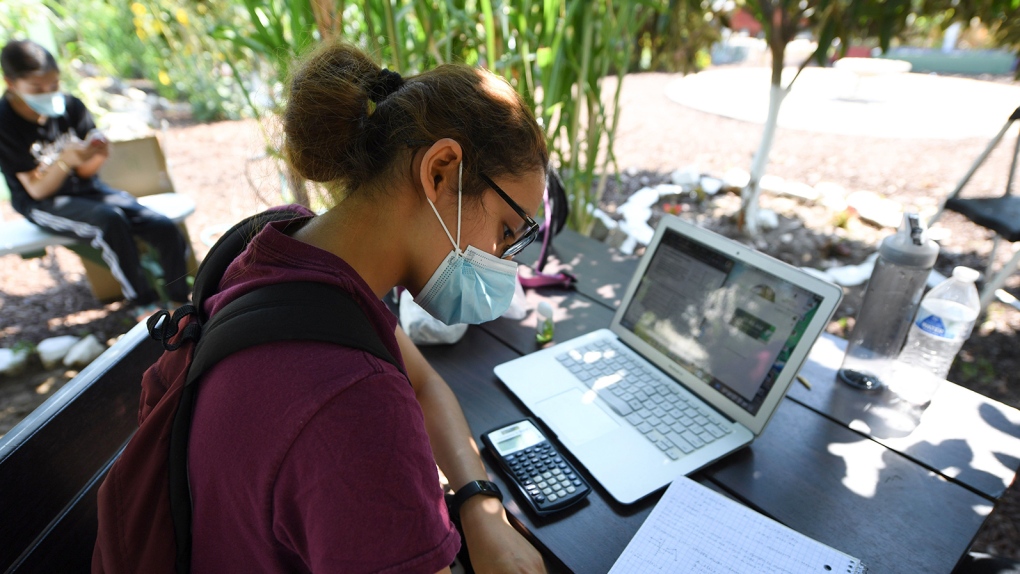
East College Prep High School senior Jocelyn Hernandez follows a remote Advanced Placement (AP) Calculus class while sitting in a community garden near her home, August 14, 2020 in the Boyle Heights neighborhood of Los Angeles, Calif. (Robyn Beck/AFP/Getty Images)

Since the global pandemic struck the United States in early spring, numbers and rates of  coronavirus cases have risen markedly in children. It had been generally accepted viewing the results of infections that children were spared the worst symptoms that COVID-19 could raise, and they were being infected at substantially lower numbers than older people of all age ranges in the general population. That initial impression has since undergone a profound adjustment.

As a new school year approaches, after the precipitate shutdown of schools with the first wave of COVID, a growing awareness of the risk that young people and their families face is striking alarm. Emergency use authorization was granted for a saliva-based coronavirus test by the Food and Drug Administration. The test, developed by Yale University researchers, is recognized as a route to reducing turnaround commercial laboratory times.

Over one thousand coronavirus-related deaths are being reported daily in the United States, with health officials reporting 1,220 new deaths and 57,120 new infections on Saturday alone. The rosy confidence relating to children's low infection rate and non-threatening symptoms related to COVID that originally reassured the medical community and parents, is now recognized as a factor linked to the first-wave action of school closings.

CDC warns US coronavirus death toll may reach 200K in weeks

That, and other public health measures such as social distancing certainly may have contributed to the low rates seen early on of coronavirus infection during the early days of the pandemic. Now, it is known that children between ages five and 17 test positive for the coronavirus at higher rates than any other age group, in accordance with CDC data; positive rates seen to be exceeding ten percent in public and private lab tests.

Children are recognized to experience a similar virus incubation period as do adults but are less likely by far to develop severe symptoms. On the other hand, roughly a third of children who are hospitalized for virus complications are placed in intensive care units at the same rate as are adults. With the anticipated start of the new academic year, concern turns toward new challenges that will most certainly arise.

Over 100 students and staff tested positive for the coronavirus in recent days and hundreds more were sent into quarantine in Mississippi, where return to school for in-person learning has been initiated. Cases have been reported in close to fifty percent of the schools in the state. The highest daily reported deaths in the country emanate from Mississippi, tracking by The Washington Post reveals.

How to recognize Covid-19 symptoms in children, based on pediatricians' advice

Elsewhere, virus concerns have forced officials to cancel classes or reverse plans to introduce students to reopened schools where the academic year is set to begin. On Saturday, a school district in Nebraska held back opening for a week because three staff members had tested positive. Classes have been cancelled as well in schools in Georgia and Tennessee.

In Canada, provinces are attempting variants on both in-class and remote teaching, with parents asked to inform their school boards in advance which option they prefer for their children. This, at a time when parents are bedevilled by the choices; personal attendance three days a week, remote the other two days. And of course it isn't only parents uncertain whether or not to return their children to classrooms which even under new rules will keep students in one classroom for all subjects and will mandate no more than 15 students to a class, but teachers also, concerned over an elevated risk of infection.

Labels: , , ,

Thursday, April 16, 2020

Re-Opening the Economy in Denmark

"I won't be sending my children off no matter what."
"I think a lot of parents are thinking, 'Why should my little child go outside first'/"
Sandra Andersen, founder, My kid is not going to be a Guinea Pig, Facebook

"I don't think it's right for the kids not to hug their friends."
"We keep the kids home, because the situation in the day cares before the COVID-19 outbreak were not OK, and the conditions they are setting up now are even worse."
Nonne Behrsin Hansen, Copenhagen, Denmark

"Suddenly, these moms feel like they just have to throw their kids to the front line and I think their reaction is: 'Don't mess with our kids."
Esme Emma Suteu, founder, Momster

"We're all a bit nervous and we'll have to ensure that we stick to hygiene rules."
"We have a lot of washing hands during the day. We don't have masks and we have to keep a good distance from each other so that's a very difficult task."
Elisa Rimpler, Danish Union of Early Childhood and Youth Educators

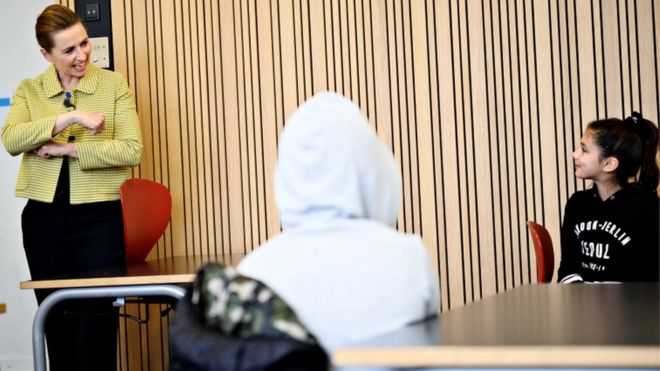
The Danish prime minister welcomed children on their return to school in Valby on Wednesday
The Danish prime minister welcomed children on their return to school in Valby on Wednesday     Reuters  

One of the first countries in Europe to decide to close down its schools in reaction to the influx of novel coronavirus cases, Denmark with its population of just under 6 million now feels the time is right to re-open them for children up to the fifth grade to "get the economy going again", according to Prime Minister Mette Frederiksen. To free up parents by allowing the children to return to school, so their parents can return to the workforce to rescue a faltering Danish economy.

Instructions have gone out to teaching staff to ensure that social distances are maintained between children. Among the population there are many who are less than pleased, even while others express confidence in the move. An online network of thousands of Danish mothers signed onto Momster have little confidence that Danish authorities have matters relating to the novel coronavirus under control.

Concerns that newly reopened schools and daycare centres may serve to open a new front of COVID transmission leading to a second wave of cases has moved thousands of Danish parents to express their foreboding by keeping their children at home, despite the official re-openings. Denmark has not seen the kind of flood of coronavirus cases seen elsewhere in Europe, like Italy or Spain, France or Britain, but the decision has brought a heated debate over priorities; health safety or the economy.

Denmark first in Europe to reopen schools after coronavirus lockdown
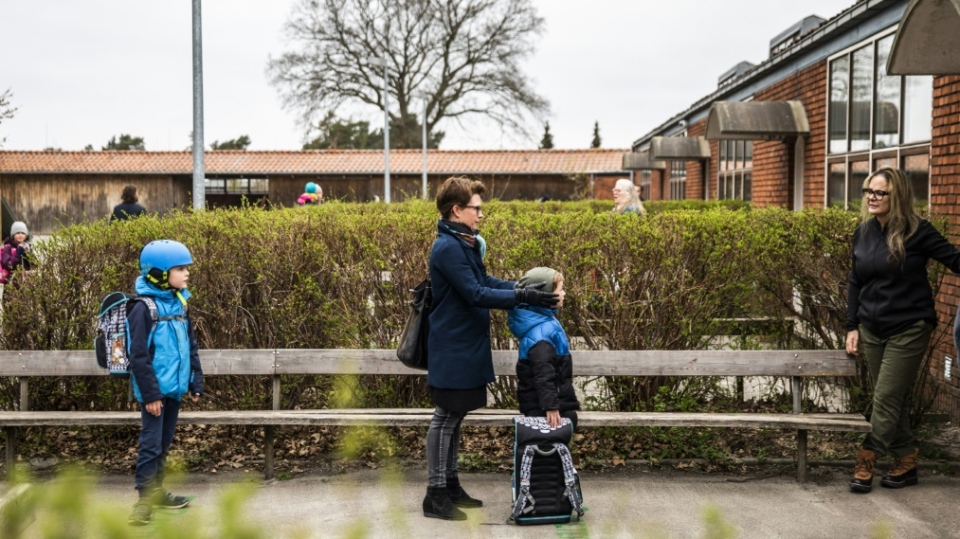
Children distancing at Korshøjskolen in Randers . Bo Amstrup/Ritzau Scanpix

Up to Tuesday the virus had infected over 6,600 Danes and resulted in close to 300 deaths. Shops were ordered closed, along with bars, restaurants, cinemas and gyms.

It was when the Danish health authority recommended an easing up after the lockdown of a month's duration had succeeded in reducing the rate of new cases, to relax the lockdown by opening up schools to children up to age eleven.

At the department of infectious diseases, Aarhus University, scientist Christian Wejse acknowledged parents' concerns "because we've spend a month trying to avoid contact". But he stated that the age group of children in question fall into a category "where few fall ill, and those who do won't get very sick". He points to Sweden as an example, where schools have remained open and no dramatic rise in infections has arisen. Children, he assured the skeptical, seem not to be a major driver of infections.
"I feel great, really good about the kids going back to school."
"I think we're all going to be sick at one point and they told us the children are going to be less sick and affected by this virus."
"I think it's good that they're going back to school... We need to go back to daily life."
Caroline, 38, mother of two, Copenhagen

Denmark schools
Schools in Denmark were closed on March 17 in an effort to curb the COVID-19 epidemic, though many had shut before then. (AFP)

Labels: , , , , ,

Wednesday, March 04, 2020

Protecting Children : Coronavirus Alert Guidelines

"It is intended that this guidance will support PHAs to provide advice to school and childcare administrators to reduce opportunities for transmission of the virus that causes COVID-19 in schools and childcare settings. This guidance is based on currently available scientific evidence and expert opinion and is subject to change as new information on COVID-19 becomes available."
"Virus transmission in the school/childcare setting, as well as in the home and community, is amplified as students/children are generally less compliant with effective hand hygiene and respiratory etiquette practices, they socialize with other students/children in a way that is likely to increase transmission and they can shed the virus up to twice as long as adults."
Public Health Agency of Canada
2019 Novel Coronaviruses
healthychildren.org
The novel coronavirus that is sweeping the globe, out of China, has swiftly become a universal concern in its affect on vulnerable populations. Children have not been recognized as being particularly threatened by the virus. Its malign effects are seen for the most part in the elderly, those over 80 years of age, those with compromised immune systems, and people with underlying health concerns. On the other hand, there have been reported cases where people in their 20s and 30s have been morbidly afflicted.

There is much more that is unknown about the effects of this new virus than has as yet been revealed. And needless to say the spread of the infection, its pandemic status, and the fact that while a large proportion of those infected experience only mild symptoms, and a very small minority are threatened with death, doesn't make its potential presence in a classroom via one infected child any less frightening a prospect for parents whose first thoughts always are with the health security and safety of their children.

main article image
sciencealert
The number of reported COVID-19 cases in children remains low: of more than 44,000 confirmed cases from China, only 416 (less than 1 percent) were aged nine years or younger. No deaths were reported in this age group."
"In Australia, only one child has so far had confirmed COVID-19 infection."
"It remains unclear whether the low numbers of child infections recorded is due to:
  • low numbers of children being exposed to the virus
  • low numbers of children being infected, or
  • low numbers of infected children developing symptoms severe enough to present for care.
"If large numbers of children are not getting sick, why does it matter?"
"If children are infected yet have milder symptoms, they may still play a critical role in COVID-19 transmission. Children are mobile, shed large volume of virus, congregate in groups and are at lower risk of severe disease so often maintain their daily activities."
"Preventing school-age children getting infected with influenza has been shown to be an effective community prevention strategy. In the absence of a COVID-19 vaccine, school closures may need to be considered when looking at ways to decrease community spread, if children are found to be key transmitters of infection.
sciencealert
Children are impressionable; exposure to a situation which obviously frightens the adults around them, causing illness whose final effects are unknown, will have a profound effect on their sense of well-being. The Public Health Agency of Canada has seen fit, at a time when Canada is just beginning to experience the first impacts of a growing infection rate, to alert teachers and caregivers to the role they can play in detecting the presence of the virus through someone infected, so that steps can be taken to protect other children from infection.
"Surgical masks in school or childcare settings are not recommended as these are not settings where people are typically trained on their use and there is a potential risk of infection with improper mask use and disposal. In young children in particular, masks can be irritating and may lead to increased touching of the face and eyes."
"If students are self-isolating at home, measures are in place to provide meaningful homework to students so they do not fall behind in their studies and they can maintain a sense of meaning and belonging. Consider flexible/relaxed approaches to missed work due to self-isolation or illness."
"Consideration can be given to having students fill water bottles rather than having them drink directly from the mouthpiece of the fountain."
Public Health Agency of Canada
While the public health agency recommends that schools affect a "relaxed" attitude to missed homework for isolated children whose illness keeps them from school, it also recommends that proactive, protective steps be taken to disinfect the tools shared between children through the education system in an effort to prevent transmission of COVID-19. While acknowledging that children are the least affected by the virus given preliminary studies, educators are asked to stress to children good hygiene methods such as hand-washing and coughing into tissues.

That steps be taken to increase the numbers of hand-sanitizing stations, and making tissues available to children for their cautionary and routine use, makes good, common sense. The potential for virus transmission is obviously "amplified" in any situation where there are large gatherings, and school and childcare attendance is among those situations. Normal child interplay represents an opportunity for viruses to spread, and for viruses to be shed (contagion) more so than adult interchanges.

Alleviating concerns over the negative consequences of missing days of school in favour of persuading ill children to remain at home, represents yet another initiative to normalize the cautionary principles involved. Reducing transmission of COVID-19 is paramount in the assembled setting of schools and day-cares. Though children tend to be spontaneous in their behaviours, they are sufficiently pliable to be taught the basics of viral-contamination control, such as frequent hand-washing and coughing into an elbow as an example, to stop the spread of germs.

School officials' actions are also spelled out in the guide released by the Public Health Agency of Canada which has stated there is no recommendation as yet in closing schools preventively. The document focuses on how school officials should routinely react if and when indications are that a student is showing symptoms of respiratory illness, including COVID-19. Common sense should prevail; that a child identified with symptoms be separated with guided gentleness and as swiftly as possible from other children. The same is true of staff members. 

Regular cleansing and disinfection of high-touch surfaces is clearly vital in helping to reduce the risk of transmission. Objects frequently used by children such as pencil sharpeners, water-fountain knobs, shared electronic devices, school bus handrails, the document stresses, should be frequently cleansed. And while all this is going on, children have a need to be reassured as they are being routinely instructed in hygienic methods. A low-key approach to voicing concern while assuring children that their personal health and safety is of concern to everyone, would be helpful.
"A new virus such as the one that causes COVID-19 can create anxiety and be difficult for students and children to understand, especially if someone in their school or family is sick, or they see or hear troubling messages on the radio, Internet or television."
"Students and children want to be heard. They do not need detailed information about events but they do need to talk about their feelings. Let them know they can ask questions."
Public Health Agency of Canada

Labels: , , , , ,

 
()() Follow @rheytah Tweet