Ruminations

Blog dedicated primarily to randomly selected news items; comments reflecting personal perceptions

Monday, August 22, 2022

Liar, Liar, Pants on Fire!
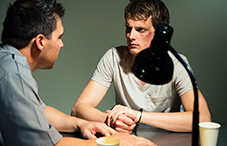

Researchers have developed new strategies to help police and other investigators catch liars in the act.
"Traditional police practices in deception detection stem from early theories on lying that assume liars will exhibit stress-based cues because they fear being caught and feel guilty about lying. This theory led researchers to search for reliable behavioral indicators of deception. They examined behaviors such as posture shifts, gaze aversion, and foot and hand movements, without much success.
"There really is no Pinocchio's nose," says Judee Burgoon, PhD, a professor of communication at the University of Arizona
American Psychological Association
 
"People tell white lies when telling the truth would be overly complicated, uncomfortable, or tedious." 
"[These types of fibs allow people to] reframe harmful truths and reframe socially awkward facts [we tell white lies to avoid hurting others and save ourselves from embarrassment]."
Dr. Christian Hart, Psychology Today
Lies of that variety are harmless and they pass the social test of civility, They don't pop up from a wellspring of malice. They are quite ordinary social interactions in normal people with a sense of social conscience. Most of us would be surprised to read that a study found six of ten Americans are committed to telling the truth, always. Liars on the other hand fib roughly 17 times daily; it has become 'second nature' to them. Actually, lying is in and of itself a human characteristic. There are studies indicating that people begin to lie at an early age until we become quite skilled at it.
 
Trinity University in Texas undertook a study to clarify what distinguishes a real lie from a white lie. The latter to be shrugged off as inconsequential, the former having unsavoury origins and consequences in the deeper recesses of a primitive mind possibly lacking social conscience and how to distinguish one category from the other. 
  • It is a serious lie if the intent is malicious;
  • the consequence of the lie is serious;
  • the liar is the one who benefits most from the lie;
  • the lie is mostly untrue -- compare the 'bending of the truth' that tends to define a white lie; 
  • the lie is considered unequivocally wrong.
There is a kind of urban myth that a lie can be revealed when the person lying moves their eyes to the left or the right, though no evidence exists to support this belief. A study done in 2012 examined the notion that people tend to look up and to the right when lying, and up and left while telling the truth; finding nothing supportive of the claim.

On the other hand, a 2015 study at University of Michigan took into account 120 videos of high-stakes court cases when they set out to construct a prototype of lie-detecting software. Part of the study was experiments that turned out 75 percent accurate in identifying liars. Close to 70 percent of liars tended to stare straight at their interrogator. 
 
Scowling or grimacing with the entire face was interpreted as an indicator of deception. Only 30 percent of liars scowled, but virtually none of the people telling the truth did. Another: close to 50 percent of truth tellers closed their yes during questioning, while merely 20 percent of liars tended to close their eyes. Head-shaking usually reflected someone telling the truth at about 50 percent, compared to only35 percent of people who lied.

People telling the truth often raised their eyebrows, while those lying had a tendency to wave their hands about during questioning. When someone's physical movements fail to match their statements; saying yes while shaking heads 'no'; almost like involuntary movements, may indicate deceit. And then, there are cultural differences to be considered. Voice pitch can reveal much.

The American Psychological Association found Chinese people had a tendency to raise the pitch of their voices when lying, whereas Hispanics spoke in lower tones when lying, compared to their normal voices while telling the truth. What research also tends to tell us is that humans generally are not very good at deciphering fact from fiction. 

People  tend to detect someone who is lying only about fifty percent of the time. According to some studies, emotionally intelligent people are more readily convinced by liars. Their personalities making them more trustful of other people.
Timeline Showing History of Deception Detection

Labels: , , , , ,

Tuesday, March 05, 2019

Health Diagnostic Technology

"Dopamine is an important marker for a lot of psychiatric conditions, but it’s been difficult in the past to measure it without PET imaging."
"With NM-MRI, we can understand some of the same things that PET tells us, but in a much more practical and accessible way."
"A clinical biomarker for schizophrenia would help people to get the treatment they need faster, and hopefully lead to an improved quality of life."
"In mental health care, we still don’t have widely available diagnostic tests for mental disorders. This means that psychiatrists still have to rely on a patient’s description of symptoms, and clinical behavioural observations in order to make an accurate diagnosis, which can sometimes mean significant trial and error."
Dr. Clifford Cassidy, scientist, The Royal’s Institute of Mental Health Research, Ottawa
Dr. Clifford Cassidy, a scientist at The Royal’s Institute of Mental Health Research is part of a research team that has discovered a potentially ground-breaking new way to diagnose and treat schizophrenia

 New research from The Royal's Institute of Mental Health Research at the Royal Ottawa Mental Health Centre has produced a study revealing a biomarker based in the brain, for schizophrenia identifiable with the use of specially configured MRI machines. The study, co-authored by Clifford Cassidy, offers a look at an accurate, quick diagnostic tool to diagnose whether people have schizophrenia, a diagnosis that has always been reliant on assessment by psychiatrists of an individual's behaviour and symptom descriptions. Such a readily available diagnostic test as described by the new study could result in a reliable diagnostic tool used is an improved strategy for early intervention and prevention.

Approximately one percent of any given population can be diagnosed with schizophrenia. The sooner the diagnosis is made and remedial intervention taken, the better the afflicted individual will be able to adjust to a protocol strategy that will enable him/her to successfully cope and to lead a fairly normal life. The new diagnosis technique with the use of specialty MRIs will extend beyond schizophrenia to encompass other mental health problems, such as PTSD. The very same technique outlined in the research has proven effective in detecting neurodegeneration in patients with Parkinson's disease; using it for patients with schizophrenia is a first.

The study was conducted to widen the scope of usefulness in diagnosis of a type of MRI (magnetic resonance imaging machine) called neuromelanin-sensitive, which has the capacity to indirectly measure dopamine function in patients. The brain chemical dopamine aids in regulating movement, learning, emotional response and attention. In the brains of people at risk of developing schizophrenia, or those experiencing some type of psychosis, excess dopamine is released. These specialty MRIs are able to indirectly measure that excess dopamine is being produced by targeting neuromelanin, a pigment created when dopamine breaks down. MRI scans detect the presence of the dark pigment.

The study identifies the MRI and its process as a reliable method to measure dopamine; a psychosis biomarker, in other words. Dr. Cassidy spoke of the satisfaction felt by researchers in achieving this breakthrough and the potential for it to lead to additional applications in the future, paving the way to diagnose psychosis and schizophrenia in a more 'accessible' manner in the sense that PET-CT scans also can measure the presence of excess dopamine, but PET-CT scans are expensive, not readily accessed and can often become an invasive technique.

The tool, stated Dr. Cassidy, could be useful for additional applications as for example diagnosing PTSD for which a different brain chemical -- noradrenaline -- has been associated with post-traumatic stress disorder. This chemical as well is pigmented and can be 'seen', to be measured through the use of specialized MRIs. There is an existing gap between individuals with mental illness and the problems they face versus the technological challenges of understanding brain function. And the hope is that the work undertaken in this study could lead to improved strategies for intervention and prevention of mental health diseases.
Head and neck MRI scan Kondor83 / Getty Images/iStockphoto

Labels: , , , , , ,

Sunday, January 21, 2018

Early Stage Cancer Detection Hopes

"We're very, very excited and see this as a first step."
"But we don't want people to call up [to ask for the test to be conducted on them, since it is not yet available for clinical use]."
Nickolas Papadoppoulos, study leader, Johns Hopkins University

"It's such a good first set of results [giving hope this approach will succeed]."
"Anything close to fifty percent or forty percent detection is pretty exciting stuff [and this protocol succeeded even beyond that margin of success]."
Dr. Peter Bach, health policy expert, Memorial Sloan Kettering Cancer Center

"[If a blood test could find 98 percent of ovarian cancers at an early stage] that would be a significant advance [in screening success]."
"We have a long way to go to demonstrate its effectiveness as a screening test [however]."
Dr. Len Lichtenfeld, deputy chief medical officer, American Cancer Society
a doctor holding a blood sampleResearchers have created a blood test that could detect eight cancer types.

The most reliably successful investigative test yet devised for the presence of cancer cells remains the biopsy, an invasive test where a sample of human tissue must be drawn to allow for laboratory testing determining the presence or absence of cancer. The earlier in its formative stages that cancer is detected the more hopeful the outcome in striving to eliminate it. Scientists in laboratories the world over are hoping to succeed in their search for liquid biopsy tests that will perform that vital function.

And they are reporting some progress. As did the team whose study results has been published in the journal Science, where John Hopkins scientists attempted to determine how well their experimental test functioned to detect cancer in people known to have the disease. Blood tests succeeded in identifying roughly 70 percent of eight common types of cancer in the thousand patients who took part in this trial. An early result that proved to be rewarding in the extreme.

The liquid biopsy tests searches out DNA and other markers tumours shed into blood in an effort to find cancer before it has time to spread, past which time chances of eliminating the cancer may be compromised by its reach into many parts of the body. The test results reported on rendered a mere seven false alarms when tests on 812 other people without cancer took place. Rates of detection in those with cancer varied with specific types; lower detection for breast tumours, but higher for ovarian, liver and pancreatic tumours.
Early Breast Cancer
A radiologist examines mammography images in Wichita Falls, Texas. Breast cancer is one of the cancers the new blood test can detect. (Torin Halsey/Associated Press)

In some of these instances the test succeeded in narrowing the possible origin of the cancer to one or two areas, such as colon or lung; indicators whose importance lies in delineating how much follow-up testing a patient might require. Although the results are being hailed as close to a breakthrough, the test itself is not ready for use since it is required to be validated in a larger study. That larger study is already underway in a general population not comprised of cancer patients, to determine whether it does work to the extent hoped to help save lives.

The purpose of the test is to detect mutations in 16 genes associated with cancer. In the process it measures eight proteins which are often seen to be elevated in the presence of cancer. The test seeks out breast, colon and lung and five kinds of cancers for which screening tests are not yet available for people at average risk. That would include ovarian, liver, stomach, pancreatic and esophageal cancers. A blood test is already in wide use -- the PSA test -- for prostate cancer; a test whose screening value remains controversial.

The initial research was carried out on people whose cancers remained in situ, confined to where they began or had spread slightly, but not yet widely throughout the body. Success was measured in 33 percent of breast cancers, 60 percent of colon or lung cancers and close to all of the ovarian and liver cancers being detected. Success was more assured when tumours were larger or had spread; less proficient in detecting tumorous cancers at their very earliest stages.

A patient has blood drawn for a liquid biopsy at a hospital in Philadelphia. A study released Thursday showed promising results for a new blood test that detects eight cancers at an early stage.
A patient has blood drawn for a liquid biopsy at a hospital in Philadelphia. A study released Thursday showed promising results for a new blood test that detects eight cancers at an early stage. (Jacqueline Larma/Associated Press)

Labels: , , , , ,

Wednesday, March 29, 2017

Detecting Cancer

"Had I not done the dog screening, I truly believe I would not have had the colonoscopy."
"I would have waited a year, two years, who knows? ... I was lucky to find it [his cancer] early."
Jim O'Mallay, Chicago fire department

"You see a guy who's telling you 'I got tested by a dog and they found my cancer', and people start listening."
Chief Steward Mike Butkus, firefighters union, Chicago

"It is a disgrace, it is an absolute disgrace that this thing [dogs' extraordinary sense of smell and teachability] isn't being grabbed onto like the invention of radar."
"It's the kind of thing that's going to save thousands and thousands of lives."
Glenn Ferguson, co-owner, CancerDogs, Aylmer, Quebec
Chris Roussakis for National Post
Chris Roussakis for National Post    Glenn Ferguson, owner of CancerDogs, shows how his animals indicate they think they smell cancer in breath samples.

No fewer than 50 fire department unions throughout the United States work with CancerDogs and that work has meant that 40,000 men and women working in an environment and in a career known to make such people susceptible to cancers resulting from their work-related exposure to cancer-causing chemicals and cancer-causing conditions, have been screened through the auspices of CancerDogs at a cost of $20 per test. A cost-effective, concern-comforting test that has the potential of forewarning of the presence of cancer in its early stages.

Dogs are well known for the acuity of their sense of smell, and Mr. Ferguson has trained his Beagle hounds, bred for their hunting instincts utilizing their extraordinary sense of smell, to identify and to signify that they have found the lingering odour of cancer in test samples they are exposed to. The co-owner (along with his wife) claims his dogs' cancer finds to be accurate 60 to 70 percent of the time, enabling people to be informed and to receive early treatment; alternately to take preventive measures.

There are a number of limited "proof-of-concept" studies that have been done in the past, that suggest dogs are capable of detecting cancers in breath samples or in urine, with an astonishing degree of accuracy. They are able to detect the chemical byproducts of cancer cells' metabolism, theorized as "volatile organic compounds". Screening using medical technological devices is available for breast, colorectal and prostate cancers, which give people the opportunity to begin treatment early, leading to improved chances of success.

Malignancies such as ovarian and pancreatic cancer, however, are most commonly discovered only when they have reached a late, and often terminal stage. Mr. Ferguson was moved five years ago to train dogs for the purpose of offering a screening method that had the potential of detecting cancers that no technological means had yet addressed. And he made his focus of service offering to firefighters' unions, organized groups whose members are at fairly high workplace-induced risk of acquiring cancer.

CancerDogs' clients range from California, to Texas and Oklahoma. The individual to be tested places a surgical mask on their face and leaves it there for a ten-minute period, after which the mask is placed in a sealable pouch and mailed off to Aylmer, Quebec. The samples are then placed on trays where the dogs are set to sniff them. When a dog seems convinced there is cancer present, it places a paw over the sample. If other dogs also identify that same sample, another sample is requested from the individual, the process repeated, and the test confirmed positive.

Chris Roussakis for National Post
The hounds of Ottawa area's CancerDogs pose in front of breath-sample jars. The company has screened 40,000 U.S. firefighters for cancer, but scientists question whether research supports the work. 
Chris Roussakis for National Post

At that juncture, CancerDogs routinely recommends to anyone whose test has been given a positive diagnosis suggesting they have a type of cancer, to undergo a specialized blood test developed by a company called OncoBlot to identify where the cancer is and what type it is. OncoBlot's test is able to identify 25 specific types of cancer. From that point forward, it is up to medical doctors specializing in cancer treatment (oncologists) to recommend the best course of treatment.

Labels: , , ,

 
()() Follow @rheytah Tweet